
The power conversion systems are gaining swift popularity particularly in the areas of aerospace, defence and advanced industrial applications, manpower, precision, performance and compact design have gained great importance. At the power stage of most high-frequency components is the 3-phase 400Hz frequency converter which is a very important enabling technology which makes energy conversion smooth and precisely as required by these advanced applications. The article focus on solid state technology in these converters and discuss how their improved design and manufacture are changing the approach to power generation in the future. The audience will also be able to see the entire working principle of solid state converters and the performance hidden in solid-state switches the use of which is fast becoming the norm instead of the exception. Regardless of whether you are a professional engineer, systems integrator, or just a technology devotee, this expansive user’s manual will provide the most current knowledge about the 400 Hz frequency conversion; that is, the latest equipment and practice in the world.
Brief Understanding of Frequency Converters
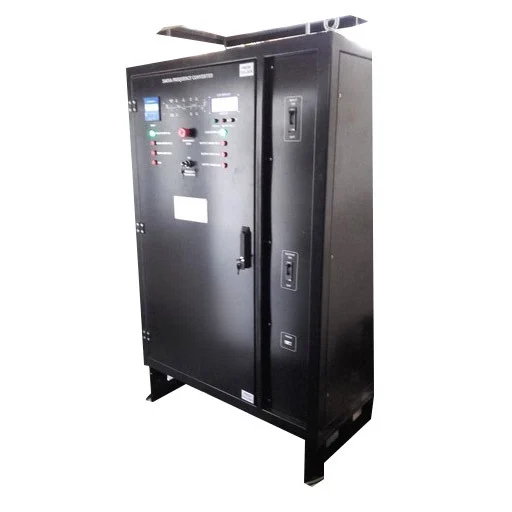
A frequency converter is equipment that can help in changing the standard frequency of an electrical power to fit some specific needs. In order to achieve this, it converts alternating current (AC) to direct current (DC) charge on its entry and changes it afterwards to AC and puts the frequency as required. The particular technology is prevalent in spheres such as aerospace, defense, production, energy systems, and so on, where the adjustment of quasistatic characteristics is necessary for the proper work of devices. Frequency converters are necessary to prevent issues between power sources and the equipment required, to reduce energy consumption, and to extend the life of electrical items by regulating power.
What is a Frequency Converter?
Frequency converters capable of varying power supply frequency are electronic or electro-mechanical apparatus engineered to adjust the input source of electric power so it may be effectively consumed by specific equipment. The process of such adjustment begins with changing the alternating current (AC) into a stable direct current (DC) by means of rectifiers and then processing the same current into AC with the required output frequency and voltage. In recent years the development of high-power insulated-gate bipolar transistors (IGBTs) based frequency converters is further advance of power semiconductor developments.
These devices are omnipresent in environments where it is necessary to change the rate of movement in devices such as motors, pumps, compressors and conveyor belting so as to provide better performance with lower energy inputs. Also, in systems that cannot do without other components, such devices are used to enable the proper synthesis of device incompatibilities, i.e., supply voltages with different frequencies of 50Hz and 60 Hz within international regions.
Types of Frequency Converters
| Type | Description | Key Features | Common Applications |
|---|---|---|---|
| Static Frequency Converter | Converts frequency without moving parts | High efficiency, low maintenance | Aerospace, industrial systems |
| Rotary Frequency Converter | Uses motor-generator system for conversion | Robust design, handles higher loads | Marine, defense systems |
| Variable Frequency Drive (VFD) | Controls motor speed via frequency adjustment | Precise control, energy efficient | HVAC, manufacturing |
| Digital Frequency Converter | Advanced electronic circuits for conversion | Compact, programmable, precise | Research labs, automation |
| Analog Frequency Converter | Uses analog signal processing | Simple, cost-effective | Legacy systems, smaller equipment |
Importance of 400Hz Frequency Converters
400Hz frequency converters are indispensable for various industries today due to their energy saving, reliability and flexibility features. The most fundamental and important benefit of using 400Hz is how much smaller and consequently lighter all these electrical components become, which is especially necessary for some overlapping industries like aerospace and aviation, where any saved pound directly enhances the efficiency and reduces operational expenses. For example, as compared to 50Hz or 60Hz units, the power supplies, transformers, and motors intended for 400Hz power systems are much smaller and lighter, thus are very appropriate in aircraft, spacecraft, and military equipment applications.
Furthermore, the high fidelity and linear control properties of 400 Hz converter ensure that most sophisticated electronic devices work correctly within this system. This is essential especially in applications such as communication systems, radar, and other sophisticated defense gadgets, where even a slight change in power level could lead to a malfunction in the operation. Introducing 400 Hz power in these devices also allows for learning regimes for better accuracy of how these systems can be operated.
Efficiency is yet another distinctive attribute of these converters since they allow one to regulate the power adroitly, thereby minimizing the loss of energy in the 400-hertz frequency converters and enhancing the functioning of the devices linked to them. In addition to the technology of digital signal processing and power electronic devices, the developments in 400hz inverter systems capture the new concepts in their programmability and remote operations functionality, contributing to their wide use in a range of installations.
Specifications of 400Hz Frequency Converters
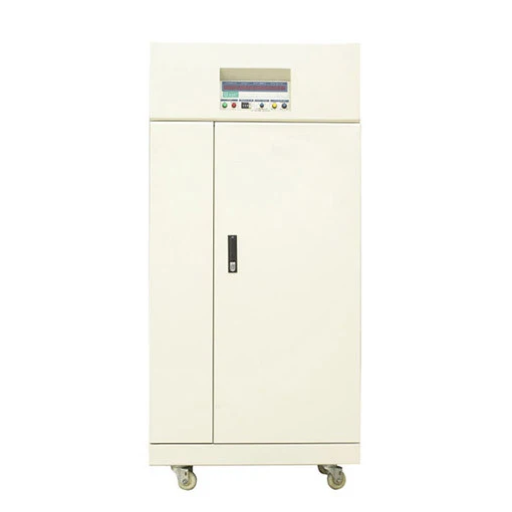
- Input Voltage Range: Usual illuminator rates 208 V to 480 V AC, whereas other models have a broader range for higher compatibility.
- Output Voltage: Frequency of 400 Hz is used to operate the ground military equipment, aerospace, and ground military equipment, and usually sends 115V or 230 V AC.
- Power Capacity: Whether a specific power rating range from 500 VA to 120 kVA or higher shall be supplied applies the most for how much power may be used.
- Phase Configuration: With a more specific, narrow configuration available as a service, single-phase and three-phase configurations are both offered, depending on working conditions.
- Efficiency: Its energy output is more than 90% of power supplied during operation.
- Frequency Stability: Ensures that the exact frequency values are applied, with deviations usually not exceeding ±0.01% in order to maintain the efficiency and reliability of the installation.
- Cooling Mechanism: Types of cooling systems such as air cooling and mixing cooling are used to maintain the mechanism in-operation even under heavy load conditions.
- Size and Portability: Solutions exist in the form of small as well as transportable units and large nonportable units which cater to the tactical exigencies.
Voltage Ratings and Power Supplies
The determination of the voltage to be used in the operation of an electrical equipment is of crucial importance. It helps in establishing the standard of the voltage to be used in different applications. Generally, system voltage ratings of current times can be classified into low voltage (110V–240V) for use in residential or commercial setting, medium voltage (1kV–35kV) and high voltage (above 35kV) for industrial or utility based installations. For transmitting power over very long distances, high voltage systems are critical in limiting the losses while at the same time limitation of distance of power supply to very short lengths is achieved by low voltage systems that are used by end users.
Design of power supply options is aimed at smooth and reliable supply of energy to cater for different operational requirements. The choices available include single-phase and three-phase supply systems in which single-phase is suitable for light loads and especially for use in domestic appliances, while three-phase applications deal with heavy loads in industrial and commercial installations. Use of advanced conversion technologies, including rectifiers and inverters, further enhances the scope of power supplies, assisting in the management of AC and DC applications. Moreover, uninterruptible power supplies (UPS) and emergency power generators are commonly introduced to prevent interruptions in operations in case of power blackouts in important installations.
Solid-State vs. Static Frequency Converters
| Parameter | Solid-State Frequency Converters | Static Frequency Converters |
|---|---|---|
| Technology Type | Uses semiconductor components | Relies on rotary machinery |
| Efficiency | High efficiency | Moderate efficiency |
| Size and Weight | Compact and lightweight | Bulky and heavy |
| Maintenance Requirements | Minimal maintenance needed | Requires regular maintenance |
| Startup Time | Instant startup | Delayed startup |
| Durability | Highly durable with reliable performance | Susceptible to mechanical wear |
| Energy Loss | Minimal energy loss | Higher energy loss due to mechanical parts |
| Lifecycle Costs | Lower lifecycle costs | Higher lifecycle costs |
| Noise Levels | Operates quietly | Produces noticeable noise |
| Recommended Use | Ideal for modern, critical applications | Suitable for legacy systems |
3-Phase and Single-Phase Options
| Parameter | 3-Phase | Single-Phase |
|---|---|---|
| Voltage Levels | Supports higher voltage levels | Suitable for lower voltage levels |
| Power Capacity | Handles heavy loads efficiently | Best for light to moderate loads |
| Efficiency | Higher operational efficiency | Lower efficiency overall |
| Starting Torque | High starting torque available | Limited starting torque |
| Installation Cost | Higher upfront cost | Lower initial investment |
| Maintenance Needs | Less frequent maintenance | Requires more upkeep over time |
| Application Suitability | Industrial and commercial use | Residential and small businesses |
| Reliability | Extremely reliable for large loads | Adequate for smaller systems |
| Energy Balance | Better energy distribution | Uneven power distribution |
| Lifespan | Longer lifespan with heavy use | Shorter lifespan for similar usage |
Applications of 400Hz Frequency Converters
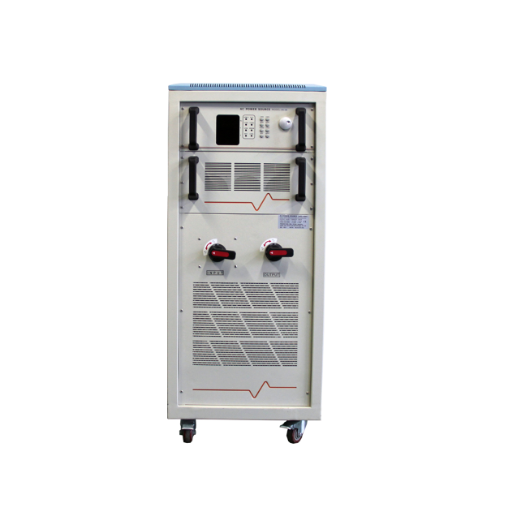
Frequency Converter 400Hz ratings are usually applied in the industrial and other settings where weight, efficiency, and controlled output are considered the prime factors of the work. Common uses include:
- Aerospace and Aviation: These are used on a larger scale for airplane operation, ground facilities and test benches. Due to their scope of use, the machines available in this category are expected to meet certain regulatory requirements, such as lightweight design, etc.
- Military Operations: Vital in operating advanced communication systems, radar units, and other strategic equipment.
- Marine and Naval Systems: Applied in navy vessels and submersibles to provide proper conditions for using sensitive electronics.
- High-Tech Manufacturing: Using power sources for laboratories and production lines with a need for stable high-frequency power generators such as testers and robots.
- Medical Technology: Maintains medical devices whose failure, be it a minor discrepancy, is out of the question, for example, imaging equipment and other complex diagnostic machinery.
Their employment is highly desired by many sectors where design aspects with power minimization, effectiveness and accuracy are demanded in the execution of duties.
Usage in Aviation and Military
The application of 400Hz frequency converters within aviation and military operations is primarily driven by their ability to provide stable and efficient power tailored to meet the stringent demands of these sectors. In aviation, 400Hz power systems are integral to both ground support equipment and onboard aircraft electrical systems. They assure the operation of avionics, navigation systems, communication systems, as well as provide in-flight entertainment with the delivery of electricity that is accurate and dependable, while offering significant weight and size benefits in comparison with the 50/60 Hz systems. This frequency standard allows for lighter transformers and motors, crucial for optimizing aircraft weight and fuel efficiency.
400Hz voltage frequency converters find considerable application in advanced military and defense equipment, for example, in cutting-edge radar systems, missile guidance systems, and mobile control centers. Designed to provide reliable supplies to very sensitive electronic systems, these converters ensure fast and precise data processing in the most difficult conditions of equipment operation. Moreover, they provide systems for unmanned aerial vehicles (UAVs) and such other contemporary technologies of war that are supposed to operate in high risk-low volume and compact scenarios.
Industrial Applications of 400Hz Power
400Hz voltage frequency converters are also indispensable in industries where high accuracy and efficiency are required. The First of many uses is found in the aerospace industry where these converters are engineered to replicate the in-flight electrical supply in order to test various aircraft systems and components. This guarantees that such systems as on-board systems, instruments, and associated equipment are fully operational within the specified frequency band prior to handing them over for use.
Moreover, their application involves automated lines with regard to electronics manufacturing. 400Hz frequency converters are an essential item since a consistent and stable power output is provided that allows for efficient running of highly delicate equipment such as robots and CNC machines, thus reducing hardware failure caused by electrical faults. These devices are also relevant to companies where miniaturized light equipment is used, as 400Hz frequency negates the use of larger transformers and inductive elements, thanks to high switching frequencies enabling the equipment to operate without the oversized bulky transformers despite the same performance as others having those components.
Also, their use encompasses green power plants, where the top, above mentioned principle is applied for providing globalization, which means integrating renewable energy sources into the existing industrial process. The compact nature and assurance of power availability with 400Hz systems because of their high power per unit volume give them a lower overall cost compared to other types of supply systems in order to meet the power demands of current industries.
Role in Testing Equipment and Systems
When it comes to the testing of equipment and systems in factories, it doesn’t come close to the versatility that 400Hz frequency converters offer. As important as the mobile equipment or static devices are to the real working conditions, they actually might not normally work in the environment where testing is carried out. It is when precise conditions of normal tariffs are replicated in an aeronautical sector for instance, that only 400Hz systems become indispensable. Such power generation equipment creates the most practicable environment under test conditions, and its design assists in the detection and rectification of any issues likely to arise for the futuristic systems before they are used in real operations.
Furthermore, in air defense a 400 Hz converter unit is employed to test intricate communication, navigation and electronic systems efficiently. Whereby their reliability and accuracy are crucial for validating the safe operational characteristics of mission-critical technologies. Further, high-quality electronics manufacturers employ 400-Hz converters to create power levels for accelerated aging that provide a means of estimating relaxation aging life. All this only underscores how vital such converters are in competitive technological advancement and quality control enhancing (especially in that the help of such devices enables industries in raising standards, while still advancing capabilities and systems in use).
Choosing Right Frequency Converters
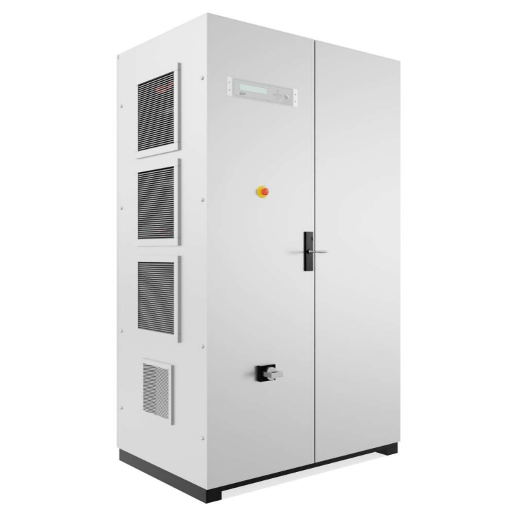
It is crucial to start by examining the specific requirements of your application when selecting the appropriate frequency converter. Start by finding out the voltage and frequency at the input and output of importance for your machine. Direct attention to the converter’s power capacity to be able to ascertain that it will withstand and support the given operational constraints. Factor in the operating temperature, the heat sink and fan size that is needed and how resistant to factors such as knockout and humidity the equipment needs to be placed. Lastly, consider buying converters that have certain safety features and come along with target certificates ensuring long-term service and meeting the legal obligations.
Factors to Consider When Selecting a Frequency Converter
Selecting the right frequency inverter is necessary in such a way that it should have advanced technical performance that aligns with the other devices that it is connected to. Start by checking the input and output voltage and determine if the device will work as needed. While performing these tasks, concern in assessing the distortion levels, especially because excessive utilization of distortions can lead to inefficiencies, equipment overheating, and possible destruction. Currently, beside the traditional frequency inverter, inverter comes incorporated with an active front end which caters for power factor problems and harmonics in the load current either of which is normally bad for efficiency.
Yet another important aspect that needs to be thoroughly analyzed is how accurate and programmable a converter’s control system can be. An advanced communication interface should be able to operate Modbus, EtherCAT, PROFINET, and other similar protocols which provide the system with the indispensable functionalities for the transmission and processing of data enabling functioning in an automatic industrial process. In extreme cases where thermal abuse is permissible, prevention has to be strictly practiced in the hope of protecting both the equipment and the structure.
Lastly, the energy efficiency and the ability of the frequency converter to regenerate power are worth a deep dive. If equipment is chosen that demonstrates a high degree of efficiency in various operating conditions, then the operational costs of the system can be reduced and sustainability can be improved The latest technology offers new inverters with abilities to send power back to the mains or back to other machines, helping to use the energy which might have been wasted At these aspects play a part in the choice a frequency converter which is effective and remains so even in the long run.
Common Specifications and Ratings
In evaluating frequency wrenches, several critical measurements have to be obtained in order to ascertain fit and performance. An important one is the device’s supply range within the admissible values of voltage and frequency, because it is this factor that will provide the device with suitable operating conditions within the system. Such devices will usually allow voltage input ranging between 200V to 690V and a frequency of either 50 Hertz or 60 Hertz as per the prevailing standards from various industry sectors.
Energy efficiency is quite an important if not the most important specification. Current demand is determined in this metric and it is given in kilowatts (kW) or in horsepowers (HP). Efficiency percentages show how much of the energy is lost while it is being converted and it is not rare to hear over 98% in efficiency in some of the converter designs under full/overload conditions.
It is important to address harmonic distortion levels because such levels could affect how well this equipment will perform as well as the quality of power provided by that equipment. In sensitive applications, low total harmonic distortion (THD) values, usually less than 5%, are more preferable. Additionally, a temperature range in which the device can continue to be used effectively, for example, -10°C-50°C to 50 °C, within severe environmental conditions is enacted to guarantee the serviceability of the device in such environments.
It’s worth mentioning that in order to successfully implement frequency power converters in automation systems, the converters are supplied with built-in communication protocols such as Modbus, Profibus, Ethernet/IP, and more which provide for their convenient integration and enable remote control and monitoring over the user interface. This work serves as a starting point for the design of a variable frequency power converter considering very specific practical and technical issues.
Advancements in 400Hz Frequency Converter Technology
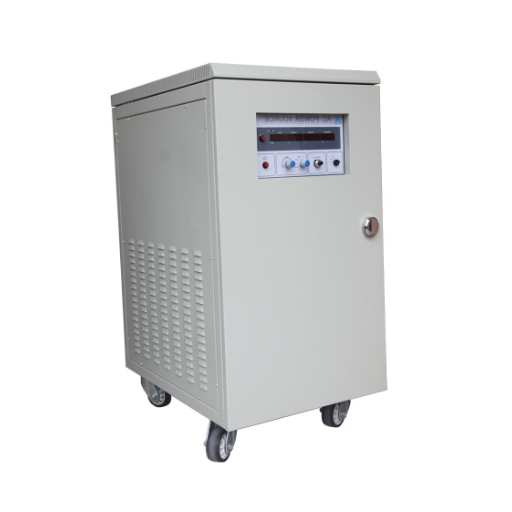
The latest technologies driving design development of 400Hz converters in terms of energy performance, system reliability, and integration are significant. Present-day converters have significantly benefited by using the most innovative technologies of electronics, like insulated-gate bipolar transistors (IGBTs), bringing very low losses and consistent operation performance. With improvements being made in cooling systems and thermal management in designs, effective operation is guaranteed even at various temperatures thus minimizing the risk of overheating especially to the overused devices.
Moreover, the new digital control devices provide not only improvement in performance, but also broader operation options that keep the converters continuing working even under the changing and varying loading conditions. Moreover, the range of IT and IoT applications includes support for smart grid technologies in different parameters, such as real-time monitoring, control, predictive maintenance, automated systems development (SDC, AIL, MGA, SCADA, and DET, Regd etc). These conclusions suggest that there is even more room for effective, sturdy, and multifunctional concepts in aviation, defense, and industry.
Recent Innovations in Solid-State Technology
A significant breakthrough in solid-state technology has been the development and the use of wide bandgap (WBG) semiconductors, such as silicon carbide (SiC) and gallium nitride (GaN). These encoder types offer greater thermal conductivity, greater operational voltage and so increased power density in power conversion systems in comparison to standard silicon. They find wide-range applications today as in the case of electric vehicle (EV) management, renewable energy sources management and even in various telecommunications equipment. For example, in the case of the EVs, the inverters for which use SiC power devices are quite remarkable since it has undergone numerous improvements with respect to energy loss due to the big changes in the car range.
Recent enhancements in chip design and the production of modern hardware, even though successive in the extreme ultraviolet (EUV) lithography as well. The fact that this development has now taken place within a field means that systems can now incorporate more functions within a chip as opposed to system of chips that could not be integrated. This advantage not only saves cost, but also power and heat. Therefore, these changes are driving the emergence of compact, efficient, high capacity, and applicable systems in fields such as data centers, consumer gadgets and all forms of sensor technology.
Trends in Power Conversion Efficiency
It is the adoption of wide-bandgap semiconductors that currently is fueling such large dynamics of increases in efficiency of power consumption and WBG semiconductors such as gallium nitride (GaN) and silicon carbide (SiC) are the drivers. These materials play an invaluable role due to their superior or comparable electrical properties, such as higher thermal stability, faster current and voltage response, and lower static impedance, which, in heat-laden power-transformation stages, enable soft-switching or low on-state activation power.
Moreover, the use of various types of converter schemes on the Power Electronics Equipment assures that the equipment works at higher than normal voltage levels and with less harmonics levels. The protection of such power electronics equipment is achieved using more sophisticated digital controllers, such as Model Predictive Control (MPC), which enable proper system regulation and current- and voltage-control without excessive energy loss during transient events. The latter developments go hand in hand with the ongoing progress in magnetic and passives components as high power integrations are being built with ever reducing material content.
One area of development includes the adoption of SiP (System-in-Package) technology, where the discrete parts of the power semiconductor, driver, and passive parts are crammed into a single compact structure. This strategy is known to help minimize parasitic elements and improvements well the thermal management. In clarification, many technologies have been focused on power conversion efficiency, and this also encompasses efforts in generic applications where the focus is on renewable energy inverters, industrial power supplies and telecommunications systems so as to reduce consumption and at the same time enhance quality.
Future Developments in Frequency Conversion
One of the biggest factor of growth in the market of the frequency converters is the use of the wide bandgap (WBG) semiconductor technologies: silicon carbide (SiC) and gallium nitride (GaN) which is actively studied and developed by the industry. These materials have some advantages over the conventional silicon-based components: they have the characteristics of higher breaking voltage, higher switching speed, and lower conduction loss. These WBG semiconductor devices are achieving the needs for higher frequencies and less heat sinks required through thermal management and converting applications will be dramatically transformed with force by these materials.
Another exciting possibility is to look deeper into the opportunities that come with the use of Artificial Intelligence (AI) in power electronic systems, which are stepped frequency systems. With the development of advanced algorithms for the predictive control and real-time optimization much higher precision and efficiency of motor drives and power converters, in particular, is expected. Inclusion of artificial intelligence technique into the control structure will also enrich adaptive performance which ultimately means that systems can respond to changes in the environment and require less energy while at the same time working for longer periods without becoming obsolete.
Reference Sources
- MDPI (Symmetry Journal):
Improved Bipolar Coordinate Control Strategy for 400 Hz Three-Phase Inverters - ResearchGate:
Design of Three-Phase, 400 Hz Power Supply Using Three-Level T-Type Topology
Frequently Asked Questions (FAQs)
What is a 3-phase 400Hz frequency converter?
These converters are generally classified as rotary converters or solid-state static inverters and they are used in the transmission of three-phase 400 Hz voltage in specialized equipments from the standard utility power which is usually of 50/60Hz. This is due to the fact that the converters have certain merits of a stable salsa tone wave output which is needed for the aviation and selected military set ups. These aids can be in the form of hand-held trolleys or fixed devices, inclusive, and often have facilities for protection and control similar to those of being speed regulated.
Where are 3-phase 400Hz converters commonly used?
3-phase 400Hz converters are generally utilized in several applications like aircraft ground power, specialized military operations, test rigs, and many more applications in the aerospace production filed which mainly uses three-phase 400Hz power. They are also applied to radar activity, avionics testing procedures, and all laboratory and industrial applications where high-frequency generators are efficient. Most of the systems produce a pure sine wave output and require very less harmonic distortion hence solid converters having appropriate filters are chosen in most applications.
How do you size a frequency converter for aircraft ground power?
Ground power should be estimated first in order to size the correct frequency converter avionic application. After doing this, find out the total kVA of the motor loads in terms of three phase, motor starting currents and peak loads. Facts like motor starting currents and continuous duty levels have rotate, electrical loads are no longer constant. Allocation of safety margins is very important to enable the avionics under test withstand overloading during aircraft operation; thus, the transient response and sine wave output quality must be considered when the system is designed.
What are the efficiency and cooling considerations for 3-phase 400Hz converters?
The effectiveness of rotary inverters and the current inverters is different: Static inverters, in general, are more powerful constrained by the amount of heat that can be dissipated, but the solid-state ones have the better efficiency. Normally, an inverter in any of these categories must be properly cooled to ensure optimal performance. Cooling methods are such that cooling may be through forced air or liquid, as per the amount of power being generated and the constraints of the installation, and thermal management has a bearing on the continuous power rating of the unit and its life.
