
Section 01
Introduction of Phase Converters
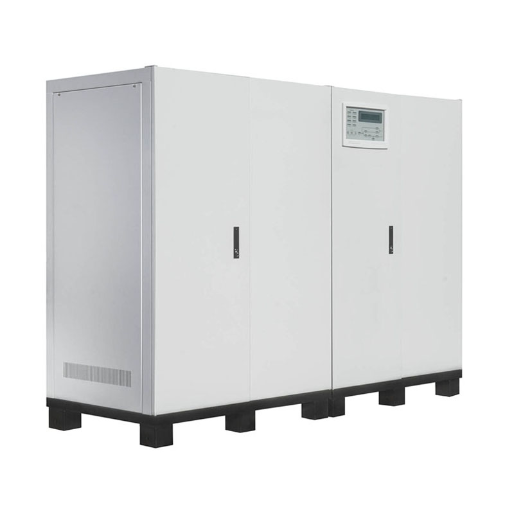
Phase converters are equipments that assist in the conversion of single-phase electricity to three-phase power output which helps machines that are three phase powered to operate in a single-phase environment. It is commonly used in various industrial settings where one would like to have three-phase motors or equipments in place without having to work on the existing electrical systems extensively. Such conversion is regarded as cost-effective, efficient and quick to implement. There are different types of converters and three main categories includes static converters, rotary converters and digital converters. All these types are tailored for specific applications to ensure efficient distribution of power in industrial applications.
The Importance of 3-Phase Power in Industrial Applications
The use of three-phase power is known to many people in various busy industries because it is most of the time effective and can be done using the necessary equipment. This is so because the energizing effect even for most heavy machinery happens to be only on 3 phases instead of a perfect ripple of 1, making it more reliable, hence that minor incidents such as frequent power cuts do not occur due to voltage. Also, this can be compelling for equipment, including: chargers, pumps, winders, etc., especially those that are designed in a way that they will suffer peak performance within the normal supply voltage level available to them. For the consumers of such power, that is, three-phase systems makes it easier as the overall energy consumed is less, there is reduced wastage and thus cost savings are realized.
Moreover, compared with single phase systems, the three phase conversion facility allows the use of equipment with smaller functional sizes and high efficiency, thus reducing industrial machinery. In fact, the improvement in three-phase systems’ technology has made these systems even more flexible. For example, with the help of digital phase converters, premises can convert their single phase power supply into a three phase power supply accurately and without any significant waste of energy. This ability allows for the spread of three-phase systems to a wider range of industries, where it becomes the lifeline for manufacturing construction and other high energy operation fields, which rely on consistent power.
Overview of Phase Electricity and Conversion
Alternating current operates on the phases of the current by oscillating electrical charges in media that are used in terms of direct current. There is a phase of electricity involving oscillation of charges in a positive and negative direction characterized as sinusoidal along a time frame. According to the Fourier Theory, the oscillation is practically single from purely geometrical decomposition of proper or total complex oscillation in relation to the electric field. This is the most suitable topology for application in the low power sector where most of the benefits are managed in the homes.
An important element of the contemporary electricity management is the of converting single-phase electricity to a three-phase one. Its implementation is achieved basically using such equipment as rotary and digital phase converters. Rotary phase converters work by combining both electrical and mechanical principles to produce a three-phase output from a single-phase input. This is true although it is true that such systems may be huge and not as efficient. It is also arguable that digital phase converters which operate using sophisticated electronics carry out this process with higher precision and energy efficiency as well as minimal harmonic distortion.
Purpose and Functionality of Phase Converters
Aside from their capabilities, phase converters are more than necessary in every of these situations where any industrial equipment operated by a three phase source has to be supplied with power derived from single phase sources only because quite light (domestic and pastoral these other sources are. This is because they give a connection between the available single phase power which is the most common even by residential and rural, to industrial equipment that is designed to run on three phase power. The operation of the industrial equipment will not be sealed off in a place with only single phase power; phase converters form the lifeline.
Rotary phase converters revolve around a dummy motor whose job is to create a three-phase balanced output, hence operating well under loads of different characteristics. On the other hand, digital ones employ contemporary controllers that are based on microprocessors and balance the input voltages and phase angles of the load such that even the most sensitive equipment can perform its role without constraints. It is reported that the operation of the most advanced digital phase converters is such that their efficiency levels are above 95% which alleviates the view that they are not just their cost necessities but also factors that contribute to their greening due to the elimination of waste energy. This also means that they can assist in the operation of advanced equipment such as CNC machines and variable speed drives for motor pumps effectively, and limit breakdowns in the manufacturing plants.
Section 02
Main Classification of Phase Converters
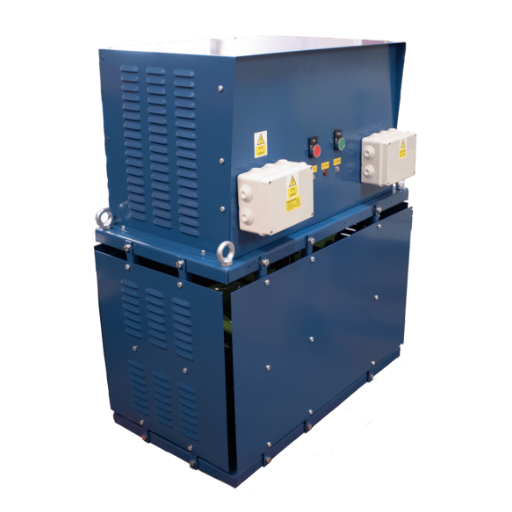
Rotary Phase Converters
The commonest type is the rotary phase converter which uses an idle motor to achieve balance and create a three-phase system from a single-phase input. They are very reliable and are perfect for high-power tools such as mills and lathes because they are able to take the shock load.
Static Phase Converters
Static phase converters are used with limited load capacity ranging from low to medium. These replaceable capacitor and voltage coil combo units can be adjusted to help balance a motor that has a low starting torque, but there against their application is subject to a cycle on duty cycle, making them most convenient for standard systems operations.
Digital Phase Converters
To ensure precise and firm three-phase output, digital phase converters exploit cutting-edge electronic regulating technology. The latter, as compared to other solutions is well adapted to the requirements of differential machinery, hypersensitive quite often, including CNC systems and automated machines, thanks to the better phase balancing and self-adjusting nature.
Static Phase Converters
Static converters are a convenient and relatively cheap way of enabling single-phase machinery to use three-phase power. These devices work by taking and providing three-phase power only while the motors are running either in unison or at different starting levels. This is done by adding capacitors that introduce a phase difference. When the motor achieves the required speed, the phase to neutral static converter (motor swap or close mounted converter) relieves and the motor works on standard single phase reducing the amount of power consumed from only two of the three windings. Although this technology is ideal in such light loads and also small machines having extending moment of inertia, the continuous loading of 3 phase shall not entail the use of phase converter. The reason being, in most cases they are said to be uneconomic compared to either rotary or digital load banks and also, a downfall comes where the phases are not balanced.
Rotary Phase Converters
As a rule, rotary phase converters are considered a valid alternative to three-phase power as it converts the single-phase power into the three-phase power with high reliability. They do this by the help of an idler motor and capacitor banks incorporated in most of them, that synchronizes the three-phase load to the utility mains. Rotary phase converters find use for wide range of power ratings and continued three-phase loads, and therefore are more efficient than static converters. Moreover, rotary phase converters have more uniform output and hence a most preferred in many applications. They give enhanced performance compared to other systems since they ensure a constant current output.
The technological upgrades in rotary phase converter have various advancements including their reliability, noise rating, and electric energy usage. In recent times, the segmented load sharing technique based on imbalance current can be applied with success. These developments in rotary phase converters have applications in many industries like fabrication, animal manufacturing and wood cutting. A very clean output waveform is easy to produce and consist of high voltage, time domain distortion, and harmonics.
Comparison of 3-Phase and Single-Phase Systems
| Parameter | 3-Phase System | Single-Phase System |
|---|---|---|
| Power Efficiency | Higher | Lower |
| Current Load Distribution | Balanced | Unbalanced |
| Voltage Fluctuations | Minimal | Significant |
| Power Transfer Capability | High | Limited |
| Cost of Installation | More Expensive | Less Expensive |
| Equipment Longevity | Longer Lifespan | Shorter Lifespan |
| Suitable Applications | Industrial, Heavy-Duty Equipment | Residential, Small-Scale Devices |
| Power Supply Availability | Consistent | Prone to Interruptions |
| Maintenance Requirements | Moderate to High | Low |
| Starting Torque for Motors | High | Low |
↔ Scroll horizontally on smaller screens
Section 03
How do Phase Converters Work?
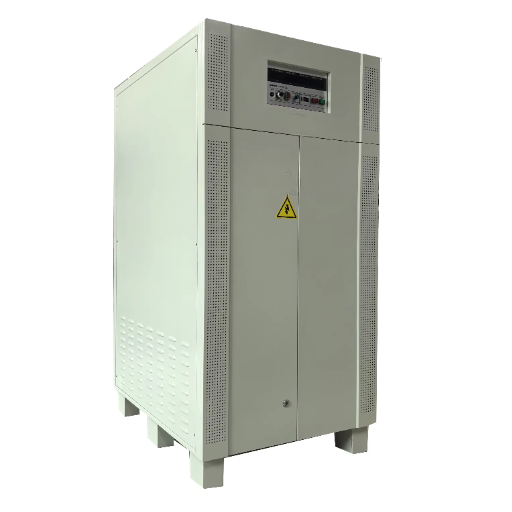
A phase converter is a device that converts a single electrical power source into three separately powered phases. Such a device is used when 3-phase machinery has to be run from a power source that has only 1-phase power available. This is done by adding the third voltage line to the existing two single-phase voltage lines on the equipment. In the majority of such applications, indicative rotating or static converters are used. The basis for the rotary converter is a spinning engine that replaces the three-phase voltage the static converter is based on the capacitors in order to obtain equally phased voltage. This allows a variety of substantial equipment to operate effectively in settings that do not have an immediate three-phase power supply.
Understanding the Mechanics of Static Phase Converters
The static phase converters work by utilizing capacitors and electronic devices to give the extra phase shift needed to create the appearance of a third phase. It involves a one phase input initially which the phase converter turns into power after passing it through a shading capacitor. This induces an energy pulse after the phase shift which makes the motor begin rotating. A static phase converter, unlike rotary converters, does not provide three phase power full-time; the power that is output here is just enough to switch on the motor.
When the motor reaches an ideal operational velocity, the motor goes on the load promptly without the need of any add-ons. With this formula in mind, this type of a phase converter is more adapted to more minor uses or those of which the devices are needed in a start-stop routine mode, most used on light industrial machines and machine tools. With this aspect considered it is best to consider that these may not always be appropriate for all machines as the ones which are used to high levels of alternating current will not be able to effectively use the same motor when connected to the first. This can appear as an efficiency decrease or could even lead to overheating. The current static phase converter technologies provide better performance and more and more users find them to be cost-effective.
Operational Principles of Rotary Phase Converters
Rotary phase converters can efficiently transform single-phase electrical energy into three-phase current, which is useful for various industrial and commercial applications. The key element of the equipment is the so-called motor-generator, i.e., an electric motor that is unloaded and hence driven by electricity to create additional phases. Under the same condition, specifically, power line voltage in single phase is supplied for operation, as a result of which a rotating magnetic field is created within. This field makes it possible to have an electrical output in three-phase current since it uniformly takes the electrical energy throughout the connected elements and load phases.
Advanced advancement has enabled the invention of contemporary representations of rotary phase converters with an application of exclusive approaches like capacitors and suitable circuitry that align the phases correctly without distortion. This protects devices such as laser cutting and engraving machines and controls wearing and damage due to electrical problems. They further ample enter of strain increment and decrease which adapts the apparatus and consumes from petty required energy consumption in which case they ult scores at these organizations of the service of either questioning utilities for least cost generation according to supply and demand constraints.
Rotary phase converters are important in situations where three-phase electrical power supply is costly or inaccessible, given the fact that they provide good supply for operation or protection of high-performance equipment. They retain their essential role in the control systems of the various types of switchgear applications as they are highly dependable and durable.
Phase Conversion Process Explained
Rotary phase converters work in a very organized and meticulous way. The hub of the converter usually has a three-phase idler motor that commutes the load of a third phase by establishing a revolving magnetic field. To begin with the operational theory of the given design, one-time power is delivered to the idler motor phase and the capacitors come into the picture in ensuring the voltage and current are well distributed in all the phases thus comes the significance of balance controllers. The arrangement then by and large produces an extra phase when it is finished, converting it into an output of three-phase power.
Voltage balance, load capability, and start-up rotation are only some of the indicators that are closely monitored during this process, and they aim to make the system work with the maximum efficiency for any of its particular use. New rotary phase converters consume less energy, have better power-output ratio and are excellent for use in settings that require a mixture of technical finishes. These changes in technologies provide benefits not only lower operating costs, but also more favorable operations in general. At the same time harm to the equipment that is with the system, shortens its life by applying less electrical stress from the input side.
Section 04
Key Selection Criteria for Phase Converters
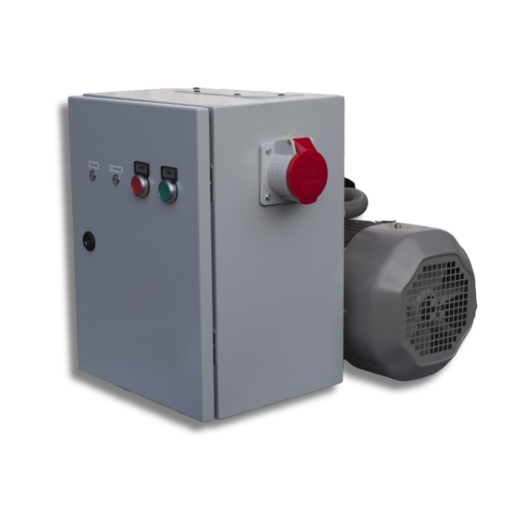
In the constraints of the phase converter that should be selected by the user, there are the following requirements that must be taken into consideration:
-
01Load Requirements
Study the kind and size of engines that you have or are going to use in production. Make sure that the phase converter can withstand the initial load and the run load of machines. -
02Efficiency
High energy-efficiency is key when selecting models as this lowers energy costs while reducing power wastage over the time period. -
03Voltage Stability
Make sure you choose a phase converter, which you can be sure the output voltage is maintained constantly so that the equipment connected to the converter is safe from any performance or damage issues due to voltage variations. -
04Durability
Examine how rugged the construction and style are such that the unit is able to withstand heavy usage for years to come. -
05Ease of Installation and Maintenance
One should consider a converter that is easy to install and work with as this helps in reduction of additional maintenance costs and operational time wastage.
These considerations are vital in ensuring that the phase converter in question is appropriate and functions effectively while catering for the specific user requirements.
Assessing Load Requirements
It is vital to consider the starting load and running load of the equipment to be connected when specifying the power ratings of the phase converter. For instance, powered equipment, such as compressors, motors, and CNC machines have very high starting currents which may go above the running load at times. This effect which is known as the in rush current must be taken into account during the selection of the phase converter to avoid undersizing it. Also there also exists an aspect of the load which is balanced and there the imbalance. The imbalance occurs when the load requirements of each of these three phases are very different, leading to operation difficulties or inefficiencies.
Recent phase converters are created with modern digital voltage controllers and work at near unit power factor even with unbalanced or distorted loads. Last but not least, if load diversity, i.e., a mix of lots with different power demands is taken into account, it can clarify the peak demand scenarios. This methodology will guarantee that the working state of the phase converter is subordinated to the given equipment with regard to overload margins and operational efficiency levels. The reliable performance in industrial or commercial applications calls for the precise evaluation of these parameters specific to the extent that it completely provides for the necessary requirements within the specified domains over time without any malfunction.
Evaluating Efficiency and Performance
Many important aspects and procedures have to be remembered when discussing efficiency and the quality to which an electrical converter operates in its process of converting electrical energy from one phase to another. Generally, efficiency is often determined by determining the relationship between output power and input power under a variety of loads in such a way as to limit the energy loss in operation of the converter. Additional developments in test procedures such as measuring the power factor and the performance in terms of thermal stress facilitated in the providing of numerical value on the handling of the energy across the equipment and distribution of heat in the equipment.
Furthermore, issues such as harmonic distortion and voltage stability should be taken into account during the performance assessment of the system, as both issues address the level of overall reliability of its components. Thanks to the application of modern sensor and computational technologies, the engineers can accurately investigate the way the systems work under changing conditions. This knowledge base is obtained when empirical data and more advanced statistical techniques are utilized and it helps specialists to evaluate limits to phase converting devices operation depending upon process control and robustness.
Compatibility with 3 Phase Equipment
Regarding phase converters- these devices are likely to adapt and work in synchrony with three phase equipment, feeding serious industrial power equipment on discerning pulsations in a single phase power environment. Through rotary or static methods, they contain some useful control mechanism to maintain the harmony and decrease the unbalance created in the voltage supply.
To make them compatible, such converters employ technology capable of accurate voltage transformer, as well as filters that arrest the harmonics hence reducing the electrical noise in the system. This enables equipment such as CNC, air compressors, and industrial pumps to operate satisfactorily and decently without the risk of power fluctuation and the damage of such sensitive equipment. Most of the reputable factorytronic industry standards state that, if the phase converters are in an ideal situation, it can offer voltage accuracy up to ±3%, once again, reinforcing that phase converters are significantly dependable and capable of getting proximate results even in the most severe types of practical environments.
Section 05
Maintenance of Phase Converters
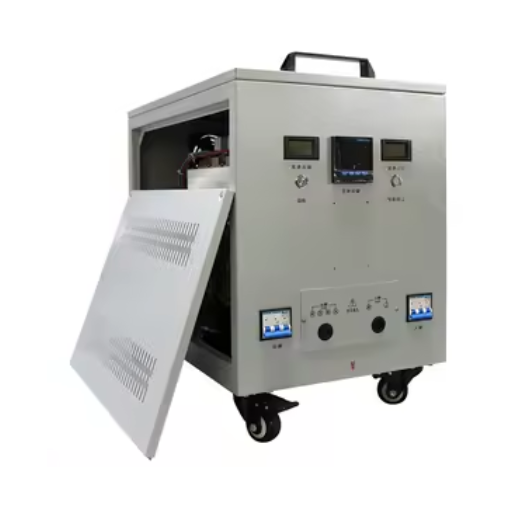
-
STEP 01Inspect Connections
Ensure you inspect the connections every so often to avoid any chances of wearing and unwinding of connections, or corrosion. Clean the affected areas and tighten them further if necessary. -
STEP 02Clean Internal Components
Make sure that no dirt or dust is trapped over time. Industrial production causes a lot of buildup making it necessary to use compressed air or gentle brush to remove dust from both fans, vents and also inside their compartments, if any. This is done to promote the flow of air and proper cooling in those systems. -
STEP 03Monitor Capacitors
Over time, capacitors will definitely degenerate and lose their efficacy. Have them checked from time to time to confirm those values from the manufacturer’s specification. Do away with any damaged capacitors. -
STEP 04Lubricate Moving Parts
When the phase convertor consists of moving parts that are internal, like a rotary motor, satisfactory lubrication should be carried out as stated in the user’s enablement document. -
STEP 05Test Voltage Output
Check with the multimeter whether the produced voltage is stable and falls within the limits set by the manufacturer. In case of any deviation, such a matter should be attended to immediately as it might hint to bigger operational problem.
Common Issues and Troubleshooting of Phase Converters
Voltage Imbalance
One of the issues that can happen is voltage imbalance. It points out on the unequal voltages present in the three phases. Such errors are common when unsuitable electrical equipment installation occur or where there is an upthrust in the internal sections of the converter. To fix this, measure the voltage in every one of the three phases with a proper multimeter. Check that the load distribution is appropriate among each of the phases and the condition of the capacitors and transformers. If the level of imbalance is experienced, let an expert pass through the site.
Overheating of Components
The motor overheating could arise due to poor barn connections, a sinking of the pump of liquid, or a violation of loads used on an inverter. Checking what precautions are recommended by the manufacturer during the operation of the rectifier. Such precautions can include precautions regarding its location in the place where a normal trend of air flow and functioning of its cooling fans or systems are implemented.
Unusual Noises During Operation
The presence of loud or unusual noise may signal presence of certain problems in the rotary motor or disintegrated parts within it. Such a retardation can be due to the presence of misaligned or worn rotary phase converter bearings or electronic modules associated with cyclic structures. Examine the structures of the motor and all their mechanical components, looking for wear, and tensions all bolts on the connection. In case the cause of the noise is still not determined despite the above, it might be reasonable to replace the malfunction parts.
Failure to Start
Failure of phase converter to turn on may be caused by various issues including start capacitor which is shorted or not working, insufficient power availability and minus damage to the wires inside. Start by measuring the voltage to find out whether voltage is reaching the converter within the required magnitude. Replace a blown start capacitor where necessary. Find out the aforementioned free wire terminations and confirm that they are in good order.
Harmonic Distortion in Output Current
Harmonic distortion is another problem associated with electrical equipment which may manifest in poor equipment performance and higher than normal temperatures of the electric motors. This problem can be caused by the load characteristics, and particularly the load characteristics of the modern equipment that might also include internal electronic components.
Extending the Lifespan of Phase Equipment
To add years of life to phase change equipment, regular maintenance and vigil monitoring play a huge role. It has to be agreed that maintenance timetables must provide for the inspection of circuit breaker elements such as capacitors, transformers, and contactors which tend to outlive their usefulness after a certain period. A very simple measure that can help avoid many reliability issues is to make sure that there is a positive airflow around the circuit to prevent it from overheating. Conducting an inspection or troubleshooting the system is much easier and quicker if a thermal camera is used as a tool since the places that are likely to fail show specific temperatures. On top of this, it should also be noted that attention must be paid to the incoming voltage, and it should be within the range allowed by the equipment manufacturer.
With the rise in technology, there has been an increase in the types of diagnostic tools available for industrial sources such as phase converters. This includes using tools such as power quality analyzers, digital systems for monitoring and other systems of conversion which help to detect problems like voltage unbalances, harmonic distortions and occurrences of transient events in real time. These devices help find the problems early and in some cases prevent damage or failure from happening. Such data can be further analyzed so to predict when the maintenance should be performed and in this way maximize the performance of the equipment and at the same time increase its service life.
Further Reading
Reference Sources
-
Static reactive power compensator design, based on three-phase voltage converter
Link to source -
A review to diagnose faults related to three-phase industrial induction motors
Link to source
Section 06
