
The continuous provision of a regular and efficient electrical supply is an absolute necessity for industries and households that depend on heavy-duty equipment. Nevertheless, the gap caused by the mismatch between three-phase power supply infrastructure and single-phase machinery is one of the most commonly encountered issues in power distribution. One way to get around this challenge is to use 3-phase-to-single-phase converters, which is the topic of this blog. 3-phase power input can be converted to single-phase output by these devices, enabling single-phase equipment to be powered in areas where only 3-phase power is available. In this blog post, we will review the information on these converters, their various types, and the specific use cases where their importance in current power systems is clearly demonstrated. Among the contributors in making this a reality, the others call them the. In any case, this is the right source of information for those who want to learn more about power efficiency and compatibility, whether they are professional engineers, facility managers, or enthusiasts.
Understanding of Phase Converters

Phase converters are machines designed to convert the power supply voltage from one configuration to another, most commonly from single-phase to three-phase or vice versa. These types of devices are very much needed in situations where the available power supply is not meeting the requirements of the equipment being used. There are three major kinds of phase converters: rotary, static, and digital. Rotary converters use a motor to generate the other phases, making them ideal for heavy, variable-load machines. Static converters rely on capacitors to give a kick to starting motors but are typically used with equipment that is always loaded with light-duty. Digital converters use sophisticated electronics to generate balanced, high-efficiency power, making them an ideal choice for sensitive equipment. The phase-shift converter selection actually depends mainly on power requirements, load characteristics, and the precision level required for the specific application.
What is a Phase Converter?
The role of a phase converter is to convert single-phase power to three-phase power, enabling three-phase machines and other tools to operate at sites supplied with single-phase power. There are two ways to convert power: mechanical and electronic. Rotary phase converter technology is based on a rotating motor-generator system that produces three-phase power and can be used in heavy-duty or variable-load applications, as the system’s nature provides the right balance of power.
On the other hand, digital phase converters use the latest electronic technology for phase balancing, which is highly precise and energy-efficient. Such an approach is precisely what is needed for high-quality or sensitive equipment to work as intended. Such equipment is simply a must for all industrial, agricultural, and other businesses that need to connect three-phase devices without incurring the costs of upgrading electrical infrastructure. The task of selecting and installing a phase converter that meets the need is accomplished by considering factors such as the required voltage, load variations, and, for specific machinery, additional information about its performance characteristics.
Importance of Converting Three-Phase to Single-Phase
The conversion of three-phase power to single-phase power is vital when a three-phase infrastructure is unavailable or cannot be brought in. A major part of residential and remote areas gets their power from single-phase systems. With a dependable conversion solution, they can run three-phase, power-demanding industrial or commercial machines. This feature is most critical for industries that operate HVAC systems, refrigeration units, and advanced motor-driven equipment.
Many sectors find that the conversion from three-phase to single-phase brings substantial advantages: energy consumption is optimized, and the machine performs flawlessly even under non-constant loads. The most advanced phase conversion technology nowadays enables highly efficient motors with minimal harmonic distortion and smooth start-up, thereby eliminating potential issues related to power imbalance, such as wear and tear on mechanical components. At the same time, the use of digital and rotary phase converters have made it possible to regulate voltage and frequency with precision, thus being an excellent choice for applications like sensitive ones in the fields of manufacturing and medical equipment operation, for example. These reasons show the impact, at the technical and economic levels, that the change from a three-phase to a single-phase AC power source has in different cases.
Overview of Single-Phase Power Systems
| Key Point | Description |
|---|---|
| Voltage Levels | Typically 120V or 240V, depending on the region |
| Current Type | Alternating Current (AC) |
| Efficiency | Lower compared to three-phase systems |
| Load Capacity | Suitable for small to medium power loads |
| Typical Applications | Residential homes, small offices, and light machinery |
| Transmission Losses | Higher due to single-conductor usage |
| Reliability | Less reliable under heavy load conditions |
| Waveform | Single sinusoidal waveform over time |
| Cost | More economical for low-power needs |
| Equipment Complexity | Simpler design, fewer components than three-phase systems |
How 3 Phase to Single-Phase Converters Work
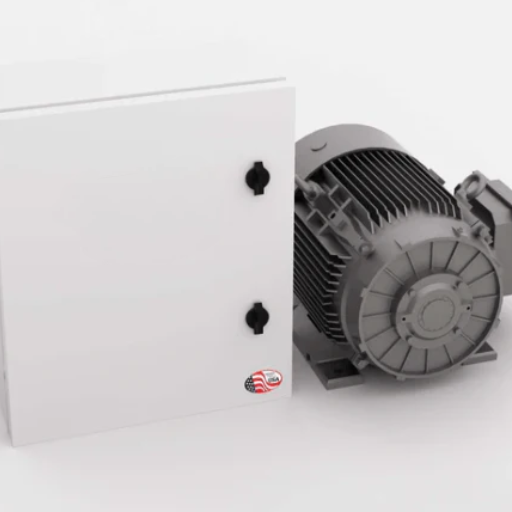
The basic function of a 3-phase-to-single-phase converter is to convert a 3-phase power supply input into a single-phase output. This is done using electronic or mechanical elements that reposition electric energy to one of the three phases. The most frequently used techniques are rectification and inverter systems, which provide the electrical flow with minimal disturbances for balanced, smooth operation. The regulation of voltage and power stability features of these converters are usually managed by either diodes, capacitors, or inductors. They are produced not only to offset the differences in frequency and voltage requirements between the inputs and outputs, but also to minimize wasted energy. Perhaps above all, these technological breakthroughs are intended to enable single-phase devices to operate in three-phase power-equipped areas, thus ensuring functionality for uses that fall within the orbit of small-scale, at best, at a level that is both environmentally friendly and economically feasible.
Technical Explanation of Phase Conversion
Phase conversion, the process of converting electrical power from one phase configuration to another, primarily involves converting three-phase power to single-phase and vice versa. This can be critically important in cases where the equipment operates on a one-phase standard that differs from the supply voltage. The two main ways of doing phase conversion are static converters and rotary phase converters.
Static converters generate the third phase to convert a one-phase power supply using capacitors and switching systems. They are good for the computer-aided low demand applications, but the downside is that they cannot deliver full power output and are therefore, they are only suitable for intermittent or light-duty use most of the time.
The relationship between power and frequency in both machines and generators means the electricity is constantly converted in a machine. Phase converters that employ diffused-mode thyristors or field-effect transistors can be used in various industrial applications, such as paper mills, textile plants, and more.
Understanding the Electrical Load and Output
The cost of generating and distributing electricity comprises four main components, some of which, such as fuel costs, can be controlled to some extent. The costs per kilowatt-hour generated by any given power plant include the monies spent obtaining the fuel, interest, and amortization, fixed and operating costs for manpower, maintenance and other functions such as supervision, insurance, etc., costs for cooling water or air to keep the plant’s production of electricity at full capacity while the plant is being constructed.
Ensuring that the output is well-balanced is pivotal to the system’s efficiency. Using a balanced load can sometimes, however, still be a pain in terms of power distribution and the power system disposing of it, so the consequences are overheating, shortening the equipment’s life, and ultimately, one can end up facing hazardous operating conditions. Current rotary phase converters are designed not only to withstand but also counter the issues mentioned above by producing an exceedingly balanced voltage. Among the statistics is one from visitors to the plants for industrial performance evaluations, who report that the rotary phase converters are consistent in regulating voltage within ±5%, making them the right products for all CNC and compressor applications involving very critical, precision machinery.
Types of Phase Conversion Processes
| Type of Phase Converter | Mechanism | Efficiency | Best For | Key Feature |
|---|---|---|---|---|
| Rotary Phase Converter | Rotating electrical machinery | ~90-95% | CNC machines, heavy equipment | Reliable voltage regulation |
| Static Phase Converter | Capacitor-based starting | ~70% | Light-duty motors, low power tools | Low cost, simple operation |
| Digital Phase Converter | Microprocessor-controlled | ~98% | Precise applications, clean power | Advanced voltage balancing |
| Variable Frequency Drive | Adjustable AC frequency | ~97% | Variable speed machinery | Custom output frequency |
Applications of Phase Converters
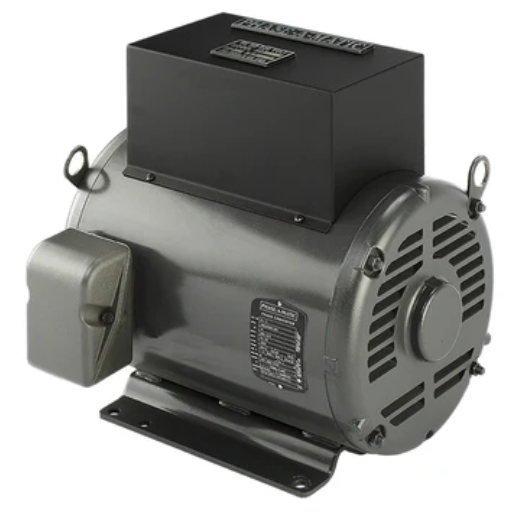
Phase converters have been widely employed in various applications to enable the use of three-phase power when only single-phase power is available. Below are the key applications:
- Industrial Manufacturing: Used to power CNC machines, lathes, and milling equipment requiring consistent three-phase power for precise operation.
- Agriculture: Drives irrigation pumps, grain dryers, and augers, offering reliable and cost-effective operation in rural areas.
- Workshops and Small Businesses: Supply equipment such as woodworking tools, compressors, and welders with power in an eco-friendly way.
- HVAC Systems: Back up three-phase air compressors and refrigeration systems to minimize power loss to the surrounding environment.
- Renewable Energy: The power generated from wind or solar systems is mostly single-phase but it can be converted by the phase converters into three-phase and operate three-phase motors in the areas of energy storage and transfer.
These instances famously portray phase converters as products of various uses and as inevitable ways to obtain and distribute power without breakdown.
Industrial and Manufacturing Uses
Phase converters are vital to the industrial and manufacturing industries, as they allow three-phase equipment to operate in locations with single-phase power. High-performance machines such as CNC machines, lathes, milling machines, and automated conveyor systems are among those powered by phase converters. These converters have come a long way and are nowadays playing a prominent role in the industry. They are mainly responsible for supplying the necessary power for the production plant and hence, their presence is significant. Voltage fluctuations, common in most areas, can have a drastic impact on manufacturing processes; for this reason, the use of converters is essential. On top of that, you have the undeniable advantage of an energy-efficient system, which reduces utility costs and helps you lose the least during shutdowns. Thus, whether they be for equipment maintenance or to boost production, they remain economical for all measures of business improvement.
Residential Applications
Phase converters are not limited to industrial environments; they also play a pivotal role in residential settings where three-phase power is not readily available. The converted power in phase covers home applications, such as sheds where people working there often rely on phase converters to run and operate high-power machinery like lathes, milling machines, and large air compressors that require three-phase electricity. The latest rotary and static phase converters are effective problem solvers, with specific power-less models that work well with residential power demands. Besides, digital phase converter technology has advanced to incorporate real-time, computer-controlled systems that ensure optimal load and voltage regulation while maintaining power stability. This usability makes them the best choice for hobbyists and professionals who are often in power-hungry work environments and can’t afford power fluctuations to hinder their work.
Agricultural Equipment Needs
Modern agricultural operations need power solutions that are reliable and highly efficient to support a wide range of machinery and tools. The likes of irrigation systems, grain dryers, and automated feeding systems would struggle to operate without continuous power delivery to maintain productivity and avoid losses in profit. There is news of a large number of agricultural installations moving to phase converters to use three-phase equipment on single-phase power supplies, particularly in outlying regions with limited power infrastructure.
The researchers have also noted that the use of advanced phase converters has a significant positive impact on the overall performance and lifespan of the electrical component by maintaining steady voltage and current levels. In the same way, the integration of intelligent monitoring systems will be of great benefit, as it would lead to more frequent inspections and, in turn, to preventive and predictive maintenance. The systems will remain functional even as work environment conditions change. This alliance of technology and reliability is what is needed to address many critical operational needs, so that agricultural people can now successfully comply with the requirements of modern farming practices.
Common Benefits of Using Phase Converters
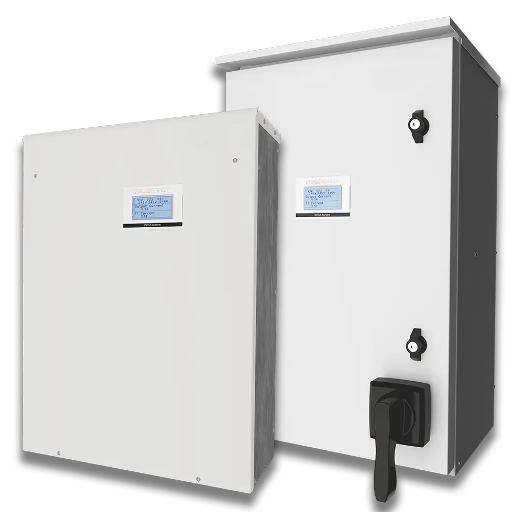
Cost-Effective Power Solution
Phase converters have become a necessity in regions where only single-phase power is available, as they significantly reduce infrastructure costs.
Versatility Across Equipment
They enable single-phase power sources to support a wide range of three-phase machinery, ensuring compatibility with industrial, agricultural, and commercial equipment.
Enhanced Equipment Longevity
By providing balanced power, phase converters prevent the potential harmful effect that could exist if there were uneven voltage or current fluctuations, thus prolonging the connected machinery’s life expectancy.
Easy Installation and Maintenance
Phase converters are most of the time easy to install and, when compared to other power solutions, they require also little maintenance.
Adaptability Across Applications
These machines are so versatile that they can be used for a wide variety of purposes, and one of the best ones could be farming equipment, machine tools, HVAC systems, and pumps, which may result in their being seen as the best power source because of their flexibility and practical usability in various industries.
Cost Savings and Efficiency Improvements
Phase converters are aspects that usually help in making the most out of the investments and operational power in a situation where there is a merger of three phase and single phase electricity networks which could be among the cause of the quick way to the bad power quality and power losses which can be of the main reasons why the power quality is an essential concern to the utilities. One of the fastest ways to improve power quality for both the utility and the end-user is the installation of phase converters in distribution networks.
Moreover, the latest phase converters use energy-efficient technology that reduces power loss during conversion. As a result of this efficiency, the user witnessed energy savings and a decrease in their electricity bill, indicating that utility costs will also decrease over time. The effect of this comes from the use of advanced rotary and digital phase converters and the study of energy utilization rates of businesses that want to power high-demand equipment shows a significant drop in their long-term operating costs, because of the improved rotary and digital phase converters technology. The units are also capable of providing a very stable voltage output, thereby extending the machines’ lifespans and significantly lowering repair and replacement costs.
Adaptability Across Different Equipment
By becoming the most adaptable solution for industrial and commercial settings, both the modern rotary and digital phase converters are packed with a multitude of features designed specifically for this role. They will be invaluable in such situations. By converting single-phase power to three-phase power as efficiently as possible, these machines can power a wide range of machinery – from CNC tools and welding systems to HVAC units and pumps. The highly advanced control systems in the latest converters perform the most critical processes of load balancing and voltage regulation with very high accuracy, ensuring that any equipment, from low-power to high-power, can be connected without difficulty. Not having a one-size-fits-all approach to power needs not only results in a single solution but also dramatically improves operational flexibility, allowing businesses to grow or alter their production facilities without the need for technical rewiring or equipment changes.
Improved Motor Performance
The presence of cutting-edge technological advancements in today’s motor systems has significantly improved performance across the board, especially in terms of energy efficiency and reliability. The arrival of energy-efficient motors, classified as IE4 or higher, has been the most impressive achievement in this regard, marking a significant breakthrough in energy savings. In industrial settings, it is not an exaggeration to say that motors are the primary consumers of electricity. Additionally, variable frequency drives (VFDs), when combined with digital control systems, guarantee the correct torque output and speed changes as well as the right speed for the load applied and with this, they make the motor operation extremely precise. Also, constant monitoring of sensors and preventive maintenance algorithms work together to reduce equipment unavailability time by quickly finding and rectifying faults that threaten to disrupt operations. Consequently, the lifetime of the machinery is prolonged and the costs of running it are decreased. These changes, therefore, show that it is crucial to have a data-driven motor control scheme in place to achieve an efficient, robust industrial process.
Installation Tips for Phase Converters
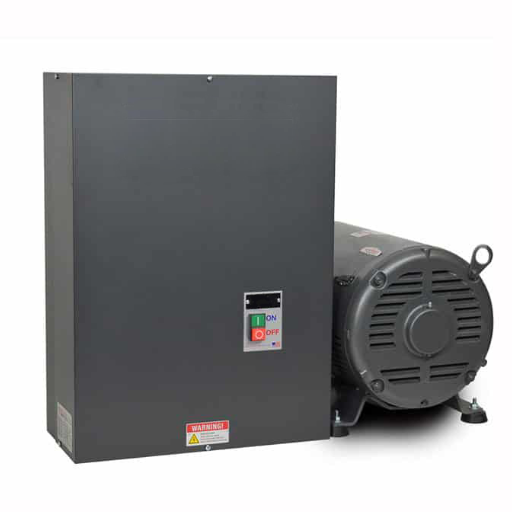
- 1
Choose an Appropriate Location
Install the phase converter in a clean, dry, and well-ventilated area. Ensure it is protected from dust, moisture, and extreme temperatures to maintain optimal performance.
- 2
Check Power Requirements
One essential thing is to ensure that the input power supply matches the converter’s phase requirements and the voltages of your equipment. The wrong voltage can work at the same time as the perfect voltage, giving the system that super excited but scared kind of feeling with the corresponding damage.
- 3
Securely Mount the Converter
Mount the phase converter on a solid surface to ensure the unit is flat and stable. This will reduce vibration and ensure safe operation.
- 4
Follow Wiring Guidelines
It’s important to follow both the electrical codes and the manufacturer’s instructions to the letter when doing your wiring. And one more thing: when using cables and connectors, always pick the right ones to avoid electrical hazards.
- 5
Inspect Grounding
The proper grounding type is a significant factor in both safety and performance. To ensure there won’t be any unwanted current flow and that the connected devices are protected, the converter must be grounded.
- 6
Test Before Full Operation
Once the converter is installed, try it with a very light load first before running it at full load. Make sure it operates normally, then hook it up to the other machinery.
Safety Considerations During Installation
⚠️ Adhere to Local Electrical Codes
The installation is always supposed to be code-up. As soon as the installation complies with local electrical codes and regulations, it is considered a two-thumbs-up safe and secure task. The standards for wiring, grounding, and equipment connections, such as flashover protection, are set by the codes.
⚠️ Use Personal Protective Equipment (PPE)
The personnel performing the installation must be suitably equipped with the necessary PPE, such as insulated gloves, safety goggles, and non-conductive footwear, to protect themselves against electrical shocks, arc flashes, and physical injuries during the process.
⚠️ Avoid Overloading the System
Determine the load requirements of the connected equipment and the phase converter to ensure the system does not exceed its capacity. Overloading can cause overheating, component failure, and reduced efficiency.
⚠️ Verify Disconnect Switches and Circuit Breakers
You must ensure that all disconnect switches and circuit breakers are not only on but also correctly rated and in working order. These are the components that are necessary for the system. The system should be disconnected and isolated during maintenance or emergencies.
⚠️ Conduct Regular Inspections During Installation
Test all connections, the wiring integrity, and the voltage levels throughout the entire phase converter system installation. Recognizing and rectifying glitches in the initial phase ensures the safety and trouble-free operation of the installation.
Best Practices for Ensuring Efficiency
✓ Utilize High-Quality Cabling and Connectors
The losses in the classical conductor vary with the temperature. The voltage initially rises with increased temperature, then eventually drops. The current is high due to the high temperatures at the conductor’s surface, and this is felt back at the power supply. That heat will gradually lead to the semiconductor’s breakdown if the temperature remains high throughout the switching operation.
✓ Adopt Advanced Monitoring Systems
After some time, the run is intended, a bread-crumb essay will be just fine. Using the substances, I enumerated the steps, and you followed them correctly; the result will be the most basic success. If, however, a run is to be put at the end of each of these steps, the result is a very successful product and minimal sales loss.
✓ Ensure Proper Load Balancing
Before going out on a boating trip, check to see how much weight your boat can handle. Make this step on the first trial, so that any faults can be easily identified and corrected before the installation is enabled.
✓ Perform Routine Calibration and Maintenance
The converter’s accuracy, in most cases, is due to routine shaping of the sensing elements and the care taken with the mechanical parts. Maintaining the highest level of operational efficiency and preventing long-term deterioration are the main benefits of including certified professionals for periodic service.
✓ Leverage Energy-Efficient Components
A set of energy-efficient relays, capacitors, and transformers designed to meet the latest efficiency standards may now be part of modern phase converter systems. There are both cost savings and environmental benefits for those who use these components, as energy consumption will be reduced while regulatory compliance is ensured.
Reference Sources
Three-Phase to Single-Phase Power-Conversion System
Summary: This study explores the use of a three-phase to single-phase matrix converter (3-1 MC) for direct AC power conversion.
Three-Phase to Single-Phase Multiresonant Direct AC–AC Converter
Summary: This research introduces a multiresonant direct AC–AC converter for high-frequency induction heating applications, such as metal hardening.
Frequently Asked Questions (FAQs)
❓ What is a 3-phase to single-phase converter, and how does it work?
A device that can convert a three-phase power supply into a single-phase one for single-phase loads is called a 3-phase-to-single-phase converter. What it does is combine and balance the three-phase voltages or currents using rotary phase converters, static phase converters, or electronic converters such as digital phase converters and VFDs. The use of a rotary phase converter requires an idler motor to generate the missing phase. In contrast, the employment of static converters involves the use of capacitors for the start-up of single-phase motors. Electronic or digital phase converters, on the other hand, not only simplify the process but also deliver a clean, balanced single-phase output with improved phase conversion efficiency and control.
❓ Can I use a rotary phase converter to power sensitive single-phase equipment?
Rotary phase converters can deliver a tough single-phase output from a three-phase source, but they might not always be able to provide the voltage balance needed for the particular electronics. For such sensitive gadgets, a digital phase converter or an inverter-based solution, such as a VFD, is the preferred option, as they provide a cleaner, regulated output and lower harmonic distortion. Rotary machinery is most suitable for powering motors and heavy machinery owing to its ability to deliver high starting currents and to carry unbalanced loads. Still, some additional filtering or voltage regulation might be needed to comply with power quality standards for delicate devices.
❓ What are the differences between static phase converters and digital phase converters?
Simple, low-cost devices that use capacitors to create a temporary phase for motor starting and then run the motor mainly on single-phase power, thereby reducing running torque and efficiency, are known as static phase converters. Digital phase converters, also known as rotary digital converters or electronic phase converters, create a continuous balanced three-phase or single-phase output using power electronics and provide much better voltage balance and uniform performance under varying loads. It may be that, for static converters, the correct use is for light, intermittent loads or when cost is the primary concern. At the same time, the opposite is true for digital converters: they are an ideal choice for applications where power quality must be stable, and motor torque must be constant.
❓ How do I size a 3-phase to single-phase converter for motors and heavy machinery?
To correctly size a converter, one must obtain information from the motor nameplate: horsepower (HP), full-load amperage, service factor, and starting characteristics such as the locked-rotor current. For a rotary phase converter, one should use an idler motor with a higher rating than any motor that will be activated; this can improve starting performance and voltage balance. For electronic or digital phase converters and VFDs, base the size on the continuous running current, then add a margin for inrush current; consider peak starting demands and the duty cycle to avoid overheating and voltage sag.
