
The demand for high-frequency power systems has increased dramatically in recent years with the advent of the technological age. In an effort to transform physical energy into a more useful state, the quest for the invention of a miniaturized and highly effective 400Hz AC to DC converters was born. Such converters, which are widely utilized within aerospace, military, and advanced industrial environments, have been instrumental in enabling organizations to overcome such issues as weight and energy efficiency. The existing high frequency power systems drive electric power converters. the article will cover the principle of operation of 400 Hz AC to DC Converter, its advantages and why it is necessary in high end applications. Whether you’re an engineer, a technician, or just a curious high-frequency power system enthusiast, this is the most useful information open to you as it informs of the energy source with high-frequency which is rarely study and know about.
Understanding 400Hz Frequency and Its Importance
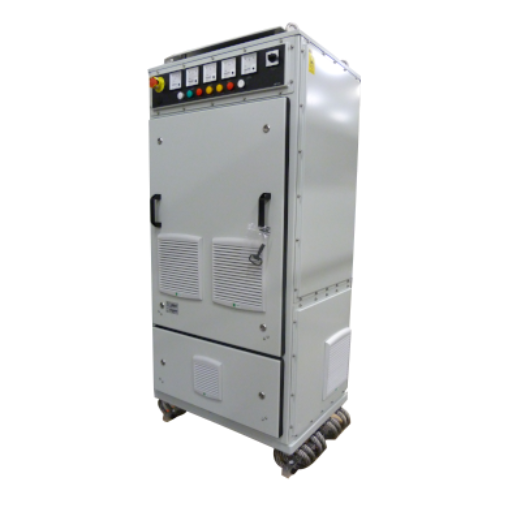
The 400Hz occurrence is usually implemented in applications where parameters of weight, size, interaction and effectiveness are central, for example, aviation, military and particular industrialized systems. In contradiction to the common 50Hz or 60Hz power, 400Hz can offer the opportunity to reduce the sizes of transformers, motors, and power supply equipments because it makes the change in magnetic core dimensions possible. This feature is appropriate when becomes the importance of space or the matter of weight. Its applications are highly resistant to the high-frequency and pulse components, making them suitable for use in environments with high performance or those that prioritize materials and high reliability.
What is 400Hz and Its Applications?
400Hz is a term used to describe the frequency of alternating current electricity, which is mostly used in specific sectors such as the aviation industry where lightweight and smaller electrical devices are absolutely necessary. High frequency systems, which are 400Hz for example, have effects that are not present in 50 or 60 Hz systems, such that cores size can be reduced to transformers, inductors and machines. The reason for this is that the load current is lesser compared to components operating on other frequencies such as 50 or 60Hz. In addition, this condition eases the difficulty of constraining primarily aircraft that could have very heavy structures.
In the aerospace and aviation industries, their weight plays a significant role in the requirements of 400Hz power systems. In the aviation ecosystems, planes require on their 400Hertz electrical supplies for specific on-board gadgets such as avionics, internal lighting as well as the communication equipment. Weight loss of the components aids in less fuel consumption and a better performance of the aircraft. On the other hand, is very useful in military operations that may need portable power and micro grid solutions to advanced field equipment and vehicles.
Although the use of 400Hz spans aviation and military force, there are also technological applications and maritime systems that use 400Hz. Very advanced real-world applications necessitate the use of high-power-density systems. Even more contemporary assessment facilities and radar infrastructure and its uses in mission-critical sites such as data centers have all indicated the promising role of 400Hz power systems with respect to energy control. Such technology high in frequency and de designed is one that fundamentally contains power protection and optimisation of power delivered to demanding applications in a very small and cold environment.
The Role of 400Hz in Power Supplies
The use of 400Hz as an AC power source is considered indispensable wherever applications need to be miniaturized and precision is sought with minimum weight. One typical example of the use of this frequency relates to the size of the transformer and inductor’s magnetic cores which being proportionate to the frequency of operation used dictates smaller sizes. This results in a significant saving in terms of weight and volume. The reasons why every civil and military aircraft in the world has 400Hz power system are due to the fact that it allows to utilize the maximum payload fraction without compromising on the component efficiency.
In addition, 400Hz energy systems offer efficiency improvements and achieve suppression of unwanted harmonics in systems that are associated with delicate digital technology and communication equipment. A case in point is the use of 400Hz energy as provided by this frequency which provides very precise energy control for radar, avionics, and space systems. It is also used for industrial applications which deal with intense processing, such as factory floors, where the requirement for highly dependable power is still possible in spite of minimal space available, due to compact but very efficient power supplies.
Another primary technical aspect is the way in which good efficiency of 400Hz is held within a system that requires large amounts of power delivered, without compromising other operational characteristics. These systems are an example of a combination of well-thought-out engineering design and sophisticated materials, confirming their place as the most fitting system for specific applications within the current industrial and national security mission scenarios.
Comparing 400Hz with Other Frequencies
| Parameter | 400Hz | 60Hz | 50Hz |
|---|---|---|---|
| Power Density | High | Medium | Low |
| Equipment Size | Compact | Larger | Largest |
| Energy Efficiency | Moderate under load | High | High |
| Applications | Aviation, Military, Industry | Residential, Commercial | Industrial, Commercial |
| Voltage Drops | Lower over long distances | Moderate | Higher |
| Transmission Line Size | Smaller | Larger | Largest |
| Noise Levels | Potentially higher | Moderate | Lowest |
| Maintenance Requirements | Specialized | General | General |
Components of a 400Hz AC to DC Converter
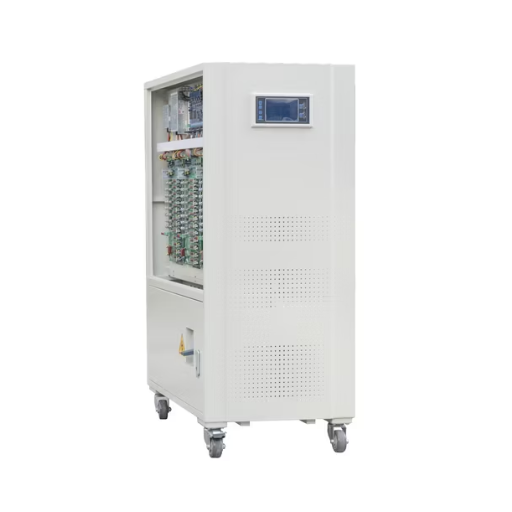
- Transformer
There are some of the applications of AC transformer. These design details can be adapted to a higher frequency to reduce volume and mass compared to normal 50 or 60HZ transformer. - Rectifier
AC voltage already stepped down, the device is inserted in and a DC voltage is produced across its terminals along the switching points. High efficiency usually employs diode based or bridge rectifier clarity. - Filter Capacitors
Gets DC voltage output from the rectifier and smoothes it which in turn helps in removing the ripples providing a clear DC for the next stage. - Voltage Regulator
Keeps a constant DC output required from the power supply and thus load and input changes are not worth experiencing more so when the equipment is very critical. - Control Circuitry
Attends to the working of the regulator to ensure the application is diagnosed such that it can work efficiently and without danger in variable environments.
Key Specifications of 400Hz AC to DC Converters
| Parameter | Description |
|---|---|
| Input Frequency | 400Hz |
| Input Voltage Range | Typically 115V AC or 230V AC |
| Output Voltage | Adjustable, commonly 12V, 24V, or custom values |
| Output Current Capacity | Range from 1A to 500A |
| Power Efficiency | Typically 85% – 95% |
| Ripple Voltage | Less than 1% of the output voltage |
| Operating Temperature Range | -40°C to +85°C |
| Cooling Method | Air-cooled or liquid-cooled systems |
| Overload Protection | Automatic shutdown during overload conditions |
| Safety Standards Compliance | Meets IEC/UL/EN standards |
| Weight | Lightweight, varies based on input/output capacity |
| Dimensions | Compact for space-constrained environments |
| Duty Cycle | Designed for continuous operation |
| Power Factor | High power factor, nearing unity |
| Signal Noise Immunity | Designed for minimal electromagnetic interference |
Types of Converters: Inverters and Frequency Converters
| Converter Type | Key Points | Parameters |
|---|---|---|
| Inverters | Converts DC to AC | Input Voltage, Output Frequency, Efficiency |
| Outputs sine, modified sine, or square wave | Waveform Type, Power Rating | |
| Used in renewable energy systems | Applications, Stability, Durability | |
| Offers voltage and frequency control | Output Voltage Range, Control Method | |
| Can operate in isolated or grid-tied modes | Operation Mode, Safety Standards | |
| Frequency Converters | Converts AC input frequency | Input/Output Frequency, Phase Alignment |
| Regulates motor speed in industrial systems | Motor Speed, Applications | |
| Suitable for varying AC voltage levels | Voltage Levels Controlled, Energy Efficiency | |
| Improves energy efficiency | Target Industries, Power Factor Correction | |
| Prevents wear on mechanical components | System Protection, Longevity Benefits |
Understanding Input and Output Requirements
If you’re about to develop an appropriate 400 Hz AC to DC converter, or choose one, there are various technical indicators to be taken into account so as to achieve maximum efficiency and compatability with the desired task. Normally, the conversions of this kind are meant to be used with 400 Hz-frequency AC power, such power is in use in the aerospace and military applications because of the capability to reduce the size and weight of the electric systems. Nominal voltage inputs are more often constrained to values ranging from 115V to 200V RMS except where some systems are designed to take up to even lighting voltages.
To meet specifying of voltage and current at the output side the DC voltage must be regulated. Different output voltage levels are usually 24V DC, 48V DC, so it is important that there is proper regulation to feed these sensitive electronic equipment. Corresponding, effective and efficient energy transfer is facilitated by low energy losses through controlling and keeping the generated ripple at minimum. Conversion circuits also include advanced power factor correction features besides other protections like over voltage and current protection and thermal protection enabling the use of the converters in a reliable manner and for a longer time before failing.
Performance Characteristics of 400Hz AC to DC Power Supplies
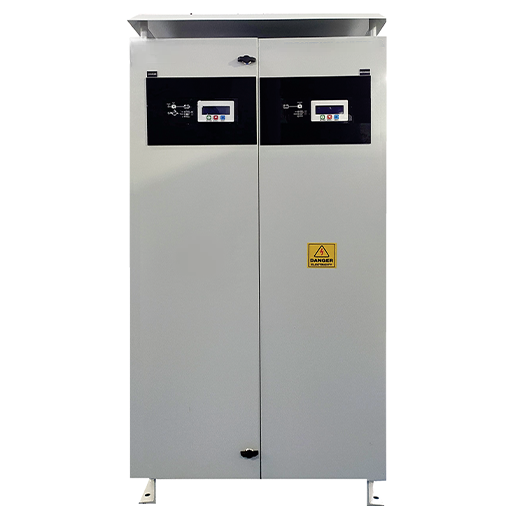
There are several Performance characteristics of 400Hz AC to DC power supplies:
- Efficiency:
The high efficiency of conversion reduces the amount of energy loss during the process and keeps the generation of heat balanced, which is necessary to attain the functional reliability in the aggressive conditions. - Voltage Stability:
The uninterrupted output voltages are very important in the course when the equipment is delicate and supports this. It is mostly achieved through the most advanced voltage regulation devices that enable steady performance even after a change in the load. - Low Ripple Voltage:
When the ripple voltage is low, there will be less interference to the external connected systems in terms of electrical noise thus the components remain undamaged. - Power Density:
The power supplies of 400Hz are small in size with a high power factor making the use of the available space even better, mostly in the aerospace and military where the load and size are crucial. - Thermal Management:
The system puts great emphasis on cooling and makes it possible to use even integrated cooling systems in the whole set up to see into it the efficiency side does not affect the effective side through the use of consistent thermal management features. - Protection Features:
Onboard protection in the form of overvoltage, over-current, and thermal protection increases the life span of the devices and services while guaranteeing their safe operation.
As such, the design approach makes 400 Hz AC to DC converters meet the requirements of systems requiring extreme reliability, efficiency, and accuracy.
Output Voltage Configurations: 115VAC and 24VDC
It is essential in various industries where accuracy and adaptability are concerned to use modern power systems with a mix of 115V AC and 24V DC outputs. The 115V AC output comprises high power functions, such as avionics systems and on-board electronics, where it provides a stable voltage for the productive operations of equipment accessed at this level respectably. On the contrary, the 24V DC output is suitable for use with low powered or control systems which are far from exclusive and allow for use of a system with many sensors, actuators, and communication accessories.
These configurations can take parallel or isolated implementation, based on the demands of the application. Methods for converting high-frequency signals optimize minimal energy consumption and high performance, whereas advanced techniques for voltage regulation maintain stable voltage loads on the system under different operation conditions. In addition, a series of secondary safety systems, such as protection of connected loads and localization within the operation of the system, prevent the adverse affects of system malfunctions to some extent. The simultaneous inclusion of these output modes also indicates an improvement in the power design, enabling operation in advanced operating conditions.
Watt Output: Assessing Power Ratings like 40 Watt and 500W
Critical aspects to think about when determining a 40W or 500W power rating include the main purpose the rated power is supplied for, the efficiency of such angles and the energy consumption related to that equipment. A 40W model is generally interpreted as a device that is the least demanding in terms of power consumption and is in compliance with LED light bulbs, small scale domestic devices, and items aimed at saving power. Such aids ensure that there is energy efficiency in the society and embody transformational objectives as well.
It is worth mentioning that 500W power ratings are usually needed in such devices as advanced audio systems, gaming PCs, and industrial tools where forceful actions are required. This power level allows much higher operational requirements and performance potential, but effective heat dissipation measures are also essential for safe use. Unfortunately, activating these power ratings must be accompanied by accurate engineering calculations with regard to voltage, current, and other parameters of the system and how they should work in different operational environments to guarantee its performance.
Efficiency and Waveform Quality: Pure Sine Wave vs. Modified
To start with, an inverter that produces a pure sine wave output usually provides an output that is very close to that of the utility grid in terms of voltage and frequency making it a good candidate for running devices sensitive to fluctuations in voltages and frequencies without detrimental effects. It also eradicates common power quality issues resulting from the electrical equipment such as medical equipment, electronic drives such as variable speed drives all the way to the full fault protection of electrical systems. Furthermore, this type of inverter eradicates the problem of overheating resulting from the distortion, and this helps to conserve energy and reduce the risk of failure of the system, mainly due to interference and distortion.
In contrast, alternative waveform generators produce rectangular signal, which has its levels rising or falling sharply. It is more straightforward and cheaper to design this type of waveform, but it may prevent applications with a need for high quality power from working effectively as there may be some problems with the quality of the output voltage. The operation of some appliances including equipment like appliances with digital timers, induction motors, some charging systems, etc may not be proper when they are operated with these type of inverters. Modified sinusoidal wave inverters also create increased thermal and sound pressures due to the presence of more harmonics than normal, which decreases machine life causing additional damage.
Applications of 400Hz AC to DC Power Supplies
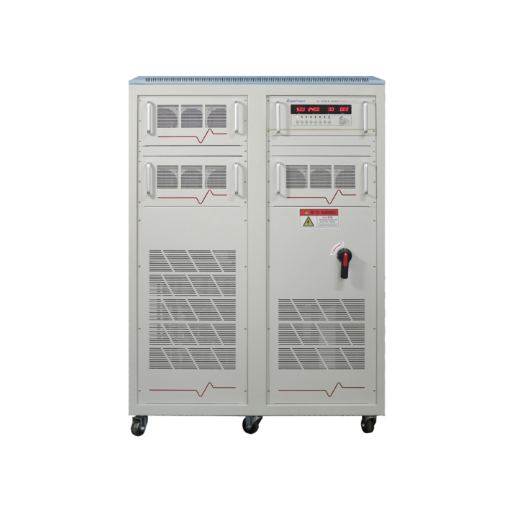
Industries where there is a premium on compact size, light weight and efficiency are the ones that mainly rely on 400Hz AC to DC power supplies. Of these industries, aviation and military applications stand out because the 400Hz power used in these areas is converted to steady DC power for supplying aircraft systems, radar and navigation aids etc. Other areas where the use of these powers is controversial are the marine and industrial settings, especially for such industries as the reproduction of systems. Most of all, it is always evident that power is an important factor in the world today, especially for industries such as Fig. that require better ways of producing power that perform better than the rest but in a very small volume. It also makes it possible to achive clean power withstand waveworm coil.
Industrial Applications and Ground Power Solutions
Industrial applications, as well as ground power, require the 400Hz AC to DC power supplies mostly because of the great reduction in size and efficiency in converting a lternating to direct current. Mostly, these power supplies are used in aviation ground power units, where they are required to support different tasks such as stable and accurate DC power provision of systems during maintenance and pre-flight operations. Furthermore, in the production of goods, these are configured with robotic and other components where high amounts of power need to be frequency converted for precision and operational efficiency with minimal power loss.
Improvements in the 400Hz power supply design and maintenance sector include amongst other issues increase in toughness, power trails and fever management which allows them to be utilized in places of high performance where their dependable performance is achieved with merely very few service interventions. It becomes easier and satisfactory to mount such power supplies to any setting or equipment without compromising the trustworthiness of performance for ease of movement-related concerns because the aforementioned designs are lightweight and modular. Such power supplies play an important role in both such sectors allowing for effective delivery of both static and mobile activities.
Use in Aircraft and Military Systems
Much like other aircraft-electronic systems modern aircraft have a power supply that converts Alternating Current (AC) to Direct Current (DC) power using 400Hz. This is because 400Hz has the ability to fulfill the aviation power needs at very high power due to its efficiency. Here, selection and use of 400Hz instead of 50 or 60 Hz essentially decreases transformers on board and transformers in electricity applications which is a critical consideration in the design and operations of an aircraft. Moreover, there are power sources intended for the integrity operation of avionics, navigation systems, in-flight entertainment, and high-level communication systems that require constant availability and use of power. There is also effective heat dissipation in case of reaching the necessary environmental conditions fully or partially if the operation is on altitude condition.
In the military, 400Hz Alternating Current (AC) to Direct Current (DC) power supplies play an important role in the effective supply of power to military equipments used in various missions, even when tactical assaults are ongoing. These power supplies come in handy during rapid deployment and are used in advanced military technologies, weapons and communication capabilities. The fixtures cater for all possibilities since the various environmental factors such intense heat, heavy machinery and operations are ultimate test for the devices. Moreover, their ‘plug and play’ interior allows for rapid installation of the cores into mobile platforms with no alterations to the stability or the output of the equipment. This flexible nature justifies 400Hz AC to DC power supplies playing a vital role in situations that are both offensive and defensive in nature.
Installation and Mounting Considerations
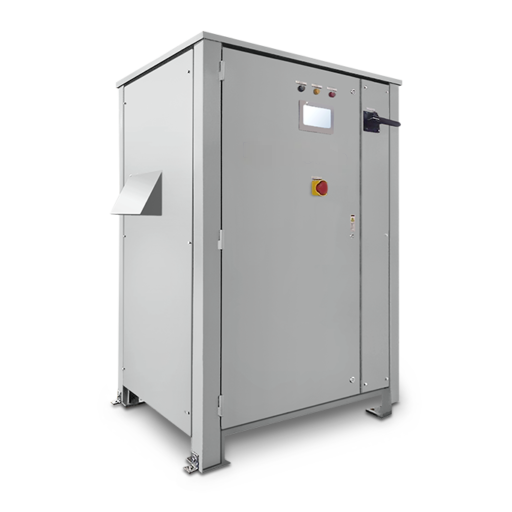
Efficient setup and mounting of 400Hz AC to DC converter units, is a vital requirement required for conformance of the component to the product specification and reliability of the system. prevail all following steps select a location that is accessible to but is as much as possible removed away from exposure to extremes of temperature, vibration, and moisture. For this reason, the converter should be mounted on a surface that is vertical and plain to relieve any mechanical pressure and allow airflow.
To avoid blockages, people are advised to observe and maintain clearance around every exposed surface of the unit as is advised by the manufacturer. It is also important to restrict such mounting procedure to the extent practical as it may require specific instructions on using vibration isolators in mobile applications especially vehicles and aircraft because industrial systems are typically prone to vibration. Fasteners need to be appropriately used to firmly secure electrical connections, and obviously, the issue of grounding needs to be looked into to check if it is appropriate for the requirements and settings.
Make it your mission to ensure the interface satisfies all the relevant technical norms, especially the standards set out by MIL-STD army regulations or the FAA rules when necessary. Full compliance with this notion shall result in the smooth operation of the converters as well as reducing chances of the system breakdown.
Mounting Options for Rugged Environments
One of the important elements which needs to be considered while designing enclosures for 400Hz ACDC converters in harsh environmental conditions is the characteristics of its installation. However, it is quite common for the converter to be fixed into the enclosure within insulated walls in these cases. Which would form rigid brackets to the wall. In this, isolating vibration transmitters and mechanical shock absorbers are brought in for installation, or the working of the internal components will be limited to ensure a good number of life cycles.
Another method will be the DIN mounting, which is easy to set up and come up with for instance. This is applicable especially in the required system with frequent updates or repair. Converters having an integrated heat sink and with fans properly positioned will locate the heat source correctly, hence avoiding overheating and consequently making the system perform better.
High-stress regions and aerospace areas would typically necessitate the presence of specialized brackets for cradle mounts. These solutions feature special materials and alignment in order to handle the high stress environment that is expected in these types of environments. Furthermore, the use of coatings which are resistant to corrosion in conjunction with inserts that conform to only the industry standards like IP65 or IP67 ensures the system survives even the most severe conditions. The proper deployment of such configurations will contribute to the optimization of the device’s service life and enable it to operate effectively and safely in any harsh operating conditions.
Grounding Requirements for Safe Operation
One has to be very careful in handling a 400 Hertz AC-DC converter, as it is very important for the three-phase cord to be attached with care to avoid risks or the users from overloads, burnouts, or electrocution. The device has to be connected safely in a way that it does not interfere in the flow of electrical devices in addition to ensuring safety and efficiency. Also, the system should maintain quality supplies by protecting the devices from potential problems associated with electromagnetic interference (EMI). To work within the set industry standards, it is required that measures and best practices outlined in IEEE 142 (Green Book), be taken to ensure a stable, low-impedance grounding system.
Developers and installers of low and medium power devices need to design the grounding system carefully to reduce system faults in the era of 400 Hz. In general, the grounding conductor shall be designed such that the skin effect that may be observed at high frequencies is properly contained, and thereby the cross-section of the conductor does not conduct current unevenly. Thanks to its good electrical properties, copper is a typical material for such a conductor, with extra protective coatings in the case of EMI.
The converter also calls for a thorough grounding so as to shield the delicate electronic parts contained in it from the overvoltage spikes or transients. Equipotential bonding techniques, grounding the enclosure and any connected metal parts to the house ground, can mitigate ground loops and consequent pitfalls. Periodic inspection of the grounding system supplemented by fault finding and checking of all bonds confirms that the system continues to be effective in operating as it was designed and in relation to safety and other standards. These measures combined enhance the protectiveness and stability of 400Hz-AC-to-DC power conversion in place, even in the most difficult usage conditions.
Reference Sources
- Novel Approach of Power Electronics for Efficient DC Fast Charging Systems
Read the abstract here - A Comprehensive Design and Optimization of the DM EMI Filter in a Boost PFC Converter
Read the abstract here
Frequently Asked Questions (FAQs)
How does a 400 Hz AC to DC converter rectifier stage work?
In a 400 Hz AC to DC converter, during the rectifier stage the high-frequency AC signal is converted to pulsating DC by diodes or synchronous rectifiers which consume less power than simple diode bridges. Following the rectifying process, the signal is filtered by capacitors installed on the DC bus, as well as controlled by the secondary two stages, like an indispensable component in any switch-mode power supply. In aviation power electronic systems the rectifier stage and DC bus also need to be able to work with a wide input voltage range and include measures for transient control for example.
What role does an EMI filter play in a 400 Hz AC to DC converter?
An EMI filter is used to decrease the produced conducted and radiated noises which originate from the PSU, servicing avionics and to assure protection from radiated interference to comply with EMC requirements. As a rule of thumb, the EMI filter is placed ahead of the rectifier at the input of the converter and may have an isolation transformer to mitigate the effects of common mode disturbances. With the use of arguments of an input voltage range and the correct placement of the grounding, it is ensured that in the course of filtration, the power density or thermal performance is not altered or worsened.
Why might an isolation transformer be used with a 400 Hz AC to DC converter?
Once the most efficient power conversion section has been chosen, the stage of isolation can be brought in, if necessary. Appliances are isolated in such case, whereas their return to the isolation transformer is not. During the design of portable energy sources, separate problems of the spatial positioning of components take place. Then, more detailed calculations of an individual expected range of ambient temperatures in various scenarios of operation are carried out. In conclusion, faults in previous ‘defective’ designs are revealed and corrected, including changes in the quality of the components with one function to favour another.
How is thermal management handled in high-power 400 Hz AC to DC converters?
Maintaining appropriate temperatures in electronic devices is achieved through the employment of different methods including the heat sink, forced air and liquid cooling, and strategic placement of components in such a way that a design minimizes thermal losses resulting from rectifiers, switches, and inductors while ensuring that the temperature of the device does not go beyond the rated value. When designing based on these considerations the energy losses originating from conduction and switching can be mitigated through the use of various techniques of power factor correction, the most common ones being the switching frequency as well as the synchronization phase of the rectification stage.
