
A need for specialized power solutions cannot be overemphasized, especially in industries where the margin of error is so narrow, like aircraft and other sophisticated industrial applications. Engineers and scientists have come up with many solutions to address this need and one of these solutions is the 400 Hz frequency converter. This powerful device has been specifically designed to work within the scope of aircraft power supply systems and with mostly high powered machinery with very high performances. The article goes further to argue that these systems are a substantial improvement from the basic 50 or 60 Hz designs in respect of design and associated weight qualities, among others, as illustrated. Before tackling the famous topic of 400 Hz power systems, the aim of the article is to provide detailed information on 400 Hz frequency converters and how they serve clients’ needs to receive a stable and accurate power supply.
Introduction to 400 Hz Power Converters
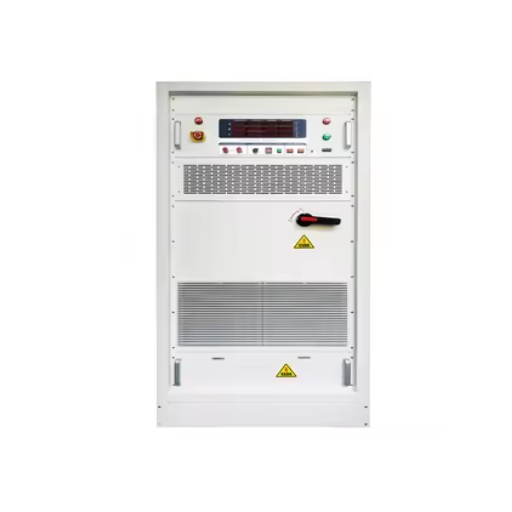
A power converter operating at a frequency of 400 Hz emphasised an appropriate modification intended to upgrade the existing standard frequency electrical power sources most of which work with 50/60Hz so that a reliable 400 Hz supply is obtained. This higher frequency is especially useful in industries of need of a more energy efficient, smaller as well as more accurate power source. Such a converter ensures an even flow of power without any break, therefore safer and more efficient for interfaces that use any kind of software. There are special areas of application for such converters, for example, aerospace systems, avionics, and power systems for military use, where the power systems need to be light, of high performance, and meet safety requirements. Such converters assist to create advanced technological conditions by providing uniform power supply at 400 Hz.
What is a Frequency Converter?
A frequency converter is an electrical device which changes the frequency of an AC supply voltage to match the user’s need, and if necessary, other electrical parameters. The frequency converter operates by changing the incoming AC to DC, since DC voltage can easily be converted to an AC voltage of any frequency by the use of advanced circuitry. This results in the adjustments of both load equipment and other sources to the specifications which are different and yet working together.
Industries use frequency converters for smoothening the operations in machines such as engines, compressors and pumps by enabling precise control of rotational tests and polycarbonate sheets. Frequency converters are commonly digitized and embedded without external controls, making use of energy when necessary and fail-proofing the system as much as possible to ensure excellent operational capacity. In cases that require standardization of power, such as automation in industries, these power converters have an excellent alternative use, including other uses such as incorporating renewable energy systems and even effects on different time zones and loads, where the 60 Hz frequency comes in.
Importance of 400 Hz in Power Systems
400 Hz is a type of power signal that can only be seen in some systems found in the aircraft, the army, and it is commonly employed in certain high-performance computing systems. The specification typically attributes some key advantages to this power standard. For instance, some equipment like 400 Hz transformers and engines can be manufactured smaller, because the power per unit volume is higher at this frequency. The scale down of such devices plays an extremely discouraging role in airplane building where less weight helps to reduce power-wasting on fuel and improve functioning efficiency that is why it is very important.
In addition, 400 Hz allows high levels of electrical energy to be transported efficiently with low losses over short distances, this is most suitable for onboard systems, and similar other small section installations. Moreover, 400 Hz supply frequency does give a better opportunity to do filtering and stabilization one part of power ensuring the stable function of such critical applications as avionics and radar operation. With the advancements of power electronics and undeformable materials, these systems still prove to be strong and very accurate and meet the growing requirements of the modern aerospace and defence markets well. These systems are currently concerned with the possibility of providing power continuity especially in mission-critical aspects and not their size or performance improvement only.
Overview of 60 Hz and 50 Hz Frequencies
The standard frequencies of 60 Hz and 50 Hz are the two main frequencies used globally in connection with .ac electricity. The main attribute distinguishing them from each other is the frequency of completion round per unit time with a rate of 50 cycles per second for a 50 Hz system and 60 cycles for a 60 Hz system. This seemingly negligible point, however, has far-reaching consequences on the electricity sector with regards to how power is generated and distributed, as well as how it is used.
The 60 Hz standard is mainly used in North America, some parts of South America and Australia, while the most popular frequency in the majority of Europe, as well as Asia, and Africa is 50 Hz, due to the reasons outlined above. A higher frequency such as 60 Hz allows for the reduction of the dimensions and mass of transformers and electric motors and facilitates their usage in applications, which are more efficient yet smaller in size. On the other hand, it has been found that 50 Hz has less power losses during transmission over long distances thus offering better line stability for long urban stretch.
Furthermore, technical variations are also seen in motor control and unit compatibility. For example, a motor that was specifically designed to operate on a particular frequency may not give its best when it is operated on a different frequency. This underlines the need for industrial systems to have their system design in regards to their frequencies. Moreover, due to historical and economic reasons the choice to adopt these standards has been influenced by different regions, thus showing that frequency is not just a technical but a geographical, environmental, and system related concept which is interrelated.
Technical Specifications of 400 Hz Frequency Converters
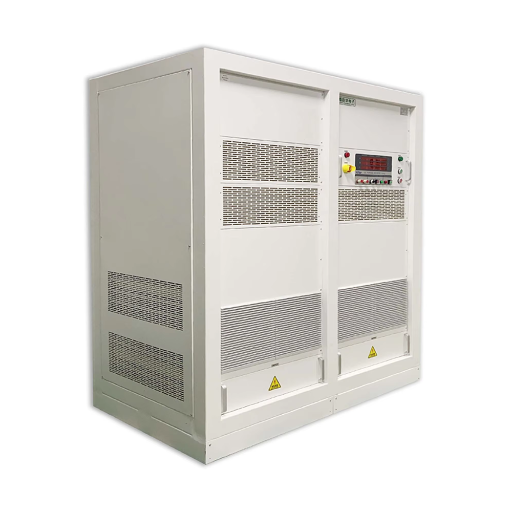
- Input Voltage Range: 110V to 480V AC is the common input range for most products with adjustments available for specific applications and corresponding models. Frequency is usually within 50 – 60 Hz.
- Output Voltage and Frequency: The normal range of output ranges between 115V and 230V AC and the primary usage unit is 400 Hz, which is typically used for military, aerospace and some special applications of most devices.
- Power Rating: The power rating is offered by various levels of power and always spans 0.5 kVA to a number of kVA in order to satisfy different operations.
- Efficiency: Increased technologically refined designs have higher levels of efficiency, even up to 95% in some cases, which is advantageous in fighting losses resulting from use of electricity and at the same time reducing operations.
- Phase Options: It can be used in single and three phase output mode depending on the devices as per their phases and design requirements.
- Harmonic Distortion: Harmonic distortions will not be an issue as power output will be stable and reliable with the total harmonic distortion (THD) generally kept below 3%.
Key Features of 400 Hz Frequency Converters
- Frequency Stability: 400 Hz frequency converters are very stable and can keep a frequency up to ±0.01% on average at all times for critical electronic and avionic uses.
- Wide Input Voltage Range: The specified 208V to 480V AC input voltage range, on the other hand, ensures that they can successfully function in a range of interface points with power.
- Power Output Capacity: One more advantage is the capability of each of these 300 KVA settings, and lots of telescopic and industrial uses.
- High Efficiency Levels: Rectifiers and inverter power converters with high efficiency ratings can save as much as 4% energy during the operation.
- Low Noise Operation: Any of the 400 Hz power converters, which are near or even greater than 60 dB, operate at respectable sound levels and consequently have little or no negative impacts on any work systems.
- Environment and Durability: Operating in the harshest conditions is the primary objective for most units, and their typical operational temperature would be kept between -20°C and 50 °C. In such cases, they come in robust cases with an IP20 to IP54 value to enhance their robustness.
Input and Output Specifications
Many models of frequency converters with a 400 Hz design are intended for a wide range of input voltages. They are tailored for specific purposes and have common options that suit regional power systems such as 110 V, 220 V, and 480 V AC at 50 Hz or 60 Hz. Different models will be detected automatically to ensure the performance is not affected in the event of change in input voltage range. Moreover, input current limits are calculated in such a way as to cause low power wastage and also prevent damage to the components due to electrical over voltages strain.
The 400 Hz changing regions are primarily intended to offer power supply to delicate equipment with frequency and voltage controlled. Common output voltage options include 115V or 208V AC, with harmonic distortion reaching a level of around 3% most of the times to prevent any distortion of the power output. This frequency of 400 Hz is accurate for aviation, military, and high performing machines. The enhanced versions have benefits like variable outputs to match the needs of a load while ensuring that the transportation is carried out efficiently and safe.
Understanding Load Capacity (e.g., 500 VA)
Load capacity, which is often estimated using the parameters of volt-amperes (VA) and kilovolt-amperes (kVA), quantifies the extent of exposure of a system to electric power without causing malfunctioning and / or safety risks. In so many words, a 600VA system implies that a corresponding device is designed to support a 600 watts rated load under ideal circumstances at unity power factor. Additionally, in real-world applications, many elements operate at power factors less than unity, thus necessitating changes to load division and efficiency calculations.
For establishing system requirements, the behavior of the connected load matters the most. The resistive load such as an electric heater or incandescent bulb requires power in a typical way. Whereas, inductive and capacitive loads, which include motors or transformers, generate useful and reactive power respectively, which needs to be pared off. To enhance the brotherhood process of a 500 VA system, one should look into the total and other forms of power estimation such as transients and lastly some additional safety factor for preventing excessive strain on the system’s components. In addition to this, sophisticated power management technologies and monitoring solutions can enhance the utility of such devices.
Common Applications of 400 Hz Power Converters

There are some electric home appliances that must operate at high frequency 400 hertz or must be powered using 400 hertz electrical energy. They include:
- Aerospace and Aviation: Aircraft air conditioning systems which are a critical part of the environmental control and life support system also consume high power. The space occupied by the cargo compartment tells us that most spaces in the aircraft contain net free space.
- Military Applications: This encompasses the use of 400 Hz in the military where advanced electronic systems, radar, and sensitive telecommunication devices are commonly used in military vehicles, naval ships, and land equipment so that they are effective in operation.
- Industrial and Testing Facilities: 400 Hz converters may be found in the testing instruments or the environments that require well-regulated and high-frequency supply of electrical power such as in military standards compliance maintenance functions of the aeronautic systems where the efficiency of the extension force systems can be very high.
- Healthcare: Medical devices mainly required for operation e.g., like micro-surgical instruments and their control units or imaging equipments may also be powered by 400 Hz provided a small and weight efficient converter is available.
These so-called converters are essential in case the efficiency of power conversion, reduction in weight and management of frequency becomes more essential.
Use in Aerospace and Aircraft Systems
400 Hz electrical systems have evolved to become essential for modern aerospace as well as aircraft platforms because of their superior performance and versatility in high-frequency electrical systems. In the most common cases, aircraft electrical loads are supplied with 400 Hz frequency to cut down on the size and weight of critical components such as transformers and motors. Aviation design, particularly for aircraft constructs, plays a crucial role in the availability of space and the reduction of mass, as it directly improves performance and reduces flight emissions due to the weight of the aircraft.
It is important to note that the 400 Hz use is required for both in-flight power supply and electric systems as well as line maintenance services. When the aircraft is in the sky, these subsystems supply the instruments, communication, controls, and the comforts of passengers and cabins in a very stable way. While servicing the plane on ground, external 400 Hz Ground Power Units (GPUs) help to supply power to the aircraft systems in a parked state and prevent the running of the engines thereby, considerably cutting on fuel use and emissions.
In addition, the progressive nature of the aerospace field stresses the significance of 400 frequency systems as more and more aircraft leap towards the more electric or hybrid electric suit. These new technological advancements are mainly dependent on the use of power at high frequencies for these chief subsytems which involve the storage of quite large amounts of energy without causing it to leak off.
Military Applications of 400 Hz Technology
400 Hz technology has to be a vital factor in military endeavors. The reason for this is the ability of the technology to offer power-saving options that are lightweight and able to fit in small spaces. Systems that operate at higher frequencies that are used in current military aircraft play an important role in that they enhance light weight construction and operation of avionics, radars, navigation and communications with less weight unlike the older technology systems that used a lower frequency. Boosted mission performance and fuel efficiency are improved and highly useful in operational functions.
Within the field of military affairs, the use of sophisticated 400 Hz power systems still extends beyond reliance on aircraft alone. Both portable power sources and tactical power management systems, do frequently feature this frequency, so that sick force members may access electricity at a moment’s notice whenever they are on the ground. In this sense, 400 Hz is used as a unifying frequency which unites all types of systems and allows them to work with each other— these may include aircraft and engines.
While modern warfare has employed development of electronic warfare and defense technologies, the 400Hz bus is used in enterprises to maximize the efficiency of electronic host equipment. For example, the pressing requirements for technologies such as directed high-energy equipment and supercomputers are met more easily with 400Hz systems. This exemplifies the importance of 400 Hz technology in embedding present and future military strategies.
Factors to Consider When Selecting a 400 Hz Frequency Converter
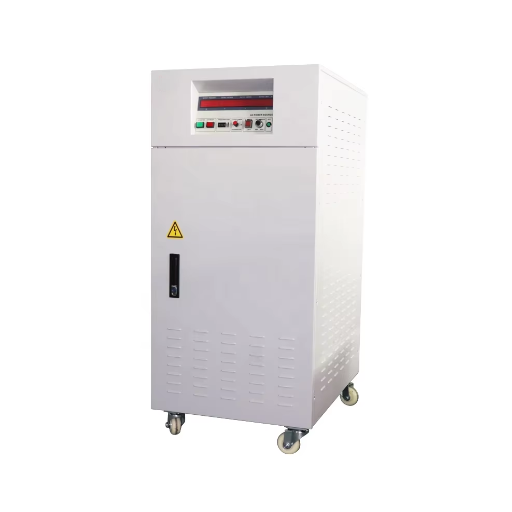
- Power Requirements
Calculate the voltage, current and the total power requirement of the manual to ensure compatibility with the output of the frequency converter installed. - Load Type
Analyze whether the converter will be used to handle resistive, inductive or capacitive loads, as it will affect performance and form of the system too. - Efficiency
Critically assess the level of power consumption due to the lack of energy flow and determine ways of minimizing this wastage, especially for long term uses such as data server applications. - Size and Portability
When thinking of prime locations and portable applications, think about the ease of applying it in a narrow space or moving around. - Regulatory Compliance
Confirm compliance of the converter with those particular industry standards or country certifications, like with any military devices the MIL-STD standards ought to be applied. - Durability and Environmental Conditions
Make sure the device is ultimately going to be able to with function properly in the environment that preside it in terms of temperature, humidity and vibration.
Evaluating Power Requirements
When trying to determine power requirements, it is very important to do an elaborate analysis of the energy needs of all the systems that are connected. The very first thing to do is sum the power that is consumed by all devices in terms of peak and average times while considering the specified values for voltage and current. Work on the design so that the power supply is complete when the load is full without affecting the performance or efficiency of the power supply. Assume that there are also transient current requirements at the start up of the system which are above the standards. This should be taken and some additional safety factor should be included to protect the system from overloads or shortcomings.
Currently, a lot is dependent on technological advancements. Most modern electric equipment needs an adaptability with DC and AC input power sources. If one would be interested in operating various DC power supply types, one must get the exact energy efficiency of operation. Additionally, for various other forms of system designs, such as converters, it is relevant to evaluate the ratio of energy wasted, therefore minimizing such wastage. The above evaluations assist in determining the best possible power system for the specific application as well as the reliability of the intended product.
Single Phase vs. Three Phase Solutions
| Parameter | Single Phase | Three Phase |
|---|---|---|
| Power Delivery | Suitable for lower power loads | Suitable for high power loads |
| Efficiency | Less efficient for large systems | Highly efficient for large systems |
| Voltage Stability | More prone to voltage drops | Stable voltage, less fluctuation |
| System Complexity | Simpler design and installation | More complex design and setup |
| Cost | Lower initial cost | Higher initial cost |
| Applications | Residential and small businesses | Industrial and commercial systems |
| Maintenance Requirements | Minimal | Requires more upkeep |
| Energy Losses | Higher energy losses | Reduced energy losses |
| Load Balancing | Not ideal for balancing loads | Excellent load balancing capability |
| Reliability | Less reliable for high loads | Highly reliable for demanding loads |
Design Considerations for Specific Applications
To achieve the best possible outcomes, the appropriateness of an electrical system in a given scenario has to be looked at against several factors. Single-phase systems are the more preferred choices for small-scale and private settings like homes and small offices due to their simplicity and capital-saving spaces caused by the reduction of control equipment. Such vacillation in energy consumption rates makes it easy to make proper adjustments.
However, the requirements of industrial and commercial areas are such that such systems must manage huge accumulatções of energy as possible and effectively. For such a situation, the best solution is the use of 3-phase systems, since 3-phase systems are about efficiency of utilisation and minimising of losses. Fault tolerance under high load again ensures that all critical equipment can be operational at all times, one of the principal aspects of industrial establishments, computer data centres, and the likes. In addition, although the superiority of three-phase systems is quick and involves a high initial expense as well as huge costs for maintenance, it is observed that such costs are quite compensable in terms of total cost and functional continuity.
Practical Tips for Using 400 Hz Frequency Converters
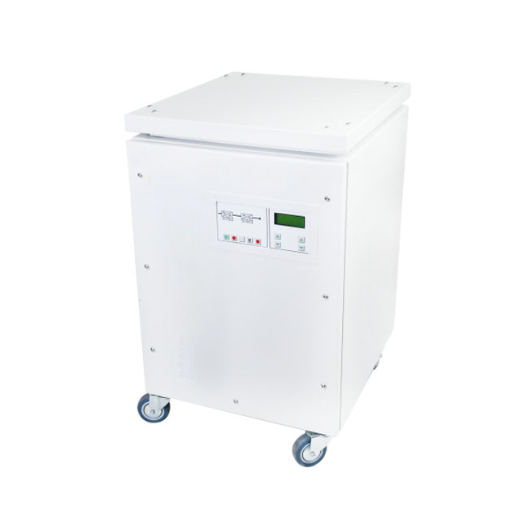
- Ensure Compatibility with Equipment
Check to ascertain that all devices have a 400 hz rating. This serves as a precaution since some components may be rendered invalid or malfunction in case such equipment is used. - Monitor Input and Output Ratings
Check the voltage and current ratings during operation to ensure that they are within the system ratings. Operating the converter in excess of the rated load and current can cause the device to overheat and the equipment fails. - Maintain Proper Ventilation
It is recommended to position the frequency converter in a well ventilated room to prevent it from overheating. When the frequency converter overheats, it becomes useless and also has a shorter lifespan. - Schedule Routine Maintenance
Don’t just run the equipment, make sure to check their operation within specified limits periodically, and to clean before the unit finally wears out, for instance, from overheating. As per the recommendations of the manufacturer, the frequency at which the equipment should be maintained needs to be observed. - Follow Installation Guidelines
Complying with the installation procedure set out by the manufacturer of the product is vital in order to reduce the effects of noise on the system and other functions.
Installation Best Practices
- Verify Power Requirements
Check that the apparent power ratings and the current ratings provided meet the power source that is to be run by the machine. There is no point attaching a tool to a wrong power source. - Ensure Proper Grounding
In order to avoid the spread of electricity, the device should be properly grounded. All earth connections should conform to benchmark parameters to eliminate any risks of electric shock. - Maintain Adequate Ventilation
Make sure you only place the devices in open areas where there is no blockade. Sufficient airflow is a requirement in some areas; improper conditions can lead to equipment failure since they may cause devices to overheat. - Use Quality Fasteners and Mounting Hardware
Stabilize the equipment by fixing it properly with joints and other metallic appliances in such a way that minor vibrations will not lead to structural failure of the equipment or help the base to weaken or collapse. Verify if all mounting parts are rated as per the size and weight of the equipment. - Consider Environmental Factors
Check out the ambient condition of the place of installation and ensure that the level of temperature, humidity, dirt and dust, as well as fume (corrosive element) exposure, is suitable for that particular area. Encase in protective casings or treat with relevant coatings the devices that are designated for use in such challenging and hazardous terrains. - Label and Organize Wiring
Implement the wire labelling during installation and appropriately segment for instant spot checking and identification in case of any necessities during maintenance or troubleshooting. Vibrant looms prevent these accidental pull-outs and interference of the wires.
Maintenance and Operational Guidelines
- Monitor Equipment Performance
Always make sure to routinely follow the operating equipment, using the appropriate measuring instruments in order to identify any deviations that occur due to the energy consumption, or a normal or an abnormal temperature, or performance level. If you address these issues on a proactive basis, the situation will not necessitate any restraining of the system for too long thus aligning with the goal of reducing the time of operational systems breakdowns as well. - Ensure Optimal Operating Conditions
Prompt and persuade the employees to further better the desired levels of performance by maintaining the temperature, humidity and ventilation levels suitable for their working conditions. The weather conditions in the workplace can also accelerate the level of wear of the components, cause more failures to occur, and consequently shorten the life span of the equipment in service. - Utilize Predictive Maintenance Techniques
Make good use of the modern predictive maintenance technology and services, which can include vibration monitoring, thermography and monitoring systems based on machine learning. This allows anticipating problems, so that measures can be taken before they become severe. - Follow Appropriate Safety Standards
Ensure that all maintenance work complies with the safety procedures accepted within the industry, such as those that comply with IEEE and ISO standards. Use of adequate personal protective, well laid out procedures and skilled personnel will prevent any hazardous accidents. - Document and Review Maintenance Activities
Keep comprehensive maintenance records such as the services on various parts, issues resolved, if any, and replaced parts. Also, go through these maintenance logs at later date to unearth any common factors that could be causing poor performance within the system so as to improve the system efficiency in the longrun.
Reference Sources
- Decoding the Developmental Trajectory of the New Power System in China via Bibliometric and Visual Analysis
Read more on MDPI - Challenges for the Baltic Power System Connecting Synchronously to Continental European Network
Read more on ScienceDirect
Frequently Asked Questions (FAQs)
What is a 400 Hz power converter and how does it produce 400hz power?
So-called frequency converters/power converters are devices that receive electrical power at one frequency and use it at another, especially when that is done with power usually taken in an aircraft power, also do some dc to ac conversion to produce a pure sine wave suitable to test equipment. These converters also often have built-in protection. They shall be compact and mobile, convenient to be used at airports, inside hangars, or on aprons, to provide constant output power. All these frequency converters developed for aircraft applications include one or another type of connect disk circuits and protective units that shield these circuits from the overvoltages and overcurrents.
Can a 400 Hz frequency converter work with 60 Hz or 50 Hz input?
In most new 400 hz converters, it is the conversion of power supply from 50 or 60 hz to 400 hz that becomes complicated and these are mostly of these devices. For example, a converter might take 115V AC 400Hz input options or 230V AC 50Hz/60Hz depending on the model. The nominal steady state ratings of the converter are rated as peak kVA settings where peak duration is indicated rather than oscillation, harmonic, transient status or RMS ratings. Always verify that the converter’s protection features cover unwanted surges from the input source.
Are 400 Hz power systems designed for aircraft use different from industrial converters?
Miniaturization, weight, reliability, and cool designs are differentiators of the avionics converters and the drive to build them more as small state-of-the-art processes rather than bulky ones. The aircraft-oriented units may have two outputs (dual) configurations, and they are directed at aviation with their compact maneuvering and use in the areas of the airport and hangar. There are versions for industrial applications where the emphasis is on higher constant output power or where capacities of 500VA and more are designed for tests and production applications of the harsh nature.
What is the maximum power I can expect from a compact 400 Hz converter?
The maximum output power capability of a converter varies significantly, from small 500VA devices to heavy-duty converters with kilowatt-level output. Mobile converters, small and practical, will be easy to carry, industrial ones and particularly those incorporated in the equipment racks deliver more draw in continuous output power levels. In choosing a model, study the continuous and intermittent capabilities of the on-board inverter, as well as determine if there is a pure sine wave output for nonlinear electrical loads. Furthermore, please check whether dual output or single phase outputs are designed to suit your load requirements.
