
01
Brief Introduction to 400Hz Frequency Converters
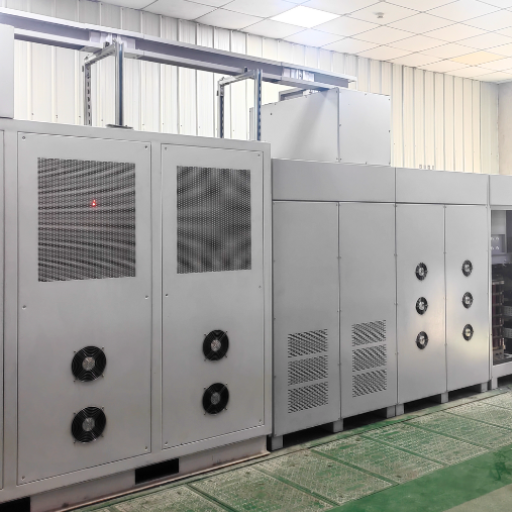
400Hz frequency Aero power or rotary convertors mean the special devices that are designed to convert the available standard electrical power, usually at 50Hz or 60Hz into 400Hz frequency. This change in frequency is required in most operational instances that involve mobility without sacrificing lethality due to the fundamentals of physics that power increase is with frequency. This is more so in sectors such as aerospace, aviation, military, where no extra weight is willing to be carried for an inefficient one, examples of such system include flight control systems.
Installing rotary converters ensures that aircrafts can use sophisticated equipment without any problem, such technology includes, among others, radar systems, the aircraft avionics, the cockpit, and more mission critical equipment. The function of these rotary converters in such critical users is to provide power free of fluctuations one can also use them to uptrend the voltage up.
The Importance of 400Hz Power in Aviation and Military
The reasons for the 400Hz electrical power use in aviation are technical. To maximize system efficiency and minimize aircraft’s overall weight, aircraft systems are designed with components that are small and lightweight. The hurried rate of 400Hz frequency makes it possible to employ small transformers, motors, and generators beyond that allowable when using any other standard frequency of operation such as 50 or 60Hz. All these have greatly helped to reduce the weight of equipment carried on board but allowing for the possibility of achieving, even high operational reliability. In addition, 400Hz power supply is very important in the effective use of more conventional includes, navigation and communication equipment and on board processing systems, which require a precise and unchanging electrical input for optimal functioning at the stress levels usually experienced during the critical flight phases such as take off and landing or in turbulence.
Given the importance of precision and reliability in military affairs, 400Hz power cannot be ignored. Namely, the functionality of surface-based radar systems, anti-aircraft and ship-to-plane missile targeting equipment, and even small tactical links working in such hard to penetrate spectrum wholly depend on this type of power. The 400Hz systems’ ability to make components smaller and lighter is especially useful in military applications on the move for example on automobiles, field headquarters, or even when inspecting the aircraft in aircraft carriers. Moreover, military-specification 400Hz power systems are created in such a way that they are capable of low performance in the sealed in equipment environments such as combat conditions, at extremely low or high temperatures, in wet weather, and when subjected to mechanical shocks.
Overview of Frequency Converters and Their Role
Nowadays, frequency converters are one of the most important elements of change in power systems since they adjust electrical energy frequency to the specific requirements of machines and systems. In general, these are complex systems that play a leading role in systems that have fluctuations in operations such as military installations, production factories, and aerospace. By shifting the frequency of 50 or 60 hertz to 400 hertz or the other way around, frequency converters enable the connection of power sources and loads which would be otherwise incompatible when operating complex machinery.
Recent frequency drives advantages over previously employed rotative transforms are the application of state-of-the-art electronic elements and higher energy efficiency and more trouble-free maintenance, as well as layout improvements. Due to the built-in mechanisms, the conversion of power is smooth in terms of voltage and frequency and prevents any appliance from being damaged by a sudden and unexpected surge of electric force. Moreover, often frequency converters are equipped with monitoring systems and manual and/or pre-set parameter changes, which make them easy to control and adapted for changing dynamic operating situations as frequency stabilization during operation.
02
Key Differences Between 50Hz/60Hz and 400Hz Systems
| Parameter | 50Hz/60Hz Systems | 400Hz Systems |
|---|---|---|
| Frequency | 50Hz or 60Hz | 400Hz |
| Primary Usage | General electrical grids | Aerospace and military systems |
| Transformer Size | Larger, heavier | Smaller, lightweight |
| Power Demand | Suitable for high-power applications | Optimized for low-power systems |
| Voltage Drop | More significant over long distances | Minimal over short distances |
| Efficiency at Load | High for most industrial loads | High for precision equipment |
| Equipment Compatibility | Common commercial devices | Specialized, high-frequency devices |
| Weight Considerations | Less critical | Highly critical |
| System Cost | Relatively lower | Generally higher |
| Energy Loss | Moderate during transmission | Lower due to reduced inductance |
03
Key Application Areas of 400Hz Frequency Converters
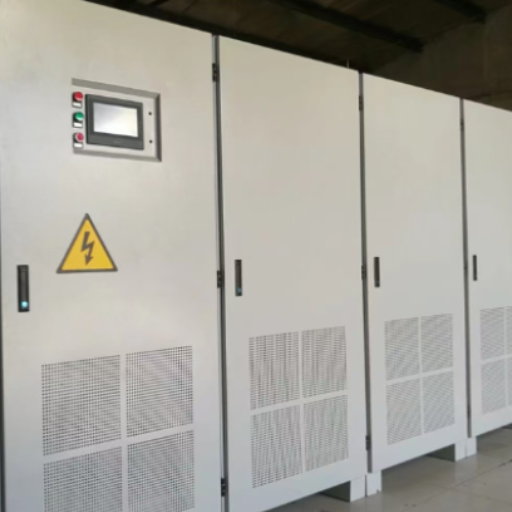
- Aerospace
Aerospace and Aviation: They are commonly used for utilization in aircraft systems, ground power unit, and onboard avionics systems with concern of lightweight and small sizes. - Defense
Military Systems: It is critical to integrate them into ships, radar sets or communication systems to provide ready and stable power sources in the harsh operational environment. - Electronics
High-Performance Electronics: As high-performance electronic devices tend to use more precise and dependable power sources they can be found in a number of areas such as medical apparatus, lab equipment and test systems. - Ground Ops
Ground Support Equipment (GSE): Through this distributed infrastructure, serving aircraft parked off-stands in an airport during simple in his demand coverage and cost effectiveness with usage of the on board fuel.
Usage in Aircraft Ground Power Units (GPUs)
One of the prime inventions in the modern Aircraft Ground Power Units (GPUs) is the 400Hz Frequency converters, these devices provides smooth and balanced power to the aircraft during all the ground operations done to the same. They are crafted to suit the power consumption of the electric systems found in most aircraft as they tend to work at 400Hz as opposed to the normal 50/60Hz often used in commercial grids. This enables the power system to be in harmony with the onboard systems without altering the circuits and protocols, making it suitable for all operations.
The modern 400Hz ground power unit is eco-friendly and efficient in terms of energy consumption. This is in line with the world’s endeavors to mitigate emissions in the international civil aviation industry. Newer units offer advanced technology such as 400Hz converters, power factor correction plus active cooling amongst other essential components. The units are also lightweight as well as small in size which acts as an easy to install and disassemble at airports and at the same time capable to handle high demanding tasks.
Military Applications and Support Systems
Defence missions would not have been successful without the help of 400 Hz frequency converters. This is particularly because they are effective in providing clean and steady power for the military’s expensive and sophisticated electronics. These converters are used nowadays in almost every type of military vehicle, aircraft and even outside of weapon platforms such as weapon systems and communication systems. They mainly work in powering up communication systems, radar and nav equipment that need clean frequency adjustments for their effective operations.
Newer systems such as military grade 400Hz converters can cater to outdoor activities that are exponentially more demanding of electronics, especially in desert regions and mountainous areas or any other difficult terrain. Many of the 400 Hz frequency converters are also designed to have high efficiency coolers along with effective electromagnetic interference (EMI) shields that may prove to be less effective in such a dusty environment. The introduction of the modular units has also been linked to the desire to reduce the maintenance cost and improve usability by increasing the number suitable for both military and civil purposes.
Besides, technological progress in the field of control systems is present. They can offer systems for diagnosis and monitoring purposes allowing the converters to diagnose in online mode, lengthening the standing times of critical missions. In addition, the need to control energy and environmental efficiency also generates energy-saving opportunities for experts in this field. It follows that such hardening capabilities allow for the continued use of 400Hz converters as one of the major components of military installations–and proper functioning of advanced military combat systems.
Commercial Aviation and Its Dependence on 400Hz Power
In aviation, overall, there is extensive utilization of 400Hz frequency power systems which are utilized for optimal reasons in the avionics arena. Such power systems are purposely made in a way that they can serve the electronic on-board equipment such as Avionics, lighting system, communication system and the in-flight entertainment system among others hence providing a high and constant power. The bulk and mass of 400Hz power systems in comparison with their 50Hz or 60Hz counterparts is also crucial in the aviation industry like any other where the entire focus is on minimizing weight to save cost and enhance fuel efficiency.
The contemporary versions of ground power units (GPUs) which provide 400 Hz output conform to the most demanding standards such as of ISO 6858, SAE ARP5015, and can be used across most aircraft models. Moreover, the improvements in the solid-state silicon technology embodied in the converter design took place making the 400 Hz aircraft ground power units more efficient, and longer lasting than was the case with prior airplanes, necessitating less maintenance and reduction in power wastage. The trend of incorporation of self-diagnosis capabilities into the 400Hz power supplies is on the increase in order to improve the efficiency of maintenance and monitoring activities consequently reducing equipment downtime.
Continuing in the same line of thought, while taking into consideration environmental protection, the adoption of energy-saving systems in the aviation sector is yet to become an ultimate auspicious event. These are systems based on static power sources operating on high current alternating current and 400 Hz of current, which are capable of replacing on-board installations auxiliary power units for fueling aircraft engines and wings while decreasing the volume of carbon produced during pre-flight and turn-around operations.
04
Crucial Technical Specifications to Consider
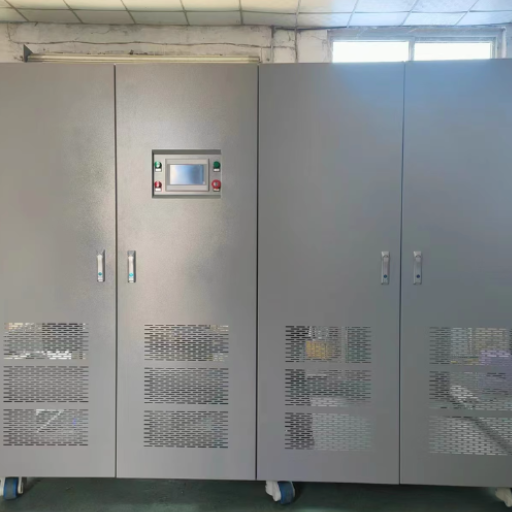
-
01
Output Frequency Stability
If we talk about 400Hz systems, everything means that the frequency of 400 cycles per second at the end of wire should be stable regardless of the capacity. This stability is often conditioned by the loss at most by ±0.1% around the nominal frequency.
-
02
Power Capacity
A converter is measured in kilovolt-amperes (kVA). This is the rated output of a unit that has to be rated as per the load it is going to supply. Avionics equipment can be powered with anything between around 30 KVA and 180 kVA, subject to the type of airplane.
-
03
Input Voltage Range
In order to work with various power grids, it is necessary to use a variety of primary voltages for the converters, and they are usually in the range of 208–480 volts.
-
04
Total Harmonic Distortion (THD)
The inclining graph of THD is highly undesirable, positive scalar should be around 3% or lower in order to put a bar on electrical noise that could sprawl on the susceptible avionics and other systems.
-
05
Cooling Mechanism
It is very essential to have a proper cooling system, be it air-cooled or liquid-cooled to prevent the respective system from applicable to heating or burning due to continuous activities.
-
06
Efficiency
High energy consumption, often reaching 90%, not only minimizes energy waste but also reduces heat production, which helps manage effective efficiency.
Power Output Requirements for Different Applications
Different applications and situations require various energy levels. When it comes to homes, the inverters typically operate within the range of 1 and up to several tens of kW, allowing a user to efficiently operate household standard electric appliances and a smaller solar equipment. These commercial and industrial applications, on the other hand, have to provide the even larger output, for example, data centers or production facilities more often have inverters with capabilities reaching tens of megawatts to run sophisticated equipment and to supply very substantial amounts of power.
Solar or wind energy facilities differ in power output adjustments and are usually designed for a particular purpose. For example, home solar power plants may only need a 3 kW to 10 kW inverter, while grid integrated solar plants have a capacity of many MWs. In the same way, wind turbines have inverters that are meant for handling dynamic loads and their capacities range from 10 kW for small to many megawatts for industrial-sized devices. Sensitive services in fields like hospitals and aerospace industry need high redundancy power inverters, that can internally manage output stability, overload situation and emergency power demand.
Design Considerations for Solid-State Frequency Converters
While designing solid-state frequency converters, there are several areas that need to be taken into account to ensure that the system is efficient, reliable, and upgradable. One of the things to keep in mind is the semiconductor devices to be used – for instance, depending upon the selected semiconductor active elements – IGBT or MOSFET – the frequency handling capacity of the device, its power capability and thermal condition are appreciably different. Furthermore, the design of the converter also affects its efficiency, given that it depends on the particular configuration of the converter (for example, full-bridge or modular multi-level converters) and should be in accordance with the relevant application and loading conditions.
There is also increasing emphasis on thermal management which is a critical aspect that has to be considered in the design of such devices since the solid-state converters when operated generate heat, which has to be dissipated suitably or the components may not last long and may eventually fail. It is why novel thermal management solutions, including liquid cooling self-compliance heat sink solutions have to be engineered so as to keep the enclosure alive. There is also a customary requirement to deal with EMI. This often requires the use of filtering and shielding as well as techniques that ensure that specified interference levels are not breached especially in critical systems.
Efficiency and Reliability Metrics in Converter Systems
When assessing the rating of solid state frequency converters, there are two key aspects; efficiency which determines their performance and its cost implications on the user. Efficiency figures often are seen in the terms of the energy-to-power conversion factor which is then quantified as energy used efficiency, i.e., the percentage of the input energy (in the form of electrical power) that is actually put to work with as little loss of heat as possible. The efficiency advantages of the converters which are available with their high power density often make good use of wide band gap power semiconductors such as silicon carbide (SiC) and gallium nitride (GaN).
The other aspect that is of interest is reliability that is build up when MTBF (Mean time between failures) and system environmental or loads failure rates happen. This has a huge impact on long-term reliability as insistence on a strong cooling approach, designs that minify heat losses, and very reliable fault-tolerant architecture is an invaluable contribution. Also, employment of preventive maintenance planning ‘big data’ enabled expanded for degradation analysis involving online sensors ensures that defects and degradations can be detected in time, thus reducing the numbers of failures and assuring the expected outcome.
05
Benefits of Using 400Hz Frequency Converters
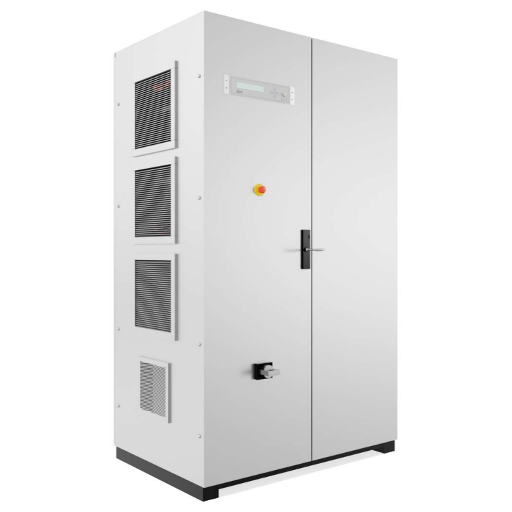
Devices with power systems of 400Hz have a wider range of applicability where weight and efficiency are concerned and also have more advantages. In fact, power converters with that frequency are mainly used in the aerospace and military industries where every little bit counts in reducing weight and size of electric components like transformers, motors and so on, thanks to the higher switchover frequency. What is in addition to these is that they make it possible to deliver power that is steady without any deviation and meet the standards of voltage tolerance. This attribute of the AC output converters is its credit in making it a minimalist element which in turn helps in conserving both space and power which are very essential in such environment settings where space and weight to be considered as effective space and cost savers.
Enhanced Performance & Power Efficiency
Innovative power control and modulation techniques are part and parcel of the present-day 400 Hz converters. Consequently, they minimize our power wastage as much as possible and achieve efficiency at the same time. These converters host upgraded power semiconductor materials namely silicon carbide (SiC) or gallium nitride (GaN) which offers opportunities for faster switching speeds and reduced amplifier heat losses. This technological upgrade brings along the benefit of decreased energy dissipation in the course of usage thus improving the overall efficiency of the equipment. Another factor of energy saving in these cases is inclusion of adaptive algorithms for power control which help to monitor and tune the system in active mode in order to meet specific and harsh criteria. Developments of this nature, besides cutting on power costs, are also designed to minimize contingency and operational costs, and thus add value from efficiency to sectors such as aerospace, defense, and precision engineering.
Reduction in Weight & Space Requirements
Utilizing breakthrough materials along with principles of structured construction has made modern systems a lot lighter, and occupancy volume smaller. Thanks to the technology of lightweight composites and high strength alloys, it is possible to make the system more rigid providing considerable weight savings. Another example covers methodologically implemented structural design tasks which may for instance appear in low profile packages and higher performance components offering the modern space limits full acceptance such that no protruding or awkward elements are left for end users. These innovations significantly reduce transportation and installation costs while enabling the system to enhance its reach and improving its modularity in restricted usage environments. This particular gain is very crucial in industries such as aerospace, where performance and mission feasibility are directly proportionate to weight and volume efficiency.
Improved Equipment Compatibility & Versatility
The new machine improvements are mainly compatible to a broad range of platforms in order to make the integration of heterogeneous technology easier. Interchangeable elements and well-known interfaces help increase system’s effectiveness by allowing interface at the same level regardless of any change in the supporting infrastructure. Such adaptability decreases any difficulty that occurs during repairs, up-team and upgrading efforts. This features reduces any possible downtimes, reduce hitches in maintenance, and stutterless upgrade installations. Furthermore, the flexible designs guarantee the equipment operates adequately in various operational viewpoints thus making it ideal for defense, telecommunication or even medical applications. These innovations not only assure a certain degree of productivity but also help to improve the deprecation of investment and in turn the improved productivity provides genuine benefits to the economy and operational efficiency.
Ref
Reference Sources
- Advanced Power Electronics for the Aircraft Electrification Challenge
digibuo.uniovi.es → Read more on DigiBUO - Averaged-Value Modeling and Analysis of 96-Pulse Rectifiers for Harmonic Reduction in Aerospace and HVDC Applications
msesj.com → Access the article on MSESJ
FAQ
