
When a precision tool shop in Chicago was presented with a shipment of CNC devices that had been exported from Germany in early 2024, a serious issue arose. The CNC aesthetics, layout and concept are best suited for a 400V/50Hz supply, while the machine shop had American electrical standards set at 480V/60Hz. Once the machine is powered on, any potential user would note a 20% step-up in rotor speed which would be dangerously high and could lead to destruction of high calibers of manufacturing parts and warranties subsistence.
This problem persists in our highly connected and global milieu. A 50Hz – 60Hz frequency converter is a quick fix, which converts off-the-shelf power from one frequency standard to another, while maintaining proper voltage. In any undertaking be it transport of machinery from Europe to North America, testing of goods for the worldwide markets, production, whether management or operation, of goods or facilities in more than one geographical location, clothes involve a conversion of the frequency which is the equipment itself – how it fits into the properties of subtleties in-particular application.
Take a close look at this informational article if you plan to switch from 50Hz power to60Hz power. Some of the topics included are the moments when the conversion of the frequency begins, how the converter can be chosen for the necessary goals as well as what kind of problems may appear at the very beginning of the use of the converter. Additionally, this manual will help users learn many of features of this particular converter including what is expected of installation and operation.
Need help with your specific frequency conversion requirements? Contact our engineering team for application-specific guidance.
Understanding 50Hz vs 60Hz Power Standards

Why Different Frequencies Exist
The globe functions under two main frequency indexes; that is, 50 and 60 Hz. This classification dates back from the age of early use of electricity in the 19th and 20th centuries. European specialists, in particular the Germans, have traditionally preferred a 50Hz system for reasons of simplicity in their generator designs.
50 hertz range is used by about 60% of the world mostly in Europe, Asia, Africa and Australia. The remaining 40% such as North America, Central America and South America, use a frequency of 60Hz. This geographical power frequency split creates significant problems related to the compatibility of devices used internationally.
Requirements for grid synchronization prevent simply changing a frequency. Every other generator on the grid must run at an equal speed to maintain dynamic constancy. Altering grid frequency is a practical impossibility without particular equipment, hence the evolution of cross-border equipments and the technology of 50Hz and 60Hz power converters.
Technical Differences Between 50Hz and 60Hz
The frequency difference creates several technical effects on electrical equipment:
Cycle Time Difference
At 50 Hz, this means that each cycle of current is generated within 20 milliseconds, that is 50 millionths of a second. That 3.33-millisecond period does not appear to be very significant at first thought; however, in fact, it is critical and powerful for equipment that is made for specific purposes.
Motor Speed Impact
Regardless of the complexity of the machine, rewiring of any motor alone will not change the speed of the motor. The speed of an induction motor is directly related to its frequency of operation. A 50 Hz rated motor will actually run about 20% faster if 60 Hz power is provided. In return, a 60 Hz motor will be 17% slower if it is connected to 50 Hz power. These speed changes affect:
- Pump and fan flow rates
- Machine tool cutting speeds
- Conveyor line speeds
- Compressor output
Heating and Efficiency Effects
Motors working at differing frequencies often overheat. In particular, if a 60 Hz motor draws lesser current on 50 Hz than it would on 60 Hz, the motor works under light load conditions and consequently develops less mechanical torque. On the other hand, a 60 Hz motor on 50 Hz will draw more current causing excessive heating and and potentially drying of the insulating materials used.
Can 50Hz Equipment Run on 60Hz?
When Do You Need a 50Hz to 60Hz Converter?
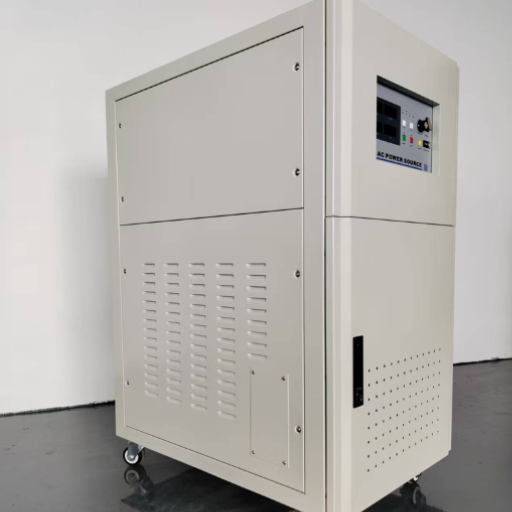
Common Applications
A Brazilian company importing a freeze-dryer temperature would face this choice in 2023 – replacing motors and control systems, which may be quite expensive, or setting up a frequency converter for the USA territory, that’s not as ‘invasive and costly’ for the authority country and thus corrective action in this case is simply to buy half of the equipment (even though the replacement cost of motors could in fact). They also opted to use the 30kVA single-phase static converter, saving more than $40,000 over equipment modifications and, at the same time, preserving the original manufacturer’s warranty.
Frequency converters solve several common scenarios:
Importing Equipment from Different Regions
Typically, most European-made pieces of equipment sent to North America will involve change in the operational frequency. Likewise, any American equipment to be erected in areas of 50Hz rating shall require frequency inversion. It may also refer to production facilities, medical devices or test benches, as in any other industry.
Testing Products for Export Markets
Given these circumstances, manufacturers have to ensure that the operational functions of all the equipment are compatible with the power supply before transportation even takes place. By using 50 / 60Hz frequency converters, 50Hz devices can be tested on 60Hz networks and vice versa and such testing results in functional operation validation and compliance with standards.
International Manufacturing Operations
The integration facility of TNC has been set up within a short span of time, and within it, a variety of projects have been implemented. Converters like these make 50 and 60-foot long engines which are exactly the same, minimizing the complication with the maintenance of these engines and also their spare parts systems.
Specialized Equipment Requirements
In certain applications, and particularly in medical, laboratory, or aerospace applications, a number some of precision instruments requiring specific frequencies on the electronics not the mechanical levels of the equipment are there radiations if within or administered within fetching ranges of tolerance, safety and the fact that almost no radiation-related termination is exposed to redundant doses are expected.
Equipment That Requires Conversion
Motors and Pumps
Where AC induction motors are under use, the speed at which the motor runs is directly related to the applied frequency. For instance, if the motor designed to run at 50Hz is connected to 60Hz mains, such an operation would increase the speed beyond the safe limit by 20%. Apart from that, the flow rate of the pumps and fans is also more as the speed is increased causing problems in the system.
HVAC Systems
Such equipment as air conditioning and refrigeration compressors are seldom frequency adaptable; they are usually developed to be operated at certain frequencies. Change of frequencies on the aforementioned systems will then change the flow of the refrigerant, the cooling effect of the system and even might shorten the compressor’s life. Variable speed HVAC systems are particularly sensitive as they depend on the frequency for enhanced electronic controls.
Manufacturing Equipment
Frequency rotatory motors and controllers are typically installed on computer numerically controlled (CNC) machines, industrial presses, conveyor systems, automated production lines, and similar. Quite a lot of precision is associated with speed control thereby matched to the particular design frequency during manufacturing.
Medical Devices
Magnetic resonance imaging (MRI) units, computer tomography (CT) scanners, and laboratory instrumentation often require frequency match to be almost perfect. Frequency accuracy is important in some simple medical devices, for example, where the power frequency is used for the purpose of calculating the elapsed time.
Audio/Video Equipment
Types of 50Hz to 60Hz Converters
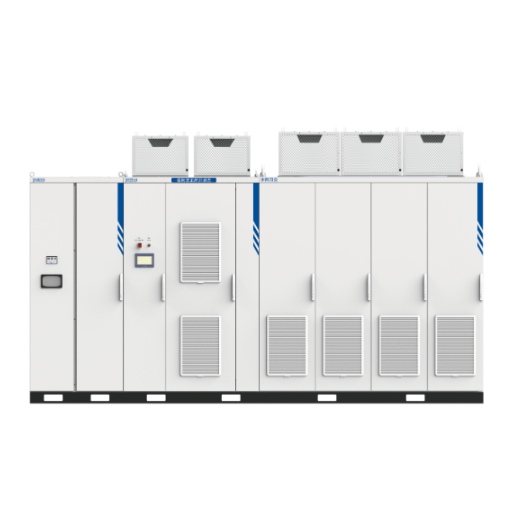
Static Frequency Converters (Electronic)
It is common to use Insulated-Gate Bipolar Transistors (IGBTs) in modern, rather than former, static converters. For most applications of such converters in the form of 50Hz and 60Hz, they are the most efficient to date.
How They Work
Static converters, first of all, convert the AC signal to DC using a rectifier, and only then, with the help of an IGBT, reverse the voltage so that the output is an AC signal of the desired frequency. Advanced PWM tools generate the output in the form of a sine wave conforming to the existing power quality Grading- formatting parameters.
Advantages
- High Efficiency: Modern units achieve 92-98% efficiency, minimizing operating costs
- Precision: Digital control maintains exact output frequency (±0.1% or better)
- Compact Size: No rotating components allow smaller footprints than rotary converters
- Low Maintenance: Solid-state design eliminates mechanical wear items
- Fast Response: Output changes within milliseconds of input adjustments
Best For: Most industrial and commercial applications, particularly where efficiency, precision, and minimal maintenance matter.
Rotary Frequency Converters (Motor-Generator)
The rotary convertor design uses a motor-generator arrangement where the driving input motor rotates an output generator yielding the desire frequency of the output power. This technique though old, is still effective in fulfilling specific requirements.
How They Work
If everything else is to be the same, an AC motor works at the supply frequency and drives a generator which outputs at the desired frequency without any mechanical variation. The motor-generator groups may be of direct-coupling or may be connected by means of belts or gears in order to achieve a certain speed ratio.
Advantages
- Galvanic Isolation: Complete electrical separation between input and output
- Surge Capacity: Rotating mass handles brief overloads better than electronic systems
- Durability: Simple mechanical design tolerates harsh environments
- Noise Immunity: Less susceptible to electrical interference
Best For: Heavy industrial loads, high-inertia motor starting, harsh environments, and applications requiring maximum isolation.
Comparison: Static vs Rotary Converters
| Feature | Static Converter | Rotary Converter |
|---|---|---|
| Efficiency | 92-98% | 85-92% |
| Size | Compact, lightweight | Larger, heavier |
| Initial Cost | Lower | Higher |
| Maintenance | Minimal (filters, fans) | Moderate (bearings, brushes) |
| Response Time | <100ms | 200-500ms |
| THD | <3% | <5% |
| Isolation | Transformer-based | Complete galvanic |
| Lifespan | 10-15 years | 20-30+ years |
For most modern applications, static converters offer the best combination of performance, efficiency, and cost. Rotary converters remain relevant for specialized heavy-duty applications.
Key Specifications to Consider

Power Capacity (kVA)
Selecting the right capacity ensures reliable operation without overspending. Calculate your requirements carefully:
Calculating Required Capacity
Add the power ratings (in kVA) of all equipment to be connected simultaneously. For motors, use the nameplate kVA rating rather than horsepower. Include:
- Continuous operating loads
- Peak demand periods
- Future expansion plans
Motor Starting Current Considerations
Motors draw 6-8 times rated current during startup. While brief, these surges affect converter sizing. Options include:
- Oversizing the converter to handle starting current
- Using soft-start motor controllers
- Staggering motor starting times
Safety Margins
Add 20-30% capacity margin above calculated load. This accommodates:
- Measurement uncertainties
- Temperature derating
- Future load growth
- Temporary overload conditions
Voltage Requirements
Input Voltage Options
Standard industrial input voltages include:
- 220V (single and three-phase)
- 380V (common in Asia)
- 400V (European standard)
- 415V (UK/Australian standard)
- 440V (industrial North America)
- 460V (North American standard)
Please ensure that the supply voltage of your facility is within the allowable limits of the input voltage specification for the converters. There are some converters which allow different input voltages by few adjustments.
Output Voltage Requirements
Match output voltage to your equipment requirements. Common outputs include:
- 220V for Asian equipment
- 380-400V for European equipment
- 460V for North American equipment
- 110/220V for residential/small commercial
Single Phase vs Three Phase
For the most part, Industrial machines need power supplied by three-phase. This is necessitated by the size of the device itself. In homes and light commercial areas where these machines are installed, users tend to be interested in sustaining their power consumption. Also some electrical components may demand single-phase as opposed to three-phase power, which may necessitate phase converters in one or the other case.
Waveform Quality
Pure Sine Wave Importance
Quality converters produce pure sine wave output matching utility power. This ensures compatibility with all equipment types, particularly:
- Variable frequency drives
- Sensitive electronics
- Motor control systems
- Power factor correction equipment
THD (Total Harmonic Distortion) Specifications
THD measures waveform distortion. Lower is better:
- <3% THD: Excellent, suitable for all applications
- 3-5% THD: Good, suitable for most industrial loads
- 5-8% THD: Acceptable for resistive loads only
High THD can cause motors to overheat, transformers to buzz, and electronic equipment to malfunction.
Efficiency and Features
Conversion Efficiency Ratings
Higher efficiency reduces operating costs and cooling requirements. Modern static converters typically achieve:
- 92-94% for smaller units (1-10kVA)
- 94-96% for medium units (10-50kVA)
- 96-98% for large units (50kVA+)
Protection Features
Essential protections include:
- Overload protection (time-delayed for motor starting)
- Short circuit protection
- Overheat protection with temperature monitoring
- Input undervoltage/overvoltage protection
- Phase loss detection (three-phase units)
Control and Monitoring Options
Consider:
- Digital display of voltage, current, frequency
- Remote monitoring capability
- Programmable voltage/frequency settings
- Alarm outputs for building management systems
- Data logging for performance tracking
Selection Guide: Choosing the Right Converter
Step 1: Assess Your Equipment
Begin by creating a complete inventory of equipment to be powered:
Identify Frequency Requirements
Find out the frequency from the equipment being used; because in some equipment two different frequencies are mentioned depending on where and what the equipment’s intended use is (50/60Hz). Hybrid state means there is no need for any conversion as a universal frequency rating is available.
Determine Voltage Needs
Let the rated voltage of each appliance be noted as you check. This is done bearing in mind that certain ratings are given as a three-phase voltage, while others are given as a single-phase voltage.
Calculate Power Consumption
Sum the kVA ratings of all equipment. For motors without kVA ratings, estimate using:
- 1 HP ≈ 1 kVA (conservative estimate)
- Or calculate: kVA = (HP × 0.746) / (Efficiency × Power Factor)
Step 2: Determine Load Characteristics
Continuous vs Intermittent Duty
Equipment that will be used for longer hours, normally eight hours or more daily, such as friction motors, for instance, will require more considered sizing than those that would be used for less time, intermittently. When equipment is on a continuous duty, the use of higher quality material and designing with de-rating margins is regarded as a must.
Motor vs Resistive Loads
Because of the way in which they are started and their power factor, motors have to be ‘over-sized’. On the other hand, resistive loads, e.g., heaters and incandescent lights can more easily and cheaply be catered for as the power ranking can be lowered.
Starting Current Requirements
Determine the loads that run at the same time. It is important to consider the option of introducing motor starters or VFD to limit increasing of the starter load on the converter, which will promote the original converter design/impact operation.
Step 3: Select Specifications
Match Capacity to Load
Increase the mentioned value by 20-30% to ensure safety of the converter. Direct the final naught to the standard value converter. 10 kVA, 20 kVA, 30 kVA, 50 kVA and 100 kVA are the sizes commonly available in industry.
Choose Appropriate Voltage
To avoid issues in the power supply of the facility, obtain the proper input voltage. Choose an appropriate input voltage for the equipment. Such converters sometimes allow a change in the output voltage.
Consider Future Expansion
In case there will be an ever increasing load within the next three to five years, it might be advisable to size the later version for the future. A big converter at a higher price, often costs less than buying an underperforming device again.
Application-Specific Recommendations
Residential/Light Commercial (1-5kVA)
Suitable for:
- Imported household appliances
- Small workshop equipment
- Testing and demonstration equipment
- Audio/video systems
Small Industrial (10-30kVA)
Appropriate for:
- Machine tools and CNC equipment
- Small manufacturing cells
- Medical and laboratory equipment
- Agricultural machinery
Large Industrial (50kVA+)
Required for:
- Production line equipment
- Heavy manufacturing machinery
- Testing laboratories
- Multiple machine installations
Installation and Setup
Electrical Requirements
Input Power Connections
This installation legitimizes the presence of a circuit-breaker device that complies with the 125% advice rating of the input current to the converter. Focus on the cable length and the supply voltage to determine the most suitable cable conductor area.
Grounding Requirements
It is important to provide a low-impedance and proper grounding because it helps in safety and eliminates noise. Use the recommended wire gauge size to connect the chassis ground to the earth grounding of the building. In some instances and for the delicate equipment, a fully insulated ground system is required.
Circuit Protection
Adjust the setting of protection devices in a manner that if any fault occurs in the equipments they would trip in a sequential manner. The input feeder circuit breaker must trip first before the above breakers during a converter fault. Such regions experience frequent lightning; you are also advised to enforce installation of surge protection devices.
Physical Installation
Location Requirements
Install in clean, dry locations with adequate ventilation. Avoid areas with:
- Excessive dust or conductive particles
- Corrosive atmospheres
- Extreme temperatures (outside -10°C to +40°C)
- Direct sunlight or weather exposure
Ventilation Needs
Maintain manufacturer-specified clearances around the converter. Typically requires:
- 1 meter clearance in front for access
- 0.5 meter clearance on sides and rear for airflow
- Adequate room air circulation or air conditioning
Environmental Considerations
Converter output power is less for the installations at high altitudes like above 1000m due to lower capacity of cooling. High temperatures can also worsen the situation and the capacity gets reduced. It is essential to refer to the manufacturer’s guidelines regarding the de-rating.
Configuration and Testing
Output Voltage Adjustment
The output voltage must be suitably modified to meet the equipment requirements. Majority of the converters have provisions for voltage adjustment ranging from ±10% and it can be manipulated using control panels or through digital interfaces.
Frequency Verification
Adjust the voltage in order to fulfill the needs of the load perfectly. In most converters, voltage is within adjustable limits ±10% through external wiring or kits on the equipment.
Load Testing
Test the installation progressively:
- Start with no load, verify output voltage and frequency
- Add 25% load, check for voltage regulation
- Add 50% load, verify temperature rise
- Add 100% load, confirm stable operation
- Test overload protection by exceeding rated capacity briefly
Cost Consideration and ROI
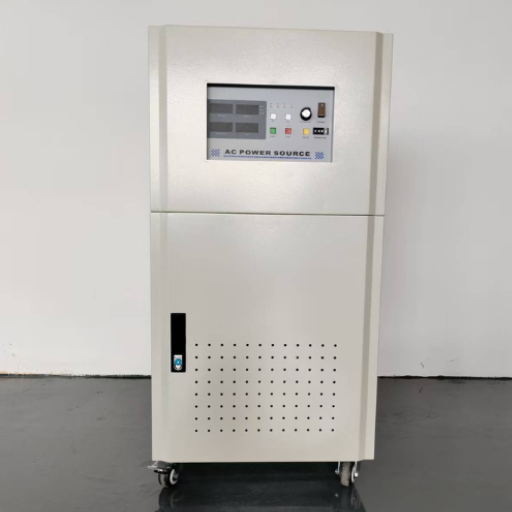
Converter Costs
Price Ranges by Capacity
Industrial-grade static converters typically cost:
- 1-5kVA: 500−500−2,000
- 10-20kVA: 2,000−2,000−6,000
- 30-50kVA: 6,000−6,000−15,000
- 100kVA+: 15,000−15,000−40,000+
Premium features (higher efficiency, remote monitoring, advanced protection) add 20-50% to base costs.
Factors Affecting Cost
- Capacity (kVA rating)
- Input/output voltage combinations
- Efficiency and features
- Brand and manufacturing quality
- Certifications (UL, CE, etc.)
Budget Considerations
Factor in additional costs:
- Installation materials (cable, conduit, breakers)
- Professional installation labor
- Shipping and import duties
- Maintenance and spare parts
Return on Investment
vs. Equipment Replacement
Compare converter cost against alternatives:
- Motor replacement/reconfiguration: Often 2-5x converter cost
- Equipment replacement: Typically, 10-50x converter cost
- Control system modifications: Variable, often exceeds converter cost
Energy Efficiency Savings
High-efficiency converters (96%+) reduce operating costs. For a 50kVA converter running 8,000 hours annually:
- 96% efficiency vs. 88% efficiency saves 4,000 kWh/year
- 10-year savings = $4,800
Operational Benefits
Beyond direct cost comparison, consider:
- Maintained manufacturer warranties
- Preservation of original equipment specifications
- Flexibility to relocate equipment internationally
- Reduced downtime and maintenance
Payback Period Example
A manufacturing company imported €200,000 of European equipment requiring 400V/50Hz power. Options were:
- Option A: Modify motors and controls: $45,000, void warranty
- Option B: Install 50kVA frequency converter: $12,000, maintain warranty
The converter paid for itself immediately through cost avoidance and warranty preservation.
Conclusion
A frequency converter from 50Hz to 60Hz can be used to equalize the supply. This will allow you to use the equipment both in 50Hz regions and in 60Hz countries. It is important to make correct decisions and conduct appropriate calculations during the design, selection and order of converters in order to avoid failures of the connected equipment.
Key takeaways for your evaluation:
- Frequency matters for motors and sensitive equipment – Even with the current rise in all-in-one configurations that are associated with gadgets, when it comes to motors or machinery, a perfect and exact match in frequency and design is always required.
- Static converters suit most applications – They are and their default installation device is a perfect mechanism for a variety of reasons, including superb precision and quality, as they provide their technical ability.
- Proper sizing ensures reliable operation – By performing practical on-load tests and designing thyristor-controlled reactors which can supercompensate for the capacitive or inductive lagging power factor load for a better power quality, the following shall be brought into full use.
- Installation quality affects performance – Strictly adhere to the electrical code, etc., also ensure that the critical loads of the system are energized only after satisfactory completion of these checks.
- Converters often cost less than alternatives –
The cost of performance modification might be higher than that of acquiring a completely new set of equipment thus it is something that should also be considered thoroughly in the evaluation of options.
It does not matter if you are looking for a 60 hertz to 50 hertz converter for those equipments which are bound for Europe, or if you are in need of a 50 hertz to 60 hertz converter while you are in North America, every power factors are well taken care of.
Ready to solve your frequency conversion challenge? We have the lastest in frequency conversion modular systems available right here. Our Engineering team also focuses on Global Power Solutions. Contact us and we will request a quote in a structured manner.
