
Voltage and frequency converters are crucial devices in today’s electrical and electronic systems, which are essential for ensuring power system compatibility across different product standards worldwide. The demand for frequency conversion has never been higher, as the spread of international trade, the use of power in industries, and the proliferation of advanced electronic gadgets are all vital to it. This article will provide a detailed overview of the technologies of voltage and frequency converters, covering their fundamental principles, operational mechanisms, and key applications. Whether you are an engineer, a technician, or a decision-maker seeking the best power systems to operate, this guide will provide you with all the necessary knowledge to understand and evaluate these fundamental devices.
Understanding of Voltage and Frequency Converters
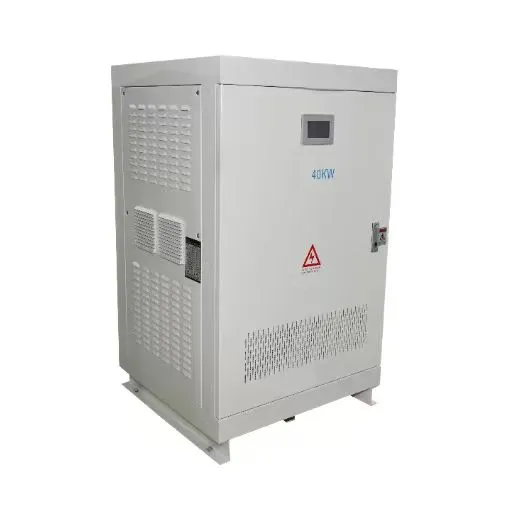
Voltage and frequency converters are devices that change the electrical power supply’s voltage and frequency to suit the desired application. Modern electrical power systems would struggle to function without these machines, which play a key role in power systems and, as a result, facilitate the accommodation of different electrical standards, provide power to the equipment located in regions with varying requirements of the grid, and, most importantly, ensure the stable operation of the power delivery systems for electronics. The converter accomplishes its task by first converting the incoming AC power to DC using a rectifier, then using an inverter to generate the desired AC output voltage and frequency. They find applications in the industrial and military fields, as well as in space satellites.
What is a Voltage and Frequency Converter?
Voltage and frequency converters are critical across various technical and industrial areas, as they can modify power supply parameters to meet the specific requirements of equipment and systems. They are essential in situations where running foreign machines requires a voltage or frequency (or both) different from the local standard. For example, a machine built for 60 Hz power in North America can work in 50 Hz regions, such as Europe, by simply using a converter.
One cannot overlook converters in renewable energy systems, such as wind turbines and solar inverters, which stabilize power output and make it grid-ready by conditioning it. The use of advanced converters is often associated with exact control mechanisms, such as pulse-width modulation (PWM), which aim to improve energy efficiency and minimize harmonic distortion. In the same vein, converters are employed in applications such as aerospace, where they ensure stable, precise power supplies to highly sensitive avionics systems, even in the face of significant operational variations.
Importance of Voltage and Frequency in AC Power Systems
In AC power systems, both voltage and frequency are primary factors that determine the efficiency and reliability of electrical power transmission and distribution. Voltage is the factor that ensures electrical devices receive the right amount of power without overloading or damaging components. On the other hand, frequency largely influences the stability and synchronization of grid power, especially in applications where timing must be very accurate, such as industrial automation and communication networks.
Globally, different regions use different voltage and frequency standards, and most countries operate at either 50 Hz or 60 Hz, covering the full range of voltage levels (for example, 230V in Europe versus 120V in North America). Variations in either of these two parameters can cause a range of problems, including equipment failures, overheating, and shortened working lives. Also, in industrial plants, incorrect voltage or frequency can disrupt processes that must be very accurate, leading to production costs and inaccuracies.
The latest AC power system design improvements focus on adopting wide-bandgap semiconductors and grid-smart technologies, such as AI-based monitoring, to achieve tighter control of voltage and frequency. These developments enhance power quality, enabling compatibility across a wide range of electrical systems, especially as smart grids and clean energy are mushrooming.
Key Terminology: AC, Hz, and Watt
AC (Alternating Current)
AC can be described as the constant change of the electric charge for the given period, which flows back and forth with a disposition to the direction. Its major advantage over direct current (DC) is that it can be easily converted to various voltage configurations, and hence it is highly suitable for electricity transmission over long distances. The current is commonly used in domestic and industrial areas and is generally available at standard frequencies ranging from 50Hz to 60Hz, depending on the region.
Hz (Hertz)
Hertz is the frequency unit, defined as cycles per second for AC, with 1 Hz equal to 1 cycle per second. For instance, the USA standard household grid at 60 Hz means the current changes direction 60 times per second. Strict control of frequency is a critical factor in the overall compatibility of electric devices and the steady operation of contemporary electric grids.
Watt (W)
The watt is the fundamental power unit in the International System of Units (SI), equal to one joule per second. It expresses the capacity of electric energy to be either used up or created. For example, a 100-watt bulb converts electricity into light and heat at a rate of 100 joules per second. Having a good idea of the wattage is a praiseworthy practice when setting up electric systems to ensure they are energy-efficient, especially when incorporating solar panels and wind turbines as sources.
Key Types of Frequency Converters
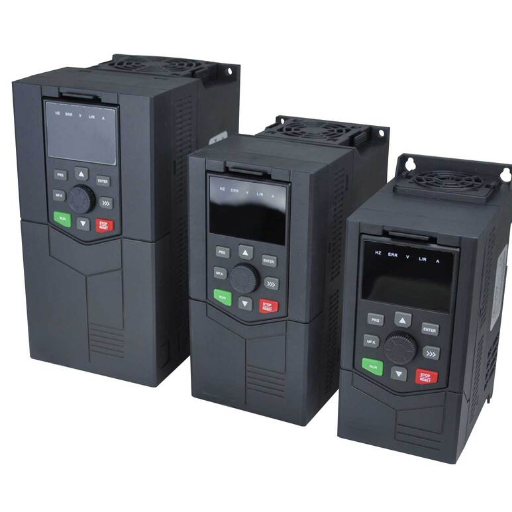
Rotary Frequency Converters
These converters function on a motor-generator set, which steps up the input frequency to the required output frequency. They are typically found in sectors where high power demand and reliability are the top priorities.
Static Frequency Converters
Inverting is performed in the latter using solid-state electronic components, such as rectifiers and inverters, to change the frequency. Static converters are not only compact but also more energy-efficient, making them ideal for modern applications such as HVAC systems and variable-speed motors.
Variable Frequency Drives (VFDs)
VFDs are among the most exceptional and specific inverter types, tailor-made to handle the motor’s RPM. A motor controller for this device is used across many industries, such as automotive production, shipping, and power generation, to address today’s concerns about motor and energy efficiency.
Solid State Frequency Converters
Solid-state frequency converters are among the most recent semiconductor innovations, enabling precise and reliable frequency conversion. Their competitors, rotary converters, lack the mechanical complexity, thus requiring less wear and maintenance. The key advantages of these types of converters are energy efficiency, a modest size, and improved reliability. In addition, the fast response times and custom output frequencies of solid-state converters make them an ideal choice for very demanding industrial applications, including but not limited to aerospace, telecommunications, and renewable energy systems. Higher-end solid-state frequency converters have built-in features such as harmonic filtering and power factor correction to improve performance and ensure compliance with the strictest electrical safety standards. Solid-state frequency converters are indispensable in power process environments where the consistency of power delivery is mainly affected by the frequency deviation.
Transformer-Based Frequency Converters
A frequency converter based on a transformer operates by electromagnetic induction to change the voltage and frequency of alternating current (AC) power systems. Actually, these systems are mainly composed of a transformer, rectifier, inverter, and related control circuitry, which interact to achieve effective frequency conversion. Among the available solid-state converters, transformer-based circuits use magnetically coupled components, providing galvanic isolation, improved power demand handling, and, lastly, increased service life in harsh conditions. The use of magnetic parts also results in higher efficiencies and lower core losses, thanks to greater capability to optimize the winding technique and the materials. This last improvement opens the door for heavy-duty applications like industrial machinery, rail systems, and ship propulsion, where the transformers were already being used, and, in some cases, their use has been further increased, mainly to ensure the reliability of the power being produced. Additionally, their inherent ability to withstand overload conditions without the need for performance alteration makes them a part of the most demanding electrical power systems.
Comparing Single-Phase and Three-Phase Converters
| Key Point | Single-Phase Converters | Three-Phase Converters |
|---|---|---|
| Power Supply Type | Requires single-phase AC supply | Requires three-phase AC supply |
| Voltage Ripple | Higher voltage ripple | Lower voltage ripple |
| Efficiency | Lower efficiency | Higher efficiency |
| Power Handling Capability | Limited for small loads | Suitable for heavy-duty applications |
| Circuit Complexity | Simpler circuit design | More complex circuit design |
| Installation Cost | Lower setup and maintenance cost | Higher setup and maintenance cost |
| Torque Characteristics | Pulsating torque | Smoother, consistent torque |
| Stability | Less stable under variable loads | Highly stable under variable loads |
| Application Scale | Residential and light-duty applications | Industrial and large-scale applications |
| Harmonic Distortion | Higher harmonic distortion | Lower harmonic distortion |
Technical Specifications and Functionalities
Efficiency
Systems that are characterized by smooth, consistent torque —such as those that exhibit strong stability under varying loads —usually exhibit high operational efficiency. This fact is most clearly seen in industrial and large-scale applications, where reliability and lower harmonic distortion together contribute to excellent performance.
Reliability
A lower harmonic content follows, with less wear and tear and hence greater long-term reliability. Besides, practically all industrial systems’ units have robust mechanisms that efficiently handle demands that vary in size.
Application Suitability
The choice of a system depends heavily on the size of the application. For lighting and residential use, cost-effective installations can be the choice of the moment. Still, for industries where the consistency of a system’s torque and its operational stability are primary, the robust, functional advanced systems are indispensable indeed.
Understanding Voltage Ratings: 220V, 240V, and 120V
Voltage standards like 220V, 240V, and 120V describe the electrical pressure that drives current flow in an electric circuit. To set voltage standards across different regions and ensure electrical devices are compatible, these ratings are widely used. The 120V system is the most common one in North America which consists of a single-phase supply that is used for residential appliances and lighting, whereas 220V and 240V systems, which are used mainly in Europe and in many parts of Asia, provide the users with a higher voltage level suitable for heavy-duty installations like cooling, heating, or even more industrial type heavy machinery to operate with more efficiency, on the other hand.
It is essential to realize that the difference between 220V and 240V is not significant, and most of the time it is due to normal fluctuations in the power supply rather than a change in system design. The devices designed for these voltage ratings generally account for these small deviations without any performance issues. Moving, however, from a 120V system to a 220/240V system is a logical decision, as is choosing step-up or step-down transformers and using proper plug adapters to help protect against equipment damage or inefficiencies. A complete understanding of voltage standards is needed in the international electrical system to ensure it operates safely and optimally.
Frequency Ratings: 50Hz and 60Hz
Global electrical systems are operated using two basic frequency standards: 50Hz and 60Hz. These frequency marks are essential for AC systems to operate correctly and are directly related to the power transmission networks of different regions. The 50Hz criterion is primarily working in Europe, Asia, and parts of Africa, while the 60Hz criterion is widespread in North and South America.
The preference for 50Hz or 60Hz can alter the layout and functionality of electrical equipment. For instance, the transition from revolving motors to infinity-adjustable speeds can determine the design and lead to the adoption of a particular motor type. Offer power components, like transformers or chokes, also change their working characteristics; the efficiency rating or losses can change at different frequencies. An additional note is that switching a machine from one to the other often requires extra equipment, and this is where frequency converters come into play, addressing some compatibility issues but potentially causing additional costs and power losses.
At the same time, the choice of primary frequency standards has in the past been influenced by factors such as system efficiency, implementation costs, and compliance with prerequisite technical advancements. Even though both frequencies are functionally equivalent in terms of power transmission and utilization, regional differences persist because some systems have laid out their networks in line with their frequencies. Being aware of these differences is a must for global manufacturers and infrastructure developers seeking solutions that are both reliable and flexible worldwide.
Power Ratings in kVA: What You Need to Know
Electrical equipment, notably transformers, generators, and uninterruptible power supplies (UPS), greatly benefits from power ratings expressed in kilovolt-amperes (kVA), as this is a key factor in determining the equipment’s efficiency. The real power (measured in kilowatts or kW) and reactive power are the two components that are combined to determine the kVA value. AC systems assign an essential role to apparent power, since it specifies the total electrical power delivered to a system, accounting for power lost due to phase differences between voltage and current.
The difference between kVA and kW is significant, and one should be careful not to confuse them. Both values are related by the power factor, which, in turn, depends on the load’s nature. In other words, motors and transformers, which are examples of inductive loads, have a power factor that is lower than unity; hence, not all the apparent power is converted into work, and some is lost as heat. It is, therefore, imperative for engineers and professionals in the industry to carefully analyze these factors when scaling up the equipment for its application and, at the same time, reduce losses.
It is often a matter of industry governance that equipment is labeled with power in terms of voltage and current (kVA) rather than the actual power (kW), because power is universally used in calculations. This approach guarantees agreement and ease of connection among different systems, without accounting for the load’s characteristics. The understanding and interpretation of kVA ratings are indispensable tasks for facility planners, electricians, and energy managers who provide solutions in an integrated manner that affect energy quality and cost while preventing equipment overload.
Main Applications of Voltage and Frequency Converters
🏭 Industrial Manufacturing
Making the transition between regions with different voltage and frequency standards easy for machinery results in cost-effective, productive operation.
✈️ Aerospace and Defense
Providing the exact frequency power required for the aircraft’s electrical system by using a power supply at 400 Hz, thus assisting in the calibration of electronic devices and aircraft systems.
🌱 Renewable Energy
Integration of energy from wind turbines or solar inverters in local grids, converting the output to the appropriate voltage and frequency.
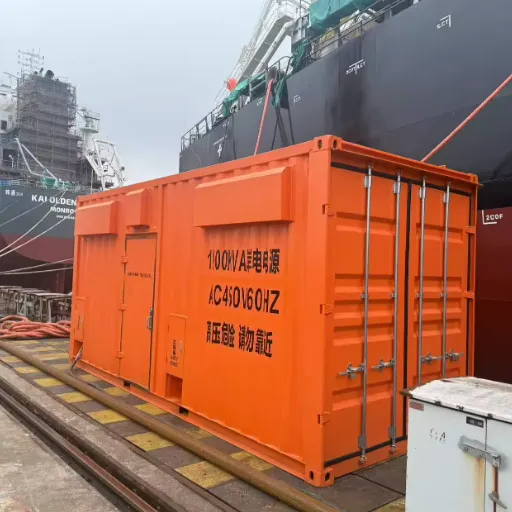
⚓ Marine and Offshore Operations
Making it possible to use equipment across various ships and ports by adapting to different electrical infrastructures.
🔬 Research and Testing Laboratories
Powering testing and experimental equipment with clean, continuous power, thus avoiding any deviation in the end results.
Industrial Applications: Powering Machinery
Frequency converters have a significant impact on mechanization in industry and are used to convert electrical inputs into the exact requirements of the machines. In today’s industry, motor control and torque often require significant power conversion, changing the frequency and voltage to whatever is needed. Machines work at high speed and need as much power as possible; they typically achieve this in manufacturing. By using frequency converters, one can achieve greater benefits than mechanical performance alone, making conveyor belts, pumps, and compressors more energy-efficient and reducing wear and tear. Another way to sum it up is that the operation of many machines can be synchronized using frequency converters, enabling increased productivity and maintaining product quality. The metalworking and paper manufacturing sectors, among others, have been known to widely use frequency converters to achieve the several benefits mentioned above, while also enabling scheduling of readings and thus presenting the link between the actual and desired quantities. Moreover, there is a growing trend in which efficiency, reliability, and ease of control are seen as the most critical aspects supported by the use of frequency converters in today’s industrial processes.
Household Appliances: Adapting to Different Power Sources
The present-day household appliances are designed to perform at their best regardless of the power they receive, which aligns with the global trend of energy diversification and sustainability. Many machines now have voltage regulators and are dual-frequency, so they can operate without interruption in regions with different electrical standards, such as 120V/60Hz and 230V/50Hz. These are not burdensome because one of the technological power conversion tricks, namely switch-mode power supplies and inverter circuits, is at work. They did the job of the step-down transformer in the past, but with less inductance and thus less energy loss. Furthermore, as machines are increasingly built for renewable energy sources like solar or wind, the storage component of the systems is one of the ingredients. This tacking of both energy generation and demand not only increases users’ operational hours but also reduces their total power-related carbon footprint in the long term. So they get the best of both worlds by making the most of in-house, energy-intensive household appliances, and also the path to eco-friendliness.
Commercial Uses: Ensuring Equipment Compatibility
Compatibility in commercial settings is among the most critical factors for establishing an efficient workflow and minimizing downtime. Modern commercial appliances and systems are designed to comply with universal protocols such as Ethernet/IP, Modbus, and BACnet, which simplifies the transition process by enabling easy integration with existing systems. This results in the fact that just-installed hardware can communicate with older systems, provide better performance monitoring, and, at the same time, reduce the hassles of using different but good vendors. At the same time, connecting various hardware over the internet and communicating via cloud-based platforms has dramatically expanded the possibilities for compatibility. Compatibility assessment has become a common practice in the procurement process for businesses, as it helps avoid potential conflicts over system interoperability, thereby reducing the risk of high maintenance costs or operational disruptions. The industry is also moving toward the use of open-source frameworks, which will help blur the boundaries between different manufacturers’ technologies and create a more flexible environment for commercial applications.
Challenges and Limitations of Voltage and Frequency Converters
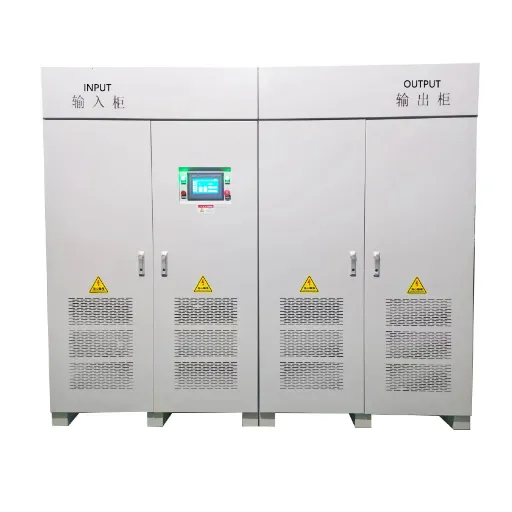
Voltage and frequency converters, although highly demanded in many instances, are significant sources of power engineering. These systems must be carefully reviewed because they tend to drain energy and generate heat, and they require a cooling system to be maintained at peak performance. The other, and not less significant, point is that there should not be excessive harmonic distortion, which could interfere with achieving the best-quality output and even harm very sensitive electronic devices. Furthermore, if the operation and maintenance costs are too high, small-scale or low-budget businesses may not be able to profit from these converters. Lastly, the complex setup and configuration might require specialized personnel, leading to longer timelines and significant cost implications at the end of the project. The resolution of these matters is the main factor in the maximum worth and dependability of the voltage and frequency converter systems.
Common Issues with AC Power Conversion
Harmonic distortion is a significant concern in AC power conversion, leading to inefficiencies and equipment deterioration. Harmonics are created when the waveform of the current or voltage fails to follow the ideal sinusoidal shape, and they are mainly, although not always, attributable to the presence of non-linear loads, such as variable-frequency drives (VFDs) or switched-mode power supplies. These distortions lead to a less efficient system and can cause overheating of transformers, motors, and other components.
Furthermore, voltage variations, also called voltage changes, sometimes occur on the power line when large appliances that require a lot of power to start, e.g., air conditioners or refrigerators, switch on and off; at the same time, fluctuations can be observed in lighting. Such voltage instability not only affects the quality of power supplied but also damages the equipment connected to it.
Electromagnetic interference, also known as EMI, is a problem that infiltrates AC conversion phases. If the correct shielding and grounding methods are not used, power conversion equipment can become the primary noise source. This results in increasingly complex systems, higher maintenance, and, very often, much greater cost, as with the EMI filter installation.
Even with the best conversion tools, a converter will generate heat rather than converting energy 100% efficiently. The most critical issue is heat dissipation associated with various power conversions. Wrong conversions and excessive heat generation can really break the machines, as one of the likely causes of performance loss is equipment failure.
Understanding Harmonics and Sine Wave Output
Harmonics are voltage or current waveforms that are found at multiples of the fundamental frequency integer value in an electrical system. Nonlinear loads, such as frequency converters, distort the electrical system’s sine wave output. This distortion can cause additional losses, equipment overheating, and reduced overall efficiency in delicate devices.
The optimal sine wave output represents a steady, progressive motion of voltage or current with nearly no distortion. The presence of harmonics, however, results in certain deviations from this perfect form, and their extent is determined by the total harmonic distortion (THD). International standards such as IEEE 519 set appropriate limits on THD for various applications, making it a significant issue that must be addressed to ensure systems remain reliable and compliant.
Different techniques are used to eliminate harmonics, including the application of filters (passive, active, or hybrid), improved converter design, and technological improvements in Pulse Width Modulation (PWM). The active filters, for example, can compensate for harmonic currents, and advanced PWM systems can convert the output waveform to a more accurate sine wave. All these changes are meant to improve system performance and make it more reliable in a world where the electric power supply is becoming increasingly critical.
Reference Sources
Power converter for ultra low-frequency and low-voltage
This study explores energy conversion mechanisms in harvesters that generate very low voltage (mV) and frequency (few Hz) electrical outputs.
Frequency to Voltage Converter Market expected to grow significantly
This market analysis provides insights into the growth trajectory of the frequency-to-voltage converter market, projecting significant expansion by 2035.
Frequently Asked Questions (FAQs)
❓ What is a frequency converter, and how does it work?
A frequency converter is an apparatus that changes the frequency of electricity, thereby making different electrical appliances and machinery compatible across different power standards. The usual conversions are from 50 Hz to 60 Hz, indicating their necessity in regions where power frequency varies. There are two types of converters: solid-state frequency converters and motor generator sets, and each is used in a unique field. The output voltage can be regulated to meet the specific devices’ requirements; this way, they will work correctly and without damage. In general, a frequency converter produces a neat sine wave, which is good for sensitive electronics.
❓ Can a voltage frequency converter handle 3-phase and single-phase power?
Indeed, a voltage-frequency converter can handle both 3-phase and single-phase power, making it flexible for various applications. Single-phase static frequency converters are the best option for smaller loads, while 3-phase converters are necessary for larger industrial power devices. Instead of only a 50Hz input frequency, if the input frequency is 60Hz, the converter will make the required adjustments to the output power to keep the voltage within the given limits. This flexibility provided by the adaptive systems is essential for running household appliances and industrial equipment that need different power configurations. Moreover, these converters can support a wide range of input voltages, making them very versatile with other power sources.
❓ How do solid-state frequency converters differ from traditional transformers?
Solid-state frequency converters rely on semiconductor technology to manage both voltage and frequency, whereas traditional transformers primarily adjust voltage levels without affecting frequency. The key advantage of solid-state converters lies in the generation of the purest type of AC signal —the sine wave, which is indispensable for the proper operation of the device. Unlike transformers, which can introduce mains noise, solid-state converters keep the power supply clean and prevent interference from affecting the system. Apart from that, solid-state frequency converters are often the solution, mainly when used as built-in transformers that are much smaller and lighter than traditional ones and, therefore, much easier to install and to improve the system.
❓ What are the applications of a 50Hz to 60Hz converter in household appliances?
A 50Hz to 60Hz converter is indispensable in the home to ensure that household appliances designed for different power frequencies operate without problems, such as air conditioners, refrigerators, and washing machines. It may be necessary to match the power frequency to specific devices; otherwise, they may not work correctly. If a frequency converter is used, users and power can convert from 50Hz to 60Hz so that the appliances operate without a hassle. Moreover, with these converters, a single power source can feed power to several devices, ensuring everyone gets the right power for their best performance and no one person is oceans apart from the others.
