
The shift from single-phase to three-phase power is a critical move for many industrial and commercial applications and is often the core of contemporary electrical systems. Single-phase power can meet basic home needs, but the efficiency and reliability of three-phase power are essential for high-performance machinery, manufacturing equipment, and advanced HVAC systems. This post takes a close look at the technical workings of phase conversion by discussing single-phase-to-three-phase converters, the situations when they are essential, and the main factors to keep in mind when choosing the right solution. Whether you are looking to maximize power delivery at your place of work or simply want to improve your competence in electricity, this detailed guide provides the know-how to make the right decisions about phase conversion.
Introduction to Phase Conversion
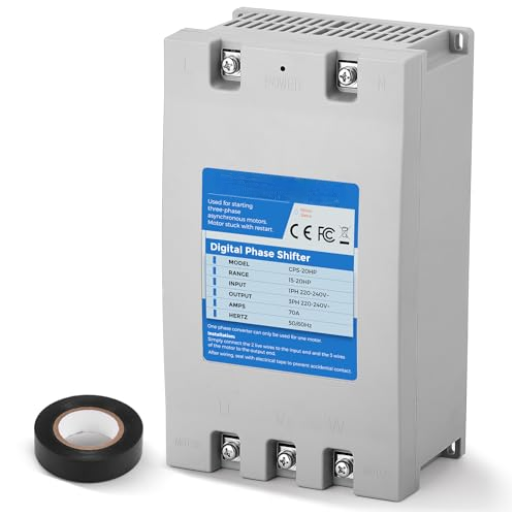
The process of phase conversion pertains to the alteration in the form of electrical power delivered from one phase to another. This alteration of power is usually required in businesses and factories to operate three-phase machinery or devices. Phase conversion is most evident in workshops and industrial units where high power consumption is required. Typically, residential single-phase power is delivered through a single alternating current (AC) waveform. In contrast, three-phase power provides power through three alternating currents, spaced by 120 degrees, making the energy supply more stable and efficient.
For phase conversion, rotary-phase, static-phase, or digital converters are commonly employed. Of all types, rotary-phase converters are most widely used in applications that may require high power efficiency and very accurate performance. In contrast, static-phase converters are most favoured, especially when relatively light loads are the case. Digital converters would be the best solution for their high operational control and adaptability, enabling the most accurate power management. The choice of the most suitable converter type depends on factors such as load type, power requirements, and the industrial environment, and can range across the three types.
What is a Single-Phase to 3 Phase Converter?
One of the best solutions for converting single-phase to three-phase power is a single-phase-to-three-phase converter, an electrical device designed to convert single-phase power, usually distributed by standard utility grids, to three-phase power used by most industrial machines and equipment. This transformation is essential in places where a three-phase power supply is not readily available. Yet, the proper functionality of machinery, such as motors, HVAC systems, or CNC machines, depends on the efficiency and stability of a three-phase power supply.
Modern power converters use high voltages, powerful technologies, and many computers to provide the necessary power consistently and maintain phase shift. By being digital, the converters can use microcontrollers and software algorithms to simulate three-phase power accurately. Also, these systems always include harmonic filtration and voltage regulation as add-on features, which provide the lowest losses and the most significant performance improvement. The main performance metrics of the single-phase-to-three-phase converter are its power rating, efficiency, and the type of load it is connected to. The right choice and proper placement of these devices are crucial for maintaining operational reliability and energy efficiency in all diverse fields.
Importance of Phase Conversion in Industrial Applications
Phase change is the most critical process in industry. Especially in cases when three-phase electric power is needed but only single-phase power is available. The reason three-phase systems are so popular in industry is that they provide continuous, stable power transfer, are more energy-efficient, and can handle heavier loads than single-phase systems. Thus, some heavy machinery, such as CNC machines, conveyor systems, and large motors, is among the most common three-phase power users.
Presently, the use of power system converters in industry has been advancing, thereby increasing their reliability and efficiency. With evolving technology, converters are now integrated with the latest microprocessor controls that enable accurate voltage balancing, improved energy efficiency, and real-time load response. At the same time, converting equipment components such as rotary and static converters are seeing increased use due to their low cost and maintenance advantages. In diverse speed-control applications, Variable Frequency Drives (VFDs) are also being increasingly installed. If the power is converted correctly, the operation will be consistent, reducing wear and electrical energy losses and thereby contributing to the sustainability and cost-effectiveness of industries in the long run.
Overview of Motor Types and Their Requirements
| Motor Type | Characteristics | Key Applications | Power Source | Maintenance Requirements |
|---|---|---|---|---|
| AC Induction Motor | Rugged, efficient, low starting torque | Pumps, conveyors | Alternating Current | Minimal, periodic inspections |
| Synchronous Motor | Precise speed, high efficiency | Compressors, generators | Alternating Current | Regular alignment checks |
| DC Motor | High torque, adjustable speed | Cranes, elevators | Direct Current | Brush replacement, frequent checks |
| Stepper Motor | Precise position control, low speed | Robotics, CNC machinery | DC or AC (with drive) | High, position feedback alignment |
| Servo Motor | High precision, dynamic response | Automation, robotics | DC/AC (control drive) | Drive calibration, lubrication |
| Universal Motor | Lightweight, portable, high-speed | Drills, mixers | AC or DC | High, carbon brush checks |
| Permanent Magnet Motor | Compact, efficient, high torque density | Automotive, appliances | Direct Current | Low, periodic performance checks |
Functionality of Phase Converters
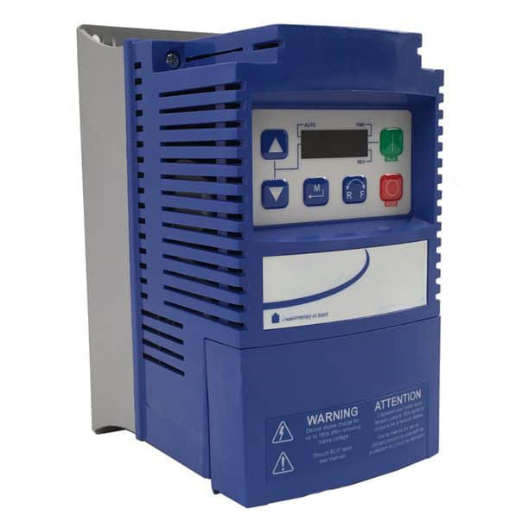
Phase converters convert single-phase electrical power to three-phase power, enabling the use of three-phase equipment in areas where only single-phase power is available. The basic principle of operation of a phase converter is to generate the other phases required for three-phase motors and machinery. The usual three common types of phase converters are rotary, static, and digital converters:
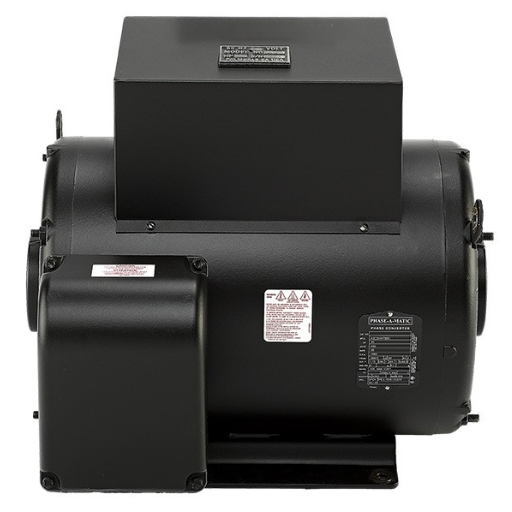
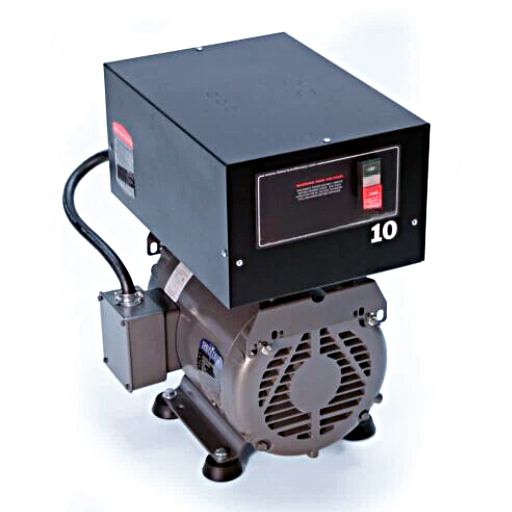
- Rotary Phase Converters: The simplest and most rugged of the phase converters, powered by a motor that turns a generator rotor. This generator produces balanced three-phase power. Their main advantage is the ability to provide and maintain a constant, smooth power supply to connected devices for extended periods of uninterrupted operation.
- Static Phase Converters: These converters are designed to supply the third phase briefly during the motor’s startup; however, they cannot provide full three-phase power during operation. They may be used primarily on cameo and/or less demanding applications.
- Digital Phase Converters: Utilize sophisticated electronic circuits to generate highly accurate and consistent three-phase power. This makes them the right choice for computer numerical control (CNC) equipment, test rooms, and other precision or varying-load applications.
In general, phase converters are essential in industrial settings, shops, and villages where three-phase electrical power is not readily available. The choice of a converter primarily depends on the specific load requirements and performance characteristics of the equipment in use.
How Single-Phase to 3 Phase Conversion Works
The conversion from single-phase to three-phase is achieved using technologies such as phase converters or Variable Frequency Drives (VFDs), which can adjust the electrical characteristics to either simulate three-phase power from a single-phase feed or generate three-phase power directly. The primary purpose is to obtain a balanced three-phase waveform from a single-phase input, providing a continuous, efficient power supply to the three-phase equipment.
Phase converters work by adding the third leg of voltage to determine the proper phase angle and amplitude for three-phase operation. Rotary phase converters use an idler motor to do this. The motor spins, and the additional phase is generated by electromagnetic induction. However, static phase converters are entirely different. They use capacitors to temporarily provide phase-shifted power, which is sufficient to start electric motors. But these converters might not always offer continuous, adequate three-phase power for all load conditions, which is a significant issue.
Digital phase converters use high-end solid-state electronics to simulate the third phase digitally. This guarantees precise voltage monitoring and makes them suitable for delicate or variable-load conditions. In addition, by converting single-phase power to direct current (DC) first and then using inverters to reintroduce a balanced three-phase supply with adjustable frequency and voltage, variable-frequency drives (VFDs) offer another solution. This provides superb control of motor speed and energy usage, among other features.
Understanding Power Supply Requirements
Vital factors to consider when sizing the power supply for any electrical system include the system’s total power demand, input voltage, and load characteristics. The correct wattage calculations ensure the power supply can sustain peak loads without sacrificing performance or safety. Single-phase systems typically operate at 110-240V, mainly determined by local customs, whereas three-phase systems usually operate at much higher voltages, such as 208V, 400V, or 480V, to cater to the power needs of large industrial machines.
Power factor and the selection of power supply components are directly affected by load characteristics, including inductive, resistive, or capacitive properties. For example, a motor acting as an inductive load leads to a lagging power factor and the need for capacitors as correction devices to keep the entire system still efficient. Furthermore, it is now possible that regulated power supplies with low electrical noise may be necessary in some cases, and they are usually equipped with advanced filtering circuits or power electronics to provide stable, high-quality outputs.
Environmental factors such as heat dissipation, cooling requirements, and air temperature are also dominant factors in power supply design. The use of adequate ventilation or active cooling systems, such as fans or heat sinks, may be necessary to prevent thermal overload and to maintain long-term reliability. A properly selected and controlled power supply, enabled by those factors in the design and selection process, will make any electrical application more efficient and durable.
Applications of Single-Phase to 3 Phase Converters
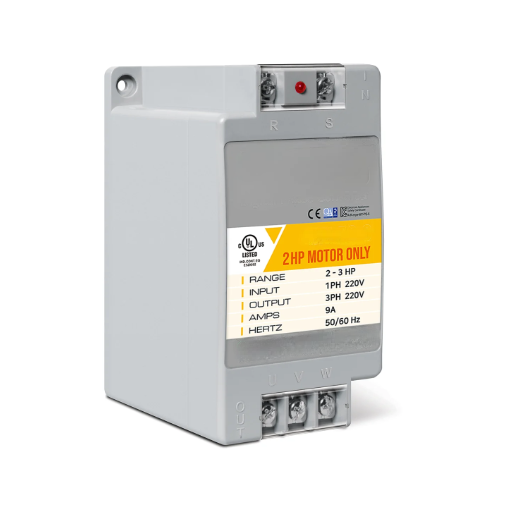
Single-phase-to-three-phase converters are widely used across sectors to enable the use of three-phase equipment when only single-phase power is available. Such converters are very common in industries to power machines such as motors, pumps, compressors, and conveyor belts, which require a three-phase supply to achieve optimal performance and efficiency. In the agricultural sector, these converters are used to power irrigation systems and grain-handling equipment. Also, they are used in small workshops and across all types of tools, including lathes, milling machines, and welding equipment. The capability of these devices to provide portable, reliable power solutions makes them a must-have for improving the usability of three-phase loads in single-phase locations.
Common Uses in Industrial Settings
Phase converters are critical in industrial scenarios where three-phase power is unavailable or too expensive to install. Very often, they are the only way a CNC machine can work, which, as here, requires three-phase power, all while being very stable and of the highest quality to perform at its best. Moreover, businesses using timber- and metalworking machinery, such as saws, grinders, and shears, are highly dependent on phase converters because they enable efficient operation of heavy-duty equipment.
Moreover, phase converters in manufacturing facilities enable the operation of conveyors, hydraulic pumps, and compressors, thereby supporting continuous manufacturing. The technological updates enhance the reliability and efficiency of phase converter systems, ensuring stable voltage and preventing downtime, thereby prolonging the life of the equipment, which would be very expensive to replace. Phase converters remain the key to optimizing industrial systems and processes across various sectors, offering their advantages and easily adapting to them.
Application in 3 Phase Motors
Among the different types of power systems used in industries, the three-phase motor is the most common. It relies heavily on a balanced, steady power source provided by phase converters for proper operation. The details of the contribution of phase converters to three-phase motor operations are given below:
- Industrial Machinery: Three-phase motors are commonly used in machines such as grinders, mills, and lathes to deliver top-level performance and reliability. Phase converters can also power single-phase motors, but efficiency remains the same. Computer numerical control (CNC) machinery requires strict control over voltage, which can be ensured by rotary phase converters, which in turn provide the least fluctuations.
- Pumps and Compressors: The power supply generated by the three-phase system feeds the water pumps, air compressors, and all other related equipment. Sectors like agricultural irrigation need a high-current, constant supply. In machines like these, phase converters are essential for regulating power delivery.
- HVAC Systems: Most heating, ventilation, and air conditioning systems in larger commercial and industrial buildings use three-phase motors, which are among the most energy-efficient machines in the world. Having phase converters will ensure the system keeps running; therefore, the overall risk of downtime, especially during busy hours, of fruitlessly trying to control one’s environment will be minimized.
- Conveyor Systems: To move products on the factory conveyor belt, huge three-phase motors are required. Phase converters are preferred for powering those motors in this instance because they entail minimal downtime. Some goods must be continuously moved, and without the correct torque and speed, the system can become inefficient and thwarted.
- Refrigeration Units: Refrigeration is a fundamental process in the cold storage industry and large-scale refrigeration systems typically have three-phase motors that work for good cooling and performance. The application of phase converters eliminates fluctuations in the power supply, thereby preventing machine overheating and prolonging its working life.
- Woodworking and Metalworking Tools: High-end manufacturing and warehouse tools, such as saws, planers, and welders, are among the devices designed to operate on three-phase power. Phase converters convert single-phase power to three-phase power and are a practical, effective solution for powering the same tools used in big factories and warehouses in small workshops.
Benefits of Using Phase Converters
Cost Efficiency
Businesses can use single-phase power for three-phase machinery, thus saving on the high cost of three-phase utility line installation.
Versatility
On top of that, they can be adjusted to suit different operational requirements very well, as they have a wide application range, from simple tools to big industrial machinery.
Improved Equipment Performance
Another positive implication is that the use of phase converters can lead to increased performance and reliability of three-phase equipment, thanks to the provision of a steady, balanced electrical power supply.
Extended Equipment Lifespan
Yet another advantage of using phase converters is that they can be generators of the sort of power that would still make machine wear and tear problems less, and thus, leading to more time for businesses to keep up their work.
Ease of Installation
The makers of phase converters often make promises of easy installation. In other words, the converters are so user-friendly that they can be integrated without much alteration into the existing electrical system or in common standard electrical codes.
Cost-Effectiveness and Energy Efficiency
Phase converters are a relatively inexpensive solution for companies and production facilities that need three-phase power in areas where only single-phase power is available. By eliminating the need for expensive grid upgrades or time-consuming logistics such as generator refueling, phase converters significantly reduce initial and recurring costs. Besides, the most recent phase converters are designed with energy efficiency as the top priority, resulting in lower power loss throughout the process.
The energy-saving benefits of having digital phase converters are even more pronounced with the latest progressive technological developments. Apart from that, energy utilization is further optimized through advanced power conditioning and adaptive controls that deliver the requested power level under different customer conditions. According to research, industries that use efficient phase converters can save energy in the long run, thereby supporting the overall sustainability objectives and lowering environmental harm. The ability to combine utilities with decreasing energy use in a plant makes the phase converter option for machine drives in various manufacturing utilities an economical and environmentally friendly choice.
Improved Motor Performance and Reliability
Phase converters have a significant impact on the performance and reliability of motors, making power distribution more uniform and maintaining voltage across all three phases at a consistent level. Correctly balanced phases prevent the ends of the copper coils in the motor windings from being burned by high voltage, so the motor runs cooler and is far less likely to fail from wear and tear. Even more, those that have central control units among their parts, top-rated models, allow for good performance through load-swing compensation, maintaining a flat torque output, and stability in machine operation. Showings in one of the investigations held are that the usage of such kind of phase converters leads to the motors demanding less maintenance and having a longer life because they are exposed to a lesser extent of the imbalance caused by both mechanical and electrical factors, this, in turn, makes the system of phase converters a must-have industrial equipment for businesses that rely on high-demand and high-precision motor-driven applications.
Flexibility in Power Supply Options
Phase converters are currently the most versatile way to adapt power supplies to different industrial specs. The units can run in locations with limited access to three-phase power or undergo a voltage change, and the devices will work without requiring any significant alterations to the infrastructure. The latest phase converter technology is incredibly efficient. It can convert between a wide range of input and output voltages, so the systems will not only work well in a specific location but also worldwide, as long as the power standard is included. Rotary and digital phase converters are the best options for even small-scale shops’ and large industrial operations’ energy consumption needs. The installation of advanced monitoring systems is probably the best move to make to enable real-time adjustments that will increase reliability and minimize energy waste. As mentioned earlier, the features make phase converters the most critical solution for keeping businesses running across industries, even in areas with erratic or unstable electricity supply.
Considerations When Selecting a Phase Converter
- 1
Power Requirements
The phase converter must be checked to see whether it can supply power to all connected machines. It is crucial to consider both the current load and the peak load to avoid shortcomings during operation. - 2
Type of Equipment
Find out which equipment the system is driving. In some cases, CNC machines and compressors may require rotary phase converters to remain consistently operational. - 3
Voltage Compatibility
Make sure the phase converter is configured to the same voltage as your machines are rated for to avoid damage or inefficient operation. - 4
Load Balance
Check the phase converter’s ability to provide balanced output across all three phases, including the one for precision or sensitive machines. - 5
Environment
It is also recommended to consider factors such as temperature, humidity, and available space for operation. The best for your working environment, either indoor or outdoor must be taken. - 6
Cost and Efficiency
Check all possible costs: the initial cost, subsequent maintenance costs, and power consumption. A highly efficient converter might not be the most profitable right from the start, but it will significantly lower costs over time.
Compare Common Types of Converters
| Type of Converter | Functionality | Best Applications | Advantages | Limitations |
|---|---|---|---|---|
| AC-DC Converter | Converts AC to DC voltage | Electronics, batteries | Simple design, cost-effective | Limited to DC output applications |
| DC-AC Converter | Converts DC to AC voltage | Solar, UPS systems | Supports AC devices, versatile | Higher power loss |
| DC-DC Converter | Changes DC voltage levels | Electric vehicles, robotics | High efficiency, compact | Restricted to DC environments |
| AC-AC Converter | Modifies AC frequency or voltage | Industrial motors, lighting | Precise control, flexible input | Complex design, costly |
| Step-Up Transformer | Raises voltage levels | Power transmission lines | Reliable, handles high power | Size and weight can be huge |
| Step-Down Transformer | Lowers voltage levels | Power distribution, electronics | Durable, reduces high voltage safely | Not portable, fixed size |
| Bidirectional Converter | Allows power flow in both directions | Energy storage, smart grids | Adaptive, multifunctional | Expensive, higher control needed |
Power Ratings and Motor Speed Considerations
It is essential to understand the relationship between power ratings and motor speed when selecting power converters and related components. Power rating, generally expressed in watts or kilowatts, is the maximum energy a device can withstand without overheating or breaking down. Converters with higher power ratings are required for applications that handle heavy loads, such as industrial machines or electric vehicles, as they ensure sufficient energy transmission and operational stability.
Motor speed, which is usually measured in revolutions per minute (RPM), is mainly determined by the power input and voltage provided. For instance, in AC motors, the synchronous speed is fixed by the supplied power’s frequency and the motor’s poles. Any difference between the converter’s power output and the motor’s demand will lead to reduced efficiency, overheating, or even mechanical failure over time.
Modern systems also use state-of-the-art control methods, such as pulse width modulation (PWM), to regulate the motor’s speed with greater precision and reduced power loss. There is also the fact that new types of variable-frequency drives (VFDs) and bidirectional converters are beneficial for this, especially for energy storage and automation, where the need for both high-speed control and coordinated power usage is crucial. In all cases, the choice of equipment should be based on proper load demand estimates, application needs, and, not least, local environmental conditions to ensure safety and performance.
Reference Sources
Active-Phase Converter for Operation of Three-Phase Induction Motors on Single-Phase Grid
Summary: This study introduces an active-phase converter that enables three-phase induction motors to operate from a single-phase grid.
Single-Phase to Three-Phase Converters With Two Parallel Single-Phase Rectifiers and Reduced Switch Count
Summary: This paper proposes two innovative topologies for single-phase-to-three-phase converters that utilize two parallel single-phase rectifiers.
Frequently Asked Questions (FAQs)
What is a single-phase to 3-phase converter, and how does it make 3-phase power?
The conversion from single-phase to three-phase power is facilitated by a one-to-three-phase converter, enabling the use of three-phase motors and equipment on single-phase power. The latter now covers various types of converter systems, including general rotary phase converters, static phase converters, and electronic or digital phase converters, thus providing different balanced-voltage and motor-performance benefits. Rotary converters are more widespread because they can generate power with an idler motor to create the third leg, support multiple loads, and have greater horsepower capacity than static converters, which can only handle light or starting loads.
How does a rotary phase converter compare to a static phase converter for running a 3-phase motor?
From a historical perspective, the operating costs of rotary phase converters have been on the lower side, and they are also able to provide a balanced three-phase output that is more rugged than what is commonly achieved with static converters; thus, the rotary phase converters are the perfect solution for uninterrupted operations and the use of various loads like machining equipment or industrial motors. The rotary phase converter is a high-maintenance solution, but it is currently the most essential one. It consists of an idler motor that creates and carries the third leg and can power large motors of 10hp or more, with the final size depending on the machine’s rating. Conversely, a static phase converter predominantly consumes power from the grid for motor starting and is not suitable for continuous full-load operation.
Can a VFD or digital phase solution control motor speed on a 3-phase motor from a single-phase input?
Indeed, a Variable frequency drive (VFD) can convert a single-phase input to a three-phase output, allowing motor speed and torque to be varied for a 3-phase motor; thus, enabling variable-frequency operation and exact motor speed control. One of the main applications of VFDs is to provide 3-phase power to equipment that must vary speed. Moreover, the use of VFDs may lead to considerable power conservation and improved system quality control, as they also integrate life-prolonging equipment such as overload and ramp controllers, among others. If you are considering the VFD for a single-to-3-phase converter application, in addition to the power size, you must ensure the drive is single-phase-input compatible.
What size or specification of phase converter do I need for a 3-phase motor rated 3 hp or 10hp?
Determining the appropriate phase converter size is a technical matter that relies on several motor characteristics such as Full Load Amperes (FLA), Horsepower (HP), Torque at Start up and number of simultaneous loads, e.g a three horsepower motor would hardly need any converter at all when it is compared to a 10 horse power motor and the kVA rating of the converter is supposed to be, by all means, higher than the motor’s total demands. For rotary converters, it is a fairly common practice to choose a unit whose rating is slightly higher than the motor’s power to account for starting currents and any discrepancies in the system.
