
Electric frequency converters constitute a key element of contemporary power systems, as they permit a quick and smooth transition between different electrical frequencies; consequently, the system’s performance and efficiency are tuned. The case study involving operating in the industrial equipment sector, integrating renewable energy, and motor control requiring great precision, clearly indicates the importance of the devices across a variety of applications. Frequency converter technology is briefly discussed here, and the best part is that the solid-state devices market is a whole new field of reliability and energy savings that steady-state inverter technology still has to catch up to. Given the basic empirical knowledge one has to have to go almost all the way to a multi-billion-dollar industry in the first place, the study is saturated with results and analyses for the electrician and the user who wants a broader perspective in this segment of the field.
Overview of Frequency Converters
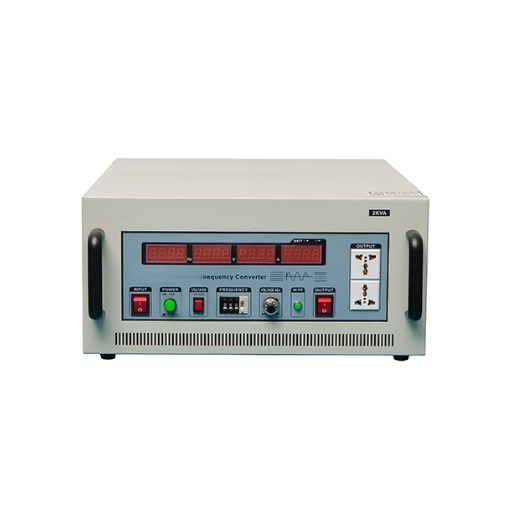
Frequency converters are devices that change the frequency of an electric power source. They are first and foremost assisting in the manufacture of electric machinery that can operate at various frequencies; often, this is done by converting electric power from one standard frequency (such as 50 Hz or 60 Hz) to another. The method employed first rectifies the input alternating current (AC) to direct current (DC) and then inverts it back to AC at the desired frequency. Frequency converters have a wide range of applications in the industrial sector, including manufacturing and aerospace and marine environments, where equipment compatibility and precision in motor control are essential. The energy efficiency improvements and operational flexibility made possible by their use have turned them into a basic technology found in all modern electrical systems.
What is an Electric Frequency Converter?
Advanced electronic devices known as electric frequency converters change the frequency of alternating current (AC) power to make it suitable for the equipment or systems connected to it. They consist of a rectifier, a direct current (DC) link, and an inverter. The rectifier works by converting the incoming AC power to DC while the inverter reverses it to AC again at the frequency that was required. In terms of technology, the latest frequency converters use semiconductors, such as insulated-gate bipolar transistors (IGBTs), to achieve precise frequency regulation and high efficiency.
Frequency converters are critical for accurate control of electric motors. Such applications include variable-speed drives for pumps, fans, and compressors. They make it possible for machinery to operate at the most efficient speed, reducing wear and tear and saving electrical power. On the other hand, they are a must-have in the aerospace and defense sectors, where devices are often set to operate at frequencies other than the standard 50 or 60 Hz. With the advent of digital control systems and power electronics, current frequency converters have earned praise for their compact designs, high energy efficiency, and enhanced reliability in energy management and industrial automation systems.
How Frequency Converters Work
A frequency converter operates by modifying the power supplied to a machine or system. This change helps the machine or system slow down or speed up. The whole process begins with the incoming AC power, which is first converted to DC power by a rectifier. The converted DC power is then passed through capacitors to establish the voltage stability. Subsequently, the inverter circuit will be put into operation, in which insulated-gate bipolar transistors (IGBTs) or related semiconductor devices switch the DC power very rapidly to generate AC power at the desired frequency and voltage.
Modern frequency converters leverage advanced Pulse-Width Modulation (PWM) techniques to produce accurate waveform outputs, guaranteeing minimal harmonic distortion and achieving peak energy efficiency. Moreover, they take advantage of the feedback mechanisms that are in operation at all times and are frequently connected to the sensors to reach even more accurate adjustments of the output frequency than is possible within the operational requirements. Such an approach allows extending applications like motor drives to their limits, resulting in precise speed regulation, reduced mechanical stress, and longer equipment lifespan. Along with the highly reliable and long-lasting cooling solutions and thermal management designs of modern converters, these are one of the factors that make the devices a long-lived and dependable part of operations, even under harsh conditions.
Types of Frequency Converters
| Type | Key Features | Applications | Advantages |
|---|---|---|---|
| Static Frequency Converter | Solid-state technology | Motor drives, power transmission | High efficiency, compact size |
| Rotary Frequency Converter | Electro-mechanical operation | Industrial machinery, legacy systems | Rugged construction, high durability |
| Matrix Converter | Direct AC-to-AC conversion | Compact motor drives, aerospace | No intermediate energy storage |
| DC-Link Converter | AC-DC-AC conversion via DC link | Variable speed drives, energy systems | Wide voltage and frequency range |
| Cycloconverter | Direct frequency conversion | High-power industrial applications | Handles high power levels efficiently |
Common Applications of Frequency Converters
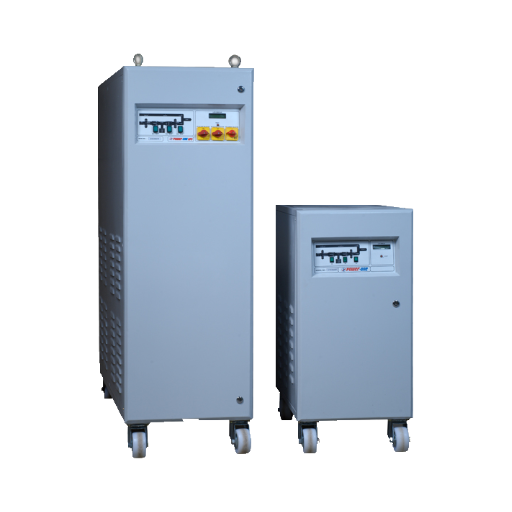
Industrial Automation
Frequency converters enhance the precision and efficiency of motor-driven systems across various industrial processes. They invariably use conveyors, pumps, compressors, and machine tools as they are widely used there.
Renewable Energy Systems
In the larger view, such converters are essential in wind turbines and solar power systems, enabling the efficient integration of variable power into the grid.
HVAC Systems
The potential energy savings of the Heating, Ventilation, and Air Conditioning systems are enabled by frequency converters that provide motor speed control and maintain comfortable environmental conditions.
Marine and Aerospace
Frequency converters are a big help to the entire power system in vehicles, as they can meet exact power demand, making the system overall very reliable and stable under dynamically changing conditions.
Transportation
Vehicles on rails, homes, offices, industries, electric vehicles (e.g., trains), and elevators are just a few of the applications where speed control and energy efficiency are combined through frequency converters for smooth operation and reduced environmental impact.
Use in Household Appliances
The crucial role AC frequency converters play in the operation of modern household appliances is that they help regulate motor speeds and thus optimize energy consumption. A washing machine with a frequency converter, for instance, can control the drum’s spinning speed very accurately, improving performance and reducing power costs. A similarly significant benefit of applying frequency conversion technology to refrigerators is that compressors are speed-modulated in a power-efficient manner, maintaining a constant low energy level and keeping the fridge at the desired low temperature with no energy waste. The movement along the road toward more silent, energy-saving appliances has been made possible by the very technology that originated in frequency conversion. Moreover, not only do these changes improve the tools’ energy efficiency, but they also align with cutting household energy consumption and reducing carbon dioxide emissions.
Frequency Converters in Renewable Energy
One cannot doubt the importance of frequency converters for the successful integration and improved performance of renewable energy systems, especially in wind and solar power. These units are necessary for converting variable-frequency outputs from renewable energy sources to a constant frequency suitable for grid distribution or local use. Wind power plants, for example, produce energy at many different frequencies related to wind speeds, and these converters are the link that ensures the power matches the grid requirements, which are typically 50 or 60 Hz.
Modern frequency converters enhance system reliability through advanced power electronics and control systems, enabling precise voltage and frequency adjustment while minimizing energy losses. Innovations such as active front-end (AFE) technology improve energy conversion efficiency and reduce harmonic disturbances, a common challenge in renewable energy integration. Additionally, the ability of frequency converters to regulate power flow and react to grid conditions has proven vital for maintaining stability in increasingly decentralized energy systems.
By using the latest power electronics and control technologies, modern frequency converters enhance system reliability. They enable precise adjustment of voltage and frequency while simultaneously reducing energy losses. An active front-end (AFE), a good example of an active front-end technology, reduces energy conversion losses and cancels a significant portion of the harmonic power generated simultaneously with the “clean” renewable energy. By the same token, the grid-connected inverter, which is today’s state-of-the-art equipment for all renewable sources, cannot only supply but also support the grid in emergencies.
The statistical data underline the importance of frequency converters. The capacity of renewable energy expands worldwide. As a result, demand for high-performance frequency converters is expected to increase significantly over the next few years. This technology plays a crucial role in enhancing grid responsiveness and supporting the transition to greener energy solutions.
Benefits of Using Solid-State Frequency Converters
1
Enhanced Energy Efficiency
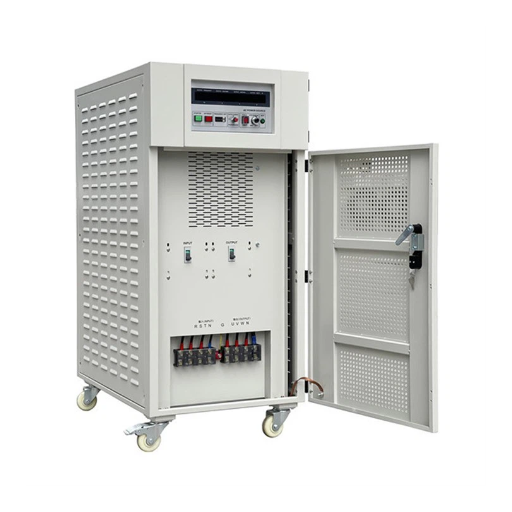
Power consumption optimization is achieved through the use of solid-state frequency converters, which ideally and on the spot match the frequency and voltage to the load situation. This minimizes energy consumption mishaps and operational costs.
2
Improved System Stability
In milliseconds, again, such converters act globally as stabilizers in the power delivery process by taking the peak of the erratic power flow and the weak, if any. Hardware and software are powered by digital control technology.
3
Versatility Across Applications
In sectors such as manufacturing, renewable energy, and data centers, solid-state frequency converters are the choice for power control. They provide the required power support without any noticeable impact on operations.
4
Compact and Reliable Design
The weak point of these converters was always the reliability of the mechanical components, which solid-state design avoids completely. This situation facilitates a smaller size and less maintenance effort in the long run.
5
Support for Green Energy Integration
Its importance is not overestimated when we talk about renewable energy systems, for example, solid-state frequency converters. The great thing about it is that they make it much less complicated and less costly for energy to interact with and use natural elements.
Efficiency and Energy Savings
The forefront of the energy-efficient revolution is represented by state-of-the-art solid-state frequency converters, which, through their sophisticated design and optimized performance, offer marked savings in energy consumption. The converter also mastered the use of high-efficiency power electronics and adaptive algorithms to the point of exactly matching power demand without energy loss. Modern frequency converters, on the other hand, can reduce energy consumption by 30% when networked into variable-load systems, especially in HVAC systems, industrial motors, and renewable energy systems. This 30% efficiency is not only a money saver but also a carrier of CO2 emissions and a link to the operational efficiency with the already set environmental sustainability goals. With the marvel of the age, these systems provide a much superior and reliable way to manage energy, leading to a negative carbon footprint.
Improved Power Quality
One of the best solutions for high- and broad-scale applications in buildings and factories today is a power management system that uses advanced electronic devices and many practical strategies. The most accurate measures, such as the non-consistency of the voltage, increased harmonic distortion, and no more reactive power wastage, are the focus of the precision-tailoring process, which strictly eliminates inaccuracy and undesirable factors one by one. However, to better demonstrate the significance and implications of what has been said in the line above, it is helpful to think that the combined usage of active filters and phase balancing will lead to very much reduced Total Harmonic Distortion (THD) that in turn will amount to the equipment under protection becoming free of the vulnerability, thus extending its life.
Furthermore, a range of voltage regulation technologies also provides power supply consistency, reducing the risk of equipment damage from voltage sags or peaks. These modifications will not only make the system more powerful and efficient but also ensure it fully complies with major international standards like IEEE 519, even under strained conditions, thus proving its effectiveness in high-demand situations.
Versatility in Voltage and Frequency Conversion
Modern voltage and frequency conversion systems are being developed with the utmost flexibility to suit myriad applications. These systems are used for quick, smooth transitions between voltages and frequencies, which, as a result, easily fit into regions or countries with diverse electrical standards. By utilizing state-of-the-art technologies such as programmable power converters and wide-bandgap semiconductors, the systems not only approach their peak but also reduce energy losses. You have to take for example the case of silicon carbide (SiC) where its primary applications are improved thermal handling and faster switching times in comparison to the conventional silicon-based components. In addition to this, the systems are equipped with certain built-in features that enable them to integrate well with the equipment, thereby reducing idle time and making cross-border operations easier. Also, the use of energy-saving meters and broadband monitoring systems provides further support in response and guarantees fault-free operation, even if a heavy industrial or medical site reaches the verge of a blackout. Through these features, modern power management solutions’ conversion technologies functionally and fully support the operation and movement of industry worldwide.
Technological Advancements in Frequency Changers
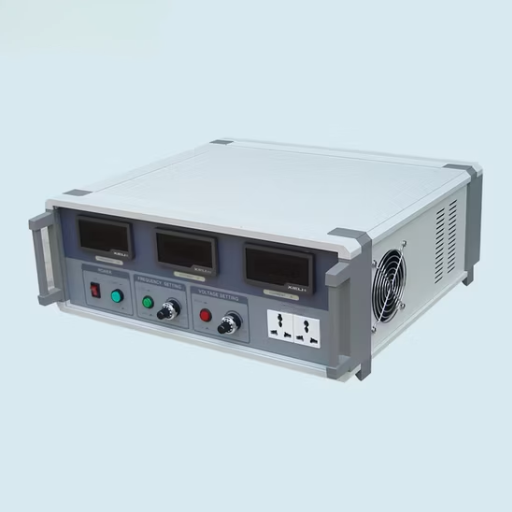
Recent progress in the field of frequency converters has focused on three main areas: energy efficiency, miniaturization, and operational flexibility. Very efficient power electronics, such as insulated gate bipolar transistors (IGBTs), have reduced energy losses during conversion by a considerable amount, resulting in better performance and lower operating costs. Apart from that, the modular design and integration of the systems have made them easy and relatively inexpensive to install and maintain, while also being scalable in large power systems. Moreover, the availability of very advanced digital controllers and real-time monitoring systems has greatly helped in making the frequency changes easier and also has a greater degree of enhanced diagnostics, which means a more robust product development, and at the same time, being able to cater to different industrial and commercial applications of various natures. These things seemed to have created a path to making the frequency changers and their performance situation (even though they are very costly products) somehow not so far from nature, which is the most modern energy management.
Latest Innovations in Solid-State Technology
Solid-state technology has recently made an enormous leap forward, making heat management a leading factor in keeping the system efficient, reliable, and easy to use. The so-called silicon carbide (SiC) and gallium nitride (GaN) materials’ advancements have enabled devices to transfer heat and dissipate power more quickly. Among other merits, SiC and GaN materials reduce the burden on traditional silicon systems by allowing operation at higher voltages, frequencies, and temperatures, thereby improving performance in harsh environments. Moreover, different cooling methods, including liquid-cooled systems and advanced heat sink designs, have become part and parcel of data shifting in solid-state systems to ensure that heat is effectively removed. These factors are crucial for ensuring units last longer and prevent thermal-related failures, making them unavoidable in power electronic appliances, renewable energy systems, and electric vehicles.
Intelligent Frequency Converters and IoT Integration
Intelligent frequency converters have been instrumental in improving efficiency and flexibility in modern electrical systems, enabling the regulation of motor speeds and, consequently, energy consumption. The integration of these converters with the Internet of Things (IoT) further unleashes the capabilities of these systems, enabling remote monitoring, automated operation, and even the prediction of potential system failures. IoT technology and cloud-based platforms are the pillars of the monitoring and management system through which data from these smart frequency converters is processed. Energy usage patterns, torque fluctuations, and system efficiency are some of the performance metrics that IoT-enabled frequency converters collect and analyse in real time, enabling proactive optimisation of system operations and thus reducing downtime.
Moreover, these systems often use machine learning algorithms to identify deviant behavior and anticipate failures in advance. Thus, the maintenance required is faster and less expensive. In the manufacturing, HVAC, and renewable energy sectors, there has been a remarkable increase in efficiency and a reduction in energy consumption through the use of these technologies. The coupling of intelligent frequency converters and IoT empowers not only the establishment of more thoughtful and sustainable infrastructures but also the more effective prevention of energy losses across multiple applications.
Future Trends in Electric Frequency Conversion
The future of electric power conversion is much more in favor of advanced technologies in artificial intelligence (AI) and machine learning (ML). Even though these are being incorporated into converters, the converters themselves need to support not only predictive maintenance but also very high fault detection and energy usage optimization. Among other things, the capability-enhanced real-time analytics enable dynamic parameter modifications to be the norm, which, among other improvements, are very noticeable in terms of system reliability and efficiency.
On the other hand, the world is witnessing a new trend: the gradual transition to wide-bandgap (WBG) semiconductors, such as silicon carbide (SiC) and gallium nitride (GaN). Different from silicon, these materials offer good thermal and electrical performance. The use of such materials in power converters has the advantage of power densities being increased, losses reduced, and also the frequencies of switching being taken to even higher levels, thus rendering these converters favorable for applications that are pretty rugged, like electric vehicle (EV) systems, industrial robotic applications, and solar power systems.
Besides that, the mix of frequency converters with smart grid technologies is a complete game-changer in distributing and consuming energy. Frequency converters are increasingly integrated with energy storage solutions and distributed energy resources to enhance grid stability and balance loads precisely. This is especially crucial as the share of renewable energy sources like wind and solar increases in the global energy mix, which in turn calls for very smooth management and the ability to handle fluctuating inputs.
Technical Specifications and Considerations
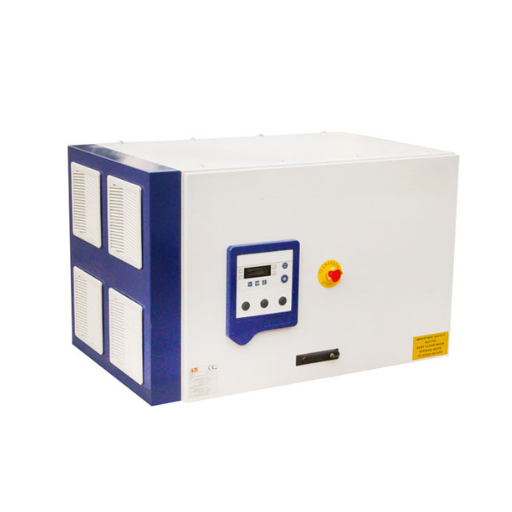
- Voltage Range:
Frequency converters must operate within a specific voltage range, particularly when variable generation is connected to the power system, such as wind turbines or photovoltaic arrays. Regional grid requirements, such as 230V-480V AC for low-voltage applications, typically set the ranges.
- Frequency Stability:
The system must keep the output frequency within ±0.1 Hz of the nominal grid frequency (e.g., 50 Hz or 60 Hz) for synchronization and to prevent supply interruptions.
- Efficiency Ratings:
Power conversion efficiency is high (>95%) when most of the generated power is used rather than lost in the conversion process. The high-efficiency design is a prime requirement for economic and environmental benefits to justify the integration of renewable.
- Power Capacity:
The converter must be able to operate at the total power level of the connected integrated system. The power rating should be based on the expected peak loads and the required fault tolerance.
- Harmonic Mitigation:
Harmonic management is equally essential to ensure the signal is not distorted and to comply with IEC and IEEE standards that enable the regular operation of connected devices.
Understanding AC Power Sources and Voltage Ratings
One of the indispensable parts of contemporary electrical systems is the Alternating Current (AC) power supply, which provides continuity and efficiency in the long-distance transfer of electrical energy. These supplies are characterized by time-varying sinusoidal voltage and current, which is the basis for the flawless operation of residential, commercial, and industrial application systems. The correct understanding and application of voltage ratings are necessary for the performance and safety of these systems.
Voltage ratings are defined criteria that specify the maximum voltage a device, circuit, or electrical system can support. The standard AC voltage ratings in North America are 120V, 240V, and 480V for the majority of applications, with 230V being the most common in Europe and other regions. These standards are specified in regional ways, such as ANSI/NEMA in the U.S., and international ways, such as IEC worldwide. Working according to these norms can reduce risks such as electrical failures, fire accidents, and machine stoppages.
What is more, there should be voltage ratings that match the operational requirements, especially the power demand, fault tolerance, and insulation resistance. Advanced power monitoring systems and voltage regulation technologies can be coupled to ensure system stability, especially when load demand fluctuates. By adopting international standards and implementing stringent design policies, engineers can maximize system performance while protecting critical infrastructure.
Choosing Between Single-Phase and Three-Phase Frequency Converters
| Key Parameter | Single-Phase Converter | Three-Phase Converter |
|---|---|---|
| Power Capacity | Lower, suitable for small loads | Higher, ideal for heavy-duty applications |
| Voltage Range | Generally, limited voltage options | Wide voltage range for diverse systems |
| Efficiency | Lower efficiency due to limited phases | High efficiency across industrial processes |
| Load Compatibility | Best for light-to-moderate loads | Supports high and uneven load demands |
| Complexity | Simpler design, easier maintenance | Complex design requires expertise |
| Cost | Lower initial costs | Higher initial investment |
| Applications | Domestic and small office use | Industrial, commercial, and extensive facilities |
| Weight and Size | Compact and lightweight | Bulkier, with heavier components |
| Output Stability | Moderate stability in voltage load changes | Excellent stability, even with surges |
| Installation Flexibility | Suitable for isolated or simple setups | Requires more intricate installation setups |
Power Ratings: KVA and Continuous Power Requirements
It is essential to clearly distinguish kilovolt-amperes (KVA) from kilowatts (kW) when evaluating power ratings, as they serve very different roles in power generation and use. KVA is a measure of apparent power that includes both active and reactive power. Conversely, kW is the power that actually performs work and drives electrical devices, known as the real power. This difference becomes unavoidable when discussing the power factor, which is a ratio that shows energy-use efficiency and usually lies between 0.8 and 1.0 in most power systems.
To avoid inefficiencies and potential failures, the continuous load demand for power must be matched to the system’s actual demand to keep it operating. On the odd occasion when a specific industry has very high electricity needs, it is expected that its generators or transformers are also of higher KVA. This is to help avoid losses in the event of power surges and to accommodate load variations without performance loss. In this situation, a system designer must consider two power needs: the continuous and the peak load. Also, to keep the equipment within a safe and efficient operating range, the peak and constant-load power demands must be considered. Mismatching KVA and continuous power to applications can lead to energy waste and degrade the whole system’s train reliability; this is reduced by accurately matching KVA and constant power to the application.
Reference Sources
Introduction of a Novel Frequency Converter
This article discusses a new piezoelectric frequency converter (PFC) and its innovative design.
Variable Switching Frequency Techniques for Power Converters
A comprehensive review of variable switching frequency techniques and their applications in power converters.
A Noise Figure Lower Bound and a Frequency Converter
This study explores the nonlinear conductance of frequency converters and their performance in specific applications.
