
Frequency conversion is essential for those who need to adapt their equipment to power standards in different regions. Adopting a frequency converter will not only save you the trouble of replacing all your devices, but also deliver significant long-term savings, since the converter is not expensive to install. This article deals with how frequency converters work, why they should be considered in the global scheme of things, and what you should be looking for when selecting the right frequency conversion solution. If you are an engineer, facility manager, or just a person who is having difficulties with the power differences in various regions, then this guide is for you as it will help you to understand the frequency conversion and make the right decisions based on the information provided.
The Purpose of a 60hz to 50hz Converter
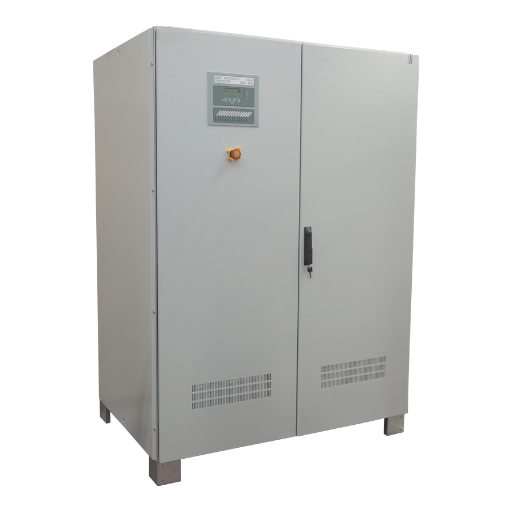
A 50 Hz throughput is achieved by designing a 60 Hz system at the heart of the base equipment, which accepts and uses the 60 Hz frequency in a place where the energy frequency is always 50 Hz. It is crucial because the performance, safety, and lifetime of electrical equipment must be maintained; if devices are operated at a frequency that does not match the power supply frequency, the situation may be very inefficient, or the equipment may be damaged. However, the converters are very helpful because they provide the exact functionality of machinery, appliances, and other devices that are affected by frequency, and they also maintain all the required power-grid attributes on the technical side. The converter also plays a vital role in global settings, where equipment may move between areas with different power protocols.
What is a Frequency Converter?
A frequency converter is a high-end electronic device designed to modify the grid frequency to conform to the application for which it is intended. The operation of a frequency converter follows a two-step sequence. The first step is to convert the incoming AC voltage to DC using a rectifier. The DC voltage is then converted back to AC at the required frequency using an inverter. Frequency converters today integrate complex control systems that accurately adjust voltage, current, and frequency, enabling the connected equipment to operate at optimal conditions.
Frequency converters are essential components in various applications, including industrial automation, HVAC systems, and renewable energy solutions. When frequency is kept stable and adjustable, frequency converters ensure that motors and large machines operating on the power grid achieve the highest efficiency. They are obviously needed in places that either run on variable speed or have equipment originally designed for a specific frequency, e.g., 50 Hz or 60 Hz, that needs to work with a different power grid. The technology also supports features such as harmonic filtering and energy recovery, which the user can use to save energy further and improve reliability.
Why Convert 60hz to 50hz?
The reason one has to convert 60 Hz to 50 Hz is the main differences between regional power standards and the compatibility of electrical appliances. Some nations operate at 50 Hz, while others, such as the United States, operate at 60 Hz. A device designed for a specific frequency may not work well or at all when connected to a power grid operating at a different frequency. This is especially true in industries where it is normal to move the machines from one place to another around the world.
In another scenario, an engine calibrated to run at 50 Hz will usually run faster when plugged into a 60 Hz source, and this can even lead to mechanical stress or overheating unless some measures are taken. In the same manner, some systems used for timing activities, like clocks, and some medical equipment can malfunction when used at the wrong frequency. Frequency converters address these problems, enabling the equipment to operate reliably and safely across different power systems. Furthermore, by changing the frequencies, it is guaranteed that energy losses are kept to a minimum and, at the same time, that the life and use of sensitive gadgets are well protected under non-standard power settings.
Applications in Residential and Industrial Settings
- Household Appliances
A good number of the latest home appliances, like washing machines, fridges, and air conditioning units, require a constant, specific power frequency to operate without a hitch. In the case of frequency converters, they alter the operation of appliances to match the electrical standard of a region (for example, 60Hz to 50Hz). - Backup Power Systems
Frequency converters are used in generators and uninterruptible power supply (UPS) systems installed in homes to maintain a constant power supply. It provides power to all electronic gadgets, making the power supply more reliable and safer to transmit to devices such as television sets, computers, and home automation controllers. - Renewable Energy Integration
In a robotic home equipped with renewable energy systems like wind turbines or solar inverters, it is the frequency converters that align the generated power with the grid frequency for efficient energy use and transfer. - Motor Drives and Automation
Frequency changers are standard in industrial motor drives, as they help control speed and torque. Industries can make the most of production by reducing machinery maintenance costs and increasing energy efficiency. - Power Generation and Distribution
Electric utilities depend on frequency converters to achieve the right timing for power generation that matches the network. They assist in bringing the electrical frequency to precise levels, which are then used for grid balancing and ensuring that the power is compatible with the market-made grid. - Aerospace and Defense Industries
Aircraft and defense systems are among the systems that often use ancillary equipment operating at 400 Hz. Frequency converters are used extensively here because they allow a 50 Hz or 60 Hz power supply, which is standard in the industry, to be converted to 400 Hz or vice versa for special services that require high-frequency power.
How Does a 60hz to 50hz Converter Work?
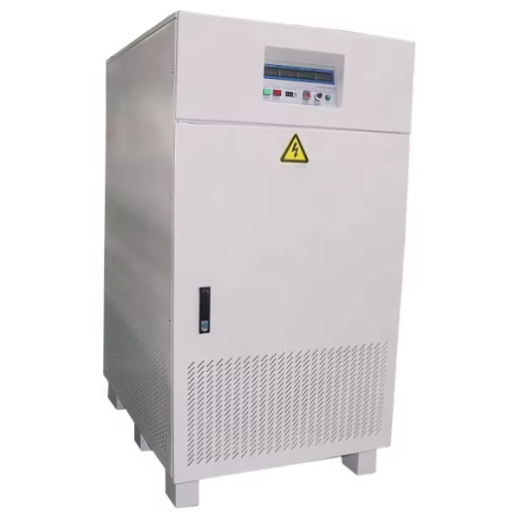
A 60Hz to 50Hz converter function coincident with the input electrical frequency regulation to match the expected output. Initially, the converter employs a rectifier to turn the input alternating current (AC) at 60Hz to direct current (DC). This step creates a soft electrical signal. Later, the DC power goes through an inverter, and the latter injects the alternating current at a different frequency, which is 50Hz in our case of converting from 60Hz to 50Hz. This is done very precisely with the help of the circuit to ensure the output frequency remains constant and correct. The need for such converters persists even when using different electrical standards.
Understanding AC Power and Frequency
The standard unit for power in electrical transmission and use is an alternating current (AC). It is efficient in long-distance transmission. The AC frequency, typically 50Hz or 60Hz depending on the area, determines the rate at which the current oscillates. This frequency is fundamental because it has become the standard for many electrical appliances and industrial systems.
It is possible to convert AC power into different forms not only for each region but also for specific applications. Nowadays, the most effective frequency converters are transistor-based, also called semiconductor devices. This technology is used in variable-speed drives in the automation industry. These variable frequency drives (VFDs) automatically adjust their speeds and torques to the proper frequency. Integrated systems with real-time control ensure that, in case of conversion, there is minimal harmonic distortion, improved power quality, and a stable voltage output.
Mechanisms of Frequency Conversion
Modern frequency conversion relies on a complex combination of power electronics, control algorithms, and hardware design to provide a reliable output. The techniques, such as Pulse-Width Modulation, are necessary and make the converters very efficient and accurate, as they vary the pulse durations to create the needed waveforms. The high-frequency switching that occurs in all cases is now possible, and almost without the already mentioned low energy losses, thanks to the latest class of semiconductor devices, especially Insulated-Gate Bipolar Transistors (IGBTs) and Metal-Oxide-Semiconductor Field-Effect Transistors (MOSFETs). Likewise, computational changes in how signals are processed are mainly supported by digital signal processing (DSP). Thanks to these changes, the previously mentioned losses will be avoided, and the system will be able to serve the market, as it already does in the areas of renewable energy systems, the automotive industry, and the automation of production processes.
Types of Converters: Phase Frequency Converter vs. Inverter
Key Selection Criteria for Frequency Converters
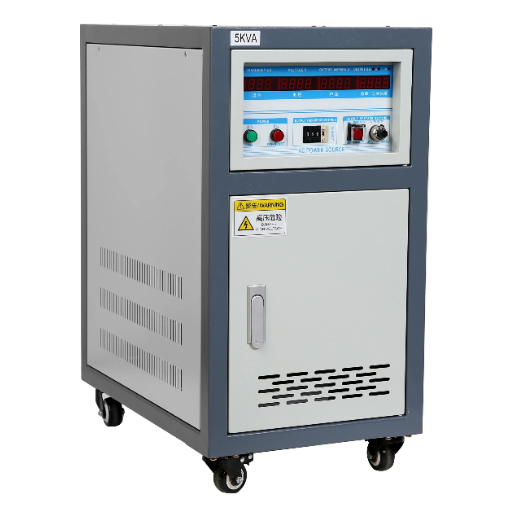
- Load Compatibility
Check the frequency converter’s specs to verify the three load types (inductive, resistive, or motor), so it is designed to accommodate the required loads. This way, you can have all the advantages and no problems caused by the lack of it, as well as all the advantages, e.g., the stability of the whole system. - Efficiency
Check how well the frequency converter performs under specific conditions and, at the same time, look for another solution with lower direct recurring costs and losses kept at a minimum. - Voltage Regulation
Consider also the ability of a converter to maintain not only that the voltage does not go up and down very much, but also, if swift and precise adjustments are required for the application, what these adjustments would be. - Frequency Range
A straightforward comparison is the supported frequency range versus the application’s requirements. The solution spectrum will match an ideal one, offering an extensive, adjustable range that would be perfect if the application required very high flexibility. - Use Case Alignment
It is common to rely on two main aspects when choosing a frequency converter. One is the design, and the other is taking into account the application’s need, which could be synchronization for motors or powering standalone systems like solar inverters.
Input Voltage Requirements
The input voltage requirements of a frequency converter are crucial for the efficient and dependable performance of the device. These requirements are typically unique to the specific application and the standards set by the electrical authorities in a region. For example, the majority of industrial applications are supplied with standard voltage levels of 220V, 400V, and 480V, respectively, depending on the system type – single-phase or three-phase. The stake in ensuring the input voltage is compatible with the converter’s specifications and the power grid is that it won’t experience issues such as voltage mismatches, underperformance, or equipment damage. Furthermore, the specifications for the converter input voltage of modern frequency converters are often characterized by a wide range to accommodate the increasingly prevalent sources of variable input, such as renewable energy systems or remote power distribution areas. Power supply stability and resilience to voltage variations are other decisive factors to consider when selecting a suitable frequency converter.
Single Phase vs. Three Phase Converters
Power Ratings: Choosing the Right kVA for Your Needs
The proper selection of kVA (kilovolt-ampere) rating is crucial for an electrical system to operate optimally, deliver maximum power, and maintain a reliable supply. The load’s power, nature, and propensities, and the possibility of scaling up are all factors that affect the choice of the kVA values a system needs. For example, suppose a system operates on loads that generate heat. In that case, the power requirement will differ from that for inductive loads, such as motors or transformers, which also affect the power factor.
To determine the appropriate kVA rating, the first step is to perform a load calculation, which includes both reactive and active power, measured in kilowatts (kW). If we use the formula kVA = kW / Power Factor, we can predict the system’s total apparent power. Systems that are highly efficient and have a power factor closer to 1.0 will demand less apparent power for the same active load, thereby lowering operational costs.
When you decide on the kVA rating your company will require, you should also factor in peak demand events, voltage abnormalities, and possible load growth. An increase in the breadth of capacity can be seen as a future-proofing move and at the same time a way of making sure that there will be no system overloads, but it should also be said that too much oversizing might bring about inefficiencies and higher costs. Particularly in places that cannot withstand a momentary power failure, like hospitals and data centers, operating with uninterruptible power supplies or secondary generators with even higher kVA ratings than those intended for peak critical demand are common tactics to ensure power is available during outages.
Practical Applications of 60hz to 50hz Converters
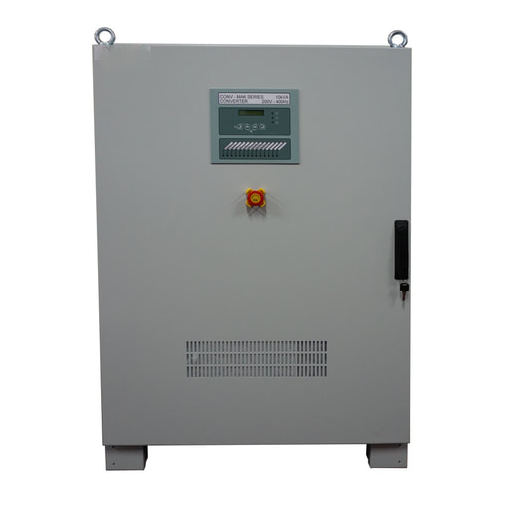
Converters from 60Hz to 50Hz are very commonly used when devices are designed for a 50Hz power supply, and people need to use them in regions with 60Hz electricity. These converters are of great importance, especially for industrial machines, transportation, and consumer electronic goods imported from the 50Hz areas. They keep things compatible, protecting from overloading or frequency-mismatch-caused faults. A simple scenario is one in which manufacturing equipment is adapted in globally placed plants, testing and calibration devices are used to assess the export product’s performance, and the use of ancient specialized systems, which are no longer available, is limited to changing the cable or connector rather than procuring costly replacements.
Utilizing Converters in AC Motors
Converters are essential to enhancing the effectiveness, power, and dependability of AC motors in a wide range of ways. By matching the input power frequency to the motor’s design specifications, frequency converters enable the motor to run stably and prevent issues such as overheating, excessive vibration, or mechanical wear caused by misaligned frequencies.
The control over motor speed and torque that modern converters, endowed with variable-frequency drive (VFD) technology, make possible is crucial. This is especially the case in the manufacturing industry, where conveyor systems, pumps, and compressors are designed to operate at different motor speeds to be efficient and meet operational demands. Furthermore, the amount of energy converters can save is considerable – by adjusting motor speeds to actual load requirements, converters reduce energy consumption and thus operational costs dramatically.
Impact on Equipment Performance and Efficiency
The use of modern converters markedly improves device performance, primarily by precisely controlling motor speed and torque. This precise control reduces mechanical stress on components, thereby reducing wear and tear in the long run. For instance, variable frequency drives (VFDs) can be up to 40% more efficient than motors without VFDs, particularly when the application has variable, fluctuating load demands. Furthermore, these systems improve startup and operational procedures by suppressing voltage spikes, enabling the equipment to run smoothly and extending its service life.
Incorporating the latest technologies into industrial systems is expected to save significant energy by eliminating excess power consumption. According to research, motor-driven systems are the industry’s largest energy consumers, and they can consume 20-30% less energy with modern variable-speed control solutions. These energy- and cost-saving efficiency gains are also instrumental in achieving more demanding carbon-emission reduction objectives, which, on the other hand, align with the global sustainability goals.
Conclusion of 60hz to 50hz Converter
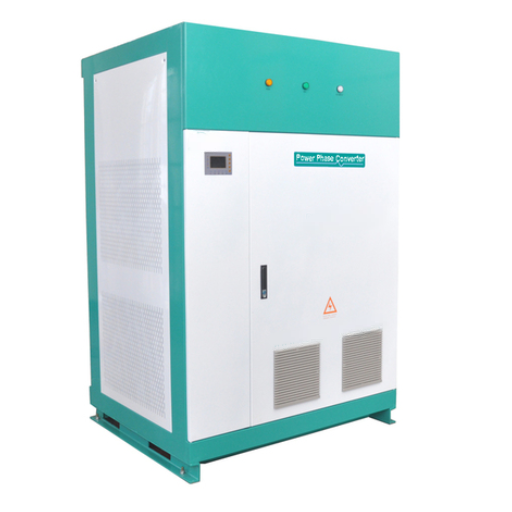
The 60Hz to 50Hz converter is a primary solution for adapting equipment designed for one frequency to run very efficiently in areas with a different frequency. By making devices compatible, the power converter prevents machines from crashing, reduces the need for expensive new machines, and keeps them running smoothly. The application of these converters may be mainly seen in cases where there are varying global machine standards or the transfer of equipment across different frequency zones. Their use provides operational flexibility to a greater extent and as a result,; a decrease in operational downtime making them be an ideal equipment in the maintenance of electricity security in a variety of electrical environments.
Summarizing the Importance of Frequency Converters
Frequency converters are a crucial part of modern electrical systems because they allow power supply frequencies to be aligned without any means of acknowledgment, and they are absolutely necessary for applications that require precise motor speed control and efficiency, such as industrial manufacturing and aerospace. To meet the specific requirements of various equipment, the conversion of electric power is not only handled by them; they also enable improved energy consumption, as the power delivered is controlled and stable. Moreover, they could be the component with the highest power density, facilitating lower energy dissipation and improved efficiency, thereby enabling easy adaptation to high-performance applications and offering an advantage in terms of converter size. In the same vein, the use of a frequency converter to address technical and operational challenges is both economical and time-efficient for companies seeking to maintain their competitiveness.
Future Trends in Frequency Conversion Technology
Frequency conversion technology is a field that continues to grow, primarily driven by advances in power electronics, control algorithms, and materials science. One primary trend driven by silicon carbide (SiC) and gallium nitride (GaN) is the use of wide-bandgap semiconductors. Due to higher switching frequencies, the use of these materials will result in smaller, lighter power components, making the converters more efficient and compact! On top of that, the fusion of artificial intelligence (AI) and machine learning algorithms is increasing the accuracy of frequency converters, further enabling predictive maintenance and self-optimization. Thus, downtimes and operational costs are lessened with the aid of these technologies.
One more fantastic thing is produced and saved through energy-efficient designs that make the goal of a fully decarbonized world a reality. Energy systems of all kinds, most typically wind turbine and solar inverter systems, are the focus of tailor-made frequency converters. These products help distribute and store energy and, at the same time, make the whole system perform most effectively. In addition, the move towards the creation of converter systems that are not only modular but also scalable is a process the industry is adopting little by little, with steady progress. This means that, with a bit of hassle for one, but without much modification, different load and power demands are to be met. All these changes in the market, not only but by far and large on top of one another, consider frequency conversion technology to be the lifeblood of the modern industry and energy system.
Final Thoughts on Selecting the Right Converter
It all boils down to how well you have researched the key aspects of the converter, and only then can you guarantee ideal performance and prolonged reliability. Why not start with the specific application requirements, such as input and output voltage levels, frequency, and power ratings? It is also strategically efficient to tap into efficiency levels, since even a small decimal number of losses may accumulate over time, leading to less and less energy saved and higher costs. For those who are busy with scalability and flexibility, modular converter systems can be the best choice, as they are easy to operate and accommodate future expansion without redesign.
Moreover, the most recent developments in power electronics, such as wide-bandgap semiconductors like silicon carbide (SiC) and gallium nitride (GaN), allow converters to operate at higher frequency or a bit faster, reduce heat loss, and achieve a more compact form factor. Maintaining temperature, adhering to the standard, and the management system’s cooperation in the innovative use must be other main elements to be considered before making the decision. Suppose you are not slow to believe and bear in mind all of these factors. In that case, you are within reach of the splendid use of the selected converter’s both technological and economic features, and its location on the map is just a little thing to accompany it.
Reference Sources
-
Power converter for 60 Hz-400 Hz bilateral power conversion
This paper discusses three-port power converters and their application in frequency conversion, including 60Hz to 50Hz.
Read more here -
Comparison of solid-state frequency converter and rotary frequency converter in 400Hz power system
This research compares solid-state and rotary frequency converters, starting with 50Hz or 60Hz AC input power.
Read more here
Frequently Asked Questions (FAQs)
What is a 60Hz to 50Hz converter, and how does a frequency converter work?
A 60Hz to 50Hz frequency converter, which is commonly realized as a frequency converter, converts the frequency of the alternating current from 60 hertz to 50 hertz, therefore the 50Hz-targeted equipment can run properly. The equipment changes the received AC power to DC first and then back to AC at the wanted 50Hz output, so maintaining the voltage level, and minimizing the danger of motor overheating or timing errors. A lot of the converters include filtering for handling harmonics and having protection for most vulnerable electronics and might give isolated outputs for the sake of increased safety. International equipment compatibility is something that calls for a solution and it is very possible that power standards might differ thus the machines are shipped from one such region to another.
Can I use a phase converter instead of a frequency converter for converting 60Hz to 50Hz?
A phase converter is distinguished from a frequency converter and usually alters the number of phases instead of the frequency; that is why it cannot, by itself, do the job of converting from 60Hz to 50Hz. Phase converters have been used for the operation of three-phase motors by using single-phase supplies, on the other hand, a frequency converter intermittently changes the AC frequency to the desired value. When the equipment needs real frequency conversion such as speed-sensitive equipment or timing circuits, an inverter-based frequency converter becomes a necessary accessory. The hybrid systems that make use of both phase conversion and frequency control are still in the market, however, they are complicated and costlier.
Do 60Hz to 50Hz converters affect motor speed, and how is motor speed controlled?
Without a doubt, converting from 60Hz to 50Hz would have a strong influence on motor speed for the reason that the synchronous motor speed is directly proportional to the supply frequency; a 50Hz supply will make synchronous speed slower than 60Hz. However, this problem can be solved as there is a possibility of adjustable output frequency in many frequency converters whereby motor speeds can be controlled smoothly and at the same time the lower 50Hz baseline can be compensated for. Divisionary frequency driving and converting equipment can remain the same with the offered torque by zoofication of V/F rates so that motors can run efficiently at different speeds.
Will a 60Hz to 50Hz converter change voltage, and do I need a voltage converter as well?
Some 60Hz to 50Hz converters do voltage conversion, but there are also models that do not; switching of the frequency and voltage is done separately and in some cases a double unit for both changes is necessary. Also, if your machines need a different nominal voltage (like 120V vs 230V), you must either buy a voltage converter which is a step-up or step-down one or a frequency converter version which should also have voltage regulation. The advancing technology has brought in the market a great variety of converters that come with auto voltage adjustments, equipping of isolation transformers as well as with surge protectors, thus, ensuring safe use with other electrical equipment of compatible power, and also adequate protection against sudden electrical peril.
