
The transformation of three-phase energy into a single-phase one is absolutely necessary for the type of electrical and industrial connections that exist nowadays, the unity of power systems, so that the distribution of energy would be easier and more efficient. Whether it is the use of single-phase equipment drawing power from a three-phase system or the optimization of operations in areas with inadequate infrastructure, knowing the rules of phase conversion is the first step. The present article is going to get us through the role that static converters play in the process, not only being a major part of it but also being one of the few components that make it efficient and simple. Citing their operation principle, peculiarities and field of application, this article will finally show you the powerful tool of static converters as the major support of their business.
Introduction to Phase Conversion
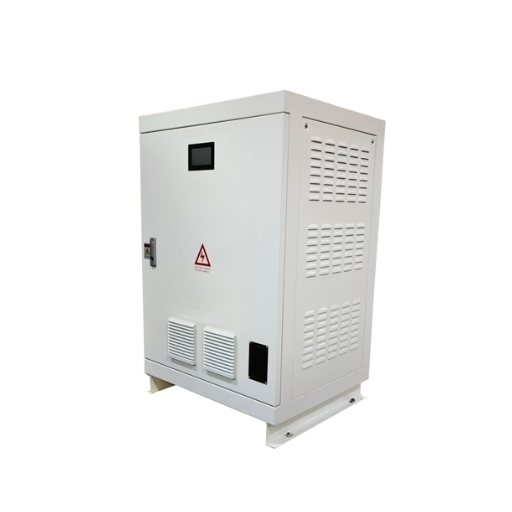
Transforming electrical power from a single-phase to a three-phase output source or vice versa is the main purpose of the phase conversion process, which is done to satisfy the power demands of certain equipment or systems. This conversion is commonly required in places where the three-phase power is not available but is a must for driving industrial machinery, motors, or other high-efficiency tools. Besides other methods like rotary and variable frequency converters, static converters are extensively used for their efficacy and simple application. The phase conversion they offer is achieved by the storage and subsequent redistribution of electrical energy for a short period of time; thus, they turn out to be one of the most feasible solutions to make the herculean task of powering three-phase systems from single-phase sources possible.
What is a Phase Converter?
A phase converter is an electronic device that changes single-phase power into three-phase power, so three-phase equipment can work in a place where only single-phase power is accessible. The use of three-phase power in the power sector is unbeatable, and every power plant and heavy industry uses it because of its perfect efficiency and uninterrupted power supply. Phase converters are classified based on their design—static, rotary, digital.
The prime purpose served by static phase converters is to power the three-phase motors through the use of capacitors and sometimes relays to create an initial phase shift that can start a three-phase motor. Due to this, the motor efficiency becomes weak in the case of these factions. Rotary phase converters contain a series of motor-generator parts, and they enjoy a good reputation for working powerfully and consuming typical power, making them suitable for all-day operation on lines where the power is not very good. Indeed, some industries mainly run on these in-house power sources. But still, they are very violent to the local power supply. The third category, Digital phase converters, employs very sophisticated electronics to produce very accurate three-phase power with the least harmonic distortion and, therefore, are the best solution for sciences and industry that call for extreme punctuality and high efficiency.
Types of Phase Converters
| Type | Technology | Typical Applications | Advantages | Limitations |
|---|---|---|---|---|
| Static Converter | Simple design | Low-horsepower equipment | Low cost, easy installation | Limited to smaller loads |
| Rotary Converter | Rotating motor generator | Industrial machinery | High reliability, balanced power | Bulky, higher maintenance |
| Digital Converter | Advanced electronics, microprocessors | Precision tools, CNC machines | High accuracy, low harmonic distortion | Expensive, requires expertise |
| Hybrid Converter | Combines rotary and digital features | Versatile industrial applications | Flexible, robust performance | Higher initial cost |
Importance of Conversion in Electrical Systems
It is impossible to overstate the impact of power conversion in electrical systems, because it is what makes the connection between energy sources and the devices they operate possible. With the continuous development of technology and the continuous trend in the advancement of electrical equipment, power conversion methods that are both efficient and reliable cannot be ignored. Thus, the rise in the use of solar and wind energy, among other renewable sources, needs advanced converters that can convert the variable and intermittent energy produced by these sources into the consistent and standardized electrical power supplied by grids and used in end-use devices.
The importance of power conversion in the establishment of new technologies like electric vehicles (EVs) can never be overemphasized. The deployment of dual-mode and digital converter technologies allows for a relatively high level of energy efficiency, also giving the EVs a long battery lifetime and less power losses. This is not only making the performance better but also supporting the world’s sustainability targets through the promotion of energy efficiency. The converters are going through a procedure of advancement, which is marked by the implementation of features such as bidirectional conversion and a free circulation of power that the users can choose to use or harvest.
Static Phase Converter Explained
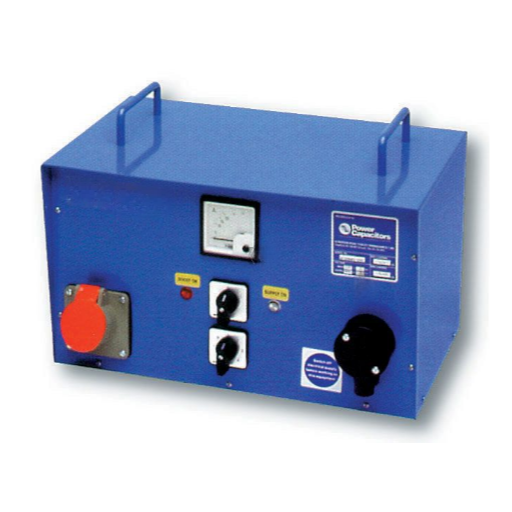
The use of static phase converters makes it possible and easy to run three-phase equipment on a single-phase power supply scheme. The converters serve as a boon to the equipment when they start by giving them a third-phase power supply temporarily, which is necessary for the motor to start in the motor loads the best way. When the equipment has reached its operating speed, the converter that was supplying the motor is disconnected, so the motor is left running with one phase only. This type of converter is said to be the best option for applications where moderate to very little loads are being used on a regular basis; however, it is not good for applications that require full motor performance or large load changes.
How Static Phase Converters Work
Static phase converters function through the formation of a pseudo third phase which converts a single-phase power source into a three-phase one, hence enabling the starting of three-phase motors. The procedure is initiated by the converter switching on a start capacitor, a move that results in the required phase shift for the creation of the third phase. The third phase, brought into existence artificially, is essential to set the motor in motion and to get the startup torque. As soon as the motor finally moves to about 75-80% of its full speed, it sparks a current that results in the start capacitor being disconnected by or through a potential relay or a centrifugal switch. And the motor then runs solely on the single-phase power, with the third phase used only for the starting part.
Even though they are simple to install and not very expensive, static phase converters are primarily useful for motors with a light and steady load. This is because of their inability to give full motor performance since the generated phase does not represent a true three-phase output, which can cause losses in the motor operating efficiency and low-speed or high-load operations. Although the efficiency of the parts used in static phase converters has been improved through the years, these converters are still the most preferred option for cases where true three-phase power is not a must or where the aspect of cost-effectiveness and simplicity is paramount among the factors.
Benefits of Using Static Phase Converters
1. Cost-Effectiveness
Static phase converters are much more affordable than rotary phase converters or the entrance of a utility-provided three-phase power supply. The lower operating and purchase costs of these converters make them well-suited for small-plant projects and budget summaries when handling larger loads.
2. Simplicity of Design
Static phase converters are uncomplicated in their construction, involving a small number of components only. This simplifying of the design process goes to the point where the brackets for the system could be machined from one piece of metal, practically eliminating this weak point. Installation is also quite an easy and straightforward procedure, which adds to the attractiveness of this type of equipment for small operators.
3. Suitable for Low-Demand Applications
Among the various machines and equipment, static phase converters could be used for, there are the ones which do not need to be operated at full load all the time. For example, woodworking equipment, milling machines, and low-duty machine tools that work intermittently are good examples of the latter.
4. Compact and Lightweight
The occupied space of static phase converters is not a problem as they are small and light. This is a major factor when looking for compactness, for example, in the case of portable operations or where space is a premium.
5. Energy Efficiency in Idle States
Contrary to what happens with rotary phase converters, where energy is consumed even when the equipment is not in use, static converters do not operate and thus energy is not being used. Consequently, energy losses are reduced appreciably in cases where the machinery is not operating continuously and throughout the day.
6. Easy Maintenance
Static phase converters with fewer mechanical and electrical parts need almost no maintenance at all. This leads to lower costs in the long run and less frequent downtimes for small businesses and workshops.
3 Phase to Single Phase Conversion Process
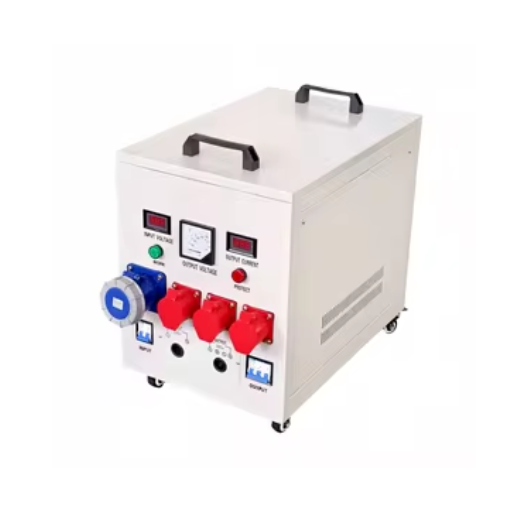
Conversion of a 3-phase power system to single-phase power requires the application of either a phase converter or a transformer. A phase converter, e.g., a solid-state or rotary phase converter, modifies the 3-phase power that is incoming to a single-phase output, which is appropriate for the equipment or the application in question that needs such a kind of power supply. On the other hand, transformers can either reduce the 3-phase power or redistribute it to a single-phase voltage, depending on what the equipment calls for. By both methods, the power source and the load remain compatible with one another, all the while the latter’s stability and the performance of the former in small or specialized systems are maintained quite efficiently.
Understanding the Conversion Mechanism
It’s a complicated process turning a 3-phase power to a single-phase one since a number of the most critical components are involved, each having its own role to play in making the operation stable and efficient. The one way with which every engineer would agree is the use of phase converters, such as rotary or static converters, which, by balancing the power distribution among the phases, are capable of producing a single-phase output. On the other hand, there are also ultra-modern electronic gadgets such as Variable Frequency Drives (VFDs) that can make phase-to-phase adjustments with an accuracy that is both impossible and adequate by simply playing with the input frequency and voltage.
Another possible route consists of special transformers that have the ability to shield and bring to a lower level the voltage of a single-phase that gets from a 3-phase source through exact winding configurations. These transformers are built in such a way that they use very little energy when compared to the energy being supplied to them and they give out exactly the right voltage or current depending on the application’s needs. The robustness and accuracy of the system have been increased by the progress in the semiconductor and microcontroller areas, thus enabling these converters to easily adapt to the changing power needs. Without understanding such operations, the public would be exposed to higher energy costs and greater disruptions of their services due to technical reasons.
Voltage Requirements for Conversion
The voltage that needs to be converted is decided by the objects or systems connected and the bigger operational requirements of a particular infrastructure. The voltage is usually within the range of 3.3V to 12V DC in low-power cases, like those of small consumer electronics. On the other hand, the voltage requirements for industrial plants might be broader, 24V to 48V DC, or even more for machinery that uses higher voltage.
To efficiently cope with these requirements, modern converters are using advanced control methods that make it possible to do real-time adjustments. For instance, in the case of switch-mode power supplies (SMPS), utilizing pulse-width modulation (PWM) is an important technique to be applied. It helps to keep the supply stable and running efficiently when the loads change. The electrical standards like IEC 60950-1 and IEC 62368-1 are mostly followed, thus ensuring the compatibility and safety of the system worldwide. Another killer fact is the application of the components mentioned above, like Metal-Oxide-Semiconductor Field-Effect Transistors (MOSFETs), along with high-frequency transformers, which amount to achieving maximum accuracy and energy consumption at the same time.
Factors Affecting Conversion Efficiency
1. Input Voltage Stability
Voltage changes may have a large impact on the conversion rate of power supply units. For example, power supplies with the capability of an input voltage range of 90V to 260V, with the help of an external circuitry, are a good fit for industrial operations. It has been observed that systems that benefit from stable input voltage attain a 95% maximum efficiency, while a 5-15% has been seen in systems during instability.
2. Switching Frequency
Higher switching frequencies in power converters lower component sizes, thereby increasing power density, but they also increase switching losses in line with the higher rates of energy dissipation. According to the study, the optimum power switching—commonly between 20kHz and 100kHz—enables the achievement of up to 98% efficiency in properly engineered systems.
3. Thermal Management
One of the key aspects in the process of power conversion is the heat generation. A poor thermal management practice will mean the loss of energy due to heat dissipation and this will definitely affect the life of the components adversely. However, performance improvements up to 10% have been obtained by applying the heat sinks or forced-air ventilation cooling systems, especially in the high-power segments.
4. Component Quality
Components of high quality, namely, transistors, diodes, and capacitors, markedly affect the conversion efficiency. As an illustration, but MOSFETs with a lower RDS(on) and Schottky diodes could be used to reduce the conduction and the switching losses, hence the overall efficiency can be up to 7% more.
5. Load Variability
The efficiency levels in conversion systems are not the same at all load conditions. The majority of the systems have their highest efficiency between 50% and 70% of the rated load, with drops occurring at lighter or heavier loads. The use of converters with load tracking capability can minimize the disturbances and ensure consistent performance over a wider range of loads.
6. Topology Selection
The type of converter circuit—whether buck, boost, flyback, or forward—affects efficiency according to the requirements of a specific application. For example, a buck converter that steps down voltage can achieve efficiencies of above 90%, while more complicated topologies may be less efficient but more operationally flexible.
Practical Applications of Static Phase Converters
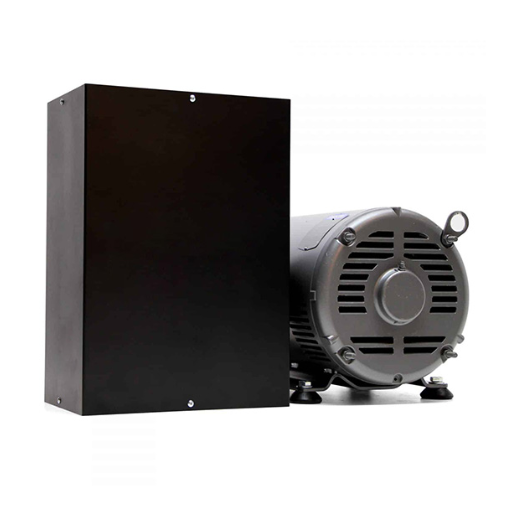
1. Manufacturing Equipment
In many cases, the working facilities, especially mills and foundries, which utilize power-hungry machines like masonry saws and grinders, require 3-phase electricity. Static converters are an answer to such energy problems and they are often used in the above-mentioned facilities.
2. HVAC Systems
Industrial cooling and ventilation systems, such as the air conditioning system, that are composed of compressors and large-scale fans, rely on static phase converters to operate on single-phase grids of the utility, thus ensuring the continuous operation of the cooling and ventilation systems.
3. Agricultural Tools
The places where farming is practiced have the outskirts as the most common locations and the rural power supply can present its limitations. Even then, the phase converters for 3-phase motor tools are something that cannot be overlooked in such places.
4. Woodworking Machines
In industrial applications, you can find saws, planers, sanders, etc., working from three-phase motors. For the woodworkers who have such machines and are reluctant to upgrade their electric power supply systems, they can use static phase converters as a solution that is cheap and close at hand.
Using Converters in CNC and Heavy Load Equipment
With the single-phase power converted by the static phase converters, it is also possible to use it for the CNC machines and the other heavy load equipment, making the overall operation seamless for the different industries. CNC machines are very demanding when it comes to precision and the power that is supplied consistently. They get the most significant benefit when the voltage and phase are kept stable by the converters throughout the entire operation.
When heavy punch machines are in use, the constant phase power supply can turn the motor easily. The converters that are being designed are so good that they can handle not only constant but also fluctuating power requirements. This way, the equipment remains in perfect working condition, having the best performance, without considering the change in load situation because of the phase converters’ facility to adapt.
Impacts on Small Business Operations
Static phase converters are very useful to small businesses, especially to those found in the manufacturing, agriculture, and workshop sectors. The businesses can now use three-phase equipment without having to change their power distribution system from a single to a three-phase operation, which would be very expensive because the equipment would still have to run on a three-phase supply. On the market today, static phase converters provide a practical and cost-effective way for these companies to increase capacity. The research shows that the use of converters can save the cost of establishing a three-phase connection by as much as half, not to mention that the money saved on the transaction can make a big difference for small companies. Also, it is noted that the proportion of energy consumed by the advanced static phase converters is much less than that of traditional converters as well as the electricity used in the operation of the equipment being the same before the change and after. Furthermore, the new technology not only enhances the industry but also shortens the payback period sufficiently not to be a heavy burden for small business owners.
Real-World Implementations
In the field of agriculture, farmers are increasingly using static phase converters to run the irrigation pumps and grain dryers that are considered the heart and soul of this industry. Hence, static phase converters are a necessity for agricultural activities in the hinterland where there is no connection to the three-phase power utility, and they do the job by making it easy to power the critical equipment instantly. Consequently, it not only cuts back on the costs of setting up infrastructure but also guarantees the uninterrupted operation of the business even in the peak times.
Also, small workshop plants that are into metal processing and furbishing have been using the static phase converters to mechanize lathes, mills, and computerized numerical control machines, as is the case at times when there is no three-phase input. The situation has become quite cost-efficient with a decrease of even forty percent of the expenses for the traditional power supply upgrade being reported, on top of the guaranteed and tracked changes in the production schedules.
Indeed, phase converters had become popular in systems utilizing renewable energy. These include, but are not limited to, the small scale wind and hydroelectric power installations, which are usually driven by three-phase motor schemes for maximum power generation. The power suppliers that operate to the same rhythm as these converters are the new age companies, and they belong to the eco-friendly energy producers. They can vary the speed of energy production quickly and in a large range by using the static phase converters; therefore, their technical demands are quite high, and these phase converters should be very efficient.
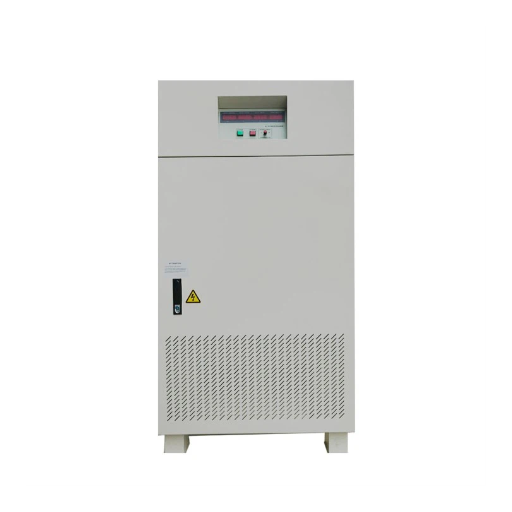
Advantages of Using a 3 Phase to Single-Phase Converter
- 1. Cost-Effectiveness:
Converting three-phase to single-phase is another way to cut costs in rewiring and the purchase of expensive three-phase sources, thus the overall operation and product costs are also lower. - 2. Compatibility:
It accommodates the problem of equipment with the three-phase protocol with very limited infrastructure changes in the areas already supplied with single-phase power. - 3. Efficiency:
This device will give full and stable power while half of the connected elements are line-to-neutral. - 4. Versatility:
By accepting three-phase equipment onto a single-phase environment without any conflict, the application is opened for a variety of industries, businesses and homes. - 5. Ease of Installation:
A simple, and everything in a little that is needed to install this system. It will also save money and time because the installation process is so simple.
Cost Savings and Energy Efficiency
Combining rotary phase converters and variable frequency drives will lead to a major drop in operational costs on account of energy optimization and efficient power management. The latest designs of phase converters are able to cut down on energy losses effectively during power transmission, therefore letting the three-phase machinery work in the single-phase loads with maximum efficiency rate. Next to that, the systems most frequently come with PFC, which is normally offered as an option that not only compensates for power factor losses, but also opens up the world of lower electricity consumption.
In addition to that, an energy-efficient design is a great way to lessen the global carbon footprint with all the associated monetary and environmental perks. High-efficiency phase conversion technologies have been proven to eliminate irregular power draws and surges, thus making industrial equipment last longer and helping companies save money on maintenance. Thus, energy savings can be renewed as an outcome of keeping IT equipment from going into sleep mode, and enterprise PC installations will remain with a longer useful life, resulting in savings in hard dollars.
Flexibility for Different Applications
The technologies for the modern phase conversion have been precisely tailored to fit into the operations of a great number of applications of the industrial and commercial type. A good example of the above is the industry where the machinery needs the use of three-phase power, which is constant. This scenario can still be amended by the same machines, but where the location only allows for single-phase power. The same is for the farm sector, where phase converters have been supporting irrigation pumps and grain driers with flawless operation. Further, the recent advances in technology are very affirming as the phase converters are said to be an ideal fit for all that, from the most sensitive equipment, such as CNC machines, that require absolutely steady voltage for the sake of maintaining accuracy and efficiency in operation.
UL Certification and Safety Standards
UL (Underwriters Laboratories) Certification acts as a crucial tool in guaranteeing the safety, quality, and performance of electrical equipment, and also a phase converter. Being UL Certified implies that the item has been through a strict process, and the resulting product is safe, with a lower chance of getting caught by electrical fire, having a short circuit, or malfunctioning of the system. For phase converters, the UL Standard requirement entails that, in all probability, it shall be met by even the most scrupulous manufacturer, being tested in various ways for the proper operation and consistency under conditions greatly enforced.
Key requirements with regard to industrial control equipment are UL 508A and adjustable speed electric motor drives are UL 61800-5-1, with both these standards giving priority to fault protection, dielectric strength, and thermal performance. Adherence to these standards has a double benefit for the user, i.e., not only does it guarantee their safety, but also it makes UL-certified converters a must-have for the establishments whose top priority is operational safety. The businesses going for UL-compliant equipment can step ahead by not only providing better reliability but also complying with both legal and industrial standards regarding safe electrical infrastructure.
Reference Sources
- ResearchGate – Advanced Traction Power Supply System
A Traction Three-Phase to Single-Phase Cascade Converter Substation - MDPI – Energies Journal
Three-Level Neutral Point Clamped (3L-NPC) Three-Phase to Single-Phase Cascade Converter - IEEE Xplore – Railway Line Power Reinforcement
The Static Phase Converter: A Solution to Reinforce the Power
Frequently Asked Questions (FAQs)
Can a static phase converter convert three-phase motors to run on single-phase power?
Yes, a static phase converter can start a three-phase motor on single-phase power, but it is generally only for reduced-load or idling applications. Static phase converters provide a brief phase shift at startup to give starting torque, but they do not deliver the morally balanced three-phase power for continuous heavy loads like solid-state phase converters or a 3-phase converter. Three-phase motor loads must be utterly balanced at all times, but this is not possible with a static phase converter. A full & heavy-duty load, along with the reduced HP motor, will not operate as required in the case of a static phase solution. Instead, for the continuous or heavy-duty applications, the rotary phase converter, VFD, or inverter option could be considered for maintaining proper rpm and motor speed.
How does a 3-phase to single-phase static conversion process affect motor speed and starting torque?
Compared to true three-phase power, in a static phase converter, the generated power is not fully balanced so that the input and output are the same requires easier starting torque and the motor’s speed might be different. The VFD or frequency converter is the best solution for controlling the motor speed accurately and eliminating the motor’s hassle to run at rated rpm in CNC or precision applications. The Rotary or Solid State phase converters from American Rotary can deliver higher performance compared with the basic static units. Make sure you have looked into the manufacturer’s guidelines and the HP rating of the motor when choosing a converter for motors operating on single-phase power.
Is a static phase converter suitable for running a 3-phase motor on a 240V or 220V single-phase supply?
For a 240v or 220v single-phase supply, a static phase converter can be utilized to kick-start a 3-phase motor—however, under load it might lack full three-phase power provision which will hold back the motor achieving its rated horsepower. For continuous use on heavy loads or equipment with high starting torque, it’s best to choose a rotary phase converter, a digital phase converter, or an inverter to get perfect three-phase power from single-phase supplies. With reference to the application, a VFD on a single-phase input might be another good and record-breaking method to obtain controlled motor speed and ensure reliable operation. The converter must always correspond to the motor hp and the load parameter to prevent breaker trips and unbalance.
What are the differences between solid-state phase converters and rotary phase converters?
Phase converters made of solid state use electronic devices to generate the third leg and can be designed to be small; however, phase converters made up of a rotary system make use of an idler motor to create three-phase power and generally have a more consistent output power with changing loads. Though solid-state phase converters may be suitable for light loads or uses only occasionally, they will have a hard time with single-phase heavy motors. Rotary converters, on the other hand, are more likely to promote the starting of the motor and smoother speed variations, and they are even able to give a more constant output of RPM and HP.
