
In this modern day, frequency converters are a must-have in any electrical system. This is because they are the only known device which helps machines run within areas that have slight differences in electrical standards. In most instances, the fact that power systems emit either 50Hz or 60Hz, which drives different parts of the world, gives an even greater reason for the use of specific frequency conversion equipment in order to ensure satisfactory operation and the assurance of different equipment interfaces on both ends from malfunctioning. This post discusses the main frequency converters, which are two in this case — static and rotary, comparing them to each other in terms of workability, energy-use and what kind of usages they are meant for. When in the business of managing industrial processes, working with sensitive electronic equipments, or dealing with the issue of global compatibility, these aspects are very important for making the right decision.
What is a Frequency Converter?
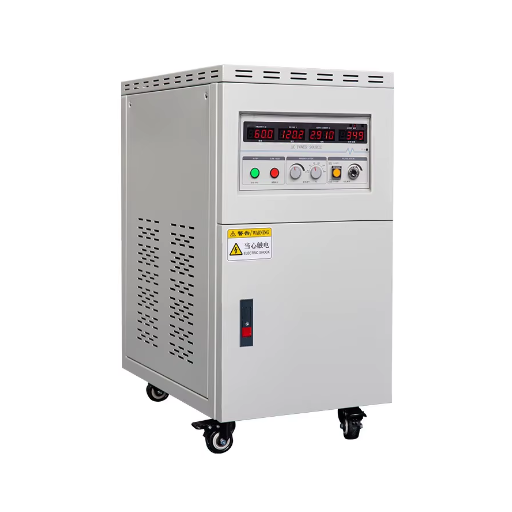
A frequency converting device is a specific device used to adjust the frequency level of an incoming power source to fit the particular power consumption requirement. This is done by converting AC that is given at a single frequency to what is another needed frequency so that the power used can be geared towards the specific devices. The converters’ aspect can be neglected, as there is no complex relationship between changes in the fundamental and harmonic segments of the input signal. They are usually in commercial use, when such installations provide higher performance stability of the equipment, energy savings for the drive, and or the possibility of using the equipment of one region in another with different voltage characteristics.
Types of Frequency Converters
| Type | Key Characteristics | Applications | Advantages | Limitations |
|---|---|---|---|---|
| Rotary Frequency Converters | Uses rotating machinery | Industrial equipment power | High reliability | Bulky and high maintenance |
| Static Frequency Converters | Solid-state components | Electronics and HVAC systems | Compact and efficient | Limited power output range |
| Variable Frequency Drives (VFDs) | Adjustable motor speed control | Motor-driven systems | Energy efficient operation | Requires proper cooling |
| Digital Frequency Converters | Advanced microprocessor control | Precision equipment, labs | Highly precise frequency control | High upfront cost |
Applications of Frequency Converters
- Industrial Automation and Manufacturing
Frequency converters like Variable Frequency Drives (VFDs) and servo systems are gaining popularity especially in typical automated industrial applications where motor speed levels and torque levels requires precise control. They make it possible to carry out the energy saving operations of leading industries, such as straight line dust suction fans, portable dust cleaning systems, screw pumps, dust blowers, etc. - Aerospace and Defense
For aviation ground support equipment and radar test and measurement equipment to be reliable or to operate from the mains, static and rotary frequency converters are used. These converters alter the frequency of the incoming power to the one desired by the aircraft, and in this way, operational safety and efficiency are enhanced. - Marine and Shipping Industry
The main function of frequency converters in this case is to adjust the input power, therefore enhancing the operation of machines – for instance, propulsion units, thrusters as well as general ecological control systems. These systems ensure operational and economic efficiency by making it possible to subscribe to the generated frequencies of operation as load variance. - Renewable Energy Systems
Renewable resources are quickly becoming the go-to, primarily through wind and solar power generation, with the help of frequency converters to connect the power generated to the grid and maintain its frequency. A notable application for grid-connected inverter systems contains advanced dynamic digital frequency converters allowing reasonably efficient and accurate energy to be supplied to the grid. - Medical and Laboratory Equipment
The indispensable role of Digital Frequency Converters in medical and laboratory settings is built upon their accuracy and reliability. These sophisticated and expensive pieces of hardware, such as MRI scanners, laser machines, and centrifuges, work more effectively with stable power frequencies. - Telecommunication Infrastructure
Frequency converters are also found in telecommunication systems to supply regulated power in backup systems hence data center cooling. It is very important in achieving infrastructure and service homogeneity and performance optimizations that one only works with high frequency precision and recommends the backup designs to be located far away from each other.
Rotary Frequency Converters
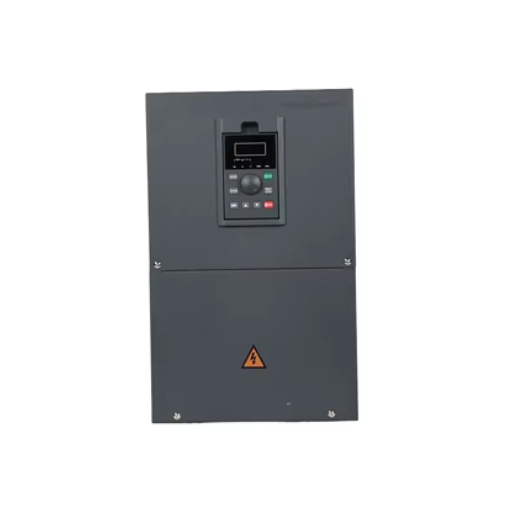
Rotary frequency converters are specialized devices that can alter the frequency of the output power signal using a mechanism that includes a motor and a generator. The machines are most effective when utilized in the most challenging conditions with significantly high reliability and capacity. The one that depends most on design and construction is, of course, its longevity, its ability to carry peak loads, and the lack of additional perturbations compared to static ones. In these installations, the rotary frequency converter is used for the particular equipment in which precise and steady power is needed for unvarying function.
How Rotary Frequency Converters Work
Rotary frequency converters are machines that employ both the mechanical and electrical mechanisms in their operation. Just as the name suggests, they have a motor that moves a generator which produces AC output at a different cycle to that fed to it. When activated, the motor is powered with an electric power of a certain frequency to start the system. This motor in turn transmits its energy to the generator through a connecting shaft, ensuring a steady and accurate rotation. The following electric device generates the frequencies output to the connected objects’ equipment.
Recent advancements in rotary frequency converters are offered in packages with intricate control algorithms, in order to achieve maximum operational efficiency, decrease the loss of energy, and ensure the highest working characteristics. They continuously compare the input and output parameters and change controls to compensate for or prevent these changes to protect the system from being overloaded. These have become ubiquitous in the areas of aerospace testing, medical engagements as well as the other specialized industrial equipment due to their control systems’ ability to keep distortion at minimum levels even where changes of load are being experienced.
Key Benefits of 50Hz to 60Hz Rotary Frequency Converters
New-designed frequency converters with their 50 Hz to 60 Hz power output is an up-to-date tool for respectables making power conversion, geographical preferences put aside. Such frequency inverters are being prepared in such a way as to ensures high productivity and ranges of equipment designed for different frequencies be operated. And one significant advantage that is worth noting is its ability to manage or treat large startup currents and other factors without loss of functionality. Its usefulness is such that some devices go much more specific, particularly in heavy-duty applications such as mighty engines in industries or Airbus aircraft.
Recent developments have not left the power systems untouched expectedly, they also made the energy devices more efficient saving considerable amount of energy and at the same time preserving all their operational functionality. The power of the rotary converters can be anywhere between a few kilowatts to several megawatts meaning that they are relevant to a broad range of industries from health to military. In addition to this, their capacity to clamp out voltage changes makes it possible to operate even those items that are sensitive with regard to power transports while taking away any reservations associated with unstable electricity supplies.
Applications of Rotary Frequency Converters
- Aerospace and Defense
Rotary converter is a well-known and much respected technological solution used in military and civil purposes: ground service and support facilities, simulators, radar, etc. This trademark feature enables them to serve as advanced and highly effective electricity distribution systems that produce and regulate desired industrial frequencies such as 50 Hz, 60 Hz, and 400 Hz, with its advantages included in many military and aviation installations. - Healthcare and Medical Equipment
Imaging equipment used in hospitals and clinics includes MRI machines and CT scanners, among others. Health facilities require the devices in diagnosing and treatment, therapeutic interventions on patients especially in surgical phases and emergency preparedness for patients. To ensure that the machines maintain the specific frequency without deviations, this risk is brought about by the patient. - Maritime and Offshore Applications
Some maritime applications often involve measure of converting shore power to oil and gas platforms cranes, often of different frequency standards. Rotary converters are able to effectively provide solutions to polarity compatibility 50 Hz or 60 Hz shore supplies to 400 Hz shipboard loads thereby allowing for operational systems like navigation, communication, safety-critical onboard systems to perform adequately provided the necessary aids. - Energy and Renewable Power
Rotary converters also come in handy for piloting and consolidating alternative energy generation such as the wind or photovoltaic power generation. They are able to operate conductively with systems supplied with frequencies that differ enabling the grid to perform more efficiently. - Industrial Testing and Research Laboratories
The testing of machinery, materials, and electronic components in industrial and research environments necessitates dealing with power they’re not designed to use, and thus, frequency conversion. Rotary frequency converters are engineered to supply precise frequency outputs so that accurate and reproducible measurements can be taken of tested equipment in laboratory settings. - Railway Systems
In the rail transport industry, rotary frequency converters are often employed to prevent interruptions in the supply of traction energy to trains. This is where converters come in by making it possible for the rails to power electric trains without interfering with the standard proposed voltages.
Static Frequency Converters
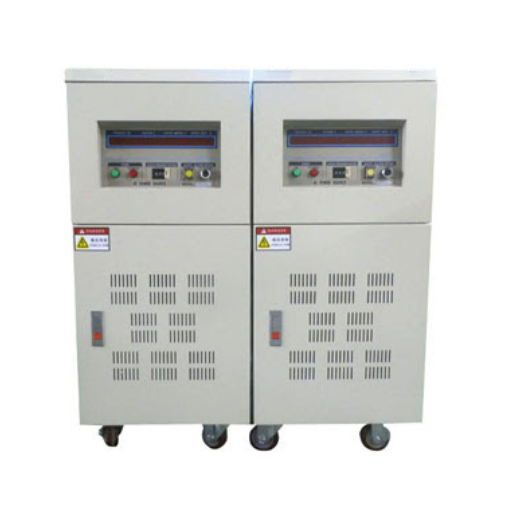
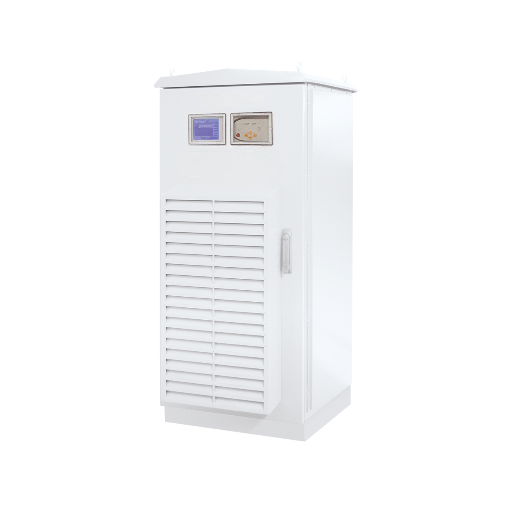
The fundamental principle of operation of static frequency converters (SFC) lies in the transformation of a constant input frequency into a variable output frequency without using any moving parts, utilizing purely its solid state components. SFCs are mainly preferred for their high energy efficiency, small dimensions, and reduced maintenance in comparison to the rotary systems. SFCs are used in various fields such as aviation ground power, wind and solar power, and engineering applications which are needed, in so far as they require precise frequency regulation devices. Their adaptability towards contemporary digital controls is such that it enhances ease of use and their application significantly.
How Static Frequency Converters Work
The operation of Static Frequency Converters lies in the use of the latest power electronics to change incoming electrical power of one frequency into a steady output of another frequency. Basically, the straight flow of the whole process commences with the rectifying stage where a cycled current (AC) is changed to direct current (DC) with the aid of a phase that has a flow. This direct current power is further fed to a rectifier brick element, in which it is turned back into an alternating current power in the appropriate frequency and voltage.
To achieve a specific frequency, SFCs employ digital modulation techniques that precisely adjust the outcoming waveforms via Pulse Width Modulation (PWM). Most existing SFC devices are fitted with Insulated Gate Bipolar Transistors (IGBTs) which boast of a high level of efficiency and quick operation, allowing smooth and reliable operation. They also frequently contain certain computerized controllers interfaced with the microprocessors, which can carry out electrical functions in real time and enhance functioning.
Built with the aim of managing absolute loads effectively, advanced SFCs also contain protective features (e.g., overload tolerance, harmonic filters, and voltage regulation) whose goal is to improve power quality, decrease electrical disturbances, and support the operation of a variety of precision equipments. It is for these in-built safety features and power management capabilities that these types of SFCs enjoy significant use in applications requiring efficient frequency conversion.
Benefits of Static Frequency Converters
- Improved Energy Efficiency
SFCs help reduce the total electricity consumption significantly by converting the electrical frequencies in a very efficient manner. Practical examples also prove that the reduced energy use through the use of SFCs can be up to 20% when compared to the electromechanical traditional converters. - Precise Frequency Output
It is important that advanced electronic controls help SFCS in producing the best possible frequencies with precision. With the high level of precision being attained in these power system frequencies, critical operations such as testing in facilities such as those for aerospace cannot reach or go beyond 0.01Hz on the higher or lower side of the output. - Adaptability to Various Applications
The benefits are with the many voltage/frequency combinations that SFCs operate with because they are adaptable in different electricity systems. In regions using a 50Hz system, for example, the SFC is used to regulate the frequency between 60Hz and 50Hz. This makes it beneficial for the maritime, military, and aviation industries of the world. - Enhanced Power Quality
SFCs also come with a feature of harmonic filtering, which ensures the Total Harmonic Distortion (THD) level does not exceed the 3% limit. This will make it possible to offer well-regulated power that will not damage delicate hardware like ultrasound machines or vital medical procedure tools. - Reduced Maintenance Costs
Rather than rely on mechanical parts to change frequency, SFCs alter the electric rating because they are free from moving components. This construction significantly reduces servicing intervals and increases life expectancy, often by 20 years, without the need for any large-scale repair. - Compact and Modular Design
In addition to that, the current SFC is designed in such a way that its modules are simplistic and self- contained, making its use in working setups simplistic. Furthermore, these modules can be built up in various configurations making it easy to incorporate growing levels of power.
Comparison: Rotary vs Static Frequency Converters
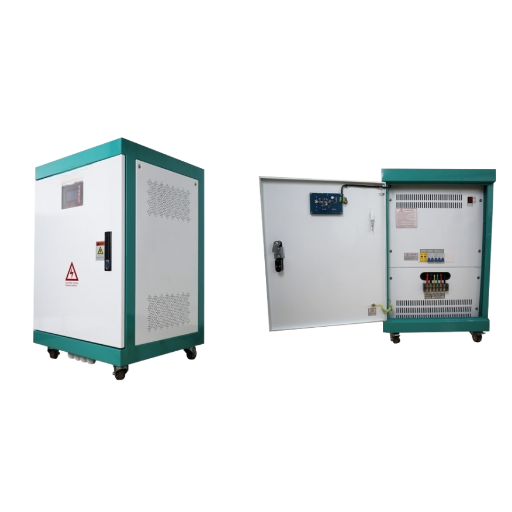
- Efficiency
SFCs are more effective because, in the absence of any moving parts in the equipment, the frequencies are changed using contemporary solid-state electronic components. RFCs, on the other hand, are incorporating rotary mechanical means; thus, they tend to exhibit higher mechanical losses and overall lower efficiency. - Maintenance Requirements
RFCs are prone to getting parts worn out within moving structures, thus requiring periodical mechanical repairs. However, SFC, which does not comprise any mechanical parts whatsoever, does not suggest the necessity of this kind of repair at all. - Durability and Reliability
SFCs are the most suitable candidates for long-term operations, conventional mechanical components being absent and making the number of points of potential failure lower. In turn, RFCs, despite being durable and long-lasting, might experience wear within the mechanical parts after some years of undergoing expansion of needs, which can lead to poor reliability. - Space and Scalability
SFCs fall into such a category that they can easily be designed and fitted on various power systems in existing facilities or even evolving capacities. Designing an SFC system takes up little space and can be placed anywhere. An RFC, on the other hand, requires more space and cannot be a readily rescale variant within an SFC system’s framework. - Cost Efficiency
Initial outlay to acquire an SFC may be higher than that of an RFC. However, lower operating and maintenance costs of the SFC systems will facilitate faster return as it would be cost-effective throughout the entire product lifecycle compared to buying an RFC and incurring repeated additional maintenance costs at frequent intervals.
Differences Between Rotary and Static Frequency Converters
| Parameter | Rotary Frequency Converters (RFC) | Static Frequency Converters (SFC) |
|---|---|---|
| Physical Size | Larger and bulkier | Compact and space-efficient |
| Scalability | Limited scaling options | Highly scalable and flexible |
| Maintenance Requirements | Higher and regular maintenance | Low maintenance needs |
| Operational Noise | Noisier operation | Quiet performance |
| Energy Efficiency | Lower energy efficiency | Higher energy efficiency |
| Initial Cost | Lower upfront cost | Higher upfront cost |
| Lifecycle Cost | High over lifecycle | Cost-effective over lifecycle |
| Durability | Robust and long-lasting | Reliable with modern design |
| Installation Complexity | Requires complex installation | Simple and straightforward setup |
| Energy Source | Requires mechanical-to-electrical | Purely electrical conversion process |
Performance Metrics
While considering the use of static and rotating frequency converters, two options consume energy differently and each option possesses strengths and drawbacks. Energy efficiency is one of the most crucial factors. It has been observed that when operating at 1000 Hz and above, static frequency converters have energy rates of above 95% as against the 80%-90% rates for rotary converters. The operation of rotary converters also involves the consumption of energy due to the movement of parts, as well as to heat losses which contribute to low efficiency.
Equally important is the need for service. In comparison with the operational rotary equipment, in order to maintain the devices of static converters, one does not have to make many efforts. Most of them are based on the solid-state platform, therefore, do not require much maintenance. Contrarily, rotary frequency converters come in handy for this quest since they have sufficient mechanical elements, such as ball bearings, rotating parts, and slip rings, that can wear out during their lifecycle.
In terms of power quality, current- sourced converters generally perform well in controlling the varying loads and ensuring the voltage is maintained constant, which makes them very appropriate in situations where the loads usually are subject to spikes. However, it is usually observed that controlled converters are more functionalizing for demanding precision coordinated and self-regulated environments, they offer a controlled frequency and do not alter the voltage especially in the delicate areas of industrial usage.
Cost and Efficiency Analysis
Several trade-offs exist between rotary and static frequency converters when considering cost as well as efficiency. These trade-offs are primarily shaped by the specific requirements and financial boundaries present. This less efficient design, as mentioned above, entails higher capital expenditure at the beginning primarily because of the difficult and heavy-duty nature of such installations. Still, such a high capital investment is considered to be prudent in the case of applications that involve long-term service and work in the conditions of operation that are unfriendly. These are those that are described as having few unpredictable events requiring the backup plan as one of the management strategies.
In contrast, static converters are more cost-effective in terms of their installation, as well as long-term maintenance. This is mainly because they do not have a reputation for mechanical malfunction due to a complete absence of moving elements. Its’ smaller volume for the same capacity also guarantees a reduced installation cost because the vessel is usually so huge that it covers all grounding and substation systems. In general, static converters are more effective in terms of performance than fast-moving mechanical systems when the unavoidable energy losses are considered.
Key Considerations for Selection
- Efficiency Requirements
A static converter, by design, is in theory more energy-efficient as it contains no moving parts, thus finding its place in applications where high levels of energy efficiency are required. - Load Characteristics
Rotary converters allow for operation with high overloads, and in case of failure, the object cannot easily be stopped. This makes them perfect for intensive loads operations or operations in industrial environments. - Maintenance and Longevity
And it’s true that even heavily designed rotary converters may require a constant schedule for maintenance with all the repairs falling in this light. However, maintenance of a static converter contains fewer hassles and concerns due to its being mechanical in total. - Space Constraints
Static converters facilitate smaller spaces when it comes to their form factor which is mostly applicable for the direct installation through the process. - Initial and Operational Costs
Even though rotary converters are perceived to be cheaper at the front end, static units typically have a lower installed operational expenditure due to the less maintenance and the better efficiency.
Power Supply Requirements
As a result of the mode of operations, the power supply needed for static and rotary frequency converters are separated by a wide margin. While it is optimum for rotary converters to be connected to a three-phase power supply, they work by mechanically converting the incoming electrical energy to the desired frequency. The mechanical converters are prone to higher energy dissipation and lowest subsequently efficiency compared to the electronic ones. Rotary converters also have and higher starting current over static frequency converters hence require adequate reinforcement where the converter is being used.
Adjusting to fluctuations in the supply voltage is made easy due to the fact that static frequency converters make use only of solid-state devices. When grounded on such a principle, they can perform optimal operations where the power supply is single-phase or three-phase. In such cases, inverter-type connections work best. Unlike rotary converters, whose inrush current is very high once connections are made, the static type has reduced inrush currents during connection operation. Reduced loss of the system. Also, the lack of reactive power benefits the power factor of these static devices. This reduction in the moving components is also responsible for greater energy saving.
It is crucial to ensure that an adequate appraisal of the current electrical infrastructure, energy consumption rates as well as the intentions of the use is undertaken in the reservations; in order to ensure that symmetry among factors that affect performance and costs is reduced when ‘of the two’ such choices are made. The high capacity use, reduction in the losses of power, and more importantly, reasonable power demanded by static converters that change over wins the more votes when it comes to ranking the most preferable solution, particularly in the contemporary consciousness of energy setting.
Single Phase vs Three Phase Options
| Parameter | Single Phase System | Three Phase System |
|---|---|---|
| Voltage Levels | 120V or 240V typically | 208V or 480V typically |
| Power Supply Consistency | Less stable, prone to interruptions | Highly stable and consistent |
| Power Distribution | Suitable for light loads | Ideal for heavy industrial loads |
| Efficiency | Lower efficiency | Higher efficiency |
| Cost | Lower installation and equipment cost | Higher initial cost |
| Complexity | Simpler design | More complex setup |
| Applications | Residential and small businesses | Industrial and commercial settings |
| Energy Losses | Higher due to single conductor | Lower due to balanced load sharing |
| Maintenance | Requires less maintenance | More complex maintenance |
| Load Balancing | Not applicable | Ensures balanced load distribution |
Output Specifications and Compatibility
To fully satisfy the project specifications, the output details of the subsystem should match with the level of performance desired or already provided in the mainstream system. In most cases, single phase systems’ rated voltage is either 120V or 240V and this makes them economically viable for use in domestic or light duty. On the other hand, three phase systems are developed to cater for more components and are usually higher in terms of power especially when it comes to the levels of between 208V to 480V for industrial and commercial installations.
The solution also needs to be suitable for equipment connected to the computer. Single-phase installations are employed efficiently with both household and light industrial appliances and equipment save for in the case of three-phase designs which are usually for heavy machinery such as electric motors and factory machines. Furthermore, in this digital age, systems are also equipped with all the necessary monitoring and control systems to further reduce the loss, allowing systems operation to be completed with minimal utilization of the energy, load-bearing capacities and time. Such systems can adapt to the voltage input signal rate and are energy-friendly.
Reference Sources
- A Rotary Frequency Converter Model for Electromechanical Transient Studies of 16 Hz Railway Systems
Read the paper - Vibration Control of Resonant Vibratory Feeders with Electromagnetic Excitation
Read the paper
Frequently Asked Questions (FAQs)
Can a rotary frequency converter provide 60 Hz to 3-phase equipment?
A frequency converter in the form of a rotary generator can be used to generate a stable 60Hz frequency three-phase supply, even where a 50Hz supply is available. It is sought after in many applications especially for driving industrial motors and other old devices. The primary reason for the requirement for rotary frequency converters in certain parts of the world is the demand for a 50 to 60 hz frequency conversion system. Rotary frequency designs offer light three-phase synchronization and are suitable for areas where 50 hz to 60 hz conversion is more common, and the other types of system activities will also occur.
What is the difference between a static frequency converter and a pure sine wave frequency converter?
Technical operations within systems have a lot of variations and each will require a particular method of control. Things such as load value and arrangement largely determine the type of control that can be applied. For this reason, I will take a look at the elements of a simple variable frequency control system. For optimality with stability, the design of the control usually involves a derivation of suitable difference equations and a subsequent analysis of the system. At the end of the day, a conclusion on how the developed model can be used in practical applications will be forgone to give room to suggestions for new ideas and future possibilities that further studies
Can a 60 Hz converter be used to convert 60 Hz to 50 Hz power for equipment from other countries?
Indeed, you may intend a 50Hz to 60Hz converter to enable 60 Hz equipment run on 50 Hz mains. Hence, it is not elusively converting a 50Hz supply to a 60Hz supply when you change one from 50 Hz to 60 Hz. Pure frequency converters indeed involve the power relevant networks with different operational frequencies, and thus classes utilizing them differ for example application in specific attorney stated solid state function and plugs are across the cost of such design and make from there.
Are frequency converters suitable for sensitive equipment requiring a pure sine wave?
Devices which market themselves as producing pure sine wave output in the context of an inverter are useful for low harmonics and stable ac power to be applied to vulnerable loads. So, solid state sine wave converters or advanced inverter technology are very beneficial since they provide one of the best sinusoidal harmonics with close voltage and frequency control which is appreciated when devices concern about quality power supply with specific ac frequencies. Rotary frequency converters in particular can produce three-phase power of good quality, but their waveform is better in some designs and can at times need cleaning for some applications.
