
As power electronics have been evolving to modern days, many researchers and engineers involved in power electronic systems have been working to explore the benefits of high frequency converters as the main core of most applications across various industries. As a result, these system design principles have been forced to work at higher frequencies to increase in efficiency, decrease in size and meet new applications in other industries. Such mechanisms are indispensable in the integration of renewable energy systems, built into consumer electronics, and industrial automation. By the end of this post, you will have an excellent understanding of high frequency converters, including what they are, why they matter, and how they are changing the scope of both energy management and electronic system design.
Introduction to High-Frequency Converters
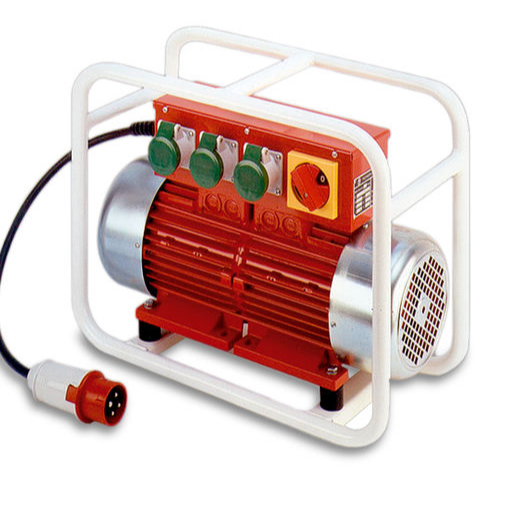
High-frequency converters are advanced components used to convert electricity from one form to the other or at a different level at extremely high consumption levels, a wide band of typically several kilohertz to some megahertz. Capacitive converters are necessary for achieving even small and more efficient power conversion in such cases when form-factor becomes crucial—economic and technological aspects of size, weight and energy consumption of the device.
On the other hand, an upper range frequency results in the ability to use a much smaller weight, a smaller and more expensive element. If converters operate at such short wave frequencies, passive elements such as transformers and capacitors will also be small. However, used in diverse renewable energies, telecom and consumer electronics, high frequency converters are crucial to avoid energy wastage in the modern power distribution.
Definition and Importance of Frequency Converters
In the world of electrical engineering, a frequency converter, which is also known as frequency changer, is a device that was developed so as to modify the frequency of the power to the electric motor so as to retain relevant equipment or services. They are crucial components when it comes to applications that demand precision when controlling the speed and torque of an electric motor. They are important because by converting one frequency of alternating current (commonly known as AC) to another, most machines in use in various industry and commerce can run perfectly well.
An essential characteristic of renewables is the role they play in enhancing energy efficiency and enabling flexibility in systems. For example, in the variable-speed drive systems, the frequency converters adjust the motors’ speed operation thereby decreasing the energy use significantly. Operating in the same field is the more technically demanding task of synchronizing power systems with varying frequency standards, which permits new energy sources such as wind energy to function alongside conventional power systems without the need to supply power only at frequencies in synch with the main grid.
Overview of High-Frequency Power Applications
Due to the potential of high-frequency systems to cut energy costs even further, technological advancements will be adopted in many modern industries. A good example of this is found in the telecommunication industry, in which high-frequency signals are deployed because they exceedingly shorten the amount of time it takes for data to travel over distances and as such are the chief backbones of global networks. Used in all electric heating processes, especially induction heating and dielectric heating, high frequencies need very precise energy transfers due to their higher cycle rates.
To incorporate renewable energy, it is necessary to use inverter systems that convert the DC cycle from solar panels or wind turbines into an AC cycle that is compatible with the grid system; this significantly improves the power system and boosts its reliability. It should be noted that HF power systems are equally important in developed Magnetic Resonance Imaging (MRI) and radiofrequency (RF) ablation medical systems as well, where the high quality rates are essential. The power systems based on high frequency work support almost all procedures used in medicine including those where one needs to use energy for diagnosis or cures.
The need for consumer electronics to be as portable as possible, to utilize less energy, and be faster also speeds up the development of circuits working in a very high frequency. The ability of materials based on compounds with a wide bandgap such as silicon carbide (SiC) and gallium nitride (GaN) goes to the new level and at the same time provides efficient heat removal during operation in high-power ranges. The examples described demonstrate the role of ultra-high-frequency power systems in subsequent development across many industries.
Key Components of High-Frequency Converters
| Component | Description | Key Parameters |
|---|---|---|
| Wide-Bandgap Semiconductors | Materials like SiC and GaN offering high efficiency. | Efficiency, heat tolerance, switching speed. |
| High-Frequency Transformers | Ensure efficient voltage conversion and isolation. | Core material, size, and frequency range. |
| Power MOSFETs/IGBTs | Switching devices for controlling power flow. | Voltage rating, current capacity, on-resistance. |
| Gate Drivers | Provide control signals to power switching devices. | Voltage levels, speed, input capacitance. |
| Capacitors | Store and stabilize electrical energy. | Capacitance, voltage rating, ESR. |
| Inductors | Manage energy storage in magnetic fields. | Inductance, core material, saturation level. |
| Snubber Circuits | Reduce voltage spikes across switching devices. | Resistance, capacitance, dissipation power. |
| Control ICs | Regulate and optimize converter operation. | Control algorithm, response time, interface. |
| Heat Sinks | Dissipate heat generated during operation. | Thermal resistance, material, surface area. |
| Filters | Suppress electromagnetic interference (EMI). | Cut-off frequency, attenuation, impedance. |
Types of High-Frequency Converters

- Buck Converters (Step-Down Converters)
These take down the high voltage a notch while making better usage of the power, typically used in power supplies equipping electronic equipment that needs a safe low voltage level. - Boost Converters (Step-Up Converters)
These steps up the voltage from input to output, generally in the case of the battery-operated systems so as to maintain the power output - Buck-Boost Converters
Depending on voltage requirements, buck-boost converters allow for considerable changes in the amplitude of voltage, so that they can operate at all ranges of power. - Isolated Converters (e.g., Flyback, Forward Converters)
These converters not only safely isolate the voltage but also are highly effective in the suppression of EMI. Their application includes building structures for power production and communication.
- Resonant Converters
In order to facilitate high efficiencies at the faster rates of switching, another category of converters uses the process of resonance to minimize the losses occurring from the switchings and to decrease the electromagnetic interference (EMI) generated.
High-Frequency Inverters
High-frequency inverters are nowadays an essential component in all power electronics, as they are designed and optimised for the conversion of direct current (DC) into alternating current (AC) with an absolute focus on efficiency improvement and reduction in size and weight. Signals at these inverters operate at higher frequencies, which are on the order of tens of kilohertz to several megahertz, typically, thus reducing the size and weight of passive components such as inductors and capacitors utilised.
Understanding how high-frequency inverters work appreciates workshops that use advanced techniques that use intense light to control the waveform produced and control unwanted distortion. These are most methodical systems in renewable power production, automobiles such as electric cars, and even as well as sophisticated industrial machines. In addition, the specific developments in semiconductors, especially silicon carbide (SiC) and gallium nitride (GaN), greatly improved the operational efficiency, heat dissipation, and serviceability of high-frequency inverters for high-power-density installations.
Their capability to enhance total plant efficiency and reduce the energy consumption levels has made the high frequency inverters rather indispensable in technology leading to energy conservation efforts. Moreover, they are usually equipped with complex monitoring and security systems that can control such problems as temporary voltage changes and operational safety in different application domains.
Switching Frequency Variations
The design and optimization of high frequency inverters, on the other hand, depend significantly on the control of switching frequency variations which relates to the capability to manage heat, power and electromagnetic radiation. This is because by changing the switching frequency, system designers can perform the operation mode and its dynamics for some specific application, therefore making some compromises between efficiency, mass of power and heat dissipation. For example, increasing the switching frequency usually enables the use of smaller passive components and permits faster transients; however, it is associated with higher switching losses and greater thermomechanical impacts.
Improved fabrication processes, whose effects can be realized in high-speed electronic devices, are crucial in contemporary times. This is possible through employment of such wide bandgap materials as SiC (Silicon Carbide) and GaN (Gallium Nitride). In this case, the body indicates that certain SiC-based inverters, when used at switching intensities exceeding 20 kHz, exhibit better performances and lower losses; hence, they are more suitable for use in electric and renewable sources of energy than other types of inverters. Also, what is being noted here is the vehicle of those optimization efforts that people are referring to next to intelligent control and advanced liquid-cooling systems which are useful in various operational aspects when it comes to high frequency devices.
Single Phase vs. Three Phase Converters
| Parameter | Single Phase Converters | Three Phase Converters |
|---|---|---|
| Power Output | Lower, ideal for small loads | Higher, suitable for heavy loads |
| System Complexity | Simple design | More complex design |
| Efficiency | Lower efficiency | Higher efficiency |
| Voltage Regulation | Less stable | More stable |
| Cost | Lower initial cost | Higher initial cost |
| Power Quality | More harmonic distortions | Reduced harmonic distortions |
| Size | Compact | Larger |
| Cooling Requirements | Lower cooling requirements | Higher cooling requirements |
| Maintenance | Easier maintenance | More extensive maintenance |
| Common Applications | Residential systems | Industrial and commercial systems |
Working Principles of High-Frequency Converters
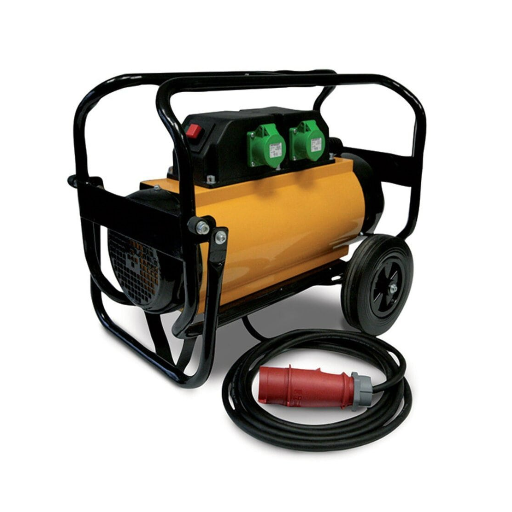
The basic operation of high-frequency converters is the efficient conversion of electrical energy adopting high switching frequencies, typically within tens to hundreds of kilohertz. The specific operation involves the conversion of an input voltage (AC or DC) to a higher frequency of an alternating current which is electronic switching using devices like MOSFETs or IGBTs. This high-frequency AC signal is then propagated through compact magnetic components such as transformers or inductors, which are able to reduce weight and size compared to low-frequency systems.
The signal is hence rectified and filtered with the aid of diodes and capacitors after being treated by the transformer so that a constant DC or AC voltage is produced. The high switching frequency, as intended, contributes to the reduction of sizes of passive components and improves the power components of the converters, thereby making them suitable for installation in applications that need lightweight and efficient systems, such as consumer electronics, alternative power generation, and electric vehicles.
Conversion Mechanisms: Voltage and Frequency
Voltage and frequency conversion systems are the cornerstone of modern power electronics, making a smooth and efficient variation of one form and level of electrical energy to another possible. When we talk of voltage change, applications mostly embark on a variety of techniques such as buck, boost, or buck-boost topologies, aimed at either decreasing, increasing, or altering the bi-directional range of the voltage. The driving components contain switches, inductive devices, and capacitors used so as to take care of any voltage errors in the device or the product where the power has to be delivered.
Whereas frequency conversion is done by specific devices known as inverters and cycloconverters, and relevant systems are not in alignment with inverters but converters. In frequency conversions, the signal is changed from one frequency to another, i.e., a new wave produces a certain frequency pattern or the existing frequency is adjusted to require one. These developments are particularly handy in motoring of industrial machines because it is a common practice to modify the frequency of the operations to the motor so as to optimize the efficiency and performances. The frequencies and voltages necessitate a wide range of limits in most practical circuits.
Role of Circuit Design in Efficiency
In the goal of empowering electronic machines, it is often realized that the most effective objectives are to design circuits that consume less power while carrying out their normal tasks, use less watts, do not harm people, and operate well even at extremes of temperature. By using enhanced techniques, such as low-dropout regulators, synchronous rectification and power factor correction, the power dissipation through the circuits is kept at a minimum. To illustrate, advanced MOSFETs with lower on-resistance used in switching circuits decrease switching losses, and the advanced PCB technologies decrease the amount of heat generated in the system and lower parasitic inductance.
In the same vein, the data centers use dynamic voltage and frequency scaling (DVFS) to enhance power efficiency by varying the performance of the systems according to the change in the load of the work. This is because, in due course, they are capable of estimating the likely problem areas and tweaking the different parts to ensure that they have the required power efficiency ratios when there is a necessity, obviously, x-rated engineering safeguards, and proper maintenance.
Impact of Input Voltage on Output
Input voltage variation has an impact on the functionality and the effectiveness of electronic systems. This may affect the performance of some components like power supply systems, microprocessors and other circuit elements when the applied input voltage changes. For a power converter, a decrease in the applied voltage will lead to a decrease in the output voltage or current, and the normal operation will no longer be able to meet the desired values. However, overly high input voltage that is used can lead to heat stress and accelerated component failure duration, e.g., overheating of integrated circuits.
Research has indicated that ensuring the input voltage is kept within the window of the system’s design performance specifications is fundamental to guarantee uniform behavior and effectiveness of the system. To account for variations of input signals, such as those due to load changes, the output will be maintained at the desired level by employing advanced voltage regulation techniques such as Pulse Width Modulation (PWM) control. Closed loop control. Innovations such as high frequency switching regulators in power electronics have very useful in this regard, in alleviating the problem of over- or under-voltage and thus ensuring that the operational reliability of the equipment is maximized.
Applications of High-Frequency Converters

There is increased interest in using high-frequency converters in different sectors; they are appreciated for their simplicity and flexibility. These devices are installed in most renewable energy devices, and more especially in solar inverters, where direct current power generated from solar panels is converted into alternating current. Furthermore, the energy of electric vehicles is balanced and optimized by the use of these energy conversion systems as interfaces between batteries and motors. High frequency converters are also integral in the field of telecommunication installation providing regulated and spike-free safe electrical power to delicate equipment. Their small size, high efficiency, and high adaptive capability for power changes under loads are indispensable in contemporary power applications.
Industrial Uses and Power Supply Systems
Reactive power systems with active reactors are the most important elements in contemporary technical disciplines, in which they are applied as active reactors administering, compensating and scaling. The power electronic converters have also found their utilization in day-to-day industrial applications, like in facilities utilizing resources to accomplish various tasks with varying dynamic loading. Power-system-intensive customers, such as semiconductor manufacturers, are, in theory, the strategic users of this technology, as they use extremely high-frequency power converters in power-sensitive tool applications, e.g., photolithography, a specific instance in which power variation can compromise the end product.
This implies that when it comes to power supply schemes, inverters play a very critical role in power backup provision, introducing the uninterruptible power systems (UPS) in between the swapping of the power input sources to any energy storage in case of outage or brownout. The development of new semiconductor technologies with wide bandgap such as silicon carbide (SiC) and gallium nitride (GaN) has led to a greater efficiency of conversions as well as offering benefits like the operation of drivers at extreme temperatures and voltages. Due to this fact, it is now possible to come up with compact and aggressive designs that will work well in vertical market applications such as data centers, aviation, and renewable energy projects, as each one calls for both survivability advantages and growth.
Consumer Electronics and Gadgets
Breakthroughs in fanless transformers attributable to consumer electronics manufacturing contribute significantly to the effective operation of modern devices. It is easier to size some of the electronic devices that are light, less voluminous, and perform better, all of which are driven by high-frequency conversion-based devices. Also, intelligent power management modules are presently integrated into any device, such as smartphones, tablets or smart glasses which facilitate the user by optimizing operation and life span of the battery and the system.
Further advancements in power electronics have paved the way for the operation of high-performance modules that use parts such as OLED displays, high-resolution cameras, and AI-driven processors. Furthermore, those changes on power devices applied to consumer electronics did not at any point alter the intention of energy-consuming consumer electronics. Instead, they ensured that consumer eggheads had enough gadgets and still conserved relative resources on their environment. Such improvements, in fact, demonstrate how consumers’ electronics progress with the power control effects.
Aerospace and Military Applications
There have been major enhancements in performance, reliability, and adaptability within the aerospace and military sector thanks to the integration of innovative technologies. Efficiency is necessary in aircraft, spacecraft, and other military equipment and since it requires long service and robust functionality under adverse conditions, the power systems of such craft must be very efficient. A number of new and off-the-shelf lightweight, high-power, and high-longevity battery systems and solutions for the improvement of unmanned aerial vehicles (UAVs) and reconnaissance drone missions have and will continue to make an impact. Solar panel capacity and appropriate storage of energy stored in space-based systems have also kept up with the enormous development of satellite systems, therefore enabling service provision even in such a challenging environment as space.
In the battlefield, there are military hardened electronic systems with next-generation power backups that provide for real-time data processing, which is vital to communication and battlefield awareness. These, coupled with enhanced microprocessors and AI-driven initiatives, do all they can to guarantee the balance between the highest performance and energy minimization, ensuring the safety of both data and equipment. Numerous new developments in related fields emphasize an additional fact – the importance of power and energy-based technological advances is incredibly high for the prospective development of military air and space weaponry.
High Power Applications and Future Trends
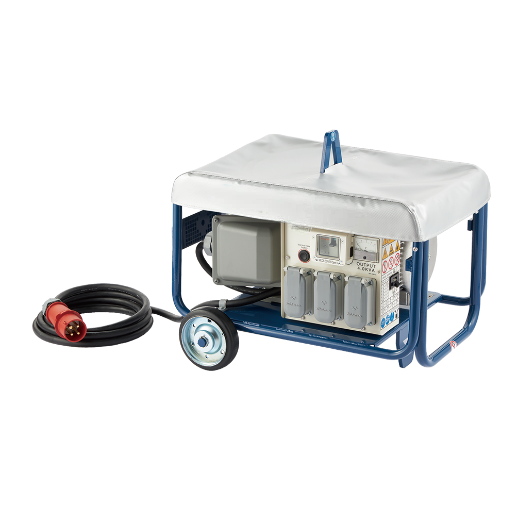
Areas such as aerospace and military are emphasizing highly powered options such as advanced propulsion, directed energy techniques, as well as technologies for effective radar and communication systems. The working and application of these systems require the availability of a lot of power for the purposes of providing effective services that are timely, reliable and quickly carried out. There are other prospects also, and that is how much busier they are, more responsible towards the environment, trying to use electricity until buying a green fuel car, and at one point installing an electrical filler is in installation to fulfill the energy demands of the user. With compact nuclear reactors and advanced fuel cells as well, capturing the possibilities of such technologies enhances the energy requirements on a rather ambitious scale.
Emerging Technologies in High-Frequency Power Conversion
Emerging technologies like Wide bandgap (WGB) semiconductors, for example, Silicon Carbide (SiC) and Gallium Nitride (GaN), have radically changed and pushed power electronics technologies to the next level. These materials have improved performance in terms of higher breakdown voltages, faster switching rates and lower conduction and switching losses as compared to the conventional silicon based devices. There is also the difference in the density and efficiency of power systems which WBG semiconductors have actual relevance since electric vehicles, renewable energy systems and space systems have ever involved designs requiring a high degree of minimization of the size and effective ways of thermal dissipation of the heat generated.
Over the course of the last few years, there is a growing interest in using resonant topologies such as the series resonant and LLC resonant for high frequency circuits. Most resonant topologies are designed to reduce the switching losses so that either the voltage or the current of the main switch changes from zero, transforming the energy lost to heat in other semiconductor devices, thus enhancing overall efficiency. These elements, which mainly concern power delivery, represent applicability for serving telecommunication hubs, technological rooms, mini-cassette servers, and other power-hungry industrial applications such as automotive motors in chassis control and so on.
Trends in High Power Frequency Converters
As has already been emphasized in this article, the most prominent shift in high-power frequency conversion units has been the introduction of wide bandgap (WBG) semiconductor materials, with silicon carbide (SiC) and/or gallium nitride (GaN) tending to substitute the traditional silicon-based semiconductors. These silicon carbide and gallium nitride materials offer greater thermal capacity, higher margins of safety, and faster switching speeds compared to the older silicon that is possible to work at low levels of switching. All of these advantages and many more contribute to the development of power converters that are more efficient, resulting in less power loss, and the system is not adversely affected by the heat. WBG-based converters are fast on their way to becoming important in application areas such as electric vehicles, renewable energy installations, and also aircraft.
Another notable trend is high power frequency converters integrating unprecedentedly efficient digital controllers. This has been facilitated by ensuring the implementation of real-time monitoring, caliber tuning, and adaptive control functions that improve the converter’s operation with changes in the load. The transition from conventional control strategies to Digital control strategies would further assist in the integration of smart grid technologies including the Internet of Things (IoT) for the sake of enhancing predictive maintenance and energy management. This new trend is acting as a catalyst for the creation of intelligent power systems incorporating advanced technologies to meet the changing needs of industries.
Environmental Considerations and Efficiency Improvements
In an era marked by bold and dynamic advancements in power systems, ecological factors and nature conservation emphases take a top priority. Ensuring that energy losses are reduced is a priority, hence high-efficient power converters and energy storage will be considered leading to declined carbon traces. Furthermore, advancements such as wide-bandgap semiconductors, namely silicon carbide (SiC) and gallium nitride (GaN), have created a new paradigm in energy system components by enabling higher frequencies of operation and improving heat management, directly shutting down the energy losses as a whole supply system.
While it is also challenging to integrate renewable energy sources such as solar panels and wind turbines into an existing power grid, the fact that inverters are our guarantee of seamless power transition, even as we strictly adhere to environmental policies, is quite encouraging. Incorporating environmental consideration through life cycle assessment and giving consideration to the selection of materials that are friendly to the environment have stood as barriers to the sustainability of these systems and developments in renewable energy, as they seek to be appreciated as part of a green energy approach both in large-scale industries and individual homes globally.
Reference Sources
- A Review of High Frequency Power Converters and Related Technologies
Read the paper on IEEE Xplore - High-Frequency Integrated Point-of-Load Converters: Overview
Read the paper on IEEE Xplore
Frequently Asked Questions (FAQs)
What makes a high-frequency system different?
High frequency systems, as a rule, operate at much higher hertz frequencies than standard power networks, and that factor directly affects the size and efficiency of working elements, especially autotransformers and inductive impedances. They are often employed to alter high voltage or low voltage power with superior electronics having high operating frequencies, thereby maximizing power density. When looking at the power circuits of the frequency ranges 50hz and 60hz from a structural point of view you shouldn’t be surprised to see a decreased size of the magnetic components but the Electric and Magnetic Interference (EMI) aspects will vary. The said systems can be powered by an AC input signal converted into direct current (DC) or with the help of DC power circuits.
How does a high-frequency converter work?
High-frequency switcher power supplies primarily convert the rectified ac mains power to dc, and then, through high-frequency chopping, invert that dc into AC or DC as needed. Such a design makes it possible to use smaller sized transformers and filters resulting in enhanced efficiency, pertinent to the usage of 400 Hz or other inverter frequency outputs. This can provide a continuous power supply for on-board aircraft equipment or similar loads in an industrial plant. Provided adequate skill is imbued in designing the input and output stages. Depending on the load type, the converter design can be single-phase or multiphase.
Do transformers need to be different for high-frequency applications?
Since transformers made for the management of high power supply easily tend to be small when compared, cores and magnetic materials are seen to be frequency-dependent and allowed designs for such applications as 400Hz and above. However, the materials selection and winding construction differs greatly for frequencies below 60 Hz to prevent heat generating losses. When it comes to the converter that has ac and DC power stages, the transformer is specifically designed for the switches of the combinations rather than input and output mHz power, as is the case with generation. With a proper design of the transformer, there should be good input and output isolation with very minimal losses of the output power at the input.
Why does the choice of Hz matter for power systems?
Every device involved, including the generator, transformer, and filter, must always follow the norms that structure it such that the domestic home frequency is 50 Hz or 60Hz, while the airplane frequency is 400 Hz. Frequency determines the requirements for components, such as the size of the component, as well as its impedance, and determines the ease with which power can be transferred to the load. High-frequency power supplies can afford less bulky components than potential lower frequencies, but control of EMI becomes crucial for the application of these frequencies. Also, some equipment must be able to operate on both 50 Hz and 60 Hz, or be redesigned as the high frequency converter does.
