
Electricity is everywhere in today’s technologically advanced society. And, the challenge of optimal and efficient harnessing of electricity has been the main foundation upon which several industrial and technological revolutions have been established. Though static frequency changers are crucial, they are one of the most ignored components in electrical engineering. These converters are very important for purposes of synchronizing systems that run at different frequencies. They perform the function of changing electrical power from one frequency to another, thereby allowing seamless interaction among different industries – for instance, military, aerospace, defense, engineering, tourism, and even on issues of energy consumption. The goal of this post is to unveil the secrets of static frequency changers in the context of their basic theory, their mode of action, and their extensive utilisation in a range of environments.
Overview of Static Frequency Converters
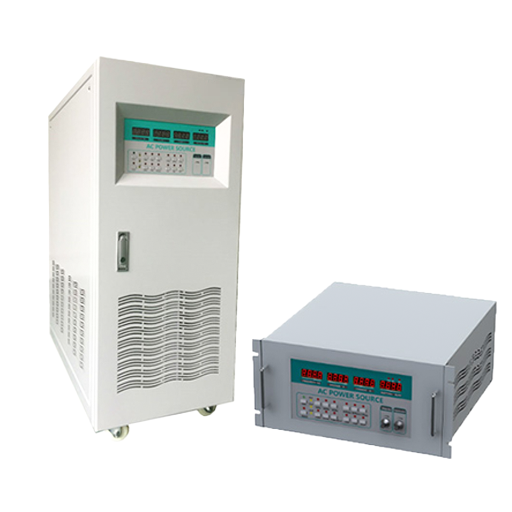
In the simplest of words, static frequency converters (SFCs) are machines that modify the frequency of the electric supply enabling interoperability in different frequency domains. This is done by converting existing AC to DC in order to invert it again in desired frequency of AC. The above step allows for a great quality and effective power supply without any interruptions. In particular, SFCs can be of great assistance to the fields that requires precise regularity control which include but not limited to aerospace, manufacturing and renewable energy. Just as their reliability speaks volumes, so can be said of the wide range of their applications. Sed and overloaded systems, hence the capability of handling them is very important today in modern electric supply systems.
What is a Static Frequency Converter (SFC)?
Initially, advanced power electronics components are put in place in the form of electrical circuits that are combined into what is known as a Static Frequency Converter (SFC) to positively change one frequency to another. Upon arrival, alternating current (AC) gets rectified to direct current (DC) at the rectifier stage. Such power is then modified positively and stabilized, and then passed to the inverter, which converts it back to the needed AC frequencies. The use of insulated-gate-bipolar transistors (IGBT’s), particularly in the inverter stage, ensures very low losses with high efficiency because power switches are sophisticated components and require minimal time to switch off and on.
Present-day SFCs are indubitably becoming much automated and smart with all their control systems that now involve microprocessors and software packages, real-time algorithms for computer numerical control (CNC). This system and the appropriate devices it operates encompass the advances that enable the processing operation to work more efficiently with the plant output, energy exchange, and load deviations control for recommended energy saving mode even when voltages or frequencies oscillate. Likewise, SFCs also present the users with some effective ways of cooling, like air or liquid cooling systems, to save up idle heat which increases their efficiency and lifespan.
How Does a Frequency Changer Work?
Power conversion frequency is defined as the adherence of an entity to frequencies other than the natural occurring ones. This process is carried out through multiple steps like rectification, inversion, and filtering. First, the incoming AC power is rectified into DC power using a rectifier circuit to make the power output with expansion, which is the resultant AC current waveform. The inverter then restores the DC power rather than its waveform into AC power at the required frequency through the usual use of insulated-gate-bipolar transistors (IGBT’s) or related devices.
Current models of frequency converters have electronic control systems that adjust the output waveform to the right degree of precision and minimal harmonic distortion. There are output filters for this purpose in some of the devices as such kind of filtering is essential where any noise or distortion gets introduced. These systems may employ a control to achieve part load efficiency under varying operational conditions and cope with all conditions while maintaining efficiency.
Advantages of Using Static Frequency Converters
1. High Efficiency and Reliability
The conversion process of static converters allows for an optimum energy conversion from one form to another with the efficiency averaging between 95 to 98%. Consequently, it facilitates less energy dissipation and promotes the dependent working of the device since there are no wearing mechanisms, such as gears, together with other moving parts being absent.
2. Compact Design and Space-Saving
Consequently, solid-state static frequency inverters are almost always more compact and lightweight than their mechanical counterparts. Consequently, the size of the installation in any given position will often be reduced without the need of oversized mechanical systems.
3. Improved Power Quality
If there are advanced filtering and control systems, static converting devices can form an output of electric power without any problems. It is possible to keep the distortion levels in harmonica below 3%, and in such a case, there is practically no interference of it with top equipment, and its compatibility can be accomplished.
4. Wide Frequency Range
DC-AC converters produce a frequency that can easily be varied for an operation in the range from 1 to 400 Hz or above. This feature is ideal for applications such as aviation industry products for example engines manufacturing and scientific research.
5. Reduced Maintenance Costs
Failure modes are nonexistent in these systems since they lack rotating or abrasive elements. Generally, linkages are simulated as circuit diagrams which is sufficient in most cases helping to maintain the costs in the overall structure.
6. Precise Speed Control
The combination of these converters with motors makes the process more accurate and prioritizes the control of motor speed and strength. This is most significant for industries such as coal belt conveyors, centrifugal blowers in air conditioning systems and automated factory assembling.
Main Classifications of Frequency Converters
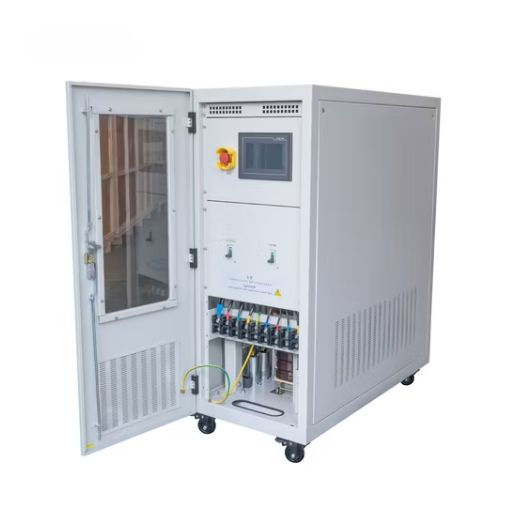
1. Voltage-Fed Frequency Converters (VFFC)
These devices make use of an electric voltage source with no internal impurities, usually a DC link capacitor, that is responsible for supplying energy to a specific device or component. They are efficient for applications that require maintaining a constant voltage level and are therefore regularly incorporated into drives with variable-speed rectifiers.
2. Current-Fed Frequency Converters (CFFC)
Current-fed converters, have a DC source with an inductive characteristic and provide power to the load by injecting a current in the load. These types of converters are used where constant current output is needed, like in high power motor drives.
3. Direct Frequency Converters
Direct converters or cycloconverters, as the name suggests, convert the input frequency directly to the required output frequency by avoiding the unnecessary DC chopper stage, if it forms part of the system. These types are used in very large machinery for low-speed, high-power applications, such as in wide and large mills or marine propulsion systems.
4. Matrix Converters
There are matrix converters which are known to generate an output that has a non-constant frequency right from the ac input without the need to have a DC intermediate. They can be classified as concurrent and are small and energy-efficient, making them the obvious option for applications that require high efficiency and compact dimensions.
Rotary Frequency Converters vs. Static Frequency Converters
| Parameter | Rotary Frequency Converters | Static Frequency Converters |
|---|---|---|
| Operating Principle | Uses mechanical rotation for conversion | Relies on static electronic components |
| Energy Efficiency | Moderate due to mechanical losses | High due to reduced energy losses |
| Maintenance Requirements | Requires regular mechanical maintenance | Minimal maintenance needed |
| Noise Levels | Produces mechanical noise during operation | Quiet operation due to lack of moving parts |
| Size and Weight | Large and heavy | Compact and lightweight |
| Durability | High durability, suitable for rugged environments | Sensitive to temperature variations and dust |
| Initial Cost | Higher purchase cost | Generally lower purchase cost |
| Power Capacity | Suitable for high power applications | Ideal for low to medium power requirements |
| Application Types | Industrial and maritime applications | Precision electronics, medical devices, and more |
| Scalability | Limited scalability | Highly scalable and flexible |
Single Phase vs. Three Phase Frequency Converters
| Parameter | Single Phase Frequency Converter | Three Phase Frequency Converter |
|---|---|---|
| Voltage Range | Handles lower voltage levels | Supports higher voltage levels |
| Cost Efficiency | Lower cost, suitable for small-scale use | Higher cost, justified for industrial use |
| Power Output | Limited to lower power loads | Capable of handling high power loads |
| Operational Stability | Less stable in high-demand systems | Highly stable under heavy loads |
| Phase Configuration | Single live wire, neutral, ground | Three live wires, no neutral required |
| Efficiency | Lower energy efficiency | High energy efficiency |
| Applications | Residential and smaller-scale projects | Industrial, commercial, heavy-duty needs |
| Scalability | Challenging to scale | Easy to scale |
| Complexity | Simple design, easy installation | Complex setup, requires expertise |
| Maintenance | Lower maintenance needs | Higher maintenance demands |
Understanding 50Hz, 60Hz, and 400Hz Frequency Standards
| Parameter | 50Hz | 60Hz | 400Hz |
|---|---|---|---|
| Frequency | 50 cycles per second | 60 cycles per second | 400 cycles per second |
| Geographical Use | Common in Europe, Asia, Africa | Common in North and South America | Mainly aviation, military |
| Energy Consumption | Slightly lower energy consumption | Higher energy consumption | Highest energy consumption |
| Generator Size | Larger generator, lower RPM required | Smaller generator, higher RPM required | Very compact generators |
| Transmission Loss | Higher transmission losses | Lower transmission losses | Minimal over short range |
| Equipment Design | Designed for 50Hz compatibility | Designed for 60Hz compatibility | Specialized equipment only |
| Applications | Domestic, commercial use | Domestic, commercial use | Aircraft, naval systems |
| Scalability | Limited long-distance scalability | Better scalability over long distances | Not scalable for wide use |
| Motor Speed | 1500 or 3000 RPM | 1800 or 3600 RPM | Around 24000 RPM |
| Cost Efficiency | Cost-efficient for general utilities | Better for high-demand environments | Expensive, highly specific |
Applications of Frequency Changers
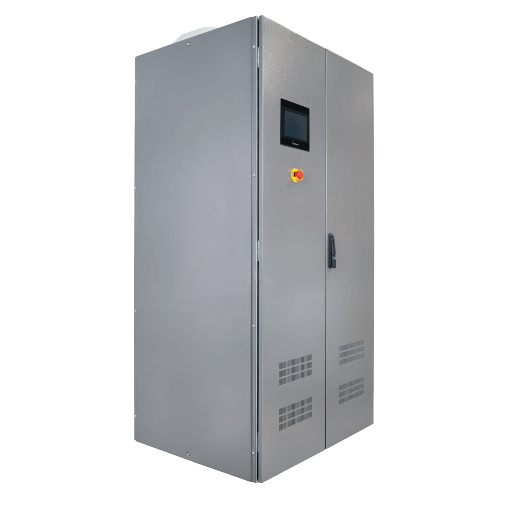
Frequency converters, known as VFDs, are of key importance in different sectors and purposes:
1. Industrial Processes
Being responsible for controlling the rotation speed of the electrical engines, they help optimize the use of machines in production and assembly lines.
2. Renewable Energy Systems
To be able to introduce environmental protection measures, they convert the changeable frequencies from wind and/or solar power systems into corresponding grid frequency levels.
3. Aviation and Maritime Systems
Airborne and seaborne means of transport involve frequency changers in adapting specific aviation and naval equipments to appropriate frequency ranges, thereby enhancing the performance during flight and voyage.
4. HVAC Systems
These are electronic devices that in the rain calm down the level of voltage and therefore the run time of the cooling devices used in heat, ventilation and air conditioning systems generating cooler air in the process with much less energy being utilized.
Frequency changers have its importance when accuracy in frequency is significant for the stable operation and usability in several applications.
Use of SFC in Aviation and Aerospace
The importance of Static Frequency Converters (SFC) has greatly increased in aviation and aerospace, due to the capability of this equipment to convert fixed frequency power to the specific frequencies needed for differentsystems. For aircraft maintenance purposes, the rectifiers are widely used to distribute 400 Hz electrical energy which is generally used in most systems of aircraft design. Auxiliary power units (APUs) that are currently used on the ground are not compulsory, and this in turn saves a lot of fuel consumption, reduces the harmful emissions to the environment, and saves the unnecessary wear and tear on the engine.
In spacecraft and satellite systems, the primary role of the SFC is to ensure proper operation of certain devices by providing stable frequency conversion. In most cases, such converters are utilized for power management, specifically during the periods when voltage fluctuations could negatively impact the accomplished mission. Also in the development of electric as well as hybrid aircraft, this component provides the advancement of more effective propulsion systems to the aircraft, where the targets of energy savings can be achieved, as it simultaneously aims at the green approaches of aviation.
Burning less fuel, reducing downtime, and system protection are all relevant challenges within the aviation industry that SFC solutions have to face in order to be compliant with the constantly evolving criteria of performance as well as ecological integrity.
Marine Sector Applications of Frequency Converters
Frequency converters are essential in the world of marine engineering, which ascertains the operation and existence of different systems on the ships. Regulation of frequencies from the main source of power (in electrical form) to the ship’s other auxiliary entities, such as the propulsion system, pumps, fans, compressors, etc., is adjusted using these devices. These converters are capable of rounding the speed of electric motors to match the operational requirements on the vessel which in turn escalates further cruise energy efficiency and system adaptability.
The realization of energy conservation and emission reduction as dominant concepts in recent maritime works signifies the crucial importance of up-to-date frequency converter solutions in the context of the industry’s current recyclable development. For example, the common use of Variable Frequency Engine is to adjust ship engine speeds so they can be more controlled, thereby lessening the loss of energy and making the ship comply with International Maritime Organization (IMO) emission flags guidelines. Moreover, the frequency inverters enhance the ship operations, contributing to less noise as they reduce vibrational effects and undue mechanical strains rewarding not only the ship employees but also the marine denizens.
Improved monitoring and control technology has influenced modernization process of frequency converters for vessels converting them into an integral part of ship instrumentation complex. These measures allow for the use of performance evaluation checks and advanced maintenance techniques enhancing equipment utilization, reducing risks of breakdowns and maximizing efficiency. This can help any chipset maintain its operational performance, which in turn enhances the way the individual systems work as a process. Such developments have strengthened the importance of marine frequency converters in overcoming current issues within the maritime industry – from energy management to environmental management.
Industrial and Commercial Applications
Frequency converters are extremely important in lots of industrial and commercial processes because they allow easily control speed and torque of an engine hence ensuring that it is operating efficiently. They play a big role of controlling the performance of conveyor systems, pumps and HVAC units within the manufacturing sector which results into energy-efficient operation and cheap utilization. Furthermore, frequency converters are necessary in the renewable power which includes systems like wind turbines that use them for the asynchronous control of the turbines turning the grid to the required level so as to correspond the energy production.
Business-wise, the critical infrastructure in data centers and tall buildings such cooling and electrical loading systems is supported by frequency converters. The latest technologies have further shown that they can minimise harmonic distortions, thereby enhancing power quality and the operational life of machinery. In accordance with the relevant sector statistics, the installation of medium to high – end frequency converters in some cases has led to energy reductions of about 30%, enhancing the campaign for sustainability and reducing the associated environmental effects. The appreciation for such features has also led to the increased advancement and application of these products in several industries.
Technical Considerations for Frequency Conversion
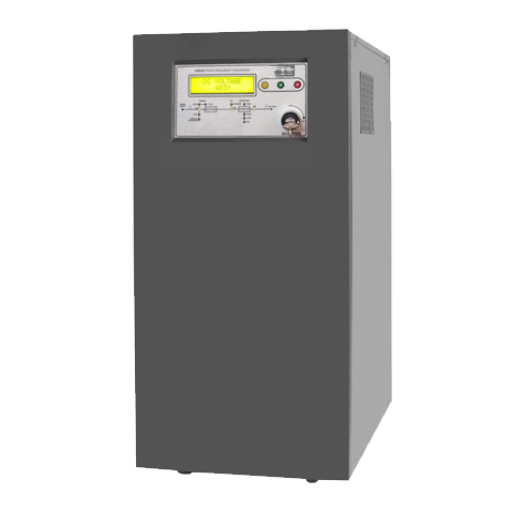
When assessing frequency conversion rates, different aspects must be taken into consideration to guarantee its performance and reliability.
1. Input Voltage Stability
It is necessary to maintain an adequate stability level of the input voltage in order to maintain smooth conversion without interruptions. Any alteration in the voltage supplied can result in certain malfunctions and contingencies that may later translate to additional expenses.
2. Harmonic Mitigation
The systems must contain harmonic filtering filters to reduce distortions and keep control over the power quality. The use of filters or advanced power electronics technologies also makes outputs of better quality.
3. Thermal Management
Efficient heat transfer is required to prevent thermal degradation of converter components due to overheating. Good thermal control ensures that system components perform better.
4. Load Compatibility
It is important to ensure that the frequency converter reaches the degree of efficiency as required by the given load. Non-compliance with the set target can lead to losses or, at times, non-performance.
5. Energy Efficiency Ratings
Again, high efficiency are potential increases in performance acquired from improved components or architecture at a higher cost in terms of energy in the short term. Systems that meet the requirements of established standards, such as IEC or NEMA, are present; this indicates that the specification is expected to be met.
Having those issues fixed will make improvement, strength, and energy efficiency of frequency process systems, thus optimizing, if not maximizing, the age of service starting from day one.
Efficiency Ratings of Static Frequency Converters
DC frequency converters work by converting frequency-based electrical energy, and as such, every efficiency test is performed on a standardized basis to achieve guaranteed results. A reflective report is given on the results obtained during an efficiency test conducted in a technically profiled manner. The predominant use of insulated-gate bipolar transistors (IGBTs) and silicon carbide (SiC) devices has led in most modern converter systems to efficiency exceeding 95%. New technologies have allowed for the reduction of the switching losses in the system, and increase the operating frequency of the system, which leads to an increase in the overall system performance.
Additionally, it is important to follow well-known energy efficient standards such as the International Energy Conservation Code (IECC) or the European Ecodesign Directives while making ratings and benchmarks. Implementation of PWM-based APF improves the system’s power quality, which in turn minimizes the consumption of reactive power and the presence of harmonics in the network. Detailed information from independent certification laboratories on the efficacy of these evaluations helps consumers to make well-informed decisions on the energy efficiency of the product.
Power System Compatibility and Grid Integration
Utilizing power conversion systems is a difficult task and flexibility is required for the modern network as increased interconnections and efficiency in the operation are expected. Hence, considerable improvement considering new converter topologies come prepackaged with grid support functions like fault ride-through, smart grid communication interfaces as well as adherence to dynamic voltage and frequency regulation. For instance, utilizing the pertinent standards, that is, IEEE 1547 and ENTSO-E codes, restricts adverse interaction of converters with the grid and subsequent problems during voltage sags or frequency deviations. Apart from that, the use of real-time monitoring and control devices improves integrability by supporting and reinforcing opposing trends, e.g., appropriate power backflow in the renewable energy systems and use of battery sources. In this way, such systems can meet self-generation patterns without causing any harm to the overall energy system while reducing amounts of both capacity and production standstill.
Maintenance Protocols for Frequency Changers
In order to achieve the highest level of efficiency and increase the duration of action of the variable frequency drivers, specifically providing cost-effectivity, it is vital that you have regular checkups. Consistently, the main selling point of products is extended life; the latter can only be attained in a more structured and comprehensive approach. For instance, heat extraction, power circuits, and drive system should inspect properly for any mechanical wear and tear, overheating, or contamination. Visual checks establish mostly the naked parts though with thermal imaging defects hidden under the visible surfaces can be spotted more easily. Bonding and grounding, bus bars, potential transformers and switchgear wiring coatings cause most recurring violations.
The primary goal of preventive maintenance strategies is to reduce the risk of incidents and to improve the performance of inverters. Frequency converters, which include the overrunning systems, attuned filters, radiator, heat sink are also such systems, where all these components are to be cleaned, the lubricants to be checked for their levels, and adequate airflow must be maintained in order to facilitate cooling. It is also important to identify measures relating to the condition of insulation, harmonic distortions, and the grounding system. On a related note, increasing the frequency at which firmware and software is updated will help align the system with the dynamics of the current grid in addition to protecting against known threats.
Implementing modern inspection gadgets, for instance, vibration measurement technique and prognostics system, helps in early fault detection in frequency converters. Historical Data and machine learning algorithms further help in prediction of possible faults, which in turn reduces unscheduled shutdowns. As such, this approach is meant to ensure effective maintenance planning and overall resource optimization while balancing key performance indicators.
Market Trends and Innovations
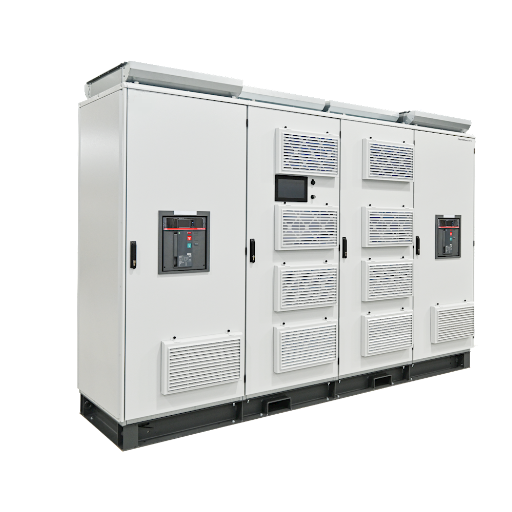
The current market for what is referred to as a static frequency converter (SFC) is growing in part due to the need to improve power efficiency and the advancement of the power technology. The adoption of enhanced digital control technology is considered to be one of the driving factors. There are incursions of high power conversion through a more innovative system of modular and compact constructions, which makes it easier to deploy in any form of remedy with minimal footprint.
Another essential shift lies in the growing acceptance of green components and materials, which are more and more pronounced in the energy-efficient field which adheres to green compliance as well. In addition, thanks to the point that IoT has gained ground, organizations are managing actively through the use of continuous operational performance measurement, therefore improving the effectiveness of action-based maintenance and also reducing operational expenses. These levels of advancement are causing SFCs to be key in areas such as renewables, move shipping and heavy manufacturing, for they will form an indispensable part of the future power conversion systems.
Current Trends in Frequency Converter Technology
The trend that is gaining more prominence in the sector of frequency converters would be the application of wide-bandgap materials, or in other words, silicon carbide (SiC) and gallium nitride (GaN). These materials produce less power in the form of heat and are therefore deemed as energy efficient materials in comparison to the traditional silicon based materials due to less conduction and switches losses. With the improvements in these material, frequency shifters are able to switch at a higher percentage which result in lower power utilization, less heating and smaller sizes. Their use is particularly beneficial where high-power applications are considered important since the savings in energy are directly proportional to the cost benefits and the effectiveness of the products.
Some manufacturers are opting for designs that are modular and scalable, as it helps to meet the different industrial requirements. This streamed approach allows easy service, quick repair, and way less system downtimes because the components can be removed and replaced while the others continue working. In other words, retrofitting or replacing parts of a system is not difficult while expanding the capacity. And should you need specifics, customizing the system to deliver the needed power level can be achieved using the scalable capabilities. This helps the development of the market offering solutions that adjust to energy planning and the usage of source improvements.
Future Developments in Static Frequency Conversion
In the area of the development of static frequency conversion, the improvement in specialized materials used also plays an important role. Therefore, such advanced materials as SiC (silicon carbide), GaN (gallium nitride) and others from wide band gap group take their significant place here. These materials are more efficient and enable operation at higher frequencies, (where needed), and also operate at better thermal conditions than traditional silicon based elements. Their use, allows designing systems with lower power consumption in the form of both weight and volume and by a less dissipative approach to power conversion and in this way makes them especially attractive for applications where power density and efficiency are important design considerations.
One more evolution is changing active frequency converter to come of digital control age. This advance is made possible by contemporary precise systems for manipulation and FPGA (Field-Programmable Gate Array) structures. This system when put in practice allows fast adjusting of frequency and voltage and precision in achieving these targets concurrently. Use of intelligence and machine learning, especially sophisticated computing, will work smarter for perfecting the system, detecting diagnostic secret problems would foresee breakdowns, and auto remedies would drive down associated repair bills in turn enhancing the system’s availability even more.
Reference Sources
1. “Modeling and Simulation for Transformer Ratio Controlled Slip Power Recovery Scheme”
2. “Static Analysis of a Digital Peak Current Mode Control DC–DC Converter Using Current–Frequency Conversion”
Frequently Asked Questions (FAQs)
How do frequency converters convert 50 Hz to 60 Hz for grid and power system compatibility?
Frequency converters convert alternating current frequency from one level to another so as to cater to the efficiency of equipment within the grid interface where local power system requirements may be in solely different frequency. With solid-state solutions, the conversion includes conversion of intermediate DC voltage formed with the help of IGBTs and power technical devices to an output voltage with a sine waveform. Such technology allows implementing zonal systems with standard voltages and frequencies with their own requirements for industrial installations, informing of renewable energy sources, and electric support of the АGС.
What is a static frequency converter, and how does a single-phase static frequency converter work?
In a static frequency converter (SFC), the three primary components are a rectifier, a DC link, and an inverter. This is essentially the system that is generally employed to convert signal frequency and amplitude in the input to the desired output. In the case of a single phase SFC, the focus of design is on changing one frequency to another while protecting the quality of the output wave shape as well as providing a stable output power for the supplies that are more sensitive to variations in the frequency. Such type of converters typically possess adjustable frequency at the output and also may have a built in or externally mounted step down transformer or inductor to adjust the output voltage and power factor.
Can frequency conversion equipment deliver pure sine wave output voltage for sensitive AC power supplies?
Sure enough, the frequency inverters in operation today such as solid-state inverters and an enhanced pulse-width-modulation inverter are being engineered to cater for pure sine output voltages appropriate for use with most equipment and applications. Low distortion is achieved due to the combining of such converter inverter, IGBT inverter topologies, filtering and adjusting output frequency and voltage with accurate precision. This has always been crucial, especially in operations that require a stable 60 Hz or 50 Hz power supply from a different frequency input or power grid. There is power provision to create a 60Hz power waveform, indeed.
How does a frequency changer manage 3-phase loads and large KVA ratings like 125 KVA or 500 KVA?
The mechanics for converting electric power for three phase systems are generally arranged so that a zero sequence vector component is eliminated by adequately dimensioned rectifier, DC link and inverter sections with the power having a high KVA rating, for example 125kva or 500kva. In the case of high power levels, design solutions may also include additional units and mechanisms, and higher power may be obtained by using Medium Voltage or several parallel modules in install. The connection of generators or the power grid, i.e., access initialization values such as 208V, 380V, or higher required as an input, is a must for sustaining operational frequencies and voltages.
