
Motor protection relay settings are calculated from motor nameplate data, current transformer ratios, and system grounding method. For thermal overload protection (ANSI Device 49), the pickup is typically set at 115% to 125% of motor full-load amps depending on service factor. For overcurrent protection (Device 50/51), the instantaneous pickup must exceed 1.7 times locked rotor current to avoid nuisance tripping during startup.
In 2023, a cement plant in Southeast Asia commissioned a new 2,000 kW kiln fan with a modern microprocessor relay. The protection engineer used the motor’s service factor current (1.15 times FLA) as the relay pickup instead of true full-load amps. Result: nuisance trips every three to four days during peak summer temperatures. After three weeks of frustration, a field technician discovered the error. Correcting the pickup from 138 A to 120 A eliminated the trips entirely. Cost of the mistake: $45,000 in lost production and engineering time.
You already know that incorrect relay settings destroy motors or cause unnecessary downtime. The challenge is calculating each setting correctly the first time. This guide provides exact calculation methods for every major protection function, with worked examples you can apply directly to your project.
For the full system-level context on motor protection, see our complete guide to medium voltage motor protection and control.
Key Takeaways
- Overload pickup is 115% of FLA for SF 1.0 motors, 125% for SF 1.15 motors
- CT primary rating should place motor FLA between 50% and 100% of the CT primary
- Device 50 instantaneous pickup must exceed 1.7 times locked rotor current
- Thermal time constants are set to 80% of the motor cold withstand time
- Ground fault pickup depends on system grounding: 5-10 A for resistance-grounded systems
- Device 87M differential is set to 10-20% of motor FLA with no intentional time delay
Prerequisites: Data You Need Before Calculating Any Setting
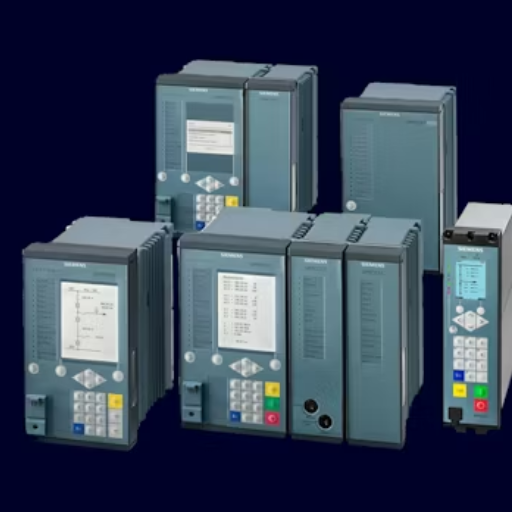
Every relay setting calculation starts with accurate input data. Missing or incorrect data produces settings that either fail to protect the motor or trip unnecessarily.
Motor Nameplate Data Required
Record the following from the motor nameplate: rated power (kW or HP), rated voltage, full-load amps (FLA), service factor (SF), locked rotor current (LRA), locked rotor time (hot and cold), NEMA design letter, and insulation class. If the motor has winding RTDs, note the sensor type (PT100 or PT1000) and locations.
The locked rotor time is critical. This is the duration the motor can withstand locked rotor current without thermal damage. Manufacturers provide hot and cold stall times. The relay thermal model must trip before the hot stall limit.
System Data Required
Collect the system voltage, maximum and minimum three-phase fault current, and grounding method. For resistance-grounded systems, record the grounding resistor current rating. For solidly grounded systems, note the expected ground fault magnitude.
CT and VT Specifications
Document the phase CT ratio and accuracy class (typically 5P20 or 10P20 for protection). Note whether the CT secondary is 5 A or 1 A. For differential protection, you need six CTs: three at the motor terminal box and three at the breaker. Verify that all CTs have identical ratios.
Device 49 — Thermal Overload Protection Settings
Thermal overload protection is the minimum protection required for every motor. Device 49 uses a mathematical thermal model to estimate winding temperature based on current and time. Modern microprocessor relays calculate accumulated heat using an I squared t algorithm.
Overload Pickup Calculation
The overload pickup determines the current level at which thermal protection begins to operate. The calculation depends on motor service factor.
For motors with service factor 1.0: Set pickup at 115% of FLA.
For motors with service factor 1.15 or higher: Set pickup at 125% of FLA.
A common error is using service factor current as the base value. Service factor current is 1.15 times FLA. If you set the pickup at 115% of service factor current, you are actually at 132% of true FLA. The relay will allow dangerous overloading before tripping.
Example: A motor with FLA of 100 A and SF 1.15. Correct pickup: 1.25 times 100 A equals 125 A. Incorrect pickup (using SF current): 1.15 times 100 A equals 115 A base, then 1.15 times 115 A equals 132.25 A. The motor could run at 130 A indefinitely without tripping.
Thermal Time Constant Selection
The thermal time constant defines how quickly the relay accumulates thermal capacity. It must match the motor’s actual thermal characteristics.
Set the time constant to approximately 80% of the motor’s published cold withstand time at locked rotor current. This ensures the relay trips before the motor’s thermal damage limit.
For Class 10 motors: Time constant typically 8 to 12 seconds.
For Class 20 motors: Time constant typically 12 to 20 seconds.
For Class 30 motors: Time constant typically 20 to 30 seconds.
If the motor manufacturer only provides one stall curve, assume it is the hot curve and set the hot-to-cold ratio to 1.0. If both curves are provided, calculate the ratio as hot stall time divided by cold stall time.
RTD Biasing Configuration
If the motor has stator RTDs, configure the relay to bias the thermal model based on actual winding temperature. This improves accuracy by 40% compared to current-based thermal estimation alone. Set the RTD alarm threshold 10 to 15 degrees C below the insulation class limit. Set the trip threshold 5 to 10 degrees C below the limit.
Worked Example: 1,000 HP, 6.6 kV Pump Motor
Motor data: FLA equals 78 A, SF equals 1.15, LRA equals 468 A (6 times FLA), cold stall time equals 22 seconds, hot stall time equals 11 seconds.
Overload pickup: 1.25 times 78 A equals 97.5 A (set at 98 A).
Thermal time constant: 80% of 22 seconds equals 17.6 seconds (set at 18 s).
Hot/cold ratio: 11 seconds divided by 22 seconds equals 0.5.
Trip class: Class 20 (pump application).
Device 50/51 — Overcurrent Protection Settings
Overcurrent protection guards against short circuits and sustained overloads. Device 50 provides instantaneous tripping. Device 51 provides time-delayed tripping following an inverse-time curve.
Device 50: Instantaneous Overcurrent Pickup
The instantaneous element must operate for short-circuit faults but remain stable during motor starting. The critical rule: set pickup above the maximum asymmetrical locked rotor current.
Typical setting: 1.5 to 2.0 times locked rotor current.
For contactor-fed motors, Device 50 is often disabled because the contactor cannot interrupt short-circuit current. The fuse or upstream breaker handles fault interruption. If Device 50 is used, a short time delay of 50 to 100 milliseconds helps avoid nuisance trips from DC offset during starting.
Example: Motor with LRA of 468 A. Device 50 pickup: 1.7 times 468 A equals 795.6 A (set at 800 A primary). With 100/5 CTs, the secondary setting is 800 divided by 20 equals 40 A.
Device 51: Time Overcurrent / Locked Rotor Protection
Device 51 serves two purposes in motor protection. It provides backup overload protection and locked rotor (stall) protection.
For locked rotor protection, set the pickup at 0.9 to 1.0 times LRA. Set the time delay longer than normal acceleration time but shorter than safe stall time. A common formula: time delay equals motor acceleration time plus 1 second margin, or 80% of safe stall time, whichever is smaller.
For overload backup, set pickup at 110% to 120% of FLA with a very inverse or extremely inverse curve. Coordinate with the thermal model so Device 49 trips first on overloads, and Device 51 operates only if the thermal model fails.
Worked Example: Same 1,000 HP Motor
Device 50: Pickup equals 800 A primary (40 A secondary on 100/5 CTs). Time delay: instantaneous (0 ms) or 50 ms if nuisance trips occur.
Device 51 (locked rotor): Pickup equals 450 A primary (0.96 times LRA). Time delay equals 8 seconds (motor accelerates in 6 seconds, safe stall is 11 seconds hot).
Device 51 (overload backup): Pickup equals 90 A primary (1.15 times FLA). Curve: very inverse, time dial 0.5.
Device 51N — Ground Fault Protection Settings
Ground fault protection detects insulation breakdown between phase windings and ground. Sensitivity depends entirely on how the system neutral is grounded.
Ground Fault Pickup by System Grounding Type
For resistance-grounded systems: Ground fault current is intentionally limited to 5 to 10 A. Set the relay pickup at 10% to 20% of the grounding resistor current rating. Typical settings: 1 to 2 A primary for a 10 A resistor.
For solidly grounded systems: Ground fault current equals phase fault current. Set pickup at 20% to 30% of motor FLA.
For ungrounded systems: Ground fault produces capacitive current only. Specialized sensitive ground fault relays are required. Standard 51N elements may not detect the fault.
Time Delay Selection
Use a definite time delay of 0.5 to 2 seconds for resistance-grounded systems. The delay prevents nuisance trips from transient surges or surge arrester operations during switching. For solidly grounded systems, a shorter delay of 0.1 to 0.3 seconds is typical.
Zero-Sequence vs. Residual Connection
Zero-sequence (core balance) CTs provide the most sensitive and noise-immune detection. A single window CT encircles all three phase conductors. The relay sees only unbalanced ground current.
Residual connection sums the three phase CT secondary outputs. This is less sensitive because CT mismatch and saturation during starting produce false residual current. Use residual connection only when zero-sequence CTs are not practical.
Worked Example: Resistance-Grounded System, 10 A Resistor
System: 6.6 kV, resistance-grounded with 10 A grounding resistor.
Ground fault pickup: 20% of 10 A equals 2 A primary.
Time delay: 0.5 seconds definite time.
CT: 100/5 phase CTs in residual connection, or dedicated 50/1 zero-sequence CT.
Secondary setting with 100/5 CTs: 2 A primary divided by 20 equals 0.1 A secondary.
Device 87M — Motor Differential Protection Settings
Differential protection compares current entering the motor with current leaving it. Under normal conditions, these currents are equal. During an internal fault, they diverge, and the relay trips instantaneously.
CT Requirements and Placement
Device 87M requires six current transformers with identical ratios: three at the supply breaker and three at the motor neutral terminal box. CT accuracy class should be 5P10 or better. The CTs must be specifically matched for differential applications, with identical excitation characteristics.
Minimum Pickup and Restraint Slope
Minimum pickup (operating current) is set to avoid tripping from normal CT mismatch and saturation. Typical setting: 10% to 20% of motor FLA.
Restraint slope defines how much differential current the relay tolerates during through-faults or starting. Typical setting: 30% to 50%. A 50% slope means the relay requires differential current exceeding 50% of the through-current before operating.
The breakpoint defines where the relay transitions from fixed minimum pickup to percentage restraint. Typical setting: 0.5 to 1.0 times motor FLA.
An instantaneous high-set element bypasses the restraint for severe internal faults. Typical setting: 8 to 12 times FLA.
Worked Example: 5,000 kW Motor, 6.6 kV
Motor data: FLA equals 390 A, CT ratio equals 400/5.
Minimum pickup: 15% of 390 A equals 58.5 A primary (set at 60 A). Secondary: 60 divided by 80 equals 0.75 A.
Restraint slope: 40%.
Breakpoint: 1.0 times FLA equals 390 A primary.
High-set: 10 times FLA equals 3,900 A primary.
Sensitivity check: For a two-phase fault at motor terminals, minimum fault current is typically 5,000 to 8,000 A. Sensitivity equals 5,000 A divided by 60 A equals 83, far exceeding the minimum requirement of 2.0.
For accurate application scenarios and standardized configuration methods of motor differential protection (87M), (see our professional motor differential protection specification guide).
Device 46, 37, 27/59 — Additional Protection Settings
Beyond the core functions, several additional protections improve motor reliability.
Negative Sequence / Current Unbalance (Device 46)
Voltage unbalance of just 3.5% produces negative sequence current of approximately 25%, causing rotor bar overheating. Set Device 46 at 15% to 25% negative sequence current with a time delay of 5 to 10 seconds. Some relays apply an I squared t characteristic for unbalance, similar to thermal overload.
Undercurrent / Loss of Load (Device 37)
Device 37 detects pump cavitation, broken shafts, or loss of load. Set pickup at 80% to 90% of normal running current. Set time delay at 5 to 10 seconds to avoid tripping during normal load dips. This protection is essential for pump and conveyor applications.
Undervoltage and Overvoltage (Device 27/59)
Set undervoltage pickup at 80% to 90% of rated voltage with a time delay of 1 to 3 seconds. This prevents damage from sustained undervoltage that increases motor current. Set overvoltage pickup at 110% of rated voltage. Overvoltage increases magnetic flux and core heating.
CT Ratio Selection and Verification
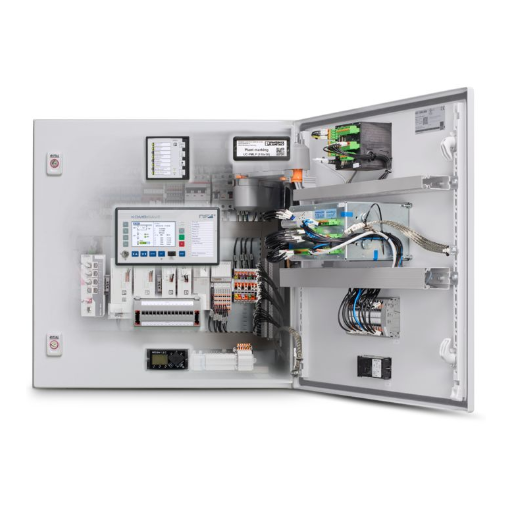
Current transformer ratio is the foundation of all relay settings. An incorrect ratio makes every subsequent setting wrong.
Sizing CT Primary Rating
The motor FLA should fall between 50% and 100% of the CT primary rating. If FLA is less than 50% of CT primary, the relay sees low secondary current and loses resolution. If FLA exceeds 100% of CT primary, the CT saturates during overloads.
Example: Motor with FLA of 78 A. Suitable CT ratios: 100/5 (78% of primary) or 150/5 (52% of primary). A 200/5 CT would place FLA at only 39% of primary, which is marginal.
Accuracy Class Requirements
Protection CTs should be class 5P or 10P with accuracy limit factor of 10 or 20. For differential protection, use 5P10 or better. Metering CTs (class 0.5 or 1.0) are not suitable for protection relays because they saturate at lower currents.
Common CT Mistakes and How to Detect Them
A water treatment plant specified 200/5 CTs for a 180 A motor. During commissioning, the relay was programmed for 100/5 CTs, a simple data entry error. For six months, the relay saw only half the actual current. When a bearing failure caused the motor to overload to 220 A, the relay registered only 110 A, well below trip threshold. The motor burned out before anyone detected the problem. The 12,000rewindand12,000rewindand8,000 emergency callout could have been prevented with a five-minute primary injection test.
Always verify CT ratio with a primary injection test before energization. Inject known primary current and confirm the relay reads correctly on the secondary side. This test takes less than 10 minutes and identifies ratio errors, wiring mistakes, and polarity problems.
Relay-Breaker-Fuse Coordination Check
Protection coordination ensures the device closest to a fault operates first. For motor protection, this means the motor relay trips before the feeder breaker, which trips before the main breaker.
Time-Current Curve Plotting
Plot the following curves on the same log-log graph: motor thermal limit (hot and cold), Device 49 relay curve, Device 51 relay curve, fuse or breaker characteristic, and upstream feeder breaker curve. The motor relay curves must lie below the motor thermal limit and below the upstream breaker curve at all current levels.
Selectivity Margins
Maintain a minimum time margin of 0.3 to 0.4 seconds between the motor relay and upstream breaker at maximum fault current. This margin accounts for breaker operating time, relay processing time, and CT saturation effects.
Type 2 Coordination Verification
For contactor-fed motors, verify Type 2 coordination. The fuse or breaker must clear short-circuit faults before the contactor attempts to interrupt. The contactor and overload relay must survive the fault without damage. Compare the contactor withstand I squared t with the fuse total clearing I squared t. If fuse I squared t is less than contactor withstand I squared t, Type 2 coordination is achieved.
Special Cases: VFD-Fed and Soft-Started Motors
Modern motor starting methods change protection requirements. A relay set for direct-on-line starting will be wrong for a VFD-fed motor.
How VFD Starting Changes Relay Requirements
A VFD limits starting current to 1.0 to 1.5 times FLA, compared to 5 to 7 times for DOL starting. This fundamentally changes overcurrent protection. Device 50 instantaneous pickup, set at 1.7 times LRA for DOL applications, may now be 8 to 10 times higher than necessary.
During a ground fault developing inside the motor, an inappropriately high Device 50 setting delays clearing until the fault escalates. A petrochemical facility learned this when adding a VFD to a 1,500 HP compressor. The original Device 50 setting of 1,500 A, based on DOL locked rotor current, was now 7.5 times higher than needed. A developing ground fault was not cleared until it became a phase-to-phase fault. The facility now uses VFD-specific protection with Device 50 set at 2.5 to 3.0 times FLA.
For VFD-fed motors, the VFD itself provides overload protection through its thermal model. The external relay serves as backup and provides protection the VFD cannot, such as differential and ground fault. Coordinate the VFD thermal curve with the external relay to avoid both devices tripping for the same event.
For harmonic mitigation strategies in VFD applications, see our MV drive power quality guide.
Soft Starter Protection Integration
Medium voltage soft starters limit starting current to 3 to 4 times FLA. The integrated protection in modern soft starters includes electronic overload, locked rotor, and current imbalance. When using soft starter integrated protection, set the external relay as backup only. Set backup pickup at 110% to 120% of the soft starter overload setting.
For detailed parameter matching and industrial application selection of medium voltage soft starters, (see our medium voltage soft starter selection guide).
Common Relay Setting Mistakes
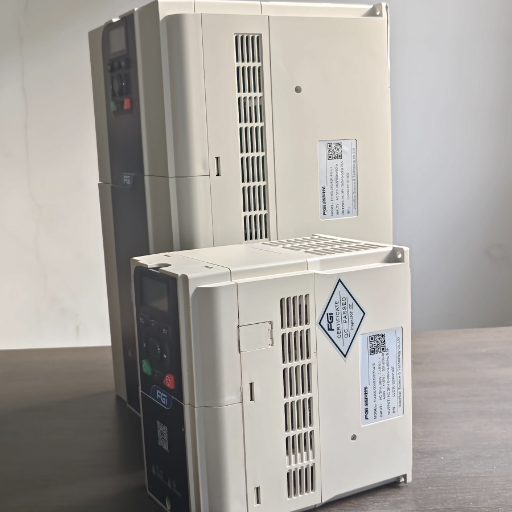
Three setting mistakes cause the majority of motor protection failures in the field.
Mistake 1: Using Service Factor Current as FLA
As illustrated in the cement plant example, using 1.15 times FLA as the base for pickup calculation creates a 15% error. The motor can overload continuously without tripping. Always use true nameplate FLA as the base value.
Mistake 2: CT Ratio Mismatch
Relay programmed for wrong CT ratio is the most common commissioning error. It produces settings that are off by the ratio error factor. A 2:1 ratio error means the relay misses 50% of overload conditions. Primary injection testing catches this in minutes.
Mistake 3: Ignoring Motor Acceleration Time
A pump motor with high inertia may take 15 seconds to reach full speed. If the locked rotor timer is set at 8 seconds, the relay trips on every normal start. Always verify acceleration time under actual load conditions before setting the stall timer.
Mistake 4: Ground Fault Relay More Sensitive Than Feeder
In resistance-grounded systems, the motor ground fault relay must be more sensitive than the feeder ground fault relay. If the feeder is set at 5 A and the motor at 10 A, the feeder trips the entire bus for a single motor fault. Set motor ground fault at 10% to 20% of feeder setting.
Mistake 5: Setting Device 50 Too Close to Inrush
If Device 50 is set at 1.5 times LRA but the actual asymmetrical inrush reaches 1.6 times LRA, the relay trips on every start. Use a minimum margin of 1.7 times LRA, or add a 50 to 100 ms time delay.
Commissioning Checklist and Verification
Before energizing any motor with new relay settings, complete the following verification steps.
Pre-Energization Checks
Verify all nameplate data matches relay settings. Confirm CT ratios are correctly entered. Check CT polarity using a flick test or primary injection. Verify wiring matches the single-line diagram. Confirm control power voltage matches relay requirements.
Primary Injection Testing
Inject known current through the primary CT circuit and verify relay readings. Test at 25%, 50%, 100%, and 200% of FLA. Confirm overload pickup operates within 5% of set value. Test instantaneous overcurrent at 150% of pickup. Test ground fault element with simulated zero-sequence current.
Coordination Verification
Plot time-current curves and verify selectivity margins. Confirm motor relay curves are below motor thermal limits at all points. Verify upstream breaker curves provide adequate coordination margin. Document all settings and test results for future reference.
Documentation Requirements
Maintain a relay setting sheet for each motor. Record nameplate data, CT ratios, all protection element settings, test results, and commissioning date. Update the sheet whenever settings are modified. This documentation is essential for future troubleshooting and maintenance.
Frequently Asked Questions
How do I convert primary current to relay secondary settings?
Divide the primary current by the CT ratio. For a 100/5 CT (ratio of 20), a primary current of 100 A equals 5 A secondary. A pickup of 125 A primary equals 6.25 A secondary. Always verify whether the relay expects secondary amps or per-unit values.
What is the difference between Device 49 and Device 51?
Device 49 is a thermal model that simulates motor heating and cooling. It trips on sustained overloads but allows normal starting inrush. Device 51 is a time-overcurrent element that follows a fixed inverse-time curve. In motor applications, Device 51 is often configured as locked rotor protection with a definite time delay, while Device 49 handles overloads.
Should I disable Device 50 on contactor-fed motors?
Yes, in most cases. Vacuum contactors cannot interrupt short-circuit current. If Device 50 trips, the contactor attempts to open under fault current and may weld or explode. The fuse or upstream breaker should clear short-circuit faults. Device 50 is appropriate only when a circuit breaker (not a contactor) provides the switching function.
How does ambient temperature affect relay settings?
High ambient temperature reduces motor cooling capacity. If the motor is rated for 40 degrees C ambient but operates at 55 degrees C, the thermal model may need adjustment. Some relays provide ambient temperature bias. Alternatively, reduce the overload pickup by 5% to 10% for every 10 degrees C above rated ambient.
Can one relay setting work for multiple motors?
No. Each motor has unique FLA, LRA, thermal time constants, and acceleration time. Using identical settings for different motors guarantees that some motors are under-protected and others nuisance-trip. Always calculate settings individually for each motor, even if the motors appear similar.
Conclusion
Calculating motor protection relay settings requires methodical attention to motor data, CT ratios, and system characteristics. The protection chain is only as strong as its weakest setting. A correct thermal model with a wrong CT ratio is worthless. A perfect instantaneous overcurrent setting with ignored acceleration time causes nuisance trips.
The key is verification. Every setting should be checked against motor data, tested with primary injection, and confirmed with time-current coordination curves. The 10 minutes spent on primary injection testing prevents the $20,000 emergency repair that follows an undetected CT ratio error.
Shandong Electric manufactures power conversion and motor starting equipment for industrial, mining, oil and gas, and power generation applications. Our engineering team supports project-specific protection system design, from relay selection and setting calculation through commissioning verification. For complex medium voltage motor applications, custom engineering ensures your protection system matches your exact motor specification and grid code requirements.
Request a free motor protection relay setting review. Contact our engineering team with your motor nameplate data and application details, and we will verify your settings or recommend optimal values for your project.
Shandong Electric also offers our 400Hz frequency converter for ground power and aviation applications, manufactured with the same engineering rigor that supports critical motor protection worldwide.
For scientific type selection rules and precise parameter setting standards of MV motor thermal overload relays, (see our thermal overload relay selection and setting guide).
