
Precision control over the speed of an alternating current motor has become crucial in the framework of contemporary industrial and business practices – be it in the electro-mechanical operations, heating-cooling systems, including propulsion systems of electric cars. This ability can immensely enhance energy saving, functional characteristics and dependability of the system. The aim of this article is to cover the central issues of the regulation of the speed of an AC Motor, and the following details the methodologies, how they function and apply to different contexts in reality. For instance, methodology of control for drive, as an object of regulation, electrical slip control method, vector control method, etc. tools are examined. Also, analysis of such methodologies as methods of adjusting voltage, methods of adjusting frequency, vector control and others more advanced as well.
Introduction to AC Motor Speed Control
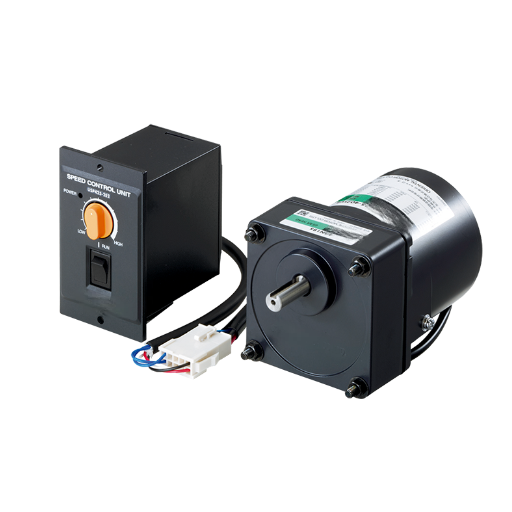
Depending on user needs, it can be required to adjust the speed of operation of an alternating-current electric motor optimally in the following ways. To do this, supply frequency or voltage can be altered. The simpler methods employ volts per hertz (V/f) control which is load torque dependent and special method called vector control eliminates these limitations. In the stationary and rotating coordinates, vector control is very accurate and yields excellent dynamic characteristics. These controls are used in industrial controls systems, climate control systems, and even electric cars, being characterized by fairly high sustaining load stability. By applying an optimum speed control in relation to load, equipment users can save energy with no impact on the operational performance.
Importance of Motor Speed Control in Industries
This is where motor control comes in handy for boosting the efficiency of the system as well as the output of any industry or task at hand. This is achievable, once the rate of the motor can be varied to what the specific process expects, that is, affecting reduction in wastage of energy and operations costs. Indeed, for instance, in manufacturing, the conveyor belts function without any jerks, operations in the workshop are precise, and the process of assembling is well streamlined – thanks to the amazing control of speeds. In the same way here, ventilation and air conditioning systems – which is HVAC systems provides a situation where the climate remains calm but does not consume so much energy once the fan speeds are controlled accordingly including the compressors.
Advances in technology, for instance, sensorless vector control and adaptive control mechanisms, have improved speed control systems. Wireless sensor networks for example, on the other hand enhance the determinacy of speed feedback control system. This means that it is possible to perform changes like increase or decrease the load applied to the system in real time in order to prevent the system from failure and wears leading to extended life of the equipment and reduced system maintenance. Using wholistic integrated methods of advanced approaches of motor speed control benefits directly wedging such objectives among the performance and the results (e.g. energy consumption save) of industry applications.
Types of AC Motors
| Type of AC Motor | Key Characteristics | Applications |
|---|---|---|
| Induction Motor | Operates on electromagnetic induction | Industrial machinery, pumps, fans |
| Synchronous Motor | Rotates at constant speed | Power generation, robotics, compressors |
| Single-Phase Motor | Suitable for low-power applications | Household appliances, small tools |
| Three-Phase Motor | High efficiency and power output | Factories, HVAC systems, heavy equipment |
| Servo Motor | Precise control of position/speed | Automation, robotics, CNC machines |
| Stepper Motor | Moves in discrete steps | Printers, scanners, precision instruments |
| Universal Motor | Operates on AC or DC power | Power tools, portable devices |
Applications of AC Motor Speed Control
The application of AC motor speed control systems has become quite popular within different sectors, as this allows significant improvement in the efficiency of the system, saves more energy and ensures reach of electrical motor content. Regulation of the speed can be achieved with the help of speed control methods such as Adjustable Speed Drives (ASDs) or Variable Frequency Drives (VFDs) where speed is varied by adjusting the frequency and voltage fed to the ac motor. This particular area of technology is most useful in the processes where the motor is required in conveyor belts, extruders, pumps and other applications where precise motor control is essential.
HVAC systems (short for Heating, Ventilation, and Air Conditioning) are very important in any building and industry because when we optimize the execution of the fan as well as the power consumption of the compressor, we can achieve large quantities of energy savings, as well as create thermal comfort. Moreover, the control of the speed of a motor in the renewable energy systems, like wind power system, helps increase the power generation by idealizing transition load operating points by ensuring that the rotational speed always remains on the efficiency curve.
Several developments in the field of AC motor control systems have been made in response to the pressure for smart automation, which the markets for robotics, security solutions and CNC machinery have experienced over the years. Hence, the smart operation and maintenance of industrial facilities have also adopted industrial IoT-controlled motors, as it becomes harder to apply standard motor control systems to modern machines.
Methods of AC Motor Speed Control
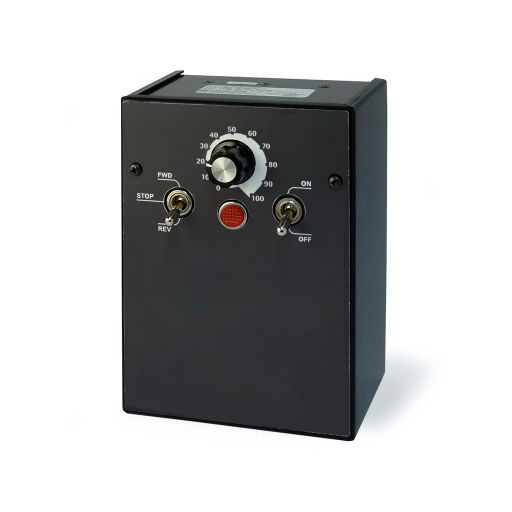
- 1
Variable Frequency Drives (VFDs): VFDs are one of the most convenient ways of controlling an AC motor speed. They adjust the frequency and the output voltage to the motor, which in turn makes it possible to determine the exact speed that one wants, while at the same time saving power. - 2
Pole Changing: This method alters the number of poles the motor hence the synchronous speeds by switching poles and its effect and also is characteristically employed by applications with specific speed levels. - 3
Slip Control: Given that wound rotor motors utilize motor start resistance, changes in the rotor resistance can be given to the wiring of the motor to achieve slip control, thus allowing a variety of speeds. - 4
Voltage Control: The motor speed can be reduced by lowering the driving voltage. However, this is not commonly applied since it is a superior motor control technique and has a big influence on the heating effect of the motor. - 5
Vector Control (Field-Oriented Control): This control strategy is capable of controlling both the magnitude and the phase of motor current vectors making it possible to accomplish highly dynamic and precise operation of the plant in the context of different actuators in any forms.
Voltage Control for AC Motors
Changing the voltage levels in the operational of the ac motors is referred to as a voltage control in the AC motors. The idea is to regulate the speed and torque of a motor by varying the supply voltage. This measure is usually applied in cases with low capability of speed control because it is easy to understand and affordable as well. However, it should be emphasized that this method definitely cuts the efficiency of the motor. Decreasing the voltage reduces the flux density, and therefore the torque balance will reduce as well increasing the likelihood of rise in temperatures, especially in situations of full loading. Consequently, voltage control is most feasible where the power is no more than minimal or where strict management of torque is not essential.
Recent developments in motor control technology are leading to smart systems devised using artificial intelligence to control voltage, maximizing energy saving performance. This is achieved by minimizing energy consumption while still providing the amount of power the consumer wants. Voltage control has been improved further by adding features such as a feed back loop and real time operation where quick corrective actions can be effected in case of a malfunction. While voltage control is usually defined in terms of low power dc motors, it can also operate in large systems when coupled with other installations such as variable frequency drives (VFDs) or different operation conditions that will affect voltages.
Frequency Control and Its Mechanism
Frequency control is a clever way of tweaking the motor speed by varying the frequency of the source. One way of achieving that is by the use of a variable frequency drives (VFDs), which converts the fixed supply frequency into an output that is quite enough to suit the motor’s operational requirements. This particular method depends on advanced electronic circuits, including inverters and rectifiers, further inspection of the AC lines. The principle of operation of the VFD lies in tuning the frequency of the output of the motor. Altering the frequency results in a variance of the synchronous speed of the motor shaft, which controls the speed of the motor rotating direction precisely.
The present day frequency control devices are provided with advanced control algorithms in order to control the movement dynamics with strict adherence to smooth acceleration and deceleration efficiency thus reducing wear and increasing the life span of the motor. Other important systems include, but are not limited to, torque and energy optimization that additionally increase the efficiency when exerted in different fields of industry. As far as the latest information, the improvement in system of frequency control combined with condition tracking abilities such as new sensors for predictive maintenance has shown very good reliability results. This in turn emphasizes the importance of it in many dynamic production environment designs in order to improve steadiness and minimise the wastage of power.
Vector Control Explained
Field oriented control, also known as Vector Control is an advanced technique employed in Variable Frequency Drives (VFD’s) to have better control over the performance of three phase AC motors. By controlling the magnetic flux and the current that produces torque, vector control allows a more dynamic system performance, efficiency torque stability, and overall increase in energy conversion. The method is popularly utilized in applications where there is an expectation of high level control of motors such as in high performance motor control such as robotics, CNC machines and lifts as precision and certainty is a must.
Recent technologies in vector control now enable the use of latitudinally gathered information coupled with real-time operations resulting in even greater improvement regarding control of motors. Such improvements have made it possible to tune out frequencies that are essential in minimizing distortion, reducing power losses and accounting for changes in a load in a manner that adheres to the industrial load. Moreover, the advanced condition-monitoring systems, which are part of the system that collects real-time data, enable predictive maintenance. By identifying the issues that cause the motors to vibrate within acceptable limits, it will be possible to overcome them reducing the downtimes and the number of maintenance schedules. These aspects of vector control, e.g., precision, adaptability, and fail-safeness, are capable of presenting this technology as irreplaceable.
Real-World Applications of AC Motor Speed Control
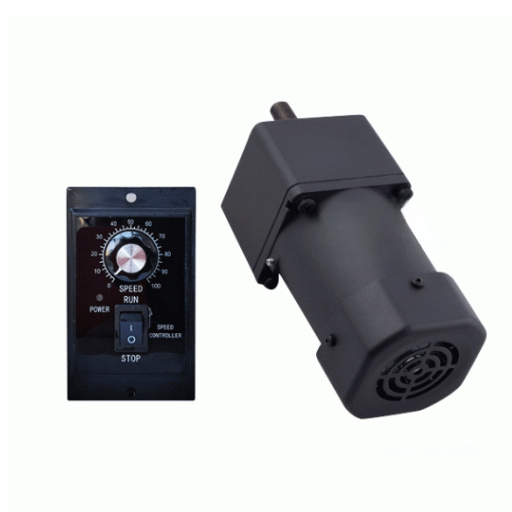
- 1
Manufacturing Processes — Utilizing speed control in any activity has always been seen as a significant factor. This is especially true in regards to equipment used in production such as conveyor belts. That is why this trend is being promoted so much to solve the typical demerits of production, such as a faster pace and less waste. - 2
HVAC Systems — In such systems, speed controllers governing the airflow are employed mostly to fan, pump and compressor power consumption to predetermined limits whilst comfort conditions within buildings are satisfied. - 3
Transportation — Electric vehicles and rail systems count on accurate mechanical speed modulation to regulate their operations, which includes speed up and slow down scenarios, as well as accommodating loads in due course. - 4
Energy Sector — Such equipments as pumps and compressors in oil, gas and renewable energy sector are typically required to achieve speed control to run reliably without amid in the changing requirement cycles. - 5
Textile Industry — It is extremely important to program motor speeds in spinning, weaving, and coloring machines to maintain uniformity in the final product.
Manufacturing Industry Applications
Modern industry has managed to evolve speed control for AC Induction motor as one of the pillars in aspects of efficiency, quality, as well as operational restructuring. Speed control is important in the operation of machines in manufacturing since it enhances the machines performance levels and hence the amount of energy used reduces. For example, in a manufacturing facility, if the delivery to the next processing machine will proceed after the first one has completed the production, synchronization to avoid downtimes between the processes is implemented.
There is also demand for controlled speeds in material handling where goods are properly moved from shelves to a desired position without damage. Speed control technologies, especially with the help of innovation in the use of drives such as the VFD, drives empower more exact increments of speed, which also integrates well with other systems of automation, and accomplishes the reasons why the engines are used for the machines in industry 4.0. Thus, applying more advanced engines for such working means one is already considering the future expansion capabilities and dependability in the industrial functions to be carried out.
HVAC Systems and Their Efficiency
The modulation of the speed of an alternating current motor is a key factor when it comes to reducing the environmental impact of HVAC (heat, ventilation, air conditioning). The new HVAC equipment includes variable frequency drives (VFD) providing speed control of the AC motors to variances within the demand. They have the capability to reduce the energy consumed in the motor operation where the motor speed does not have to be constant but can be adjusted accordingly with the corresponding output required from the load.
A typical example can be taken of ventilation systems where the traditional means of flow rate control involved use of dampers or throttling vanes, which were not efficient but only added to the energy waste. In case of VFD operating AC motors, the fan or pump speeds can be modulated so that the airflow or the conveying liquid is optimal with the least energy spent. According to the data from studies focussing on energy efficiency, the implementation of VFD in HVAC systems can lead to saving of up to 35% of the energy consumption depending on the level of variability on the load and the design of the system.
Also, the operational life of equipment increases by using smart technologies in which mechanical and thermal modes are less stressed due to the non-stop running. Besides high level of control which enables the motor to be incorporated within the buildings operation system also provides for the monitoring of other performance signals for example vibration and current consumption in real time. It therefore stabilises the system performance over the long run and ensures compliance with ever tightening energy and environmental requirements.
Robotics and Automation
AC motor is also very important for the modern robotics and automatics as it handles acceleration and deceleration in many of the applications. As far as robotics are concerned, such nonsynchronous motors along with variable frequency drives (VFDs) permit continuous modification of rotation speed, which is invaluable in performing high precision operations like handling items, or making manipulations with the objects by means of, for instance, robot arms. Metals strengthen and wear intensity increase with the speed of conveyance. Stiff gradients of speed-rate add instability and more pathetic s curve becomes more and more of a perfection at low speeds where a lot of techniques would not work for lowering the inertia.
Aside from that, when speaking of machines and systems, the use of AC motor speed control entails higher productivity rates and possibilities. As established, inter alia, in the case of conveyors, different speed of motors is put to use in order to match outputs at different production points, avoiding queues and switching to low loads. With the onset of Industry 4.0, there is a trend in which AC motors are assimilated inside networked environments of intricate sensor and control equipment design, for instance, IoT, such that they can be observed all the time and operated for optimal operation. And also the technical efficiency and the linking capabilities of the present-day AC motor drives are conducive to the current need to have production systems running smoothly, with much of demand on production quotas and on energy conservation measures duly met by different corporations.
Advantages of AC Motor Speed Control
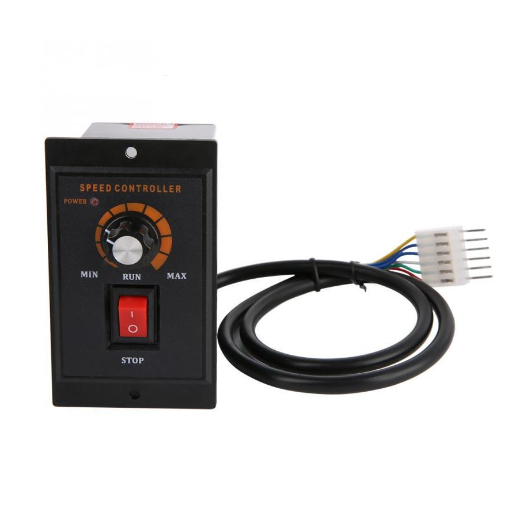
Energy Efficiency
Enabling automatic adjustment of motor speed in accordance with the load to control required, ac motor speed control is designed with the aim at reducing operational costs by minimizing energy usage, with commendable results.
Precision and Flexibility
Variable speed drives (VSDs) have changed motor control from speed to velocity control, for example, in acceleration, deceleration, and even across different environments.
Extended Equipment Lifespan
There are several benefits to controlled startup and controlled operation, such as the reduction in the mechanical stress on the components of the system which would otherwise cause them to wear and fail more quickly within the required lifetime.
Improved Process Performance
Speed changes should be avoided as much as possible since they constitute another form of waste in the various industrial activities which affects the speed of product processing. As a result, quality processes are enhanced and losses cut using economic aspects.
Reduced Downtime
AC motor speed control by itself with improved performance and monitoring systems can also help in the improvement of lubricant condition and hence extend the machine life by providing better designs for speed control mechanisms.
Energy Efficiency and Cost Savings
An electric motor speed control system increases the reliability of industrial devices by changing the load regulation produced by the engine. In the case of traditional motors, there is very little dynamic response from the motor. Despite the low dynamic response, which has no input signals for changing the speed, it can operate at constant speed even when it is not in use. The waste of energy is not limited to the above aspect: as the power supply runs at constant speed, fast cooling and heating requirements make it difficult to supply the electrical machines. The slow-rotating internal combustion engines and electrical rotating machines and the driven systems is very high and their fast-rotation performances are discarded. Inclusion of variable frequency drives or Variable-speed drives allows the industry to match requirements with efficient speed control, thus, in pumps and fans the energy is lowered by up to about 50%.
Research has shown that speed control systems in major applications, though at first they may be heavy on capital infrastructure, can largely pay back within a few years due to power consumption cuts only. Equivalent energy levels further make the installation of such based systems more appealing under such rules as energy incentives and green energy programs. Availability of the speed control system also makes it possible for the companies to comply with energy efficiency directives thus reducing carbon emissions in the organizations, rationalizing costs which are much related to the environmental benefits of the activity performed.
Improved Performance of AC Motors
At this point, it is safe to say that the introduction of speed control for an AC motor results in a higher level of operational efficiency and quality of any given industry. Many of the latest frequency converters are provided with adjustable frequency in real time. This way, these frequency converters will allow the machines to run at the speed of the application. It saves energy consumption, extends the life of parts and equipment, and enables smooth operation. It has been shown that VFD equipped systems results in energy savings ranging from 30-50% over other methods in the case of some loads, and some applications.
In addition to these, speed control systems tend to improve the quality level in at least few applications such as conveyor or HVAC systems and production lines’ processes by not destabilizing the motor performance although the load fluctuates. This type of improvement enhances the operation of such equipment and increases the working efficiency in any sector that is liquid using such equipment including the industrial sector.
Operational Flexibility in Various Applications
AC motors control systems are designed for adapting to a variety of operating conditions and fields owing to their operational flexibility. When it comes to precision engineering flows, thanks to Variable Frequency Drives, the different speeds can be correctly met, enabling proper coordination among various motors and operations. It allows eliminating the errors and improving the quality of the produced items at the same time.
Different from the above situation, the possibility for control of speed in case of fans or compressors operation in HVAC Systems is adopted to match the time varying airflow and temperature requirements. Consequently, this feature, enables energy savings, minimization of operational costs and spare parts consumption. More importantly, control of speed, in systems like irrigation pumps of farms, ensures that water flow is modifiable according to the area and use a practice that cuts on wasteful use of the natural resources. Such high degree of control mechanisms has made the AC motor speed control techniques as a vital ingredient in ensuring that the full potential is realized which includes energy efficiency and process reliability.
Future Trends in AC Motor Speed Control
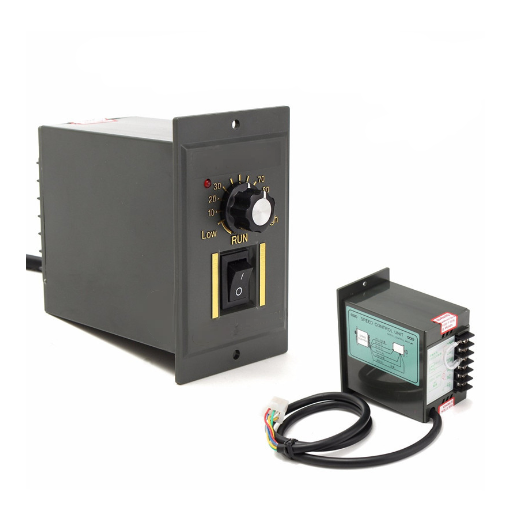
Intelligent solutions and effective energy saving in technologies of controlling electric motors using AC are the most expansive and direction-carrying and require careful research and investment. Major feature of development is integration of platforms of Internet of things (IoT), which provides instant access to data almost everywhere and from any device. That is why this leads to a practice of maintenance based on wear conditions allowing the fleet to maximize the overall performance of the systems. It is also where the attention has been directed to the improvement of efficiency of motors of the variable frequency drives (VFDs) — systems that retract power losses and operate with renewable energy.
Technological Advancements in Speed Controllers
In recent years, electronic speed control systems are adapting more and more seasoned electrical emergent methods especially those from machine learning, which is a member of the artificial intelligence family, used as one of the active control techniques. With any of these, one can monitor the operation of the motor in real time and fine tune it speeding up, minimizing energy consumption. Dynamic machinery which maintains a certain industrial plant modified to react to external influence reducing operational risks includes systems which may adapt to a disturbance or a change in the load making dilate any manual adjustables. It is important to note that thanks to artificial intelligence, speed controllers are now equipped with predictive maintenance technologies that make it possible to predict faults before they happen hence allowing for operational enhancement. As such, the scope of these improvements extends the system’s useful life, helps control the cost, and improves steady-state time between generating failures.
Impact of IoT and Smart Technologies
The evolution of IoT and smart devices has brought a new dawn to the way industrial data is captured, analyzed, and used to predict. Simply put, the use of such devices allows individuals to see what their equipment is doing at any given moment in order to respond to situations. Such features make performance, its energy effect as well as environmental impacts very tightly managed through a variety of sensors and the use of cloud data in real-time. Similarly, advanced technologies such as artificial intelligence make the forecasting of future conditions by enriching models with enormous volumes of data, easier. This paradigm shift does not only enhance the system’s reliability but also makes users’ tendency towards appropriate use of energy, quality, scalability, and green growth — towards which the world is generously leaning — possible in all contemporary industrial scenarios.
