
Variable speed control has been the focus of a tremendous advancement in the way industries optimize efficiency, performance, and energy consumption ever since it was integrated into AC motors. This modern innovation caters to a wide range of applications including, but not limited to, HVAC systems, industrial machinery, electric vehicles, and renewable energy systems by offering motor speed and torque control with high precision. In this article, we will delve into the nitty-gritty details of AC motors equipped with variable speed control, explaining their principles of operation, their main advantages, and how they find their way into everyday life in many different markets. If you are an engineer, a business professional, or just someone who is keen on the latest industrial developments, you will be provided with a very comprehensive guide to the technology that drives the modern motor system in this article. Let us explore the new doors of flexibility, sustainability, and innovation that variable speed control is throwing open.
Principles of AC Motors
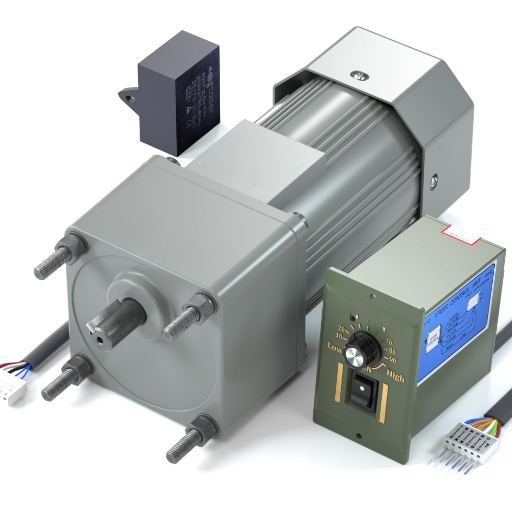
AC motors are designed based on electrical induction theory, which is a phenomenon where the magnetic fields and the alternating current participate in the production of mechanical motion. The motor’s stator upon the application of an AC voltage creates magnetism that rotates. This magnetism, in turn, being the electrical force of the rotor, creates another magnetic field. Those two magnetic fields combining their forces result in the rotor starting to rotate, also meaning that the electrical energy is converted into mechanical energy. AC motors are thus very efficient and reliable which is the main reason for being applicable anywhere from industrial machinery all the way to household appliances. The important parts such as a stator, rotor, and bearing do their jobs together to make the motor operate smoothly and perform its best.
Basic Operation of AC Motors
The working of AC motors is connected with basic electromagnetic principles. In the presence of a stator winding where the current is alternating, the rotating magnetic field is created. This magnetic field is connected with the rotor conductive material which is generally done through one of the two effects; electromagnetic induction or direct power input via slip rings, depending on the motor type. The rotor current, which is induced, then generates its field, which in the end aligns and reacts with the stator’s field, leading to torque production that in turn makes the rotor turn.
Recent developments in the field of electric motors have given rise to designs that not only maximize efficiency but also are very flexible. For instance, high-efficiency induction motors have their copper windings optimized and rotor designs improved to the point of energy losses reduction. Moreover, the usage of permanent magnet synchronous motors (PMSMs) has become very common in the industry owing to the achievement through the use of rare-earth magnets of higher power density, precise speed control, and consequently better performance in robots and electric cars. It is clearly evident from the industry data that the vast majority of the present-day AC motors work at an efficiency rate of over 90% in the case of the optimal load being applied.
Meeting stringent industrial requirements such as the IE3 and IE4 energy efficiency classes are a clear sign that the present-day AC motors are an effective way to cut down costs and power use in your operations. The close-loop controls, much of the time driven by VFDs, enable the whole speed and torque to be easily governed, and this is how the AC motors become an essential part of energy-saving and automated systems. These improvements are a vivid example of the continuous development of AC motor technology to meet the needs of efficiency and performance in today’s applications.
Types of AC Motors: Single Phase vs. Three-Phase
Key Components of AC Motors
Variable Speed Control Mechanisms
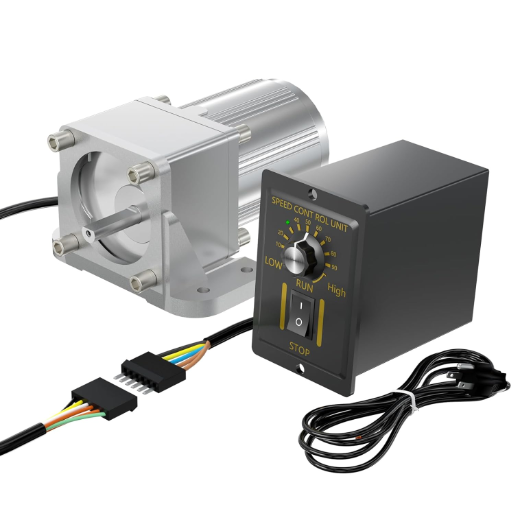
Variable speed control mechanisms are systems that are intended to regulate the rotational speed of a motor and ensure that it is working optimally for different operational needs. By changing the frequency or voltage that is supplied to the motor, these mechanisms can always set the motor’s speed right. The most popular methods by which these mechanisms can operate are:
- Frequency Control via Variable Frequency Drives (VFDs): These tools regulate the power frequency reaching the motor and at the same time allow accurate speed changes and save on energy.
- Voltage Control: One of the most effortless speed control methods is to change the voltage for which the motor is supplied. However, it might not be the best solution when a big change of speeds is needed.
- Mechanical Adjustments: Drives like gearboxes or belts can give a motor a different gear ratio or length and hence a different speed, but it is less accurate when compared to electrical solutions.
The use of variable speed control is superior to the traditional method as it saves energy, makes the system more adaptive, and harmonizes the demands in the application.
Understanding Variable Speed Motors
The main feature of variable speed motors is their exceptional efficiency regarding various operating speeds. The motor drives find the exact load requirement for a given moment, so they reduce the energy wasted by a great amount. It is even more improved by the use of Permanent Magnet Synchronous Motors (PMSMs) and high-frequency inverters, which have found modern areas of application, notably in industry. In comparison with the older motor technologies, the efficiency of PMSMs is higher for more than 90% even after low loads, so there are systems where they can be found as the most economically feasible solutions.
In addition, the increment in the popularity of VFDs has played an essential role in making the motor performance improved. The VFDs control both the voltage and frequency that are provided to the motor, enabling the speed to be changed without any torque loss. The application of VFDs is said to be providing 20-50% energy saving and hence making them an indispensable part in complying with tough energy standards such as those of the U. S. Department of Energy (DOE) and the European Union’s Ecodesign Directive.
Reliable control strategies that employ feedback loops and forecast algorithms are effective in improving the operational accuracy of variable speed systems. These systems keep on modifying their output to meet the required load, and at the same time, they keep the system stable and the equipment safe as they go through the process. This unique combination of control and system flexibility is further validated by the significant role of variable speed motors in the energy-efficient designs of the modern industrial and commercial infrastructure.
Types of Motor Speed Controllers
Inverters and Their Role in Speed Control
The use of inverters, alternatively called as VFDs, is crucial to maintaining the desired speed and power of AC motors because they change the frequency and voltage of the electric power supplied to the motor. The modification of the frequency has the biggest effect on the rotational speed of the motor thus giving the operator a lot of control over its pace. The inverter always has as its main purpose the alteration of fixed-frequency AC power to DC power, thus the DC power becomes the source for the desired frequency and amplitude of the AC power after being inverted. This whole cycle is achieved through the very tricky pulse-width modulation (PWM) methods that are used in an inverter which, in turn, guarantee the motor’s smooth and high performance.
Modern-day inverters generally cater to sophistications that include the control of the torque, the algorithms for energy optimization, and the integration with automation systems, making the achievement of excellent operational efficiency possible. The aforementioned ones and other areas heavily relying on inverters are those of manufacturing, HVAC, and renewable energy where it is required to vary the speed of the loads dynamically and in the meantime save energy in an automated way by using inverters. In fact, the most efficient method of reducing energy consumption during low-demand periods is to switch off or even turn down the inverters, and this practice is a big contributor to reducing operating costs and increasing mechanical precision.
Benefits of Variable Speed AC Motors
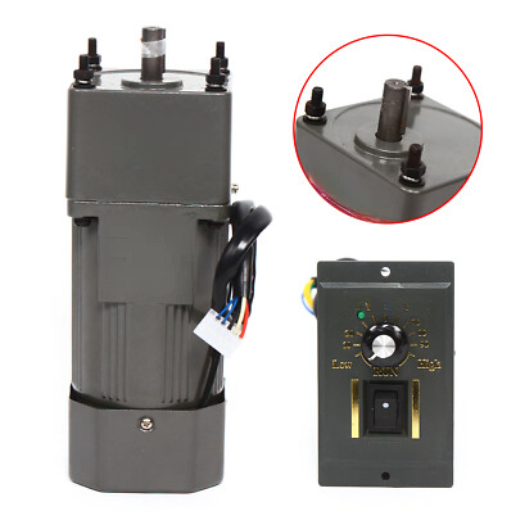
Enhanced Energy Efficiency
The variable speed nature of AC motors makes sure that their speed is adapted with the loading requirements which helps to use only the energy that is absolutely necessary for the assignment. The comparison of fixed-speed alternatives with variable-speed AC motors is still very hard to make in most cases.
Improved Process Control
The use of these alternating current motors to allow for specific speed changes is such that the processes become easier to control, thus, relentless performance and ultimate output quality are ensured in various fields, like in the industrial and commercial sectors, through the use of the motors.
Extended Equipment Lifespan
Adjusting the motor’s speed to the requirements of the operation is a technique that can be applied to all types of electrical machinery hence, such a positive side of things that the machines will last longer and cheaper to keep up with the maintenance.
Noise Reduction
The motors of different speeds produce less noise as they are not raised to their maximum level, working steadily causing a more peaceful and less disturbing work atmosphere and hence less precarious work set up.
Cost Savings
There is the most significant saving in the consumption of electric power; as a result of that, there is a reduced maintenance cost, and at last the machinery sooner replaced are some of the reasons that will make the operations of industries a cost-efficient one when the variable speed AC motors are used.
Energy Efficiency and Cost Savings
The incorporation of variable speed AC motors in industrial and commercial systems is an example of a very beneficial action in the fields of energy efficiency and financial performance. Based on the latest technical research, the variable speed drives (VSDs) are the ones that are capable to produce the biggest savings in terms of energy, sometimes even up to 30-50%, particularly in the cases of HVAC systems, pumps, and fans applications where full-speed operation is very seldom needed. Consistent with the load conditions, these motors modify their performance level, causing the elimination of the energy wastage that is common with the static-speed systems.
On top of that, better control of the motors based on advanced algorithms can make energy use in peak and off-peak time optimal and increase the usage efficiency of the entire plant. Studies show that firms that implement this technology report very substantial cost savings and are more than able to pay back the energy bill along with the initial investment in 1 to 2 years. With the lesser pressure applied on the parts, the lifespan and the profitability of the motors are increased. It is the same thing as getting a car maintenance-free, which you would definitely not do if the steering was worn. Through those new technologies, companies can be freer to perform and speak environmentally, and, besides, they can bid the cheapest cost on the market in terms of power.
Enhanced Performance and Precision
State-of-the-art techniques are currently employed by advanced systems to achieve very high levels of accuracy and efficiency. In doing so, they require, and are capable of using, data algorithms of considerable sophistication and real-time data analytics. In the case of industrial automation, an example is to ensure the precision tuning of the equipment to achieve the optimal throughput with the least errors thus, contributing to waste and operational downtime minimization. Besides, operators can foresee and prevent the trouble before it starts while also the process stays within the defined limits throughout the varying operating conditions via the combination of the other. The risk of material inefficiency and reduced energy costs is another important benefit of these technological advances. A high level of accuracy has become obligatory for the quality in industrial fields, and this level of technology is definitely the driving force of both innovations and environmental preservation as well.
Application Versatility in Industry
Highly developed technology has a presence in many different fields, showing an astonishingly vast range of uses. A good instance is the manufacturing industry where the introduction of automation and robotics into the process flow has optimized production, increased precision, and reduced the waiting time. We can also see that in the field of healthcare, machine learning algorithms are scanning through huge data sets and helping with previously hard-to-find diseases and making tailored treatment plans for each patient. Agriculture is another sector that is using drones and IoT-enabled sensors to carry out precision farming and, in this way, to tackle the challenge of feeding a large population by increasing the yield available crop area. Besides that, energy companies are relying on predictive maintenance technologies to monitor machinery condition, thus leading to more operating and maintenance costs and improved safety. In general, these developments cast a light on the strategies of industries to combat the rising need for innovative solutions with the help of state-of-the-art developments thus ensuring smoothness in the overall process and stable outcomes.
Applications of Variable Speed AC Motors in Machinery
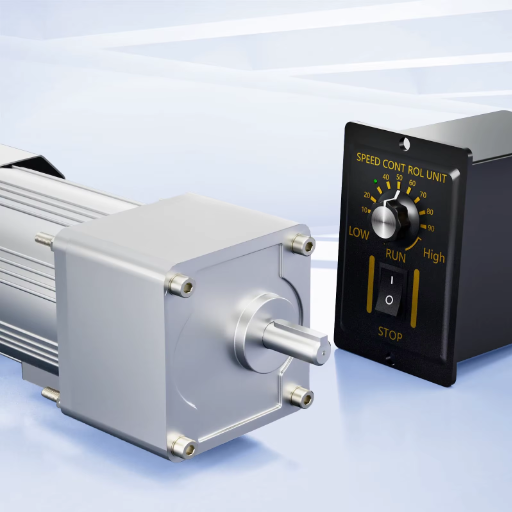
The use of variable-speed AC motors are very common in today’s machinery just simply because these motors can cope up with the speed and torque specifications with high precision hence a boost in efficiency and adaptability through numerous applications. They are definitely in every conveyor system, and the speed control is a necessity in these systems to match the processing requirements and thus keep the workflow consistent. Likewise, such motors find applications as part of HVAC systems, where they help to maintain the least possible amount of energy consumption by controlling fans and pumps.
Various products are made possible in large quantities by the CNC machines, mixers, and grinders, with the use of variable-speed motors in the manufacturing industry. Such motors are very energy-efficient, have a long life cycle, and are very accurate when it comes to the operation which is why they are an essential part of modern industry.
Use in Conveyor Systems
The presence of varied speed alternating current motors is considered to be crucial to the improvement of the operations and organization of handling units in different industries. The use of these motors in controlling the conveyor has made the transfer of unit loads smooth, thus fulfilling the diverse operations requirements such as sorting, packing, and assembling. This attribute has, in turn, caused a significant reduction in power consumption and better productivity in conditions of varying weights of unit loads. For example, logistical operations as well as in the storage of goods, a system that has such conveyors can be a major solution to minimize bottlenecks by adjusting the flow rate dynamically and hence to enhance the productivity of the whole warehouse.
Moreover, the machinery is constructed in such a way that it puts very little mechanical load on the belts and rollers. As a result of this, the machines would have their service life significantly extended and at the same time reduced downtime. The program logic controllers and sensors have been made part of the rollers, controllers giving on the motor and both of them are designed to be able to read the same information, possible by the sensor data available to both of them. Thus, the programmable logic controllers (PLCs) and the sensors in the system together make up the brains and nerves of the system.
Integration in High Torque Applications
Variable speed AC conveyor motors play a major role since they have a great power output changing capacity with the condition of the load not as heavy as to cause efficiency of less than 90% at the worst case. There are different sectors like mining, automotive manufacturing and material handling that regularly call for the presence of these motors knowing that they have to deliver a lot of power without compromising quality or even being dangerous in any other way. The motors are managed by VFDs that adjust speed and torque for the best and power efficient operation according to the priority of the application.
The motors ensure energy efficiency, and they do not overheat by means of dynamic braking systems and regenerative drives, even if they are used continuously and under extreme loads. Thanks to the recent advancements in the design of motors including such rotor and stator configurations that are now much better than before, the torque delivery and the operational resiliency have been further optimized. The feedback systems that work as closed loops, for instance, help in monitoring the performance of the systems and they adjust the parameters in such a way that the torque does not fluctuate and the mechanical parts do not get strained. The technology trends hence spot the variable speed AC motors, which represent a major player in the world of high torque industrial applications to cater to stringent and restrictive industry application requirements.
Technical Considerations for Implementing Variable Speed Control
Load Characteristics
It is necessary to know if the load is a load with constant torque, variable torque, or constant horsepower since it will be the main factor determining the speed-torque profile of the motor and makes sure that the control method chosen fits the operational requests.
Drive Selection
Variable frequency drives (VFDs) are the most widespread choice for speed control. The task is to find a VFD with the right power ratings and that is compatible with the motor specifications for best performance and energy savings.
Harmonics Management
VFDs have the potential to cause harmonics to the power supply which can have negative effects on other equipment. Installing filters or following harmonic mitigation methods is recommended as a remedy to maintain the limits within those defined by the IEEE-519 standard.
Cooling Requirements
Lower motor speeds may cause a reduction in the cooling air provided by the internal cooling fans. Having some sort of external cooling becomes the only way to cope with overheating problems during continuous low-speed operation.
Energy Efficiency Goals
It may sound boring to you but let me tell you: using the speed control to keep the rotational speed of the motor at a different rate can reduce the energy consumption significantly. I’m letting you know that the payback time of a project that does not consider efficiency might be more than its life cycle but again with a proper motor choice this issue is easily solved.
Choosing the Right Motor for Your Application
It is important to note that choosing the right motor for a specific application plays a very crucial role in working with maximum output, reliability, and efficiency. The given factors will aid in the selection of a motor:
Load Requirements
One of the most important steps to be taken is to find out the nature of the load. The motors are divided into two categories, the constant torque and the variable torque loads. The Examples are given; generally, pumps and fans are variable torque, where conveyors or compressors are mostly constant torque.
Speed and Torque Characteristics
The application’s speed and torque requirements must be the main influencers of the motor category to be selected. Synchronous and asynchronous (induction) are the main motor types; their performance characteristics are totally opposite to each other. That is, one may be more suitable than the other, depending on the load changes and the necessity of controlling the speed.
Energy Efficiency Standards
Strict adherence to energy efficiency regulations (e.g., NEMA Premium, IE3/IE4) is so crucial that it comes first among other variables you should consider. Moreover, if you choose the best energy-saving motor, you automatically get an enormous amount of energy saved over the motor’s service life, which implicates the accomplishment of the sustainability objective.
Voltage and Power Supply Compatibility
To make the motor selection process easier, it is recommended that the motor voltage and power supply be similar to the available ones at the installation location. Not only the single-phase or three-phase sources but also the frequency in the area with alternating currents of 50 Hz or 60 Hz should be taken into account.
Environmental Conditions
The choice of motor is heavily swayed by the operating conditions. In particular, for areas where the equipment is prone to contaminants, humidity, or explosive gases, you may need a motor that is enclosed in a certain protective way (e.g., IP-rated or explosion-proof designs).
Control System Integration
It might be the case that compatibility with variable frequency drives (VFDs) or other motor controllers is a must for applications that are in need of very precise speed and torque control. So, the motor and control systems must be designed in such a way as to achieve perfect integration, thus reducing the likelihood of any operational problems.
Through a combined consideration of these factors and the technical parameters, a motor that meets the performance requirements and at the same time is highly efficient in terms of long-term operation can be identified.
Voltage and Power Ratings Explained
Voltage and power ratings are very critical factors that greatly influence the operational capacities and limitations of electrical motors and devices. Voltage rating tells the user the best electrical potential difference that a motor can handle without any safety or efficiency compromise. It can be a problem to operate a motor below or above this rating due to a decrease in performance, overheating, or even damage to the motor’s internal parts. Voltages are usually classified as low (up to 1,000V), medium (1,000V to 35,000V), or high (above 35,000V), with the classification often being done by application-specific requirements.
Motor power, often indicated in kilowatts (kW) or horsepower (hp), is the most iconic and barrier-free power source. The rated power of a motor is very dependent on the physical quality, the material quality, and the whole system design, among others. It is therefore very important to have the power rating and motor in complete agreement. Concerning the power factor, the engine maintenance, and the distribution system, there is a much better alignment of resources and savings. Also, the undesired faults, efficiency drops, and shortening of life may be the drawbacks of incorrect alignment. To achieve operative and safe control, it is equally important to match the voltage and power ratings precisely to the intended application.
Reference Sources
- Applications of Variable Speed Drive (VSD) in Electrical Motors Energy Savings
Read more on ScienceDirect - A Review on Variable Speed Control Techniques for Efficient Control of Single-Phase Induction Motors
Read more on ScienceDirect
Frequently Asked Questions (FAQs)
What is an AC motor with variable speed control?
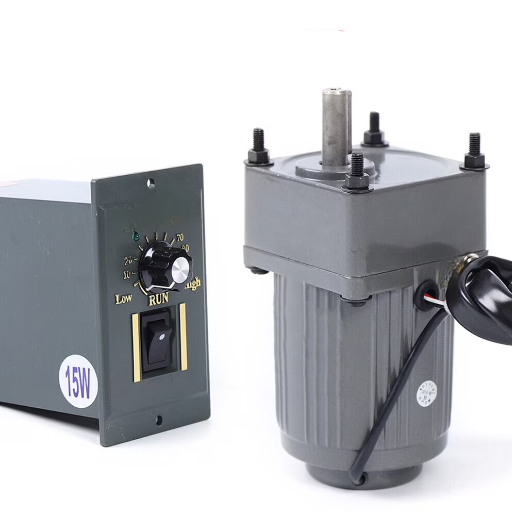
An alternating current variable speed motor is being adopted widely and it is highly probable that its new control technique together with the use of a variable frequency drive (VFD) or inverter as the controller in the power supply will mark a very significant moment in motor control history. By using this particular kind of setup, which implies that the input voltage and frequency get to be changed for motor speed adjustment, a very wide and adjustable speed range becomes accessible. The kinds of motor designs that can be used are either induction or permanent magnet, moreover, the encoders might be included for rpm control and accurate motor speed feedback.
What role does a VFD or inverter play in variable speed control?
A VFD or inverter changes the input voltage to a manually-controlled frequency and voltage waveform, usually by means of PWM techniques, thereby leading to the regulation of rotor speed and torque of three-phase ac induction motors. With the aid of VFDs, it is possible to control the motor in rpm with very high accuracy, enable the speed modification, and establish various speed characteristics that the conveyors, pumps, and industrial machinery need. VFDs decrease energy use through adjustment of motor speed according to the load and provide such utilities as provision of the limit of load, softness of acceleration and deceleration, and connectors for seating encoders.
Can variable-speed gear motor systems deliver high torque at low speeds?
Yes, gear motor variable speed systems, such as AC gear motors, worm gearmotors, and right-angle or flange-mounted gearboxes, are able to produce speed reduction and high torque motor output at low speed, which are very much demanded in conveyors and machinery where 150 rpm or similar is needed. The gearbox can be considered as a perfect match with a variable-speed AC or brushless motor so that the combination is able to offer both the problems of accurate position holding and the necessary torque. Where the speed operation has to be accurate, these assemblies shall often be found in use, and they can be as small as 90W or 200W as well as go up to the sizes of large industrial electric motor ratings.
How do permanent magnet and brushless designs affect motor speed control and performance?
Permanent magnet and brushless motor designs are known to offer the highest efficiency, the fastest response, and the widest range of speed, which makes them suitable for variable-speed applications like servo controls or automotive systems. It is very common for the brushless DC and BLDC motor controllers to use PWM and encoder feedback to enable quite fine rpm and torque control in the end, and therefore, they are the perfect choice for applications that require quick and a sudden stop of acceleration. Such motors are often used in low voltage options such as 12V or 24V for portable or automotive use, however, they can also be scaled up to industrial voltages with the right controllers.
