
A frequency converter manufacturer owns production facilities and controls quality directly. A trading company sources from other factories and resells, adding a markup and an extra layer between you and production.
For frequency converters — where voltage stability, certification accuracy, and after-sales support determine project success — that difference can cost far more than the quoted price.
What if the lower quote is actually the riskier one? Last year, an industrial distributor in Southeast Asia chose a supplier advertising “factory-direct” 400 Hz frequency converters at 15% below the next bid. The first shipment arrived with inconsistent branding, manuals in the wrong language, and no traceable test records.
When a unit failed, the supplier could not explain which factory had built it. Six months of customer complaints later, the distributor switched to a verified manufacturer. The higher initial quote turned out to be the lower total cost.
This guide explains the real difference between a frequency converter manufacturer and a trading company. You will learn how to verify which type of supplier you are dealing with, when each makes sense, and why frequency converter sourcing deserves closer scrutiny than commodity products.
الوجبات السريعة الرئيسية
- فهم frequency converter manufacturer vs trading company difference protects your investment and project success.
- A trading company adds 5–30% markup and creates distance between you and the actual factory.
- Frequency converters need technical support, traceable testing, and matching compliance documents — areas where trading companies struggle.
- Verify supplier type by checking business licenses, factory evidence, technical competence, certifications, and product range.
- Trading companies can work for small orders or mixed shipments, but OEM and custom projects usually require a direct manufacturer.
What Is a Frequency Converter Manufacturer?
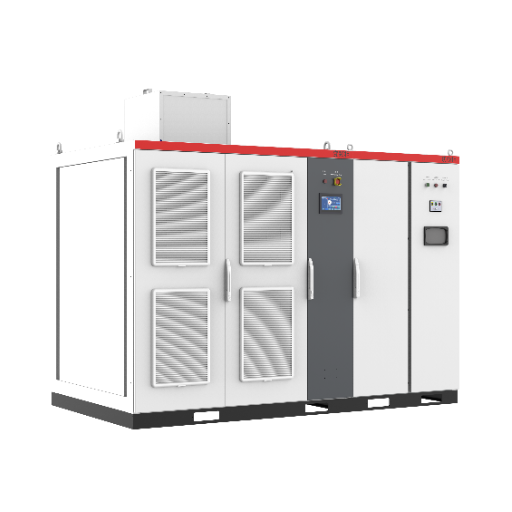
A frequency converter manufacturer designs, engineers, assembles, and tests frequency converters under its own roof. It owns or directly operates production lines, PCB assembly stations, transformer winding equipment, burn-in racks, and final inspection areas. Engineers work in the same facility where products are built, so technical questions travel a short distance.
For a deeper look at what separates top-tier suppliers, see our دليل شامل لمصنعي محولات التردد.
Direct Ownership of Production
Real manufacturers control production from incoming components to final packing. They select power modules, capacitors, magnetic cores, and enclosures based on application needs. They can adjust designs when a customer needs a different voltage class, control interface, or enclosure rating.
Engineering and R&D Capability
A manufacturer employs engineers who understand power conversion, motor control, thermal design, and EMC compliance. That expertise matters when your project needs non-standard voltage outputs, specialized enclosures, or integration with existing control systems.
مراقبة الجودة والاختبار
Genuine manufacturers run incoming inspection, in-process checks, and final testing. Many perform full-load burn-in for several hours to catch latent defects before shipment. They can trace a failed unit back to a component lot and a specific test operator.
تصنيع المعدات الأصلية/تصميم المعدات الأصلية والتخصيص
If you need private-label frequency converters, a manufacturer can provide editable manuals, branded labels, custom firmware defaults, and warranty transfer. ODM partners can co-develop designs with you. These services require direct control over engineering and production.
A true custom frequency converter manufacturer or OEM frequency converter supplier can adjust firmware, enclosures, and documentation to match your brand, while a broker cannot. Understanding the difference between OEM and ODM manufacturing helps buyers choose the right partnership model.
What Is a Frequency Converter Trading Company?
A frequency converter trading company does not manufacture. It sources products from one or more factories, often without disclosing which ones, and sells them under its own branding or as a broker. Some trading companies are transparent about their role. Others present themselves as manufacturers to win orders.
Middleman Business Model
Trading companies add margin to factory pricing. Industry estimates place that markup in the 5–30% range depending on product complexity and order size. They may also charge handling fees, inspection fees, or documentation fees that are not visible in the unit price.
Broader Product Catalogs
A trading company often lists many unrelated product categories: frequency converters, motors, sensors, cables, and industrial controls. That breadth helps buyers consolidate shipments, but it usually signals limited technical depth in any single product.
Advantages for Small Buyers
For buyers who need small quantities, mixed products, or one-stop logistics, a trading company can be practical. They may accept lower MOQs and communicate fluently in English. They can handle export paperwork and consolidate cargo from multiple factories.
المخاطر الخفية
The problems appear when something goes wrong. The trading company may not know which factory produced a specific batch. They may switch factories without notice to chase lower cost. Warranty claims can turn into disputes between you, the trading company, and an unnamed factory.
Direct Comparison: Manufacturer vs Trading Company

ويلخص الجدول التالي frequency converter manufacturer vs trading company decision across eight key factors.
| عامل | الشركة المصنعة لمحول التردد | Frequency Converter Trading Company |
|---|---|---|
| الأسعار | Factory-direct, typically 10–30% lower | Marked up 5–30% above factory cost |
| التخصيص | Deep: OEM, ODM, custom engineering | Limited: usually catalog products with minor branding |
| ضبط الجودة | Direct, traceable, auditable | Indirect, dependent on upstream factories |
| دعم فني | Engineering team answers directly | Questions relayed through sales staff |
| المهلة | Predictable based on own capacity | Variable depending on partner factory |
| المساءلة | نقطة مسؤولية واحدة | Blurred between trader and factory |
| المواصفات الفنية | Issued in manufacturer’s name | Often issued in factory’s name, not trader’s |
| الحد الأدنى للطلب | Higher for custom, lower for standard catalog | Often flexible and lower |
When Each Makes Sense
اختيار الشركة المصنعة لمحول التردد when you need customization, consistent quality, OEM branding, technical support, warranty coverage, or volume pricing. Choose a شركة تجارية when you need small quantities, mixed-product shipments, fast communication, or one-stop export handling — and you accept the trade-offs.
How to Tell If a Frequency Converter Supplier Is a Real Manufacturer
Verification requires more than reading a supplier profile. Real manufacturers leave evidence. Trading companies leave gaps. If you want a structured evaluation framework, our step-by-step guide to choosing a frequency converter manufacturer walks through every checkpoint from first contact to final order.
You can verify a frequency converter supplier is a real manufacturer by checking five things. First, the business license scope must include manufacturing. Second, factory photos and live video tours should show real production equipment. Third, technical questions are answered directly by engineers. Fourth, certification numbers match the company name in registrar databases. Fifth, the product catalog is focused on power conversion rather than unrelated categories.
This frequency converter supplier evaluation works whether you are sourcing locally or vetting a مصنعي محولات التردد في الصين من الخارج.
التحقق من رخصة العمل
Request a copy of the business license and confirm that manufacturing appears in the business scope. The company name on the license should match quotations, invoices, bank accounts, and certification documents. Subsidiaries and parent companies are not interchangeable. For additional guidance on Chinese supplier verification, خدمات التحقق من الجهات الخارجية offer detailed factory audit protocols.
Factory Evidence and Virtual Tours
Ask for factory photos with identifiable details: company signage, equipment models, employee uniforms, production line labels. Then schedule a live video call from the production floor, not a conference room. A real manufacturer will walk you past SMT lines, winding stations, assembly benches, and burn-in racks.
Technical Question Test
Ask a specific engineering question: “What power module do you use in your 45 kW VFD, and why?” or “How do you check waveform quality on a 400 Hz aviation unit?” If your project involves aerospace ground power, explore our 400 Hz frequency converter solutions to see how a real manufacturer documents waveform testing and certification. A manufacturer’s engineer will answer directly. A trading company will delay, generalize, or route the question.
Certification and Documentation Check
Request ISO 9001, CE, UL, and IEC 61000 certificates. Verify the certificate number through the issuing registrar’s online database. Confirm that the certificate is current, the scope covers your product category, and the company name matches exactly.
تحليل مجموعة المنتجات
A real frequency converter manufacturer usually specializes. Its catalog may include VFDs, static converters, 400 Hz units, and high-voltage converters — all power conversion products. For buyers evaluating suppliers above 690 V, our high voltage frequency converter manufacturer guide explains the specialized engineering and safety certifications required at higher voltage classes.
A trading company often lists unrelated items like cables, sensors, motors, and pumps.
When Elena, a contractor in Dubai, evaluated suppliers for a 50 Hz to 60 Hz converter project, one supplier sent a polished catalog with 14 unrelated product categories. Another sent only converter catalogs but offered a live factory tour.
The second supplier took longer to quote, but their CE certificate matched their business license exactly. Elena’s shipment cleared customs without delay.
Why Trading Companies Struggle with Frequency Converter OEM/ODM
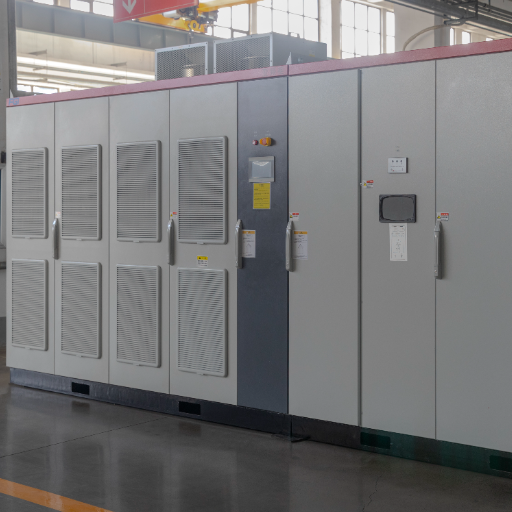
Private-label and custom engineering projects expose the limits of trading companies. These projects need capabilities that only a manufacturer can provide.
No Control Over Design IP
A trading company does not own the converter design. It cannot modify firmware, change control logic, or redesign the power stage. Any customization request must be forwarded to the actual factory, often with incomplete specifications.
Inconsistent Production Partners
To maintain margins, a trading company may move orders between factories. That creates inconsistency in build quality, labeling, manuals, and packaging. For an OEM brand, inconsistency destroys customer trust.
Certificate Name Mismatch Risks
Compliance documents usually list the factory’s name, not the trading company’s. If your invoice, certificate, and customs declaration do not align, regulators or marketplaces can reject the shipment.
This is a common and expensive problem for resellers.
Warranty and Spare Parts Challenges
When a unit fails, the trading company must coordinate with the factory. Response times stretch out. Spare parts may not be stocked. Root cause analysis rarely reaches the buyer.
For critical industrial equipment, that support gap is unacceptable.
Red Flags That Suggest a Trading Company
Use this checklist to spot suppliers that may not be real manufacturers:
- The business license does not list manufacturing in the scope.
- The supplier refuses a live video tour or factory visit.
- Product catalog spans many unrelated categories.
- Technical answers are vague or delayed.
- Certificate numbers cannot be verified with the issuing registrar.
- Compliance documents show a different company name than the invoice.
- Pricing is far below market without a clear explanation.
- The supplier demands full payment upfront with no trade assurance.
- Different salespeople give conflicting details about production.
- The registered address maps to an office building rather than an industrial zone.
When a Trading Company Can Be the Right Choice
Trading companies are not automatically bad. They serve a purpose, especially for buyers who do not yet have the volume or resources for a direct factory relationship.
Small Orders Below Factory MOQ
If you need five units for testing and the factory MOQ is 50, a trading company may be your only practical option. Just understand you are paying for convenience and flexibility, not manufacturing expertise.
Mixed-Product Shipments
When you need frequency converters, cables, enclosures, and accessories from different sources in one shipment, a trading company can consolidate logistics. That saves time and freight complexity.
One-Stop Export Logistics
Some trading companies excel at export documentation, customs clearance, and multilingual communication. For buyers new to international sourcing, that support has value.
Testing a New Market
If you are entering a new region or product line and want to test demand before committing to a factory relationship, a trading company lowers your upfront risk. Once volume grows, transitioning to a manufacturer usually makes sense.
The Real Cost Difference: Factory Direct vs Trading Company

Unit price is only part of the equation. A 10–30% markup from a trading company may be acceptable if the relationship runs smoothly. But hidden costs can reverse the apparent savings quickly.
فشل الجودة
A frequency converter with poor waveform quality or inadequate protection can damage connected equipment. One field failure can cost more than the entire order.
Customs and Compliance Delays
Certificates that do not match the seller can cause customs holds, rejection by inspectors, or marketplace delisting. Delays cost money and damage customer relationships.
Warranty Disputes
When a trading company and factory blame each other, the buyer often absorbs the cost. Direct manufacturers have stronger incentives to resolve issues because their reputation depends on it.
Lost OEM Customers
For distributors and OEM brands, inconsistent product quality destroys brand equity. Customers do not blame the anonymous factory. They blame the brand on the label.
When Lina, an OEM product manager in Germany, launched a private-label VFD line, she initially used a trading company that promised low MOQs and fast delivery. The first three shipments came from different factories. Logos were misaligned, manuals used different templates, and firmware versions varied.
Returns and complaints consumed her margin. She eventually partnered directly with a manufacturer. Lead times were slightly longer, but every unit looked and performed the same. Her return rate dropped by 80%.
الأسئلة الشائعة
Is it cheaper to buy from a frequency converter manufacturer or trading company?
A manufacturer is usually cheaper at equivalent specifications because there is no middleman markup. Trading companies add 5–30% to factory cost. However, trading companies may accept smaller orders and handle logistics, which can be cost-effective for small buyers.
How do I verify a frequency converter manufacturer in China?
Check the business license for manufacturing scope, request a live factory video tour, ask technical questions that only engineers can answer, verify certifications through issuing registrars, and analyze whether the product range is focused on power conversion or spread across unrelated categories.
Can a trading company provide OEM frequency converter services?
A pure trading company cannot provide genuine OEM services because it does not control production. It can only add your logo to products sourced from another factory. For real OEM work — custom firmware, documentation, warranty transfer, and consistent branding — you need a manufacturer.
What certifications should a real frequency converter manufacturer have?
At minimum, look for ISO 9001, CE marking for European markets, IEC 61000 for EMC, and UL listing for North America. Market-specific certifications may include GOST-R, SABS, or SASO. Always verify certificate numbers with the issuing body.
Why do some trading companies pretend to be manufacturers?
Buyers often prefer factory-direct pricing and assume manufacturers are more reliable. Trading companies pose as manufacturers to win that trust and capture orders they would otherwise lose.
Should I avoid all trading companies when sourcing frequency converters?
No. Trading companies work well for small orders, mixed shipments, and buyers who need one-stop logistics. The key is knowing which type of supplier you are dealing with and structuring the relationship to limit risk.
What questions should I ask to identify a real manufacturer?
Ask about production equipment, monthly capacity, incoming inspection processes, burn-in testing duration, engineering team size, and recent custom projects. Then verify the answers with evidence such as factory video, certificates, and references.
خاتمة
The frequency converter manufacturer vs trading company decision is not about good versus bad. It is about matching the supplier type to your project needs. Manufacturers offer lower pricing, deeper customization, direct quality control, and stronger accountability. Trading companies offer flexibility, lower MOQs, and logistics support.
For frequency converters — where technical performance, certification accuracy, and after-sales support determine long-term value — direct manufacturers usually win. The extra effort to verify factory ownership pays back many times over in fewer failures, faster problem resolution, and stronger customer relationships.
Start with clear requirements. Verify business licenses and certifications. Ask hard technical questions. Demand factory evidence. And never choose a supplier based only on the lowest unit price.
Ready to work directly with a frequency converter manufacturer? Shandong Electric welcomes factory audits, sample evaluations, and technical discussions. اتصل بفريقنا الهندسي to share your specifications and receive a customized proposal built around your exact requirements.
