
The issue related to moving from one-phase to three-phase energy systems is unquestionably a very important matter for experts in different areas such as electric power, industry and it also has an undeniable importance for homes. It does not matter if you are trying to make your machinery’s power delivery perfect or you are doing a little bit of the opposite, the factor of the conversion can be very interesting and at the same time very necessary for the efficient working of the plant. This tutorial talks about main characterists, ways, and the tools needed to switch the three-phase system to a single-phase one, with efficiency. At the end, you’ll be able to connect all the main parts, the actual methods, and specific situations where the transformation is a must. Be prepared to not only discover the “how” but also the “why” of this drastic electrical change.
Understanding Single-Phase and Three-Phase Power
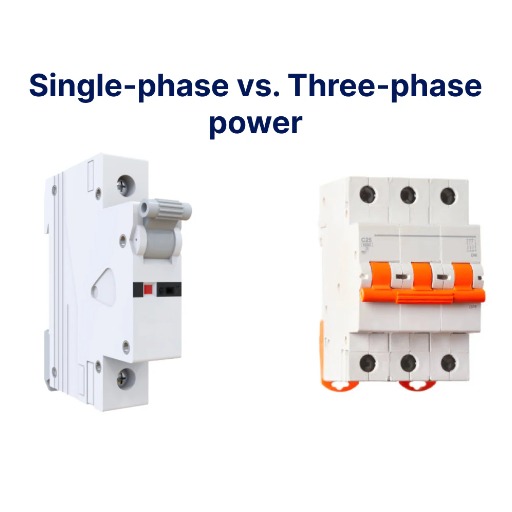
Single-phase and three-phase power systems differ by the number of alternating current (AC) waveforms they use. A three-phase power system is based on having three AC waveforms, each 120 degrees apart from the other, and this setup results in an uninterrupted and stable power supply with high efficiency which is perfect for both industrial and high power systems. The single-phase power system uses one AC waveform and it is generally used for the requirements of energy that are lower in residential and smaller commercial applications. The biggest advantage of a three-phase over a single-phase system is the larger amount of electric power that can be delivered with more efficiency, this making it a frank choice for major operations. The single-phase system is also more cost-effective and easier to be installed for smaller-scale applications and, therefore, it still plays a role and keeps its importance in daily applications.
What is Three-Phase Power?
Three-phase power is a power transmission technique that incorporates three purposely different alternating current signals, each of which is dislocated from the others by 120 degrees. This arrangement is quite effective in supplying energy to heavy machinery, industrial equipment, and large infrastructure because it is more balanced, and the loss of one phase has no noticeable effect on the other two. Like single-phase power, three-phase power has no zero point where voltage momentarily drops to zero; in contrast, it keeps on transferring energy evenly. This is highly advantageous for the areas that need extremely large amounts of power such as manufacturing plants, data centers, and grid-level energy distribution
Moreover, three-phase power distribution systems are considered to be the most flexible and versatile technology as they are capable of being used for both low and high voltage applications with almost no power efficiency loss. As a rule equipment made for three-phase power, motors and transformers for example, will operate more smoothly and have a longer life than the equipment designed for single-phase power, as a result of lower electrical stress. This is the reason why three-phase power is the most popular standard in almost every industry across the globe.
What is Single-Phase Power?
On the other hand, single-phase power is a form of alternating current (AC) electricity generated by a single alternating waveform. It is the most widely used power system employed in domestic and light commercial areas where power consumption is relatively low. This system transmits power through a pair of wires that are referred to as the phase and neutral lines, giving way to a rather straightforward and inexpensive setup when compared to three-phase systems.
It is customary for single-phase power to work at either 120V or 240V depending on the geographical area, and it is the main source of energy for laptops, cell phones, and light fixtures. Yet, it becomes impractical in terms of the distribution of power for the smelting and mining of metals, as its output is wavering. A crude or simple example is in each cycle of varying voltage and zero current which could lead to equipment overheating and other problems such as tampering of automation devices. Thus, single-phase power is best used in machines that draw current periodically or cannot handle a concentrated power load, the power would not be directly fed to the products or machine and could be worked around.
Differences Between Three-Phase and Single-Phase
| Feature | Three-Phase | Single-Phase |
|---|---|---|
| Power Delivery | Continuous and smooth | Intermittent, periodic dips |
| Voltage Fluctuations | Minimal | More significant |
| Efficiency | High | Moderate |
| Power Capacity | Suitable for heavy loads | Limited to light/moderate loads |
| System Complexity | More complex wiring and setup | Simpler and straightforward |
| Cost | Higher installation costs | Lower installation costs |
| Reliability | Highly reliable | Moderately reliable |
| Energy Losses | Lower transmission losses | High transmission losses |
| Applications | Industrial and commercial use | Residential and small businesses |
| Number of Conductors | Three | One |
Methods to Convert Three-Phase to Single-Phase
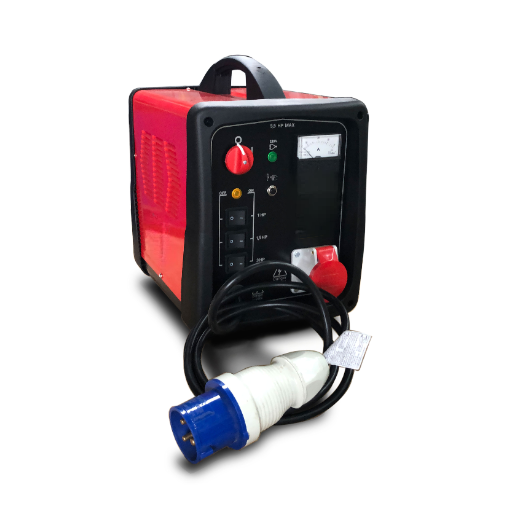
Using a Transformer
A transformer that is specifically intended for phase conversion is capable of taking power from a three-phase system and power up a single-phase output. This approach is less cumbersome and frequently utilized to supply single-phase loads from a three-phase source.
Static Phase Converter
A static phase converter is a temporary means that shifts in phase to kick off single-phase motors running on three-phase power. This way is economical but it is still less efficient when running the motor continuously.
Rotary Phase Converter
A rotary phase converter adopts a motor-generator design to convert three-phase to single-phase. This method is the most secure as it can continuously operate and it is well-suited for heavy loads.
Direct Connection
The direct connection to one phase of the three-phase system might be a suitable choice for small loads. Still, this procedure has to be carried out cautiously in order to maintain the balance of the system.
Using One Leg of the Power Supply
Drawing power from one pole of a three-phase power supply brings about both the challenge of system balancing and the effects on load distribution. At the beginning, it could be a good method to balance it by drawing power from one of the phases for smaller loads, but there would be a danger of serious imbalances if the practice is not done carefully. This sort of imbalance can result in heating of the transformer(s), stress on equipment, and in a smaller power system efficiency. Generally, to make it more safe, it is necessary to divide the loads evenly among the three phases when possible. A combination of a load monitor on a regular basis as well as possible phase-balancing equipment or devices enforcement could assist with the imbalances. System analysis and proper planning are a necessity to ensure reliability and safety during single-phase power usage.
Implementing Digital Phase Converters
Digital phase converters have come a long way in the field of power conversion technology and utilize state-of-the-art electronic components to deliver a much more efficient and quality three-phase power supply from a single-phase source. The machines work through the use of microprocessors and modern algorithms to create a new, synthesized third phase that features voltage balance and very precise frequency control at the same time. The most important point is that digital phase converters are very flexible and provide a variety of voltage settings to suit equipment with wide-ranging power requirements.
The efficiency of digital phase converters is one of the major advantages. They require less rotating machinery and hence the energy loss is efficient in the case of digital models. This not only leads to lower operational costs and heat dissipation but also to a better capability among digital converters to balance the phase-to-phase voltage as it is required for the sensitive electronic equipment, CNC machines, laser cutters, and other automated systems.
At the same time, modern digital phase converters are equipped with automated diagnostics, load monitoring, and programmable settings. In this way, both user control and system reliability are maintained and improved. Besides, the size and weight of such devices being small and light, their installation becomes very easy and they take up less space than ever in the industrial and commercial areas. Comparing the digital phase converters with the traditional methods of phase conversion, the former have more precise, reliable, and energy-efficient properties in providing balanced three-phase power.
Utilizing Rotary Converters
It has been quite typical for rotary converters, which are mechanical devices operated by a motor-generator combination, to be used as a very efficient means of converting single-phase power into three phase power. The conversion method in this case relies on the motor-generator setting where the rotating element, known as an idler motor in most cases, generates the needed additional phases in the three-phase systems. This way, a reliable power supply with the same voltage and phase balance is ensured by the rotary converters.
Modern rotary converters are optimized for the industry and can take up large power loads like CNC machines, motors, and air compressors. Rotary converters are opposite to their digital versions in terms of this feature as they are very rugged when it comes to high demand and are hence very suitable for places where long service and ruggedness are critical. Concurrently, they are liked for their capacity to withstand voltage fluctuations and consequently make sure that the equipment that is connected to them operates efficiently even under conditions when the voltage is fluctuating.
One of the technological breakthroughs in rotary converter technology is using an engineered to the last detail control panel which is a real-time and stabilizer of the outputs of different phases. Moreover, the combination of innovations in motor manufacturing, which have made them more energy-efficient, and the very sophisticated thermal protection mechanisms have made it possible to reduce a huge part of the energy losses. All these combined properties including the capacity to adjust to varying load requirements very easily make rotary converters a very useful and flexible choice for numerous industries.
Essential Equipment for Conversion
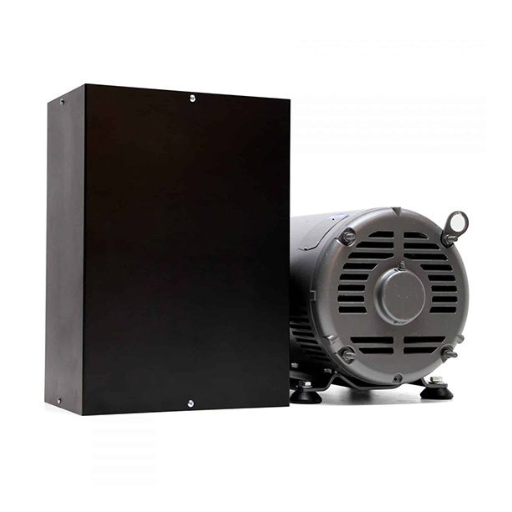
The fundamental equipment for the efficient operation of phase conversion systems involve rotary phase converters and static phase converters. Both of these are in fact the single-phase power to the three-phase power converters. Rotary phase converters are the first choice for the situation where the power required is both constant and balanced, mainly in the case of industrial plants that have loads that keep on fluctuating. Static phase converters, though less complicated and less costly, are actually more ideal for somewhat lower loads as they have the virtue of requiring less torque for starting.
Besides, source control panels, voltage regulators, and thermal protective devices are must-have complementary instruments to keep the system from fluctuating operation-wide and lower the risk of breakdown. Finally, the need for choosing the right equipment basically depends on the power conditions and nature of the load of the application selected.
Transformers for Phase Conversion
Transformers are vital in the phase conversion process, they can provide the variable voltage and current capabilities needed for the power source and load requirements to be compatible, thus achieving a seamless operation. Take autotransformers as an example, they are always the first choice in the phase conversion system because of the feature of flexible voltage output and very small energy losses. In their modest compactness, the materials used are lesser, and the transformers themselves are effective for such applications with low is a major advantage of such transformers while the same and material efficiency is maintained.
On the other hand, isolation transformers are frequently used in phase conversion systems asking for electrical isolation for increased safety and noise reduction. They are very good at harmonics filtration and preventing ground loops and thus guaranteeing steady and reliable operation even in delicate applications like industrial automation or medical equipment. By any chance of having high-capacity needs, multi-winding transformers can be built up to supply three-phase power networks which are critical for heavy-duty industrial machinery.
Choosing the Right Converter
Choosing the ideal converter includes looking at the critical technical parameters, which must be evaluated to be consistent with the planned application. The very first thing to do is to make the input voltage range and output requirements fit exactly the system’s operation needs, which, among other things, include voltage regulation and power stability. The second thing is efficiency, which is a very important factor in a situation where the converters with high efficiency are the ones that minimize the loss of energy as well as heat generation, thereby contributing to the longer life of a device and saving costs for the device’s operation. Moreover, the power for handling or often measured in watts must be the one that the load demands also the system must be able to prevent overloading or inefficiencies.
The compliance to Electromagnetic Interference (EMI) standards stands out as a major concern, particularly in the case of systems where strict regulatory standards must be met, and the availability of thermal management solutions is crucial to achieving the best performance even in high-stress conditions. In the instances of using sensitive applications such as medical imaging systems or aerospace technology, the low ripple noise and high precision are the vital factors that one can rely on to maintain the system’s reliability. Finally, verification of the harmonious integration of the device into the existing hardware configurations would require a thorough examination of the form factor and mounting options.
Tools and Accessories Needed
For the conversion process to be exact and successful, a very wide-ranging set of tools and accessories is needed. A trustworthy digital multimeter is the most important tool for getting precise measurements of voltage, amperage, and resistance. Oscilloscopes are the tools of the trade when it comes to analyzing waveforms and signal behavior anomalies; you wouldn’t be able to do without them. Power supplies with adjustable output levels are a must for hardware testing and calibration processes under different load conditions. And there could also be no good without crimping tools and precision screwdrivers for proper assembly and secure connections of electrical components.
Shielded cables and connectors are essential to reduce electromagnetic interference to a minimum for operations related to high-frequency applications. Moreover, thermal paste and heat sinks are major factors in the correct thermal management. Availability of diagnostic software can also facilitate the troubleshooting and performance appraisal. Integration of those resources guarantees that the conversion process follows the same specifications and reaches the maximum system functionality.
Safety Considerations and Compliance
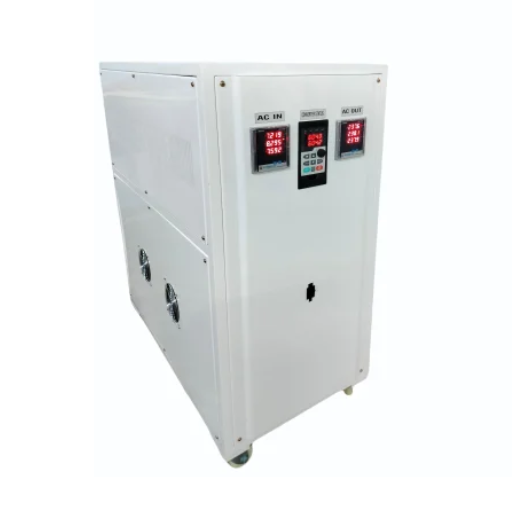
To ensure safety thoroughly through transforming the power supply from a three-phase to a single-phase system demands meticulous following of the set down guidelines and conformity to the standards. The most significant factors are to prevent overloading power with on-time loading calculations that do not exceed the single-phase system’s capacity. Grounding and insulation ways that would lessen the impact of electrical faults should be definitely used.
Continuous examination of circuits and electrical elements is indispensable as it helps to avert dangers like short circuits out of overheating or even fires. Simultaneously, operating in accordance with the local electrical codes (for instance, NEC in the U. S.) and the National Electrical Manufacturers Association (NEMA) standards is a must to guarantee safety while also managing the legal part. The involvement of a certified electrician or an engineer is an absolute necessity to confirm the process’s thorough vetting and implementation.
Electrical Safety Guidelines
When moving from a three-phase to a single-phase arrangement, the selection of equipment is very important, and that it should satisfy the load requirements. A correct load distribution should be identified and followed to avoid any overloading, which could lead to the failure of equipment or even electrical accidents. The main issue to be taken care of during the whole process is whether the sizes of the conductors, circuit breakers, and wiring are being rated correctly according to the adjusted voltage and current levels.
An isolation transformer might be necessary in particular cases to convert three-phase power to single-phase securely and at the same time to ensure the system’s stability and protection. Besides, verify that every piece of equipment, including switches and panel boards, is marked and reputed for single-phase operation so as not to cause any damage or heating. Moreover, global and local regulations, codes, and standards like the ones of IEC or IEEE need to be pointed out and strictly followed during the change. The upgrade for which the system runs energetically and at the same time does not put it at any risk, should be preceded by a detailed plan, very careful calculation, and regular testing.
Regulatory Compliance for Homeowners and Businesses
When homes and businesses want to change from a three-phase to a single-phase power system, they must follow the exact rules that are existing in a particular country, otherwise their system will not be considered safe, not legal, and not reliable. The first step is to get in touch with the local government to get an idea about the zoning regulations as well as find out the restrictions on the types of electrical system residents and business owners are allowed to install. The accreditation with the National Electrical Code (NEC) in the USA would be a great step in this direction or compliance with comparably requisite standards in other places would be inevitable. The said codes include among other things the following: wiring, grounding, circuit protection, load management.
Certified electrical engineers or licensed electricians will normally need to conduct inspections before and after the modification process so that it can be determined that all the changes meet the set standards and the criteria that the government has set for the implementation. Also, it is common that one of the utilities will have its own conditions before they approve the use of single-phase, namely they might conduct a load assessment and request certain supporting documents in advance.
Businesses that work in industrial sites or in high-demand settings need to be sure that their one-phase systems are not causing operational difficulties or breaking energy efficiency regulations. The limitation of maximum power, consumption and harmonics is the way regulatory bodies keep the broader grid from going unstable. On the other hand, homeowners, who have to deal with the less complex situation, should still be ready to get permits and arrange the compliance inspections to escape fines or penalties.
Risk Mitigation Strategies for the transition from three-phase to single-phase
When moving from three-phase to single-phase systems, a pragmatic approach in identifying possible risks from the outset and adopting multiple aligned strategies to achieve ongoing stability and compliance with technical benchmarks are the key characteristics of the risk mitigation process. The first and foremost step is performing the analysis of loads so that we can have a clear picture of the power demand of the current equipment and their operational conditions in a single-phase system. This will be a preventive way of identifying such risks as the imbalance of phases, the fall of voltage, or the heating of some components because of an unequal distribution of power.
It is among the significant strategies to make all incompatible equipment with single-phase power either upgradable or replaceable. For example, if a machine is designed to run on three-phase power, there is a need for a converter that is specialized, or the replacement needs to be of single-phase power. This is not only for easy repair and trouble free operation but also for the purpose of saving energy by not putting additional wear. Moreover, installers of surge protectors and voltage stabilizers will be an extra shield for the very delicate-to-manager equipment against the clutches of fluctuations in the single-phase system that would have caused the faults.
Furthermore, it is possible to have tools for monitoring and advanced metering infrastructure (AMI) so that the real-time energy consumption data can be available for analysis, and thus, the facility manager will have information to be able to address inefficiencies and unforeseen stoppages. It is also important to have routine checks on wiring, circuit breakers, and grounding systems every few months as part of the complementary measures to ensure that the infrastructure is working within the required safety parameters.
Practical Use Cases for Converting Three-Phase Power
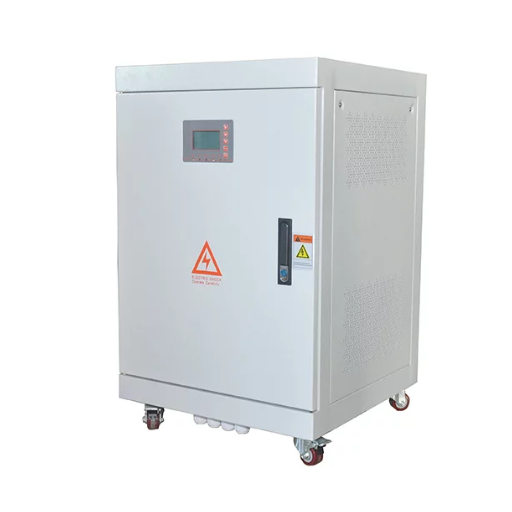
One of the many situations where it is appropriate to get the three-phase power converted is the places of different commercial and industrial applications that need power to be continuously reliable and efficient. One of the most regular uses is the power supply of industrial machinery that performs heavy tasks like compressors, motors, and pumps that must be fed with a stable and reliable power source to be operated in the right way. Manufacturing plants are, in many cases, dependent on the conversion of three-phase power to get the automation lines running smoothly and without breaks.
Moreover, it is quite common to see three-phase power being transformed for data centers, which is because these types of facilities house very powerful servers that are always on and that is why there should be an uninterrupted power supply. Taking the even wider category, one can include organizations like office parks and large shopping centers that would likewise feel the positive impacts from three-phase power conversion as this helps them control the energy distribution for their respective HVAC systems, elevators, and lighting as well.
Homeowner Applications
It is more common to see three-phase power in the places of the industry and commerce than in homes, but homeowners have been increasingly converting three-phase power to a suitable configuration for residential use. This issue is becoming more and more significant for people living in buildings that have high electricity needs, like those who are using heavy machinery or need to charge their electric cars. Converting method is the key as homeowners can then balance and make more efficient the power supplied to their devices, like that of the large HVAC systems or workshop machinery.
A considerable benefit of changing three-phase electricity for households is that it reduces losses and makes the system more reliable. Many electronically-aided home appliances and electric vehicle chargers are set up to make the most out of the uninterrupted power flow granted by the three-phase systems. Further, through this configuration, the system can grow because of the increasing demand for electricity in houses where more appliances will be using advanced energy systems. It is a must to have the right gear, such as a three-phase inverter or a transformer, and these should be the best in the market so that they can make the power conversion and at the same time be able to supply the household load without recurrently tripping the single-phase circuits in use.
Hobbyist Projects for Converting Three-Phase Power
Designing custom rotary phase converters or static phase converters is a very popular option for amateur explorers of three-phase power conversion. A rotary phase converter is a device that is a three-phase motor and a single-phase power source combined to produce an additional phase, which allows the operation of three-phase machines. The best thing about this type of converter is that it is a very energy-efficient and at the same time it is very well adaptable to the changes in loads. That’s why a rotary phase converter can cater to the needs of both home workshops and small production operations.
On the contrary, static phase converters are less complex and can be easier to construct having a limitation of lower load handling capacity. This kind of setup depends on capacitance to help the motor start running, with the motor then running on single-phase power. They have an advantage in terms of cost but may not be as good as rotary converters in terms of performance for operations that last for extended periods.
Those who are really advanced may be willing to try digital phase converters, the devices that employ solid-state electronics to create a pure, balanced three-phase output. Priority of use of microcontroller or programmable logic controller (PLC) systems by the hobbyists could also allow them to adjust well even such performance and efficiency aspects as that equipment’s optimal high-precision functionality. The projects that are presented here usually have modern components such as IGBT (Insulated-Gate Bipolar Transistor) modules and high-grade inverter models as the base to reach high reliability.
Reference Sources
“Differences between continuous single-phase and online three-phase power-decoupled converters”
“Active-phase converter for operation of three-phase induction motors on single-phase grid”
Frequently Asked Questions (FAQs)
Can you convert a three-phase supply to a single-phase supply?
Actually, three-phase power can be changed into single-phase electric power through such methods as the usage of an open delta transformer or a three-phase to single-phase converter. The VFD or an open delta system might be enough for low-power loads, but for high-power loads, either a single-phase transformer which is specially designed for the load, or the main transformer has to be reconfigured. In the process of set up, one has to integrate different voltages like 220V, 240V, or 208V. The reason is to align single-phase 220V or 240V supply line with your equipment. Moreover, current balancing and the total KW required are the factors that must be always taken into consideration during the conversion process.
When would you use a VFD to convert three-phase power to single-phase?
VFD is used as a common method for making a 3-phase motor act like a single-phase motor through a 3-phase motor connected to a single-phase source and running electrically asynchronously. In fact, a VFD has the capability to generate a frequency-variable three-phase output from a single-phase input. Then, a VFD could work best in with the 3-phase motor if managed at the level of its speed and torque and it also serves as a solution to the variable frequency drive requirements. At the same time, it must be remembered that the VFD to power method can be at the cost of the available kW equivalency with the native 3-phase which needs to be consumed by making a precise sizing to prevent the drive from heating.
How does an open delta transformer help convert three-phase to single-phase?
An open delta transformer configuration is a useful setup in solving the problem of a single transformer failing again, and of the power conversion from 3 phase to single phase. The use of open delta is one of the methods possible to have a single phase transformer but with a relatively lower capacity comparing to the two other usual methods such as full delta or wye. The open delta transformer method is a practical teaser transformer solution for temporary or lower-power requirements and can be used across two phases of the main transformer. A careful approach needs to be taken while using this method as current imbalance may happen and might not be suitable for higher loads unless the equipment is upgraded.
Is it beneficial to convert three-phase to single-phase for residential single-phase power?
It is desirable to change three-phase energy to single phase for houses linked to a three-phase grid if the equipment works on a single phase; otherwise, most dwellings would be already covered by the single-phase system. A single-phase transformer or a three-phase to single-phase converter in the case of residential conversions can give the right 220-volt or 240V single-phase supply for household heat and light. Your wiring will become easier with such conversion. The single phase motors and other single phase load devices will be suitable for using single phase power. Be that as it may, the one-phase supply condition given by the 3-phase transformer phase might be more advantageous from the economic point of view.
