
An industrial converter factory is a manufacturing facility that designs, assembles, and tests power conversion equipment such as frequency converters, AC/DC converters, DC/DC converters, and variable frequency drives for industrial use.
The wrong factory choice can cost you far more than the unit price suggests.
The frequency converter market was valued at approximately 4.2 milliards en 2024 et devrait atteindre4.2billiola2024andisprojectedtore (Ensemble on va plus loin)ach8.1 billion by 2033, according to industry forecasts. As demand grows, more trading companies and brokers are entering the market. That makes factory verification more important than ever.
Last year, a procurement team in Southeast Asia placed a 300-unit order with a supplier that looked like a manufacturer online. The price was 18% below the next quote.
When three-quarters of the shipment arrived with the wrong input voltage configuration, the team discovered the supplier was a trading company with no engineering staff. There was no design review, no production record, and no one accountable for the error. The buyer lost six weeks and $23,000 in rework and air freight.
This guide explains what an industrial converter factory actually does, how it differs from a trading company, which certifications and capacity metrics matter, and how to audit a facility before you place an order.
Points clés à retenir
- An industrial converter factory designs, assembles, and tests power conversion equipment, not just resells it.
- Factory direct sourcing reduces cost, improves customization control, and creates clear accountability.
- Verify certifications such as ISO 9001, CE, UL, and IEC 61000, and confirm they match the actual manufacturing entity.
- Evaluate capacity through output claims, equipment lists, testing infrastructure, and engineering support, not just price.
- A factory audit or live video tour is the fastest way to separate a real manufacturer from a middleman.
What Is an Industrial Converter Factory?
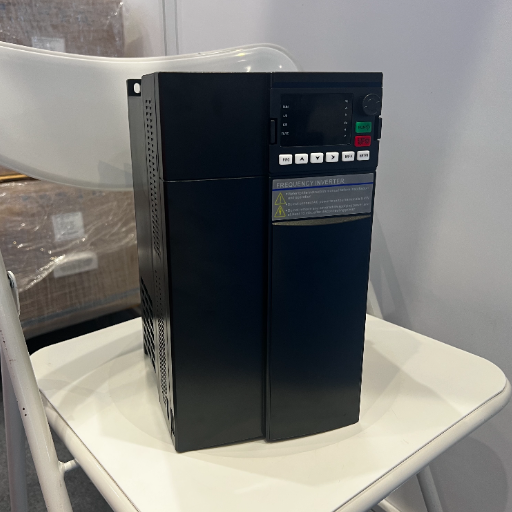
An industrial converter factory is a manufacturing facility that produces power conversion equipment for industrial, commercial, and infrastructure applications. These facilities typically handle design, component sourcing, printed circuit board assembly, mechanical fabrication, final assembly, testing, and quality control.
That control is what separates a manufacturer from a broker or trading company. For a deeper look at what defines a reliable partner, read our guide complet des fabricants de convertisseurs de fréquence.
Products commonly built in these factories include:
- Convertisseurs de fréquence statiques for 50 Hz/60 Hz conversion, including 400 Hz frequency converter solutions for aviation
- Entraînements à fréquence variable (VFD) for motor speed control
- AC/DC and DC/DC converters for industrial power supplies
- High-voltage converters for heavy machinery and infrastructure. For specialized voltage classes above 690 V, see our high-voltage frequency converter manufacturer guide.
- Custom power conversion systems for OEM and project-specific needs
- OEM industrial converter supplier programs with white-label and co-branding options
A true factory controls the production process. It maintains work instructions, inspects incoming components, tests finished units, and can trace each unit back to its component lots.
Factory vs Trading Company: Why the Distinction Matters
When Chen, a procurement manager in Singapore, sourced 150 VFDs for a water treatment project, he compared two suppliers. One was a trading company with a polished website and fast English response. The other was a factory two hours away in Guangdong with slower replies but a full engineering team.
Chen visited the factory. He saw the SMT line, the burn-in racks, and the final test station. The trading company refused a site visit and offered only a video call with a salesperson. Chen chose the factory. Six months later, when a firmware issue appeared, the factory solved it in 48 hours. The trading company’s other clients were still waiting for answers relayed through a middleman.
Trading companies add value for small orders or multi-product sourcing, but they create distance between you and the people actually building the product. For industrial converters, that distance can become expensive. Working directly with an industrial converter manufacturer eliminates markup layers and gives you direct access to engineering.
| Facteur | Industrial Converter Factory | Société de négoce |
|---|---|---|
| Prix unitaire | Lower, no reseller markup | Higher, markup typically 5–30% |
| Personnalisation | Direct engineering input | Limited, relayed requests |
| Contrôle de qualité | Tests en cours et finaux | Cela dépend des relations avec l'usine |
| Responsabilité | Clear, single responsible party | Souvent fragmenté |
| MOQ | Généralement plus élevé | Plus flexible |
| Communication | May need technical translator | Often faster in English |
| Meilleur pour | Repeat orders, custom specs, technical products | Small orders, variety, convenience |
For a deeper comparison of sourcing models, read our article on Fabricant de convertisseurs de fréquence vs société de négoce.
Certifications essentielles à vérifier
Certifications are not decorations. They are evidence that a factory has been audited against a recognized standard and that its products have been tested for specific markets. For a detailed breakdown of each certification and how to verify it, see our guide to ISO certified frequency converter manufacturers.
ISO 9001 : Fondements du management de la qualité
ISO 9001 certifies that the factory follows a documented quality management system. For an industrial converter factory, this means controlled design changes, incoming inspection, process monitoring, final testing, and corrective action procedures.
However, ISO 9001 alone does not guarantee product quality. Always check the certificate scope. A certificate covering only “sales and distribution” does not prove manufacturing capability.
Marquage CE : accès au marché européen
CE marking indicates that a product meets the essential requirements of European directives such as the Low Voltage Directive and the EMC Directive. Because CE is often self-declared, request the Declaration of Conformity and supporting test reports.
Homologation UL / cUL : Certification de sécurité nord-américaine
UL listing is a third-party safety certification common in the United States and Canada. For power conversion equipment, the relevant standard is often UL 508C. UL-listed products are tested by an OSHA-recognized NRTL and subject to factory follow-up inspections.
IEC 61000 and IEC/EN 61800-3: EMC Compliance
Frequency converters and motor drives generate electrical noise. IEC 61000-6-2 covers immunity in industrial environments, while IEC 61000-6-4 covers emissions. IEC/EN 61800-3 is the product standard for adjustable speed electrical power drive systems.
Certifications spécifiques à l'application
Depending on your project, you may also need:
- ATEX / IECEx pour zones dangereuses
- DNV / Lloyd’s Register / CCS for marine and offshore
- EN 50155 / EN 45545-2 for railway applications
- IATF 16949 for automotive supply chains
- MIL-STD / DO-160 for military or aerospace use
How to Evaluate Production Capacity
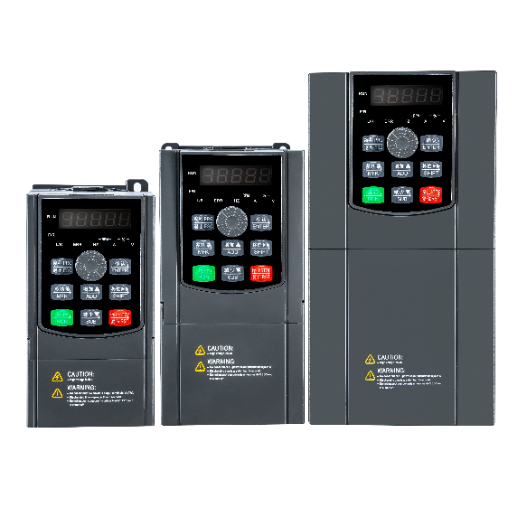
Capacity is not just a number on a website. When you evaluate an industrial converter factory, look at the systems behind the number, not just the marketing claim.
Output Claims and Historical Data
Demande à industrial converter factory for monthly or annual production volume and request historical data. A facility claiming 5,000 units per month should be able to show production records, shift schedules, and equipment utilization. Be cautious of round numbers without supporting detail.
Equipements de production et automatisation
Key equipment in an industrial converter factory includes:
- SMT lines for PCB assembly
- Reflow ovens and wave solder machines
- Inspection optique automatique (AOI)
- Transformer and inductor winding equipment
- Conformal coating or potting lines
- Burn-in and aging racks
- Final functional test stations
Infrastructure de test
Testing separates a real manufacturer from an assembler. Look for:
- Inspection des composants entrants
- In-circuit testing (ICT) or flying probe
- Functional test rigs at rated load
- High-potential and insulation resistance testing
- EMC pre-compliance capability or third-party reports
- Thermal cycling or environmental chambers
R&D and Customization Capability
If you need custom voltage, frequency, enclosure, or control interfaces, confirm that the factory has in-house engineers. A true custom industrial converter factory will have a dedicated R&D team that can review your specification, control design changes, and modify firmware or control logic to match your exact requirements.
Lead Time and MOQ Flexibility
A factory’s quoted lead time should match its capacity. If a facility claims mass production but quotes six weeks for a 100-unit order, ask why. Understand the MOQ for standard products versus custom designs, and whether the factory stocks common components.
How to Audit an Industrial Converter Factory in 5 Steps
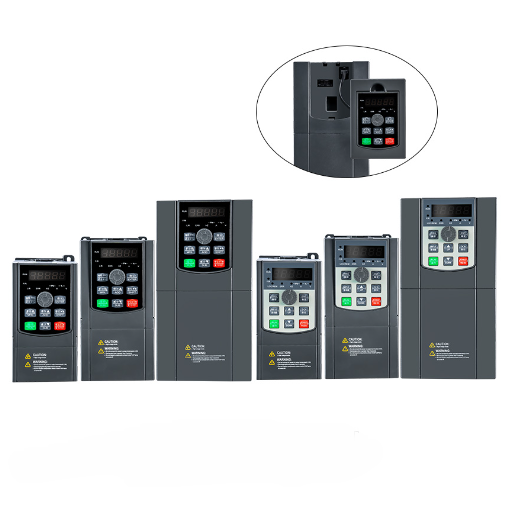
An industrial converter factory audit does not need to be expensive. Much of the verification can be done remotely or during a single day on site. Whether you conduct the audit yourself or hire a third-party inspector, the goal is the same: confirm that the facility actually manufactures what it claims. For the full supplier selection framework, see our guide étape par étape pour choisir un fabricant de convertisseurs de fréquence.
Step 1: Verify Business License and Certifications
Request the business license and confirm that manufacturing appears in the business scope. Check that ISO 9001 and product certificates are issued to the same legal entity that will invoice you, not a parent company or unrelated factory.
Step 2: Review Production Flow and Equipment
Walk the production floor or request a live video tour. Look for clear material flow from incoming inspection through assembly, testing, and packing. Empty floors, outdated equipment, or generic stock photos are warning signs.
Step 3: Inspect Incoming QC and Traceability
Ask how components are inspected on arrival and how lots are traced to finished units. For power converters, the quality of IGBTs, MOSFETs, capacitors, magnetics, and PCBs directly affects reliability.
Step 4: Observe In-Process Testing and Final Inspection
A real factory tests during production, not just at the end. Look for functional test stations, burn-in areas, and calibration records for test equipment. Request sample test reports for the product you plan to buy.
Step 5: Assess Engineering Support and After-Sales Capability
Ask who answers technical questions. Can you speak directly with an engineer? Does the factory document failure analysis and corrective actions? Strong after-sales support is often a better indicator of quality than a low price.
When Maria, a buyer for a Brazilian distributor, audited a China industrial converter factory, she followed these five steps. The facility, a mid-sized industrial converter manufacturer in Shenzhen, passed every checkpoint, including a live functional test of her sample unit. She placed a 500-unit annual contract and has since had a field failure rate below 2%.
Red Flags That Should Disqualify a Factory
Some warning signs are clear enough that you should stop evaluating an industrial converter factory immediately. If you see any of the following, move on to another supplier.
- Certificate name mismatch. The ISO 9001 or CE certificate is held by a different company than the one quoting you.
- Scope excludes manufacturing. The quality certificate covers trading or sales only.
- Aucun système de traçabilité. The factory cannot link a finished unit to its component lots.
- Missing or outdated calibration. Test equipment has no valid calibration stickers or records.
- Refusal to allow an industrial converter factory audit or video tour. A legitimate manufacturer usually welcomes transparency.
- No engineering staff available. Salespeople handle all technical questions.
- Unrealistic output claims. Capacity figures are not supported by equipment, shifts, or records.
When a Trading Company Still Makes Sense
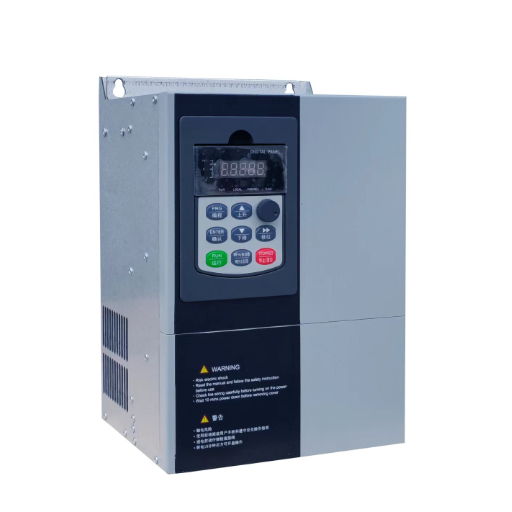
Factory direct is not always the right choice. A trading company may be better when:
- Your order volume is below the factory’s minimum order quantity
- You need products from multiple categories consolidated into one shipment
- You need fast English communication for a simple, standard product
- You are testing a market before committing to a larger direct relationship
Even then, ask the trading company to disclose the actual industrial converter factory and verify its credentials independently.
Real Cost Difference: Factory Direct vs Middleman
David, a procurement director in Poland, needed 200 frequency converters for a packaging line. One trading company quoted 12% less than a factory direct price. David chose the lower quote.
Within nine months, 15% of the units had failed. The trading company could not provide failure analysis, spare parts, or engineering support. David spent $18,000 on replacements and lost a key customer relationship. The initial savings disappeared, and the total cost exceeded the factory direct option by 22%.
A properly selected industrial converter factory may not offer the lowest unit price, but it typically delivers lower total cost of ownership through fewer field failures, faster problem resolution, and predictable repeat orders.
Want a reliable manufacturing partner? Shandong Electric operates an industrial converter factory with in-house engineering, ISO 9001 quality systems, and global certification support. Schedule a factory audit or discuss your specifications with our team.
Checklist: How to Vet an Industrial Converter Factory
Use this checklist before you commit to any industrial converter factory:
- La licence commerciale mentionne la fabrication dans le champ d'activité.
- ISO 9001 certificate scope includes design, manufacture, or testing.
- Product certificates (CE, UL, IEC) match the target market.
- Certificate name matches the invoicing legal entity.
- Factory can show production records supporting claimed capacity.
- Production floor has clear material flow and relevant equipment.
- Incoming component inspection and traceability are documented.
- Functional testing, burn-in, or aging tests are performed.
- Test equipment is calibrated and records are available.
- Engineering team can answer technical questions directly.
- Industrial converter factory audit or live video tour has been completed.
- Warranty, spare parts, and after-sales support are clearly defined.
Questions fréquemment posées
What is an industrial converter factory?
An industrial converter factory is a manufacturing facility that designs, assembles, and tests power conversion equipment such as frequency converters, VFDs, AC/DC converters, and DC/DC converters for industrial applications.
How do I know if a supplier is a real factory or a trading company?
Request a business license, ISO 9001 certificate, and factory audit or video tour. Check that the certificate name matches the supplier’s legal name and that the scope includes manufacturing. A real China industrial converter factory will usually welcome a tour and show you production records without hesitation.
What certifications should an industrial converter factory have?
At minimum, look for ISO 9001 for the factory, CE marking for Europe, UL listing for North America, and IEC 61000 or IEC/EN 61800-3 for EMC. Specialized applications may require ATEX, DNV, EN 50155, or IATF 16949.
What is the typical markup from a trading company?
Trading company markups commonly range from 5% to 30%, and can reach 40% for low-volume or complex products. Factory direct sourcing removes this margin.
How do I evaluate factory production capacity?
Ask for historical output data, review equipment lists and shift schedules, observe testing infrastructure, and confirm engineering and after-sales support. Capacity claims should be supported by evidence, not just marketing statements.
When should I choose a trading company instead of a factory?
A trading company makes sense for small orders below factory MOQ, multi-category consolidation, or simple standard products where engineering support is not critical.
What are the biggest risks of sourcing from the wrong factory?
Risks include product failures, warranty disputes, customs delays from certificate mismatches, missed deadlines, and hidden costs from rework or replacements that exceed any initial price savings.
Conclusion
Choosing the right industrial converter factory is one of the most important decisions in a procurement process. The lowest price rarely means the lowest total cost. Certifications, capacity, testing infrastructure, and engineering support matter just as much as the quoted unit price.
Start by verifying who actually manufactures the product. Confirm that certifications match the factory, the scope covers production, and the capacity claims are supported by real equipment and records. Then complete an audit or video tour before committing to volume.
Shandong Electric welcomes factory audits, technical discussions, and sample evaluations. If you are looking for an industrial converter factory with documented quality systems and export experience, schedule a factory audit to share your requirements and receive a proposal. We also serve as a reliable industrial converter manufacturer et OEM industrial converter supplier for partners who need white-label or custom-engineered solutions.
