
A vacuum contactor motor starter is an electromechanical switching device that uses a vacuum interrupter to make and break current to medium voltage AC motors rated from 1 kV to 15 kV. Paired with current-limiting fuses, it provides frequent-start capability, long electrical life, and lower total cost of ownership than breaker-based alternatives for high-cycle motor applications.
A maintenance manager at a cement plant in northern China replaced twelve air-break contactor starters on a 6 kV kiln exhaust fan with modern vacuum contactor starters. The holding power dropped from 620 watts per starter to 180 watts. That is a 70% reduction. It saved nearly 4,000 kWh per motor annually.
Two years later, one unit began chattering on closing. A micro-ohmmeter test showed contact resistance at 520 micro-ohms. That is above the 400 micro-ohm replacement threshold. The vacuum interrupter bottle needed replacement, a repair costing 40% of a new contactor.
The disconnect was simple. The spec sheet promised one million mechanical operations. The unit had only logged 95,000 cycles. But mechanical life and electrical life are not the same thing. Switching a 355 kW motor 95,000 times had eroded the contacts inside the vacuum bottle. That distinction is one of six specification errors engineers make most often when selecting vacuum contactor motor starters.
This guide gives you the complete framework for selecting, sizing, and specifying a vacuum contactor motor starter. You will learn when vacuum contactors beat circuit breakers and when they do not. You will see how to coordinate fuses with contactors using time-current curves. You will understand how AC-3 and AC-4 duty affect contact life by an order of magnitude. You will get real cost ranges. And you will learn how to predict replacement before a failure shuts down your process.
Pour une présentation complète du contexte système en matière de protection des moteurs, consultez notre Guide complet de la protection et de la commande des moteurs moyenne tension.
Points clés à retenir
- A vacuum contactor motor starter pairs a vacuum interrupter with current-limiting fuses and is ideal for applications requiring more than 10,000 operations over the equipment lifetime.
- AC-3 duty delivers 250,000 to 1,000,000+ electrical operations; AC-4 duty drops that to 10,000 to 50,000 operations. Always specify against electrical life, not mechanical life.
- Vacuum contactors cannot interrupt short-circuit current. Upstream fuses or a breaker must clear faults. The fuse-contactor take-over point is the most critical coordination parameter.
- Modern motor-duty vacuum contactors with CuCr contacts have chopping currents below 1 ampere, making additional surge protection unnecessary in most installations.
- Predictive replacement based on contact resistance trending (above 400 to 500 micro-ohms) prevents unplanned outages and costs 30 to 50% of a full contactor replacement.
What Is a Vacuum Contactor Motor Starter?
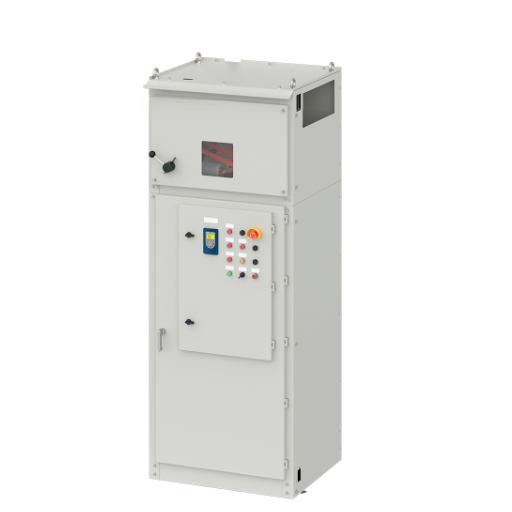
A vacuum contactor motor starter combines three core components: a vacuum contactor that switches the motor current, current-limiting fuses that clear short-circuit faults, and an overload relay or motor protection relay that trips on thermal overload or locked rotor conditions. Together these form a NEMA Class E2 fused contactor starter, the standard architecture for medium voltage motor control in North America and increasingly common globally.
The Vacuum Interrupter: How It Works
The vacuum interrupter seals a pair of contacts in a glass or ceramic tube under a high vacuum. The arc, which forms when the contacts are parted, gets confined within the bowl, and hence extinguishes pretty quickly merely since the environment will not have any gas molecules permitting ionization. This means these contacts can be much smaller and lighter than their air-break counterparts and yet carry the same current. In whole, the vacuum prevents oxidation of the contact, the reason why contactors maintain the same condition for contact resistance much longer than air-break designs.
The contact material makes a big difference. Older varieties employed copper-bismuth or copper-tungsten alloys. Modern vacuum interrupters designed for motor duty employ copper-chromium contacts, with the very good combination of low chopping current and an even greater arc-quenching ability. The new versions are built to IEC 62271-106 to release no chopping currents above 1 ampere, nullifying the transient overvoltage phenomenon experienced at the inception of vacuum switching devices.
Fuse-Contactor (F-C) Architecture vs Breaker-Based Starter
In a fused contactor starter, the vacuum contactor handles normal switching operations while the current-limiting fuses handle fault interruption. The contactor is rated for short-circuit withstand, typically 25 kA for 1 second, but it does not interrupt fault current. This separation of duties is why vacuum contactors are simpler, lighter, and less expensive than vacuum circuit breakers of equivalent continuous current rating.
A breaker-based starter uses a vacuum circuit breaker that both switches load current and interrupts fault current. This eliminates the need for fuses but adds complexity, weight, and cost. The trade-off is the subject of the next section.
Valeurs nominales de tension et de courant
Standard medium voltage vacuum contactor ratings cover:
- Tension: 3.3 kV, 4.16 kV, 6.6 kV, 7.2 kV, 11 kV, 12 kV, and 15 kV
- Courant continu: 180 A, 400 A, 630 A, 720 A at 7.2 kV; up to 1,250 A at 12 kV
- Tenue aux courts-circuits: 20 to 31.5 kA for 1 to 3 seconds (withstand only, not interrupting)
The motor full-load current must fall within the contactor’s continuous current rating. The inrush current during starting, typically 6 to 8 times full-load current, must fall within the contactor’s making capacity, which is rated at 6 to 10 times the continuous current depending on the standard.
Vacuum Contactor vs Vacuum Circuit Breaker: The Decision Framework
The choice between a vacuum contactor motor starter and a vacuum circuit breaker starter comes down to two questions: how often will the device switch, and who will clear a short-circuit fault?
| Facteur | Vacuum Contactor + Fuses | Disjoncteur à vide |
|---|---|---|
| Fréquence de commutation | Very high (100,000+ operations) | Low (1,000 to 50,000 operations) |
| Interruption due à une panne | Fuses clear faults; contactor survives | Breaker clears faults directly |
| Coût initial | Coût en adjuvantation plus élevé. | Higher (typically 40 to 100% more) |
| Entretien | Simple inspection; fuse replacement | Detailed mechanical/electrical checks |
| Downtime after fault | Remplacement du fusible requis | Reset and reclose immediately |
| Courant continu | Jusqu'à 1,250 A | Jusqu'à 3,150 A |
| Capacité de court-circuit | 20 to 31.5 kA withstand | 25 to 63 kA interrupting |
| Reduced-voltage starting | Simple multi-contactor arrangement | Complicates switchgear design |
When to Choose a Vacuum Contactor
Select a vacuum contactor motor starter when the application requires frequent switching, the motor current is within standard contactor ratings, and brief downtime for fuse replacement is acceptable. Typical applications include pumps in peaking service, compressors with multiple daily starts, conveyor systems, and batch process mixers. A vacuum contactor is also the right choice when reduced-voltage starting requires multiple contactors and interlocking.
For any application with more than 10,000 expected operations over the equipment life, the vacuum contactor’s endurance advantage becomes decisive. A breaker operated beyond its design cycle count will require increasingly frequent maintenance and premature replacement.
When to Choose a Vacuum Circuit Breaker
Select a vacuum circuit breaker starter when the system requires direct interruption of high fault currents without relying on fuses, when the motor current exceeds practical contactor ratings, or when process continuity is so critical that fuse replacement downtime cannot be tolerated. Large synchronous motors, main distribution feeders, and generator breakers are typical breaker applications.
La zone grise
Some applications fall between the two categories. A large motor that starts infrequently but runs a critical process may seem like a breaker candidate. However, if the motor current is within contactor ratings and the process can tolerate 15 to 30 minutes of fuse replacement after a fault, the fused contactor starter often wins on total cost of ownership. The breaker pays for itself only when the cost of downtime exceeds the premium paid for breaker complexity.
Need help deciding between contactor and breaker architectures for your specific motor ratings? Contactez notre équipe d'ingénierie for a no-obligation application review.
How to Size and Select a Vacuum Contactor Motor Starter
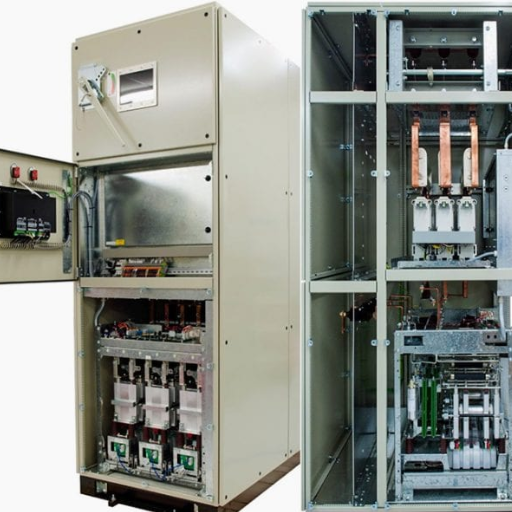
Sizing a vacuum contactor motor starter requires five steps. Skip any of them and you risk either premature contact erosion or inadequate fault protection.
Step 1: Match Motor Full-Load Amps to Contactor Rating
Always size the contactor to the motor nameplate full-load current, not the horsepower. A 1,000 HP motor at 4.16 kV draws roughly 133 A, while the same horsepower at 6.6 kV draws only 84 A. The contactor must be rated for the actual current it will carry continuously.
Step 2: Declare Utilization Category (AC-3 vs AC-4 vs AC-6b)
The utilization category defines the severity of the switching duty:
- AC-3: Squirrel-cage motor starting and stopping under normal running current. Making current up to 6 times rated current; breaking current at or below rated current. This is the standard duty for most motor starters.
- AC-4: Inching, plugging, or reversing. Breaking current equals making current, up to 6 times rated current. Electrical life drops to 10,000 to 50,000 operations.
- AC-6b: Capacitor bank switching. Inrush currents of 100 to 200 times rated current require specialized contactors with pre-insertion resistors.
If your application involves jogging or reversing, you must derate the contactor significantly. An AC-4 duty often requires selecting a contactor rated at 1.5 to 2 times the motor full-load current to achieve acceptable contact life.
Step 3: Specify Short-Circuit Withstand and Upstream Fuse Coordination
The contactor must survive the maximum prospective short-circuit current at its terminals for the duration required by the protection scheme. A typical specification calls for 25 kA withstand for 1 second. This is verified by type testing to IEC 62271-106.
The fuses upstream of the contactor must clear fault currents before the contactor is damaged. This coordination is covered in detail in the next section.
Step 4: Verify Control Circuit Compatibility
Vacuum contactor control circuits use electromagnetic coils to close and hold the contacts. Two design choices matter for specification:
- Tension de bobine: Must match the control power available, typically 110 V AC, 220 V AC, or 24 V DC. Universal coils covering 24 to 240 V AC/DC reduce spare parts inventory.
- Rectified DC holding: Most modern MV vacuum contactors use a rectified DC coil for the holding circuit. The DC holding current is lower and more stable than AC, reducing coil heating and energy consumption. However, the DC dropout time is longer than AC. For SCR soft starter bypass applications, the dropout time must be below 60 milliseconds to prevent re-strike during the ramp-to-bypass transition.
Step 5: Apply Environmental Derating
Altitude, temperature, and humidity all affect vacuum contactor performance:
| État | Effect | Mesures |
|---|---|---|
| Altitude above 1,000 m | Dielectric strength drops ~10% per 1,000 m | Specify higher BIL or derate voltage |
| Ambient above 40 C | Coil and contact heating increase | Derate current or improve ventilation |
| Humidité élevée | Surface tracking risk on insulation | Specify anti-condensation heaters |
| Polluted atmosphere | Contamination on external insulation | Higher IP rating for enclosure |
A water treatment plant in Australia specified vacuum contactor starters for twelve high-cycle effluent pumps. Each pump ran eight starts per day. Over ten years, that is roughly 29,000 starts per motor.
The engineering team originally considered vacuum circuit breakers. Then they realized that 29,000 operations exceeded the standard maintenance interval for breaker mechanisms. The vacuum contactor’s AC-3 rating of 300,000+ operations meant no major maintenance for the full design life.
The contactors were selected with 400 A ratings for 250 A motors. That provided margin for the cycling duty. Three years into operation, contact resistance on all twelve units remained below 200 micro-ohms. That is well within the healthy range.
Fuse-Contactor Coordination: The Critical Take-Over Point
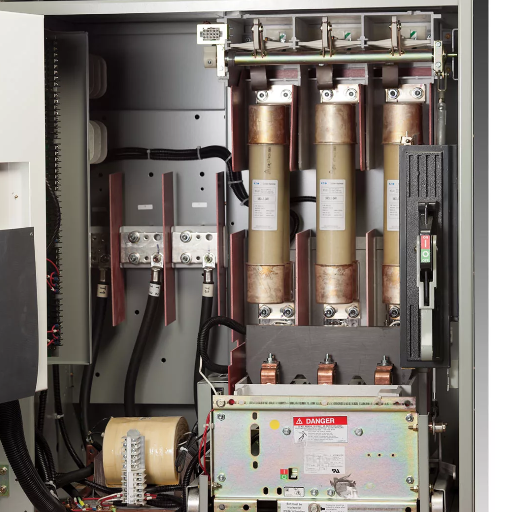
The single most misunderstood aspect of vacuum contactor motor starter design is fuse-contactor coordination. The contactor switches load. The fuses clear faults. The boundary between those two roles is the take-over point on the time-current characteristic curve.
Why Contactors Cannot Interrupt Fault Current
A vacuum contactor is designed to interrupt normal load current, typically up to its rated continuous current. Its opening mechanism is fast enough for load switching but lacks the energy absorption capacity and arc management system needed for high fault currents. When a short circuit occurs, the contactor must survive the fault current for the time it takes the upstream fuse to melt and clear. This is the withstand rating.
If the fault current is below the fuse’s minimum melting current but above the contactor’s interrupting limit, neither device handles the fault correctly. The contactor may weld or explode. This is why proper fuse selection is not optional.
Selecting Current-Limiting Fuses
Three fuse types are common in MV motor circuits:
- Class R (general purpose): Fast-acting, current-limiting. Used for general motor protection where starting inrush is moderate.
- aM (motor) fuses: Partial-range breaking capacity. Designed to withstand normal motor starting inrush while clearing high fault currents. Preferred for motor circuits because they tolerate starting surges better than general-purpose fuses.
- R-rated motor fuses: Specifically designed for medium voltage motor starters. The R rating indicates the fuse will not melt at 100 times rated current for a defined minimum time, ensuring it rides through starting inrush.
The fuse rating must be at least 1.33 times the motor full-load current to avoid nuisance melting during starting. It must also coordinate with the motor locked-rotor current and starting time.
Worked Example: Coordinating a 400 A Contactor with a 6.6 kV Pump Motor
Consider a 1,500 kW, 6.6 kV pump motor with a full-load current of 155 A and a locked-rotor current of 930 A (6 times FLA). The starting time is 8 seconds.
- Select fuse rating: 1.33 times 155 A equals 206 A. The next standard fuse size is 250 A.
- Verify starting coordination: The 250 A R-rated fuse must not melt at 930 A for at least 8 seconds. Check the fuse minimum melting curve. At 930 A, the fuse melts in approximately 45 seconds. The motor starts safely.
- Verify fault coordination: At a prospective fault current of 20 kA, the fuse limits the let-through current to approximately 12 kA and clears in 0.01 seconds (half cycle). The contactor’s 25 kA/1-second withstand rating is not exceeded.
- Check take-over point: The contactor’s damage curve and the fuse’s minimum melting curve must not cross below the maximum fault current. The take-over point occurs at roughly 3,500 A and 0.3 seconds. Below this point, the contactor can interrupt. Above it, the fuse must clear before the contactor is damaged.
Exigences de coordination de type 2
Type 2 coordination, defined in IEC 60947-4-1, requires that the contactor and overload relay be reusable without repair after a short-circuit test. The fuse must clear the fault while the contactor survives with only light contact welding that can be separated without tools. Specifying Type 2 coordination is essential for applications where fuse replacement must be followed by immediate restart without contactor overhaul.
At a mining operation in South Africa, a conveyor drive using a NEMA Class E2 fused contactor starter experienced a locked-rotor event when a bearing seized. The 400 A R-rated fuses cleared the fault in less than half a cycle. The contactor survived with no damage, verified by a contact resistance test showing 180 micro-ohms, unchanged from the baseline. Operations resumed within 30 minutes after fuse replacement. The same event in a breaker-based system would have required breaker inspection and possibly contact servicing before reclosure.
Understanding Life Expectancy and Maintenance
Vacuum contactor life ratings are often misunderstood because manufacturers publish two very different numbers.
Mechanical Life vs Electrical Life
Durée de vie mécanique is the number of no-load operations the contactor can perform before mechanical wear requires overhaul. For premium MV vacuum contactors, this ranges from 1,000,000 to 3,000,000 operations. Springs, linkages, and latches are the limiting factors.
Vie électrique is the number of load-breaking operations before contact erosion in the vacuum interrupter exceeds limits. Under AC-3 duty, this ranges from 250,000 to 1,000,000+ operations depending on the manufacturer and contact material. Under AC-4 duty, it drops to 10,000 to 50,000 operations.
For motor starting applications, electrical life is almost always the limiting factor. A contactor with 1,000,000 mechanical operations and 300,000 electrical operations will reach end-of-life due to contact erosion long before the mechanism wears out.
AC-4 Duty: Why It Destroys Contact Life
AC-4 duty involves breaking current equal to the making current, typically 5 to 7 times rated current. The arc energy during interruption is proportional to the square of the current. Breaking 6 times rated current produces 36 times the arc energy of breaking rated current. This is why AC-4 electrical life is roughly 3 to 10% of AC-3 life.
If your application requires jogging, plugging, or reversing, you have three options: specify a larger contactor frame size to reduce the relative current stress, accept frequent vacuum interrupter replacement, or switch to a vacuum circuit breaker designed for AC-4 duty.
Predictive Replacement Using Contact Resistance
The most reliable indicator of vacuum interrupter health is contact resistance, measured with a micro-ohmmeter applying at least 100 A DC test current. Typical values for a new MV vacuum contactor range from 50 to 150 micro-ohms. As contacts erode, this value rises gradually.
Industry practice recommends planning replacement when contact resistance exceeds 400 to 500 micro-ohms, or when the value has increased by more than 50% from the baseline measurement taken at commissioning. Trending contact resistance every 6 to 12 months allows maintenance teams to schedule replacement during planned outages rather than reacting to failures.
Vacuum Interrupter Bottle Replacement Economics
On many vacuum contactor designs, only the sealed vacuum interrupter bottle needs replacement when contacts reach end-of-life. The mechanical mechanism, coils, and auxiliary contacts often remain serviceable. A bottle replacement typically costs 30 to 50% of a complete new contactor and can be performed in the field in 2 to 4 hours.
This is a significant advantage over vacuum circuit breakers, where contact wear often requires factory refurbishment or complete replacement of the breaker assembly. For high-cycle applications, the ability to replace only the vacuum bottle makes the fused contactor architecture more economical over a 15 to 20 year life cycle.
Current Chop and Transient Overvoltage in Vacuum Switching
One of the most persistent myths in medium voltage motor control is that vacuum switching inherently produces dangerous transient overvoltages that damage motor insulation. The reality is more nuanced.
What Is Current Chop and Why It Matters for Motors
Current chop occurs when a vacuum interrupter extinguishes the arc before the AC current naturally crosses zero. The instantaneous interruption of current in an inductive circuit produces a transient overvoltage according to the formula V equals L times di/dt. In early vacuum interrupters with high chopping currents, this transient could reach 3 to 5 per-unit, stressing motor winding insulation.
Modern motor-duty vacuum contactors are specifically designed to minimize current chop. CuCr contact materials and optimized contact geometry reduce chopping current to below 1 ampere. At this level, the energy stored in the motor inductance is insufficient to produce damaging overvoltages in normal starting and stopping operations.
When Surge Protection Is Actually Required
Additional surge protective devices are recommended in three specific situations:
- Switching motors with long cable runs (over 150 meters), where traveling wave reflections can amplify transients.
- Switching high-efficiency motors with inverter-grade insulation that may have lower impulse withstand than traditional designs.
- Switching synchronous motors or motors with power factor correction capacitors, where the circuit characteristics differ from standard squirrel-cage induction motors.
For standard squirrel-cage motors with cable runs under 150 meters, modern vacuum contactors with documented chopping current below 1 ampere do not require additional surge protection. This is supported by decades of field experience and by the absence of surge protection requirements in current editions of IEC 62271-106 for standard motor-starting contactors.
Vacuum Contactor Motor Starter Cost Benchmarks
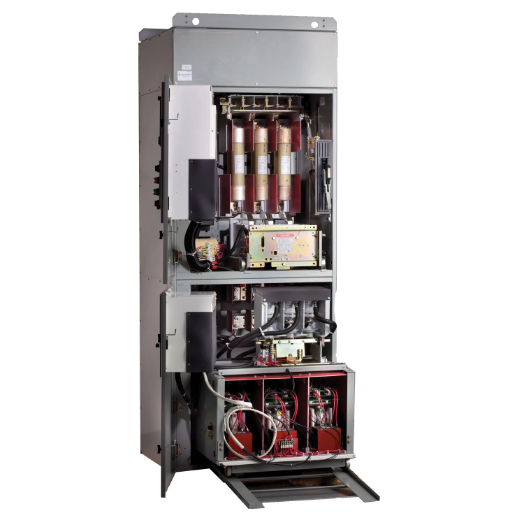
Cost is a major factor in the contactor versus breaker decision. The following ranges represent 2026 estimates for complete fused contactor starter assemblies in NEMA 12 enclosures, including contactor, fuses, overload relay, and control power transformer.
| Classe de tension | Plage de puissance du moteur | Fused Contactor Starter | Breaker-Based Starter |
|---|---|---|---|
| 3.3 à 4.16 kV | 100 à 500 kW | 8,000à8,000to15,000 | 14,000à14,000to28,000 |
| 6.6 à 7.2 kV | 200 à 1,500 kW | 12,000à12,000to25,000 | 22,000à22,000to45,000 |
| 11 à 12 kV | 500 à 3,000 kW | 18,000à18,000to35,000 | 32,000à32,000to65,000 |
| 15 kV | 1,000 à 5,000 kW | 25,000à25,000to45,000 | 45,000à45,000to90,000 |
F-C Starter vs Breaker-Based Starter Total Cost Comparison
The initial cost advantage of the fused contactor starter is only part of the story. Over a 15-year life cycle, the total cost comparison includes:
- Puissance: Vacuum contactors draw roughly 180 W holding power versus 620 W for equivalent air-break designs. At 0.10perkWhandcontinuousoperation,theannualsavingsperstarterisapproximately0.10perkWhandcontinuousoperation,theannualsavingspERStarterisapproximately385.
- Entretien: Vacuum contactor inspection requires visual checks and contact resistance trending. Breaker maintenance includes mechanism lubrication, timing tests, and vacuum integrity checks, typically at 2 to 3 times the labor cost.
- Pièces de rechange: A vacuum interrupter bottle replacement costs 30 to 50% of a new contactor. Breaker refurbishment or replacement costs 80 to 100% of the initial breaker price.
- Temps d'arrêt: Fuse replacement after a fault takes 15 to 30 minutes. Breaker reset takes 5 minutes, but if the breaker is damaged, repair may take days.
For applications with more than 10,000 operations, the fused contactor starter typically wins on total cost of ownership even after accounting for occasional fuse replacements.
Normes et conformité
Vacuum contactor motor starters are governed by overlapping standards that vary by region and application.
IEC 62271-106: High-Voltage Contactors and Motor-Starters
This is the primary international standard for vacuum contactors rated above 1 kV. It defines type tests for making and breaking capacity, electrical and mechanical endurance, and dielectric performance. A contactor tested to IEC 62271-106 carries a defined AC-3 or AC-4 rating verified by an accredited laboratory. Procurement specifications for international projects should require ILAC-accredited type test certificates, not just manufacturer self-certification.
IEC 60947-4-1: Low-Voltage Contactors and Motor-Starters
Although this standard applies nominally to low voltage, its utilization category definitions (AC-3, AC-4, AC-6b) and endurance testing methodologies are widely referenced for medium voltage contactor selection logic. The Type 2 coordination requirement for contactor reusability after short circuit originates here.
UL 347: Medium Voltage AC Contactors, Controllers, and Starters
The North American standard covering vacuum contactor motor starters up to 7.2 kV. UL 347 includes requirements for across-the-line, reduced-voltage, and multi-speed starters. A UL 347 listing is mandatory for installations subject to NEC Article 430 requirements in the United States.
NEMA ICS 2 / NEMA Class E2 Controllers
NEMA ICS 2 defines industrial control devices including contactors and overload relays. A NEMA Class E2 controller is a combination motor controller using fuses and a contactor with no short-circuit interrupting rating of its own. This is the formal classification for the fused vacuum contactor starter architecture described throughout this guide.
For global EPC projects, specifying both IEC 62271-106 and UL 347 compliance ensures the equipment is acceptable in virtually any jurisdiction.
Questions fréquemment posées
What is a vacuum contactor motor starter?
A vacuum contactor motor starter is an electromechanical device that uses a vacuum interrupter to switch medium voltage AC motors. It is typically paired with current-limiting fuses for short-circuit protection and an overload relay for thermal protection. The vacuum contactor handles normal switching operations while the fuses clear fault currents.
Vacuum contactor vs circuit breaker: which do I need?
Choose a vacuum contactor for applications requiring frequent switching (more than 10,000 operations), where motor current is within contactor ratings, and where brief downtime for fuse replacement is acceptable. Choose a vacuum circuit breaker for large, infrequently switched loads, where high fault interruption is required, or where no fuse replacement downtime is tolerable.
How long does a vacuum contactor last?
Mechanical life ranges from 1,000,000 to 3,000,000 no-load operations. Electrical life under AC-3 duty ranges from 250,000 to 1,000,000+ operations. Under AC-4 duty (jogging, reversing), electrical life drops to 10,000 to 50,000 operations. Electrical life is almost always the limiting factor in motor starting applications.
What is AC-3 vs AC-4 duty for a vacuum contactor?
AC-3 is normal squirrel-cage motor starting and stopping under running current. AC-4 is inching, plugging, or reversing, where the contactor must break starting current. AC-4 duty is roughly 10 to 30 times more severe than AC-3 and requires significant contactor derating or frequent replacement.
Why does a vacuum contactor need fuses?
A vacuum contactor can interrupt normal load current but cannot safely interrupt short-circuit fault current. The fuses provide current-limiting fault interruption that clears faults before the contactor is damaged. This separation of duties is the fundamental principle of the fuse-contactor starter architecture.
How much does a vacuum contactor motor starter cost?
A complete fused contactor starter assembly ranges from approximately 8,000forasmall3.3kVunitto8,000forasmall3.3kVunitto45,000 for a large 15 kV unit. Breaker-based starters for equivalent ratings cost 40 to 100% more. Total cost of ownership over 15 years favors the fused contactor starter in high-cycle applications.
What is current chop in a vacuum contactor?
Current chop is the premature interruption of arc current before natural zero crossing, which can produce transient overvoltage in inductive circuits. Modern motor-duty vacuum contactors with CuCr contacts are designed for chopping currents below 1 ampere, making additional surge protection unnecessary in most standard installations.
When should I replace a vacuum interrupter?
Plan replacement when contact resistance exceeds 400 to 500 micro-ohms, or when the value has increased by more than 50% from the commissioning baseline. Trending contact resistance every 6 to 12 months allows scheduled replacement during planned outages. Bottle replacement costs 30 to 50% of a new contactor and takes 2 to 4 hours in the field.
Conclusion: Specifying the Right Vacuum Contactor Motor Starter
The vacuum contactor motor starter remains the most cost-effective solution for medium voltage motor control when switching frequency is high and fault interruption can be delegated to current-limiting fuses. The five decisions that determine success are: matching the contactor rating to actual motor current, declaring the correct utilization category, coordinating the fuse-contactor take-over point, verifying control circuit compatibility, and planning predictive maintenance based on contact resistance trending.
Get any of these wrong and you risk the same surprise that caught the cement plant maintenance manager: a unit that should have lasted years failing because the specification targeted mechanical life instead of electrical life.
This article is part of our complete medium voltage motor protection and control guide. For related reading, see our guides on medium voltage soft starters, méthodes de démarrage des moteurs moyenne tension, ainsi coordination de la protection des moteurs.
