
In 2018, the team of Dr. Sarah Chen headed at a facility for manufacturing semiconductors faced a crucial issue. Their induction heating power supplies were functioning at a frequency of 20kHz, but the losses because of switching frequency were yielding excessive temperature. approximately 30% of the total acquisition cost of the facility came as a result of the cooling systems. Shifting to a 100 kHz resonant converter configuration that featured the latest gallium nitride (GaN) components reduced losses by 65%. As a result, the operation of the building alone saved $450,000 in heating energy cost per year.
That is why for the contemporary power electronics the frequency plays a role as a criterion of the power circuit. A high frequency power supply involves the conversion of electrical power with the use of high frequencies rather than the traditional mains operating frequency. Early converters used to switch at grid type frequencies from 50-60Hz which was intended to generate power at the grid, but currently they operate in the tens of kilohertz regime and even higher than that – up to hundreds of megahertz.
This is a very informative topic; users who are in any way involved in the development, deployment or quality assurance of high conversion frequency technology in their operations will find this document very useful. Furthermore, it will without doubt enlighten you as to how such devices are applicable and which factors to consider when selecting a suitable one. It will provide the right assistance even for such applications as designing induction heaters, communication equipment, and most of all medical equipment, that require complex engineering approaches.
Need application-specific guidance? Contact our engineering team to discuss your high frequency power conversion requirements.
What Is a High Frequency Converter?
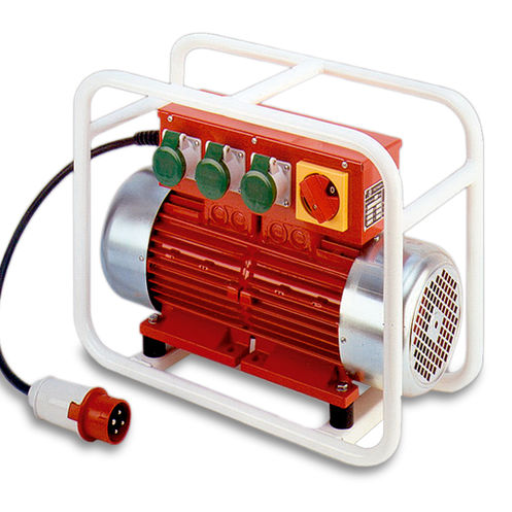
A high frequency converter is a power electronic device that uses a switching frequency, which is much higher than the line frequency; in general, switch frequency range falls within 20 kHz to several tens of megacycles. As the voltage or current conversion performed by a traditional transformer has a frequency content of zero, the above-mentioned converter utilizes extremely fast semiconductor switches in order for the technology to function at higher power densities and at faster rates while maintaining control.
Definition and Frequency Ranges
The term “high frequency” in power electronics covers several distinct ranges with different applications and design considerations:
20kHz to 100kHz: This range is the most commonly used in the electricity conversion during industrial processes. Frequencies above 20kHz for the audio remove the humming noise coming from the magnetic devices. Machine and plant engineers frequently operate in this range such as industrial induction furnaces, switch mode nonlinear elements, and even motor drives or the so-called voltage inverter.
100kHz to 1MHz: Middle high driving frequencies make the design of magnetic components compact and ensure fast power up times. The boundary between server power supplies, telecom power types and power adaptors in consumer electronic devices is being blurred with the increase of these device of applications.
1MHz to 100MHz: These ranges of frequencies support highly restricted application areas such as RF, wireless energy transfer, medical instrumentation and power amplification. These sort of frequencies involve sophisticated solutions telling about special circuit topologies and proper and careful control over conducted and radiated interference.
Above 100MHz: The frequencies of RF communications are in the field of two-way phone and wireless communication systems, where we have these frequencies served by radar, and within other areas – equipment for selective high frequency electromagnetic heating.
Core Operating Principles
All high frequency converters share fundamental operating principles based on rapid energy transfer and storage:
Switching Operation
Numerous applications involve power semiconductors like MOSFETs, IGBTs or wide bandgap devices, which basically involvs these components switching on and off several thousand times even more per second. This way, the energy is transferred from the input stage to the output stage over the entire period using the inductive and capacitive elements. The output voltage depends on the duty cycle, which is the ratio of the time to the period in which the switch is closed.
PWM and Resonant Control
To achieve voltage control PWM (Pulse width Modulation) can be used to vary the length of one switching cycle with constant frequency of the circuit. On the other hand, in resonant converters LC circuits are common and generate sinusoidal waveforms, which provide the system to carry out soft switching with lesser switching losses.
Magnetic Component Considerations
Key Technologies and Topologies
Hard-Switching vs. Soft-Switching
When designing an induction heater that required a high frequency inverter, David Martinez made a costly mistake in 2019. His original hard-switched inverter design had 94% efficiency at full power but had thermal problems with light loads owing to switching losses. Implementation of the resonant soft-switching converter saw the light load efficiency rise to 97% and cooling was no longer required.
Hard-Switching Converters
Zero voltage switching in principle has always been in existence. While there is more focus on zero voltage switching in series resonant converters, electronic engineers should be keen on the minimization of energy loss during the switching of a power converter. In series resonant converters, the bridge connected to the resonant tank drive switch n and off when sin w is zero such.
Soft-Switching Converters
Resonant and quasi-resonant techniques have a specific feature where either voltage or current is zero at the beginning and the end of every switching cycle. Devices are switched on when the Turning-Zero Voltage Switching (ZVS) is zero across them. Deactivation of the switching devices takes place when the Turning-Zero Current Switching (ZCS) state is achieved. Both states result in the minimization of the switching losses.
Comparison of Approaches
| Characteristic | Hard-Switching | Soft-Switching |
|---|---|---|
| Efficiency | 92-95% | 96-98% |
| Complexity | Lower | Higher |
| Component Stress | Higher | Lower |
| EMI Generation | Higher | Lower |
| Cost | Lower | Higher |
| Frequency Range | Up to 500kHz | Up to several MHz |
Common Converter Topologies
Buck, Boost, and Buck-Boost at High Frequency
All the basic DC-DC Converter topologies are designed for use with proper components usually at high frequencies. The buck (step-down) converter reduces voltage but increases available current. The boost (step-up) converter raises the voltage of the input. A buck-boost, plugs either step-up or step-down functions. These basic topologies are used in a number of applications ranging from LED drivers to battery chargers.
LLC Resonant Converters
LLC topology is widely used in applications above 100 kHz, mostly having its specific modifications implemented as the benefit of high-efficiency applications. Generally for an LLC, two inductors and a capacitor form a resonant tank where the main characteristic is natural resonant frequency that aids in ZVS at a vast range of output loads. Modern server power supplies and EV chargers commonly use LLC converters achieving 98%+ efficiency.
Dual Active Bridge Converters
The dual active bridge, is a comprehensive solution where power both flows and can be controlled both ways, specifically advantageous for stand-alone or high-power functionality. The reason: all structures are equipped with active switches at both the primary and the secondary side performing an absolute power control. Moreover these converters are widely used in battery energy storage, solid-state transformer as well as in various aerospace applications.
RF Frequency Converter Architectures
When it comes to RF design for the radio frequency converters, the principles of the power supply design will differ. A significant part of the circuity is dedicated to the oscillator or exciter, the signal source itself, the frequency multipliers, and divide to extend the desired frequency ranges. The main considerations for these systems are mentioned as linearity, low performance, and the signal attenuation even at the intermediate frequency has no regard to the power and efficiency.
Power Semiconductor Selection
Choosing the right power semiconductor determines converter performance, efficiency, and reliability:
Silicon MOSFETs
Applications up to 200 kHz operate using conventional silicon based MOSFETs. At higher switching frequencies, the performance improves due to the minimum conduction losses and transient suppression caused due to the charge in the depletion region of the floating body. The same trend has been observed as far as the super junction MOSFET is concerned, whereby its performance improves but the silicon material it is based on remains a limiting factor.
IGBTs (Insulated Gate Bipolar Transistors)
IGBTs have advantages of working well within high voltage levels and at middle frequencies. Operating at a high current level and having a low voltage drop make them cost effective in industrial inverters and drives. Although, technical requirements, especially with respect to IGBT switching ability, restrict their effective service to about 50 KHz. Higher switching frequencies result in excessive losses due to the limits of IGBTs.
GaN (Gallium Nitride) Devices
Other devices, dubbed GaN power devices, advance the high frequency topology. The reason is that the mobility of carriers in GaN is about 1000 times higher than that in silicon. This enables not only an increase in switching speed by 10-100 times but also a decrease in conduction losses by 2-3 times. GaN converters are currently being built that operate at 1 MHz and above. The GaN power device market is growing at over 60% CAGR, projected to exceed $2 billion by 2028.
SiC (Silicon Carbide) Devices
SiC MOSFETs and Schottky diodes are commonly placed between silicon and GaN as far as performance potential is concerned. These devices are capable of operating at both higher voltages than GaN (at the moment up to 1700 V) and higher temperatures compared to silicon and have arms at present. These SiC devices prove useful in various applications demanding high voltage characteristics and high temperatures, examples include power systems of electric vehicles and solar inverters.
Selection Guidelines
- Below 100kHz, 600V: Silicon superjunction MOSFETs offer best cost-performance
- 100kHz-1MHz, under 650V: GaN HEMTs provide superior performance
- Above 900V: SiC MOSFETs are the clear choice
- High current, low frequency: IGBTs remain economical
Applications by Industry
Induction Heating and Industrial Processes
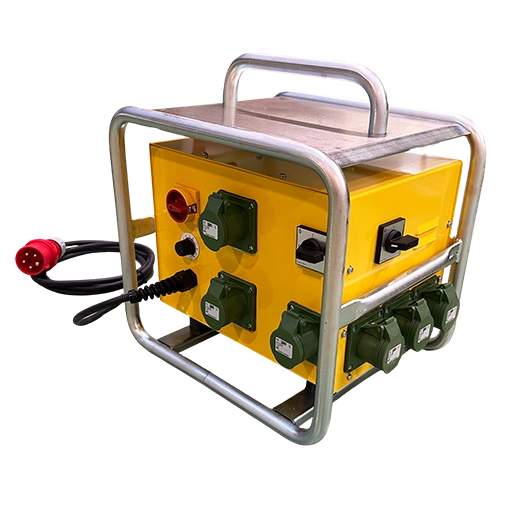
The market for induction heating equipment is estimated to be over 8 billion and showing annual growth of up to 5.5%. The market continues to grow mainly thanks to high frequency power converter technology which has made it possible to build heating plants that are both effective and environmentally friendly.
Induction Heating Power Supplies (10-500kHz)
Understanding the induction heating principle, it is possible to say that it is the process through which heat is generated due to the circulation of eddy currents. this heated substance is the material being heated such that it becomes hard, melts or even changes its state without having direct contact. Frequency selection depends on application:
- 1-10kHz: Deep heating for forging, through-hardening
- 10-50kHz: General purpose heating, brazing, annealing
- 50-200kHz: Surface hardening, shallow heat treatment
- 200-500kHz: Soldering, fine heating, special applications
Metal Treatment and Forging
Automakers and aircraft manufacturers are some of the people who use high frequency converters in heating of gears, axles, and other core manufacturing components. All of these very fine differences in metallurgy/concentration are controlled to within very close tolerances accordingly. Besides, a more unique use of semiconductors and which still relates to the RF heating process is crystal growing and wafer processing.
Operating in the 1960s, the turbine-generator frequency converters of Johnson Forge Company was supplanted by a cutting edge solid-state high frequency inverter device 40 years later. Such an action effectively saved the company 25% of energy and brought the maintenance of the engines down by 80%. This was due to the more exact power adaptation of the new system as well as better quality aspects of the production process.
Telecommunications and RF
Modern telecommunications infrastructure relies heavily on high frequency power conversion for signal processing and power amplification.
RF Signal Processing
All communication systems, including cellular base stations, satellite ground stations, and radar systems, utilize frequency converters to convert the frequency band of those operations. Whenever a workable frequency conversion is needed I the system, mixers and synthesizers will be used to calculatedly shift the carrier frequency so that it carries as much information as before this process was done.
Wireless Power Transfer
Inductive Power Transfer enables wireless charging for environment friendly electric vehicles and other consumer electronics that use a frequency that ranges from 85kHz to 13.56MHz. Such systems can eliminate the need to plug in the device for charging, thus making it more reliable and persistent. Labeling is highly recommended for better performance and detection of any other metal objects in the surrounding area.
Radar and Communication Systems
Military and commercial radar systems use MHz frequency converter circuits for signal generation and processing. Although microwave diode technology is used today for RF systems requiring high frequency generation, it is known that it has its drawbacks. Modern radar increasingly employs solid-state transmitters replacing vacuum tube technology.
Medical Equipment
Medical applications demand the highest reliability and precision from high frequency converters.
MRI Power Systems
MRI scanners make use of Magnetic resonance imaging, which is an imaging technology that uses exact radio frequency (RF) energies in order to cause at pulses, which are excited by RF energy, dragging the nuclear spins of the protons inside hydrogen in the water molecules located in a sprayed around hydrogen group. The RF amplifiers used to pass the RF energy to the patient usually operate at 64MHz (1.5T systems) or 128MHz (3T systems), but it gives a kilowatt of power with an exceptional linear and stable window.
Medical Imaging
The ultrasound imaging system is equipped with a high frequency converter that assists in the operation of the transmit beamformer block. In the case of Computed Tomography scanners, they have very high voltage regulated power supplies. However, each application has his noise requirements, specifications and safety considerations.
Electrosurgical Equipment
The high frequency AC surgical systems (typically in the range of 400-600 kHz) are designed to cut tissues and coagulate blood vessels. Such systems have to have strict power and arc control. The issue of patient security will require even higher barriers of separation and protection of patient and equipment electrical connections.’
Consumer Electronics and Computing
The demand for smaller, more efficient electronics drives high frequency converter adoption in consumer markets.
Server Power Supplies
Data processing centers annually utilizes more than 200 terawatt-hours and therefore helps them to use as much power as possible. When operating these hyper-scale facilities, where every unit is to be as efficient as practicable, 100-300kHz GaN based resonant topologies, which are PS units, stand to plus or minus 1Kw. Over 96 percent efficiency is the target for all facilities.
Laptop and Mobile Chargers
USB Power Delivery and similar rapid charge technologies exploit high frequency conversion for reasons of size reduction. For example, a 65W laptop charger currently manufactured has a volume two-thirds the volume of such chargers produced ten years ago, thanks to the use of high frequencies as well as the abridged design for semiconductors.
LED Drivers
In Solid-State Lighting (SSL) applications, the design usually calls for a constant current power supply. High frequency switching is used for the implementation of be lighting design which is more versatile to incorporate into a lamp or fixture. This is further complicated by the use of power factor correction and dimming functions.
Design Considerations and Challenges
Magnetic Component Design
High frequency magnetic components present unique design challenges. What works at 60Hz fails completely at 100kHz.
High Frequency Transformer Design
In all transformers, as the frequency rises, it is necessary to size down in order to accommodate the desired voltage and current rating. However, at the same time, the higher the frequency, the electric and slug losses similarly increase. Hence, the design of core materials becomes increasingly important. Essentially, above 50 kHz, ferrite materials should be chiefly used because of their high resistivity and low eddy current losses. At low frequencies and high DC bias magnetization, powdered iron cores perform better.
Core Material Selection
- Ferrites (MnZn, NiZn): Dominant choice for 20kHz-2MHz. Low cost, high resistivity, well-characterized.
- Powdered Iron: Handles high DC bias, moderate frequencies up to 100kHz. Higher losses than ferrite.
- Amorphous and Nanocrystalline: Premium materials for highest performance. Lower losses, higher permeability, higher cost.
- Thin Silicon Steel: Limited to lowest frequencies and highest power where cost matters more than size.
Winding Techniques
The accumulation of skin and proximity effects at high frequencies leads to an increase in the current near the surface of the conductor. This effect can be reduced by using Litz wire, which is a wire made up of several thin insulated strands. In high current axial, foil windings can be used to decrease the skin effect in magnetics. Proximity losses are often the core of the magnetic structures. Their cores substrate ends are lossy.
Thermal Management
Switching losses in high frequency converters generate significant heat. Effective thermal design ensures reliability and longevity.
Switching Loss Management
Thermal management issues are inevitable when the power converter operates at high frequencies even when utilizing soft-switching. The losses in wide-bandgap (WBG) semiconductors are lower but the package size is reduced and consequently the thermal mass. Junction temperature is an important parameter of the power devices and over and above this in our present world the temperature of most power devices should fall within operating temperatures, which are usually 125°C and 175°C.
Thermal Design Strategies
- Natural Convection: Simple, reliable, limited to low power
- Forced Air: Cost-effective cooling for medium power
- Liquid Cooling: Highest performance for high power density
- Heat Pipes: Efficient heat spreading for concentrated losses
- Phase Change Materials: Thermal buffering for pulsed loads
Cooling System Selection
When Beijing Precision Manufacturing was awarded a contract to supply a 500 kW induction heating system in 2022, the thermal study led to a conclusion that the forced air cooling system would necessitate the use of 48 dBA fans. Therefore, the project had to scrap the conventional cooling method and take up a liquid cold plate system in order to shrink the enclosure by 40 percent.
EMI and EMC Compliance
High frequency switching generates electromagnetic interference that can disrupt nearby electronics and violate regulatory limits.
High Frequency Noise Challenges
High-frequency noise, ranging from the fundamental switching frequency to hundreds of megahertz, is generated as the signal transitions at high speeds. Both common-and-different-mode noise will propagate along different paths. Several aspects of radiated emissions, emanating from cables, PCBs and conducted electrical noise emissions all require mitigation measures.
Filtering and Shielding
- Input Filters: Attenuate conducted emissions back to the power source
- Output Filters: Reduce ripple and noise on the load
- Common Mode Chokes: Block common mode noise currents
- Shielding: Metal enclosures prevent radiated emissions
- Grounding: Proper ground planes and connections manage currents
Regulatory Compliance (FCC, CE)
Gate Drive and Control
Proper gate drive is essential for realizing the performance potential of high frequency power semiconductors.
Fast Switching Requirements
GaN devices are fast enough to switch within a few nanoseconds. In such cases, the inductance between the driving circuit and the gate of the device should be the least. This is because improper gate driving may lead to not only unnecessary and cyclic ringing but also EMI and internal loads on the device. Designing gate drive loops and layouts of their PCB layout is also significant.
Isolated Gate Drivers
Security should be maintained in situations where high-side switches are configured in a bridge. Various methods are used to provide fast transitioning isolation to the trade-signal, such as communications and rating; including digital isolators, magnetic couplers, capacitors and functional anthrombosis. Isolator ratings should correspond to the insulating voltage required by the application.
Dead Time Management
Output current sharing, however, is a concern as unequal currents may be drawn from the two parallel converters. Diversity can be observed with the energy which is being shared, which leads to current sharing discrepancy.
Selecting a High Frequency Converter
Performance Specifications
When evaluating a high frequency DC-DC converter or inverter for your application, key specifications determine suitability:
Efficiency Requirements
Efficiency in each while operating is now possible even for practices that do not require operational at full load for prolonged time. Such a functional need raises the importance of light-load-efficiency in systems accommodating variable duty cycles. Efficiency maps is an example output from this digital tool allowing designers to see how the component they are working with will affect their solution.
Power Density Targets
Smaller and more portable systems are popular with the advent of integrated systems and more recently, simple surface-mount techniques. For reference, a figure of 50-100 watts per cubic inch by means of GaN technology is about the technology density for higher power density designs in comparison to 5-10 watts per cubic inch for the traditional line frequency systems which can be obtained through silicon-based technologies.
Output Ripple and Regulation
Delicate loads need a strict range of voltage stability, and minimal impact due to noises. High frequency converters produce less package noise with therefore smaller filter components, but the switching noise may equally prove to be a challenge. Noise sensitive applications might require additional filters as well.
Environmental and Reliability Factors
Operating Temperature Range
Most of the time, industrial grade devices would be required to work within –40°C to +85°C. For automotive purposes, the range is extended to +125°C. The device selection has to be rugged, the thermal design should be robust, and the control logic should work properly for the entire temperature range.
MTBF and Reliability Requirements
The Mean Time Between Failures (MTBF) aimed at for mission-critical apps is expressed in several hundred thousand hours. This objective is challenging and entails component derating, redundancy, and thorough testing for reliability.
Protection Features
Comprehensive protection prevents damage from abnormal conditions:
- Overcurrent and short circuit protection
- Overvoltage and undervoltage protection
- Overtemperature protection
- Input surge protection
- Soft start to limit inrush current
Integration and System Considerations
Input/Output Interface Requirements
The adapter itself is the last component that anyone will build but the first component that everyone would want to use in their system. Control signals, monitoring outputs, and communication interfaces are quite diverse. For ease of access, standard protocols such as CAN bus, Modbus, or PMBus should be used by the different devices in the system.
Control and Monitoring Needs
Newer power converters are rich in monitoring or control features. Furthermore, digital power management being particularly appropriate for adaptive operation brings fault data, maintenance and logs, all under one system.
Form Factor Constraints
At this point, the most important thing is that the mechanical parameters of the switches, their types of mounting, and the connections used have to be commensurate with the place of their attachment. The concepts of insert plans and build people also contribute to imagining the creative solutions and a calculative approach to a design problem.
Trends and Future Developments
Wide Bandgap Semiconductor Impact
The transition to GaN and SiC devices is transforming high frequency converter capabilities.
GaN and SiC Adoption Trends
Performance Improvements
Efficiency of 98 to 99 percent is easily achievable with GaN based converters as against 94 to 96 percent for silicon MOSFET design. Putting up switching frequencies 5 to 10 times higher which enables extreme minimization of size. In system cost, the cost of the component is sometimes overshadowed by benefits of the overall system level.
Cost Trajectory
The costs of wide bandgap devices will only go down as production volumes increase. According to market researchers’ predictions, many applications will achieve cost parity with silicon superjunction MOSFETs by 2027 at the latest. This will make for a much faster rate of adoption in every market segment.
Integration and Miniaturization
Higher Power Density Trends
The power density doubles approximately with every ten years passing by. Presently, the compact converters approach 10kW per liter. As technology of devices and the basic packaging technologies develop this trend is extended.
System-on-Chip Approaches
Adoption of a number of additional principal power devices, driving electronics and control logic in integrated circuits reduces cost and size of the package. Monolithic GaN Power ICs incorporate various functions into one package. These eliminate the need for ancillary components and boost resilience of the power supply.
3D Packaging
Power components’ vertical integration leads to decreasing parasitic inductance as well as an enhancement of cooling. Embedded Die Packaging ensures that the semiconductors are placed within the PCB layers. With these technologies, we look forward towards the next phase of the designs- ultracompact converters.
Conclusion
A main feature of the modern power electronics is the high frequency converter technology that can be applied in many fields ranging from industrial surface heating to over magnetic resonance imaging to power system for data centres, thus enabling high efficiency, small physical dimensions, and good controllability which cannot be provided by any way besides (line hum) alternative.
Key takeaways for engineers and procurement teams:
- Frequency selection balances tradeoffs: Higher frequencies enable smaller components but increase switching losses and EMI challenges
- Wide bandgap semiconductors are transformative: GaN and SiC devices enable higher efficiency and frequency than silicon alternatives
- Soft-switching topologies reduce losses: Resonant and quasi-resonant designs achieve efficiency above 98% in suitable applications
- Magnetic design is critical: Core material selection and winding techniques determine performance at high frequency
- System integration requires careful planning: Thermal management, EMI compliance, and control interfaces significantly impact success
What is more, the fast changing trends of the high frequency converter development trends have already started to bear fruit. Semiconductor technology, design of magnetic materials and configuration of the converter are all undergoing changes with each passing day to improve efficiency. To be more exact, staying in the know helps to take an important lead over your competitors in designing and specifying the advanced or improved systems.
