
High Frequency to Voltage Converters are essential components when it comes to developments being done concerning the new age of electronics. All thanks to such components; the high frequency signals are comfortably accommodated with the main output being the required voltage as per the needs of the applications in which they are being employed. These converters are predominantly found in such sectors as telecommunications, instrumentation, and control systems where signal processing is of great importance. This analysis will cover principles of high-frequency to voltage converter operation, along with the basic approaches towards the design, and the actual uses of such circuits. In simple terms, it covers the basics of the basic design and functioning of these circuits and explains why these circuits are a must have if the modern high technology electronics have to work accurately. This is an essential guide to both an engineer and enthusiast interested in signal analysis and processing.
Introduction to Frequency-to-Voltage Converters
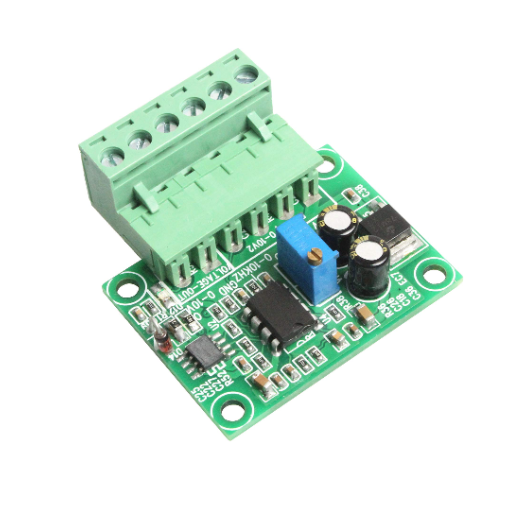
Often, frequency-to-voltage converters are ordinary mechanisms that are used to translate the frequency being received as an input into a voltage output that is proportional to it. Frequency-to-voltage converters work by establishing periodic signals and then effectively define a continuous DC voltage which directly represents the frequency of the input signal. In many real applications, including speed control, vibration monitoring, and signal processing, these are part of the systems that will involve frequent real-time convergence and often demand high precision. Typically, to function well, especially with different ranges of frequencies and input variations, frequency-to-voltage converters would need components such as timers, filters, and operational amplifiers for their efficient working.
Definition and Importance of Frequency-to-Voltage Converters
A frequency-to-voltage converter is an electronic device where the output is proportional to the input frequency (rate of signal) instead of signal voltage. This type of converter plays a key when we need to convert a frequency signal into an analog voltage while performing any operations including control or analysis. Frequency-to-voltage converters have seen great improvements recently because they include components that fit in today’s technology and which are capable of improving the sensitivity, accuracy and the general usefulness of these instruments in quite demanding situations.
Such devices are important in the industrial and automotive industries. They also play significant role in telecommunications. For example, in the case of industrial applications, they are used for the purpose of adjusting the speed of motors or conveyor belts by converting the different frequencies of electrical signals into voltage levels which reflect the operating mode of the equipment in the process. In addition, in automotive applications, frequency-to-voltage converters are used to monitor the vehicle’s rotational speed and engine fuel injection, ensuring that appropriate measures are taken swiftly and accurately.
Applications in Modern Electronics
1. Industrial Automation Systems
There is also a high demand and even wide use of Voltage to Frequency converters within the industrial sector as they are used to switch signals such as motor counters in these environments. Voltage to Frequency converters are used to process frequency data from encoders or tachometers and convert it into a form that is easily used by motor control designs or monitoring equipment in some extent of the situation.
2. Telecommunication Equipment
There is a particularly indispensable play of such converters in signal processing devices in use in telecommunications. This is best seen when such converters are employed in the translation of different rates of signal frequencies into their electrical equivalent for data representation purposes in modems and network devices to facilitate the communication of information whether it may be sending or receiving that information.
3. Medical Devices
The wide range of converters also finds frequency-to-voltage converter technology useful, for instance, embattled with ventilators and cardiac monitors in medical monitoring equipment to observe and interpret vital signs such as the frequency of heartbeats. They give accurate results within strict margins, which is essential in the context of medical treatment.
4. Automotive Systems
Frequency-to-voltage converters are not only used in speedometers and fuel injection systems but are also applied on anti-lock braking systems (ABS) and also engine control units (ECUs) to decipher sensor frecuen-cies and determine wheel speed or crankshaft position for easier, quicker, and safer vehicle operations.
5. Test and Measurement Equipment
The application of these frequency-to-voltage converters in oscilloscopes, spectrum analyzers, other medical diagnostic tools among others is clearly more efficient. They assist highly in properly conducting an experiment as well as in the process of finding faults.
6. Renewable Energy Systems
Their application on. This form of energy involves checking the speed of a wind turbine and / or instead monitoring the performance of a solar panel inverter. In such case, it is used to adjust power output to maximum efficiency from the given equipment by operating with constant frequency data.
Overview of Key Concepts: Frequency and Voltage
In electrical and electronic applications, frequency and voltage are two of the most essential parameters and they tend to be closely tied together in a number of different ways. Frequency is an identification of the number of oscillations within a period of time while the voltage is simply how electrically powerful a given circuit is. To any radio or television engineer, frequency is the number Hertz standard of one cycle or complete of the wave; whereas voltage is the potential that separates charges in a direction such as current which is measured in volts. The interaction between these two parameters is very important when considering system performance more so in power transmission and signal processing.
In certain electricity systems using alternating current, retention of constant system frequency is indispensable to make sure that the power is fully delivered and no failure of equipment takes place. Power swings and equipment damage could take place, if frequency were to be above or below the rated level. A somewhat similar relationship can be seen with the devices incorporated in voltage control loops. These devices contain such features as frequency-to-voltage converters which can react virtually immediately to alterations in frequency. This makes these devices optimum for control and monitoring applications.
Working Principle of Frequency to Voltage Conversion
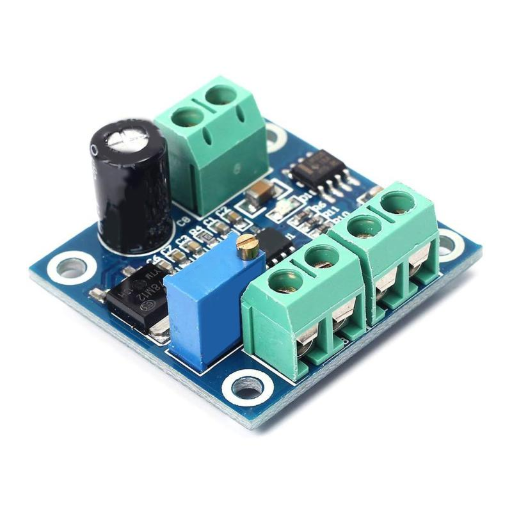
Translating frequency into voltage occurs when an input is transformed into voltage parallel to that frequency. In practical terms, it begins from the input signal, and after processing the input signal by an integrator or charge pump, it is generated. In this process, dependent on the input AC signal, the converter will estimate the frequency by measuring the cycles of the AC signal over a fixed period. The number of cycles that were measured in this manner is then converted into a voltage signal that corresponds to the frequency of the input itself. It is this voltage which is produced directly and scales with the frequency of the signal, which in turn ensures that there is a degree of repetition and many more accurate outputs.
Basic Mechanism of Conversion
The fundamental feature of operating with V/F conversion is designed to use the relationship between the frequency change of a variable and the charge that is gathered in the capacitance. Whenever a frequency signal is injected into the system, it develops a charging situation whereby every revolution makes a known amount of charge to be accumulated. The stored charge is then added up at each step and quantized to turn it into a continuous voltage. Optical testing facilities use a special speckle noise reduction where the samples are saved and filtered to perfect a test.
These systems use operational amplifiers and other components of high precision in most cases, so that linearity is enhanced and the relationship between frequency and voltage well kept, particularly in forward and reverse engineering, that of medical electronics, but not limited to the likes of audio signal processing and telecommunications systems. Moreover, advanced technologies such as digital compensation greatly enhance the accuracy of these devices by minimizing the errors that occur and allowing them to operate in the most strenuous conditions possible without achieving any sort of degradation in performance.
Understanding the Sine Wave Frequency
When using a value(s) as reference, what it basically means is the number of movements the ship does in terms of the duration of one second in a horizontal direction; this measurement is called the Sine Wave Frequency and counted in units of Henry (Hz). Thus, this very postulate and the “whole science” are crucial to fields such as communication theory, electronics, and signal processing. With enough experience and due to acquired knowledge, it is clear that the prettier the waves, the higher; therefore, the shorter the time period of that wave. When the period of the wave is shorter, its frequency and abilities are far greater.
When one works in an environment where perfection is the norm, accurate frequency estimation becomes concomitant with a need, for instance, if one is a broadcast engineer and the need to avoid interfering one radio with another arises. Even changes in the far future in technologies, e.g., improvements to frequency-shift keying, allow for the construction of means that more effectively take over the available electromagnetic spectrum. With the application of this progressive technology, it is reasonable to expect frequencies to improve even further, enabling greater efficiency in 5G, Satellite communications, and superlative naval systems.
Analog Voltage Output Generation
In making these analog voltage outputs, it is the translation of the digital signal to a continuous line of voltage which is frequently occurring to take place in a device like a digital–to–analog converter. This is a practice that is crucial partly due to helping digital technologies interact with analog systems and also brings with it such benefits as in audio processing or process control in the industry. An important concept is present within the analog output generation, versus, where granularity of the output voltage levels is determined and that is the resolution, and the rate at which samples are taken when they are converted which is called sampling rate, which can also impact the accuracy and speed of the conversion in the system.
Present-day versions frequently use very precise digital-to-analog converters (DACs) providers without noise DACs and works of 16-bit or higher resolution. Over and above this, most ADC are cascaded with integrable low pass filters to fix the signal. The filters’ internal functioning helps alleviate the signal from its periodic distortions, thereby bettering the output signal quality. Many companies have taken, rather uniquely, to use both new and existing choice, materials into the design and manufacture of signal filters.
Types of Frequency-to-Voltage Converter Circuits
1. Analog-Based Frequency-to-Voltage Converters
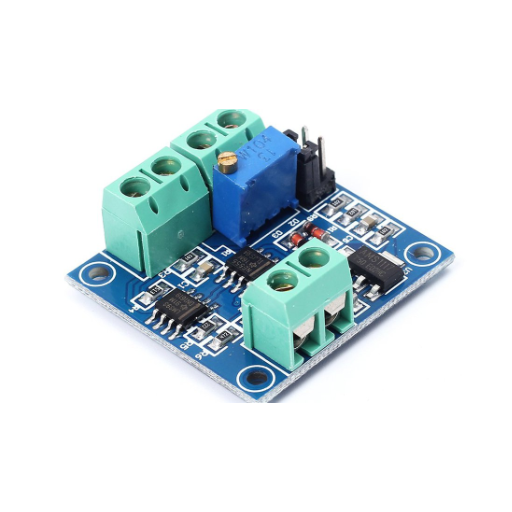
These circuits are designed in accordance with similar principles and are modified to suit the specific transmission medium and the type of signal being transmitted. These stages have some inherent advantages, primarily the simplicity of the system, the associated costs, and real-time capabilities. This makes the stereo generator ideal for systems that can easily handle elementary processing of functions and tasks.
2. Digital Frequency-to-Voltage Converters
Digital-to-analog converters divide microcontrollers and dedicated digital-to-analog processors that allow metering of input frequency and discharge of a rated digital-to-analog voltage. These systems provide high accuracy, programmability, and potential use in final assemblies created, for example, such as contemporary automation and application of digital signal processing in any way.
3. Phase-Locked Loop (PLL) Circuits
Because a reward translation is demanded over time, PLL techniques may necessitate translating the frequency to a voltage. This is achieved in a more direct fashion since a reduction in the frequency amplifies the error. These are more useful for applications that require better stability and performance under high-frequency conditions, like telecommunication and control applications.
Single Phase Frequency Converters
Single phase frequency converters become essential in systems where electrical power like voltage and frequency must be controlled with greatest accuracy. These are converters that read the input power signal and provide an output signal meeting the desired specs for other systems. Today’s designs also contain the system of power electronics, which involves insulated-gate bipolar transistors (IGBTs) and pulse width modulation (PWM) techniques. These measures are used to achieve better performance in the system, with higher productivity, smaller harmful overtones and good stabilization of the system in operation.
Single-phase frequency converters are utilized in various industries, such as aviation, industrial automation or renewables. Most notably, they are frequently used to modify equipment for certain power standards specific to a region and displayed in a frequency other than 60 Hz. More sophisticated products can nowadays even be found with smart sensors to give such services as instant self-checking of the app, or factory options to let it be used most effectively and comfortably from a distance. These developments have proven to be invaluable in robust and efficient power systems.
Three Phase Frequency Conversion
Three-phase frequency conversion commits to alteration of the electricity at one frequency level to another and is concerned with power line enhancement for larger industrial systems and demand-side applications. Utilising sophisticated power electronic utilities, including, but not limited to, insulated gate bipolar transistors (IGBTs), increases, on the one hand, its capacity of controlling the power flow at capacitors and lowers the power loss on the other. Modern three-phase frequency converters have more functional baskets of protective enclosures which provide cooling to achieve equal thermal performance of a variable frequency drive under varying load.
The heavy industries, such as aerospace engineering, metallurgy, and the renewable green energy sectors, are plagued with the problem of the three-phase frequency change because most of their equipment is designed to operate on different frequencies, e.g., 50Hz and 60 Hz. For instance, on the aircraft computer Avionics reservations, there is a 400 Hz power supply unit which uses such converters. Other areas where such systems are found useful include energy storage systems as well as wind farms where such three-phase frequency conversion is used to smooth the output and correct the phase imbalances, integrating with the grid norms.
Different Types of Frequency Converters
| Type of Frequency Converter | Key Points | Applications |
|---|---|---|
| Rotary Frequency Converters | Mechanically convert power frequencies | Industrial machinery, legacy systems |
| Static Frequency Converters | Solid-state power electronic systems | Aerospace, railways, offshore wind systems |
| Variable Frequency Drives (VFDs) | Adjust motor speed and torque | HVAC systems, industrial automation, pumps |
| Digital Frequency Converters | Microprocessor-based frequency adjustment | High-precision operations, testing equipment |
| Hybrid Frequency Converters | Combines rotary and static technologies | Specialized military and aviation needs |
| Regenerative Converters | Recover energy during deceleration phases | Elevators, cranes, renewable energy systems |
Practical Applications of Frequency-to-Voltage Conversion
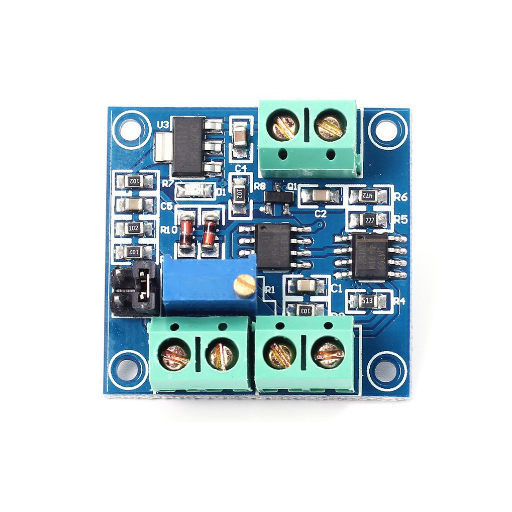
One of the main applications of the voltage-frequency converter is to facilitate the performance of frequency and feedback systems. In some cases, these converters are employed in speed control systems of motors where the purpose is to provide a voltage signal that is directly proportional to the changing frequency of the motor to ensure the motor operates effectively. But Frequency-to-Voltage Converters are designed to function not only in these closed-loop frequency feedback applications. In industrial automation applications, they are integral components for measuring the revolutions of rotating machines, when a frequency-to-voltage conversion method is used to make the tachometer or encoder data available for process control.
Instrumentation and measurement applications refer to the use of a frequency-to-voltage machine in a block diagram. This allows the best signal condition of the input signal with measurement characteristics, as at the output signal we achieve the corresponding signal. Additional applications include power generation and grid management activities with an emphasis on tracking frequency changes to coordinate grid operations and enhance its performance. The aforementioned applications are evidence of the ability of such circuits or solutions to help manage the manipulation or enhancement of various processes.
Use in Digital to Analog Converters
The frequency-to-voltage conversion is a vital aspect that broadens the functionality and accuracy of digital-to-analog converters (DACs). This method translates frequency signals into voltage ones and is thus able to connect operation of digital and analog circuits optimally. In modern designs of DAC, conversion of the frequency signal is converted to the voltage output for better precision and stabilization enhancement, mostly in the systems for acoustic, signal and image processing and industrial automation.
The development of modern converter devices has provided DACs with superior performance in critical usage scenarios as their accuracy is higher and the devices respond more quickly. One of the most immediate applications of these advances is in instruments with high precision, where too much noise and distortion are unacceptable. This is achieved by converting digital signals into stable voltages, utilizing the popular frequency-to-voltage converters, resulting in distortion- and noise-free measurements, as they do not introduce much noise. It gets the system design with its range to accept and cope with variation in input while preserving output quality over the stock level. This has long solidified the place of such semiconductor devices as a necessity in ordinary and professional electronic equipment.
Applications in Signal Processing
One crucial use of frequency to voltage conversion within the signal processing apparatus is data acquisition, especially in such industrial environments. These systems have to maintain high resolution and minimum system processing delays to accurately represent sensor data. Frequency-to-voltage converters are common in data acquisition systems, allowing frequency-based signals from tachometers or flow meters to achieve an interpretable voltage signal. The output converted to voltage is accurate enough to add onto analog-to-digital converters (ADCs) without creating a significant error when the signal is quantified.
To further optimize the quality of signals in communication systems, frequency-to-voltage converters is yet another component aimed at reducing errors and distortions in system operation. More so, with an emphasis placed on wireless communications, the fact that in most cases high frequency signals are impacted by phase noise and spurious emissions, as all this affects signal distortion. Transformation of the signals into voltages eases the burden in signal preparation and attenuation – thus the signal interpretation is more accurate. This is not just to put a guarantee on safety but also to improve built-in checking and correction processes meant for keeping the data persistently streaming along the complex network.
Impact on Measurement Systems
The process of frequency to voltage conversion system is essential, as it helps to improve the performance and usefulness of modern measurement systems. Such systems save time as they convert the data from frequency signals to the voltage drops and hence minimize the extent of errors in measurements. It is very important to point out that the process of this type is especially vital in such areas of concern as frequency drives, regulation of processes, and industrial automation systems, as the evaluation of any of the above systems tends to depend on highly elaborate frequency measures.
In addition, such functional diversity in these devices is ensured by the high reliability of the design through the use of advanced algorithms and precision circuitry for very high accuracy and delays in the course of signal processing. Equipped with these features, present frequency to voltage converters can handle smoothing of the input signal in a range from a few hertz to several kilohertz eliminating shelving filters regardless of the input. This delivers not only clear enhancement of real time system monitoring and diagnostics for assessment and calibration, but assured adaptation to all types of conditions and the enhancement of flexibility.
Challenges and Considerations in Frequency to Voltage Conversion
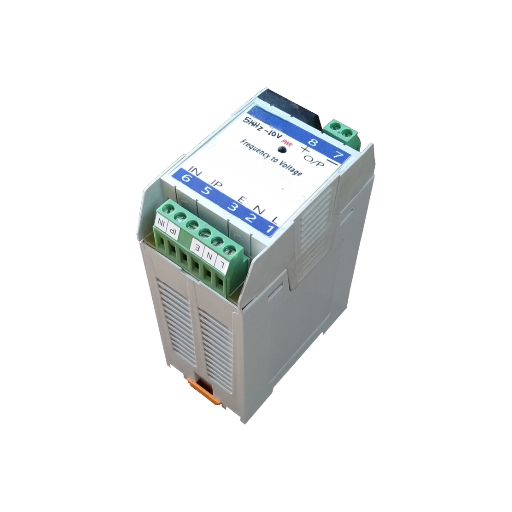
Efficient and effective conversion of hardware signals to an electrical measurement scale bringing in the light potential issues. This is predominant and the focus remains on the degradation of output and maintaining the normal levels of accuracy. It is paramount that precise signal conditioning, which includes filtering and regulation, be introduced in the design in order to reduce the errors as much as possible. A further disadvantage is the functioning upto optimum in fixing heating related sensitivity to the circuit at hand under the present environmental.
Response time is yet another important issue to take into account about the converter. Applications with a high processing demand cannot always achieve the trade-off between precision and speed without additional help. This is often the case, when it comes to the detailed selection of the subsystem components or employment of a hybrid solution instead. For one, it is essential to make the converter stick to the voltage and signal aspects of other system components, and moreover, the associated system or operational environment as a whole. These issues when addressed will improve the performance and durability of the system.
Frequency Range Limitations: 0Hz to 10kHz
The frequency band between 0 and 10 kHz is quite wide, hence covering various applications, specifically where there is audio processing, vibration monitoring, and low-frequency signal surveillance. However, there are several technical issues that must be resolved within this spectral range so as optimize the designs performance. For instance, in the case of the high frequency part, the signal is seen to be highly attenuated, caused by the capacitance due to the parasitic elements and the resistive losses of the circuit elements.
This is critical reasoning and is particularly true when it comes to low-frequency measurements that require very high resolution, as DC offsets and noise make it impossible to see very little signal changes near 0Hz. A case in point is that noise suppression and high precision circuit design will have to be used to dilute these confinements most effectively. Also, the relevant frequency segment will of course be contingent on the dynamic range of the application, considering the availability of enough margin for signal purity as opposed to saturation. Careful manipulation of these orientations, through advances in current engineering tactics, allows such systems conducting at this particular frequency level to ultimately achieve high levels of performance suitable for a variety of applications, except for heavy industrial applications.
Noise and Interference in High-Frequency Applications
Applications that function at a higher frequency naturally offer several drawbacks such as distortions and different kinds of noises, which could cause a decline in signal quality and deterioration of the system’s output. The main concerns are thermal noise in resistive elements, shot noise in active elements, and intermodulation distortion due to two or more frequency components nonlinearly interacting in components. Further, due to the effect of external Electromagnetic Interference (EMIs) which may come from other equipment or environmental factors such as the presence of power lines or harmonics and frequencies used over the air, there is an additional burden that needs to be handled.
In view of this, some advanced strategies are used by specialists to avoid these existing obsolescence problems. Shielding and grounding are techniques that protect components from the adverse effects of EMI. Improving the signal-to-noise ratio (SNR) demands the fabrication of low noise amplifiers (LNAs) of the highest quality so as to avoid exceptional noise figures internally and enhancing elimination of unwanted noise. Such filtering devices, including band-pass and low-pass filters, are designed to stop unwanted spectral components and associated harmonic distortions. The adaptation of algorithms that solve the problem of noise is necessary and spread spectrum techniques, such as frequency-hopping spread spectrum (FHSS), are used in modern systems to change frequencies dynamically in RFI scenarios.
Calibration and Accuracy Issues
Fundamentally, for the beneficial working of high-frequency structures, calibration and precision are core requisites. Whenever equipment is properly calibrated, for instance, it is well within the required limits to ensure that no deviations are able to affect the normal functional abilities of that machine. One of the major problems encountered is that of sensor drift, which is an issue mainly over a long duration of time caused by factors such as temperature variations, wear or tear or interferences from electromagnetic sources. These challenges have led to the development of sophisticated calibration approaches, such as online calibration, as well as error-correcting devices. Such a control technique consists of regulation and positional feed-forward pressure controllers, as well as other control elements for rate and position compensation control.
One more crucial consideration we should take into account is the measurement uncertainty which, to assess the performance of any system, should be evaluated with figures and facts. Comprehensive statistical modeling of various factors as well as tools used for analyzing uncertainty will give engineers a competitive edge in designing the system and improving the accuracy of predictions. Furthermore, there is a high degree of system integrity with regular calibrations in place, which requires meeting industry standards through practices and policies, such as those by NIST (National Institute of Standards and Technology). These measures will help to preserve the accuracy, and dependability of the high-frequency systems in increasingly more complex operating scenarios.
Reference Sources
1. Solid State Transformers: A Critical Review of Projects with Relevant Prototypes and Demonstrators
2. A Survey on Switching Oscillations in Power Converters
Frequently Asked Questions (FAQs)
What is a high-frequency to voltage converter, and how does it work?
When it comes to converting an input frequency into a DC voltage, a voltage to frequency (VFC) subsystem at the core, frequency to voltage (FVC) stage including several additional filtering sections and buffering are used for stability of the designed system. If the accuracy level or frequency range is not very strict, various additional stages that include a phase-locked loop (PLL) feedback network, a charge pump network, or, in some cases, a pulse counter can be employed. Often, such output will be additionally treated with an op-amp chip as well as an active rectifier, both of which are aimed at reducing noise and improving linearity.
What frequency range can a typical frequency-to-voltage converter handle?
The usable frequency changes due to topology. For operational frequency, PLL-based architectures can be used for a few cycles up to several megacycles, while the overstate frequency in designs can be higher with the application of pre-scaling. High frequency to voltage converters for reception of RF signals have to deal with high-frequency signal conditioning and comparators able to operate in the GHz range. Such pitfalls imply resolution, linearity, and settlement time drawbacks—expanding the high frequency regime often means reduction in resolution, unless more high-speed components/prescalers are employed.
Can a phase-locked loop be used as a high frequency to voltage converter?
Of course, a phase locked loop is a high converting device from frequency to voltage of a signal since the input and output signals are in the form of changes in the phase and frequency, respectively, which are fed through phase detectors, loop filters and charge pumps to transform them into corresponding control voltage. The device can track properly and is capable of giving almost perfect DC low-loss output if the conditions to be met in the loop design and compensation are within the guidelines. This is especially the case of assisting in frequency tracking or narrowband conversion, together with the use of buffering and active filtering.
What are common applications for high frequency to voltage converters?
Some of the primary applications of it include frequency monitors, tachos, RF level detectors, signal generators, frequency/angle may be converted to an event greater than a microcontroller, subsequently interfaced with a transmitter or receiver. They are usually employed in specific communication accessories, motor speed controls, and in the measurement of frequencies expressed in the form of direct current. Simultaneous frequency or tachometer measurements coupled with any other parameters are very useful and are used in different applications including control loops and measurements requiring linear dependence on frequency, where the design is simplified with the help of a VFC IC.
