
One of the most crucial needs of modern engineering and industrial automation is controlling AC motor speed. In sectors such as manufacturing and HVAC systems, precise motor speed regulation is the driving force behind development, enabling greater energy efficiency, reduced consumption, and improved operational performance. But how do engineers manage to do that? This post covers the technological methods, possibilities, and applications of AC motor speed control, providing a broad, in-depth guide to Variable Frequency Drives (VFDs), phase control methods, and more. It may be a seasoned engineer, a system designer, or only an individual curious to understand the motor operations’ mechanics – this post will give you an account of the basic methods and their respective practicalities, thereby increasing your motor performance optimization knowledge in any setting. Don’t miss out on the talk about the myriad tools and strategies that operate across industries worldwide.
Understanding AC Motor Speed Control
AC motor speed control primarily involves adjusting the frequency and voltage supplied to the motor, as these variables directly affect its rotational speed. The equation explains this connection:
Speed (RPM) = (Frequency × 120) / Number of Poles
After the frequency is changed, Variable Frequency Drives (VFDs) enable excellent speed control without sacrificing motor efficiency or performance. Also, VFDs use voltage to maintain proper torque across the different speeds of the motor. This control method is widely used because it is practical, scalable, and energy-saving; thus, it is the standard approach to energy-efficient manufacturing and HVAC systems.
Importance of Speed Control in AC Motors
The adjustment of the speed of alternating current motors is significant for industrial processes, the use of electric power, and the easy performance of tasks. The performance of electric motors can be tailored to the specific requirements of an application, thereby reducing energy consumption and mechanical stress. Centrifuges, such as pumps and fans, are examples of applications where power consumption scales with speed squared. Therefore, the energy savings could be significant even with a minimal decrease in speed. Moreover, the precision of the entire process is improved with the use of the conveyor line, resulting in better-quality products. Today, the use of sensorless vector control and a digital VFD that can monitor in real time has dramatically improved the way speed adjustments for AC motors are made. Furthermore, speed control ensures the equipment adjusts more easily, making the process not only more reliable but also requiring less energy, leading to an improvement in overall productivity.
Overview of AC and DC Motors
In many industrial and commercial sectors, AC (Alternating Current) and DC (Direct Current) motors are the primary power sources, each with its own unique operating principles and suited to different purposes. AC motors, the most common because of their sturdy construction and economy, require an alternating-current supply to generate a rotating magnetic field that rotates the rotor. They come in a wide variety of types, including synchronous and asynchronous (induction) motors, catering to many varied uses such as HVAC systems, pumps, conveyors, and compressors. New technologies like improved insulation materials and highly efficient designs have not only made them increasingly important but also reduced energy consumption and heat generation, whereas before they had significant heat and power generation issues.
However, DC motors, being powered by direct current, create a constant magnetic field that rotates the rotor. These motors are widely used for their reasonable speed control and high torque at low speeds, making them the preferred option for applications such as robotics, traction systems, and adjustable-speed systems. The brushless DC motor’s silver lining lies in the elimination of wear and maintenance problems typical of old-fashioned brushed designs, thanks to present-day technology, which brings extended operational life and high operational reliability. The use of the most advanced control technologies with both AC and DC motors, such as variable-frequency drives (VFDs) and programmable logic controllers (PLCs), will deliver the highest possible optimization and flexibility in the industry, resulting in energy-efficient, cost-effective solutions.
Key Terminology in Motor Speed Control
Variable Frequency Drive (VFD)
A VFD is a digital system that controls AC motor speed and torque by varying the input frequency and voltage. These are just three of the parameters in a VFD’s to-do list, but you can go much further than energy efficiency, mechanical wear, and motor operation.
Pulse Width Modulation (PWM)
This pulse length modulates the electric motor by providing the desired pulses of the right duration. Generally, pulse-width modulation ensures the motor’s speed and efficiency while minimizing losses.
Torque Ripple
This situation occurs during motor loading and unloading. If industrial equipment users encounter high power factors, they can perform power and torque analyses under overload conditions.
Feedback Control Systems
Feedback Control Systems use encoders or sensors to provide the user with real-time information about the motor’s speed and position. Feedback is what lets us have a closed-loop control system, which keeps the motor operating within its limits in the best possible way, minimizing the spread.
Slip (AC Motors)
Slip is the difference between the synchronous and actual rotor speeds of an AC induction motor, usually expressed as a percentage. Observing and optimizing slip are primary tasks of maintaining motor efficiency, especially in high-end applications.
Hysteresis Loss
The term hysteresis loss refers to the energy dissipated in the motor’s core material during alternating magnetization and demagnetization. High-performance motors with lower-hysteresis-loss materials are preferable for reduced heat generation and better overall performance.
Methods to Control Motor Speed
- Variable Frequency Drives (VFDs): One of the most popular ways to adjust the frequency of the power supplied to the motor is through VFDs. Through the application of this specific method, it has become the most widely recognized and highly reliable across all industries.
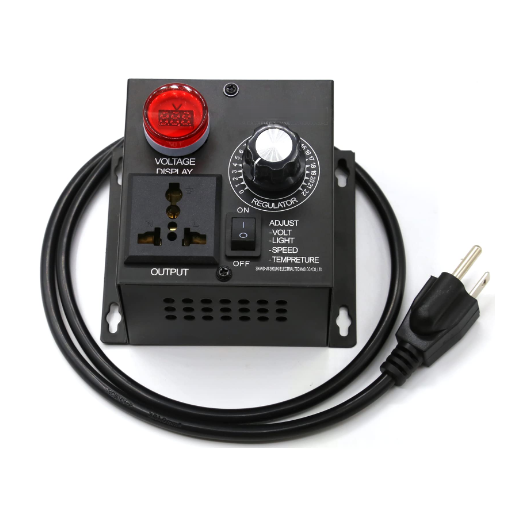
- Voltage Control: By adjusting the voltage supplied to the motor, the speed can be controlled to a degree and monitored closely. On the other hand, this system has a significant disadvantage: it consumes more power and thus produces more heat.
- Pole Changing: It is mainly the motor’s winding that determines how many times the poles go round the rotor. However, one can change the number of pole settings, enabling discrete speeds. This practice is mainly confined to fan or pump systems.
- Resistor Control: Adding additional resistors to the rotor circuit (for infrequently used induction motors) changes the speed as the resistance increases. This method is obsolete, inconsistent with modern energy-saving protocols, and applicable only to rare instances.
- Electromagnetic Clutches: This is one of the devices that provide speed control by mechanically coupling or decoupling the motor from the driven load. The approach is best suited to situations with intermittent changes in speed.
Variable Frequency Drives (VFDs)
Variable Frequency Drives (VFDs) are innovative electronic systems used to control the speed and torque of electric motors by altering the frequency and voltage of the power supply. Among the many advantages, the VFD method is not only highly efficient but also versatile, making it the dominant option where high motor-control accuracy is of utmost importance. The use of pulse width modulation (PWM) is essential for VFDs to achieve one of their primary purposes: converting a fixed electrical input power into a variable output power source, enabling smooth acceleration, deceleration, and precise speed adjustments. Another great benefit which the VFDs come with is that they help in saving energy by matching the motor speed to the load requirements, thus, reducing unnecessarily power consumption—most particularly in applications like HVAC systems and conveyor systems. Also, VFDs contribute to energy savings by providing a longer motor lifetime due to minimal mechanical stress during startup, achieved through controlled ramp-up mechanisms.
IoT connectivity, remote monitoring, and predictive maintenance capabilities are the latest innovations in VFD (Variable Frequency Drive) technology that enhance system reliability. In the same way, they open the door to integration with larger automation systems, which, in turn, facilitates workflow in the food-processing industry and other sectors. In addition to the technical pros, the use of VFDs is also synonymous with green-thinking moves, resulting in reduced total energy consumption and related costs.
Pole Changing Techniques
The speed and torque of induction motors are regulated by changing the number of poles in the motor’s stator windings. According to standard practice, pole changing is performed using a Dahlander connection, a method that switches the windings from series to parallel to achieve two-speed control, typically at a 2:1 ratio. This method is very suitable for operations requiring two different working conditions, such as putting in the case of pumps or fans.
The new developments not only introduced high-tech dual-winding motors but also electronically controlled pole switching, both of which are used in modern advancements. With dual-winding motors, you get two distinct windings explicitly designed for two different pole setting options. This creates room for flexibility through proper human programming and control methods. Also, connecting programmable logic controllers (PLCs) and variable frequency drives (VFDs) to the system delivers the highest levels of accuracy and the broadest spectrum of operations, thereby enabling a smooth, energy-efficient pole change procedure even when loads are very dynamic. The power grid is on and off all the time.
On another note, for practical use, the pole-changing methods are the saving grace for power users. Industries that are major consumers of power, like HVAC, influence the motor speed range in material handling and process automation, which require customized speed ranges; pole changing finds the perfect ally in these applications. As the intersection of knowledge between electrical and digital control technologies advances, engineers are witnessing the very boundaries where motor efficiency and versatility are redefined.
Voltage Control Methods
Voltage control is the key factor in adjusting the speed and torque of an induction motor, and it is the star of the show. Speed adjustments are made by changing the voltage supplied to the motor, and the motor is still allowed to operate within its design limits in a very steady manner. This method is highly efficient for applications in which reduced starting currents and more even acceleration curves are the primary requirements. The newest voltage-source inverters (VSIs) and pulse-width modulation (PWM) methods have made voltage control much more efficient and accurate.
To illustrate, the method of voltage control via PWM is an approach that drives the service voltage with modulating the duty cycle of the supply, ensuring the best possible performance by the least possible losses in the system and also obviously energy-saving; performance in the application of such methods in the areas of the most commonly integrated fields such as renewable energy systems, electric vehicles, and industrial robots where the accurate operation of the motor is a critical issue. On the other hand, the independent literature also points out that voltage control, together with real-time monitoring, is another area that warrants close attention, as it enables the motor to operate optimally when loading conditions change. This marriage will not only reduce the system’s wear and energy consumption but also maintain the whole system at a high level of efficiency where the motor is installed.
Common Applications of AC Motor Speed Control
AC motor speed control is a mechanism used across many industries to operate with high accuracy and efficiency. This technology has its main applications as follows:
Even if it sounds like it, through the use of speed control technology, those applications can make a huge difference, ensuring they operate at their best while also being more cost-effective and saving a lot of energy.
Industrial Applications
Manufacturing and Assembly Lines
The deployment of AC motors controlled by VFDs ensures gentle operation of conveyor systems and manipulators, providing precise speed and torque control and accommodating multiple runs simultaneously. And this is definitely the case in the automotive industry, where VFDs reportedly not only reduce power consumption by up to 30% but also ensure consistent output.
Material Handling and Logistics
ACs are widely used in cargo handling operations and are the primary power sources for cranes, hoists, and conveyor belt systems. These systems are not only able to operate at high speeds and handle heavy loads, but also increase efficiency by approximately 20%, primarily through the reduction of idle time and the optimization of handling processes, by using a speed control system for the automated warehouse setup.
HVAC Systems in Industrial Complexes
Industrial complexes’ floor plans are mainly served by HVAC systems composed of AC motors with variable speed, which are responsible for air quality and temperature control; thus, energy efficiency is always compromised. This is by far not the story in the case of factory-scale operations that have seen a 45% cut in power consumption, as the motors can be continuously adjusted to slower or faster speeds depending on actual demand.
Pumps and Compressors
The electric motors in pumping stations and compressor units are so controlled that the fluids or gases are delivered at precise rates to reduce wear and tear on components. The system not only guarantees the production of high-quality, accurate products but also offers energy savings of up to 25% and lower maintenance costs in the industrial sector.
Steel and Paper Mills
The same motors power rolling mills and paper-cutting machinery, and so is the motors’ production rate. Air-cooled drives do hard work in steel and paper mills, and many report productivity increases of up to 15%, making them the most commonly used in the world.
Textile Industry
The industry relies heavily on electric motors to drive spinning, weaving, and finishing equipment. As such, AC motors, which allow for consistent product quality and reduced power consumption, are not new. Improvements in motor technology have increased production yields by as much as 18%.
Commercial Applications
HVAC Systems
The use of advanced motor-driven systems is essential in heating, ventilation, and air conditioning (HVAC) applications. These systems are the key to making the best use of energy and climate control. It has also been found that the use of VFDs with HVAC systems can reduce power consumption by up to 35%, resulting in a remarkable reduction in operational costs and, at the same time, maintaining the desired environmental conditions.
Elevators and Escalators
With AC motors and advanced controllers, elevators and escalators operate smoothly and safely. Information points out that the latest elevator systems are not only faster to respond but also save power by almost 20% compared to older designs, thus cutting total costs and improving load efficiency.
Pumping Systems
The use of AC-motor-driven pumps is widespread across sectors such as water treatment, agriculture, and petrochemicals. Flow rates are optimized and downtime is reduced through the use of intelligent controllers, resulting in energy savings of up to 30% in some recent case studies of large operations.
Industrial Compressors
Compressors that employ advanced AC motor technology are much more reliable and efficient in refrigeration and pneumatic applications. It has been shown that there is almost a 25% increase in recyclable energy when VFDs are applied, and that the extension of equipment life due to decreased mechanical-scrum occurred simultaneously with the efficiency increase.
Transportation Systems
Electric train systems, as well as AC motor-run mass transit vehicles, have been in existence for more than a century to provide transportation. Nevertheless, due to the latest developments, energy efficiency improvements have been quoted at around 15%, which has been a pillar of the rising oil costs and the issue of environmental pressures not being addressed further.
Benefits of Effective Motor Speed Control
⚡ Energy Efficiency
In terms of energy efficiency, the significant consumption of energy was reduced by working with the most suitable speeds of the motors so that energy efficiency became a major factor. This could be a major plus for the company.
🔧 Extended Equipment Lifespan
Soft and controlled motor running means less mechanical stress on all parts, less service, and, consequently, longer life of the machines.
📈 Improved System Performance
100% control becomes possible despite the automation of speed, and therefore, the industrial operations will be run in the most economical way, which will finally lead to a higher-quality finished product.
💰 Cost Savings
If the production process and the service requirements always stay at their lowest level, the company will save a great deal of money.
Energy Efficiency and Cost Savings
The deployment of highly efficient energy technologies has led to significant reductions in power consumption across a variety of sectors. For example, the application of variable-frequency drives (VFDs) to motor-driven systems can reduce energy consumption by 30-50% under certain load conditions. It is estimated that the use of technology in such systems helps limit actual consumption of valuable energy; moreover, the system’s speed is the primary factor, and matching the equipment speed with the energy at that level is cumbersome. In addition, the energy management systems of today continuously monitor and automatically provide data on the plant, identifying and fixing inefficiencies to ensure energy regulatory compliance, minimizing operational costs, and reducing energy waste. Thus, the latest innovative technologies are, more than ever, the necessary prerequisite for eco-friendly, and therefore economical, economic conditions and economic scenarios to be sustainable.
Enhanced Performance and Reliability
Improving performance and reliability in contemporary systems requires adopting state-of-the-art technologies and strong engineering principles. The cutting-edge materials and designs of the components minimize the wear and tear on the systems. Preventive maintenance is implemented, and failure points are identified before they occur. Real-time data analytics functions as the mainstay of this system, as it promotes the system performance optimization and operational accuracy. Besides, machine learning algorithms are becoming so powerful that systems can adapt to changing conditions, thereby maintaining performance and operational accuracy. By the way, these and other technological improvements turn the system’s reliability and efficiency factors to the highest levels ever available in high-demand environments.
Improved System Flexibility
The enhanced flexibility of the system comes from the merging of the most advanced computational models with real-time data processing capabilities. To be more efficient in resource allocation, scheduled maintenance is minimized, and downtime is kept at the lowest levels possible while the systems leverage predictive analytics to maximize throughput. The presence of a modular architecture also allows for a quicker and easier response to all intents and purposes, the demand following, whether due to changes in the environment or the decision to add more usage. This systematic configuration of parts also ensures that new technologies are easily absorbed into the system, making it prepared for the future as well as for a very complex, ever-changing environment through its precision and robustness. Such advancements in interoperability and agility create a solid foundation for operations, which shall require continued excellence, however, in the face of highly dynamic environments.
Conclusion and Call to Action
To stay ahead in today’s fast-paced environment, it is crucial to adopt modular, scalable, and adaptable system designs. Hence, by selecting the best interoperability and future-proof strategy for the company, many operations could be made smoother and transitioning to the most advanced technologies could be achieved; in addition, organizations will be well positioned to face future challenges. We would like to draw the attention of those making the choices to review their existing systems for flexibility and robustness, and to explore the potential opportunities opened by the latest innovation to lead the way to a sustainable future and the achievement of long-term objectives. Why don’t you make the first move yourself on the road to operational excellence for your infrastructure and sustainable growth of your business, with the core of your strategy being the adaptive systems that they are?
Summary of Key Takeaways
✓ Operational Adaptation is Critical
To be able to cater to the agile market demands and to take the needed precautions against external challenges, modern enterprises must put at the heart of their operations the concepts of adaptability and resilience.
✓ Integration of Advanced Technologies
Applying the latest developments like AI-powered analytics, IoT systems, and cloud-based platforms is a must to make sure processes run smoothly, decision-making is improved, and operations are easily scaled.
✓ Data-Driven Strategies Drive Growth
Utilizing analytics insights from the full data range can assist in competitive advantage realization, and also facilitate prediction development that would be a pillar to the sector, keeping its position in the competition for sustainable growth.
✓ Sustainability as a Core Pillar
Sustainability in operations is not only a point that is being checked by regulators, but it is also a way to reach environmental and economic goals in a totally different process compared to the non-sustainable way of doing things.
✓ Proactive Assessment and Planning
Finding out the best ways to upgrade the system by checking it against recent developments regularly results in making the system future-proof and bringing the net outcome of changes to be noticed along the way.
Exploring Expert Consultation Options
Collaborating with highly professional consultants enables firms to receive customized advice and leverage top-notch techniques aligned with current industrial trends. These experts are good at very different things, such as improving operations and using data for advanced analytics. They are there to ensure that firms make the right decisions in highly competitive, unstable markets. Companies can gain the correct information, forecasts, and advice by receiving expert consultation in this way before dealing with the area where they will be ready to take advantage of market trends or manage the business risks. This can also be supported by comparisons of industry norms and the latest technologies, thereby contributing to the elaboration of decision processes, the stimulation of innovation, and the strengthening of the company’s positioning through the ability to predict and adapt to future market variations.
Comparison: Common Methods for Motor Speed Control
| Method | Description | Key Advantages | Key Limitations | Applications |
|---|---|---|---|---|
| Voltage Control | Adjusts input voltage to control speed. | Simple, cost-effective. | Limited torque control. | Fans, pumps, low-power applications. |
| Frequency Control | Modifies supply frequency to vary speed. | High efficiency, precise. | Requires VFD, costly. | HVAC systems, industrial drives. |
| Pulse Width Modulation (PWM) | Controls power delivery via duty cycles. | Accurate control is efficient. | Complex circuitry needed. | Servo motors, robotics. |
| Resistance Control | Various resistances in the motor circuit. | Easy to implement. | Inefficient heat generation. | Small DC motors, basic setups. |
| Field Flux Control | Adjusts the magnetic field strength in the motor. | Effective for a wide speed range. | Reduced stability at low speeds. | DC motors, traction systems. |
| Vector Control | Uses mathematical models for control. | Precise performance, dynamic. | Advanced, expensive technology. | High-end industrial applications. |
| Direct Torque Control (DTC) | Manipulates torque and flux directly. | Fast response, high accuracy. | Complex algorithms required. | Heavy-duty motors, precision tasks. |
Reference Sources
A comprehensive review of the multiphase motor drive topologies for high-power electric vehicle: Current status, research challenges, and future trends
Summary: This review focuses on multiphase motor drive systems, which are increasingly used in high-power applications like electric vehicles. It discusses the role of AC speed control systems in reducing startup currents and improving efficiency.
Speed control of AC Motor
Summary: This paper introduces a novel speed control procedure for single-phase AC induction motors, emphasizing automation and technological advancements.
Frequently Asked Questions (FAQs)
❓ What is a variable frequency drive (VFD) and how does it help in controlling the speed of an AC motor?
A variable-frequency drive (VFD) is a digital device that can control the speed and torque of an AC motor by varying the frequency and voltage supplied to it. The drive’s output frequency is the system’s mean output frequency. The change in frequency also changes the motor speed, which is controlled very accurately by the VFD. Consequently, it is possible to operate the motor at different speeds without the need to use any additional mechanical parts. This is highly advantageous in cases where saving energy and a high level of control are the most critical factors. The technology not only leads to more efficient systems when using a motor but also results in a significant reduction in the system’s energy consumption. The return on investment of VFDs is typically very rapid, depending on the field of application.
❓ How can I control the speed of a single-phase motor?
Clever methods have been developed to control the speed of a single-phase motor, including the use of speed controllers or variable-frequency drives (VFDs), especially in the single-phase case. An easy way to achieve the goal is to adjust the motor’s supply voltage, which can be done with a transformer or a resistor. Also, the motor speed can be controlled via a capacitor-start method that not only enhances starting torque but also allows for speed variability. There is also an option to insert a potentiometer into the circuit of some single-phase induction motors to control speed precisely.
❓ What are the benefits of using a motor controller for AC speed control?
Opting for a motor controller as a source of AC speed control comes with many positive aspects, including efficiency and operability. They are perfect tools for adjusting the motor’s running speed and thereby achieving optimal motor operation for the application. This is of great help in industries where operations are performed with varying loads that are not steady; hence, load is a prime factor in motor terminal power and efficiency. Combined with the features they bring to the motor, such as overload protection and soft start, motor controllers go a long way toward ensuring the motor is always in top form, and they are the sort of devices that go hand in hand with the motor.
❓ How does reducing the voltage affect the speed of an AC motor?
One way to reduce the speed of an AC motor is to reduce the voltage it is fed. However, doing so also affects the motor’s performance. The torque is reduced, making the motor less effective at handling the load. When a fan or pump requires a lower speed, the supply voltage will be reduced. Still, a too-steep voltage cut might cause the motor to overheat and not operate as it should. Therefore, switching to a different voltage source through transformers or resistors, enabling a more gradual reduction in voltage, will result in a win-win situation for both the desired speed and motor health.
Ready to Optimize Your Motor Control Systems?
Embark on the path of automated and optimized processes, saving money and increasing the productivity of your company. The effects of implementing the latest AC motor speed control solutions go beyond the improvements in power quality.
