
The need for efficient, versatile, and highly accurate motor control solutions has driven revolutionary change across industries worldwide. In the center of this change are inverter drives—excellent precision instruments designed to control the motor’s speed and torque more precisely than any other means. Inverter drives are the best choice for higher performance, cost reduction, or energy savings. They are, at the same time, changing the world of motor control and variable-speed applications. This report delves into the top-notch technological features of inverter drives, their significant benefits, and their crucial role in shaping the industrial automation of the future. Get ready to see the next big thing in the dynamic world of energy-efficient and innovative technology.
Understanding Inverter Drives
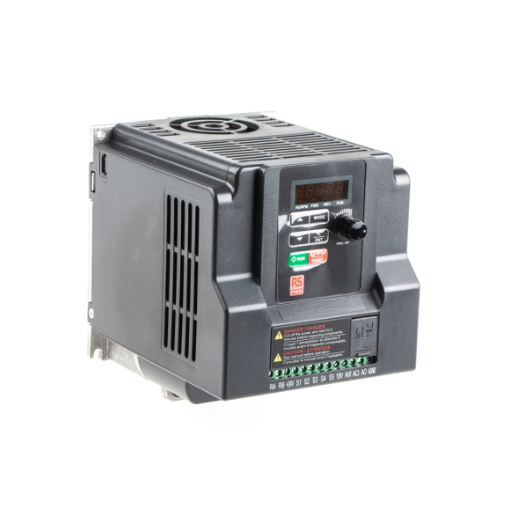
An inverter drive, or variable-frequency drive (VFD) in standard terms, is a device whereby the speed and torque of an electric motor are managed through the alternation of the frequency and the voltage of the power supplied to it. The first step is converting incoming AC power to DC using a rectifier. The DC power is then converted back to variable-frequency AC by the inverter. The motor speed regulation characteristic allows energy savings, reduced mechanical wear, and improved motor operation, both in industrial and commercial applications.
What is an Inverter Drive?
An inverter drive, also called a variable-frequency drive (VFD), is a device that regulates motor speed, torque, and direction by varying the power supply’s frequency and voltage. The main work consists of converting fixed-frequency AC to DC using a rectifier, and then converting the DC back to AC using an inverter with a variable frequency. Hence, precise control of motor performance, coordinated with the required load conditions, is possible.
To achieve extremely high energy efficiency and operational precision simultaneously, contemporary inverter drives incorporate cutting-edge electronics and software algorithms. The field of operation is quite broad, from the manufacturing industry to HVAC systems and renewable energy, where motor control via frequency converters should be almost perfect. This is to cut energy consumption to the lowest possible level, minimize wear, and improve reliability. Some high-end inverter drives come with regenerative braking, fault diagnostics, and network connectivity, making them suitable for real-time monitoring and system integration. The use of inverter drives has emerged as an essential element in achieving both efficient and sustainable industrial operations.
Components of an Inverter Drive
How Inverter Drives Work
The operation of inverter drives is based on the principle of transforming a fixed-frequency AC power source into a variable-frequency AC output. This is accomplished through the power conversion stage, which consists of a rectification process to obtain DC voltage from the AC source using a rectifier circuit. In the next phase, the DC voltage is further processed by the capacitors, ensuring a stable input power supply for the following stages of the system. After the DC voltage stabilizes, the inverter produces a pulse-width-modulated (PWM) AC signal using insulated-gate bipolar transistors (IGBTs) or the like. The inverter drive can control the AC motor speed and torque by varying the frequency and amplitude of the PWM signal. Consequently, drives nowadays use refined algorithms to boost efficiency, reduce harmonic distortion in the load, and maintain a steady torque output.
The system incorporates feedback sensors that continuously monitor the state of the motors, the current they draw, and the voltage level. This monitoring process is key to making changes at the right time, so the system operates more accurately and, at the same time, safeguards the elements from operational faux pas. Furthermore, the system’s communication interfaces can easily connect to industrial automation networks, enabling data exchange and remote monitoring. By reducing energy consumption and improving process control, inverters drive significant energy management savings across industrial, commercial, and residential operations. These developed technologies are keeping system performance, operational reliability, and cost savings at a high level.
Variable Frequency Drives (VFD)
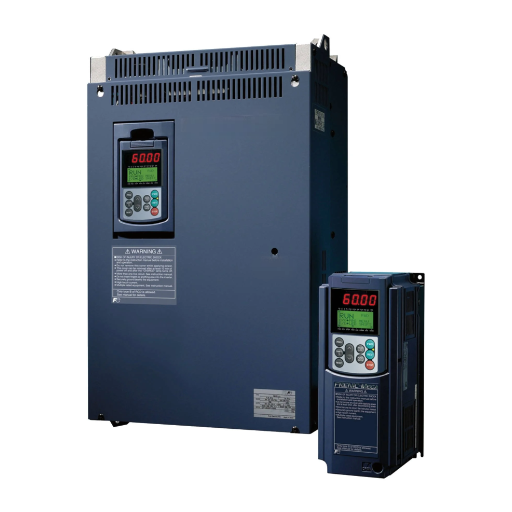
Variable Frequency Drives (VFDs) function by varying motor speed to meet an application’s specific needs, rather than the common practice of operating at full speed all the time, which in turn helps save energy. The VFDs can significantly reduce energy consumption by adjusting the frequency and voltage supplied to the motor, especially for variable loads such as pumps, fans, and compressors. This active control limits waste, improves system efficiency, and synchronizes energy demand with the system, thereby saving substantial costs and reducing environmental impact.
Definition and Functionality of VFDs
A Variable Frequency Drive (VFD) works by changing the Alternating Current (AC) generated at a constant frequency to an AC output with variable frequency and voltage, thereby enabling motor speed control with great accuracy. In broad terms, the whole process occupies three stages: rectification, DC Bus filtering, and inversion. At the rectification stage, the AC input is instantly converted to direct current (DC) using a rectifier. The DC BUS then stabilizes the signal by smoothing it before it reaches the inverter stage, where the DC is converted back to a variable AC output.
VFDs are capable of more than just speed control; they also provide a soft start by gradually increasing voltage and frequency, thereby reducing mechanical stress and extending equipment lifetime. Advanced VFDs have integrated controllers with programming, communication, and monitoring functions. Therefore, they facilitate the operational efficiency and the full integration of the system with industry automation. The VFDs contribute to the industrial processes by reducing energy consumption. The lifespan of the equipment is also increased not only when the VFDs are installed and set up correctly, but also when the power is switched off.
Benefits of Using Variable Frequency Drives
Energy Efficiency
VFDs, or Variable Frequency Drives, are energy-efficient by default because they operate on the principle of electric motor control based on demand for speed and torque. In the case of VFDs powered by traction or pump motors, energy consumption can be reduced significantly, up to 50% in some cases. Moreover, the energy savings from fans and pumps operating on VFDs are considerable at low speeds and, hence, with lower power outputs than at full capacity.
Enhanced Process Control
VFDs enable accurate motor speed and torque control, reducing reliance on mechanical systems. The result is a decrease in process variation and a guarantee of product reliability. One of the benefits is that, in conveyor belt systems, changes in velocity facilitated by VFDs cause no sudden jerks, thus reducing product damage and wear and tear on mechanical parts.
Reduction in Mechanical Stress
VFDs support by gradually increasing motor speed to avoid sharp torque jumps, which are normal during ignition. The “soft start” process plays a significant role in alleviating motor stresses, such as those on shafts, bearings, and gears. In this way, the equipment failure rates are conspicuously low while the life of the main assets is relatively longer.
Lower Maintenance Costs
Mechanical equipment, worn out by repetitive stress, can be minimized, and a cost-effective solution using VFDs can be achieved as technology shifts toward computer-controlled equipment in the latest VFD motor control installation. It has been proven that machinery with VFDs requires less frequent maintenance, with a possible reduction of up to 30% compared to the conventional method.
Improved Power Factor
The quality of the power supplied to the VFD also plays a significant role in the motor’s life. Improved power quality, which goes hand in hand with VFDs, will also prolong the motor’s life by minimizing voltage transients at the motor terminals, internal cables, and the motor itself. Moreover, VFDs are intelligent enough to reduce power in nearly all places.
Reduced Downtime
VFDs ensure mechanical breakdowns do not occur without warning and provide integrated diagnostics; thus, the user can determine the problem before it happens. Such strategies based on forecasts rather than reaction inevitably help reduce the time the machinery is out of service and, consequently, improve the reliability of the machines as a whole.
Applications of VFDs in Industry
Industrial Manufacturing
VFDs are an excellent tool for manufacturers, as they help efficiently control pumps, fans, and other machinery. Besides, by controlling the motor speed on conveyor belts, it is possible to accurately control operating time and save up to 30% on energy costs, according to various studies on energy management.
HVAC Systems
Heating, Ventilation, and Air Conditioning (HVAC) systems are essential to large buildings. They rely on VFDs for controlling both airflow and temperature. Thus, by cutting the speed of compressors and fans, VFDs cut energy demand and waste by around 50% as per US Department of Energy data.
Water and Wastewater Treatment
The use of VFDs inside the waterworks industry has not stopped at pumps and blowers. Almost all treatment plants today benefit from these drives, as they enable water to be treated at the highest process efficiency. Several water pumping systems with VFDs have reported savings of 20-50%.
Oil and Gas
The oil and gas industry views VFDs as components of drilling rigs, pumps, and compressors. VFDs are not just a technical improvement but a revolution that makes operations more flexible and eliminates unnecessary downtime, even in the most challenging conditions, such as offshore drilling. By providing accurate torque and speed control, they help reduce energy costs and, in the long run, create a safer work environment.
Mining and Minerals Processing
Mineral extraction processes are enabled by VFDs on equipment such as mills, conveyor belts, and crushers. The assured start and stop of VFDs, reduced mechanical stress, and the improved energy efficiency of motors through VFDs, up to 60% of energy use, support the described roles in mining.
Power Generation
VFDs are even part of power generation industry systems, installed in components such as cooling fans, boiler feed pumps, and air compressors. The ability to change speed in this way will significantly reduce power consumption and prolong the life of the plant’s critical components.
Torque Control in Inverter Drives
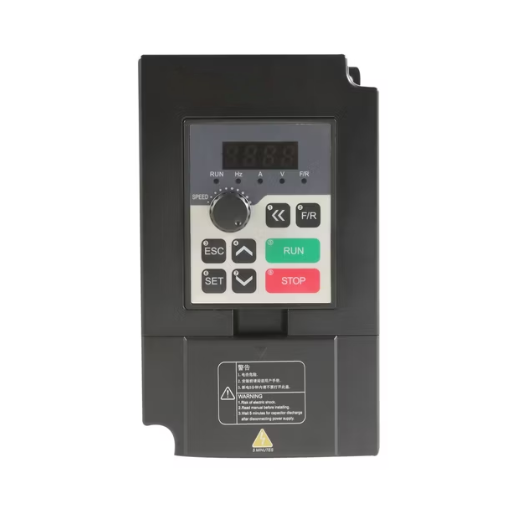
Inverter drives control torque through accurate regulation of the motor’s magnetic flux and current. Nowadays, vector control and direct torque control (DTC) are widely used methods in inverter drives for high-precision torque management. The vector control method separates the motor’s torque and flux components, then independently adjusts them to maintain the desired performance. In contrast, the DTC method directly controls torque and flux; thus, no coordinate transformation is required, which makes the process faster, more responsive, and more efficient overall for dynamic applications. Both methods serve the purposes of supply of torque continuously along with varying load conditions; and that is why it will be a very great help to the industrialists who work in the realms of industry where the conditions are complex and yet several workers have to provide the bulk of the productivity which is usually required if the workers in the industry were to be placed in a high-tech unit.
Understanding Torque and Speed Control
The most recent technology for controlling torques and speeds in the industry leverages top-notch algorithms and precisely manufactured electronic devices to deliver extraordinary results in motor equipment. These systems gather information in real time and use it to make continuous changes. For one, Model Predictive Control (MPC) is increasingly the method of choice, as it handles system constraints and tunes the system simultaneously to achieve the best possible performance, such as high efficiency, better stability, and rapid response times.
On top of that, sensorless control methods are now offering significant improvements by eliminating the need for physical speed or position sensors and using mathematical estimations based on motor parameters, which are more reliable. Using these methods, the system complexity is reported to decrease, reliability is increased, and costs are reduced, making the sensor a preferred speed control technique in fragile conditions. The additional development of semiconductor technology and the use of wide-bandgap materials will further improve the efficiency and precision of the torque and speed controller systems. These factors together enable the systems to switch faster and lose less energy, especially in harsh industrial and automation environments.
Methods of Torque Control
Methods for controlling torque may be distinguished by the purpose they serve and the technology on which they are based. Two of the primary techniques used everywhere are open-loop and closed-loop control systems. Open-loop control relies on fixed input data to control torque delivery; thus, it is simpler and more affordable, but less precise because there is no feedback loop. In contrast, closed-loop control uses sensors for real-time supervision and correction of torque, providing better accuracy and dynamics, especially in high-performance operating ranges.
Another sophisticated approach is field-oriented control (FOC), which applies mathematical transformations to separate torque and flux control in the motor. This technology will help regulate motor behavior more precisely and effectively, and, as a result, improve the performance of motor-controlled processes such as variable-speed drives and robotics. By the same token, the direct torque control (DTC) can shift flux and torque through the stator without modulating the pulse-width signals. This reduces computational complexity while maintaining a quick, accurate response to torque, making the system suitable for industrial applications.
New approaches like predictive torque control are becoming increasingly prominent because they can predict and adjust motor behavior using advanced algorithms. These techniques provide an efficient way to optimize switching states and reduce energy losses, resulting in more energy-efficient systems that are currently in high demand. Artificial intelligence and machine learning technologies working together are contributing to torque control becoming increasingly adaptive, i.e., it can learn and autonomously improve its performance in real time. This, in turn, is pushing the boundary of performance further for modern torque control systems.
Importance of Torque Control in Motor Performance
Torque control is an essential part of motor performance and directly affects efficiency, lifetime, and working stability. By providing the correct torque output, the systems can save energy and produce less heat and waste. In exact applications such as robotics, electric cars, and the like, one must employ advanced torque control systems that meet market requirements. Applying advanced torque control algorithms in the first place will deliver immediate benefits for the electric vehicle, including quieter acceleration, longer battery life, and reduced mechanical wear, all of which have a direct effect on the vehicle’s total reliability. Also, the recent process-control system modifications, namely the integration of model-based predictive control and computer-aided design systems, have reduced overshoot and response times by a substantial margin, ultimately resulting in enhanced dynamic behavior. These enhancements make torque control the key factor in the overall functionality and versatility of the current motors for different user groups.
ABB and Other Leading Drive Solutions
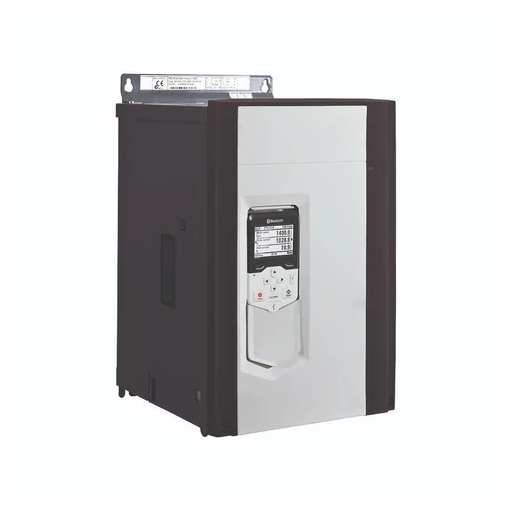
ABB is well-known for its drive solutions worldwide, offering a range of variable-speed drives that help improve energy efficiency, operational performance, and maintenance. Applications include manufacturing, oil and gas, utilities, and transportation that require drives, and they use ABB drives to do the job. The latter is the best because their drives are easy to use, durable, and can be easily integrated into existing systems. The other players in the market, including Siemens, Schneider Electric, and Rockwell Automation, among others, cater not only to general but also to industry-specific demands, thereby contributing to the energy-saving, rightful use.
Overview of ABB Inverter Drives
State-of-the-art technology is what ABB inverter drives are equipped with to deliver high energy efficiency, accuracy, and performance across various applications. The drives are intelligent because they employ various motor control methodologies, including direct torque control (DTC), which enables very accurate, smooth operation even in the most challenging environments. Moreover, the key feature of their modular design is its quick, easy installation, customization, and scalability, making them the perfect match for diverse operational demands.
Moreover, ABB inverter drives are also designed smartly in terms of connectivity and product compatibility. They come with the highest level of support for industrial communication protocols, such as Ethernet/IP, Modbus TCP, and others. As a result, an integration-free remote monitoring system can be set up, which will, at the same time, enable diagnostics and predictive maintenance and reduce overall downtime. Their energy-optimization algorithms lead to a significant reduction in energy consumption while meeting global sustainability objectives.
ABB inverter drives come in various configurations to meet a wide range of applications, from low- to medium-voltage systems, and provide motors with high reliability and extended lifespans. They are also very safe due to security features such as Safe Torque Off (STO) and Safe Stop. ABB therefore offers not only drives but also interfaces and digital tools that are both user-friendly and highly efficient. Consequently, industry users will find applications in HVAC, food and beverage, mining, and water treatment even more paperless and just a couple of mouse clicks away with ABB’s digital support.
Comparative Analysis of Drive Solutions
High Performance and Efficiency in Electric Motors
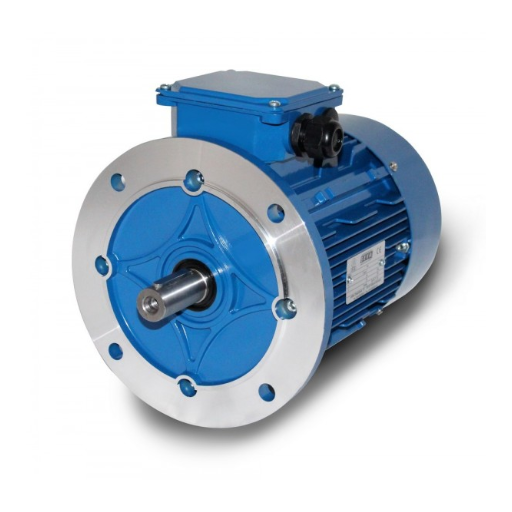
The advanced human design principles and technologies being put in electric motors are the ultimate source of both their performance and efficiency. The most important factors are the rotor and stator designs, which are optimized, energy losses are reduced through material improvements, and precision engineering is used to minimize friction as much as possible. Certification by the established global organizations, IEC, ISO, and UL, is also in terms of reliability and sustainability. In addition, being connected is another boost from digital monitoring systems and other technologies supportive of IoT and cloud analytics, such as remote diagnostics and more. Such a motor that meets the requirements of the new era will then be of significant service to industrial and other sectors, and energy conservation will be a by-product.
Defining High Performance in AC Motors
High-performance AC motors are those that offer better efficiency, reliability, and durability due to the different operating conditions they are designed for. Usually, the motor’s efficiency is greater than the requirements set by regulations such as the National Electric Manufacturers Association (NEMA) Premium Efficiency guidelines or the IEC standards; under these standards, motors are classified as IE3 and IE4. The most significant aspect of high-performance motors is their design; they feature advanced rotor and stator geometry optimization, high-quality copper windings, and low-loss materials that reduce energy dissipation.
Besides, high-performance AC motors usually use Variable Frequency Drives (VFDs) for accurate speed and torque control. This system makes them easily adaptive to dynamic load demands and, at the same time, minimizes energy consumption. The previously mentioned innovations in sensorless vector control and integrated temperature monitoring have also significantly contributed to their operational stability and lifespan. Such AC motors are now essential for the mentioned fields and others that use them, saving a lot of energy and reducing costs.
Improving Efficiency with Inverter Drives
The combination of inverter drives and AC motors represents a significant step forward in energy savings and system performance. By dynamically controlling motor speed and torque to meet system needs, inverter drives can eliminate many energy losses found in fixed-speed systems. For example, inverter drives can achieve energy savings of 30% to 50% in variable-load applications such as pumps or fans, depending on load variability and system configuration. This is done by setting the voltage and frequency at the motor to the exact values required by the current’s operating conditions to produce just the right power.
One can see that, after vehicles, the control of industrial drive systems would benefit most from predictive maintenance, as it provides self-diagnostic and troubleshooting capabilities. This will significantly reduce downtime and maintenance costs, while also making it easier to manage work orders. These practically tel-Command of the maintenance department by the control system, turning the process of parts replacement and debugging into physically locating the fault in a consumer-service approach, thus making the maintenance service sub-system more user-friendly and client-oriented. The plant operator himself could check whether the fault had already been located and, if not, reach the service engineer directly via a direct line.
Reference Sources
A Data-Based Review of Battery Electric Vehicle and Traction Inverter Trends
Summary: This study analyzes advancements in battery electric vehicles (BEVs) and traction inverters from 2010 to 2025. It highlights the efficiency and cost-saving potential of partial-load optimized multi-level inverters (MLIs) for future BEVs.
A New High-Performance Multisource Inverter: Design, Control, and Implementation
Summary: This dissertation introduces a high-performance multisource inverter designed to enhance traction inverter performance. It explores the integration of multilevel and multisource inverter technologies to improve efficiency and reliability in traction applications.
Frequently Asked Questions (FAQs)
What is a variable frequency drive, and how does it work?
A variable frequency drive (VFD) is an electronic device that allows an electric motor’s speed and torque to be controlled by varying its frequency and voltage, respectively, with power supplied to the motor. With the frequency variable, the VFD allows exact control of the motor, enabling applications such as acceleration and deceleration. This technology is more convenient in industrial sectors where energy savings are of paramount importance, since it can make a significant difference by reducing the amount of electrical energy used. VFDs are among the most widely used solutions for drive systems because they can be used with a variety of motor types, including induction motors. Moreover, automation tasks can be carried out using programmable logic controllers (PLCs).
How do inverter drives improve speed and torque control?
Inverter drives influence speed and torque control by allowing the motor’s operational parameters to be changed in real time. To accomplish this, the practitioner must adjust the frequency and voltage. This process enables the electric motor to develop and operate under the best conditions. Inverter drives with torque-control features can work very effectively with different loads. This quality is of immense advantage in elevator and extruder applications. Moreover, this quality means the motor and drive suffer less from operating conditions — this is achieved through gradual speed, resulting in minimal torque heating and no “sudden death” of windings. Besides, it allows the system to work efficiently.
What are the benefits of using ABB inverter drives in industrial applications?
The ABB inverter drives have a reputation for being the top-performing and most dependable drives in the industry across different industries and applications. They come with the perk of being energy-efficient, a spot-on motor control, and settings that can be configured to suit operational requirements. Apart from these, ABB drives also feature cutting-edge communication functions, which pose significant challenges for system integrators. On top of that, the most efficient and reliable solutions are in place with medium-voltage drives, which are a must for industries with high power demands from different kinds of heavy machinery. Hence, enterprises opting for ABB inverter drives will be able to achieve the highest operational efficiency and save on energy costs.
How can adjustable speed drives contribute to energy savings?
Adjustable-speed drives (ASDs) are among the most energy-saving technologies, enabling variable-speed operation of motors in accordance with the load demand of the equipment being driven. In other words, motors can avoid running at full power all the time and instead use just enough energy for the application by adjusting their power estimates. It is possible to achieve much greater savings through ASDs by enabling motor frequency adjustment, thereby increasing the amount saved, especially in applications with load swings. What is more, ASDs can operate automatically and play a role in energy management and, thereby, cost reduction, demonstrating their effectiveness across other parts of the operation as well.
