
Medium voltage motor starting methods include direct on-line (DOL), reduced-voltage electromechanical (autotransformer, reactor, resistance), electronic soft starting, and variable frequency drives (VFD). The best method depends on grid stiffness, load torque characteristic, starting duty, speed control needs, and budget.
In 2019, a water treatment plant in the Middle East commissioned four 1,500 kW raw water pumps with DOL starting to save on upfront costs. During the first start, the inrush current depressed system voltage by 22%. The plant SCADA system tripped. Contactors on three other running motors dropped out. The engineers had to install a dedicated diesel generator just for pump starting at a cost of 180,000.A180,000.A75,000 medium voltage soft starter would have prevented the entire problem.
You already know that starting a large motor is not as simple as flipping a contactor. The method you choose affects voltage stability, mechanical stress, protection coordination, and total project cost. Pick the wrong one and you’ll face either equipment damage from excessive inrush or budget overruns from unnecessary sophistication.
This guide gives you a practical selection framework. You’ll learn how each starting method works, when to use it, what it costs, and how to avoid the mistakes that cost engineers their weekends and their companies serious money. We will cover voltage dip calculations, NEMA starting duty limits, and a five-criterion decision tree you can apply on your next project.
For the full system-level context on motor protection and control, see our complete guide to medium voltage motor protection and control.
Key Takeaways
- DOL is only suitable for motors below 500 kW on stiff grids; inrush reaches 5-7 times full-load current
- MV soft starters limit inrush to 3-4 times FLC and typically cost 50,000to50,000to200,000 depending on voltage and power rating
- VFDs provide the most controlled start at 1-1.5 times FLC but cost 3 to 7 times more than a soft starter
- Voltage dip at motor terminals must not exceed 20% (80% retained voltage) per EPRI guidelines for large MV motors
- NEMA MG1 limits large MV motors to 2 cold starts or 1 hot start, with 35 to 90 minutes required between starts
- The selection decision tree uses five criteria: grid stiffness, load torque, duty cycle, speed control needs, and budget
Prerequisites: Data You Need Before Selecting a Starting Method
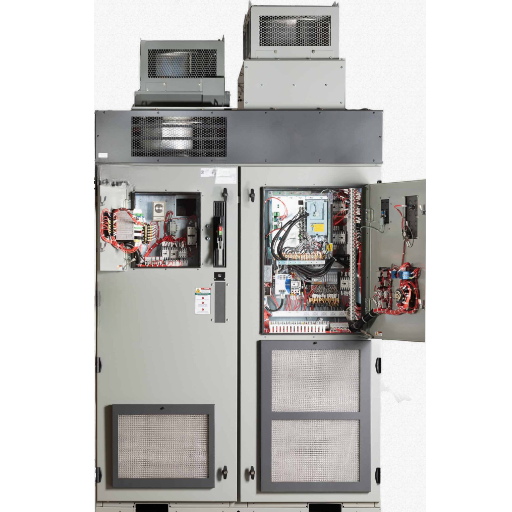
Before you can choose a starting method, you need four categories of data. Missing any one of them leads to either oversizing, undersizing, or complete misapplication.
Motor Nameplate Data
Collect the rated power, voltage, full-load current, locked rotor current, locked rotor torque, NEMA code letter, and service factor. The code letter tells you the locked rotor kVA per horsepower, which directly impacts your voltage dip calculation. A Code G motor draws 5.6 to 6.3 kVA per HP. That translates to roughly 6 times full-load current at full voltage.
System Data
You need the available short-circuit capacity at the motor bus, the source impedance, and the transformer rating. These determine how much voltage dip the system will tolerate during starting. A 1,000 HP motor on a 10 MVA transformer causes a much larger dip than the same motor on a 50 MVA transformer.
Load Characteristics
Document the load inertia (WK2), the load torque versus speed curve, and the required acceleration time. High-inertia loads like large fans and SAG mills need longer acceleration times. If your starting method cannot deliver enough torque throughout the acceleration period, the motor stalls and overheats.
Starting Duty Requirements
Determine how many starts per hour the application demands. NEMA MG1 defines starting duty for large motors as 2 cold starts or 1 hot start, with intervals of 35 to 90 minutes between attempts depending on motor size. Frequent starting changes the economics. A motor that starts twenty times per day justifies a higher investment in controlled starting than one that starts twice per week.
Want to see how protection requirements interact with starting method selection? Review our guide to motor protection relay settings for coordination strategies that work with each starting approach.
Method 1: Direct On-Line (DOL) Startinghttps://markdowntoword.io/blog/motor-protection-relay-settings-guide/
DOL starting connects the motor directly to the supply at full voltage through a contactor or circuit breaker. It is the simplest, most reliable, and least expensive method. It is also the most brutal.
How DOL Works
The controller closes a single set of contacts. Full voltage appears across the motor terminals instantly. The motor draws locked rotor current, typically 5 to 7 times full-load current, and produces starting torque of 1.5 to 2.5 times full-load torque. If the supply is strong and the load is forgiving, the motor accelerates to full speed in a few seconds.
Inrush Current and Voltage Dip
The inrush current is the primary concern. On a weak system, a 2,000 kW motor starting DOL can depress bus voltage by 15% to 25%. EPRI guideline 1011892 specifies that large MV motors must start their load with at least 80% retained voltage at the motor terminals. NEMA MG1 requires successful starting at 90% rated voltage. ANSI C50.41 for power plant motors sets the limit at 85%.
When DOL Is Acceptable
DOL works when the motor is small relative to the supply capacity, the mechanical load tolerates sudden torque application, and voltage dip limits are not strict. General industry practice limits DOL to motors below approximately 500 kW or to systems where the motor starting kVA is less than 10% of the transformer kVA.
When DOL Fails
DOL fails on weak grids, with sensitive loads on the same bus, with high-inertia equipment, or where mechanical shock damages couplings and bearings. Conveyor belts slip. Pump shafts twist. Gear teeth chip. The sudden torque transient often causes more mechanical damage than the electrical stress.
Worked Example: Voltage Dip Calculation
Consider a 1,000 HP, 6.6 kV motor with a full-load current of 82 A and locked rotor current of 6 times FLA (492 A). The motor is fed from a 10 MVA transformer with 6% impedance. The source fault level is 200 MVA.
Using the per-unit method, the motor locked rotor kVA is approximately 5,600 kVA. The voltage dip at the transformer secondary is roughly:
Voltage dip (%) = (Motor starting kVA) / (Motor starting kVA + Transformer kVA / %Z) x 100
Voltage dip ≈ 5,600 / (5,600 + 10,000 / 0.06) ≈ 3.2%
At the motor terminals, accounting for cable impedance, the dip is approximately 8%. This is acceptable. But if the transformer were only 5 MVA, the dip would exceed 15%. That is when you need a reduced-voltage method.
Method 2: Reduced-Voltage Electromechanical Starting
Before solid-state electronics became cost-effective, engineers used electromechanical methods to reduce starting voltage. These methods still appear in older plants and budget-conscious projects.
Autotransformer Starting (Korndorfer)
An autotransformer starter applies reduced voltage to the motor through transformer taps, typically 50%, 65%, or 80%. The motor draws reduced current and produces reduced torque proportional to the square of the voltage. At 65% tap, the motor draws 65% of locked rotor current and produces 42% of locked rotor torque.
The Korndorfer method uses a closed transition. The transformer is disconnected after the motor accelerates, but the motor remains connected to an intermediate tap during transition. This avoids the open-circuit transient that occurs with simple open-transition designs.
Primary Resistance Starting
Resistors are inserted in series with the stator. As the motor accelerates and current drops, the resistors are bypassed in steps. This method provides closed transition and smooth acceleration. But resistors generate heat and require physical space. They are rarely used in new MV installations.
Reactor Starting
A reactor is similar to resistance starting but uses inductors instead of resistors. It provides a fixed percentage reduction in voltage. The advantage is no resistive heat losses. The disadvantage is a larger physical footprint and less flexibility than autotransformer tapping.
Open vs. Closed Transition
Open transition means the motor is momentarily disconnected from the supply during the switch from reduced voltage to full voltage. The motor decelerates slightly, then reconnects. This creates a current and torque transient that can reach 80% of DOL levels. Closed transition keeps the motor energized throughout, eliminating the transient. For MV applications, always prefer closed transition.
Why These Methods Are Declining
Electromechanical starters are gradually being replaced by electronic soft starters. Soft starters offer continuous voltage control rather than fixed tap points. They include integrated protection. They occupy less space. And their cost has decreased to the point where they are competitive with autotransformer starters for new installations.
Worked Example: Autotransformer Tap Selection
A 2,000 kW, 11 kV motor has a locked rotor torque of 180% and a load torque requirement of 100% at 90% speed. The load is a centrifugal pump with a square-law torque curve. Can a 65% autotransformer tap start this motor?
At 65% tap, available starting torque = 0.65^2 x 180% = 76% of full-load torque.
At 90% speed, the pump requires approximately 0.9^2 x 100% = 81% of full-load torque.
The motor cannot deliver enough torque at 90% speed with a 65% tap. The motor would stall. The engineer must either select an 80% tap or switch to a soft starter with current-limited acceleration. At 80% tap, available torque is 0.8^2 x 180% = 115%, which provides adequate margin.
Method 3: Electronic Soft Starting
Medium voltage soft starters have become the default choice for most new fixed-speed MV motor applications. They combine controlled starting with integrated protection in a single package.
For detailed parameter matching and industrial application selection of medium voltage soft starters, (see our medium voltage soft starter selection guide).
How MV Soft Starters Work
MV soft starters use back-to-back SCR thyristor stacks to control the voltage applied to the motor. For a 6.6 kV system, the starter typically uses 18 SCRs in anti-parallel configuration. For 11 kV systems, 30 or 36 SCRs provide higher voltage withstand. A bypass contactor closes once the motor reaches full speed, eliminating the SCR voltage drop and associated losses.
Control Modes
Modern MV soft starters offer several acceleration profiles:
Voltage ramp increases voltage linearly from an initial value to full voltage over a set time. This is the simplest and most reliable mode.
Current limit overrides the voltage ramp if motor current exceeds a preset threshold, typically 250% to 400% of FLC. This is essential for weak grids or generator supplies.
Custom curve allows the engineer to define specific torque-time points for non-linear load requirements.
Tachometer feedback provides closed-loop speed control for precise acceleration management.
Key Features
Kick start applies a short pulse of higher voltage for 0.3 to 1.0 seconds to break static friction before the main ramp begins.
Soft stop ramps voltage down during deceleration to prevent water hammer in pumps and load swing in cranes.
Dual ramp stores two independent profiles and switches between them without reconfiguration.
Protection Integration
MV soft starters incorporate electronic overload, locked rotor protection, current imbalance, and ground fault detection. This reduces the component count in the motor control center. However, the starter protection must still be coordinated with upstream breakers and relays.
Cost Range and Sizing
MV soft starters typically cost 50,000to50,000to200,000 depending on voltage and power rating. A 2.3 kV, 500 kW unit might cost 50,000.A11kV,5,000kWunitwithfullbypassandprotectioncouldexceed50,000.A11kV,5,000kWunitwithfullbypassandprotectioncouldexceed200,000. This is roughly 5 to 10 times the cost of a DOL contactor assembly but 3 to 7 times less than an equivalent VFD.
Worked Example: Soft Starter Current Limit Setting
A 1,500 kW, 6.6 kV pump motor operates on a weak grid where the utility limits starting current to 300% of FLC. The motor FLC is 165 A.
The soft starter current limit is set to 300% x 165 A = 495 A. The ramp time is set to 12 seconds based on the load inertia and pump torque curve. During commissioning, the engineer verifies that the motor reaches 95% speed before the bypass contactor closes. If acceleration stalls, the current limit is raised to 350% and the ramp time extended.
Method 4: Variable Frequency Drive (VFD) Starting
A VFD provides the most controlled starting method available. It controls both voltage and frequency to maintain constant air-gap flux throughout the acceleration profile.
How VFD Starting Works
The VFD converts incoming AC power to DC, then inverts it back to AC at the desired frequency and voltage. During starting, the VFD ramps frequency from near zero to rated frequency while maintaining the V/Hz ratio. Starting current remains at 1 to 1.5 times full-load current. Starting torque is fully controllable from near zero to above rated torque.
Starting Current and Torque Advantages
No other method matches the VFD for low starting current. A 5,000 kW motor can start at 1.2 times FLC while delivering 120% torque if needed. This is invaluable on weak grids, generator-powered systems, or where multiple large motors must start sequentially.
Synchronous Motor Starting with VFD
Synchronous motors cannot start directly on line without special provisions such as amortisseur windings or pony motors. A VFD brings the motor to synchronous speed, applies field excitation, and synchronizes to the grid seamlessly. For large synchronous motors above 10 MW, VFD starting is often the only practical method.
Harmonics and Power Quality Considerations
VFDs introduce harmonic currents into the supply system. IEEE 519 sets harmonic distortion limits. For MV applications, multi-pulse configurations (12-pulse, 18-pulse, or 24-pulse) or active front-end designs are typically required. Long motor cables may also require output filters to protect against reflected wave phenomena.
Cost Range and When VFD Is Justified
MV VFDs are expensive. A 5,000 kW, 6.6 kV VFD can cost 500,000to500,000to1,000,000. A 1,000 kW unit might cost 150,000to150,000to250,000. The investment is justified when variable speed control is required, when starting current must be minimized on a weak system, or when energy savings from speed control exceed the capital cost over the project life. For pump and fan applications with variable load profiles, energy savings of 20% to 50% are achievable.
For the technical foundation on variable frequency drives, review our medium voltage VFD fundamentals guide.
Method 5: Specialized Starting Methods
Some applications require methods outside the standard four categories.
Wound Rotor Motor Starting
Wound rotor induction motors use external rotor resistance to achieve high starting torque at low starting current. The resistance is stepped out in stages as the motor accelerates. This method is increasingly rare because wound rotor motors are more expensive and maintenance-intensive than squirrel-cage designs. But for very high-inertia loads where soft starters cannot deliver enough torque, wound rotor starting remains the most cost-effective solution.
VFD with Synchronous Transfer Bypass
A VFD can start multiple motors sequentially by using a synchronous transfer scheme. The VFD starts the first motor, synchronizes it to the utility, and then transfers it to the line via a closed-transition bypass contactor. The VFD then starts the next motor. This reduces the number of VFDs required in multi-motor installations. It is common in power plant auxiliary systems where multiple large motors must start from a limited capacity source.
Capacitor-Assisted Starting
On systems with strict utility MVA limits, switched capacitor banks can supply local reactive power during motor starting. The capacitors are energized just before the motor starts, reducing the apparent power drawn from the utility. This technique is sometimes combined with soft starters to meet utility interconnection requirements without oversizing the starting equipment.
Starting Method Selection Decision Tree
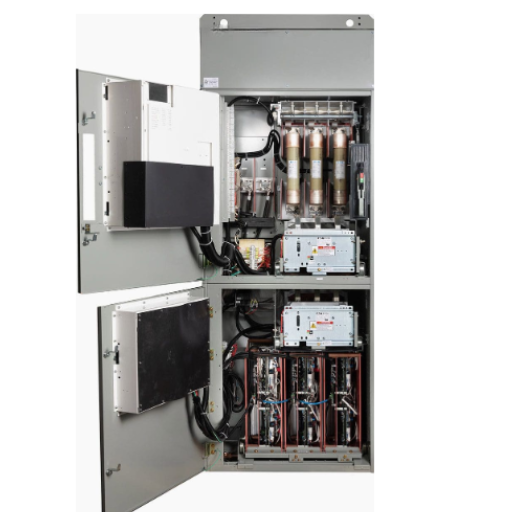
Selecting the right starting method is not about picking the most sophisticated option. It is about matching the method to the application constraints. Use these five criteria.
Criterion 1: Grid Stiffness and Voltage Dip Limits
Calculate or estimate the voltage dip for DOL starting. If the dip exceeds your system limit, eliminate DOL. Soft starters reduce dip proportionally to the current limit setting. VFDs virtually eliminate starting dip. If your utility imposes strict MVA limits or flicker requirements, you may need a VFD or capacitor-assisted soft starter.
Criterion 2: Load Torque Characteristic
Plot the motor torque at reduced voltage against the load torque curve. Remember that torque drops with the square of voltage reduction. A soft starter at 50% voltage produces only 25% of full-voltage locked rotor torque. If the load torque exceeds motor torque at any speed during acceleration, the motor stalls.
Centrifugal pumps and fans with square-law torque curves are ideal for soft starters. Constant-torque loads like conveyors and positive displacement pumps need more careful analysis. High-inertia loads like large fans and SAG mills may require VFDs or wound rotor motors.
Criterion 3: Starting Duty (Starts per Hour)
NEMA MG1 defines starting duty limits. Large MV motors are typically limited to 2 cold starts or 1 hot start with 35 to 90 minutes between attempts. Soft starters and VFDs do not change the motor thermal limit. They only control how the stress is applied. If your application requires frequent starting, verify that the motor is rated for the duty. Then choose a starting method that minimizes mechanical and electrical stress per start.
Criterion 4: Speed Control Requirements
If the process requires variable speed, a VFD is the only practical choice. Soft starters, autotransformers, and DOL methods all run the motor at fixed speed once started. Don’t specify a soft starter and then add a separate VFD later for speed control. The correct approach is to size the VFD for both starting and operating duties from the outset.
Criterion 5: Budget and Total Cost of Ownership
DOL is cheapest upfront but may require infrastructure upgrades to handle voltage dip. Soft starters offer the best balance of cost and control for fixed-speed applications. VFDs have the highest capital cost but deliver energy savings and process control that can pay back the investment in 1 to 3 years for variable-load applications.
Quick Reference Selection Table
| Scenario | Recommended Method | Approximate Cost Range |
|---|---|---|
| Motor <500 kW, stiff grid, simple load | DOL | 5,000−5,000−15,000 |
| Need current limit to ~50%, infrequent starts | Autotransformer (closed transition) | 25,000−25,000−75,000 |
| Frequent starts, controlled acceleration, fixed speed | MV Soft Starter | 50,000−50,000−200,000 |
| Very large motor, weak grid, full torque required | VFD | 150,000−150,000−1,000,000 |
| Variable speed process, energy savings priority | VFD | 150,000−150,000−1,000,000 |
| Multiple large motors, only soft starting needed | VFD with synchronous transfer | 300,000−300,000−2,000,000 |
| High-inertia load, soft starter cannot deliver torque | Wound rotor or VFD | 100,000−100,000−500,000 |
Common Starting Method Selection Mistakes
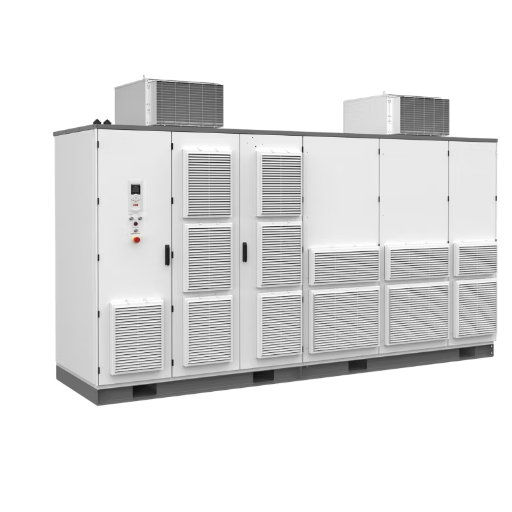
Even experienced engineers make these errors. Each one has a real cost.
Mistake 1: Applying DOL Without Voltage Dip Study
This is the most common and most expensive error. An engineer assumes that because a motor is within the plant rating, DOL will work. But the plant transformer may be loaded to 80% capacity. The motor starting current pushes the transformer into overload and depresses voltage for the entire bus. The fix is either a voltage dip study during design or a conservative rule: if motor kVA exceeds 10% of transformer kVA, perform the calculation.
Mistake 2: Ignoring Load Inertia and Acceleration Time
In 2017, a mining engineer named Derek selected a soft starter for a 3,000 kW SAG mill motor. The starter was electrically rated for the motor power. But the mill had extremely high inertia. The soft starter could not deliver enough torque to accelerate the load within the motor thermal limit. After two failed start attempts, the motor thermal protection tripped. The mill lost 18 hours of production. The correct solution was either a VFD or a wound rotor motor with liquid rheostat. The lesson: always verify that the starting method can accelerate the load to full speed before the motor overheats.
Mistake 3: Selecting Soft Starter for Frequent Starting Duty
A soft starter controls voltage but does not eliminate motor heating during start. The thermal energy deposited in the rotor bars during acceleration is the same regardless of starting method. If your application needs 10 starts per hour, check the motor data sheet. Most large MV motors cannot handle that duty. You may need a specially designed motor, not just a better starter.
Mistake 4: Open-Transition Bypass with VFD
An open-transition VFD bypass momentarily disconnects the motor from both the VFD and the line. The motor coasts uncontrolled. When the line contactor closes, the supply voltage may be out of phase with the motor back-EMF. The resulting transient can reach 2 times normal current and damage the motor windings. For MV applications, always specify closed-transition (synchronous transfer) bypass.
Mistake 5: Undersizing Based on Motor Power Alone
Starting equipment must be sized for both the motor current and the load torque requirement. A 2,000 kW motor driving a high-inertia fan needs a larger soft starter or longer ramp time than the same motor driving a centrifugal pump. Always provide the load inertia and torque curve to the equipment supplier.
NEMA, IEEE, and IEC Standards for Motor Starting
Standards exist to ensure motors start safely and reliably. Understanding them prevents specification errors.
NEMA MG1 Starting Requirements
NEMA MG1 Part 20 defines motor performance standards including locked rotor current, locked rotor torque, breakdown torque, and starting duty. It specifies that motors must successfully accelerate their load at 90% rated voltage. It also defines the number of starts allowed and the required cooling intervals.
IEEE 399 System Design Guidance
IEEE 399, the Brown Book, provides recommended practices for industrial power system analysis. It covers motor starting studies, voltage dip calculations, and system design criteria. Many consulting engineers use IEEE 399 as the basis for their starting studies.
IEC 60034-12 Starting Performance
IEC 60034-12 defines starting performance for single-speed three-phase cage induction motors. It classifies starting characteristics by design letter (N, H, DY) and specifies minimum locked rotor torque and current values. IEC standards are increasingly referenced in international projects.
Voltage Dip Limits and Flicker Standards
IEEE 1159 classifies voltage sags as retaining 10% to 90% of nominal voltage for 0.5 to 30 cycles. IEC 60076-5 specifies that voltage dip at supply busbars should not exceed 10% with duration not exceeding 500 ms. Utility interconnection agreements often impose stricter limits, particularly for industrial customers with multiple large motors.
Commissioning and Verification
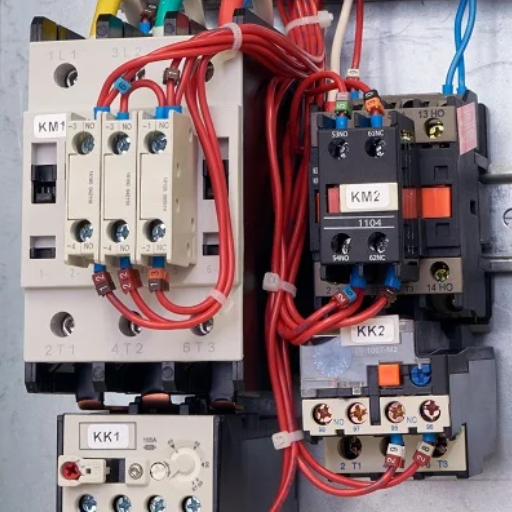
The starting method selection is only validated when the motor starts successfully under actual conditions.
Pre-Energization Checks
Verify starter wiring, phase sequence, control logic, and protection settings before the first start. Confirm that the motor is uncoupled from the load for the initial rotation check. This prevents mechanical damage if the motor runs backward.
Starting Current Verification
Use temporary clamp-on current transformers or the starter’s built-in metering to record starting current versus time. Compare the waveform to the design expectation. If the current exceeds the predicted value, investigate. Common causes include incorrect tap settings, incorrect load inertia estimates, or supply voltage higher than expected.
Voltage Dip Measurement
Record bus voltage during starting at the motor terminals and at sensitive loads. Compare measured dip to calculated dip. If the measured dip is larger, the source impedance may be higher than estimated. This is common when cable impedances were omitted from the calculation.
Mechanical Stress Assessment
Measure vibration during starting. Excessive vibration indicates misalignment, bearing problems, or torque pulsation from the starting method. For soft starters and VFDs, verify that acceleration is smooth without torque steps or oscillations.
Frequently Asked Questions
What is the cheapest starting method for medium voltage motors?
Direct on-line starting is the cheapest upfront, typically costing 5,000to5,000to15,000 for contactor and protection. But it may require infrastructure upgrades if voltage dip is excessive. For motors above 500 kW or on weak grids, the lowest total cost often belongs to soft starters.
Can I use a soft starter for a high-inertia fan?
Maybe. Soft starters can handle moderate inertia loads like pumps and standard fans. But very high-inertia loads such as large induced-draft fans or SAG mills may require acceleration times longer than the motor thermal limit allows. Perform a torque-speed analysis or specify a VFD.
How do I calculate voltage dip during motor starting?
Use the per-unit method. Determine the motor locked rotor kVA from the nameplate code letter or locked rotor current. Add the source impedance and transformer impedance. The voltage dip is approximately the motor starting kVA divided by the total system kVA at the motor bus. For precise results, use software like ETAP or SKM PowerTools.
Should I always choose VFD for large motors?
No. VFDs are justified when you need variable speed, when starting current must be minimized on a weak grid, or when energy savings from speed control will pay back the investment. For constant-speed applications on strong grids, a soft starter or even DOL may be more cost-effective.
What is the difference between open and closed transition?
Open transition momentarily disconnects the motor from all power sources during transfer. This creates a current and torque transient. Closed transition keeps the motor energized throughout, either through an intermediate tap or by synchronizing the source to the motor before transfer. Always use closed transition for MV applications.
Conclusion
Selecting a medium voltage motor starting method is a system-level decision, not just a motor decision. The right choice balances electrical constraints, mechanical requirements, starting duty, process needs, and project budget.
Start with the data. Gather motor nameplate information, system impedance, load characteristics, and duty requirements. Eliminate methods that violate your voltage dip limits or torque requirements. Then compare the remaining options on total cost of ownership, not just purchase price.
Remember Derek’s SAG mill. Remember the water treatment plant that spent 180,000onageneratorinsteadof180,000onageneratorinsteadof75,000 on a soft starter. The cost of a wrong decision is not theoretical. It is measured in production hours, emergency callouts, and damaged equipment.
If you are evaluating starting methods for an upcoming project, our engineering team can perform voltage dip studies, torque-speed analyses, and total cost of ownership comparisons. We work with industrial facilities worldwide to specify reliable, cost-effective motor starting solutions.
Need help selecting the right starter technology for your MCC? See our guide on vacuum contactor motor starters for a complete selection framework.
