
Understanding Permanent Magnet DC Motors
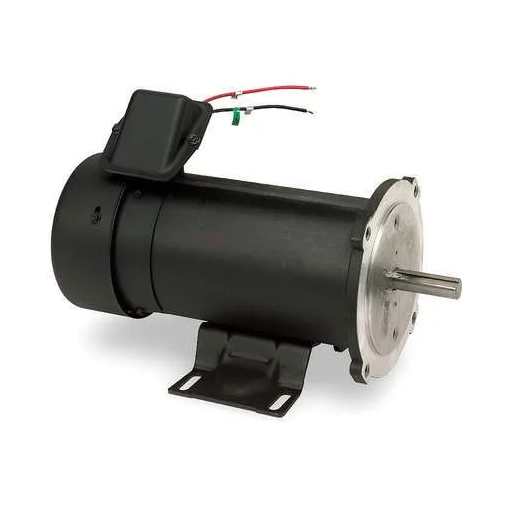
Permanent Magnet DC Motor is a type of electric motor that uses permanent magnets and not field winding to create the field flux. The magnets are strong enough up to the field available to reduce the need to create an external excitation field. A PMDC motor in its simplest form comprises an armature, commutator, brushes, and magnets. PMDC motors have found very high applications owing to their very simple design and very efficient working especially in applications that require consistent performance combined with low power requirements. By virtue of their design in that field, windings are eradicated inter alia; these motors provide typical advantages of electrical machines (lossless, linear). This is a probable and efficient option for different devices such as kitchenware, automobiles, and engineering applications.
What is a Permanent Magnet DC Motor?
In simple words, the concept of a Permanent Magnet DC electric motor is where there is a conversion of electrical energy into mechanical energy whereby there is a magnetic field being generated and the current carrying conductors interact. The motor does not have a classical electromechanically generated field as contains the conventionally known permanent magnets under stator windings. As a result of the field being non-reliant on holding windings, the Armature winding Rotor in the magnetic field moves when a DC voltage is applying causing the armature coils to carry a current. This movement and the interaction that takes place are very much related because when a current flows in the armature conductors, it meets a magnetic field, and a Lorentz force is produced, hence causing a torque that tries to rotate the rotor.
A notable quality of PMDC motors that enhances their efficiency level is that they do not need an extra effort arising from the creation of the magnet – the magnets in PMDC motors already provide it. Developments in permanent magnet materials have also boosted their quality with the introduction of materials such as neodymium-iron-boron (NdFeB), which carry higher density of flux and are more heat tolerant. This quality of PMDC motors positions them ideally for a wide range of applications of very high precision, such as robotics and HVAC systems, electrical vehicles, power tools among other devices. Moreover, the other aspect revolves around how it has been ensured that the performance is not only consistent but more so reliability has been raised through these designs without the need for servicing.
Principles of Operation
The operation of permanent magnet DC motors is associated with the permanent magnets’ magnetic field and the armature winding current interaction. The device operates by making the electromagnetic poles, actuated by the armature windings, interact with the permanent magnet’s magnetic poles, producing a torque that causes the rotor to rotate. The direction of the rotor rotation is quite often controlled by the polarity of the applied voltage which is not a big problem for PMDC motors since the polarity reverses, hence thrust changes.
Although the progress in the design is clearly pronounced, focusing on the developments or breakthroughs in the context of efficiency and performance and improvement of the PMDC motor design is easily accomplished. Specially manufactured windings and higher-strength magnetic materials such as NdFeB ensure that resistance is reduced and torque is increased. At the same time, the customized design of the commutator and the brushes are essential in maintaining the electrical contact with the rotating armature, while ensuring a good and safe flow of current. As new modifications are made to prevent wearing out, the trend in creating these components suggest the use of better materials and more precisely the use of the components especially with high load centers.
Key Components of PMDC Motors
| Component | Description |
|---|---|
| Permanent Magnets | Provide consistent magnetic field for motor operation. |
| Rotor (Armature) | Contains windings and rotates within magnetic field. |
| Commutator | Facilitates electrical connection between brushes and armature windings. |
| Brushes | Conduct electricity and maintain contact with the commutator. |
| Bearings | Support rotor movement and reduce friction. |
| Shaft | Transfers mechanical power to external applications. |
| Housing/Frame | Encloses components and provides structural support. |
| Windings | Conducts current to generate electromagnetic force on the rotor. |
| Air Gap | Space between rotor and stator for motion allowance. |
| Magnetic Core | Enhances magnetic flux concentration and efficiency. |
Types of Permanent Magnet DC Motors
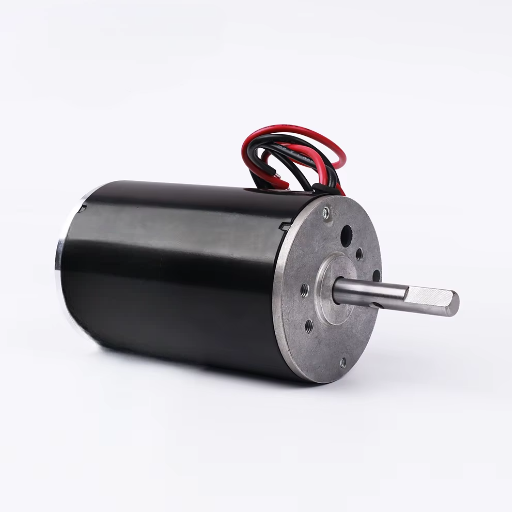
Permanent Magnet DC (PMDC) motors are classified based on the design and functional features they have. These two primary types are:
- Brushed PMDC Motors
These are the motors using brushes and the commutator to transfer the current to the windings. Such DC machines are simple to construct, are cost-effective, and are common in low-powered applications such as automotive equipments, and some white goods amongst others. - Brushless PMDC Motors
There are also no brushes in brushless motors because of the use of electromagnetic induction. Permanent magnet brushless motors have no windings or DC excitation. They are not used to the same extent as all other types of motors because their speed-torque characteristics and control arrangements are different.
There is a choice for each type of motor in the scope of its application, on the basis of a closed list of such criteria, which includes efficiency, strength, and price.
Shunt Wound PMDC Motors
Shunt wound PMDC motors (PMDC motors) essentially have their field windings connected in parallel with the armature winding, i.e., no external supply current is drawn from the field windings as in the series wound motor. This ensures that the field current remains constant over a wide variety of operating conditions, a desirable feature for achieving constant speed under varying load. These motors find extensive applications in areas where there is need for regulation of speed such as in electric traction and in conveyor belts in industries.
The the use of shunt wound motors is defined by some restrictions mostly associated with work between the supply voltage and proper load demand within all the adjustable outputs speeds generated automatically. The benefits of controlled output by a shunt wound motor are seen in gradual failure of the mechanical load which in consequence has little or no effect on the output speed of the motor. Changes in manufacturing technology and materials have also increased the service and operating power ratings of these motors while reducing the effects of thermal stress. These enhancements have made shunt wound PMDC motors an attractive choice for applications where reliability, high performance and long life are highly emphasized.
Series Wound PMDC Motors
In series wound Permanent Magnet DC (PMDC) motors, a bigger emphasis is placed on the operational efficiency of the motor including starting features rather than the no-load running performance, and this is done by providing for series connection of the field and the armature winding. In this context it is possible to have the total load current from the power source pass through not only the field but also the armature windings bringing limited torque.
Such motors are in general very robust and especially useful for applications that require high starting torque at low or near stand-still conditions, e.g., Electric Traction drives, industrial lifting machinery, and car motion starting systems. Additionally, there exists an inherent feature of the series wound PMDC motors involved in their speed-torque behavior, where with the increase in loading, the speed goes down, which is quite good for those applications which might involve controlled deceleration during the loading. Nonetheless, this means that series wound motors should not be just allowed to run themselves without a duty to avoid excessive speed, hence leading to risk of mechanical burn out.
Magnetic materials and thermal management have made significant advances with the purpose of improving the efficiency and power output of series wound motors that are all concern for the electrical industry today. The research takes note of such developments as the increased usage of rare-earth magnets and the presence of efficient cooling systems, which has led to a significant increase in the torque value and the stability in operation of these motors. Basically it keeps them attractive in industries which rely on compact and high powered motors for their success in operation purposes.
Permanent Magnet Synchronous Motors
Permanent Magnet Synchronous Motors (PMSMs) have become a vital propulsion solution especially when combined with high efficiency needs, precision control requirements and size constraints. Applications for PMSM typically involve what is known as a synchronous motor which employs a stator field that an axially you positioned rotor is expected to rotate in, thus eliminating slip and allowing one to have a high efficiency machine. Developments in materials technology have also bettered the application of permanent magnet, especially when high-performance rare-earth based magnetic materials such as neodymium are used. Such technological advancements have resulted in relatively higher packing fractions, as well as decrease of heat generation within the machine.
Furthermore, PMSMs are quite commendable due to the fact that they have significantly larger torque to weight factors compared to the conventional induction motors. They can thus be confidently used in instances of modern technology such as electric vehicles, robots and automated systems. The development of sophisticated inverter and control systems has also served to improve the speed range and high resolution capability of the motor. This aspect becomes the most important in the sectors where high efficiency and performance reliability are most required. The fact that PMSMs can work efficiently irrespective of the powering or the being powered makes it even harder to refute the technology as a critical component in both industrial and commercial sectors.
Applications of Permanent Magnet DC Motors
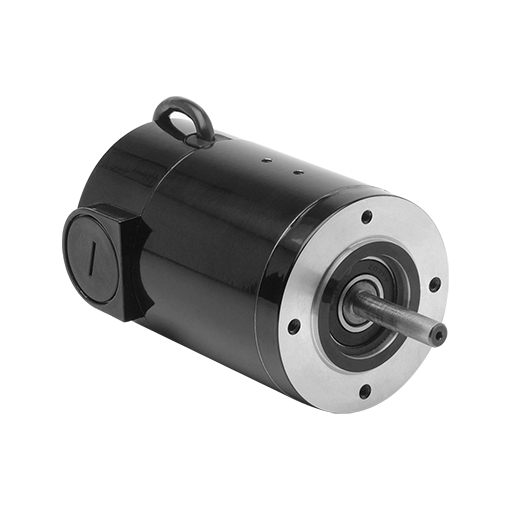
The direct current engine is highly appreciated by different industries owing to its specific design, low consumption and quality of work. The most common is:
- Automotive Industry
These are mainly seen in systems like electric window mechanisms, windshield wipers and seat adjusters as it is easy to control and maintain them. - Home Appliances
In hair dryers, vacuum cleaners and mixers, for example, they are equipped with impactfill screw driving screwdrivers. - Industrial Automation
It consists of stuff like conveyor belts, robotic arms, packaging equipment, and they are also reliable in carrying out repetitive activities. - Portable Devices
For small, battery-operated tools and equipment types, such as drills and surgical materials, a lightweight and cost-effective design is allowed.
All these examples reflect the versatility and real benefits of PMDC engines in addressing present-day engineering challenges.
Industrial Applications
DC permanent magnet (DCPM) motors are a variant of the DC motors extensively used in industrial automation. Such motors bring various distinctive advantages. Their small sizes and high torque per weight characteristic makes them ideal for precision applications where the motor load is critical to the performance of the machine. These make the motors consume less power since they do not require any power fed into them, thus improving the efficiency factor, which is crucial in cost-conscious and green industries. Moreover, PMDC motors of any type are known to be virtually free of noise which translates to fewer vibrations that make the machine operate better and is likely to minimize the wear and tear of the interfacing parts.
Increasingly, as Industry 4.0 is adopted, PMDC motors are being utilized in smart manufacturing systems. However with the migration to latest control systems, they are now capable of being controlled in real-time through advanced automation to enhance their capability particularly in situations that demand dynamic operational performance. For example, they are used in automated manufacturing however in this context, their primary aim is to control the rotational speed of the shaft, of which mechanical coupled to the arm and such is critical in case relatively small tolerances for the overall assembly is considered. With this in mind, in the field of robotics, the trend towards using PMDC motors has been driven by their ability to enable precise position control for specific operations. This is particularly the case in situations that entail welding, sorting, and material handling applications.
Automotive Applications
Presence of Permanent Magnet DC motors in contemporary automotive systems is driven by high performances and the reasonable dimensions of these devices. Numerous application of these engines includes various auxiliary and secondary systems in the vehicles like operational window and wiper systems, and, neatly, seat adjusters with particular precision and durability. Their design enables these motors to operate over a wide range of speeds and developed control techniques guarantee good torque at such design points for these motor applications.
A key breakthrough lies in the integration of the PMDC motors in the electric and hybrid vehicles. This is because the motors help improve the efficiency of electric propulsion systems, especially the ones which need power delivered quickly and the devices which have to recover energy lost within regenerative braking systems. Furthermore, their relatively low energy consumption underpins the reduction in green house gases and even the bridge in the gap to longer drives of electric cars. Several investigations attest that PMDC motors, when interfaced with state-of-the-art control mechanisms, can enhance the overall system efficiency to levels above 85% thereby confirming their importance in green automotive industry.
In advanced driver-assistance systems (ADAS), Permanent Magnet Direct Current (PMDC) motors are also in heavy use. System features like adaptive cruising and automatic parking would be impossible without them as they essentially drive sensors, actuators, and steering systems. These devices are engineered in such a way that modern vehicle layouts are preserved without compromising the engineering or performance of the car.
Consumer Electronics Applications
PMDC motors remain indispensable in the electronics market for the reason of high precision and technology, reliability and energy efficiency. One of their usual applications is the cooling of laptops and personal computers as miniature PMDC motors with low power usage and obvious size constraints are perfect for operating buffer – fan assemblies used to control the temperature of these equipments. Also, the PMDC motor is a critical component in some generic electronic household devices such as cordless and wet frankfurt sanding machines, where high starting torque must be achieved within a range of low speeds.
Although PMDC motors are commonly integrated in residential gadgets, the technology is the primary driving force in portable devices, such as trimmers and massage machines since the devices operate quietly and have consistent power outputs. In addition, this type of motor has low emissions of the magnetic signals which guarantees its efficient operation and safe application in clean rooms in manufacture of electronic devices such as cameras as well as information carried with the precise motion of the color account. Evidently, the newer motor technologies have enhanced their energy conversion efficiency matching them with new sustainable practices and that coordination is also directed towards decimating the repercussions enacted by incorporation of a broad spectrum of devices.
Emerging Trends and Advancements in PMDC Motors
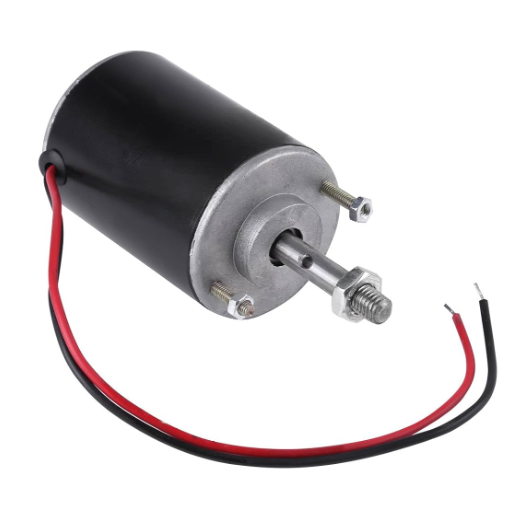
Advancement in the field of permanent magnet synchronous DC motor technology focuses mainly on effectiveness, quality and sustainability. Today, the main drivers of PMDC motor development are: application of cutting-edge materials and structures: e.g., rare-earth tambourine-type magnets that require less space and weight with massive magnetic output thin and light. There is an additional field of production engineering called the technology application, such as 3D, which helps improve motor adjustment accuracy and enables the motor sample to be applied more quickly.
A motor development that has also been recorded is the adoption of intelligent systems. Such control systems allow one to do measurements and make changes at the same time improving even the efficiency and elongating the life of the motors. Energy efficiency is inevitable in the context of energy conservation as there are ongoing efforts to reduce energy conversion losses through advanced redistribution and less resistance schemes.
Innovations in Motor Design
The utilization of high-quality composite materials in the design of electric motors has greatly improved their overall performance compared to the traditional ones. This can be noted through the application of rare-earth magnets in general and especially neodymium-iron-boron (NdFeB) which has greatly increased the power and torque produced by the motors while decreasing the size of the motor equipment. This high power density magnet has very high magnetism and very high tolerance to heat making it ideal for a variety of tough applications such as the automotive industry and especially robotics. Furthermore, the utilization of lightweight composite materials for making the motor and its components is also useful in saving power by decreasing the amount of the weight and the inertia.
Sophisticated thermal management technologies coupled with new materials that have improved conductive and strength properties including but not limited to advanced ceramics and graphene composites are employed as well. These materials permit the removal of heat more efficiently which is very important for the protection of motor parts that are sensitive and hence prolonging life operation. Over and above the continuous developments in material technology, these innovative materials enhance the efficiency and endurance achievements of motors completely new in various industries.
Advancements in Efficiency and Performance
Electric motor technology has progressively gotten better when it comes to performance and efficiency. This progress in the technology of electric motors has led to the development of different control strategies linked with motor drive control such as, e.g., vector control, model predictive control (MPC), and discrete time optimal control, with major influence on energy savings. Examples of latest sensor-equipped motor control segmentation are precision motors, linear motors, and spindle motors. These developments this led to the use of sensors to monitor parameters such as the motor temperature, vibration and motor rotation speed for predictive maintenance or even fault localization and isolation preventing loss of output time.
It is noted that the technology uptake of Internet of Things has resulted in an increased level of connectivity among such enhanced motor controls, hence making it possible for the motors to configure themselves to the prevailing condition which may change rapidly. As far as energy conservation of the motor appliances is concerned, these innovations also contribute to the serviceable lifespan of the motor systems, as such operations are required in such industries as manufacturing and renewable energy among others.
Future Directions in Permanent Magnet Technology
The novel materials and their technologies designed to offer higher performance and tackle and effectively address industry imperatives are the development engine of the permanent magnet technology. The move towards rare earth free magnet types, in particular advanced ferrites and alnico alloys, is attracting more attention because of resource limitations and the risk to the supply chains of elements such as neodymium and dysprosium. Researchers have shown that the improvement of magnetic materials and the advanced means of manufacture using nano-technologies, including the additive manufacturing, makes possible the production of stronger magnets that weigh less and are stable in high temperatures.
A different approach, which might be even more relevant, is the connection of traditional energy systems and hybrid systems to modern technologies, wherein permanent magnets are utilized. For example, over last few decades, the market for renewable energy technologies such as wind turbines has shown a remarkable increase and is still expected to grow further in the upcoming years. Focus has particularly been laid on reducing the weight of magnetic systems as much as possible to enhance output and minimize maintenance costs. Additionally, more vehicles are being fired with electricity and therefore require magnetic materials able to provide the required propulsion torque, and be efficient, in the presence of aggressive environment.
Practical Considerations for PMDC Motor Users
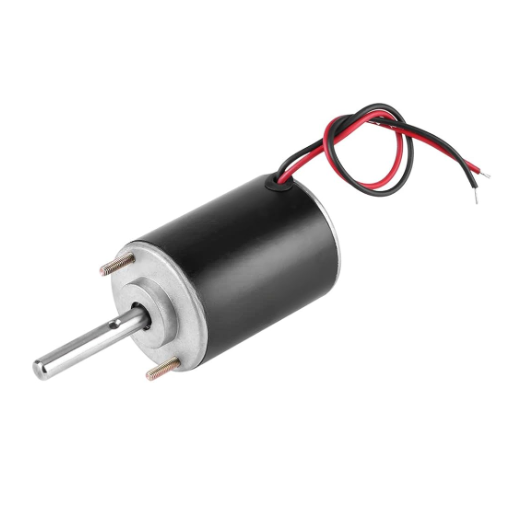
When looking at how to choose a PMDC motor, it’s necessary to look at more specific details – torque required, the type of load, and the power supply that is to be used. Should a motor be operated too extensively, or be pushed past the threshold noted in the design specifications, the end result will be overheating which in turn will lead to shortening its lifetime. Proper ventilation of motors and operation only in the recommended conditions are some of the causes with lower wear.
On the other hand, a regular check up enables one to attain maximum output in terms of these machines. It is always necessary to look out for any signs of wear on the brushes and commutators, since there is no way the engine will function without those two important elements. The dirt in the motor’s cover should also be removed to prevent damage. The most common chases are the temperature, the humidity and the consideration of sealed housings in cases where motors are installed in moist or dusty settings.
Selecting the Right Motor for Your Application
When it comes to choosing the right engine for your job, there are several essential characteristics that should be acknowledged with a view to combining properties of power, economy, and resource. First and foremost, it will be necessary to find exactly which profiles there are in which the motor is to be incorporated, such as the torque and speed characteristics and other such aspects, since these may all serve to identify whether an AC or DC motor is more appropriate. It will also be necessary to inspect the motive power system and define whether the mains is compatible with the rated voltage and frequency of the motor.
In addition, it will be necessary to evaluate the conditions under which it will be used. For instance, in environment with higher than normal moisture contents or those with a higher than normal threshold for the intake of dust, motors come with certain system design features, such as enclosed casings, which have the ability to resist such environmental contaminants. The consideration of the duty cycle is also very important – whether the motor is required operating continuously, intermittently, or is subjected to fancy load conditions—due to the effect on the generation of heat and duration of performance of the device.
It is essential that energy saving rules like those originating from international standards like IE2, IE3, or NEMA Premium together with efficiency standards restrict your choice in order to obtain reserves in electricity and safety improvement. Additionally, the utilization of sophisticated devices such as variable frequency drives for managing the speed increases the operational capabilities and efficiency of the units installed as they consume less power. In the end, to assemble a correct choice of a motor that would guarantee both the promised functionality and a continuous and efficient resource consumption would be feasible only if the mentioned components were accepted.
Speed and Torque Control Techniques
Controlling the speed and torque produced by a motor has become crucial in many instances, as today’s systems are aimed at both a high level of effectiveness/ performance as well as conserving energy. This can be achieved through several methods, with variable frequency drives being one of them. In the method, the frequency, and voltage of the motor input is changed in order to adjust the speed and torque in real time. It is also possible to effect the acceleration and deceleration rates by means of vfd control variables to effect smooth transitions without burdening the motor or wasting power because most relationships to the system are clearly defined.
Achieving that is made possible using the Vector control method, where the currents in the stator are split into two components, i.e., torque-generating and flux-generating currents. It improves the system’s ability to enhance torque precision, as well as the capability of regulating speed of motors, which make it perfect for motors including servomotor used in industrial systems such as CNC and Robotics.
In applications requiring a large starting torque or loads operating consistently at lower speeds, direct torque control (DTC) methods can be used. In contrast to conventional controls, in which optimal space vector modulator pulse-width modulation (PWM) technique is applied, the lack of necessity to modulate the pulses becomes one of the advantages of applying the direct torque control in variable speed drives. This enables reduced response time and better torque control without resorting to those complex transformations. Moreover, some particular improvements, like the development of sensorless control techniques, are underway. Sensorless techniques estimate the rotor position and speed without physical sensors, thereby reducing system complexity and maintenance and ensuring performance.
Reference Sources
- Modeling and Remedies for Rare-Earth Permanent Magnet Demagnetization Effects in Hybrid Permanent Magnet Variable Flux Motors
Read the paper here → - A New Hybrid Modelling Technique for Predicting Permanent Magnet Synchronous Motor Parameter Changes Due to Temperature and Load
Read the paper here →
