
The best frequency converter manufacturer for your project is one that combines verified technical capability, transparent quality processes, responsive communication, and export experience matched to your market. ABB, Siemens, and Danfoss dominate high-specification industrial applications, while specialized Chinese manufacturers like Shandong Electric offer strong customization, competitive pricing, and faster lead times for OEM, aviation, and industrial projects. The right choice depends less on brand recognition and more on whether the manufacturer’s engineering team, production infrastructure, and support network align with your specific application requirements.
The global frequency converter market is worth approximately 32.48billionin2025, projected to reach 32.48 billion in 2025, projected to reach 79 billion by 2035. Despite that scale, international buyers still source power conversion equipment through trial and error. Many lose money to trading companies posing as manufacturers. Others discover too late that their supplier has no burn-in testing, no spare parts inventory, and no local support network. The result is downtime, rework, and damaged customer relationships.
This guide solves that problem. It provides a complete framework for evaluating any frequency converter manufacturer, from initial screening through long-term partnership management. Whether you need a standard VFD for a production line, a 400Hz power supply for aviation ground power, or a fully custom solution for an OEM project, the principles here will help you choose a frequency converter supplier you can trust.
Principais lições
- A frequency converter manufacturer should be evaluated on technical competence, quality infrastructure, export experience, and communication reliability, not just unit price.
- Trading companies represent 30-40% of industrial equipment listings online; factory verification is essential before placing any order.
- Factory-direct sourcing from established Chinese manufacturers typically reduces unit cost by 30-50%, though total cost of ownership narrows the gap to 15-25% over ten years.
- OEM and ODM partnerships require clear agreements on IP, documentation, warranty transfer, and MOQ structures.
- Certifications like ISO 9001, CE, and UL must be verified through the issuing registrar, not accepted at face value from marketing materials.
O que procurar em um fabricante de conversor de frequência
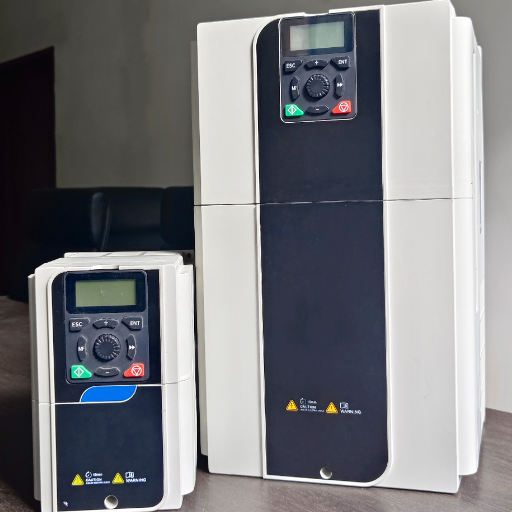
Selecting a frequency converter manufacturer starts with understanding what separates a reliable production partner from a company that simply assembles components. The evaluation should cover four dimensions: technical competence, manufacturing capacity, quality infrastructure, and commercial stability.
Competência técnica
A capable manufacturer of frequency converters should demonstrate breadth across product categories. At minimum, they should offer variable frequency drives (VFD) for motor control, static frequency converters for 50/60 Hz applications, and 400Hz power supplies for aviation and military use. If your project requires custom voltage outputs, multi-phase configurations, or specialized control interfaces, verify that their engineering team has delivered similar solutions before.
Voltage class experience matters significantly. Low-voltage drives below 1 kV are standard. Medium-voltage systems from 1 kV to 35 kV require entirely different insulation systems, semiconductor selection, and safety architectures. A frequency converter manufacturer with decades of low-voltage experience may still lack the high-voltage impulse testing rigs and partial discharge measurement equipment that medium-voltage drives demand. Confirm they have delivered units in your exact voltage class, not just adjacent categories.
Want to understand what separates high-voltage manufacturers from standard suppliers? Leia nosso guia sobre how to evaluate high voltage frequency converter manufacturers for voltage-class-specific criteria.
Capacidade de fabricação
Production floor capability separates real manufacturers from trading companies. Ask for specifics: How many SMT lines do they operate? What is their monthly output of converter units? Do they run full-load burn-in testing, or only bench checks? A legitimate frequency converter manufacturer will have no hesitation sharing factory photos, video tours, or third-party audit reports.
Scalability is equally important. If your initial order is 20 units but your business plan projects 200 units annually within two years, can the manufacturer scale without compromising quality or extending lead times? Ask about their peak capacity and how they manage seasonal demand fluctuations.
Infraestrutura de qualidade
ISO 9001 certification is the baseline requirement for any industrial power equipment manufacturer. However, not all ISO 9001 certificates are equal. Check the scope printed on the certificate itself. A frequency converter manufacturer certified for “sales and distribution” is not the same as one certified for “design, manufacture, and testing of frequency conversion equipment.” Request the certificate number and verify it directly with the issuing registrar, whether that is SGS, TUV, Bureau Veritas, or another accredited body.
Beyond certification, ask about incoming inspection protocols, in-process quality checkpoints, and final test procedures. Traceability matters. If a batch fails in the field, can the manufacturer trace it back to the specific component lot, production date, and test operator?
Commercial Stability
Years in operation and registered capital provide initial signals of stability, but they are not definitive. A frequency converter manufacturer with 15 years of export experience and reference customers in your region is generally lower risk than a newly established factory with impressive photos but no verifiable delivery history. Ask for reference contacts. A reputable supplier will provide them.
When Marcus, a procurement director for an industrial distributor in Poland, evaluated his first Chinese frequency converter manufacturer in 2023, he focused entirely on price. The supplier offered VFDs at 25% below the next bid. Six months later, three units failed during commissioning. The supplier had no technical support staff, no spare PCBs in inventory, and no documentation explaining why the failures occurred. Marcus spent eight weeks and $12,000 resolving issues that a proper initial evaluation would have prevented. The “savings” evaporated in the first quarter.
Types of Frequency Converter Suppliers
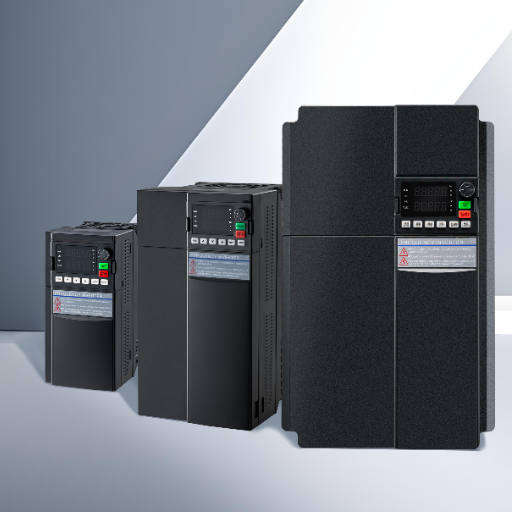
Not every company that sells frequency converters manufactures them. Understanding the four main supplier types helps you match your needs to the right partnership structure.
OEM Frequency Converter Partnerships
Original Equipment Manufacturers design and build OEM frequency converter products under your brand. You provide the logo, packaging requirements, and any custom specifications. The frequency converter manufacturer handles engineering, production, testing, and documentation. This model works best for distributors, e-commerce brands, and system integrators who want to build their own product line without investing in factory infrastructure.
OEM partnerships typically require minimum order quantities of 50 to 100 units for standard models, depending on power rating. The manufacturer should provide complete documentation packages: test reports, compliance certificates, user manuals, and warranty terms transferable to your end customers.
ODM Partners
Original Design Manufacturers go further than OEM. They co-develop custom specifications with you, often sharing intellectual property for unique designs. If you need a frequency converter with non-standard voltage outputs, specialized enclosures, or proprietary control logic, an ODM partnership gives you engineering collaboration beyond simple branding.
This model suits industrial OEMs and specialized application developers. The trade-off is longer development timelines and higher initial engineering costs. The benefit is a product differentiated from anything else on the market.
Empresas de trading
Trading companies own no manufacturing facilities. They source products from multiple factories, often mixing suppliers without disclosing it to buyers. Prices are higher because they add a margin. Quality control is inconsistent because they do not control production. Communication breakdowns are common because technical questions must be relayed to the actual factory.
Trading companies make sense only for very small orders, mixed product categories, or when you need products from multiple manufacturers consolidated into one shipment. For frequency converters, where technical support and quality consistency matter, trading companies introduce unnecessary risk.
Distribuidores
Authorized distributors hold local inventory and provide local service. They charge a premium for convenience and support. If you need a standard ABB or Siemens drive delivered tomorrow with local commissioning assistance, a distributor is the right choice. If you need customization, OEM branding, or factory-direct pricing, a distributor cannot help.
| Tipo de Fornecedor | Mais Adequada Para | Customização | Nível de preço | Suporte |
|---|---|---|---|---|
| Fabricante OEM | Distributors, e-commerce brands, private label | Logo, packaging, manuals | Direto da fábrica | From manufacturer |
| ODM Partner | Industrial OEMs, specialized applications | Full co-development | Factory direct + NRE | Colaboração de engenharia |
| Empresa comercial | Small mixed orders, multi-category sourcing | nenhum | Higher (margin added) | Limited, relayed |
| Distribuidor | Urgent standard needs, local service | nenhum | A maior | Local, responsive |
Panorama global da manufatura
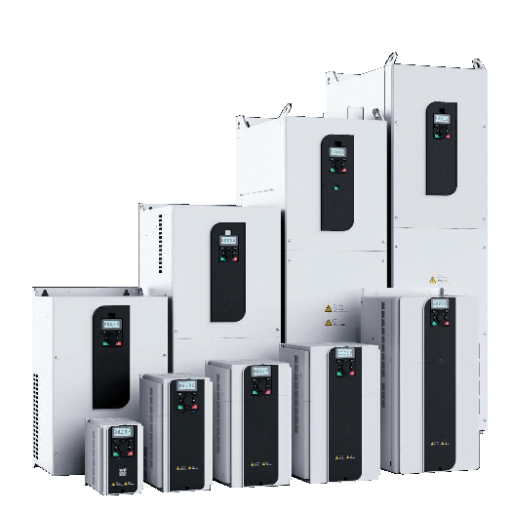
Frequency converter manufacturing is concentrated in three major regions, each with distinct strengths and trade-offs.
China Frequency Converter Manufacturer Landscape
China produces the majority of the world’s low and medium-voltage frequency converters. Major manufacturing clusters include Shenzhen and Guangdong province for VFDs and automation products, Shanghai and Jiangsu for high-frequency and precision drives, Zhejiang for mid-range industrial inverters, and Shandong for static frequency converters and 400Hz aviation power systems.
Chinese manufacturers offer significant cost advantages due to lower labor costs, integrated supply chains for semiconductors and magnetics, and massive production scale. Quality has improved substantially over the past decade. Leading Chinese frequency converter manufacturers now operate ISO-certified facilities with full-load testing, automated SMT lines, and export documentation teams.
The challenge for international buyers is verification. With hundreds of suppliers claiming manufacturing capability, distinguishing legitimate factories from trading companies requires structured due diligence.
Europe: Engineering-First Brands
ABB, Siemens, Danfoss, and Schneider Electric represent the European tier. These companies invest heavily in R&D, digital connectivity, and integrated automation ecosystems. Their products command premium prices but offer advanced features like predictive maintenance, cloud diagnostics, and seamless PLC integration.
European sourcing makes sense for mission-critical applications where downtime costs exceed equipment cost, or where integration with existing Siemens or ABB automation infrastructure reduces commissioning complexity.
USA and Japan: Specialized Applications
Rockwell Automation, GE Vernova, Yaskawa, and Mitsubishi Electric serve niche strengths. Yaskawa excels in vector control and robotics integration. GE focuses on power quality and utility-scale applications. Mitsubishi offers high reliability for Asian manufacturing markets.
These brands compete less on price and more on application-specific expertise and regional support networks.
Certificações e padrões de qualidade
Certifications provide verifiable proof that a frequency converter manufacturer operates documented quality and safety processes. Understanding which certifications matter, and which are irrelevant, separates thorough buyers from those who rely on marketing claims.
Certificações Essenciais
ISO 9001 is the baseline. It demonstrates that the manufacturer operates a quality management system with traceable processes, corrective action protocols, and continuous improvement cycles. Verify the certificate scope and issuing registrar.
marcação CE is mandatory for products sold in the European Economic Area. For frequency converters, CE compliance typically covers the Low Voltage Directive (LVD) and Electromagnetic Compatibility (EMC) Directive. CE is self-certified for most power electronics, meaning the manufacturer declares conformity without mandatory third-party testing. This makes verification important.
Listagem UL is the North American safety standard. UL-listed products have undergone testing by Underwriters Laboratories for electrical safety, fire resistance, and failure-mode analysis. If your market includes the United States or Canada, UL listing is either required or strongly preferred by inspectors and insurance providers.
IEC 61000 covers electromagnetic compatibility. Frequency converters generate harmonics and electrical noise. Compliance with IEC 61000-6-2 (immunity) and IEC 61000-6-4 (emissions) ensures the converter operates reliably in industrial environments without interfering with nearby equipment.
Requisitos específicos do mercado
Different regions impose additional requirements. Russia and CIS countries require GOST-R or EAC certification. South Africa requires SABS approval. Saudi Arabia requires SASO conformity. Marine applications need DNV or Lloyd’s Register type approval. Hazardous environments require ATEX or IECEx certification.
A global-facing frequency converter manufacturer should maintain documentation for all major markets. Ask for a certification matrix showing which products carry which approvals.
How to Verify Certificates
Never accept a certificate image at face value. Request the certificate number and verify it through the issuing registrar’s online database. Check three things: whether the certificate is current (not expired), whether the scope covers the product you are buying, and whether the manufacturer name matches exactly. Subsidiaries and parent companies are not interchangeable.
Custom Frequency Converter Design and Engineering Capability
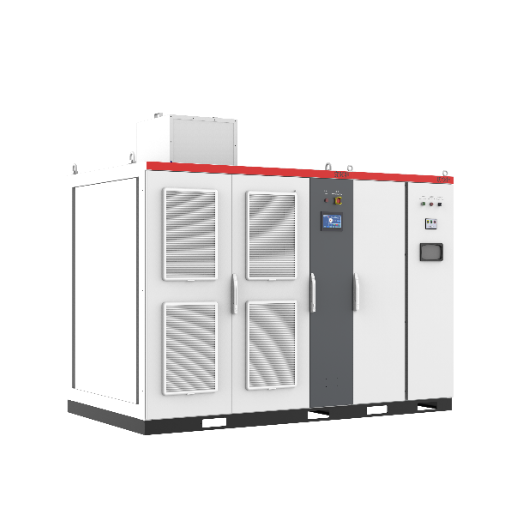
Standard frequency converters suit many applications. When your project requires deviation from catalog specifications, the manufacturer’s engineering depth becomes the deciding factor.
When Customization Is Necessary
Customization becomes essential for non-standard input or output voltages, frequency ranges outside 45-65 Hz or 400 Hz, special enclosures with IP54 or higher ratings, multi-output configurations, marine or outdoor installations, and proprietary control interfaces or communication protocols.
A custom frequency converter manufacturer with strong engineering capability will not simply say “yes” to every request. They will ask about your load profile, ambient conditions, duty cycle, and control architecture. This diagnostic questioning is a positive signal. It indicates they are designing a solution, not just repackaging a catalog unit.
Assessing Engineering Depth
Ask about R&D team size, engineering qualifications, and past custom projects. How many custom designs did they deliver in the past 12 months? What was the most complex project? Can they share anonymized case studies? A capable manufacturer will have a portfolio.
Prototype turnaround time reveals flexibility. Standard manufacturers may need 8-12 weeks for a first article. Agile engineering teams can deliver functional prototypes in 4-6 weeks, depending on complexity.
Opções de marca OEM
Private-label partnerships typically include logo placement on the enclosure, custom labels and nameplates, branded packaging and user manuals, compliance documentation in your company name, and warranty terms transferable to your customers.
MOQ structures vary by manufacturer and power rating. Small VFDs (0.75 kW to 7.5 kW) may require 50-100 units for OEM branding. Large static converters or 400Hz units may require only 10-20 units due to higher per-unit value.
Interested in building your own brand of frequency converters? Shandong Electric offers OEM partnerships with complete documentation packages, CE compliance support, and warranty transfer. Entre em contato com nossa equipe Para discutir suas necessidades de marca própria.
Processo de Fabricação e Controle de Qualidade
Understanding what happens inside a converter factory helps buyers evaluate quality claims and identify red flags during audits.
Montagem de PCB e Fornecimento de Componentes
The heart of any frequency converter is the power electronics board. Modern manufacturers use surface-mount technology (SMT) lines for control circuits and through-hole assembly for power components. Ask which IGBT brands they use (Infineon, Mitsubishi, Fuji, and STMicroelectronics are common tier-one choices). Ask about capacitor sourcing and whether components are traceable to original manufacturers.
Counterfeit semiconductors are a real problem in electronics manufacturing. A quality-focused power converter manufacturer will have incoming inspection protocols including component marking verification, electrical sampling, and supplier audits.
Transformer and Magnetics
Many frequency converters require custom transformers or output inductors. Manufacturers with in-house winding capability control lead times and quality more tightly than those outsourcing magnetics. Ask about core materials, insulation class, and temperature rise testing.
Burn-In and Load Testing
This is where many manufacturers cut corners, and where quality problems originate. Full-load burn-in testing runs each converter at rated power for 4 to 8 hours under elevated temperature conditions. This catches latent soldering defects, weak semiconductors, and thermal issues that bench testing misses.
Ask prospective manufacturers: “Do you test every unit at full load, or only sample testing?” The answer separates premium suppliers from budget assemblers. At Shandong Electric, every frequency converter undergoes full-load burn-in before shipment. Units that do not meet output stability, harmonic, and thermal specifications are reworked or rejected.
Inspeção Final e Embalagem
Final inspection should verify output voltage and frequency accuracy, protection function testing (overcurrent, overvoltage, thermal), visual and mechanical checks, and documentation completeness. Export packaging must protect heavy equipment from moisture and impact during sea freight.
Export Compliance and Logistics
International buyers often underestimate the complexity of importing industrial power equipment. A competent frequency converter manufacturer should guide you through documentation, compliance, and shipping requirements.
Documentos necessários
Standard export documentation includes the commercial invoice, packing list, bill of lading or airway bill, certificate of origin, and test reports or compliance certificates. The HS code for frequency converters is typically 8504.40, though specific classifications vary by product type and destination country.
Incoterms and Shipping
EXW (Ex Works) places maximum responsibility on the buyer. FOB (Free On Board) is common for sea freight from Chinese ports. CIF (Cost, Insurance, Freight) includes shipping to your destination port. DAP (Delivered at Place) includes delivery to your facility.
For frequency converters weighing hundreds of kilograms, sea freight is standard. Air freight is viable only for urgent small units due to cost. Proper crating with moisture barriers and shock protection is essential.
Conformidade específica do país
CE marking is self-declared for most frequency converters under the LVD and EMC directives. The manufacturer compiles a technical file and issues the Declaration of Conformity. UL listing requires third-party testing by Underwriters Laboratories and factory inspections. Local electrical safety approvals vary by country and should be confirmed before ordering.
When Elena, an engineering contractor in Dubai, sourced her first batch of 400Hz ground power units, she assumed the manufacturer’s CE certificate covered UAE import requirements. It did not. UAE customs required additional test reports and a local conformity assessment. The delay cost her project three weeks. A knowledgeable frequency converter manufacturer would have flagged this requirement before shipment.
Modelos de precificação e custo total de propriedade
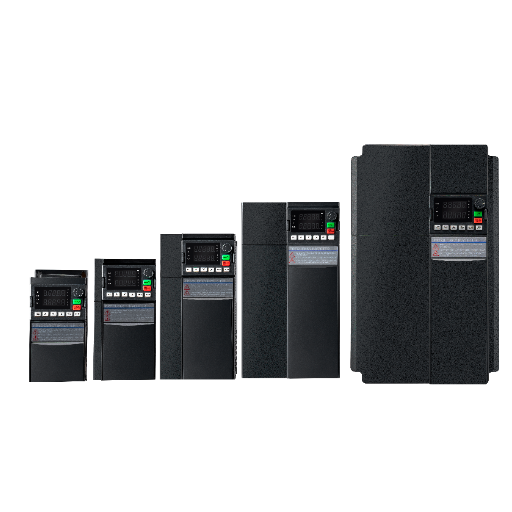
Unit price is the wrong metric for comparing frequency converter manufacturers. Total cost of ownership over the equipment lifespan tells the real story.
Factory Direct vs Distributor Pricing
Factory-direct pricing from Chinese manufacturers typically runs 30-50% below European Tier-1 brands for equivalent power ratings. Distributors add 15-30% margin for local stock and service. The trade-off is support accessibility and warranty handling.
MOQ and Volume Tiers
Sample orders of 1-5 units are usually possible at standard pricing. Small-batch orders of 10-50 units may receive modest discounts. Volume production of 100+ units unlocks meaningful price breaks and potential for OEM terms.
Os custos ocultos
Import duties and VAT vary by country, typically 5-20% of declared value. Customs clearance and brokerage fees add administrative cost. Local installation and commissioning may require certified electricians. Spare parts inventory prevents extended downtime if a unit fails. Energy efficiency differences between manufacturers can exceed $500 annually per unit for continuously operated drives.
Comparação de TCO de 10 anos
Consider a 90 kW VFD operating 6,000 hours annually. A European-branded unit purchased through a distributor might cost 18,000upfrontwith9718,000upfrontwith979,500 with 95.5% efficiency. Over 10 years, the energy cost difference at 0.12perkWhisapproximately0.12perkWhisapproximately6,480. The European unit saves energy but costs $8,500 more upfront. The break-even depends on electricity rates, operating hours, and maintenance costs. At high utilization and high energy prices, premium efficiency wins. At moderate use, the Chinese unit delivers lower total cost.
| Fator de Custo | European Brand (Distributor) | Chinese Manufacturer (Factory Direct) |
|---|---|---|
| Preço | $18,000 | $9,500 |
| Shipping/Import | $800 | $1,200 |
| Instalação | $1,500 | $1,500 |
| Energia de 10 anos | $38,880 | $45,360 |
| Manutenção/Peças | $2,500 | $3,200 |
| TCO de 10 anos | $61,680 | $60,760 |
The gap narrows dramatically when all costs are included. This is why manufacturer evaluation must look beyond catalog price.
Building a Long-Term Supplier Partnership
The best supplier relationships extend beyond the first purchase. Long-term partnerships reduce risk, improve product evolution, and create pricing stability.
Protocolos de Comunicação
Establish a clear technical point of contact with direct access to engineering. Response time expectations should be documented. For international partnerships, video calls and factory virtual tours bridge the distance gap. WeChat, WhatsApp, and email are standard channels. The key is knowing who to contact and how quickly they respond.
Garantia e Pós-Venda
Standard warranty terms in the industry range from 12 to 24 months. Extended warranties and spare parts agreements provide additional security. Clarify what the warranty covers: power electronics only, or the complete unit including fans and displays? Where are spare parts stocked? What is the typical repair or replacement timeline?
A reliable supplier will honor warranty claims without excessive documentation requirements. They will also conduct root cause analysis on field failures to prevent recurrence.
Melhoria Contínua
Strong suppliers invite feedback. Annual business reviews allow both parties to discuss volume forecasts, quality trends, and product enhancement requests. Volume commitments often unlock pricing stability and priority production scheduling.
Perguntas frequentes
How do I verify a frequency converter manufacturer is real and not a trading company?
Request a business license showing manufacturing in the scope. Ask for factory photos with identifiable details. Conduct a video call showing the production floor in real time. Verify the address on Google Maps or Baidu Maps. Request references from export customers and actually contact them.
What certifications should a frequency converter manufacturer have?
At minimum: ISO 9001 for quality management, CE marking for European market access, and IEC 61000 for electromagnetic compatibility. For North America, UL listing is important. For specific markets, GOST-R, SABS, or SASO may be required. Always verify certificates through the issuing registrar.
How much does it cost to work with a frequency converter manufacturer in China?
Standard VFDs range from 200 a200to2,000 depending on power rating. Static frequency converters for 50/60 Hz applications range from 1,500 a1,500to15,000. Custom 400Hz aviation units range from 3,000 a3,000to25,000. OEM branding typically requires MOQs of 50-100 units for smaller drives.
What is the typical lead time for custom frequency converters?
Standard catalog units from established manufacturers: 2-4 weeks. Custom configurations with modified voltages or enclosures: 4-8 weeks. Fully custom designs requiring engineering development: 8-16 weeks. European Tier-1 brands typically require 8-16 weeks even for standard units.
Can I get my own brand on frequency converters from a manufacturer?
Yes. OEM partnerships allow private labeling with your logo, packaging, manuals, and warranty terms. Most manufacturers require MOQs of 50-100 units for standard models, though higher-value units may have lower minimums.
What is the difference between OEM and ODM for frequency converters?
OEM means the manufacturer builds a standard or lightly modified design under your brand. ODM means the manufacturer co-develops a custom design with you, often sharing IP for unique specifications. OEM is faster and lower cost. ODM provides product differentiation.
How do I avoid quality problems when sourcing from overseas manufacturers?
Verify factory ownership and testing capability before ordering. Request sample units for evaluation. Conduct incoming inspection on your first production batch. Specify acceptance criteria in your purchase order. Build a relationship rather than treating each order as transactional.
Should I choose a local distributor or buy factory direct?
Choose a distributor if you need local stock, urgent delivery, or immediate service support. Buy factory direct if you need customization, OEM branding, or competitive pricing and can manage shipping and local support yourself.
What is the minimum order quantity for frequency converter manufacturers?
Sample orders of 1-5 units are usually possible. OEM branding typically starts at 50-100 units for standard VFDs. Large static converters or 400Hz units may have lower MOQs due to higher per-unit value. Volume discounts usually begin at 100+ units.
How do I handle warranty claims with an overseas manufacturer?
Clarify warranty terms, coverage scope, and claim process before ordering. Document serial numbers and delivery dates. Photograph any shipping damage immediately. Communicate failures with clear technical descriptions. Reputable manufacturers will troubleshoot remotely, ship replacement components, or arrange repair depending on the failure mode and timing.
Conclusão
Choosing the right frequency converter manufacturer is one of the most consequential procurement decisions in industrial power systems. The wrong supplier creates hidden costs that exceed any upfront savings. The right supplier becomes a long-term partner who improves your product, reduces your risk, and scales with your business.
The framework in this guide gives you a structured approach: evaluate technical competence and manufacturing capacity, verify certifications through registrars not marketing materials, understand supplier types and match them to your needs, calculate total cost of ownership instead of comparing catalog prices, and build communication protocols that support long-term partnership.
Whether you are sourcing your first VFD for a production line or building a global brand of private-label power equipment, the principles remain the same. A frequency converter manufacturer should earn your trust through transparency, engineering depth, and consistent delivery, not just competitive pricing.
Ready to evaluate a frequency converter manufacturer for your next project? Shandong Electric welcomes factory audits, sample evaluations, and OEM partnership discussions. Contate nossa equipe de engenharia to schedule a video factory tour or request a detailed quotation for your specific application.
