
A medium voltage soft starter is a thyristor-based motor controller that gradually ramps voltage to AC motors rated 1 kV to 15 kV, reducing inrush current from 6-8 times full-load current down to 2-4 times FLC. It is the most cost-effective starting method for fixed-speed loads that do not need continuous variable-speed control.
A commissioning team in Singapore arrived on a Monday morning to start up six brand-new 6 kV soft starters at a district cooling plant. By Wednesday, four of the six were tripping on overcurrent within seven seconds of every start attempt. The cause wasn’t the hardware. It was a single misread line on the data sheet. The starters had been sized using AC53a continuous-duty ratings, but the application called for AC53b intermittent duty. The required current rating was off by 22 percent, and every start pushed the SCRs into thermal protection. The team eventually swapped in larger frame sizes, but not before three weeks of delay and a $94,000 change order.
That single mistake — confusing AC53a for AC53b — is one of the five sizing errors we see most often when reviewing MV soft starter projects.
If you are specifying, sizing, or commissioning a medium voltage soft starter, this guide gives you the complete framework. You will learn how SCR and IGBT topologies differ, when soft starters beat VFDs (and when they don’t), how to read AC53 codes correctly, real cost ranges from 15,000-е15,000to200,000, and seven commissioning failures to avoid. By the end, you will have a decision framework you can apply to any MV motor starting project from 1 kV to 15 kV.
Основные выводы
- A medium voltage soft starter reduces motor inrush current from 6-8x FLC to 2-4x FLC using thyristor phase-angle control.
- SCR topologies dominate above 3.3 kV; IGBT-based soft starters are emerging for lower-voltage MV classes (2.3-4.16 kV) with better soft-stop control.
- AC53a is for continuous duty (bypass contactor not used); AC53b is for intermittent duty (bypass contactor closes after ramp). Misreading the code causes 20-30 percent oversizing or dangerous undersizing.
- Multi-motor configurations follow the formula
[4 + (n-1)] x motor FLCfor the required soft starter current rating.- Soft starter panels typically cost 30-50 percent of an equivalent VFD panel, making them the economical choice for fixed-speed loads.
- The five most common commissioning failures are: wrong AC53 code, starting voltage set too low, bypass contactor timing errors, incorrect phase sequence, and exceeding starts per hour.
What Is a Medium Voltage Soft Starter?
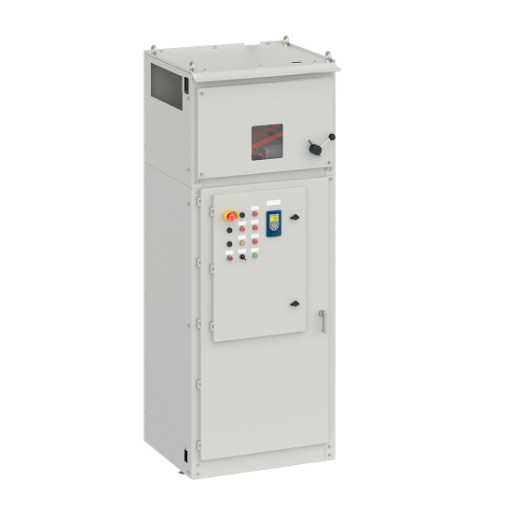
The medium voltage, also known as the soft starter, is interposed between the input supply and an ac motor. It utilizes SCRs (Thyristors) in back-to-back configuration to control the voltage across the terminals of the motor during startup. Accordingly, starting from a programmable initial point (approximately 30% to 70% of the line voltage), the voltage to the terminals of the motor is raised to line voltage in line with the user programmable ramp time (usually between 5-30 seconds).
This controlled ramp reduces mechanical stress on couplings, belts, and driven equipment. It also limits the voltage dip seen by the rest of the plant electrical system, which is critical in facilities with weak utility sources or tight power quality requirements. For a deeper look at the broader landscape of motor starting technologies, see our complete guide to medium voltage motor protection.
Voltage Range Definition
IEC defines medium voltage as any equipment rated for alternating current above 1 kV. In practice, MV soft starters are manufactured for standard voltage classes: 2.3 kV, 3.3 kV, 4.16 kV, 6 kV / 7.2 kV, 11 kV, 13.8 kV, and 15 kV. The most common industrial ratings are 6 kV and 10 kV, driven by large pump, fan, and compressor motors in water treatment, mining, and HVAC plants.
Current ratings scale with voltage. At 7.2 kV, standard frames cover up to roughly 10,000 HP. At 15 kV, frames extend to 20,000 HP. Below 1 kV, equipment is classified as low voltage and uses fundamentally different semiconductor packaging and cooling.
When You Need an MV Soft Starter (vs LV Soft Starter)
The crossover point is straightforward: when your motor rated voltage exceeds 1 kV, you need a medium voltage soft starter. LV soft starters (220 V to 690 V) use modular thyristor packages with standard heat sinks. MV soft starters require series-connected SCRs to achieve the higher voltage blocking capability, vacuum contactors for bypass, and fiber-optic gate drivers for isolation.
MV soft starters also carry different standards. IEC 60947-4-2 and UL 347 govern their construction and testing, whereas LV starters fall under IEC 60947-4-1 and UL 508. The insulation, clearances, and partial discharge requirements are substantially more stringent.
SCR vs IGBT Topology — The Two Modern MV Architectures
The vast majority of MV soft starters use thyristor (SCR) technology. SCRs are robust, cost-effective, and well-suited to the line-frequency switching that soft starters require. In an SCR soft starter, pairs of anti-parallel thyristors are connected in each phase. Firing angle control adjusts the RMS voltage delivered to the motor.
IGBT-based soft starters are a newer alternative, offered by manufacturers such as Solcon-IGEL under the DriveStart product line. IGBTs enable more sophisticated control algorithms, including precise torque control and soft-stop profiles that SCR starters struggle to replicate. However, IGBTs cost more and have not yet displaced SCRs above 6.6 kV. For most fixed-speed pump and fan applications, SCR remains the default choice.
How Does a Medium Voltage Soft Starter Work?
Understanding the internal sequence helps you commission correctly and diagnose failures faster. A modern MV soft starter executes three distinct phases during every motor start.
Thyristor Firing and Voltage Ramp
When the start command is issued, the soft starter’s microprocessor calculates a voltage ramp profile. It begins firing the SCRs at a delayed angle (high alpha), delivering a reduced voltage to the motor. Over the programmed ramp time, the firing angle advances toward zero degrees, increasing the RMS voltage linearly (or by selectable curve) until full line voltage is reached.
The initial voltage and ramp time are the two parameters that determine starting current and starting torque. Typical starting currents are 300-450 percent of motor full-load current, compared with 600-800 percent during direct-on-line (DOL) starting. Starting torque varies with the square of voltage, so a 50 percent voltage start produces only 25 percent of DOL torque.
Bypass Contactor Operation (Post-Ramp)
The soft starter transmits a closed bid to a switch-on bypass vacuum contactor by the moment the motor ramp completes and the speed reaches 97-99 percent of the synchronous speed. It is the contactor that ends up in the picture, bypassing the SCR stack and allowing the motor to run attached across the line. By stepping into bypass mode, the SCR conduction losses (~4.5 watts per amp continuous in the non-bypassed designs) are completely shut down so the life of the semiconductor section is significantly enhanced.
Appropriate timing of the changeover between SCR and bypass is critical. Closing the contactor too soon adds unwanted inrush current spikes. If the close occurs too late, SCRs overheat. Most modern starters sense motor current or speed feedback to decide when to make the switch.
Fiber-Optic Gate Drive Architecture (MV-Specific)
Because MV soft starters operate at kilovolt potentials, the control electronics must be galvanically isolated from the power circuit. Fiber-optic cables transmit the gate firing pulses from the low-voltage control board to the high-voltage SCR gate drivers. This architecture eliminates the noise and insulation risks associated with pulse transformers or direct electrical connections.
Soft Starter vs DOL, Autotransformer, and VFD
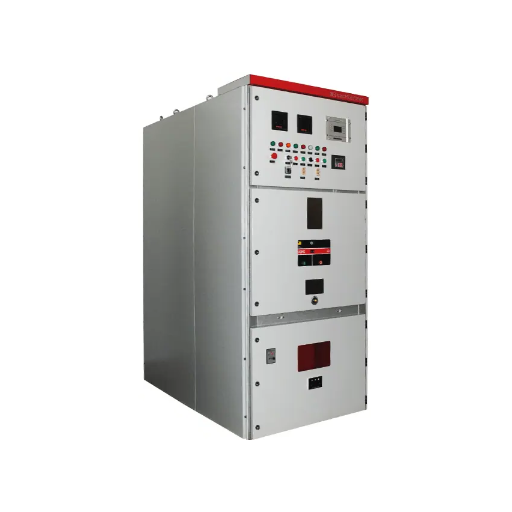
Choosing a starting method is one of the first decisions in any MV motor project. Each option has a clear economic and technical niche. For a broader comparison of all starting methods, refer to our Руководство по методам запуска двигателей среднего напряжения.
| Начальный метод | Пусковой ток | Начальный крутящий момент | Контроль скорости | Относительная стоимость | Гармоники |
|---|---|---|---|---|---|
| DOL (Direct On Line) | 6-8x FLC | 100%. | Ничто | Самая низкая | Минимальные |
| автотрансформатор | 3-5x FLC | 40-65% | Ничто | Низкий | Минимальные |
| Софт Стартер | 2-4x FLC | 15-50% | None (fixed speed) | Средний | During start only |
| VFD | 1-1.5x FLC | 100% + | Полный спектр | Наивысший | Непрерывный |
When Soft Starter Beats VFD (Cost-Driven Fixed-Speed Loads)
If your motor runs at fixed speed and does not require process-controlled acceleration or deceleration, a soft starter is almost always the better economic choice. A soft starter panel costs 30-50 percent of an equivalent VFD panel. After the bypass contactor closes, the soft starter introduces no continuous electronic losses. A VFD, by contrast, carries 2-3 percent conversion losses continuously.
Pumps, fans, compressors, and conveyors that run at constant speed for long duty cycles are ideal soft starter applications.
When VFD Beats Soft Starter (Variable Speed, High Breakaway Torque)
If your process requires variable speed, energy optimization via speed reduction, or precise torque control during acceleration, a VFD is the correct choice. Soft starters cannot control speed. They also cannot provide high starting torque at low starting current — a VFD can deliver 100 percent torque at 100 percent current, whereas a soft starter at 300 percent current may only achieve 25-50 percent torque depending on the voltage ramp profile.
High-inertia loads such as ball mills, centrifuges, and some large fans may also need VFDs if the soft starter cannot provide enough torque to reach full speed before thermal limits are reached.
Why Autotransformer Starters Have Been Displaced
The Korndorfer autotransformer starter was the standard reduced-voltage starting method for decades. It used a tapped autotransformer to apply reduced voltage to the motor during startup, then switched to full voltage via a contactor. It worked, but it was bulky, required heavy copper windings, and produced a severe current step-change during the transition from reduced voltage to full voltage.
Modern SCR soft starters have displaced autotransformer starters in almost all new MV installations. Soft starters are smaller, lighter, offer smooth voltage ramping without step changes, and allow programmable starting profiles. The only remaining autotransformer applications are in extremely cost-sensitive retrofits where the existing transformer is still serviceable.
How to Size a Medium Voltage Soft Starter
Correct sizing determines reliability, cost, and thermal margin. The process is straightforward but unforgiving if you skip steps.
Step 1 — Use Full-Load Amps (Not Horsepower)
Motor nameplate horsepower is a mechanical output rating, not an electrical input specification. Always size the soft starter using the motor’s full-load current (FLA or FLC) at the actual operating voltage. A 2,000 HP motor at 6.6 kV draws a different current than a 2,000 HP motor at 11 kV. The soft starter current rating must meet or exceed the motor FLC under worst-case operating conditions.
Step 2 — Decode the AC53 Utilization Code
AC53 is the IEC utilization category that defines a soft starter’s duty cycle capability. It is the single most misread parameter in MV soft starter procurement.
- AC53a: Continuous duty. The soft starter carries motor current indefinitely without a bypass contactor. The SCRs are sized for continuous thermal load. AC53a ratings are higher cost and used when bypass is not permitted or desired.
- AC53b: Intermittent duty. The soft starter carries motor current only during the start ramp. A bypass contactor takes over at the end of ramp. AC53b ratings assume a defined starts-per-hour limit and duty cycle.
If your application uses a bypass contactor (which is standard for most fixed-speed loads), you can use an AC53b-rated starter. Specifying AC53a when AC53b is sufficient will increase cost by 20-30 percent. Conversely, using AC53b without a bypass contactor will cause thermal failure.
Step 3 — Bypassed vs Non-Bypassed Configuration
In a bypassed configuration, the soft starter only sees current during the ramp period (typically 5-30 seconds). The bypass contactor carries the continuous load. This is the most common arrangement and allows a smaller, AC53b-rated starter.
In a non-bypassed configuration, the SCRs carry full motor current continuously. This requires an AC53a-rated starter with larger heat sinks and higher continuous current capability. Non-bypassed configurations are used when the starter must also provide soft-stop control or when bypass contactor maintenance is impractical.
Step 4 — Apply Derating Factors (Starts/Hr, Ambient, Altitude)
Manufacturer ratings are based on standard conditions: 40 degrees C ambient, up to 1,000 meters altitude, and a defined number of starts per hour. Apply derating when conditions differ:
- Начинается в час: More than 3-6 starts per hour for heavy loads requires current derating or increased cooling. SCR thermal mass is finite; repeated starts without adequate cooling intervals cause junction temperature accumulation.
- Температура окружающей среды: Above 40 degrees C, derate by 1 percent per degree C, or add forced ventilation.
- Altitude: Above 1,000 meters, air density reduces cooling efficiency. Derate by 1 percent per 100 meters above 1,000 meters.
Worked Example: 1,500 kW, 6.6 kV Pump Motor
Consider a 1,500 kW, 6.6 kV, 3-phase, 50 Hz pump motor with a nameplate full-load current of 156 A. The motor starts 2 times per hour in a 35 degrees C ambient environment at 500 meters altitude.
- Base requirement: 156 A (motor FLC).
- Тип обязанности: The application uses a bypass contactor after ramp, so AC53b is appropriate.
- Начинается в час: 2 starts/hr is well within standard AC53b limits; no derating required.
- окружающий: 35 degrees C is below 40 degrees C; no derating.
- Altitude: 500 meters is below 1,000 meters; no derating.
- Selected soft starter: AC53b-rated 200 A frame at 7.2 kV class (next standard size above 156 A, providing 28 percent thermal margin).
If the procurement team had mistakenly specified AC53a continuous duty, the required frame would jump to at least 250 A continuous, adding roughly 8,000-8,000-12,000 to the panel cost for capability that the application will never use.
Industrial Applications and Real-World Examples
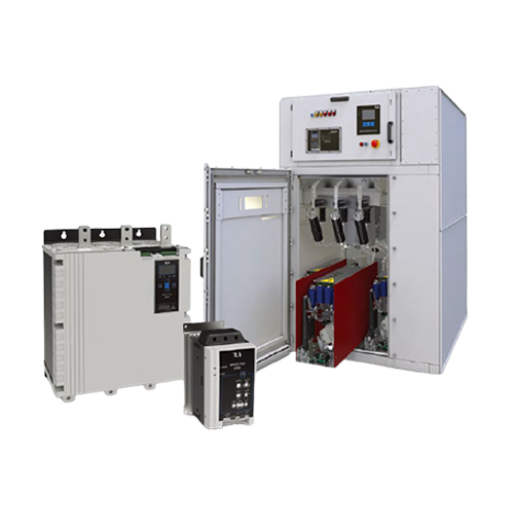
Medium voltage soft starters are used across heavy industry wherever large fixed-speed motors must start without stressing the mechanical train or the electrical system.
Pumps (Water Hammer Prevention)
Centrifugal pumps are the single largest application for MV soft starters. In water distribution and wastewater plants, pump motors from 500 kW to 5,000 kW are common. A soft starter prevents water hammer — the pressure surge that occurs when a pump starts instantly at full speed against a closed check valve. By ramping speed gradually, the starter allows the check valve to open smoothly and avoids pressure spikes that can crack pipes and damage seals.
At a water treatment facility in Northern China, a 2,800 kW, 10 kV raw water pump was originally started DOL. Pressure transients repeatedly cracked 1,200 mm ductile iron pipe sections upstream of the pump station. After retrofitting with a 10 kV soft starter and a 15-second voltage ramp, pressure spikes dropped from 18 bar to 6 bar. Pipe failures stopped entirely.
Fans and Blowers (Belt Slipping, Axial Fan Inertia)
Induced-draft and forced-draft fans in power plants, cement kilns, and tunnel ventilation systems use soft starters to reduce belt slip and coupling wear. Axial fans have high inertia; the time to reach full speed can exceed 20 seconds. A soft starter limits the acceleration torque that would otherwise stretch or slip belts during DOL starting.
The Zhongnanshan Tunnel in China, one of Asia’s longest highway tunnels, uses 36 sets of 6 kV / 140 A MV soft starters to drive exhaust fans. Reliable starting is safety-critical in tunnel ventilation.
Compressors (High Inertia, Multi-Start Systems)
Air and gas compressors present high breakaway torque and high inertia. Screw compressors in particular require controlled acceleration to avoid rotor contact. Soft starters allow the compressor to reach operating speed without the mechanical shock of DOL starting.
At an oxygen plant in Eastern Europe, a Solcon-IGEL DriveStart IGBT-based soft starter (6 kV / 750 A) starts two oxygen compressors. The larger compressor draws 666 A at full load and starts over a 43-second ramp. The IGBT topology provides a controlled deceleration profile that prevents reverse rotation during coast-down, a common failure mode in oxygen compressor trains.
Centrifuges and Mills
In mining and mineral processing, ball mills and SAG mills have extremely high inertia. While some mills require VFDs for speed control during operation, many auxiliary mills and centrifuges use soft starters for cost-effective reduced-voltage starting. One mining operation uses a 3,200 kW soft starter to reliably start a main ventilation fan, avoiding the $400,000+ cost of an equivalent VFD solution.
Multi-Motor Soft Starter Configurations
Not every plant uses one starter per motor. In some configurations, a single soft starter services multiple motors.
One Soft Starter Per Motor (Standard Approach)
The default design assigns one soft starter to each motor. This provides full control, redundancy, and the simplest protection coordination. If one starter fails, the other motors remain operational. This approach is recommended for critical process loads.
One Soft Starter for Multiple Motors (the [4 + (n-1)] x FLC Правило)
In cost-sensitive applications such as irrigation pump stations or cooling tower farms, one soft starter can start multiple motors sequentially. The rule of thumb for sizing is:
Required soft starter current = [4 + (n - 1)] x motor FLC
где n is the number of motors. The factor of 4 accounts for the inrush of the first motor during ramp. Each additional motor starts across the line (or with a smaller ramp) after the previous motor reaches speed.
For example, a pump station with four 200 kW, 6 kV motors (each 22 A FLC) sharing one soft starter:
Required current = [4 + (4 - 1)] x 22 A = 7 x 22 A = 154 A
A 200 A AC53b-rated starter would handle this application. However, note that only the first motor receives a true soft start. Subsequent motors see line voltage when their contactors close. This method also adds complexity to motor protection coordination; each motor needs individual overload protection. See our motor protection coordination guide for details on coordinating multiple motor branches.
When to Switch to Individual VFDs
If the application requires each motor to operate at a different speed, or if energy savings from variable-speed operation justify the higher capital cost, individual VFDs are the correct choice. The crossover point typically occurs when the motor runs at partial load for more than 2,000 hours per year and a 10-20 percent speed reduction is technically acceptable. Otherwise, the multi-motor soft starter remains the more economical solution.
Need help sizing a soft starter for your multi-motor pump station? Свяжитесь с нашей командой инженеров for a free configuration review.
Medium Voltage Soft Starter Cost Benchmarks
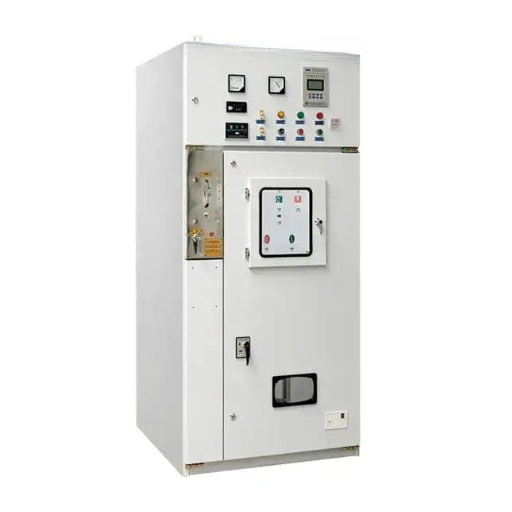
Budgeting for an MV soft starter requires looking beyond the catalog price of the starter unit itself. The total installed cost includes the starter, bypass vacuum contactor, input fuses or circuit breaker, control power transformer, enclosure, cooling, and commissioning labor.
| Класс напряжения | Диапазон мощности двигателя | Soft Starter Panel Cost (USD, 2026) |
|---|---|---|
| 2.3-3.3 кВ | 500-2,000 HP | 15,000-15,000-35,000 |
| 4.16-6.6 кВ | 1,000-5,000 HP | 30,000-30,000-75,000 |
| 7.2-11 кВ | 3,000-10,000 HP | 60,000-60,000-130,000 |
| 13.8-15 кВ | 5,000-20,000 HP | 100,000-100,000-200,000 |
These figures are for SCR-based, bypassed configurations with standard enclosures. IGBT-based starters add 20-40 percent. Non-bypassed AC53a configurations add 15-25 percent. Custom enclosures (NEMA 4X, stainless steel, seismic-rated) add 10-30 percent.
Total Cost of Ownership (Panel, Vacuum Contactor, Commissioning, Training)
Beyond the panel hardware, budget for:
- Bypass vacuum contactor: 3,000-3,000-12,000 depending on voltage and current class.
- Входная защита: MV fuses or vacuum circuit breaker, 5,000-5,000-25,000.
- Корпус и охлаждение: Forced-air or air-conditioned enclosure in hot climates, 2,000-2,000-8,000.
- Ввод в эксплуатацию и запуск: 3,000-3,000-10,000 depending on travel and complexity.
- Комплект запасных частей: Recommended spare thyristor, gate driver, and control board, 5-8 percent of panel cost.
Soft Starter Cost vs VFD Cost — When the Premium Is Worth It
As a rule, an MV soft starter panel costs 30-50 percent of an equivalent VFD panel. For a 3,000 HP, 6.6 kV fan motor, a soft starter might cost 55,000whileaVFDcosts55,000whileaVFDcosts140,000. If the fan runs at fixed speed 8,000 hours per year, the soft starter is the clear winner. If the fan could operate at 80 percent speed for 4,000 hours per year and save $18,000 annually in energy, the VFD pays back in roughly five years. The decision is economic, not technical.
Common Commissioning Failures (and How to Avoid Them)
Field experience shows that most MV soft starter problems are not hardware defects. They are configuration, sizing, or wiring errors made before the starter ever sees its first start command. The following five failures account for over 70 percent of commissioning trouble calls.
Wrong AC53 Code Selection
As the Singapore district cooling case showed, confusing AC53a with AC53b causes either dangerous undersizing (if you use AC53b without bypass) or unnecessary oversizing (if you specify AC53a with bypass). Always confirm the duty type with the process engineer before issuing a purchase specification. If in doubt, specify AC53a — but understand that you are paying a premium for continuous-duty thermal capacity you may not need.
Starting Voltage Set Too Low for Load
A common commissioning mistake is setting the initial starting voltage too low in an attempt to minimize inrush. If the initial voltage is below the motor’s breakaway torque requirement, the motor will not accelerate. Current remains high, the ramp timer expires, and the starter trips on overcurrent or stall protection.
A TECO 3.5 MW, 6 kV fan motor installation documented on an engineering forum experienced exactly this failure. The commissioning technician set initial voltage to 35 percent to be “safe.” The fan’s breakaway torque required at least 45 percent voltage. The motor stalled at 60 percent speed, drew 4.2x FLC for 22 seconds, and tripped on electronic overcurrent. The fix was a simple parameter change to 50 percent initial voltage and a 20-second ramp. The lesson: always calculate breakaway torque before setting the starting voltage.
Bypass Contactor Pickup Timing Errors
If the bypass contactor is closed before the SCRs achieve full conduction, a current step change may occur that can trip instantaneous overcurrent relays. If it’s closed too late, SCR junction temperature will exceed its safe limit. New soft starters have algorithms that automatically optimize the transition point, although these should be tested with the actual load after an initial few starts. Always compare bypass transitions using scope or power-quality analyzer during the commissioning phase.
Phase Sequence and Reverse Rotation
MV motors are sensitive to phase sequence. Reversing two phases produces reverse rotation, which can destroy pumps, compressors, and fans within seconds. Verify phase sequence with a phase rotation meter before the first start. After correcting phase sequence, recheck motor relay settings; some настройки реле защиты двигателя include reverse-phase blocking that must be enabled.
Limit Starts/Hour to Avoid Thermal Damage
SCRs have thermal mass, but it is not infinite. Repeated starting without adequate cooling intervals causes junction temperature to accumulate. As a guideline, limit heavy-load starts to 3-6 per hour. For light-load applications (small fans, unloaded pumps), 10-15 starts per hour may be acceptable. Always check the manufacturer’s derating curve for your specific frame size and duty cycle.
Стандарты и соответствие
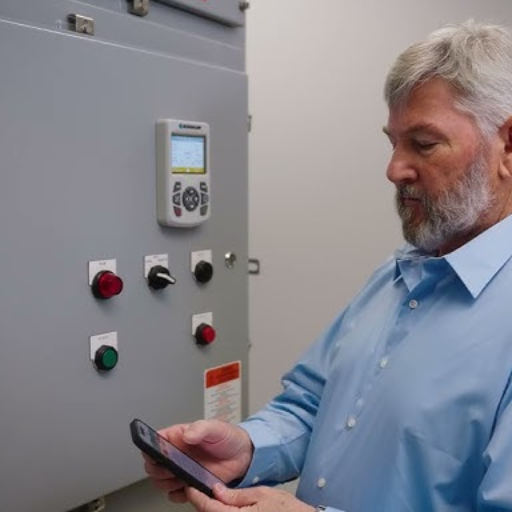
MV soft starters must comply with national and international standards to be insurable, warrantable, and legally installable.
IEC 60947-4-2 (AC Semiconductor Motor Controllers)
IEC 60947-4-2 is the international standard for AC semiconductor motor controllers and starters, including soft starters. It defines utilization categories (including AC53a and AC53b), electrical ratings, test procedures, and performance requirements. Compliance with IEC 60947-4-2 ensures that the starter has been type-tested for short-circuit withstand, overload endurance, and electromagnetic compatibility. You can access the standard at the Интернет-магазин МЭК.
UL 347 (Medium Voltage AC Contactors and Starters)
The UL 347 standard applies to medium voltage AC contactors, controllers, and starters for use in North America for almost all applications. The standard covers voltage ratings up to 15kV and has specific requirements for vacuum contactors in bypass circuitry. The Ampgard RVSS from Eaton was the first reduced-voltage, solid-state starter to achieve the UL 347 status for medium duty-a pathway that has opened the North American medium-voltage market for electronic starting. Visit us to learn more about Eaton’s Ampgard RVSS.
NEMA ICS 1 / ICS 2
NEMA ICS 1 talks about general requirements for industrial control systems, and ICS 2 includes information about controllers. References to these standards appear often in specifications in the US, and they deal with degree or type of protection provided by enclosures, normal wiring practices, and self-explanatory nameplate marking requirements.
GB/T 14048.6 (Китай)
For projects in China or for Chinese-manufactured equipment exported globally, GB/T 14048.6 is the Chinese national standard that matches the IEC 60947-4-2 standard on the applications of electro technical equipment for MV three-phase soft starters using control electrical energy. Henceforth, Shandong Electric Co., Ltd. draws, designs, and tests the relevant systems or solutions in accordance to GB/T 14048.6 to guarantee local and international equivalence.
Часто задаваемые вопросы (FAQ)
What is a medium voltage soft starter?
A medium voltage soft starter is an electronic motor controller that uses thyristors (SCRs) to gradually increase the voltage supplied to an AC motor rated between 1 kV and 15 kV. This reduces starting current and mechanical stress compared with direct-on-line starting.
What’s the voltage range for a medium voltage soft starter?
MV soft starters are manufactured for standard voltage classes: 2.3 kV, 3.3 kV, 4.16 kV, 6 kV / 7.2 kV, 10 kV / 11 kV, 13.8 kV, and 15 kV. The most common industrial ratings are 6 kV and 10 kV.
How do I size a medium voltage soft starter?
Size the motor based on its full-load current (FLA), not horsepower. Choose the AC53 utilization code based on whether or not you are using a bypass contactor (AC53b for bypassed, AC53a for non-bypassed). Apply derating for ambient temperature above 40C, altitude above 1,000 meters, and more than 3-6 starts per hour.
Soft starter vs VFD — which is right for my application?
Use a soft starter for fixed-speed loads where you only need controlled starting and stopping. Use a VFD when you need variable speed, energy savings from speed reduction, or precise torque control. Soft starters cost 30-50 percent less than VFDs but cannot control motor speed.
What is AC53a vs AC53b?
AC53a is a continuous-duty rating: the soft starter carries full motor current indefinitely without a bypass contactor. AC53b is an intermittent-duty rating: the starter only carries current during the start ramp, and a bypass contactor takes over at full speed. Using AC53b without a bypass causes thermal failure; using AC53a with a bypass wastes 20-30 percent in unnecessary cost.
How much does a medium voltage soft starter cost?
Стоимость варьируется от 15,000fora2.3−3.3kV,500−2,000HPunitupto15,000fora2.3-3.3kV,500-2,000HPunitupto200,000 for a 15 kV, 20,000 HP unit. IGBT-based starters and non-bypassed AC53a configurations cost 15-40 percent more. Total installed cost includes the bypass contactor, input protection, enclosure, cooling, and commissioning.
Why does my soft starter trip on overcurrent during start?
The most common causes are: (1) initial starting voltage set too low, causing the motor to stall; (2) ramp time too short for the load inertia; (3) wrong AC53 code (undersized); or (4) mechanical overload (pump valve closed, fan damper shut). Check parameters and mechanical load before suspecting hardware failure.
Conclusion: Choosing the Right MV Soft Starter
Medium-voltage soft starter is the best option when you want to keep the inrush current and mechanical shock on a fixed speed motor down but without the added cost and complexity of a VFD. Simple to contemplate are the steps one has to follow: Get the FLC of the motor, choose the appropriate AC53 use code for bypassing, if any, incorporate the environmental deratings, and size for the actual fact of the grossly understood duty cycle.
The mistakes that cost the most-all the examples such as the $94,000 Singapore change order, TECO fan stall trip, thermal overload from running too many start attempts per hour-all these can be avoided with proper specification and commissioning. First and foremost, get the AC53 code right. Start at a voltage higher than torque for breakaway. Check bypassing setup with instrumentation. Respect the limit on the number of starts per hour.
If you are planning to start an MV motor starting project and need guidance in choosing the right soft starter, voltage class, or topology, do contact us. Our engineering team can deal with the motor data and provide you with a tailored spec checklist according to your application.
