
An extremely crucial factor to consider while ships are being connected to tropical power supplies is the softness in the modification of the electrical frequency. Ships, in most cases, operate on a 60 Hz arrangement while in certain international ports one would find 50 Hz power format hence a dilemma in the connection of the two power networks. Particularly today when more and more ships are equipped with sophisticated electrical networking systems, the electrical frequency conversion in such conversions becomes a necessity rather than an option. The problem of the choice of frequency converters goes beyond the question of “ease of operation” – in reality, the very power efficiency and safety operational conditions of the ships at mooring depend on the appropriate choice of frequency converter operation. This need is determined by such parameters as the nature of loads and ship consumption, the efficiency of the converter itself, and its relation to the larger frequency supply system.
What is the Frequency Converter’s role?
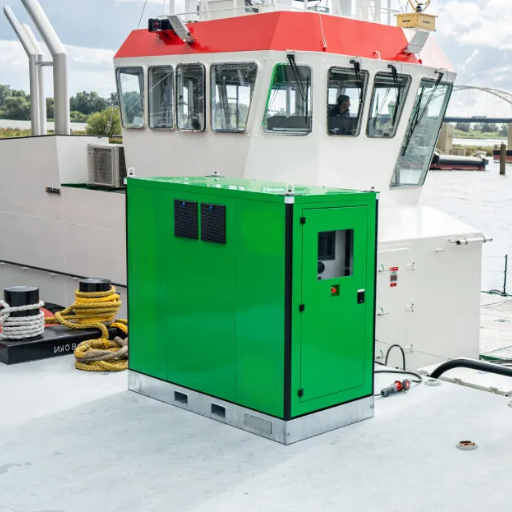
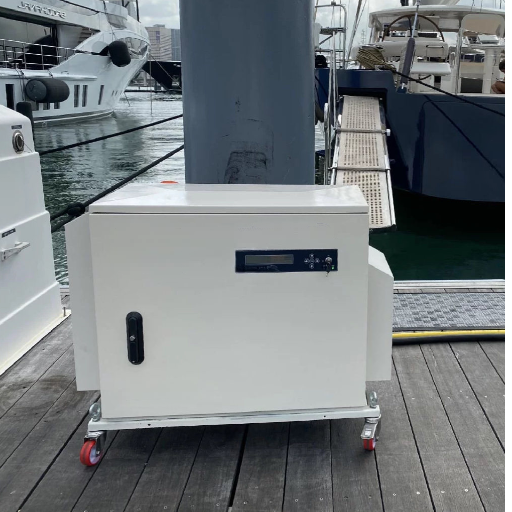
A frequency converter is an electric device, which is used to change the frequency of an input of power to the required output frequency, necessary for a particular device or system. In the case of ship to shore electricity, frequency converters are used to synchronize power delivery from the port to the demanding power systems of the vessel due to unstandardizable differences in voltages by international bodies. These electrical appliances provide for comfortable and reasonable alignment of the electrical systems in such manner that power can be transferred seamlessly without causing any disturbance to the operation of activities, so as to get useful services from the equipment.
Importance of Frequency Converters in Maritime Applications
The role played by frequency converters in maritime applications cannot be minimized; they are key in ensuring optimal energy management. It is very common nowadays to find modern ships with sophisticated power systems which require regulation of the speed and voltage in order to operate essential equipment such as propulsion, ship’s auxiliaries and on-board power distributive systems. This frees them from the clutch of one specific electrical frequency and assists them to effortlessly change between 50hz to 60hz with port utilities without incurring large modifications in mechanical or infrastructure design.
Which has become a crucial energy efficiency enhancer, these are tuned to very precise power output to lessen energy wastage and maintain high productivity. Everything associated with environmental conservation and energy efficiency always includes repair and maintenance. For example, converters development related to frequency is attributable to it that vessels can install more powerful equipment and hence, minimize fuel consumption and green gas emission which is a priority in most vessels according to the IMO. Their integration is linked to the drive to increase energy efficiency and emissions reduction in the backdrop of today’s relentless demands and requirements.
Overview of Shore-to-Ship Power Systems
There are different ways to supply ships with electrical power to minimize emissions while anchored, the focal technology being ship to shore power systems. They allow the ship to shut down its generator set while alongside the berth and hence emissions such as local air pollutants, greenhouse gases, and even noise pollution at ports can be reduced. These Ship-shore systems are often voltacry lines, such as 6.6 KV and 11 KV, and protocols, usually IEC/ISO/IEEE 80005 series have been developed to improve the functionality of such systems in different ports and ship configurations.
The advances made in shore-to-ship power have resulted in more efficiency. It has become much easier to incorporate such technologies within the ports since the solar and wind energy powerplants are added within the ports dirt and shore services grids. This enables for greener development among others in the maritime industry. The port facilities are now equipped with such infrastructures to minimize the impacts of emissions, especially the emissions of nitrogen oxides (NOx), sulfur oxides (SOx), particulate matter (PM), etc., when out at sea, thereby upholding IMO’s MARPOL Annex VI and European Union’s directive on port emissions.
On-site power systems create opportunities for significant operational advantages to be realized, most importantly, lowering costs due to the reduced need for fuel while the ship is in port. There are associated expenses for the infrastructure changes that are necessary to put in place the technologies, however they are easily offset by the savings that may be generated in the long run, global reductions in emissions and protection of the public health. The decarbonization of the industry and making ports operations sustainable, which are clearly attainable through the use of these facilities is the most significant method that should be used within the transportation sector.
Key Factors in Choosing the Right Frequency Converter
- 1
Power Requirements
It is important for the variable frequency drive to be compatible with the voltage and power requirements of the equipment. Based on the equipment and not wanting it to be either overload or under utilize, proper scaling down of the power is important. - 2
Efficiency
Assess the converter regarding cost performance efficient before making any specific investments to support any energy management objectives. Conserving the most efficient equipment will help attain cost savings over time. - 3
Compatibility
It is important to select the right conversion devices for a particular process, regardless of whether motors, hydraulic pumps, fans, or other equipment are used. - 4
Control Features
Modern converters frequently offer additional capabilities such as frequency changes, speed control and monitoring from remote locations. These capabilities improve quality and reliability in performance. - 5
Durability and Environmental Suitability
Check only quality devices that can be used even within the most extreme conditions, specifically if high temperatures, very high humidity levels or even corrosive substances are present. - 6
Compliance with Standards
The frequency converter must meet the regulatory performance and safety requirements such as IEC or IEEE recommendations for domestic and international markets.
Power Capacity and Rating
Among the main adaptation requirements for an assembly is the rated power determining the converter’s capacity. That is, the power capacity helps in calculating the maximum loading the converter can efficiently accommodate without overheating or failures, usually in kilowatts (kW) or megawatts (MW) for different system capacities. Moreover, it has to be kept in mind that the rated output of the converter should be in agreement with the calculated power consumption of the structure so that there is no wastage or excess load. Besides these, other relevant factors such as peak power demand, duty cycle, and transient response must be checked for effective operation even at different system parameters. Finally, thanks to the aspects of safety and advanced features added to the thermal design multiple peaks are considered in new generation converters to cope with any extreme case of load.
Input and Output Specifications
Specifications regarding power converters, both with respect to their input and output performance, are of paramount importance as far as the matching process and efficiency of an electrical system are concerned. On the input side, there should be no mismatch between such parameters as voltage range, current and frequency ratings and the attributes of the source in order to prevent inefficiency or threat to the device. The input voltage range specifies the extent of tolerable voltage fluctuations, catering to real-time disturbances and prevailing conditions. This makes the power supply especially configurable to the system.
As electrical engineers are often expected to provide electronically generated signals in one form or another, an output is demanded in most cases. In some aspects, however, the output design is all about ensuring that a stable and controlled voltage is supplied to the load. Details of the requirements include regulation of the output voltage, the ripple voltage, and the maximum currents. In high-quality converters, highly programmed systems enhance accuracy to one end, while low-mode operations on currently available disabled the output in the method on the other hand. A different very important factor to take into account would be the efficiency of the system since manufacturers are able to produce converters with more than 90% of efficiency, thus relieving weakening of energy in the process and reducing the created heat.
Voltage Considerations
The implications of voltage within the context of power meters can not be emphasized enough. The input voltage range of the converter should be appropriate for the range of normal bus operations without hunting or causing rapid changes in bus voltage. There are however universal circuits that operate on a wide range of voltages like 90V to 264V AC or 12V to 48V DC enabling these supplies to fit into a variety of systems leniently.
The regulated output voltage is a crucial factor to the safe operation of the linked elements. The output voltage, as needed for most types of equipment is often tight and must be within ±1% or better, for responsive electronics to perform without risk of overvoltage or underperformance due to lack of power. Modern converters feature control circuitry such as pulse-width modulation and error correction that enables them to adapt the voltage output to various load conditions or changes in ambient temperature. The high temperature becomes a problem, as it might destabilize the voltage; therefore, there are components that are often provided for the purpose of heat dissipation such as cooling systems and heatsinks.
The progress of advanced technology is in full swing. Presently, there are electronic components which consist of gallium nitride (GaN) and silicon carbide (SiC), capable of carrying a higher voltage levels which results in lower energy consumption. The use of these materials leads to lower losses and a much higher frequency of operation, thus reductions in the physical space in power systems. To the present end, more advanced technology application also fulfils the constraints within the actual designs of different power systems with emphasis also placed on the role of voltage in these designs.
Understanding Frequency Requirements
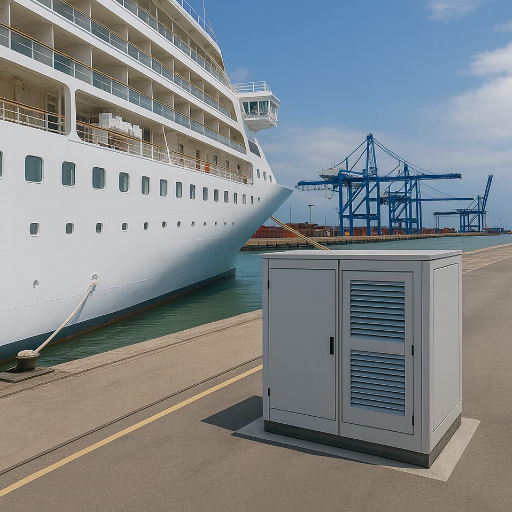
In ship power installations the maintenance of shore power systems must respect the difference in the rates of alternating voltages used in ships and land-power transmission networks. Frequently, ships use 60 Hz as their frequency, particularly ships produced in North America, while the dominant frequency for shore power systems worldwide is 50 Hz. Consequently, there are power supply equipment specially built with power frequency converters to enforce communication between the power source and power receivers for a smooth supply transition.
As a general rule, the most important consideration is that the alternating current provided from the shore matches the electrical system of the ship without any disruptions or equipment damage. Such frequency converters must be fail-safe and operate effectively for prolonged periods under sustained varying degrees of load. The opportunity of employing international standards shore-to-ship power, such as those as described in the IMO and IEC/ISO standards, is also essential in minimizing environmental impact and emissions from port activities.
Frequency Range and Compatibility
Port power generation systems must be versed across a variety of frequencies as boats from different geographical zones may have different specifications. Typically, the systems are designed to serve the standard grid electricity supply with both a 50Hz and 60Hz frequency. This flexibility in generating or providing power is important considering that power can be used or shall be used in vessels of assorted origin or with completely different requirements. Modern frequency converters incorporate power electronics that operate with closed loop control to regulate the output power, thus achieving a much better efficiency and the rated load as applicable. In addition, modern systems follow IMO and IEC / ISO requirements for compatibility and standardization across entire network of ports worldwide. Such resilience facilitates operational ease of service, uptime and throughput, while fueling the promotion of green shipping.
Single-Phase vs. Three-Phase Converters
| Parameter | Single-Phase Converters | Three-Phase Converters |
|---|---|---|
| Voltage Supply | Single phase (one sinusoidal waveform) | Three phases (three sinusoidal waveforms) |
| Power Output | Lower power delivery | Higher power delivery |
| Efficiency | Lower efficiency due to power loss | Higher efficiency with balanced loads |
| Cost | Generally less expensive | Typically more expensive |
| Complexity | Simple design and operation | Complex design and operation |
| Use Case | Residential and small-scale applications | Industrial and large-scale applications |
| Input Fluctuations Handling | Less stable under load changes | More stable under load changes |
| Maintenance | Requires less frequent maintenance | More maintenance due to complexity |
| Energy Transmission Over Distance | Less efficient for long distances | More efficient for long distances |
KVA and KW Ratings Explained
KVA (Kilovolt-Ampere) and KW (Kilowatt) ratings are of specific importance in the analysis of the capability and functionality of electrical systems. KVA signifies the total power available in an electrical system, comprising actual power (KW) along with reactive power. It is the measure of the complete power in the system without any segregation of power that is actually used to complete a certain amount of work. Contrarily, KW is the plain power, which is only power, good for tasks such as operating machines, lights, or equipment.
Knowledge of these classifications is necessary when it comes to choosing the generators, transformers, or any other heavy-current devices for any purpose – domestic, commercial, or industrial. Such decisions can even result in a breakdown of a system if the contemporaneous operation of the equipments leads to overvaluation of the design capacity of the equipments employed. Such KVA and KW do not have the same use in the system design or its inventory levels. This is necessary to achieve better system efficiency and reliability in subsequent working times.
Environmental Considerations
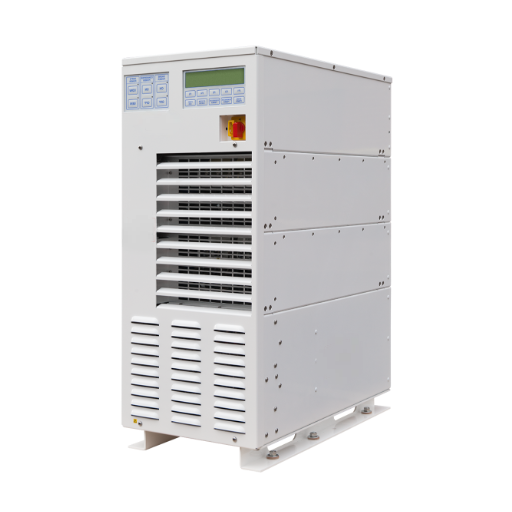
Evaluating the environmental impact of frequency converters includes aspects such as energy efficiency, heat dissipation, and the ability of the components to be recyclable after the life cycle of the machine. Energy losses are minimized with more efficient models hence the energy consumed through the machines operation is less, leading to minimal green house gases emitted. Cooling systems help in removing heat generated when in use since high temperatures may have an adverse effect on both the surrounding and the performance of the system. Moreover, there is a need for the purchase of environmentally friendly products as the components or devices used contribute to manufacturing harmful wastes. These many considerations are designed to meet the standards set by the environment and help in managing energy more vigorously.
Operating Conditions: Temperature and Humidity
Ensuring the best working conditions for temperature and humidity are very important in order to obtain stable work and durability of the device. Most products of electronic systems, such as rectifiers, operate in a range of 0°C to 40°C, though specific industrial devices versions have more expanded ranges, for example, 20°C to 60°C. Any deviation which surpasses these bounds can be quite easily damaging to the equipment through temperature acknowledgements, component sublimation or in the worst cases complete shutdown.
In the same vein, the percentage of relative humidity is usually restricted to a minimum of 20% and a maximum of 80% to avoid the formation of dew or the rusting of some components due to water, and to avoid the insulation breakdown of the materials due to too much moisture. Such limits ensure that the devices continue to perform within specification, which facilitates a decrease in the incidence of emergency downtime, and reduces maintenance costs. There are also ways of managing temperatures utilizing hi-tech solutions or constructed facility such as air-cooled area in which enhanced dehumidification and further humidification, using dehumidifiers or impermeable wall system, are involved in the room, in case of difficult industrial applications.
Static vs. Dynamic Environmental Factors
Equipment performance may be influenced by environmental factors which may be static environmental factors or dynamic environmental factors. Static factors are relatively stable, uniform, predictable, and usually refer to the unchanging state of ambient temperature, humidity or air flow in a certain location. Such factors are commonly managed with pre-designed regulations that allow the equipment to function without the importance of periodical checks. Conversely, the dynamic factor addresses numerous circumstances that are rapidly changing and involving other variables such as the weather, load operations, and sometimes the presence of contaminants like dust and chemical gases. These interactions within the system are much harder to predict and can be addressed through real-time management strategies such as dynamic monitoring.
According to multiple research findings, dynamic factors tend to be more dangerous in operational considerations, to a greater extent, because of the sudden and unpredictable nature of their occurrence. For example, material thermal expansion and contraction triggered mostly by temperature change, may cause failure to mechanical and electric devices in case estimation issues are present. Also, unexpected humidity changes often lead to the issue of condensation and corrosion of parts when such materials are combined with pollutants from an industrial process. Employing advance preventative measures for static factors and focusing on dynamic controls as well leads to superior system performance under stress. It is made possible by the alignment of activities, which when compared to change in processes, saves time, which turns out to protect the safety of assets from a point of operation to a rehabilitation level.
Cooling Requirements for Frequency Converters
Efficient management of heat generated is crucial for enhancing the efficiency and lifespan of rotary frequency converters. The power loss associated with the operation of such equipment is quite high due to different forms of loss like resistive power dissipation in power semiconductors and the power lost while the machine is working. Depending on the design and the application of the converter and the environmental conditions, several cooling mechanisms are adopted to keep the device working in an optimum state without overheating.
When the power of converted material is less, passive cooling has been very effective in a variety of its forms even to the point of using basis heat sinks and convection. This may be challenging to the case of devices with medium or high levels of power rating, however, as active cooling is sought. Such mean active cooling with forced-air systems, where fans help in moving air over the heat spreader and a networked provisioned lien that use liquid to aid in the heat removal. Good utilization of liquid-type cooling system can be of more value since when the design is constricted or when the device is working fiercely in airless or climatically high temperature conditions.
The selection of the most efficient cooling method depends on the power of the components, the space in which they are equipped, the thermal performance they can deliver. Lack of such a method renders the components subjected to them from excessive heat which can cause loss of performance capability and wear. Furthermore, failure of some modules is the result, and system life is shortened. Maybe, conventions and guidelines like generalized IEC 61800-5-1 with its constraints on thermal control in frequency converters operations which have a sense in any part of the world can also be used for this purpose.
Regulatory Compliance and Standards
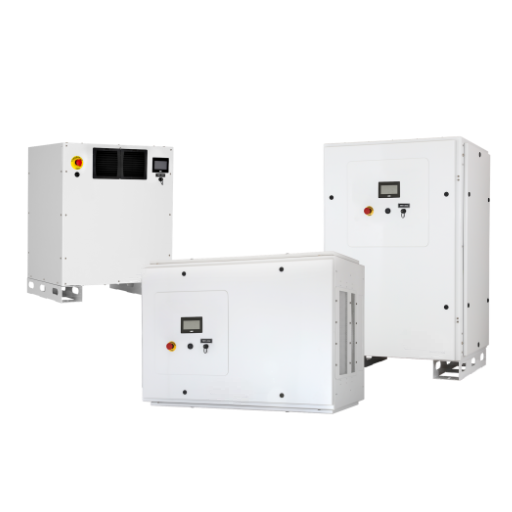
Turning the attention to frequency converters, compliance is primarily with the norms of safety, electromagnetic compatibility (EMC) and energy efficiency requirements. Such norms as the following are more often than not applied in practice:
-
IEC 61800-5-1
This international standard looks at the safety features of adjustable speed electrical power drive systems. This includes protection against electrical failure, overtemperature protection, and electrical insulation. -
IEC 61800-3
This standard gives guidance on conductive conditions applicable to high power adjustable speed motor drive systems. By conforming to this requirement, one lets it be assumed that frequency converters give no influence on electromagnetic compatibility and operate successfully in industrial area. -
EU Ecodesign Directive (2009/125/EC)
In the context of the European Ecodesign Directive (2009/125/EC), ensuring that energy-efficient means of frequency converters achieve the lowest possible energy level consumption. -
UL 508C
For the installations within North America, UL 508C contains requirements on the safety of electronic components used from the power circuits with emphasis on the prevention of fire accidents and the safety of service staff.
The usage of these standards not only promote safety, being environmentally friendly and more importantly, effective performance in industry. Manufacturers need to keep in touch with new issues of these standards and establish a constant checking mechanism for the fulfillment of these requirements.
Marine Industry Regulations
Adherence to safe practice is essential across the global maritime network in harmony with the statutory legislations presented under the forum the safety and effectiveness of operations and the environmental considerations posed. A famous Convention is known as the MARPOL convention by the International Maritime Organization (IMO) under its annexes, targets ships caused pollution in marine environment through Oil, Chemicals, Sewage, garbage and air. Similarly, the IMO 2025 Sulphur Cap directive imposes national limited quantities of sulfur oxides (SOx) that are allowed to be emitted into the atmosphere by vessels by setting sulfur content level to 0.50% in marine fuels which constitutes a remarkable measure for effective control of shipping pollution.
Furthermore, an important international regulation which has been organized to establish safety standards and conventions in an effort to regulate and create an efficient ship rescue and safety system during their operations at sea and to minimize accidents is also known as Safety of Life at Sea (SOLAS). Regulations to ensure the safety of ships in emergency situations and responding to distress calls were formulated in that period. The attempts to remodel the agreement to include modern technology saw the specific emphasis being placed on computer navigation aids like electronic chart display systems.
To provide an example of implementation, the most developed World region, the European Union implements the European Ship Recycling Regulation, which requires all vessels operated under the EU flag to be dismantled in designated facilities in order to minimize the environmental challenges and guarantee the safety of employees. In the same way, the United States Coast Guard (USCG) puts in place tough standards on ballast water management to prevent the movement of invasive species through international waterways.
International Standards for Power Converters
Below are specific International standards set for power converters to ensure safety, compatibility, reliability, and superior performance in a wide variety of applications. One of the most important procedures is the IEC 61800 series that designs at defining the operability and protection of drives with adjustable speed, both in hardware- and software-related applications. In addition to the above, IEC 62368-1 standards pertain the use and the safety of power conversion within audio, video, and information technology equipment in the design of protection of the equipments from thermal, electrical, and mechanical sources of failure.
For those who are seeking grid connectivity or also referred to as a grid-tied application IEEE 1547 compliance is compulsory because it elaborates on the for interconnection of Distributed Energy Resources (DERs) with the electrical power systems for the purpose of engineering. Additionally, power semiconductors constructed for renewable energy implementation mostly conform to the national standards as IEC 62109 is an example of such that provides specifications for the safety of the photovoltaic (PV) inverters which makes them armed, safe, reliable and capable of fighting any breakdown during the process.
Reference Sources
- 1. “A review of power converters for ships electrification”
Read more on IEEE Xplore ↗ - 2. “Stability Analysis of Grid-Forming Converters in Shore-to-Ship Power Applications”
Read more on IEEE Xplore ↗
