
Phase converters are essential for providing three-phase power to industrial equipment in areas where single-phase power is the only option. Static phase converters are the most common type and are favored for their simplicity and versatility. In this blog post, we will discuss the details of static phase converters, how they convert single-phase power to three-phase power, and their advantages and disadvantages. The use of static phase converters in heavy-duty applications will also be discussed here, highlighting the situations and reasons by which the static phase converter is the best solution. This blog is designed for anyone who wants to make a clean, adaptive change to static phase converters in the circuit, whether they are an engineer, a business owner, or a technician, by providing the necessary technical knowledge.
Overview of Phase Converters
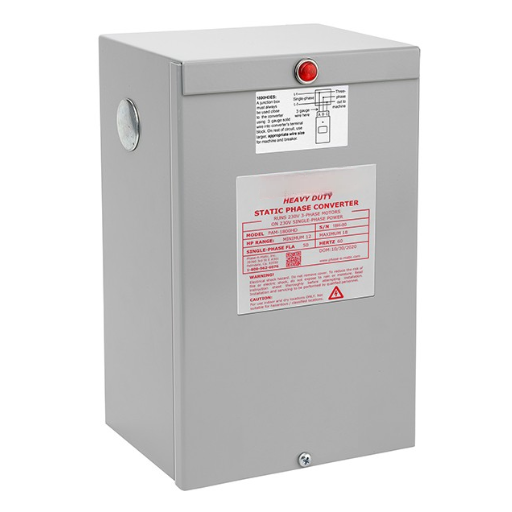
Phase converters are devices that allow three-phase machines to operate in single-phase electrical systems. They play a vital role in cases where three-phase power is unavailable or very difficult to install. In such instances, converters produce the third voltage phase, ensuring that three-phase equipment, such as industrial motors or heavy-duty equipment, operates properly in a single-phase environment. There are static, rotary, and digital types of phase converters available in the market. Each type has several specific applications, where static phase converters are best for light to medium-duty work, rotary for the heaviest loads, and digital for exacting control and high energy use. The choice of the right type will depend on the machinery specifics and the operational requirements. The deployment of the phase converters will not only enable the devices to run in synchronized motion but will also significantly reduce power line constraints.
What is a Phase Converter?
A phase converter is an electronic device that converts single-phase primary power to three-phase secondary power, enabling a 3-phase machine or equipment to operate at a location where only single-phase power is available. The invention of a phase converter eased the problem faced by industrial, agricultural, or workshop sectors that require three-phase power but lack the infrastructure to support it, and this is where phase converters will be crucial. The primary role of phase converters is to generate a balanced three-phase power output, ensuring that the machines operate smoothly and without significant voltage differences that can corrode the equipment or reduce its efficiency. Phase converters are increasingly replacing other solutions because they are much more cost-effective, less complicated, and eliminate the problems of older electrical supply systems.
Types of Phase Converters
Applications of Phase Converters in Industry
Manufacturing and Fabrication
Phase converters are widely used in factory settings that depend heavily on heavy machinery, e.g., lathes, milling machines, and grinders. Hint about phase converters also used in other industrial sectors. Associatively, metal fabrication shops use rotary converters to power CNC machines, which require three-phase power to be available at all times and in a stable condition.
Agricultural Operations
Phase converters for agricultural sites are chiefly used for irrigation pumps and grain dryers, with other types of rural machinery also being powered. Static converters are essentially different but complementary to rotary ones, as the former are used in machines with low power consumption and short working cycles, like those found on the farms in question, while the latter depend on operating a heavy rotary pump/motor for a long time without failure.
Woodworking and Carpentry
Quite often, joineries and furniture shops are where three-phase machines like table saws, planers, and jointers are found. In the above applications, digital phase converters play a crucial role in precisely balancing phases, making it easier to use the U.K. standard in these connected processes.
Automation and Robotics
Industries that use robotic systems or automated production lines are among the primary beneficiaries of digital phase converters. Their versatility and high efficiency are well aligned with the requirements for robotic component accuracy and smooth operation, especially under changing load conditions.
Small Workshops and Mobile Operations
The use of voltage doubler converters is not limited to a single sector. Still, it is particularly beneficial for compact or mobile setups, such as portable repair facilities and on-site manufacturing units. The specified converters meet power requirements with the best possible space efficiency and, therefore, are essential in mobile applications.
HVAC and Refrigeration Systems
Rotary phase converters are used in HVAC systems to ensure compressors, blowers, and refrigeration units operate properly. These devices typically need a solid three-phase supply for long-term use and require continuous, stable performance for control and storage.
Static Phase Converters Explained
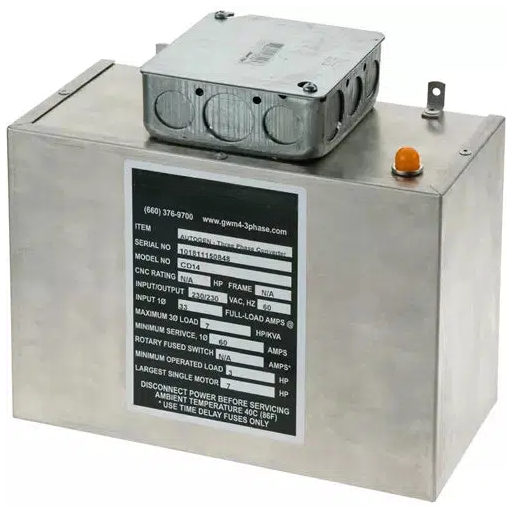
Static phase converters are equipment that allow three-phase electric motors to operate on single-phase power supplies. They achieve this by providing the phase shift necessary to get the motor running during the early stage, until it reaches operational speed; after that, the converter disconnects, allowing the motor to run on single-phase power. Despite their simplicity and cost-effectiveness, static phase converters are still not used in many cases. Such applications are mostly light-duty motors or intermittent use, since the delivered power is not truly three-phase, which can reduce the motor’s efficiency and performance. If a more reliable, continuous power output is needed, it is more appropriate to opt for other types of phase converters, such as rotary converters.
How Static Phase Converters Work
Static phase converters, as their name suggests, have no moving parts. Thus, based on the principle of creating a phase shift to simulate three-phase power from a single-phase power source, they can be considered direct-conversion motors from single to three-phase. The addition of reactive elements in the single-phase power source, i.e., the capacitor or inductor used in the phase converter, introduces the desired phase difference between the input voltage and current, creating an artificial three-phase for motor starting.
The circuit of the static phase converter is composed of components such as starting capacitors and a potential relay. With the help of the start capacitors, the required burst is applied to the current to introduce the additional phase during motor start. After that, the potential relay disconnects the capacitors so the motor can be disconnected, preventing overheating or system failure. Motor efficiency is reduced, and the power supply is not evenly distributed because the converter does not create a true third phase; this affects the motor in many ways, including reduced torque and even increased wear over time. As a result, static phase converters are cost-effective but limited, usable only in specific, low-demand applications.
Advantages of Using Static Phase Converters
✓ Cost-Effectiveness
Static phase converters are not expensive at all; on the contrary, they are the cheapest among the other solutions for getting three-phase power, such as rotary phase converters or variable frequency drives. Their low total price makes them suitable for small sites and uses where budget constraints are the main issue.
✓ Simple Installation and Maintenance
These devices have a simple design with very few elements, making not only installation but also maintenance very easy. The components, with their straightforward design, allow the end user to start using static phase converters right away without specialized skills, which, in turn, leads to lower setup time and thus lower labor costs.
✓ Compact Size
Static phase converters are compact and lightweight, making them well-suited for limited space conditions. In addition, the mobility they offer makes it possible to change their location when needed without any difficulty.
✓ Suitable for Low-Power Applications
Static phase converters are very appropriate for small motors or light-duty equipment that do not require continuous three-phase power. This is what makes them significantly used as examples of woodworking tools, agricultural equipment, or fan motors.
✓ Energy Efficiency During Startup
Static phase converters have abysmal efficiency during operation; however, they are real energy savers at the beginning of the motor’s rotation. This very feature is an assurance that single-phase-to-three-phase motor conversions are reliably fed with power initially.
✓ Support for Single-Phase Infrastructure
One advantage of static phase converters is the ability to use three-phase motors with a single-phase-only power supply at a particular location. The freedom involved is of great value to people living in rural areas where electricity is unreliable and rarely available.
Limitations of Static Phase Converters
✗ Reduced Motor Efficiency
Using static phase converters usually results in a decrease in motor efficiency compared to using a dedicated three-phase power source. This loss of efficiency is generally reflected in higher energy consumption, which, in turn, leads to higher operational costs. The findings show that motors connected to static phase converters also experience efficiency drops of 10-15%, especially at full load.
✗ Limited Power Output
Static phase converters are not intended to provide a complete power or torque delivery to the linked motor. They typically deliver about 50-60% of the motor’s rated power when operating under normal conditions. This factor makes their application in the likes of high-performance machines or those that need over-power for operation not applicable in full power and torque, and therefore not highly recommended for such environments.
✗ Single Motor Operation
The Static Phase Converter is primarily intended for use with a single motor at a time. Whenever someone tries to run a lot of motors at the same time, it is very common for the system to become unbalanced and for problems to affect the motors, as the phase converter is unable to maintain a steady, sufficient power supply for all the devices.
✗ Voltage Imbalance
Still, the major trouble is the nonuniform voltage supply across the motor winding. It not only makes the process inefficient but also poses the potential for damage, overheating, and motor inefficiency. For instance, the situation where voltage levels are up and down by 30% in systems with static phase converters is common but has a significant impact on motor life.
✗ Start-Up Complexity
The starting torque provided by static phase converters allows the motor to start without difficulty. On the other hand, converters are less effective for tough-to-start motors or for applications that switch them on and off frequently. The problem becomes more serious with compressors and pumps, where the required starting torque is very high.
✗ Not Suitable for Continuous Duty Operations
Static phase converters are intended for intermittent service, which is why they are not suitable for full-time job operation. If used for an extended period, they may cause overheating of the converter components, which in turn may reduce the converter’s reliability and service life.
Heavy Duty Static Phase Converters
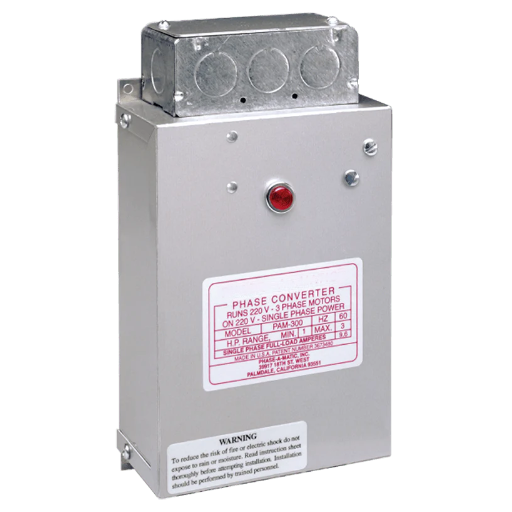
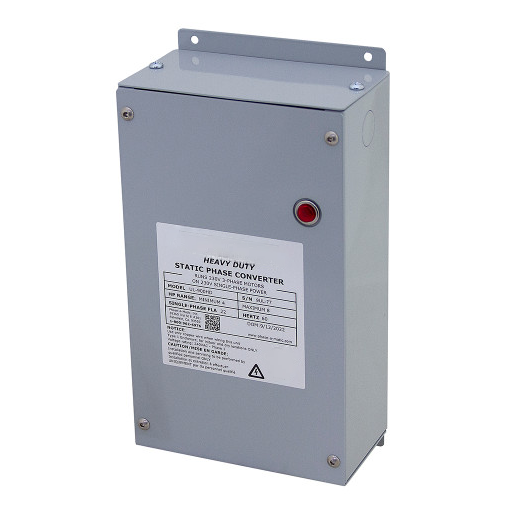
Heavy-duty static phase converters are custom-built to overcome the weaknesses inherent in ordinary models and thus deliver high performance for heavy industrial loads. The converters ensure a stable phase for machinery that requires high starting torque, such as industrial saws, compressors, and pumps. They are designed to maintain a steady power supply under varying demand and are therefore suitable for intermittent operations.
Moreover, high-intensity static phase converters are built with higher-quality components to withstand higher temperatures, allowing them to operate for longer periods. They are not the best option for steady use, yet they are an excellent and economical alternative in situations where three-phase power is mandatory but not readily available. And a user-friendly plan contributes to shorter-term installation and lower overall maintenance needs.
What Makes a Phase Converter Heavy Duty?
Heavy-duty phase converters are distinguished by several key design and operational features that enhance performance and durability. One of the main things is that they can handle larger loads, achieved through a heavy-duty build and industrial-grade components. For example, these converters usually work with larger-capacitor transformers, enabling them to withstand inrush current during the startup of load-demanding motors, carry the load with some fluctuations in the output, and more. In addition, the heavy-duty models feature advanced cooling systems; for example, they use forced-air or liquid cooling to prevent overheating, and they are equipped with these devices regardless of relative dryness or high-temperature regions, such as deserts.
Moreover, the heavy-duty phase converters undergo a comprehensive thermal test, ensuring they exhibit extreme thermal resistance and can be used reliably at extreme temperatures. Their control systems usually have a precise voltage regulation tune-up, which, along with harmonic distortion reduction, ensures they are friendly with sensitive equipment. These features put the heavy-duty converters on par with industrial applications that demand the most reliability, such as CNC machining, metalworking, and HVAC systems. Therefore, their end-user acceptance is readily understood; heavy-duty converters are thus considered indispensable tools in environments that require both power and efficiency.
Applications for Heavy Duty Static Phase Converters
CNC Machining and Tooling
The converter’s easy-to-use interface makes it a perfect choice for CNC machines. It provides outstanding results by maintaining minimum voltage fluctuations and current distortion, which the inverter circuit ensures optimal mother performance and accuracy during operation.
Metalworking Industry
The ability of converters to stabilize power benefits applications such as plasma cutters, welders, and grinders by reducing the wear of equipment and maintaining smooth operation even at full load.
HVAC Systems and Compressors
The converters are the most suitable option for large heating, ventilation, and air-conditioning systems that require a constant three-phase power supply to run compressors and pumps. Their reliability is a must-have for the operation in critical environments like cooling systems in commercial and industrial buildings.
Agricultural Machinery
Equipment such as irrigation pumps, grain dryers, and feed processing systems cannot operate without these converters, as they provide constant three-phase power, thereby eliminating the problem of single-phase power dominance in remote areas.
Woodworking Equipment
Static phase converters, which require high power output, are widely used in the woodworking industry, especially with planers, table saws, and bandsaws, to maintain high precision and prevent gaps in the process.
Material Handling Systems
It can be said that industrial or warehouse conveyor systems, hoists, and heavy-duty elevators, by utilizing the static phase converters, are getting more productive and reliable and are a high-cost-saving factor by reducing downtime.
Maintenance Tips for Heavy Duty Converters
1. Regular Inspection and Cleaning
Over time, dust and debris accumulation can lead to overheating or reduced performance of static phase converters. Do a visual inspection of components, such as capacitors, resistors, and relays, at least every 3 months to ensure that they are free of contamination. Cleaning of the internal parts can be done with compressed air or soft brushes.
2. Monitor Voltage Output
Ensure the converter’s output voltage remains within the specified range. For instance, in most static phase converters, the voltage balance should be within ±5% of the rated values. Use a multimeter or voltage analyzer and compare the results to the rated values, do this check regularly to see if any fluctuations could damage the connected equipment either through an eroding effect or a stress test.
3. Check for Overheating
Heavy-duty converters often experience heat during peak power use. Firstly, see what type of system is responsible for cooling down the converter: fans or air vents, and also how well they are doing it. To get the most out of your machines and to protect them from heat risk, your working ambient temperature and your load should be set so that the temperature ranges from 32°F to 104°F (0°C to 40°C).
4. Inspect Capacitors for Degradation
One of the main problems with converters, in the long run, may be capacitor degradation, which, in turn, is a root cause of loss of starting torque or unbalanced phase output. The types of signs to look for are swelling, leaks, or discoloration, and the only remedy for a bad capacitor is replacement. The best practice is to replace capacitors every 5-7 years to maintain optimal performance.
5. Tighten Mechanical Connections
Loose wiring or terminal connections can lead to reduced electrical conductivity and sparks. Hence, it is essential to examine all connections, particularly the input and output terminals, at a minimum once every 6 months and tighten them if necessary.
6. Perform Load Testing
Load testing should be carried out twice a year. This should be done to assess the converter’s capability to handle the normal operational load. Attach the converter to the equipment it was meant to be connected to, and start the test to measure the converter’s startup efficiency, the voltages throughout the converter, whether they are steady or fluctuating, and, last but not least, the loading capacity.
Choosing the Right Static Phase Converter
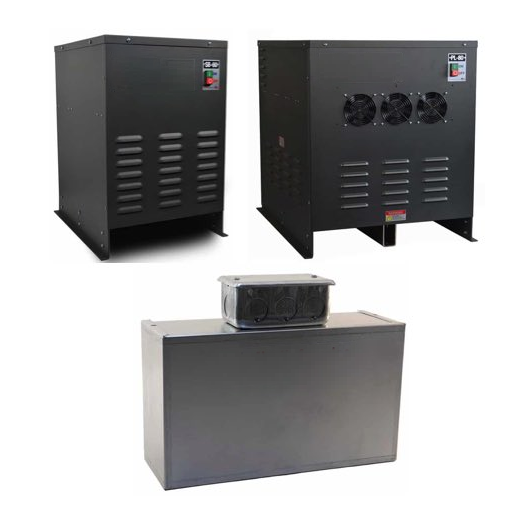
Before you can buy a phase converter that matches the needs of your business and equipment, you must consider the following points:
- Equipment Requirements:
The voltage, phase, and power output required by your equipment should be determined. The converter must be able to withstand the operational and peak loads required by your machines.
- Converter Capacity:
While looking for the converter, ensure you get one with a capacity rating just a little higher than the highest motor horsepower in your system. This is because it will be very reliable and efficient when operating.
- Application Type:
Look into the application to see whether it involves light-duty, medium-duty, or heavy-duty machinery. Some converters are suitable for loads with many starts and high torque requirements.
- Reliability and Build Quality:
The best thing would be to go for converters made of top-quality materials, in line with industry standards. This would reduce the risk of the converter breaking down and ensure consistent, long-term use of the system.
- Installation and Maintenance Requirements:
Effortlessly make the installation and maintenance the norm. Converters with simple, short instruction sets and minimal maintenance requirements are to be chosen.
Comparison: 3 HP vs 5 HP Phase Converters
UL Certified Options: Importance and Benefits
Underwriters Laboratories (UL) certification is an essential indicator of the safety, functionality, and compliance with legal requirements of different machines and units. The products are rated in accordance with applicable industry standards through rigorous testing, and the certification process serves as a guarantee. To sum up, the certification process reduces the risks stemming from electrical, fire, or mechanical problems. Both end users and manufacturers can expect to profit from it; hence, they will breathe more easily, knowing they are within safety limits and that the product safeguards their lives and property.
Besides, choosing UL-certified options not only encourages compliance with safety laws but also gives a fast start in markets with stricter standards. Besides, clients are more likely to purchase UL-certified products, thereby building consumer confidence and, ultimately, leading to greater uptake, especially in situations where safety is of great importance, with verified performance as the focal point too. The need for such security is, in fact, very pressing, particularly in the construction, manufacturing, and power industries, as noncompliance with safety standards can very well result in a total shutdown or lawsuits.
Troubleshooting Common Issues
When it comes to certification delays, many factors can affect them, such as not having all the necessary documentation, not meeting the technical requirements, or inconsistent testing from one time to another. If you want to handle this:
Ensure Complete Documentation
Make sure the technical specifications, product drawings, and compliance test reports are correct and duly submitted to avoid various administrative holdups.
Pre-Test Compliance
Implement internal compliance checks to identify design or performance issues and resolve them before products are submitted for official certification.
Engage with Certification Bodies Early
Get in touch with the certification bodies right at the start of the product development phase to work through the standards and test protocols thoroughly, ensuring visibility into the requirements.
Actively controlling variables could be a great way to reduce unexpected delays and thereby facilitate a smoother certification process.
Identifying Problems with Static Phase Converters
The budget-friendly, install-friendly static phase converters often introduce a new set of issues for site users. One of the main complaints among operators is that the phase converters do not maintain stable voltage levels when the load changes. This may create a safety hazard due to different phase system voltages, which can eventually lead to a loss of both machinery efficiency and lifespan.
A static phase converter can run a motor, but it is not recommended for frequent, high loads. A poor application of such phase converters can cause the motor’s windings to burn out or result in a short circuit while in use. Besides, another common problem with the use of a static phase converter is that the starting torque drops, resulting in functionality loss in applications with high starting or operational torque.
Regular maintenance and precise evaluation of load requirements are essential to overcoming these issues and ensuring optimal operation within the prescribed tolerance. Also, inefficiencies can worsen due to the incorrect sizing of the static converter relative to the motor’s horsepower.
When to Seek Professional Help
It’s recommended to get help from a professional to address motor performance issues, which are becoming increasingly complex, or when basic diagnostic methods are not enough to eliminate problems that persist during operation. When symptoms such as excessive heating, unusual shaking, or uneven power output are observed, this usually indicates that in-depth diagnostics and technical expertise are required to identify the main issue correctly. Processes like unconstant power conversion or torque output, by showing the same problem over and over, possibly are pointing to a fault hidden in the electrical or mechanical system that needs specialized hands-on. Certified technicians have numerous advantages, such as conducting thorough checks, performing accurate calibration, and staying up to date, which can all result in longer equipment life and improved operational efficiency in the long run.
Reference Sources
Static Converters for Active Distribution Grid: Frequency Control Field Test
Source: Academia.edu
Focus: Focuses on the role of static converters in grid-connected systems and frequency control.
The Load Influence on the Diagnosis of the Three-Phase Rectifier by Using the Analytical Model Method
Source: Academia.edu
Focus: Discusses fault diagnosis techniques in static converters for induction heating systems.
Frequently Asked Questions (FAQs)
What is a static 3-phase converter, and how does it differ from a rotary phase converter?
A static 3-phase converter is an electrical apparatus that uses capacitors and switching to produce a third phase from a single-phase supply, allowing three-phase motors to operate. Rotary converters use an idler motor that is the primary source of a balanced third leg, while static ones use a bank of capacitors to shift phases. It has to be pointed out, however, that they are not able to deliver the same quality of three-phase power as rotary devices under fluctuating loads. Initially, static converters are simpler and less expensive, but they can generate greater phase imbalance and harmonics that could adversely affect sensitive industrial motors.
Can a static 3-phase converter damage my industrial motors?
Three-phase induction motors can be overstressed when three-phase converters are used, resulting in excessive phase unbalance and voltage distortion that lead to overheating and reduced lifespan. Motors running on unfavorable voltage or with significant harmonics might exhibit increased vibration and insulation wear over prolonged operation. Connection of the capacitor bank to the motor, as well as a check of the phase sequence, can reduce risks somewhat, but, as far as static converters are concerned, they are rather good for light to moderate duty use. When it comes to heavy-duty or frequent start-stop operations, it is better to use a rotary phase converter or a variable frequency drive to better control inrush current and torque requirements.
How do I size the capacitor bank for a static 3-phase converter?
The process of estimating the required capacitor for a 3-phase converter at rest involves calculating the reactive power needed to change the phase and provide proper starting torque, along with the motor’s horsepower and load characteristics. As a rule, manufacturers provide guidance or tables to specify capacitance values, but sometimes a more precise setting is required. All too often, the use of undersized capacitor banks can cause poor starting torque and severe phase unbalance, while a bank that is too large can cause overvoltage and increased harmonics. During the start-up process, the designer should determine the inrush current rating and include protective devices if the case with inductance has to be addressed; otherwise, the issue cannot be solved.
What are common troubleshooting steps for a static 3-phase converter that fails to start a motor?
If a static three-phase converter does not initiate the motor, the first thing you should do is check for loose connections and ensure the capacitor bank is in good condition, as degraded capacitors are often the cause of start-up problems. After that, the voltages on all three legs will be measured to detect phase imbalance or a lack of phase. Moreover, the phase sequence through the connection of the three legs should be checked and made correct. Open the motor and sensor to check for high-order harmonics or signs of motor overheating, which could indicate incorrect sizing or poor voltage control.
