
What is a Static Converter?
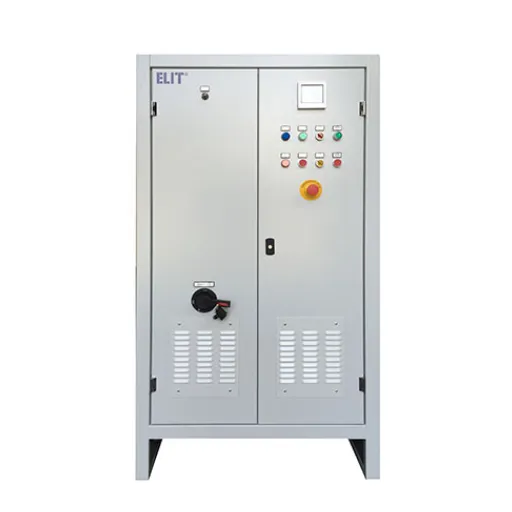
A static converter works consecutively to change one form of electrical energy into another without any mechanical apparatus. It mainly converts alternating current (AC) to direct current (DC) or DC into AC or modifies the voltage and frequency of an electrical supply. These converters are further integrated into systems such as electronic power devices, renewable energy systems, and load power, ensuring that proper and sufficient energy is transferred. Thanks to their ruggedness and maintenance-free nature, converters are highly reliable and, therefore, require minimal maintenance.
Definition of Static Converters
Static converters are sophisticated electronic devices for manipulating electrical forms of energy without the use of moving parts. Converters enable energy conversion from one format to another, specifically from alternating current (AC) to direct current (DC), DC to AC, or to other voltage and frequency levels tailored to the specific needs of particular equipment. They are actively engaged in renewable energy systems such as solar and wind, EV charging stations, and industrial automation. Thanks to the rapid progress of semiconductor technologies, static converters have been continually developed in terms of efficiency and performance, enabling them to offer high conversion factors with minimal energy dissipation and a compact size, suitable for deployment in diverse settings. Their ability to simplify energy transformation processes has established static converters as the backbone of energy-efficient technologies and sustainable power solutions.
Types of Static Converters
| Type | Function | Key Features | Common Applications |
|---|---|---|---|
| AC to DC Converters | Converts AC to DC power | High efficiency, compact design | Battery chargers, rectifiers |
| DC to AC Converters (Inverters) | Converts DC to AC power | Sine wave output, frequency control | Solar inverters, uninterruptible power supplies |
| AC to AC Converters | Modifies AC voltage or frequency | Variable speed, power regulation | Motor drives, HVAC systems |
| DC to DC Converters | Changes DC voltage levels | High reliability, step-up or step-down | EVs, power supplies |
| Cycloconverters | Converts AC of one frequency to another | Low harmonic distortion, efficiency | Industrial motors, high-power devices |
| Resonant Converters | Optimizes energy conversion resonantly | Reduced losses, minimal overheating | Telecommunications, LED lighting |
Applications of Static Converters
Rectifiers
Rectifiers are traditionally used to convert AC into DC. These are utility-dominated in battery charging systems, DC motor drives, and powering electronic devices. Electrochemical deposition uses rectifiers and electrolyte solutions to electroplate and anodize the metals, controlled for DC voltage.
AC to AC Converters
For variable speed motor control and power quality, these converters are a must. Typical examples include motor drive systems for HVAC and industrial equipment. They optimize power availability by adjusting voltage and frequency accordingly.
DC to DC Converters
Good at converting DC voltage from one level to another and being employed in electric vehicles (EV), portable electronics, and renewable energy systems like solar panels, for instance, the DC-DC step-up (boost) converter finds use in raising the voltage of an EV battery system, while the step-down (buck) converter is preferred for power supplies of microprocessors and other fragile components.
Cycloconverters
Cycloconverter application is mostly provided in heavy machinery and industrial motors with the speed variation of large AC drives. Due to the almost non-existent harmonic distortion, they are highly suitable for high-powered systems, such as steel mills, cement plants, and ship propulsion systems.
Resonant Converters
Again, resonant converters are used in applications in which energy efficiency and thermal considerations are highly imperative. Such applications include telecommunications, LED lighting, and medical devices such as MRI scanners.
Overview of Static Frequency Converters

Static frequency converters (SFCs) transfer power from one frequency to another. They must be installed wherever the equipment that is supposed to run at a certain frequency with the local grid does not match that frequency. SFCs convert AC at a certain input frequency to DC and then regenerate AC at the desired output frequency. They are so valued for their reliability, their high efficiency, and their good adaptability to diverse industrial and transportation systems, such as railways, aviation, and shipboard power. By matching output to the specific needs of the application, SFCs provide versatile and efficient solutions for frequency adjustment challenges.
Working Principles of Static Frequency Converters
Static Frequency Converters operate on the basis of a three-stage process, which ensures accurate frequency conversion as well as stability of power output. First, the input AC is converted to DC through a rectifier. The stabilization of electric flow takes out unwanted fluctuations and irregularities. The second step involves an inverter working to regenerate the AC from the DC supply at the desired frequency and voltage levels. The use of advanced semiconductor technology, such as the insulated-gate bipolar transistor (IGBT), ensures that the process is reached with great efficiency and in very short switching times.
The final stage is made to filter the harmonic distortions to a minimum to present a clean, regulated output. Some modern SFCs are equipped with a user interface and digital control system to tune to exact specifications related to the application. With these systems, reliability is guaranteed, and thus they are very popular in application areas such as aerospace, rail traction, and renewable energy systems to optimize the performance and efficiency of power supply.
Advantages of Static Frequency Converters
High Efficiency
SFCs are designed to keep power conversion very efficient, some reaching efficiencies greater than 95%. This reduces power losses for an optimized output, especially in demanding applications.
Precise Output Control
Thanks to very advanced control methods, SFCs ensure accurate frequency and voltage regulation, ensuring a stable and constant power supply that meets the specific operational requirements.
Compact and Lightweight Design
In terms of architecture, SFCs are small and lightweight compared to older mechanical systems, thereby facilitating installation and maintenance while requiring less real estate.
Reduced Harmonic Distortion
Thanks to integrated filtering technology, the SFCs have a huge effect in minimizing harmonic distortions, thereby decreasing the damage caused to associated equipment and ultimately improving the overall reliability of systems.
Wide Range of Applications
Regardless of the mode of conversion, SFCs continue to find uses in various fields such as aerospace (aircraft power systems), railway traction systems, and renewable energy generation. Their versatility makes them eminent tools in the modernization of electrical infrastructure.
Environmentally Friendly Operation
By reducing energy wastage and enhancing optimization of systems, SFCs become a direct contributor to lowering carbon emissions, interfacing with the global targets of environmental sustainability.
Comparison with Other Types of Frequency Converters
| Key Parameter | Static Frequency Converters (SFCs) | Rotary Frequency Converters (RFCs) | Electronic Frequency Converters (EFCs) |
|---|---|---|---|
| Efficiency | High, minimal energy loss | Moderate, mechanical losses present | High, minimal energy loss |
| Maintenance | Low, fewer moving parts | High, requires regular mechanical maintenance | Low, minimal components to maintain |
| Noise Levels | Quiet operation | Noisy due to mechanical components | Quiet operation |
| Size and Weight | Compact design | Bulky, requires more space | Compact and lightweight |
| Cost | Moderate, value for performance | High, expensive to build and maintain | Low to moderate, depends on model |
| Reliability | High, stable performance | Moderate, prone to wear and tear | High, very reliable |
| Environmental Impact | Eco-friendly, reduces carbon emissions | Moderate, depends on fuel source | Eco-friendly, reduces energy waste |
| Versatility | Adaptable across multiple industries | Limited to heavy-duty applications | Flexible, used in various modern setups |
| Longevity | Long lifespan with proper maintenance | Shorter lifespan due to mechanical wear | Long lifespan, solid-state components |
| Application Examples | Aerospace, renewable energy, and rail systems | Industrial machinery, older technologies | Data centers, modern industrial settings |
Static Phase Converters Explained

Static phase converters are primarily used to supply single-phase electricity to three-phase electric motors. They provide a momentary phase shift during start-up to allow the motor to accelerate to its operating speed. Once the motor is at full speed, the static phase converter is disengaged, and the motor is essentially running on single-phase power. They are hence best used in light and moderate motor load applications and may not be suited to very heavy-duty or continuous-use operations owing to their inability to maintain adequate phase balance over long periods of time.
How Static Phase Converters Work
Static phase converters enable the motor to be started by providing the necessary three-phase power for a brief period, allowing it to achieve starting torque on single-phase electricity. These are usually achieved with a capacitor or capacitor bank capable of an artificial third phase. When the motor comes alive, the converter further increases the current and shifts the phase angle in the very first moments of startup to ensure that proper torque and rotation are provided. When the motor is running at full speed, the static phase converter stops creating the artificial phase, and the motor continues on single-phase power. While this works well to start most three-phase motors, it is most suited to light and moderate loads since, during operation, it does not supply true three-phase power. Modern static phase converter designs are more efficient and reliable for specific applications; hence, they have been tailored to meet modern demands on motor controls and equipment standards.
Benefits of Using Static Phase Converters
- Cost-Effectiveness: Static phase converters serve as an economical alternative to installing a dedicated three-phase power supply. They allow businesses to carry out three-phase operations on an existing single-phase power supply, thereby drastically cutting infrastructure development costs upfront.
- Simplified Installation: Due to the comparatively simple installation process, these converters do not necessitate much rewiring or modification of existing electrical systems. Hence, it would be a proper choice for facilities with difficulty in obtaining third-phase power.
- Compact Design: Static phase converters are compact, lightweight, and can fit into tight spaces. It is easy and fast to port one across to different sites where just a small area needs to be adapted.
- Versatility: They work in conjunction with a myriad of three-phase motors and equipment: pumps, fans, and light machinery. Their versatility allows for systems of varying power capacities and operational requirements.
- Energy Efficiency at Startup: Static phase converters allow for an energy-efficient startup of the motor with just enough torque to start the rotation. This could count toward making sure energy is utilized optimally in frequent start-stop operations with minimal wastage.
- Low Maintenance Requirements: Since they have fewer moving parts than rotary phase converters, static phase converters generally require less maintenance, making them a practical and reliable solution for moderate-duty-cycle applications.
Limitations of Static Phase Converters
- Reduced Power Output: They are generally incapable of providing full power to three-phase equipment; such converters typically provide only about 60% to 70% of the motor’s rated capacity. Such power reduction might limit machinery performance and efficiency for applications needing full load operation.
- Limited to Specific Applications: These are suitable for light to moderate duty cycles and are not recommended for heavy-duty applications that require continuous use, since they cause equipment to overheat and fail prematurely.
- Shortened Motor Lifespan: The extended use of a static phase converter can negatively impact motor life. Voltage imbalance among the three phases causes overheating and excessive mechanical wear of the motor components, which will gradually increase preventative maintenance costs.
- Voltage Imbalance: Static phase converters can provide an unbalanced voltage across the three phases, which can reduce torque, cause inefficiencies, or damage sensitive equipment.
- Start-Run Limitations: Although these converters offer good starts, they often fail to deliver high-performance operations over prolonged use. The single-phase supply during the operation will restrict performance when compared to genuine three-phase.
- Not Suitable for Complex Systems: Static phase converters, due to their physical limitations and operational concepts, often fall short in sophisticated or highly technical systems that rely heavily on balanced three-phase power, such as CNC machines or high-precision industrial tooling.
Frequency Converter Overview
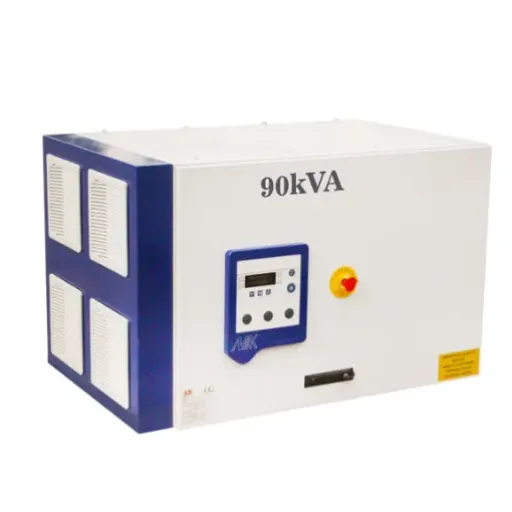
Frequency converters can be defined as any device that changes the input frequency of an electrical supply for the machinery or system to operate at speeds as intended or rated for optimum performance. Frequency converters are most useful in situations where variable motor speeds are required or when the terrain sheet on which the machines operate has varying electrical standards. By virtue of adjusting frequencies precisely, they maximize performance, conserve energy, and minimize wear and tear on machinery. It is perhaps because of this capacity to prepare the electrical supply as per equipment design that industries such as manufacturing, aviation, and renewable energy heavily rely on them.
What are Frequency Converters?
Frequency converters work by setting the frequency of the electrical power supplied to the equipment. Ideally, a frequency converter comprises three main stages: rectification, DC link, and inversion. Rectification is when the incoming AC power is converted into DC power. After conversion, the power is regulated by the DC link, and afterward, the inverter converts DC back into AC at a different frequency for use. Before this stage, the power supplied to electrical equipment is neither controlled nor optimized for its specific requirements. Most modern converters contain upgraded controls that allow motor speed and torque to be regulated with precision, minimizing unnecessary power consumption and losses.
Types of Frequency Converters
| Type of Frequency Converter | Key Points |
|---|---|
| Voltage Source Converter (VSC) | Uses DC link capacitors; high control precision. |
| Current Source Converter (CSC) | Uses DC link inductors; robust for high currents. |
| Cycloconverter | Direct frequency conversion; suitable for low-frequency output. |
| Matrix Converter | Compact design; bidirectional power flow capability. |
| PWM Frequency Converter | High efficiency; precise output frequency control. |
| Resonant Frequency Converter | Utilizes resonant circuits; reduces switching losses. |
| Single Phase Converter | For single-phase systems; ideal for light-load applications. |
| Three Phase Converter | For three-phase systems; supports industrial applications. |
| Static Converter | Contains no moving parts; reliable and long-lasting. |
| Rotary Frequency Converter | Mechanical rotation; used for specific legacy systems. |
| Linear Frequency Converter | Converts frequency linearly; tailored to specific needs. |
| Digital Frequency Converter | Advanced digital control; customizable for various systems. |
| Hybrid Frequency Converter | Combines multiple technologies; balances strengths and costs. |
Applications of Frequency Converters
- Industrial Machinery: Frequency converters are used in a variety of industrial machines, such as conveyor belts, pumps, and compressors, to vary motor speed in an efficient manner. Energy consumption optimization occurs concurrently with improvements in overall equipment performance.
- Renewable Energy Systems: Frequency converters are primarily applicable in renewable energy systems, where they convert the variable frequency and power of wind turbines or solar power systems into a steady frequency suitable for the grid.
- Aerospace and Defense: Frequency converters are frequently utilised by aircraft and military systems to adapt power supplies to required frequencies so that onboard equipment and ground systems operate correctly.
- Marine Applications: Frequency converters serve ships and submarines in managing onboard electrical systems, therefore greatly contributing to energy efficiency and enabling better control of power distribution.
- Railway Systems: Frequency converters are especially important for rail systems, as they adjust the power line frequency to meet the operating standards of locomotives and supporting infrastructure.
- Testing Facilities: Frequency converters are useful in laboratories and testing facilities for simulating various power conditions, enabling thorough testing of systems and components under controlled conditions.
Efficiency of Static Converters
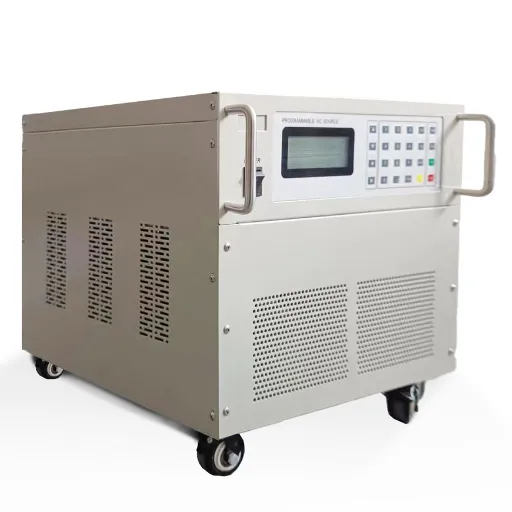
Static converters are highly efficient devices, achieving efficiencies of between 90% and 98% under optimal conditions. Factors impacting converter efficiency may include load conditions, power quality, and the exact type of converter design. Emerging technologies in semiconductor materials and thermal management are a big focus to reduce energy loss to the minimum possible levels. Running with higher efficiencies will help reduce energy consumption and heat production, making these converters suitable for applications that require continuous and reliable power transformation.
Factors Affecting Efficiency
Many aspects affect the efficiency of converters; thus, every single factor must be considered for their highest possible performance. Among those are semiconductor elements, which cannot be overlooked, for with modern materials such as silicon carbide (SiC) and gallium nitride (GaN), energy losses are lesser, and thermal conductivity is greater compared to the old silicon. Another significant issue is thermal management, where effective cooling systems are maintained to prevent overheating, ensuring consistent performance over time. Load conditions directly affect efficiency, with converters designed to adjust dynamically to changing demands usually performing better. Modern techniques in circuit design that include pulse-width modulation (PWM) that reduce switching losses and increase the rate of energy conversion are also important. Finally, the input energy quality, in terms of voltage instability and harmonic distortion, is very important, as an unstable input greatly reduces the system efficiency and reliability. If these aspects are addressed, power conversion systems can achieve ultimate efficiency levels.
Measuring the Efficiency of Static Converters
When testing the efficiency of the static converter, some relevant parameters must be considered to ensure proper testing and optimize its application. The main indicator is the relationship between the active power output and the active power input of the device, commonly expressed in percentage terms. Power losses include heat losses, electromagnetic interference, and resistance.
Additionally, several other modern efficiency tests involve in-depth testing procedures, including partial load efficiency, which tests the device’s efficiency under different load conditions, and maximum efficiency, which measures the performance limit of the package. Moreover, especially with switching converters, switching losses and thermal management have to be taken into account. In the wake of advances in digital signal processing, real-time monitoring systems offer key data that can guide engineering efforts towards higher efficiency.
A precise measurement and study of these parameters will enable the design of more fault-tolerant and energy-efficient power conversion systems, which opens the door to innovation in numerous areas of technology.
Improving Efficiency in Static Converters
The very process of improving static converter efficiency hinges on the use of modern techniques and materials to reduce power dissipation. The immediate application of WBG semiconductors would be one such example, with SiC and GaN offering benefits such as faster switching speeds and lower conduction losses compared to their silicon counterparts. Similarly, magnetic component design, including the design of transformers and inductors, can be optimized further to reduce losses from core saturation and flux density.
Thermal management further contributes to efficient operation. Heat removal techniques such as liquid cooling or heat pipe systems help prevent thermal degradation in components. Alongside intelligent algorithms, these methods enable converters to operate near their peak efficiency range.
Besides the advanced pulse-width modulation (PWM) schemes and digital control that enhance the precision and adaptability of the converters, they are then employed to utilize energy more efficiently under dynamic conditions. Thus, these developments and innovations continue to help shape the next generation of converters, growing industries into a sustainable environment.
Reference Sources
-
Static Starting Device for Gas Turbine Start-Up
- Key Findings: This paper explores the use of static frequency converters (SFCs) as starting devices for gas turbines in gas turbine combined cycle (GTCC) power plants. The study highlights the reliability and efficiency of SFCs in this application.
-
Influence of Static Converters’ Current on System Performance
- Key Findings: This study examines the performance of commonly used static converters, including Boost, Buck, and Buck-Boost converters. It identifies the impact of current variations on system efficiency and stability.
Frequently Asked Questions (FAQs)
Q: How do static phase converters work?
A: Static phase converters transform single-phase power into three-phase power required for the motors in the three-phase category. They do so by inducing a phase shift in the electrical supply, thus providing higher efficiency for motor operation. This technology is especially valuable when only single-phase utility power is present, yet three-phase loads are required. Additionally, during the starting phase, these converters provide a lesser amount of power while being very cost-effective for small to medium-sized motors. They are, nevertheless, a perfect compromise in those conditions where full three-phase power cannot be developed.
Q: What is the efficiency of static frequency converters?
A: The efficiency of static frequency converters varies according to their construction and the application for which they are used. Static frequency converters are designed to be highly efficient, with efficiencies exceeding 95% being common nowadays, ensuring that minimal energy is lost during conversion. Hence, industries want to reduce power consumption and operational costs. Highly efficient converters also help maintain output voltage stability in accordance with the power requirements of highly sensitive machinery. Lastly, since they convert frequency with a high level of conversion efficiency, they prove to be the most helpful where uniform performance is necessary.
Q: What are the benefits of using frequency converters in industrial applications?
A: Some of the reasons why frequency converters are so crucial for industrial applications are: they allow the frequency of power supplied to machinery to be adjusted so that the equipment performs at optimal levels for that operating frequency. By using static frequency converters, an industry can interface with a wide range of power sources and local grid frequencies, allowing machines to operate regardless of the local power standard. Frequency converters can also improve systems’ efficiency and bring energy consumption to the lowest level, cutting down the operational cost of industrial plants in the process.
Q: Can static frequency converters support variable frequency applications?
A: Yes, static frequency converters are applicable for variable frequency applications, especially for those processes that require dynamic control of motor speed and torque. These converters may be designed to operate over a certain band of output frequencies, allowing for accurate frequency change dependent on the operational need. In instances when the equipment operates with variations in loads, the ability to vary frequency will increase the efficiency of this type of equipment. Static frequency converters will also help with the smooth acceleration and deceleration of motors, contributing to the operational reliability of this type of system. This will be highly in demand within industries that largely depend on automation and require a high degree of control over their equipment.
