
There are various converters seen today, among which are possibly the static frequency converters or static frequency converters (SFCs). These have contributed immensely to energy systems and industrial purposes. They are necessary to convert electrical energy from one frequency to another so as to be compatible with other kinds of operational requirements. This article will dwell on the merits and disadvantages of such static frequency converters, trying to present a mixed perspective to the readers on their capabilities and downsides. This article will provide very critical insights for anybody contemplating adopting this technology in their area, or who wants to learn how such a device might impact their areas of discussion. While considering aspects such as energy efficiency and adaptability, potential problems such as cost and complexity will be discussed to go a long way in assessing the usefulness of these devices for the needs of a community with varying elements.
Understanding of Frequency Conversion
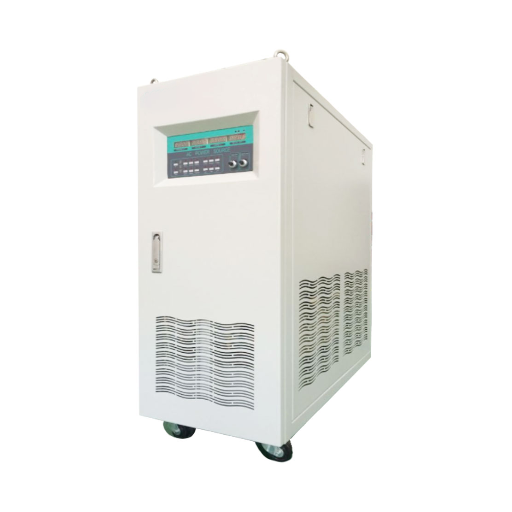
Frequency conversion is the act of adjusting the frequency of an electrical source of power in order to cater to the specific needs of other devices or systems. Typically, in such cases, static frequency Changers are used to undergo conversions and effectively tune the varied voltage and frequency levels of the available power supply to finally deliver usable quantities for the intended purpose. It is a fundamental concept where some known techniques of machine design for working at superior frequencies than the usual power source are not possible, such as in industrial machines or in an operation that spans over countries where power continuity may vary. The crucial key players that boost the preferences of power conversions are compatibility, power usage, and motor adjustment. The decision to fit an exchange system of frequency conversion should also include expenses associated with equity expenditure and system complexity.
Understanding Frequency Converters
Frequency converters are complex systems made up of several basic elements that interact to convert the frequency of electrical power. The major components are the rectifier, the DC link, and the inverter. The rectifierless rectifies the input AC (alternating current) power to DC (direct current) voltage, eliminating the fluctuation of the alternating waveform. DC link, usually consisting of capacitors or inductors, stabilizes and stores the converted DC energy so that the output is steady and fixed. Subsequently, the inverter changes DC voltage back to AC with the desired frequency and amplitude to match the needs of the connected load.
Up-to-date frequency converters usually come with more advanced control systems like pulse-width modulation (PWM) for better operational efficiency and frequency alteration. Such systems are essential for loads needing variable speeds like the HVAC systems, conveyor belts, and industrial drives. More contemporary offshore designs also come with in-built diagnostic tools, real-time monitoring, and connectivity enhancement to improve operational reliability while reducing downtime.
The Importance of Frequency in Power Systems
The process of parameterizing frequency in the power system is a matter of paramount concern in terms of grid stability, efficiency, and compatibility. The frequency control, nevertheless, is important to maintaining generators, transformers, and the final utilization systems all operating in synchronization. Frequency fluctuations will cause numerous problems, such as motor overheating, interruption of power distribution, and grid blackouts. Modern grids are designed from the very start for sophisticated frequency control actions, and these strategies need automatic generation control (AGC) and battery energy storage systems (BESS). With these cutting-edge technologies, grid operators are equipped with real-time response rates on frequency support as the demands placed on systems fluctuate. It is found from various studies that optimized frequency control significantly improves issues such as reduction in system losses, enhanced general operational security, and ease in transition to future energy means.
Overview of Static Frequency Converters
Static frequency converters are state-of-the-art electrical devices used for converting alternating current (AC) from one frequency to another, where equipment of different frequencies has to be operated smoothly. They find application mostly in industries like renewable energy integration, space science, and manufacturing. These devices are technically designed to withstand large variations in load while providing precise frequency control, an indispensable function especially important in grid stability and the synchronization of power systems. With recent cutting-edge semiconductor technology such as insulated-gate bipolar transistors (IGBTs), modern SFCs are made efficient, compact and reliable in operations.
Recent developments have drastically tried to increase the SFC system scalability and modularization. This has also seen the application of SFCs ranging from small-scale to large-scale applications. They are particularly useful in ensuring that the power generated by wind farms is aligned with the grid frequency, thus rectifying grid instability and ensuring energy savings. Besides, more effective cooling and improved thermal management have been said to ensure a longer lifespan for critical components of the system, thereby giving higher performance from the operations under high-demanding conditions. Analyst reports indicate a continual rise in SFC penetration due to the expansion of modern grid initiatives and renewable energy objectives.
Operational Principles of Static Frequency Converters
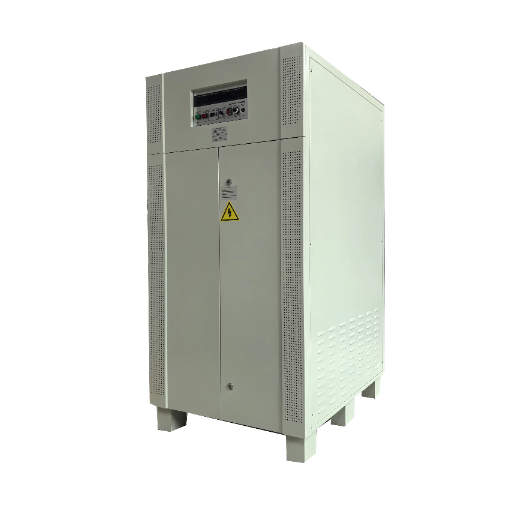
A Static Frequency Converter (SFC) basically changes electrical energy from one frequency to another to accommodate systems with different frequency requirements. This is normally achieved through the following stages:
- Rectification: In this stage, the incoming AC power is first converted to DC power by a rectifier. This should prepare the electrical energy for a stable form for further control.
- DC Link Stabilization: DC power produced will form a stabilized state via a DC link. Before further flight, it is also a medium for energy storage to permit smooth and controlled transfer.
- Inversion: DC power, coming out from DC link, is again inverted into an AC power with the desired output frequency. Typically, the inverter starts, and the end steps assure steady frequency output. With this necessity, the electrical output would fit within the frequency specification for the connection system.
Therefore, employing proper power management throughout conversion allows the static frequency convertors to integrate various power resources, maintain compatibility with various equipment , and support reliable operation of various frequency-sensitive applications.
How Static Frequency Converters Work
Contemporary power electronics function amid the scheme of Static Frequency Converters (SFCs) and secure the accuracy of the electrical power conversion. These systems use Insulated-gate Bipolar Transistors (IGBTs) along with Pulse Width Modulation (PWM) techniques to modulate voltage and frequency output. The AC power input is changed into a DC form via a bridge rectifier circuit so that harmonics are low and power quality is high.
DC power is further filtered to eliminate ripples and noise for a stable and clean intermediate energy source. The switch operation of IGBTs ensures that the right sinusoidal waveform is generated at the required frequency settings. This process results in good efficiency and low total harmonic distortion (THD) that fulfills stringent industrial and aviation requirements.
The use of SFC covers different aspects of technology for aerospace, railways, marine, and renewable energy systems for various applications, bringing them into line with seamless operation anytime the electricity supply is not standardized, which could range from as high as a 400Hz frequency to industrial alternating current motor systems. Over and above that, modern designs/ versions of SFCs are able to offer real-time monitoring and control mechanisms, which administer better conditions ensuring safety, fault detection, and reliability.
Key Components of Static Frequency Converters
| Component | Function |
|---|---|
| Rectifier Unit | Converts AC input to DC power. |
| Inverter Module | Converts DC power back to AC at desired frequency. |
| Control System | Regulates voltage, frequency, and system stability. |
| Transformer | Adjusts voltage levels for input/output compatibility. |
| Cooling System | Maintains optimal operating temperatures of the SFC. |
| Power Filter | Reduces harmonics and improves power quality. |
| Protective Relays | Offers fault isolation and system protection. |
| Monitoring Interface | Provides real-time operational data and diagnostics. |
| Synchronization Circuit | Ensures proper phase matching and system integration. |
| Fault Tolerance System | Enhances reliability during overload or power fluctuations. |
Comparison with Rotary Frequency Converters
| Feature | Static Frequency Converter | Rotary Frequency Converter |
|---|---|---|
| Efficiency | High, minimal energy losses | Moderate, higher energy losses |
| Maintenance Requirements | Low, fewer moving parts | High, due to mechanical components |
| Reliability | High, solid-state design | Moderate, prone to wear and tear |
| Noise Levels | Silent operation | Can produce mechanical noise |
| Start-Up Time | Instantaneous | May require warm-up time |
| System Integration | Easy with modern digital controls | More complex mechanical adjustments |
| Footprint | Compact, space-saving | Bulky, requires additional space |
| Weight | Lightweight | Heavy due to mechanical assemblies |
| Cooling Requirements | Minimal | Mechanical systems often need cooling |
| Environmental Impact | Low, energy-efficient | Higher, due to energy losses |
| Cost of Ownership | Lower long-term costs | Higher due to maintenance and parts |
| Customization Flexibility | High, programmable designs | Limited customization options |
| Power Quality (Harmonics) | Superior | Moderate, may need extra filtering |
Advantages of Static Frequency Converters
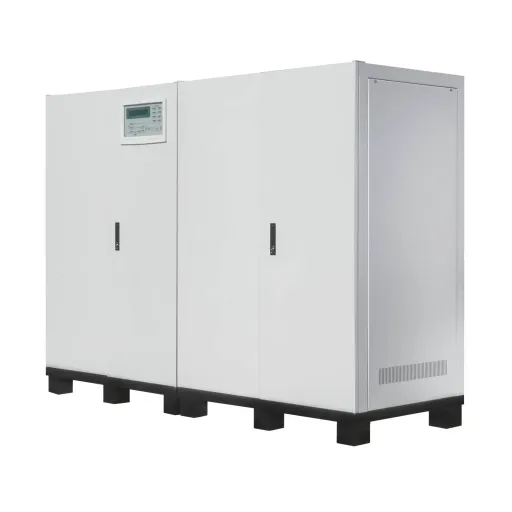
Energy Efficiency
Less power is consumed by the static frequency converter because the mechanical losses are hardly there, thus, offering a better level of performance in general.
Low Maintenance
Static frequency converters are almost maintenance-free, since they have no moving parts and do not need grease or any kind of lubricant any more.
Compact Design
They are particularly light and compact and, therefore, space-saver on a demand cycle, thereby allowing for easier placement whenever space is at a premium.
Enhanced Power Quality
They do exhibit neat output at defined THD levels, while harmonic distortion is expected to be at some minimum level on its performance.
Customization and Flexibility
Programming is used to provide operational adaptability because they have the ability to be customized to meet the requirements.
Reduced Cooling Needs
There is no generation of heat to the same extent mechanical technology does, thereby reducing the demand for any coolant system.
Efficiency in Frequency Conversion
With cutting-edge solid-state technology enabling frequency conversion, static frequency converters excel in efficiency. Models are rated between 95% and even 98%, depending on the unit. Excitingly, to operational performance, this issue is resolved when using power converter components as the rectifier and IGBT (insulated gate bipolar transistor) to reduce power losses throughout the operation.
SFCs’ efficiency is also increased by their modular design, so that they make optimal use of energy transfer with immunity to wear. These converters were placed in a category to allow transition without alteration, which enables them to operate flexibly with different load conditions and frequencies, therefore minimizing the energy loss during transitions.
While enhancing thermal efficiency due to effective heat dissipation, power losses arising from their cooling systems are minimized. These converters are to meet the international energy efficiency standards, including the IEC 61800, to ensure that they also meet strict performance standards across various industries. This design conjunction of futuristic technical and rugged design positions the SFC as the best option for high-efficiency frequency-conversion applications.
Compact Design and Space Saving
They are engineered with the exceptional space-saving design of the Static frequency converters (SFCs) so that they are the best possible type in case real estate is at a premium in the place of the motor. And this design of the modern SFCs includes a modular architecture that is very advanced when compared to those of conventional systems. For example, the high-efficiency power modules and the innovative cooling systems have been integrated into the same link so that the bulky auxiliary components are reduced, and at the same time, the performance of the system is kept at an optimal level out of the way. This is being done in this particular insignificant area (such as where a real estate agent’s performance is poor).
Moreover, these models come with next-gen artificial layout optimizations and technologies scalable to the design that further step up the adaptability of the models in tight installation spaces. Also, the choice of light and at the same time tough materials results in less demanding handling and transportation, hence smooth deployment even in the most demanding infrastructure setups. The combination of small design and powerful functionality of SFCs ensures that the most automation and machinery space-friendly operation possible is achieved at one time, thereby making them essential for the aerospace and renewable energy systems industries.
Reduced Maintenance Requirements
Static Frequency Converters (SFCs) are created to be extremely low-maintenance, a very big advantage in the highest of the high-end factory environments. They are based on super-modern equipment such as the brushless designs and modern insulated-gate bipolar transistors (IGBTs) that are less susceptible to wear compared to common systems. The SFCs, because they have fewer working parts, are virtually uninterruptible by a lack of mechanical integrity, which leads to directly related long-period operation and an increase in downtimes. Similarly, the contemporary models of SFCs come together with a built-in system that can troubleshoot and be remotely monitored; this is advantageous for the personnel to rectify or attend to potential faults prior to their culmination. The study has shown that the latest models of SFCs are able to run and also be maintained with the use of less power. It is important that the concept of the SFCs being reliable, long-lasting, and thus most cost-effective in the industry, such as aviation, manufacturing, and power generation, is given due consideration by all stakeholders.
Disadvantages of Static Frequency Converters
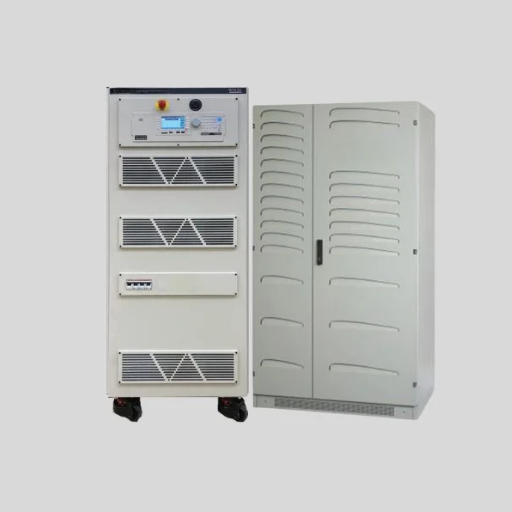
- High Initial Cost: One of the key disadvantages of SFCs is that the initial capital investment is very significant and therefore not many small businesses or applications with low budgets will be able to have access to it.
- Complex Integration: The task of installing and integrating SFCs with the systems already in place can sometimes be very hard and even necessary to have skilled people and considerable extra work such as customization to make the components work together.
- Energy Efficiency Limitations: SFCs have been very well-designed making them very efficient at present; however, one possible disadvantage of them is the energy loss which can sometimes even be the result of the conversion processes especially at low loads.
- Maintenance and Repairs: SFCs, though having longer maintenance intervals, are needsome and very complicated through the use of high-tech components and systems and thus may require more cost and complexity in repairs when troubles occur.
- Size and Space Requirements: The size and the physical requirements for the application of the SFCs may be definitely free of any doubt, and still, one of the drawbacks will be the size, and it may not suit some of the applications and areas.
Cost Implications
The acquisition and installation of Static Frequency Converters (SFCs) require a significant investment, so from that seeming point of view, they get costlier than the mechanical frequency conversion system counterparts. This is mainly because cost-wise, SFCs represent the realization of one of the most advanced technologies, composed of, among others, sophisticated control systems and power electronics.
On the other hand, SFCs can greatly help companies to reduce electric power bills, as they weigh in on energy efficiency, particularly in cases of fast and frequent power adjustments. The results of their operation are almost devoid of energy loss and, with such precision, can bring money that was initially spent back to the investor’s or the firm’s bank account. Furthermore, there are lower than traditional annual maintenance expenses, and they are due to a smaller number of mechanical parts in the system of the SFC.
Nonetheless, it should be noted that it is crucial to take the potential costs of system expansion or upgrades into account. The process of expanding SFCs in order to keep up with an increase in demand may even involve a perfect match of technology, costing a hefty sum of money, or acquiring completely new units. Moreover, labor and parts can both cost a lot, since the work and the components needed are both very specialized.
Limitations in Power Capacity
The design of Static Frequency Converters (SFCs) inherently limits the power capacity of the equipment in terms of both design and component specifications. The converter has one of the main constraints, which is the thermal management within the device. The high-power loads that come with the facility’s power demand generate a lot of heat, which requires an advanced cooling system to operate stably. Not having the heat handled well can result in overheating, performance drop, or even total system failure.
The converter limitation is another limitation posing a significant challenge to the semiconductor devices’ ability. Insulated Gate Bipolar Transistors (IGBTs), which are necessary for SFC’s smooth operation, have a set of current and voltage thresholds. Their performance and lifetime could be put in jeopardy by exceeding these limits. Furthermore, the integration of larger components often raises the physical size of the system, creating constraints such as space and installation locale selections.
Electric harmonics come as a challenge to the electronics industry. The electric power is almost always at the root of the harmonic distortion, and the power levels of higher machines are much more responsible in this case, making it difficult to mitigate harmonics without using complex and costly power electronic equipment like active filters and PF correctors. However, what is seen is that a myriad of technological solutions need to be considered, from energy storage and demand-side management to emerging solutions like vehicle-to-grid and other flexible electric vehicle charging technologies.
Applications of Frequency Converter
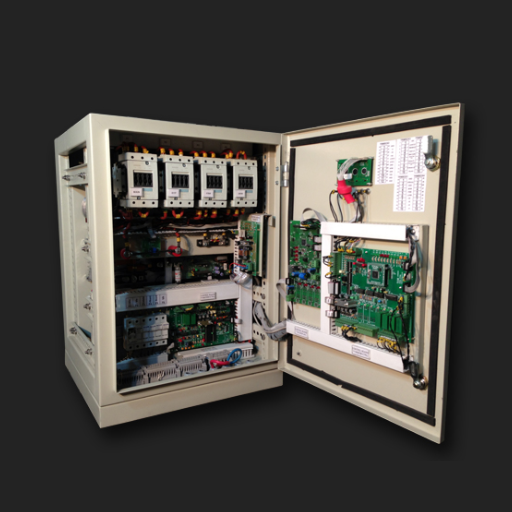
- Industrial Manufacturing:
They are helpful in controlling the speeds of the motors in the conveyor systems, pumps, and compressors, thus giving the significant improvement in efficiency and precision of manufacturing processes. - Renewable Energy Systems:
They are a must-have in wind turbines to avoid the imbalance of the power grid caused by variable generator frequencies and to smooth the output for grid power systems. - HVAC Systems:
Tons of energy and money can be saved by first optimizing air flow and then consuming less energy with the help of adjusting motor speeds in fans and compressors. - Marine and Transportation:
The products are the best choice in conversion and stabilization systems at the same time as the ships’ propelling forces, so as to improve the use of energy and also the operational control. - Test Equipment:
Engineers use this equipment to show the true behavior of the tested equipment when the frequency of the power is varied, and also for quality assurance.
Industrial Processes Utilizing Frequency Converters
Frequency converters are extremely important to many industrial processes as they need to have a very accurate control over speed and torque. An example is the metalworking industry where they make it possible the very precise control of spindle speeds in CNC machines which in turn leads to excellent cutting performance and material finish. Equally in chemical processing, frequency converters control the speed of agitators and pumps, which in consequence lead to the times of the reactions, the quality of the mixtures, and the energy used for these purposes.
Devices like these are very much needed in water treatment facilities for the purpose of controlling pump speeds, managing water flow and pressure across the filtration and distribution systems efficiently. Besides that, in paper production, frequency converters play a significant role as they regulate the motor speeds in calendaring and other processes and hence assure the desired thickness, smoothness, and quality of the paper. The modifications they do instantly result in the enlargement of the rate of the operations, less usage of energy and wear on the equipment. This is why frequency converters are considered one of the must-haves in contemporary industrial automation as well as energy management.
Use of Frequency Converters in Renewable Energy Systems
Frequency converters are a very important component for renewable energy systems, and they help in increasing the efficiency and functionality of an installation, especially in the wind and solar power generation sectors. The generated electricity in wind turbine systems has variable frequency, and this is where converters are essential in order to connect it to the grid, whose frequency is fixed. Frequency converters, in that case, are therefore a must, as normally wind turbines are built to operate at varying speeds depending on wind conditions. The stabilization of the output by these converters offers higher grid compatibility and also allows wind turbines to operate at peak efficiency during changing environmental conditions.
In the same way, two frequency converters are one of the most important things in solar energy systems because they both play an essential role in the operation of photovoltaic inverters. It is the frequency converters that primarily change the voltage as well as the current levels, such that the solar panels generate direct current (DC), which is then converted into alternating current (AC), which is fit for grid distribution or direct use. Moreover, frequency converters support maximal power point tracking (MPPT), which is a method to keep the solar panels at the top of their power output in the light of changing temperatures and light.
Hybrid renewable energy systems. This technology can also benefit from managing the integration of several energy sources, for example, by the amalgamation of wind and solar power into an efficient and unified grid system. Leading to the minimization of energy losses and stable delivery of electricity, frequency converters have been the major players in providing sustainable and reliable energy sources that are increasingly in demand. Their use mentions the coming together of sophisticated engineering and the objectives of sustainable development, so they are seen as a major tool in the shift to a greener energy future.
Reference Sources
- “Applying Variable Speed Drives with Static Frequency Converters”
Read the paper here - “Simultaneous Frequency and Voltage Regulation with Static Frequency Converters”
View the document here
Frequently Asked Questions (FAQs)
How does a static frequency converter affect frequency?
A static frequency converter is an electrical device that changes the incoming frequency of electrical power to the required frequency of the load, and so on, changing the frequency without the need for rotating machinery. The said converters work by converting grid power and then inverting it with inverters, which mimic the output frequency and voltage, so that the power can be fed back, enabling the required frequency. The rotary converters are smooth and efficient; however, they make you feel a little of the labor of such controls, whereas the brand new static frequency converters are mostly applied in conditions where a precise control of a process and variable-speed electric motors are needed.
What are the main advantages and disadvantages of a static frequency converter?
It is a common practice to frequency converters because they allow controlling the speed of electric motors and provide a small-sized, stainless steel frequency converter as an alternative to rotary frequency converter systems. The benefits include the highest efficiency, smooth and efficient control, and relatively the least maintenance cost, but the drawbacks can be a higher initial cost and sensitivity to harmonic distortion on the input power. The frequency converter is a device that changes the input power frequency to equalize with the frequency needed by the equipment, and the frequency converters also work quite well in a wide variety of industrial processes.
Can static frequency converters reliably convert 50Hz to 60Hz?
Yes, normally, solid-state frequency converters can switch Hertz from 50 to 60 and the other way around, because they are able to transform the wave power from one Hertz to another Hertz and, however, maintain the supply of a stable voltage and frequency. These modern static frequency converters employ power electronics to change the power that is fed into them and to produce a required AC output, a solution where the input frequency was now beyond the equipment’s design range, but should be the frequency required by the foreign equipment. Frequency converters have found their way into the market mainly to supply electric motors or equipment of different power frequency when the local power frequency of the area does not agree with the device’s requirements.
How does a static frequency converter affect voltage?
Not just change the frequency, but the output voltage and frequency as well, that is, no other than the function of an AC frequency converter. It is used to match the requirements of the appliances connected by supplying the necessary output voltage and frequency for a safe operation. The converter is a device that transforms the power input, i.e., both power frequency and voltage, into an AC output that is stable and specifically tailored for the load, and frequency converters are suitable for voltage variations from the power source. The frequency converter, comprised of power electronics, is the power unit performing the major function of a frequency converter, and since the power source or the power frequency is unstable, it can still meet the required frequency.
