
Testing of transformers is a critical exercise that is meant to check the safety, reliability, and efficiency of electrical equipment. A static frequency converter (SFC) is the core tool that is applied in the performance of transformer testing. It is an advanced model which incorporates a unique feature of controlling electrical frequency permitting the tool to work more efficiently and simulate actual conditions surrounding operation during transformer testing. However, the operation of the static frequency converter remains a mystery and the benefits associated with diagnosing a transformer such as this tool are worth attention. It further explains the basis of the operation of frequency converters, their use in transformer testing, and the usefulness introduced in terms of their capacity to enhance the performance of such testing procedures and meet globally applicable standards in engineering practices.
Introduction of Static Frequency Converters
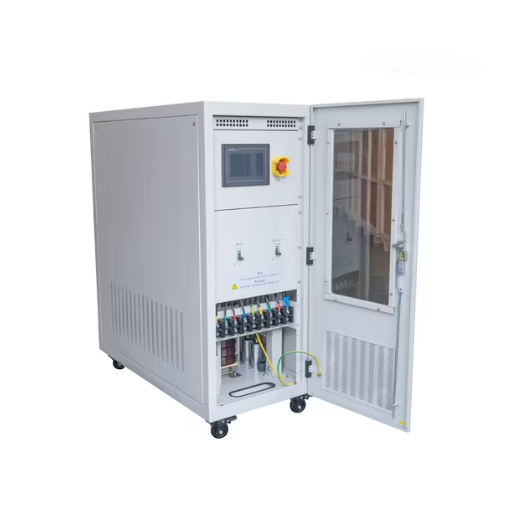
Generally, static frequency converters are electrical equipment, with advanced features and functions, which aims to alter the input power frequency into another stabilized output frequency, ensuring fine tuning of alternating current (AC) systems. Typically, the main use of these converters is to model the performance of equipment that operates at other than standard or varying frequencies. This goal is performed by the SFCs as an intermediate process of rectifying AC into DC and then reverting to the required AC output at the favored frequency. Their points of application are broad and include, among others, transformer testing and motor starting, grid power coordination, and power loss management. Such equipment is crusial to fulfill the demands of a number of industries’ operational requirements as well as improving performance using controllable load.
Definition and Functionality of Frequency Converters
Frequency converters could be the answer. These are but power regulating devices capable of changing the frequency of AC power to make it appropriate specifically for a target load. Inside these converters are given advanced solid-state electronics which ensures that an AC input signal is first rectified into DC and the output of the input voltage is made to fall within certain frequency limits via an inverter. These types of so called frequency converters are favorable to cover particular frequency ranges usually from 50 Hz up to 400 Hz. This allows them to be applicable in the production of goods for industrial technological purposes.
Major advantages of frequency converters involve providing an excellent control of voltage and frequency that is very easy to get, reducing levels of supply distorted power, and enabling proper interfacing with other systems. The use of the most advanced approaches, like pulse width modulation for example, allows these devices to perform with high energy effectiveness. This also helps in the cutting down of power usage and enhances the longevity of the equipment. Moreover, the use of these units is not limited to non-critical fields like airecraft navigation systems, promotional equipment solutions, and HVAC services.
Role of Static Frequency Converters in Transformer Testing
The evaluation of transformers requires applications of various frequencies and voltages under non-operated conditions. During testing, such transformers need to be checked for their operating capacity and efficiency of performance and such checks are expected to be complemented by using various (different) frequencies of SFCs which such as 50 Hz and 60 Hz are reported to be the most commonly used while some measure up to 15 Hz, and 400 Hz shifts, nevertheless noisy signals tolerant of high amounts of distortion are still available.
One of the reasons why the use of switched frequency converters (SFCs) is preferred over other means is the minimization of power losses while testing, thereby maintaining the frequency at the level it is supposed to be, which ensures working capacity and operational integrity. Conveniently, SFCs are designed to produce waveforms without undesirable distortions which are essential in isolating problematic harmonics associated with the device and thus protecting it from possible warm-up and other losses.
Meeting the stringent requirements for the protection of transformers, in the past decades, has seen the intensified integration of SFCs in the field of technological development. These enhanced safety features not only make it easier for engineering works to achieve their main objectives, but also help in the enhancement of infrastructure management. Added to this, improvements in technology like enhanced heat transfer and easily installable components such as transformers, overrule the situation whereby futuristic testing facilities have to work efficiently and ensure that the energy demands are accurately matched.
Main Common Types of Frequency Converters

- Static Frequency Converters (SFCs): These converters are electronic devices that modify the frequency of the input power without mechanical parts, using solid-state power. Such components are very effective, and they have been implemented in such areas as transformer testing, aviation, or the use of renewable resources.
- Rotary Frequency Converters: This equipment makes use of rotary converters that convert frequency using motor-generator sets. Even though the modern trend is to move from rotary converters towards static frequency conversion because of the reasons mentioned above, they are still appropriate and operational in heavy load cases.
- Variable Frequency Drives (VFDs): In the main form these are used for motor control so that the frequency can be altered via the VFD. Such devices are particularly important for implementation in some industries that require adjusting drive motors in a way that increases the efficiency of the energy in use and the process graphics.
Three-Phase Frequency Converters Overview
Regarding the conversion of electrical power from one frequency to another, three-phase frequency conversion equipment is of great importance, especially when it is necessary to apply it in industrial and aerospace systems. These devices help in the comfortable and efficient use of devices adapted to a certain frequency, allowing them to be easily integrated with different regions where other frequencies predominate, e.g., 50Hz, 60Hz, and even custom frequencies.
These systems usually come with such characteristics as ranges of input and output frequencies, capacity in volts, supported load, methods to reduce distortion, etc. Converting, for example, is penetrating loads both as low as 16.7 Hz, necessary for railway train equipments, and as high as 400 Hz needed in aeronautical and military equipment. In modern times, with the development of power electronics, especially insulated-gate bipolar transistors (IGBTs), power consumption deviation, which is the result of heat losses, has been minimized.
The usage of three phase frequency converters in different industries enables the users to have the advantages of power saving, increased operational features and overload capacity for various load types. Their capacity to deliver accurate and steady frequency outputs ensures that equipment such as production line machines and calibration apparatus, or CE grid systems, are used at maximum efficiency with minimum interference or breakdowns.
Comparing 60Hz to 50Hz Frequency Converters
Single Phase vs. Three-Phase Converters
Technical Specifications of Static Frequency Converters

- Input Voltage Range: The input voltage range of the converter normally encompasses 240V to 480V, and it may be changed to other constraints depending on a sectional or national basis.
- Output Frequency: The indeed inverter was constructed with the capability to have an output frequency that can be varied from 0 Hz up to 400 Hz in realistic usage scenarios.
- Efficiency: Loss of power that is often referred to as efficiency is quite high and does not exceed 3% in the best converters on the market.
- Power Output: Those with power rating are provided in configurations supporting loads ranging from 1 kW and above, to make sure they can adapt to various environments in their operations.
- Control Precision: It adjusts the power to the specific voltage and frequency by an equivalent amount, allowing for balanced operation of the power consuming equipment.
- Cooling Mechanism: The systems are generally air cooled or water cooled to cope with load fluctuations etc., provided the equipment does not lose reliability.
Power Capacity: Understanding kVA Ratings
The kVA rating is an essential parameter while designing electrical systems, particularly for industrial and commercial use. It illustrates the apparent power and the amount of real power (kW) and reactive power. When we say capacity, we are considering the energy required to perform the task and that stored, distributed and released by the inductive and capacitive components. Therefore it is essential to determine the kVA rating when designing motor systems or transformer systems.
When planning for the system, it is important to understand the nature of the new system. For instance, the power factor (PF) which is a measure of power usage efficiency has to be taken into account so that the system power loading is known more precisely. For instance, a system with a capacity of 100 kVA, which has a power factor of 0.8, will deliver only 80 kilowatts of real power. Improved power infrastructure nowadays pays a lot of attention on improving power factor to reduce the wastage of reactive energy and over energy consumption in general.
Furthermore, properly sizing the kVA system considers the expected load demands and still allows for an additional capacity for future expansion. In the process, tools such as power metering and load analysis software are used for greater accuracy in determining the accurate kVA size and thus, robust, reliable and effective energy distribution. This is paramount for any energy system engineer working with optimising their cost-effective infrastructures.
Frequency Range: 60Hz to 50Hz Conversions
When it comes to the conversion of electrical systems generated at 60 Hz into systems designed to operate at the frequency of 50 Hz, precise engineering practices are necessary to be employed to overcome the inherent performance issues of the equipment used across the frequencies. Frequency has a direct impact on the speed of operation of the motors, the design of the transformer and the compatibility of the entire system in use. For example, rotating machines such as induction motors exhibit speeds proportional to the frequency; that is why a cut in frequency from 60Hz to 50Hz is automatically met with a 17% decrease in the speed of the motor.
These are transformers, whose importance should not also be ignored or left out. Here, which involves considering frequency due to the effect it has on core losses due to hysteresis and eddy currents, and hence no transformer rated for 60Hz can be used at 50Hz without overheating and reduced efficiency without changes. In such cases, in due consideration, frequent application requires the use of advanced frequency converters or motor-generator sets to close any operational gaps.
Moreover, analog infrastructural systems, that is, lighting equipment, clocks, communication equipment with analog components, and some control devices may have to be adjusted, re-provided or changed either before or after the change of use for the new purpose. As such, it is highly recommended for electric professionals to conduct an elaborate study of load displacement assessments and perform systems interconnection tests to reinforce the dependability and avert electric power interruptions.
Benefits of Using Static Frequency Converters

- Energy Efficiency – With a high degree of efficiency, SFC’s are more effective in eliminating energy loss than the mechanically driven older systems, hence economy in terms of cost and environmentally assured healthier society.
- Precise Frequency Control – They make it feasible to change the frequencies with an exactness that facilitates managing machines providing the same equipment operation across various power grids with different standards.
- Compact and Durable Design – SFCs are tiny, yet tough, and require fewer repairs compared to the standard turning equipment and in turn have reduced maintenance costs.
- Improved System Reliability – With the provision of fewer items that move, SFC would guarantee almost consistent delivery of the product and less machinery failure as compared to other converters.
- Flexibility Across Applications – SFC can be flexible because it can be placed in any application including aerospace, manufacturing, or the area of renewable energy as it can easily be configured to exact voltage and frequency requirements.
Precision in Transformer Testing
Transformer testing is all important as it guarantees the dependability and efficiency of electrical systems. In today’s modernized testing, diagnostic methods are designed to implement a comprehensive set of diagnostic means such as the measurement of insulation resistance, winding resistance, load losses and voltage ratios. The precision instruments like Frequency Response Analyzers (FRA) and Dielectric Response Analyzers can significantly help in the evaluation of transformer condition by early identification and location of possible issues in the transformer such as core displacement, partial discharge, and insulation degradation all the while assessing the winding state of the transformer.
A trend that is seen these days is the way transformer testing is done. This also involves the use of digital technologies and real-time monitoring. This enables the modern systems to collect data all the time since visual repair cannot be made, while predicting potential maintenance measures and minimizing risks of unforeseen stoppage. Transformer testing is now reaching revolutionary levels by employing machine learning techniques in the prediction of the performance of transformers under various loading conditions. This is so because the devices are tested against the set requirements as stipulated in the current edition of IEC 60076 or IEEE/ANSI which helps keep the networks up and running with optimum reliability.
Energy Efficiency Compared to Traditional Methods
The integration of the static power converters in the facilities is a good progress and if static power converters are compared to the traditional motor/generator or electromagnetic solutions then it can be said that static power converters are a new energy technology which quickly saves energy. Because static power converters still use solid materials and other modern components they provide good power spends on actual equipment and its operation in the region of 95% in the best working conditions. Motor-generator configurations also spend much electricity due to power losses in mechanical parts and magnetic work, which results in operating limits varying between 70% and 85% known as typical efficiency levels.
In addition to this, SFCs allow achieving the best possible output voltage and frequency by reducing the parasitic power of the reactive elements, and make them compatible with modern energy systems. This is especially valuable in use when suitable dynamic characteristics are necessary in such critical applications as test benches, sources of renewable energy, and technological processes in the industry. Significantly fewer mechanical parts, means quite a sum less expenses on repairs and lack of unscheduled repair work. All these factors once again prove the undeniable advantages of SFC technology in the context of current electrical and industrial practice.
Cost-Effectiveness in Long-Term Operations
In various industries, the use of static frequency converters (SFCs) has been increasing in recognition as a good practice that is also cost-effective, mainly because of the ease of operation and the durability of the equipment which it provides. When such converters are used, it becomes possible to control the frequency of the power with much precision and such applications eliminate the most common cause of energy wastage quickly and constant wearing of the driven devices. Also, according to various researches, the maintenance costs with SFCs are significantly curtailed due to the prolonging of the useful years of the onset components like motors and generators which are as a result the soft motor starting and reducing electrical stress.
Moreover, the development of SFC is making progress, it has also brought about “many energy-efficient” infrastructural features like the application of energy recovery/breaking cushions and adaptive supply cycling, which improves the efficiency of its operations significantly. New reports indicate that the utilization of SFC’s helps to reduce the electricity demand by the companies by a maximum of 20%, which essentially facilitates the most power-efficient applications as there is no need for equipment power on three phase power and its inefficiencies.
Key Applications in High-Voltage Transformer Testing
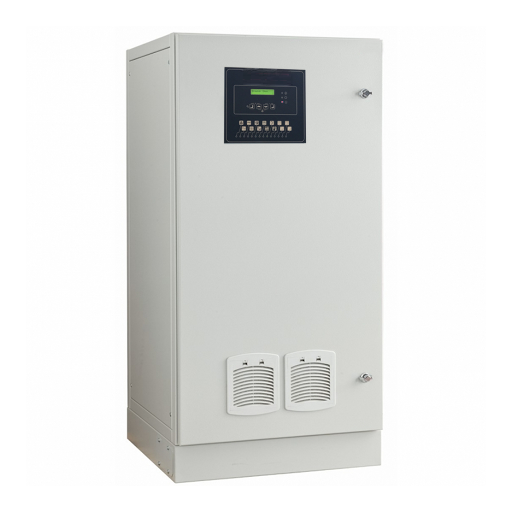
Static Frequency Converters (SFC) perform an important role in high-voltage transformers’ testing by providing the necessary precise and adjustable power outputs for testing objectives. One specific purpose is in testing transformers during routine exercises to ascertain how they will perform when subjected to the loads in question. With SFCs maintaining the frequency and the voltage, it is enables the testing process to take place in a controlled manner.
In addition to this, SFCs plays a significant role in the carrying out of the transformer short circuit tests which attempts to demonstrate the credibility and validity of the transformer in tumbling of very high temperatures. The capability to contain power consumption and reduce energy wastage while serving large loads makes the SFC confirm testing points and which performance locations leave pertaining poor durability of the transformers and their failure to maintain or meet requirements in short circuit ability.
Factory Testing: Ensuring Quality Control
Testing in a factory environment during the manufacturing process is crucial, it is aimed at ensuring that the equipment meets industry norms as well as statutory regulations. This process, therefore, entails a variety of studies, that is, dielectric tests, thermal evaluations, and impedance testing. For example, when working on power transformers, insulation tests are conducted to ascertain the soundness of dielectric layers when stressed by high voltages.
Load loss tests and no-load loss tests are also performed in order to assess energy performance as well as to comply with the international regulations such as IEC 60076. The application of factory testing with the use of the latest diagnostic tools and computer-based data recording is indispensable for greatly improving measurement accuracy and makes it easier to identify issues, hence reducing the chances of acquiring components of inferior quality. This is the only way one can achieve anything in managing critical infrastructure as framework applications to the offshore wind power sector without compromising operational safety.
Field Diagnostics: Enhancing Reliability
Field diagnostics represent a breakthrough in that they bring awareness and efficiency in operational-regime processes towards enhancing reliability and fault-free performance of electrical equipment. This factor can be deepened through usage of modern tools, for example, infrared imaging, partial dischargers and ultrasound which allow to avoid identification of surface imperfections without interruptions in the activity of the equipment. In the same vein, more advanced tools such as pattern recognition software contribute to promoting the exact and earliest possible diagnosis of faults before they advance into full blown system failures.
One potential application of thermographic imaging is that one can employ it to determine the most probable future damage and areas that require insulation improvement, or the investigation of any loose or scattered connections however this is not the case with partial discharge evaluation in high voltage systems. All these modern diagnostic practices are vital in minimizing period of inactivity, complemented with optimum maintenance program and increased duration of equipment operation, all of which contribute to lowering operation expenses and improving dependability.
Troubleshooting with Static Frequency Converters
Static frequency converters are a necessary tool in dealing with and fixing electrical problems in systems, most notably within power engineering and industrial plants. They are responsible for adjusting power frequencies suitable for load requirements granting opportunities to engineers to recreate system working conditions and identify problems with it. These converters are useful in the detection of faults, notably concern harmonics distortion, power imbalances, and transient voltage conditions, due to the ability to manipulate voltage and frequency with accuracy.
Current static frequency converters possess improvements in terms of identification of malfunctions, preventive a reliability maintenance as they incorporate such technology features like processing the waveforms, data acquisition and analysis as well as real-time monitoring. Such features increase the validity of the above illustrated maintenance approaches, enabling a clear understanding of system’s performance. Furthermore, the applications of SFCs eliminate the risks of carrying load tests on critical machines, which used to compromise safety regulations as well as operability. It is clear that the outlined way of problem solving emphasizes the necessity for SFCs in improving system quality and economy in a wide range of cases.
Reference Sources
- Partial Discharge Analysis in High-Frequency Transformer Based on High-Frequency Current Transducer
Read more here - Analytical Calculation of Static Capacitance for High-Frequency Inductors and Transformers
Read more here
Frequently Asked Questions (FAQs)
What are the advantages of using a 400hz static frequency converter for transformer testing?
In specialized sectors such as in many military institutions, a 400Hz fixed frequency rotary converter allows more power to be put into more compact designs and minimizes the effects on transformers due to core loss seen in short performance tests. These devices include a diode bridge rectifier and bridge inverter switched using IGBT modules to generate high frequency, which is advantageous in existing systems by extending the frequency range of the work supply. They may be plug in units and provide power for 208V, 230V or 400V equipment in a laboratory equipment.
How do three-phase static frequency converters support transformer testing?
While testing three-phase transformers acting under load in practical conditions, it is necessary to use a three-phase static frequency changer due to the overwhelming power structure of the 3-phase system. A large number of the SFC units currently available are capable of generating both single- and 3-phase voltages and are sufficiently capable of supporting static frequency changers, ranging from small kVA in quest to very high power of about 10 kVA and 20 kVA. Whenever there is any such need, the supply frequency can always be achieved, meaning the converters can always be adjusted to convert the power effects of 60Hz to 50Hz, and address the question of using both local and foreign-made equipment.
What features should you look for in an SFC for transformer testing?
When considering SFC tools, focus on the capabilities of the variable frequency converter the most, then accurate supply frequency and a trusty source of power as this is important for powerful and delicate military equipment industrial equipment uses. It was also advised to consider scope for assembly, a special unit transformable to a step-up transformer, and more importantly the power level change, with options such as 230V, 240V, 380V, 400V, 440V, 480V etc. Also, ensure the equipment uses a three-phase solid-state topology with IGBT switches and has an appropriate kVA rating, such as 10 kVA or 20 kVA, for the test work undertaken.
Can a three-phase frequency converter convert 220V 60Hz to three-phase for testing?
To be sure, a 3-phase frequency converter is capable of converting 3-phase 220V 60Hz systems into any other frequencies and voltages required for the operation of testing transformers in industrial equipment and other Hz rated power supply systems. These devices are generally equipped with both the rectifier and the inverter circuits; the entire system is IGBT (insulated-gate bipolar transistor) based for high precision frequency and voltage control for industrial loads. They are able to accept 3-phase 220V 60Hz inputs and output 208V, 230V, 240V or even higher using a step up arrangement when ordered.
