
Static frequency converters (SFCs) are a must-have in today’s power networks and industries. They provide a plain and easy way to control the power’s frequency. These gadgets are meant to integrate and compensate electrical frequency changes present in the operational requirements, therefore, ensuring maximum performance and reliability over the entire spectrum of sectors that they work in. SFCs, which are used in aviation, renewable energy, rail systems, and manufacturing processes, are in high demand for non-standard frequency equipment and systems. This paper will discuss the operating principles behind static frequency converters and emphasize their practical applications, thus expressing their very high level of significance in our world of technological innovation and energy efficiency. You will get a full understanding and appreciation of the necessity of having SFCs as a fundamental part of the specialized power system requirements, by the time you finish the article.
Introduction of Static Frequency Converter

Static Frequency Converters (SFCs) refer to the apparatus that changes the electrical power source frequency while the voltage remains unchanged. These converters can do that because they change the input alternating current (AC) to direct current (DC) and then to AC again but at the required frequency. SFCs are indispensable in diverse applications such as running industrial machines at different operational frequencies, aircraft, and renewable energy. The SFCs are the best solution for supplying electricity so that machines can be easily controlled, powered by the SFC, and can also be operated upon demand. Their modular design and the fact that they can operate on various loads at any given time make them a reliable power supply solution in today’s electrical and industrial industries.
Definition and Functionality
Static Frequency Converters (SFCs) are complex power converters that are designed to transform electrical power from one frequency to another without using any rotating mechanical equipment. They operate by first converting the incoming AC power to DC using a rectifier, then the inverter phase taking the DC power and converting it back to AC at the output frequency needed. The conversion of a dual-unit process enables the accurate control and the high percentage of efficiency, which lets SFCs fit into the wide range of needs due to the specific frequency requirement of different applications.
Static Frequency Converters (SFCs) are the backbone of the different supply frequencies equipment and power grids having supply frequencies not mainly dependent on each other. They are like the highway linking the air transport and power system in aviation. When we consider half the load in case of aviation, its supply is hardly 400Hz, and here also SFC is a vital component. In a Renewable Energy System, SFC is the spine coupling the turbine’s variable frequency and grid’s swinging at variable frequency. But simultaneously, we cannot overlook the low power demand and conversion process. This is to say that technologies like SFC are significant since they can adapt with modern energy requirements and consequent technological dependence on frequency.
Comparison with Rotary Frequency Converters
| Feature | Static Frequency Converters | Rotary Frequency Converters |
|---|---|---|
| Efficiency | High, minimal energy loss | Moderate, higher energy loss |
| Maintenance Requirements | Low due to solid-state design | Higher due to mechanical components |
| Size and Weight | Compact, smaller footprint | Bulky, larger footprint |
| Noise Levels | Low, silent operation | High due to mechanical parts |
| Reliability | Very high, robust control algorithms | Moderate due to wear and tear |
| Operational Lifespan | Long due to no moving parts | Limited by mechanical wear |
| Energy Conversion Speed | Fast, highly responsive | Slower due to inertia |
| Suitability for Modern Grids | Excellent, compatible with renewable energy | Limited, less adaptable |
| Initial Cost | Higher due to advanced technology | Lower at purchase point |
Importance of Frequency Conversion in Modern Applications
Frequency conversion is an indispensable element of the process to make renewable production on the modern power grid a reality. The alternative energy systems making use of wind and sun produce frequency that is variable corresponding to the prevailing environmental conditions. Frequency converters are used to steady these outputs which in turn are brought on board with the overall grid frequency leading to a constant and reliable supply. Moreover, progress in frequency conversion technology allows the precise control of factory machinery and thereby the drastic decrease in both energy usage and operational inefficiencies.
The use of the latest converter technology that can fix harmonic distortion and phase imbalance is also common in present-day applications, as they require optimized power quality. Moreover, the high-performance machinery-driven industrial sector enjoys the almost unattainably remarkable speed and torque control that these systems give through direct benefits to the quality of production and the working life of equipment. The latest technology in power semiconductors and solid-state electronics has brought the conversion efficiency to a new level, thus, the energy losses have been reduced and the system has become able to comprehend the grid’s dynamic energy demands. The change of frequency has no other role than to be a great backbone to modern infrastructures, assisting in the transitional stages of energy and technological development.
Key Components of Static Frequency Converters

- 1
Rectifier UnitConverting the incoming power to DC is done by using diodes or thyristors. The component is vital in order to keep the power on the input side of the system stable for later processing.
- 2
DC LinkThe step acts as an intermediary place to keep the DC voltage constant by storing it. To keep the voltage fluctuation small, capacitors or reactors are commonly used.
- 3
Inverter UnitThe DC power which is now turned into a stabilized one is again turned to AC, this time in the desired frequency and voltage. The process is very much dependent on power semiconductors and one of the popular devices is the Insulated-Gate Bipolar Transistors (IGBTs).
- 4
Control SystemIt is responsible for the management of the entire converter, such as the modulation of the voltage regulation, and frequency adjustment. Typically, real-time monitoring and optimization are done using advanced microcontrollers or DSPs (Digital Signal Processors).
- 5
Cooling SystemThe overheating of important components is prevented by the cooling methods using either air or liquid which helps the system to work efficiently and the equipment to last longer.
Rectifiers: Converting AC to DC
Electricians say rectifiers are the vital components that turn on a current in one direction. They also add that rectifiers are instruments so sensitive that they only recognize the DC part of the input and it allows that part to pass through. The early rectifiers were mainly based on vacuum tubes or potentiometers, followed by the age of semiconductor rectifiers that used diodes, thyristors, and electronic rectifiers. All of them are one-way current passing devices.
Modern times have seen the face of rectifier performance and efficiency through significant enhancements. Silicon-controlled rectifiers (SCR) and the insulated-gate bipolar transistors (IGBTs) have been developed and thus they control and adapt very well in the power rectification applications. Moreover, the high-frequency rectifiers, which are the same with the switching power supplies, provide the compact design and at the same time, minimizing losses of energy.
Another factor that is believed in modern society to be primary when deciding about the rectifier efficiency is the ripple factor, and that is because it shows the lasting variation level of the DC output voltage. Besides, the less the ripple factor can be, the better it is for the rectifiers because stability and precision are the main issues in these products that are used in sensitive areas. Therefore, modern rectifiers are comparatively better in terms of the following aspects: energy conversion rate, thermal loss, and reliability in the diverse operational environment, by using the cutting-edge semiconductor materials and the advanced circuit topologies.
Inverters: Converting DC back to AC
In modern electrical systems, inverters are very important devices that mainly deal with the conversion of direct current (DC) to alternating current (AC) having the ability to control the output characteristics very precisely. This very feature is highly essential for applications like renewable energy systems, uninterruptible power supplies (UPS), and electric vehicles, where the DC power from sources like batteries or solar panels has to be converted to AC so as to be compatible with the conventional grids or with end-use equipment.
Present-day inverter models make use of technical advancements like pulse-width modulation (PWM) techniques, effective cooling systems and power electronics in order to optimize operation. One of the benefits is that PWM can bring about a very close to sinusoidal AC waveform reduction in the harmonic distortion and energy efficiency enhancement. The other factor is that the advancements have made it possible for the modern inverters to offer very high conversion efficiencies starting from 95% and above such that there will only be minimal energy losses during the operation. Such systems are also modular and can be set up for power outputs going from a few hundred watts to several megawatts in the case of large industrial or utility applications.
What’s more, nowadays inverters become more and more connected to intelligent operation systems with features like real-time monitoring, diagnostics, and grid synchronization. These technical characteristics are crucial in distributed energy resources (DERs) integration, as they will enable the smart grid and its energy demands to be in sync providing not only a stable and reliable but also a resilient system. The combination of strong design and modern features in the inverters, thus, ensures the same level of performance and reliability over many and quite different but still demanding environments.
Filters and Control Systems
Power electronics and energy management systems can only be successful if filters and control systems are implemented within them. For instance, it is through filters like passive LC filters and active harmonic filters that harmonics are eliminated. The filters also cut out all electromagnetic interference (EMI) hence meeting the global power quality standards like IEEE 519. Contemporaneous control systems achieve high accuracy in controlling system parameters such as voltage, current, and output frequency through advanced algorithms like proportional-integral-derivative (PID) control and model predictive control (MPC). As a matter of fact, the systems are getting connected with machine learning, which helps them to project some sort of self-adaptation to non-linear loads and inconstant operational conditions, therefore making the systems more robust and reliable. The coordination between filters and control ensures that power is transported in a neat, stable, and economically efficient mode, hence the systems within the industrial machinery and renewable energy interconnection will be critical for the same reason as their applications.
Working Principle of Static Frequency Converters

The operation of static frequency converters is done by adjusting the frequency of the incoming power supply to the needs of the application in question. The cycle starts with the transformation of the alternating current (AC) of the incoming supply into direct current (DC) with the help of a rectifier. This DC is further processed by an inverter, which changes it to AC of the required frequency. The mentioned transformation is under the control of advanced control algorithms which are aimed to make it precise and stable. The devices usually account for a wide range of input frequencies and voltages and thus, they are extremely versatile for numerous industrial and energy sectors’ applications. Measures for proactively managing temperature and protecting the facility are an integral part of the system and, therefore, the proper operation and reliability of the system are maintained while exposed to constant use.
Overview of the Conversion Process: AC to DC to AC
The system of shifting the power, firstly from alternating current (AC) to direct current and getting it back to AC through some more stages, is carefully managed by a number of key aspects that are extremely well engineered. At first, the rectifier part of the circuit is where the alternating current (AC) is made to go through. This section takes the AC input and converts it into a one-way flowing movement, a direct current (pulsating one). The next step for obtaining an uninterrupted and smooth direct current (DC) output is to filter the rectified signal by using capacitive filtering, which is the process of getting rid of voltage ripples.
Upon the initial DC conversion, a stable DC is further processed through an inverter system, where it is converted back to an AC signal. Usually, the inverter’s main components are the insulated-gate bipolar transistors (IGBTs) or metal-oxide-semiconductor field-effect transistors (MOSFETs) whose stated purpose is to operate the switching at a very high speed. These switches, in combination with precise timing, generate the target waveform of the desired frequency and voltage. At this stage, the use of advanced pulse-width modulation (PWM) techniques is a common practice, allowing for both signal purity improvement and the reduction of harmonic distortion effects.
To make the system stable and adaptable, feedback control systems are used, and they monitor the output parameters, allowing real-time adjustment. By making these adjustments, the system can be sure that the input is reacting rapidly to the changes in the load or possibly other variations, and thus the system still meets the criteria for the performance of the output. In turn, the modern system is replete with thermal management and EMI shielding to keep the functional state of the system unchanged even if the environmental conditions are harsh.
Step-by-Step Explanation of Frequency Conversion
- Input Signal Acquisition
In the first stage of the frequency conversion, the input AC signal is received, which could come from the power grid, a generator or similar sources. The input signal is usually of a constant frequency, for example, 50 Hz or 60 Hz, depending on the regional standards.
- Rectification
The current AC input is changed to DC through the utilization of diodes or controlled rectifiers so that the frequency component of AC signal is lost and a proper base is built up for the following manipulations.
- Filtering
The rectified DC output is still not clear of being perfect because there are still some ripples and noise in it. Thereby, the signal is fed to the filter circuit, which is normally an arrangement of capacitors, inductors, and active filters.
- Pulse-Width Modulation (PWM) Generation
One of the most important stages in the process of changing the frequency is the digital processing of the signal. The control system, which is usually controlled by a microcontroller or digital signal processor (DSP), is responsible for setting a new AC waveform at the desired frequency. The method of pulse-width modulation, applied in this particular spot, establishes a synthesized signal through the alternation of DC voltage at precise periods.
- Voltage Source Inverter (VSI)
A voltage source inverter is the one that is connected to the AC source and the controlled power supply is connected to the inverter, converting the controlled power supply to the AC power supply. The inverter is very often applied with insulated gate bipolar transistors (IGBTs) or metal–oxide–semiconductor field-effect transistors (MOSFETs) as very nice and adjustable switches that need to be extremely fast.
- Output Filtering
The converted AC signal may include harmonics due to the DC-link voltage of the inverter. LCL filters incorporating inductors and capacitors are typically used to filter these harmonics and result in a clean sinusoidal waveform.
- Feedback and Regulation
A feedback control system monitors the output parameters such as voltage, frequency, and waveform quality, throughout the entire conversion process. Any required changes are made in real time for the output to fully meet the required technical and safety standards.
Industrial Applications of Static Frequency Converters

Manufacturing Processes
The VFDs are used for controlling the speed of machinery such as motors, conveyors, and pumps, which makes it possible to operate with precision and reduces energy use in some sectors like textiles, automotive industry, and food processing.
Aerospace and Defense
The most prevalent application of VFDs is in the ground power units for the aircraft use at airports. These units supply a consistent 400 Hz power for the systems during the maintenance and testing, thus there is no need to have the engines running as a backup power source.
Renewable Energy Systems
In field plants, they are the heart and soul of the inverter that transfers received DC energy from wind mills and solar panels to the AC grid power with the proper frequency.
Marine Engineering
Marine vessels are the subject of shiplifts as they regulate the fluctuating power supply from the mains resulting in the steady performance of equipment which includes but not limited to navigation systems.
Railway Systems
The converters play a front role in the elevation process, as the power lines are converted from the motive power that electric locomotives require to operate.
Application in Manufacturing Processes
Modern manufacturing is impossible to imagine without the changing of frequencies caused by the conversion of energy from one form to another. This process gives birth to the so-called frequency converters, which are devices that change both the output and input frequencies and supply a suitable voltage and current. In many cases, they are an integral part of – and work primarily with – the interconnection of embedded systems where the number of devices is limited to just the basic minimum. Energy consumption is one of the prime concerns in industry due to escalating costs. Unless the transformation of electrical energy is efficient enough, industrial equipment and machines will continue to be a major factor in the overall capital and/or operational costs of the plant. The process of converting many cores and the simultaneous computer control of all of the functional units in an industrial system carefully considers the reduction in waste.
Role in Aviation Systems
Static frequency converters (SFCs) are critical to the power supply of hospitals in the modern world and therefore, the efficiency, and power quality of electrical systems, both on-ground, and in-flight services are dependent on the supply from these frequency converters. Airports and maintenance facilities rely on SFCs to convert the mains power which is often 50Hz or 60 Hz into the 400 Hz, which is the standard power of aircraft systems. This change in frequency power makes the aircraft’s avionics, lighting, and other on-board systems use the same power as when the aircraft is on the ground so the fuel consumption and emissions from the use of the auxiliary power unit (APU) are minimized, and the operation of the equipment is seamless.
SFC technology has been a widely discussed issue due to some notable improvements in these areas. The energy efficiency, harmonic distortion, and system reliability have been the most discussed issues in briefings. The design of the systems is now modular, small-scale, and energy-efficient, which integrates with the airport systems very easily and also allows for flexibility to cater to the growing traffic. Furthermore, the controller and sophisticated cooling methods will definitely do the trick when it comes to making the flight more pleasant. These solutions further verify the importance of SFCs, from the power needed for aircraft to the disposal of waste products produced by them.
Integration in Renewable Energy Systems
Static Frequency Converters (SFCs) play a key role in the frequency standard conversion, which is one of the major functions of the integration of renewable energy systems, as well as in the increase of operational efficiencies. For example, wind turbines and solar power plants frequently produce electricity at different frequencies due to the changes in weather and environmental conditions. Static Frequency Converters are necessary for the conversion of such an unstable output into grid-compatible frequencies, and thus their capacities are very important for the smooth integration of renewable energy into the existing electrical networks.
Moreover, the SFC is a key player in the operations for grid reliability and the uncontrollability of renewable energy resources. It is capable of managing the system’s power oscillations by continuously modifying the voltage and frequency thereby providing the system with the needed amount of power and hence reducing the possibility of grid disturbances. Typically, SFCs are utilized in connection with renewable sources of energy, stitching together systems and traditional grids and so making it more reliable and efficient.
The advancements of the SFC technology in recent times for the digital control systems and the energy-efficient components have made it, in the best way possible, more than ever another outstanding player for the renewable energy sector. The technologies guarantee a further extended lifetime with less energy wasted and slowly but consistently make the SFCs the right tool for the job when it comes to utilities of the constantly evolving renewable energy field. This betrays the SFCs’ unbroken presence in one of the most significant tasks of the time, the one of moving away from fossil fuels, as well as one of the weaknesses of infinite sources, the scaling of renewable energy up to the level of becoming the main source for global energy requirements.
Advantages of Static Frequency Converters over Rotary Converters
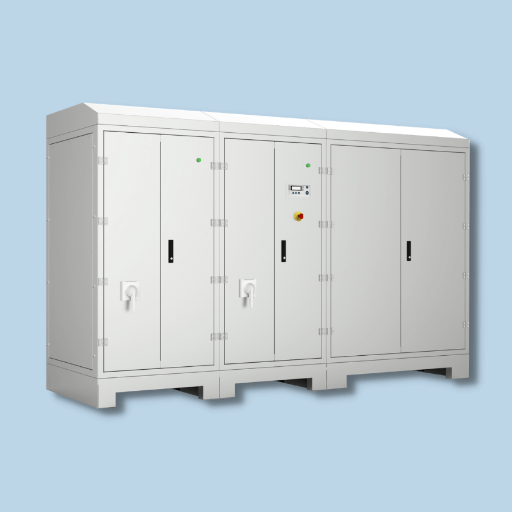
Higher Efficiency
SFCs are two orders of magnitude more efficient than the mechanical systems of rotary converters which are responsible for the generation of heat and the loss of energy on the system.
Compact Design
Due to the SFCs being of such kind of feature as the solid-state, they are very much logical in terms of power and weight, and thus are very much ideal for today’s applications of new technologies where space is at a premium.
Minimal Maintenance
As opposed to rotary converters, which need to be serviced constantly because of the moving parts, SFCs have no mechanical wear and tear and so they come with lower maintenance costs and less downtime.
Superior Reliability
The full-frame converters are able to maintain good performance regardless of the load and conditions of the environment even over time, which means operational stability is even higher.
Scalability and Flexibility
SFCs are very easy to customize and scale to the specific voltage and frequency requirements, not like the rotary converters, which are hard to tune for dynamic operation.
Noise Reduction
Operating with no rotor, SFCs produce almost no sound, hence making the environment in which they are operated more peaceful and energy-efficient.
Improved Efficiency and Performance
Static Frequency Converters (SFCs) play a critical role in raising energy efficiency in various fields. They cut off traditional mechanical parts of the rotary converters, and thus energy losses due to friction and mechanical wear are greatly lowered in SFCs. This energy saving is not only the factor cutting down operational costs but also the one contributing to the reduction of a carbon footprint at the facilities where such systems are in use. Moreover, fancy semiconductor technologies are involved in SFCs which are the main responsible drivers of voltage and frequency output control to a degree that an energy-delivery perfectly in line with the system demands is ensured. This is what makes SFCs a very good choice for the sectors applying green and sustainable methods for the reduction of the energy consumption worldwide and also for the protection of nature in general and fighting against the global warming in specific.
Reduced Maintenance Requirements
Compared to traditional rotating equipment, the maintenance requirements of the Static Frequency Converters (SFCs) are inherently lower, mainly because of their solid-state design and the decreased use of mechanical parts. When it comes to rotary converters, SFCs are much less likely to have parts that can get worn out, for example, bearings, brushes, and rotating shafts, which is a major factor contributing to cutting down the frequency and cost of maintenance. Moreover, their construction in modular units speeds diagnostics and the replacement of faulty components thus ensuring the FPS system is up and running soon and securing the system’s dependability. At the same time, the use of the newest materials and thermal management systems improve the durability of SFCs further, not only prolonging the life of the components but also reducing the need for frequent maintenance significantly. With all these qualities, SFCs are the best for very high rating or critical jobs where system operation is a must and short stops can affect the entire process.
Compact Design and Enhanced Reliability
Static Frequency Converters (SFCs) have been built to maximize energy usage in such a way that very fewer energy losses happen which leads to cost reduction. By using the latest power electronics, its modern designs enable the accurate control of voltage and frequency for the optimal performance of a wide variety of applications. Besides, their modular architecture offers the possibility of super smooth scaling, which is very important for the users since it will allow reconfiguration in line with the flexibility of the power demand. Industries, like manufacturing, aviation, and renewable energy sectors, can benefit from the use of SFCs as it will be advantageous to the energy-efficient and adaptable requirements. Therefore, from super innovation to ever-developing technologies, SFCs are considered as one of the main contributors to self-sufficient and cheap power management solutions.
Reference Sources
- Static Analysis of a Digital Peak Current Mode Control DC–DC Converter Using Current–Frequency Conversion
Read more here - Start-up Control of a Synchronous Condenser Integrated HVDC System with Power Electronics Based Static Frequency Converter
Read more here
Frequently Asked Questions (FAQs)
How does an SFC work in power systems to change frequency?
The conversion of the input AC power into the desired output frequency is the process for static frequency converters to operate, and this has generally used the method of first rectification to the intermediate DC link and then inversion back to AC with the help of IGBT-based switching. The different input voltages and output requirements such as 400V three-phase systems are some of the factors that lead to the design of these converters. The output power is maintained by the controller using the intermediate DC link and this allows the compatibility with different requirements. The static frequency converters in the case of a situation with no power factor correction could be a new way of increasing energy efficiency while improving performance in the operation of an electric motor or in other variable speed applications.
What aspects of the frequency converter work affect power capacity and output power?
The operation of a frequency converter depends on the rated kVA and the inner section, e.g., transformers or solid-state frequency converter topologies, which also determine the equipment’s maximum power capacity and output power quality. The converter sizing is usually for the higher power and the inductive loads and may need transformer isolation to be compatible with the different input voltage levels. The choice has a direct effect on efficiency and reliability, i.e., the thermal design and cooling are a must if one wants the converter to work on the same power 24 hours a day. Very specific requirements make the converters primarily for the motor starting and the variable speed drives the unit will not be overloaded.
Why are static frequency and rotary frequency converters chosen differently in marine power systems?
Rotary frequency converters use electromechanical machines and can provide excellent compatibility with inductive loads and motor starting, whereas static frequency converters utilize solid-state electronics and IGBTs to achieve compact, efficient conversion. For marine applications and shore power, static solutions are more widely applied due to their higher efficiency and lower maintenance. On the other hand, rotary units may still be chosen under very-high-power conditions or when having to endure sudden transient events are the main concerns. Both means of conversion are suitable for three-phase systems and incompatible with hydro or diesel generation, according to the power capacity required.
How does using an intermediate DC stage improve the frequency conversion process?
One example of how a converter can be simplified from using a DC/DC stage and a separate inverter to using an Integrated DC/DAC one is shown in the figure below. In this case, an intermediate DC stage has been used to stabilize the energy flow from the AC-input power to the intermediate DC before inverting it to the desired output frequency, thus simplifying the control of the output waveform and voltage. The intermediate DC link allows the output power to be tightly regulated while also providing support for variable speed drives and the precise starting sequences of the motors. The topology also has the advantage of power factor correction being incorporated and paralleling being done more easily for higher capacity and other advantages.
