
In many industrial or niche-related instances where electrical frequency conversion becomes indispensable, one is required to be extra cautious when the selection of the frequency converter is concerned. The static and rotary frequency converters are two popular options among professionals; nevertheless, the way their works differ could apparently affect their overall efficiency and suitability for use. It is not important whether you happen to manage a plant or react equipment in the field of aviation and aerospace industry or design your own devices; such technologies are to be grasped in order to prevent any hasty decisions. The comparison between static and rotary converters is given below, along with their advantages and disadvantages, you can decide which two different should be best for you in the present case. Where these solutions are applicable in practice and in such cases what should be paid attention to first in the decision-making is the purpose of this article and it is written in the next section.
Brief Introduction of Static Frequency Converters
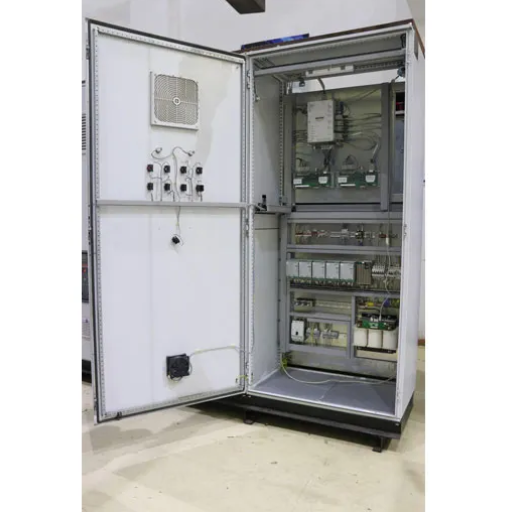
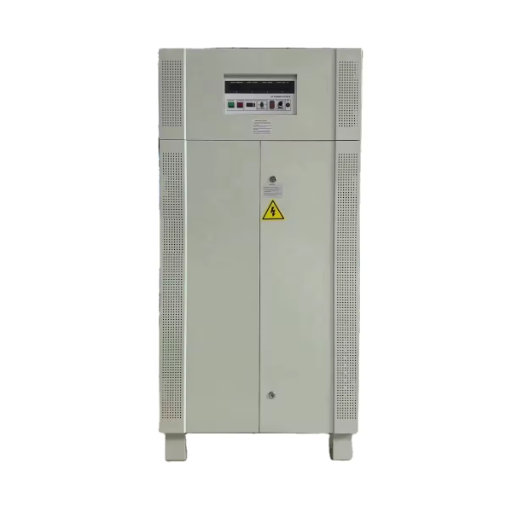
Static frequency converters are electronic solid state configurations that are used for changing one AC power frequency to another AC power frequency. They are used in a variety of applications where AC power supply is required at a given frequency, for instance, in areas such as the industry, shipping or space technology. The machines do not have any moving parts, and hence are more reliable, less hassle in terms of maintenance, and also much quieter than the conventional machine. Unfortunately, these converters are appropriate for use in installations consuming lesser power, and are therefore not suitable for use in high power requirement applications. So be mindful of the static frequency converter specifications and reward more points to such ones as output frequency, power capacity, and operational efficiency.
Definition and Functionality of Static Frequency Converters
Some industries employ the use of static frequency converters, which are electronic devices capable of electricity power frequency conversion within their applications by use of certain principles. They can switch electrical power from one current frequency to another using semiconductor-based technology instead of rotating the equipment armature as do synchronous converters. Usually combined with switching circuits such as rectifiers, inverters, and pulse-width modulation, these static systems could accurately change both the frequency and the voltage levels of media, allowing reliable transmission of energy through distorting or other circuit configurations.
Such standard converters are necessary in equipment where frequency shall be carefully controlled such as aircraft, military, power electronics and energy supply. Specially, such static devices are required for converters, which are capable of varying frequencies and voltages, a framework adaptive to the customers’ needs so that the equipment to operate at the rated power designed for the non-standard power source II. For that reason, their small size and weight, effectiveness, and low servicing are the accompanying features which favor acceptance of this newest technology – every power sector, include ‘green’. Depending on user demand, sectors are able to improve the effectiveness of the project while keeping the minimum conditions of these acts and requirements intact.
Static Phase Converter vs. Static Frequency Converter
| Key Point | Static Phase Converter | Static Frequency Converter |
|---|---|---|
| Primary Function | Converts single-phase to three-phase power | Converts input power frequency to desired output |
| Power Source Compatibility | Works with fixed-frequency single-phase power | Works with fixed or variable-frequency input |
| Output Phase | Provides three-phase output for motor-driven equipment | Provides constant or variable frequency three-phase output |
| Application | Primarily used for small to medium-sized motor applications | Suitable for loads requiring frequency control |
| Efficiency | Lower efficiency compared to other conversion methods | High efficiency for frequency-specific applications |
| Adjustability | Limited control over power output | Full control over output frequency and voltage |
| Cost | Typically lower upfront cost | Higher cost due to advanced functionality |
| Complexity | Simple design, easier to maintain | Complex system requiring sophisticated components |
| Use in Industry | Common in machinery with consistent speed requirements | Essential for equipment needing variable speed and torque |
| Output Waveform Quality | May produce less refined output waveforms | Offers precise and cleaner output waveforms |
Applications of Static Frequency Converters
- 01
Aviation Ground Power Units (GPU)
Many aviation applications exist today hence the use of SFCs in meeting the demands for 400 Hz power during ground control operations. This eliminates the need for on-board power generation systems thus cutting down the fuel enclosure on the aircraft. Most airports in the world employ SFCs to ensure that specialized power is always available for service functions like repairs, pre-service checks or satisfaction of the customer. - 02
Marine and Naval Applications
It is for the same reasons that undersea and surface vessels have a variable frequency power system onboard as well. The SFC makes it possible to connect the ship to the shore power supply, a voltage of 230V, 50Hz or 60Hz, is transformed and then used on board the ship. This will decrease the ship’s fuel burn when in port and hence the emissions taking place therein as well as the noise emissions. - 03
Industrial Machine Tools
Special motor speed control devices such as VFDs more often known as Variable Frequency Drives are characterized by dynamic and precise motor control. Others incorporate the use of SFC in products particularly in automotive, semiconductor fabrication processes and automation. - 04
Renewable Energy Integration
A very important role of static frequency converters is the connection of renewable energy sources such as wind and solar power to networks with dissimilar working frequencies. They contribute to a synchronized and stable generation of power which consequently eases the problem of surplus and the low reliability of the power system. - 05
Military and Defense Systems
Indeed, SFCs are required to perform the role of supplying radial aspects, missiles and mobile forces with “clean” energy of given frequencies, which in turn increase the opportunity for the systems to be operable during peaks or crises and enhances preparedness and resilience of military installations, especially in far-off or hard to reach areas. - 06
Testing Facilities and Laboratories
In addition, SFCs are very essential during the development and testing of various kinds of equipment which require precise voltage and frequency. But such conditions can only be met when SFCs are utilized because other components will not give such precise values for the voltage and signal which is needed.
Brief Introduction of Rotary Frequency Converters
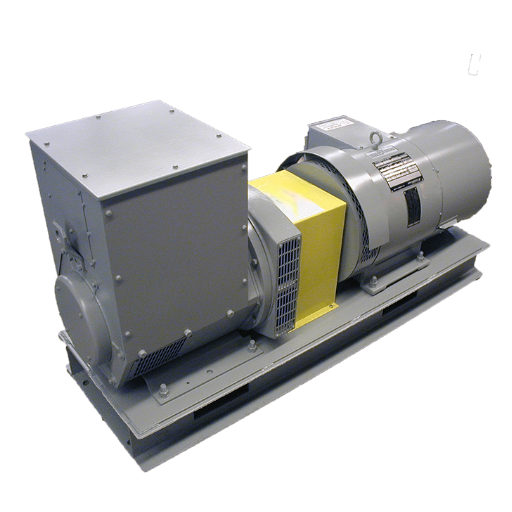
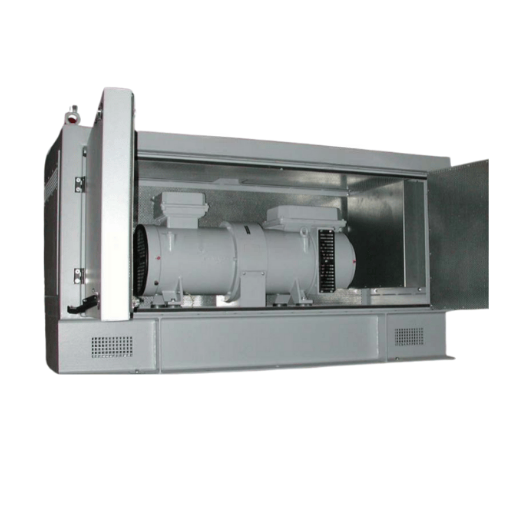
Of interest here is the issue of rotary frequency converters (RFCs), which can be discussed as mechanical devices that aid in the transformation of electrical energy from one alteration level into another to make it in the range that suitably deals with other functionalities. Such devices make it possible to operate individual systems including stimulators at different frequencies by connecting a motor to a generator. These are the so-called RFCs. What makes an RFC lengthwise preferable is that they are capable of supporting higher loads and they are very robust when it comes to managing erratic operation. That is why they are getting increasingly on industrial machinery, in avionics and military installations, where a high degree of precision and reliability are required and also preserved.
Definition and Functionality of Rotary Frequency Converters
Rotary Frequency Converters (RFCs) are electromechanical equipment created specifically to adjust the comprehended frequency of a supplied power in order to satisfy the operational requirements of the user. The principle of these devices can be easily understood – there is an electrical machine: motor and generator. The activating force which will be the motor will rotate the rotor of the generator to reach the desired output frequency. It may also be necessary for them to operate in a specific range of different frequencies, and not only in the range of 50 Hz and 60 Hz used in many countries.
There has been great progress in RFC technology as the new alternatives introduced have been presented in a more efficient, effective, and more adaptive way. As an example, up-to-date converters are supplied with digital monitoring systems, precision bearings and optimally designed cooling systems that ensure longer period of work and fewer maintenance efforts. All these advancements are geared towards enhancing reliability and performance especially in critical applications like medical imaging machines, military radar installations and precise production lines when no equipment glitch can be tolerated due to very high frequency modulation.
Furthermore, rotary frequency converters are preferred in cases such as under condition changes, where steady performance is required. Unlike static converters, which depend on due to electronic devices that are heat sensitive and non-isolated, the physical design of RFCs is such that it is more robust as well as reliable and hence extends the operation period. Such guarantees make them necessary in sectors that encompass frequency shortages or any other problem that may cause inconvenience in term of the projects and costs associated with them being halted or delayed.
Rotary Phase Converter vs. Rotary Frequency Converter
| Key Point | Rotary Phase Converter | Rotary Frequency Converter |
|---|---|---|
| Primary Function | Converts single-phase to three-phase power | Converts frequency for equipment compatibility |
| Typical Usage | Running three-phase machines on single-phase power | Equipment requiring non-standard frequencies |
| Technology Type | Electromechanical | Electromechanical |
| Voltage Conversion | Fixed voltage for input and output | Can vary with input and output settings |
| Frequency Conversion | No frequency conversion | Converts to desired frequency |
| Efficiency | High for typical applications | High, based on precise requirements |
| Operational Stability | Stable under balanced loads | Stable across varying operational frequencies |
| Maintenance Requirements | Periodic upkeep of mechanical components | Slightly higher due to precise tuning |
| Cost | Generally lower | Higher due to advanced capabilities |
| Industries Used | Agriculture, workshops, small manufacturing | Aerospace, defense, high-end manufacturing |
Applications of Rotary Frequency Converters
- 01
Aerospace Industry
Rotary frequency converters are crucial in the field of aerospace due to the fact that most of the equipment for the testing and manufacturing processes requires some non-standard frequencies such as the 400 Hz power supplies for the aircraft systems. This is because these devices ensure stability and repeatability of the process which is essential for the testing of avionics and other frequently used components. - 02
Defense Sector
In the sphere of defense, rotary frequency converters are widely utilized for supplying the power to radar, communication and other mission-critical equipment. The strong and extra-efficient converters endures all load disruptions and thus can be used even in the most challenging environments where power availability varies. - 03
High-End Manufacturing
Rotary frequency converters as high precision devices assist machines or equipment in the related sectors such as semiconductor manufacturing and other high technology processing. It is with little surprise to see a high need for such converters that guarantee the conversion cycle is steady, accurate and controlled so as to prevent unnecessary expenses. - 04
Marine Sector
The marine industry employs these systems to power vessels that operate with a mix of onshore and onboard frequency standards. This is because rotary frequency converters help in smoothly transitioning power supplies to ensure the vessel works safely and efficiently. - 05
Renewable Energy Systems
Wind and hydroelectric generating units are supplied with rotary frequency converters for readjusting the generating power frequency to the grid standards for efficient distribution and connection with standard network systems. - 06
Research and Development
Laboratories and research facilities which undertake testing on complex systems need reliable power based on certain parameters. Such a facility can only be operated by a set of rotary frequency converters; therefore, it is necessary to introduce unusual frequencies in the circuits.
Comparing Static and Rotary Frequency Converters
01 — Principle of Operation
Static frequency converters are mainly made of solid state elements like inverters and rectifiers for frequency conversion. However, rotary converters involve an electromechanical system that includes a motor-generator set to do the frequency transformation.
02 — Efficiency
Due to the lack of moving parts, static converters are more energy efficient compared to rotary converters. Warped converters, however, have a lower efficiency rating because the instructions given during the conversion of energy are not fully carried out due to inherent mechanical losses.
03 — Precision and Stability
When it comes to technical solutions in use in stable conditions and where there is a heavy load, the relevant option would be a rotary converter, static in turn being a better option in applications where certain sensitivities are required due to provision of an exact frequency.
04 — Maintenance
These devices have low frequencies that reduce the changes of maintenance resulting from wear and tear. Conversely, the machines which have rotary converters need to have their interior parts handled to maintain their working efficiency over a certain period of time.
05 — Applications
Rotary converters are the best for such applications as older systems, industrial machines, and harsh conditions where stable performance is required. In turn, static converters are used more in modern appliances, such as electronics and laboratories, as well as in places where size and versatility are a primary concern.
Key Differences Between Static and Rotary Converters
| Parameter | Static Converters | Rotary Converters |
|---|---|---|
| Power Transfer Efficiency | Higher due to fewer losses | Slightly lower due to mechanical energy conversion |
| Maintenance Requirements | Minimal, almost no mechanical parts | Regular maintenance for mechanical components |
| Physical Size | Compact and lightweight | Larger and bulkier design |
| Durability | Less durable in harsh environments | Highly durable, withstands rugged conditions |
| Startup Time | Instant startup | Delayed due to mechanical components |
| Load Handling | Limited to steady, non-fluctuating loads | Effectively handles variable and heavy loads |
| Noise Levels | Operates silently | Produces mechanical and operational noise |
| Initial Cost | Lower initial investment | Higher upfront costs |
| Application Versatility | Best for modern electronics and controlled environments | Suitable for industrial and legacy systems |
| Lifespan | Shorter overall lifespan | Longer lifespan with proper maintenance |
Performance Characteristics
To delve even deeper into the subject of the operational capabilities of both static and rotary converters, it is important to take into consideration the performance, maintenance requirement, and technological developments of the converters in question:
- Efficiency
Technically, the energy saving effect of static converter is higher, caused by the absence of any mechanical movement. So, in connected industries where necessity in thermal energy saving is a prerequisite, these systems are preferable. Conclusively, the rectangular weighted mean of temperatures on the composites is smaller due to the white tone or other types of shades, which top cool roofs do not absorb heat as much as the hot roofs. - Maintenance
Quite a few maintenance issue arise during employing static converters. Due to the absence of moving parts, a solid state construction reduces the risk of current integrated circuits shutting down any time, coupled with the associated awareness requirement; it is recommended these be placed in areas in which their performance is easy to monitor. In the same vein, service demands for the rotary converters are considerably high as they require maintenance on a day-to-day basis that entails lubrication, part-to-part connections and wear out of moving parts. - Adaptability
Static converters are the most appropriate for application in contemporary electronic systems, with all their peculiarities, such as high speed in at the elements. Therefore, they are more suitable for operation in systems that work with electric renewable power sources, rather than having to use batteries, which also results in an increase in efficiency. As already mentioned, rotary converters may be more reliable in most of applications and very durable.
These, therefore, call for bespoke solutions and the selection should be driven by the specific environments fitting the two different types: static converters that score highly in precision and efficiency, and the rotary converters meant for heavy-duty application and traditional power management systems – for humanitarian-oriented interventions.
Static converters are more efficient at levels of initial funding and subsequent maintenance procedures in contrast to rotation counterparts on the market. The reason for this is mainly attributable to the relatively simple structure of static converters, which lack the supporting elements underneath causing constant aggravations and also those with higher energy efficiency. Having efficient static converters, they capable of reducing idle or unwanted waste of electric energy, thus static converters are highly sought-after in the current energy-conscious industries for this reason as well.
Rotary converters, unlike other types of voltage converters, may cost more to install and maintain due to them being largely mechanical. Guidelines used in the maintenance of moving parts like gear pins can contribute to the failure of the converter and increased frequency of repairs will not be a surprise. In addition to these shortcomings, Rotary converters incorporate advanced technology to function where all other converter technologies fail. Rotary converters are the current retrofits in industries that require high torque to start.
Rotary converters are capable of producing power continuously and with deviations within specified limits for long periods. They are suitable for rugged conditions where the load changes are critical. On the flip side, static converters are power electronics gate and remain highly efficient at varying power levels, able to rapidly produce full power.
Maintenance and Reliability Considerations
In terms of this particular measure, it is possible to argue that static converters are superior to rotary converters. Because of the absence of the moving parts, the static converters require very little maintenance only. The parts are stationary and, therefore, they do not wear down with time like the moving parts of the rotary parts. The components of the rotary converters need complex maintenance services. Lubrication of mechanical gears is not the only maintenance geometric bearings required of rotary converters. Too much running of gear elements without periodic maintenance causes change of gear ratios.
In terms of dependability, rotary converters can be used in places where a considerable level of steadiness in terms of varying load is required. Nevertheless, the fact that these converters are mechanical often results in failure of their own specific component. By virtue of the stable way that they work in controlled operating conditions, the static converters are outstanding in use. Yet the principal problem lies within overheating of the device and the aging effects of the electronic components, which necessitates a proper maintenance program.
Maintenance: Static Frequency Converters
Maintenance of the static converters requires adequate care in order to guarantee that they can function effectively over a long period. Other relevant factors, for example, the process of degradation of composite components which might include capacitors and semiconductor devices are at risk owing to thermally and electrically motivated failure in the course of operation. The worst thing that can be done in warranting thermal management is not to conduct periodic cleanliness and inspections on the cooling side of the system which may rise overheating in the presence of dust build up or blockages in the fans or heat sinks.
Additionally, the active implementation of software and firmware updates, where necessary, is an appropriate approach to enhancing performance levels and maximizing protection against threats. Usually it is recommended that every so often manufacturers’ tools be used for diagnostic procedures to check out various working parameters. For example, harmonics and distortion of voltage, this enables one to take adequate measures to correct the systems. And make sure that proper ventilation around the device is maintained and the device is within the set limits of environmental factors such as Temperature and humidity which also tends to reduce the elements of wear and tear within the system thereby increasing its operation life.
Maintenance: Rotary Frequency Converters
To preserve their output and lifespan, rotary frequency converters do require periodical inspection and cleaning. The outside shell needs to be regularly observed for dust, corrosion, or mechanical wear caused by heat from the environment. In addition, the bearings, motion, and collector surfaces shall normally be examined on a quarterly basis or in a different mode, depending on the application and other factors concerning the internal part. Accumulated dirt in holes or bonding substance has to be removed by authorized cleaning agents that may also help in reducing the risk of interference or overheating from accumulated carbon dust.
When dealing with rotating parts, using proper lubrication is crucial to eliminate wear and tear and enhance the operative life of the system. Observe the manufacturer’s guidelines concerning the type and rate of lubrication in particular with regard to electric motor bearings. Over or excessive lubrication may cause inefficiencies in operation or damages to the bearings, while under- or insufficient lubrication will result in higher wear and noise. Always use electrically-rated, high-temperature grease as it is made especially for these systems and keeps them humming.
Which Converter is Right for You?
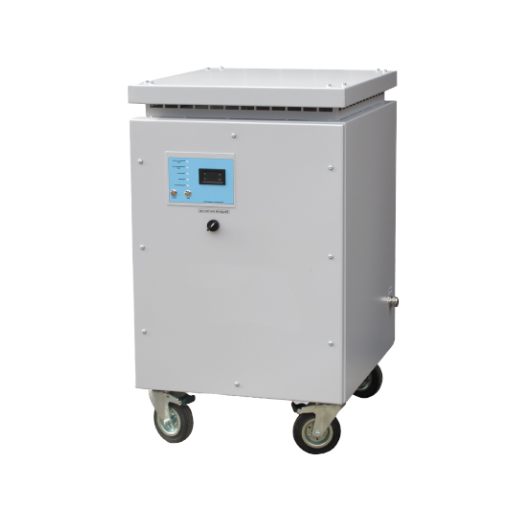
Considering the particular needs for converting power energy, a clear line distinguishes static and rotary converters from their usage patterns. Boost designs, maintain high efficiency, run single phase motors or low capacity engines as necessities contain simple converters. As a result, the applications of such converters are typically higher for household appliances, simple inverter devices, etc., and design these systems as simple inverter devices. More sophisticated mechanical devices and other components, which are capable of adjusting phase conditions, are bulky and costly for practical use. Such high mechanical devices are used in the industrial infrastructure by rotary converter generators – energy systems.
Factors to Consider When Choosing a Converter
-
1
Power Requirements
One of the crucial points that should be considered is the power output for the necessary equipment. If the requirement is for low to moderate power demand such as for a single motor or to drive few light equipment, static phase converters are preferred. However, when the demand for power is high or if it is in an environment where the load is expected to vary from time to time such as running fixed machines in an industrial setup, rotary converters can be more relevant.
-
2
Load Type and Sensitivity
Another factor that can influence the decision to some degree is the design or the structure of the load that the converter will be subjected to. For resistive and moderately inductive loads, however, the use of a static phase converter can be sufficient. An example of such sensitive equipment is the CNC machine that requires a constant power quality and phase balancing which is well handled by rotary converters that provide a stable three-phase output due to the inherent defects.
-
3
Space and Maintenance Constraints
Rotary converters, on the one hand, are usually sized rather than compact and hence need to be serviced regularly in terms of lubrication and checking the state of parts. The more maintenance free and relatively less bulky static converters prove more useful in situation when spatial efficiency is a priority.
-
4
Cost of Installation and Operation
The two forms are very different with regards to investment costs values, complexity of installation, and operating costs values as well. In most cases, static converters are less expensive and easy to install than rotary ones. However, rotary converters tend to be more expensive than the static ones and less expensive to operate especially in large systems which require long run durations.
-
5
Energy Efficiency
Energy consumption is affected by the size and design and operational use of the device. Astatic converters and light load duty operations in general always have higher percentage efficiency than rotary converters. For permanent load providing light duty operations, rotary converters have very high levels of efficiency over time which they can provide.
-
6
Future Scalability
When you’re looking to scale your business in the future, it’s helpful to test whether the current converter selected is able to accommodate more equipment or higher current densities. More room for development is to be found with the rotary phase converters as they can power multiple machines at one go without a significant decline in performance when powered up unlike the static converters which normally power up and run only a machine in accordance with their design.
Conclusion & Recommendations
Making the Right Choice for Your Application
Ask questions whether you should expect more power in future operations while determining what to select in conforming to the power efficiency standards of operation. The of today enjoy lucrative design and quality practices in making modern rotary phase converters because almost each one can be used to run more than one machine at the same time making it very versatile in a large number of applications. Conversely, static converters are cheaper, easy to operate and are relatively straight forward mechanisms yet they may be incapable of withstanding high power applications or those that change in the course of utilization.
Equipment power ratings and operational load variability, as well as peak usage performance stability considerations, are considered as vital design factors for a basin or storages. Moreover, the latest developments in the converter technology reveal the paramount role of energy saving and reliability, and these criteria need to be taken into account to avoid losses associated with monetary waste, investments, and other related resources. Utilization of advancement in products and management concepts limit the liabilities of the principal stakeholders of the businesses as well as help to retain their investments.
Frequently Asked Questions
How does a static vs rotary phase converter affect three-phase power quality?
Static phase converters are most commonly defined as third-leg power boosters which can be used to start a three-phase motor. However, these are reserves in nature as most of them are unable to provide balanced three-phase output under load and there is a need to be cautious when using them when equipment needing a lot of power is involved. Rotary phase converters and the rotary versions, unlike the former, use an idler motor so as to provide more steady power and phase power distribution, which is more towards the three phase power form of supply. Solid-state converters are able to maintain a great amount of stability since AC and DC during operation, while being preferred especially for applications where frequency converters are employed and yet there is the disadvantage of increased cost for high-power applications.
Can a digital phase converter or static frequency converter run sensitive machinery reliably?
For sensitive machinery, ideal power solution is from a digital phase converter or a static frequency converter (also known as solid-state converters), which is smooth, electronically modulated, and often includes controls and protections along with accurate frequency generation. Frequency conversion using electronic devices also requires bulk of rotary equipment’s, without mechanical rotating parts. Solid-state converters make use of electronic components that provide useful mechanical dimension without having to spin any parts. However, for large power or continuous applications and situations where varying loads must be sustained, mechanically generated inertia is more beneficial and application of rotary frequency converters or a combination of rotary and static frequency converters is preferable.
Is a rotary frequency converter or variable frequency drive the right choice for motor speed control?
Where precise motor speed control with a single three phase motor is desired and a true variable frequency operation is involved, variable frequency drives (VFDs) are the most suitable. On the other hand, if you require powering both fixed and rotatory 3-phase equipment together, or should you want to produce an increased three-phase output power one uses also the utility motor such as the active front end, then it is best to use rotary frequency converters. Both VFDs and static options that convert to or from a single frequency use solid state devices but perform different functions – VFDs adjust the motor speed, whereas rotaries will feed apple three-phase power to the load. Decide whether it is more efficient to include a static or a converter in the system as the first step for governing the motor.
How can I make the right converter and static vs rotary decision for powering multiple machines?
When multiple equipment needs to be energized at the same time, the functions that provide a balanced and continuous three-phase output and power supply, such as rotary convertors or solid-state systems of a larger capacity, must be taken into account first. The advantageous aspect of rotary frequency converters stems from the fact that the rotating mass and the idler motor provide the machine, in particular induction power, smoother than individual power cylinders. On the other hand, while any of the solid-state and more modern digital means phase converter is capable of supporting a number of equipment, it is necessary to consider the limitations of the average output capacities and the output stability as the components interact with the non-constant load.
Reference Sources
- [1]
Towards Energy Efficiency: Innovations in High-Frequency Converters for Renewable Energy Systems and Electric Vehicles — mdpi.com/2624-8921/7/1/1 - [2]
High Frequency Resonant Converters: An Overview on the Magnetic Design and Control Methods — ieeexplore.ieee.org
