
Exploring Static Frequency Converters
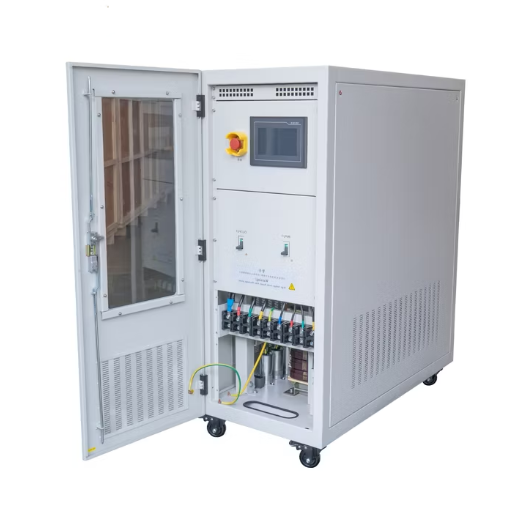
Static frequency converters (SFCs) are electronic devices which are used to control the electric power frequency. These devices are made of rectifiers and inverters which changes alternating current (AC) to direct current (DC), and thereafter restore the DC energy to the original intended frequency in use. They are space efficient and operate on no moving parts thus alleviating the need for continuous maintenance, improving longevity of the equipment. Such are the cases where changes are required and are a must, hence the need for frequency converter systems. Static frequency changers/motor-synchronous systems are particularly recommended for systems with stringent frequency control requirements such as industrial processes, aerospace qualification testing facilities or those with renewable energy sources, as well as the Technically Reduced (TR) systems.
Advantages of Static Frequency Converters
- 01
High EfficiencyLimit operability factors of stationary frequency converters that float between 95% and 98% depending on design, use, and other variations. Hence energy usage is minimally erratic and applications incur averages operational costs because they are good investments over the period.
- 02
Precise Frequency ControlSFCs feature precise frequency control capability, making honing specific frequencies in the range of 50 Hz to 400 Hz accurately and stably. This technology is particularly suitable for applications that need to be operated at a precise frequency, that is, for instance, aircraft or semiconductor manufacturing.
- 03
Reduced MaintenanceThe absence of any moving components such as traditional flow-through generators, means that the stroke frequency converters require only minimal upkeep. This is not only accompanied by less idle time but also results in lower total cost of ownership thereby ensuring more availability and reliable operation.
- 04
Load Handling CapabilityWith the adjustments made on integrating variable and cyclic loads to SFCs based on their engineering, such changes have become very simple. In particular, SFCs have features for sudden changes in load, given the necessity for fluctuations to be experienced in the load, e.g., electric power input in a test laboratory or its generation output when using a renewable energy source.
- 05
Compact DesignMost applications are light and small, requiring less space compared with the conventional rotary type converters. It is comfortable to use small equipment since its ‘inexpensiveness’ can be combined with the small size of equipment and the means of forming the equipment as components within already constructed buildings.
- 06
Enhanced Power QualitySFC eliminates harmonics and voltage droops and provides symmetrical power. That way, power supplied to the consumers is free from distortions so the electrical equipment which is used last longer and with fewer faults.
Disadvantages of Static Frequency Converters
- 01
Limited Overload CapacityThe key point to note is that SFCs have generally lower overload capability relative to rotary machines. As a consequence, such an inability to provide a high load implies that these converters may not be the ones best suited for applications that require sudden peak powers. For example, the usual overload factor for SFCs is 110% to 150% for brief periods, which is often too low for certain applications.
- 02
Susceptible to Environmental FactorsStatic converters antiquated in frequency drive systems have constrained operational benefits with respect to the rotary converters. In the absence of satisfactory protection, elements like power transistors and capacitors that are utilized in the static devices decay faster in the presence of harsh environmental circumstances, which means that their reliability and working life becomes affected.
- 03
High Initial CostThis cost emphasizes that most static frequency converter systems are electronically sophisticated and contain cumbersome board level components. While the correction tends to run behind this variable, as focus shifts to down range maintenance, finance is not always readily available for start ups which are bound to capital control.
- 04
Maintenance ComplexityWhile SFCs need less upkeep compared to rotary motors, problems associated with the electronic systems, on the other hand, require expert skills in repair and rectification. Such critical component failures like IGBTs and control boards extended downtime, mostly where technical experts are considered for recovery.
- 05
Harmonic Distortion Under Certain ConditionsAlthough SFCs have structures that reduce the production of harmonics in the system, under specific conditions such as poorly placed devices or where loads are automatically graded, the use of this power source induces harmonic distortion in the system which can cause the systems of nearby sensitive devices to warble even after it is powered on, necessitating additional correctional devices.
- 06
Dependency on Filter NetworksIt is required that static converters depending on the design restrictions and the minimization of voltage peaks or harmonics use external filters. The addition of these filter networks increases the complexity of the system and may necessitate increased civil and installation costs.
Exploring Rotary Frequency Converters
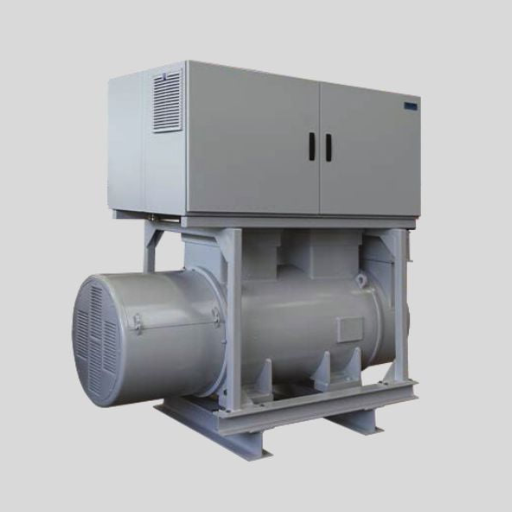
Rotary systems rely on a rotating set of devices to convert electrical frequency power from one domain to another, mostly to another frequency. It consists of a motor driving at the input frequency, turning a generator at the required output frequency. This power conversion capability offers distinct advantages over the stationary units including reduced distortion of the input current waveform as well as more stable performance when the load changes.
Also, the rotary systems find extensive use in cases of high reliability and smooth load response characteristics. They are used in industry, aerospace, and maritime systems, where there are usually frequency bubbles. In practice, such conversions are generally carried out using rotary solutions. These types of equipment are more expensive and more difficult to maintain because they have moving components which cause mechanical wear and start-up costs are potentially higher compared to stored energy systems.
Advantages of Rotary Frequency Converters
- 01
High ReliabilityRotary frequency converters are reputable for being used in hostile environments and for their tendency to last for a longer period. Its design is very stable and can be used for critical functions such as power generation, aerospace, and marine systems. It is maintained that rates of reliability in systems under good maintenance can go above 99.9%, thereby decreasing downtimes.
- 02
Superior Handling of OverloadsIn contrast to static converters, these devices show an enormous ability to carry out peak overload operations. Rotary devices are entitled to short term loads without any embarrassment to undoubtedly enhancing the stability of power output, such systems being able to bear even 200% of an overload for a couple of seconds in the case of the industrial models of design.
- 03
DurabilityRotary converters are expected to withstand more than a few decades of activity with each repair. Such devices are the result of precise calculations of efficiency and performance. Rotary frequencies are designed to operate at their desired levels under adverse external environmental conditions and maintain performance.
- 04
Low Harmonic DistortionFrequency converters based on rotary principles produce frequencies with low harmonic distortion levels, normally, not exceeding 2–3%. This application is vital to ensuring well-functioning of delicate electronic systems and in robust and high accuracy electrical installations.
- 05
Stable Output PowerThis makes rotary frequency converters ideal and more efficient for use with loads having varying power factor and those requiring high power with respect to their power ratings. This approach is very important in installations where there is need for keeping uninterrupted or stable voltage and frequency conditions especially loads that are highly sensitive and require power electronics such as systems for medical use and radars.
- 06
Flexibility in Frequency TransformationThese machines are highly malleable since they can be used in a diversity of different frequencies. For instance, many rotary frequency converters provide support of 50 Hz, 60 Hz, and some converters even up to 400 cycles per second, which makes them perfect for different industrial and aerospace needs across all the continents.
Disadvantages of Rotary Frequency Converters
- 01
Higher Initial CostsRotary frequency converters commonly come at quite an expensive cost due to their intricate structure, heavy-duty construction, and dependence on mechanical parts. For example, the efficiency, specification, resistance and power, as well as scope of operation, may cause the purchase price of such systems to escalate and may differ from 20% to 40% of similar static converters.
- 02
Mechanical Wear and MaintenanceRotary converters move, and thus they are bound to aging and as a result, they must be provided with routine post-production services including bearing servicing and replacement, which can further increase the above-mentioned costs. Where customers experience much downtime waiting for servicing, it implies that profit margins and efficiency should suffer.
- 03
Lower Efficiency Compared to Static AlternativesGenerally, rotary frequency converters have higher energy consumption when compared to inverters at nearly the same outputs. A common depiction of the two rates, for instance, is that rotary quality is about 85-92% or higher and for inverters, from 95% onwards.
- 04
Larger Footprint and WeightNormally, because of the large moving parts, rotary converters are expected to be bigger and heavier than the stationary converters. This could, therefore, continue to put barriers around the settings where they can be placed, even more in cases where mass and space is an issue, as in the avionics sector or marine environment.
- 05
Operating NoiseThe operation of the arrangement by the movement of the parts may generate sounds that are audible and may be unsuitable for crisis generators such as health facilities or for quiet office space use. There is a range from 70 to 90 decibels in most cases, again depending chiefly on the model and how it is used as with most machines that rotate and have fans.
- 06
Startup TimeNonetheless, there are rotary frequency converters which are able to convert the power as soon as they are switched on. The time between their switch-on and when they can perform to their full capacity can stretch to a few seconds and in others to more than a minute in operation, particularly in cases where frequency conversion is needed without any delay.
Static vs. Rotary Frequency Converters
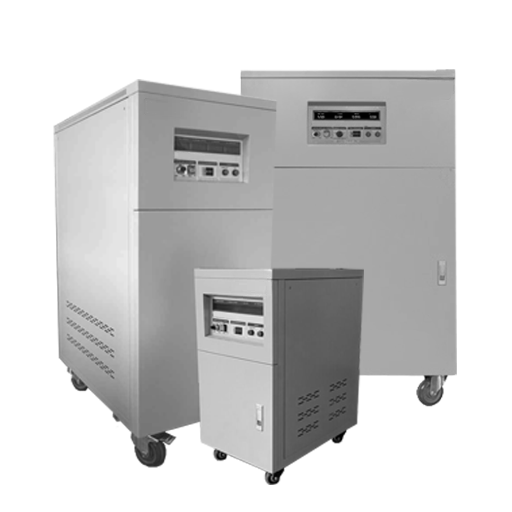
- 01
Efficiency: Static frequency converters are considered more efficient because they have fewer parts that move around and introduce distortions consequently lowering the power losses. On the other hand, as rotary converters have motors in them, they consume even more power through the inefficiencies associated with mechanical motion.
- 02
Maintenance: As for maintenance, because there are no applicable parts in static converters, there is much less care to take. However, there are some moving parts in rotary converters, hence they need to be taken for servicing after some time which leads to increased operation costs due to the downtimes.
- 03
Reliability: The use of static and rotary in wider range of load demand applications cause static types to fail because of constant stresses in components, while rotary machines can withstand loads even when they reach them suddenly or when they are just temporary overloads.
- 04
Startup Time: Static converters as it is instantaneously available upon activation which is significantly appropriate for emergency power usage. As for rotary converters, it is not readily available since it takes a few seconds or minutes to get loaded up.
- 05
Application Suitability: In some cases, static power converters will be best suited for use in clean facilities, such as a data center or testing laboratory, because they work quietly and have a small size. For more demanding applications where power supply must be able to withstand high loads and provide a long, trouble-free life span, it is advisable to use rotary devices.
Key Differences Between Static and Rotary Frequency Converters
| Parameter | Static Converters | Rotary Converters |
|---|---|---|
| Noise Levels | Operates quietly | Produces noticeable operational noise |
| Size and Weight | Compact and lightweight | Bulky and heavy |
| Startup Time | Instant activation | Requires seconds to minutes to activate |
| Load Capacity | Limited to medium loads | Handles high and variable loads |
| Energy Efficiency | High energy efficiency | Lower efficiency due to mechanical losses |
| Durability | Less durable under extreme conditions | High durability, ideal for tough environments |
| Maintenance Requirements | Minimal maintenance | Requires more frequent maintenance |
| Applications | Best for sensitive environments | Ideal for industrial and high-load settings |
| Cost | Lower initial and operational costs | Higher costs, both initial and operational |
| Power Quality | High stability and precision | Prone to minor fluctuations |
Performance Comparison
In the case of frequency converters, numerous aspects of the construction (efficiency, reliability, processing times, accuracy) are to be distinguished for static and rotary operation. Static converters or inverter machines use a more advanced solid-state electronic device to control power voltage and frequency. They include high operating factors of at least 95% that is mainly attributed to their negated motion. Electrical indicating elements can easily harm these electronic gadgets since they cannot stand either changes in power consumption, mainly large energy surges. Such condition makes the operation of such devices very limited as processing affects their operation as it is very precise.
Alternatively, rotary converters – making use of electromechanical orientation of technology- are well-equipped with the capability of handling server overload. This makes them ideal for applications that are prone to changes in the load factor. The high is thermal, due to the energy being transferred by the rotary machine part being lower, typically 85-90%. Because energy is lost to irrecoverable friction in the bearings and drives, there are renewed requirements for maintenance on the moving parts of a rotary system as it incorporates the heat sinking of the system in its construction.
On the other hand, depending on the application, improvements can be achieved from both of these types of converters, with respect to the lack of liquid. For example, static converters normally result with high efficiency of power conversion in applications where very little maintenance is needed – in other words, in ‘clean’ machines. Despite the inherent disadvantages that accompany the use of static and rotary converters, some operational goals of an organization can only be met with the former and not the latter.
Choosing the Right Converter for Your Application
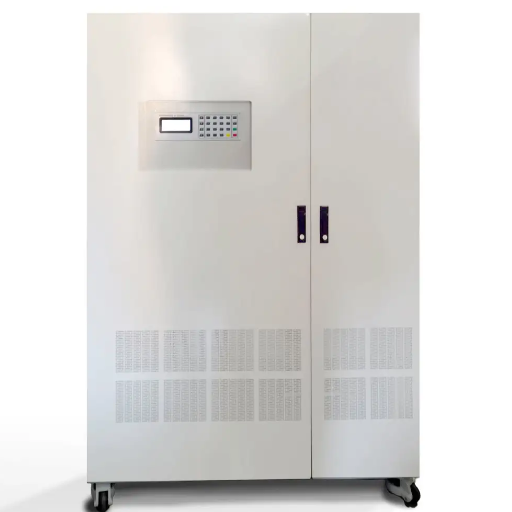
In the case that static and rotary frequency converters are to be considered used, one should take into account the peculiarities of the target application:
- 01
Precision and Maintenance Needs: Applications for static converters are well suited for those that are highly accurate and do not require frequent attention, such as instruments for laboratory, facilities for conducting an experiment or regime, equipment intended to be used in aggressively friendly environmental conditions, and some electronic devices.
- 02
Load and Durability Requirements: Given that rotary converters can be used in environments where improved mechanical strength and resistance to inrush currents or power factor are rather necessary, in heavy industry, machines, and electronic-based controlling equipment for such workshops are more likely to include traditional rotary converters.
- 03
Operational Environment: Some essential elements to consider in the operational environment include temperature, vibration and humidity. Static Converters are well-suited for use in controlled and moderated operating conditions, while rotary converters are equipped to manage more intense ones.
- 04
Energy Efficiency: The static converters use energy economically most of the time and they are, therefore, appropriate when taken long term and they are required to be in low-load use in a particular structure.
With every particular case in mind, the most appropriate use may be established, depending on such implementation strategies as compactness, reliability or energy consumption dynamics of a certain converter.
Common Applications for Static and Rotary Converters
Both static and rotary converters are in widespread use in both an industrial and commercial environments due to their ability to modify power systems so they are fit for a specific kind of work. The employment of static converters is common in applications requiring specific voltage handling with less mechanical wear. Such cases involve CNC machine tools, automated lighting, and other vulnerable devices as well, in which their advantages shall be more precisely described.
On the other hand, rotary converter systems are well-suited for applications where great overall performance, despite constant load fluctuations, is the main other concern. Units featuring such high-performance motors are actively utilized sectors like industrial production, which involves the operation of such machinery as fabricating units, quarries or carpentry shops. Also, in cases where the older systems have the requirement of connecting a three-phase device to a single-phase source through a converter, the converter rotaries would be preferred end-machines.
It is beyond doubt to argue that all these issues would dictate choices of which mode of power conversion is the most suitable for the firm or factory under examination based on efficiency constraints.
Making the Right Choice: A Decision Matrix
A careful assessment of several influential factors is imperative for the decision on the most appropriate type of converter for particular use. These factors are the power specifications, conditions under which the device will be used, practical aspects of combining it with other technologies, the operating and maintaining costs, and the energy efficiency considerations.
For the case of static converters, their miniaturization is an advantage along with these low maintenance requirements. They work well for where these two conditions exist as in the cases of economical advantages and space limitations. On the other hand, rotary converters are capable of withstanding high loads and are best suited for tasks where heavy loads are imposed on the machine for example, older processing equipment or plants with high fluctuation in power.
A decision matrix can help take a more organized approach towards breaking down these considerations. For instance, estimation of the life cycle costs of various options on account of their installation, operation, and simple maintenance makes it possible to break down all the costs involved in the property. It is essential in equal measure to analyze the input and output voltage stability against the power quality of the systems oriented to clear the air on the subject of the entry of the two systems in the same especially sensitive area.
By bringing in these aspects, the organizations can tailor their systems to meet particular operational needs and achieve maximum productivity and efficiency at minimal direct and indirect costs in various scenarios.
Digital Phase Converters
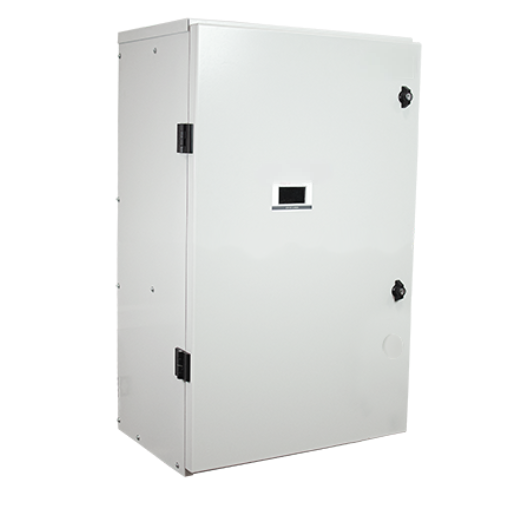
Digital phase converters are newer devices created to turn single-phase electrical power into three-phase power. Such converters help in situations where three-phase machinery has to be used in the environment, which has only single-phase power. This capability is achieved by the use of power electronics and microprocessor technology in producing three-phase output that is highly accurate and balanced. These are used in various applications, delivering efficient sustained power, ensuring that the output of the voltage is controlled and can withstand changes in loading conditions thus making it fit for purpose and useful.
What Are Digital Phase Converters?
Digital phase converters are specially designed machines that can receive one-phase power only and get out an output of 3 phases using modern ways such as solid-state electronics and sophisticated computer programs. In contrast to alternative rotary or static phase devices, the new digital models consist of microprocessors and Insulated Gate Bipolar Transistors (IGBTs) which provide three-phase power supply that is both accurate and steady. Consequently, this method ensures higher efficiency as well as equal distribution of voltage and current in all phases.
These devices offer high usability and can find application in different spheres such as – modern machining equipment, numerical or computerized control machines, pumps, and compressors. One of the main reasons is how well dynamic loads are accommodated and the output can be varied to respond to situational requirements immediately. Also, most digital phase converters are fairly small efficient and do not damage ecosystems, employing such features as power management during operation, and power overvoltage, short circuit and thermal protection. These are basic requirements that all the consumers of the country needed to invest in the most recent infrastructural facilities for industrial and trade considerations.
Comparison with Static and Rotary Converters
| Parameter | Digital Phase Converter | Static Phase Converter | Rotary Phase Converter |
|---|---|---|---|
| Phase Balance | Precise and consistent | Poor, unbalanced | Moderate, improves under load |
| Efficiency | High | Low | Moderate |
| Load Flexibility | Adapts to varying loads | Limited to specific loads | Handles moderate load variations |
| Maintenance Requirements | Low | Minimal | Moderate |
| Suitability for CNC Machines | Ideal | Not recommended | Acceptable with limitations |
| Noise Levels | Quiet | Silent | Noisy during operation |
| Voltage Regulation | Excellent | Poor | Moderate |
| Startup Performance | Smooth | Sudden | Moderate |
| Initial Cost | Higher | Low | Moderate |
| Long-Term Cost Efficiency | High | Low | Medium |
When to Choose a Digital Phase Converter
Digital phase-converters are highly effective and flexible power converters meant for cases where single-phase power is supposed to be changed to three-phase. These converters are very useful in applications where there is a need for smooth and balanced voltage and reliable operation such as CNC machining and industrial automations along with other loads sensitive to power quality. They also possess remarkable capacity for voltage control and in performance at the starting of equipment, no matter the current being used ensuring safe easy start up without causing any internal damages to any motor or electronics that might be inside the load.
Moreover, it is not without good reason that many believe that in cases, boasting low noise levels of medium voltage variable frequency drives electronic converters are better than standard rotary phase converters. This certificates that the electrical noise and acoustics nuisance generated by any drive will be less significant than in any rotary unit. Even if they are more expensive in the beginning, an energy saving technology, digital phase converters, will generally prove to be cost efficient in terms of such arguments as energy costs and other types of operating costs in the foreseeable future. But if the need arises to be able to control the power to a very high extent, nearly all the time and with high levels of accuracy, then there will be need to use a digital phase converter rather than a rotary converter for reliability and labour use inputs.
Reference Sources
- Applications of Frequency Converters (60HZ to 400HZ) in Aviation, Naval, and Industrial Sectors: A Review
Read more here - Research on an Innovative Magnetic Helix Hybrid Excitation Rotary Generator
Read more here
Frequently Asked Questions (FAQs)
Q
How does a rotary phase converter work for heavy tools?
What a rotary phase converter does is simply incorporate an idler motor that can be used as a rotating mass to generate one more phase meaning that a single phase power can now be converted to three phase power to cater for larger machines like a lathe or industrial welders. Capacitors modify the phase timing by either leading or lagging, as is the case in static phase converters. In addition, a rotary phase converter has much higher power levels available, as this station can cater for multiple machines most efficiently as compared to the basic primitive design of a static converter, in which there is an overusage possibility of the electric motor. They are also retrogressive and give out accurate three-phase electricity current with the biggest imbalance not exceeding 20%, and the incoming line rating.
Q
Can a static phase converter power my three-phase motor?
Basic frequency and voltage converter designs are capable of driving three-phase motors through direct feed for tasks such as small or intermittent loads, but in general, they deliver only two-thirds of the Horsepower continuously if it is required. Unlike the case of a conventional rotary converter, a Static section does not possess an idler mechanism or rotating mass for augmenting power factor, which means that misapplication may lead to excessive heating due to lack of voltage balancing and power constraints in Rotating Electrical Machines. They can come in handy when you need to use a single three phase machine once in a while like a small lathe, and the quantity of components/control board and the type of load are small.
Q
Is a rotary frequency converter better for converting single-phase to three-phase power?
The most effective and least complicated solution for high-power-density conditions or system integration of more than one piece of equipment is to utilize rotating frequency converters instead of various static devices. When stationary frequency converters exert the least possible starting torques, there is usually very high static imbalance of the output voltages which is often termed “voltage kicking”. They are also very helpful for coping with overweight, oversized, or very high-reactive surges as well motor torque that would be damaging with an ordinary motor starter. In such cases, the shop is normally equipped with a lathe, a welder or more machines and loads up induction motors to run the most loads invariably.
Q
When is a static frequency converter the right choice?
In the event that accurate control of speed is necessitated with variable frequency drives controlled digitally and strict overshoot of set speed due to slippage such as an induction motor, static frequency converter or digital phase converter will be the right choice. For methods of producing three-phase power digitally, solid state and digital converters are better, they maintain perfect line-to-line voltages therefore eliminating the need for phase shifting in a traditional rotating machinery set. This makes them very practical for given applications often vehicle-mounted control panels though not eminently bulky, they are also preferred due to their robust voltage adjustment capability which lacks the continuous rotating phase modifier of the delta-wye transformer.
