
A 1,500 horsepower water injection pump running at full speed, 24 hours a day, with a mechanical throttle valve choking back half its flow. That is not a design flaw. It is a standard setup at thousands of industrial sites around the world. And it is quietly burning through 30 to 50 percent more energy than necessary.
Marcus Chen, a maintenance manager at a petrochemical plant in Jiangsu, saw this exact scenario every quarter. His team had three large pumps running fixed-speed motors. The valves did the control work. The motors just ran hard, all the time. When his facility finally installed a medium voltage VFD on each pump, the energy drop was immediate. Within 18 months, the project had paid for itself. More surprisingly, bearing replacements dropped by 60 percent because the motors were no longer starting with a violent mechanical jolt.
If you are responsible for specifying, buying, or maintaining large motor systems, you have probably faced the same question: when does a motor become too large for a low-voltage drive, and what exactly changes when you step up to medium voltage? This guide answers that question in plain terms. You will learn what a medium voltage VFD is, how it works, and how to decide whether your application needs one.
For a deeper technical breakdown of high voltage frequency converter standards, (see our complete guide to medium & high voltage drives.)
What Is a Medium Voltage VFD?
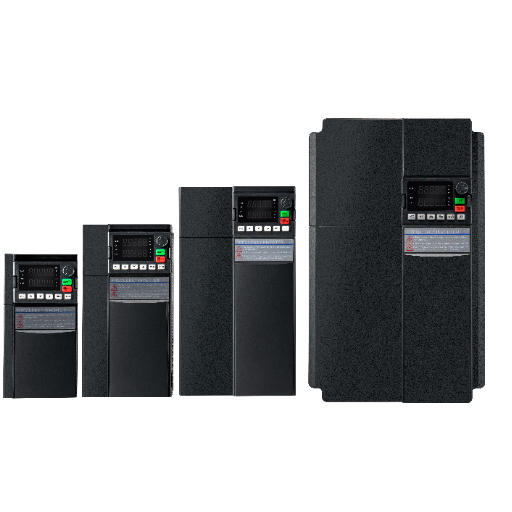
A medium voltage VFD or medium voltage variable frequency drive operates by controlling the speed of electric motors using the supply of electrical energy, therefore varying the frequency and voltage. Unlike many a low-voltage inverter gearing up to handle 230 V, 480 V, medium voltage VFDs are known to help motors with much higher ratings equal to 3 kV, 6 kV, 10 kV, and beyond. Power ratings are usually 200-300 kW and can go up to 20 MW or even higher for heavy-duty industrial uses.
The class of equipment is referred to by a variety of names: high voltage VFD, MV drive, medium voltage drive, and high voltage inverter. The given label also depends on regional and manufacturer norms.
Per the IEC 61800 standard, the industrial drive world divides voltage classes like this:
- Low Voltage (LV): Up to 1,000 V AC
- Medium Voltage (MV): Above 1,000 V AC up to 36 kV AC
- High Voltage (HV): In utility terms, this starts well above 69 kV, but in the drive industry, “high voltage” often simply means the upper end of the medium voltage range (10 kV and above)
Common industrial voltage levels for these drives include 2.3 kV, 3.3 kV, 4.16 kV, 6 kV, 6.6 kV, 10 kV, and 11 kV. The right choice depends on your motor rating, facility infrastructure, and regional electrical standards.
How an MV Drive Works
Every modern medium-voltage variable frequency drive follows the same basic principle: AC-DC-AC. The term describes what happens to an incoming fixed-frequency grid power source, which is converted to direct current, and is outputted subsequently in the form of an AC wave of controlled frequency and voltage. The drive adjusts the frequencies output to control the motor’s speed, whereas it is the voltage that adjusts the correct application of the magnetic flux in the motor.
The Three Stages
1. Rectification
The incoming AC power passes through a rectifier stage that converts it to DC. In high-power applications, this is typically a multi-pulse diode bridge or an active front-end using semiconductor switches.
2. DC Link
Capacitors and inductors smooth the DC voltage into a stable bus. This intermediate stage acts as an energy reservoir that feeds the inverter.
3. Inversion
Inverters are actually operated by power semiconductors, usually IGBTs or IGCTs, that put back the DC power to AC with both controlled frequency and voltage. The Pulse Width Modulation (PWM) steers output waveform for the motor to view a much cleaner sine wave.
Why Multilevel Topologies Matter
For low-voltage drives, you can use two-level inverter with ease. However, when you reach circuits concerning a medium voltage variable frequency drive, you will possibly need a switch that has to block the whole DC bus voltage (above 1,000 V). This leads to excessive electrical stress, low harmonics performance, and high electromagnetic interference.
This is the key reason why medium voltage VFDs find multilevel inverter topologies very attractive. These allow intermediate voltage stack levels instead of two levels, helping spread the stress over individual switches, thus reducing the amount of harmonics and resulting in a very clean waveform output.
The three most common topologies are:
- Cascaded H-Bridge (CHB): Uses a series of modular H-bridge cells, each with its own isolated DC source. This is highly scalable, so you simply add more cells to reach higher voltages. It produces a very clean sine wave and offers built-in redundancy.
- Neutral-Point Clamped (NPC): Uses clamping diodes to tie internal voltage levels to the output. This is the dominant topology in many medium voltage drives from 2.3 kV to about 6.6 kV.
- High-Low-High: Steps the medium voltage down to low voltage, runs a standard LV drive, and steps the voltage back up. It avoids complex multilevel design but requires two transformers and sacrifices some efficiency.
For a deeper technical breakdown of how AC-DC-AC conversion scales for high voltage systems, (see our detailed guide on how high voltage frequency converters work.)
Medium Voltage VFD vs. Low Voltage VFD: Key Differences
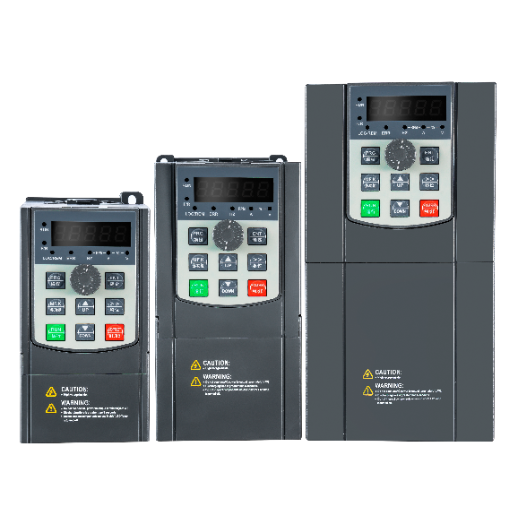
Not every large motor needs a medium voltage VFD. But not every motor below 1,000 horsepower should stay low voltage either. The decision depends on total installed cost, not just the drive price tag.
The Horsepower Breakpoints
As a rough rule of thumb:
- 500 HP and below: Almost always low voltage
- 1,000 HP and above: Almost always medium voltage
- 500 to 1,000 HP: The gray zone where either option can make sense
In that middle range, the right choice comes down to installation constraints, cable costs, and your facility’s existing power distribution.
Current, Cable, and Installation Impact
The low voltage VFD itself is almost always cheaper than the medium voltage equivalent. But the drive is only one part of the system. A large LV installation may need:
- An external step-down transformer
- Very thick, expensive cables to carry high current
- Additional harmonic filters
- Larger electrical rooms to accommodate everything
In general, any medium voltage VFD usually has an incoming isolation transformer and is of a much lesser current. For instance, a 1,200 HP motor at 480 V would be drawing about 1,500 A. The same motor at 4,160 V would draw about 150 A. That is a 10x difference in the current, meaning a very much smaller cable and not so much expensive labor for installation.
Total cost of ownership often favors MV in the 500 to 1,000 HP range when cable runs are long or when the facility already has medium voltage distribution.
Power Quality and Harmonics
VFDs for medium voltage can be constructed to meet IEEE 519 harmonic limits in conjunction with the varying pulse counts (12-, 18-, or 24-pulse) or with active front ends while trying to avoid additional harmonic filters. With many modern designs, even at 0.96 power factors, they can greatly reduce utility demand charges.
Low voltage drives can perform at those levels, but obtaining that compliance may require very costly equipment. Therefore, if your plant has strict power quality conditions for the drives, it would be much easier to meet these requirements through MV installations.
For a deeper technical breakdown of low voltage vs medium voltage VFD standards, (see our guide on how to choose the right drive for your application.)
Industrial Applications of Medium Voltage VFDs
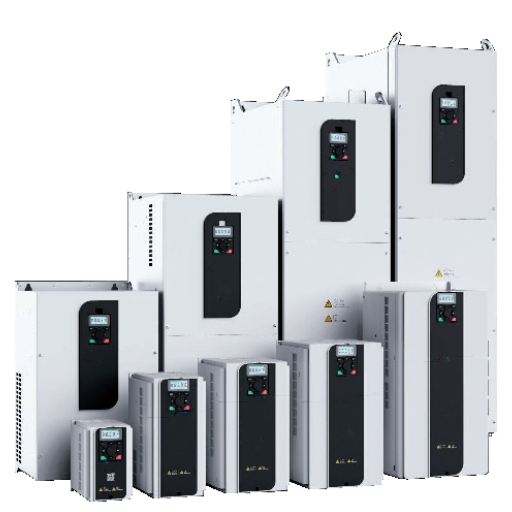
Medium voltage VFDs are the workhorses of heavy industry. Any application with a large motor that does not need to run at full speed, 100 percent of the time, is a candidate for energy savings and improved process control.
Mining and Quarrying
Underground and surface mining operations use MV drives for:
- Belt conveyors and transfer machines
- Crushers, grinding mills, and ball mills
- Mine hoists and winding gear
- Ventilation fans and slurry pumps
In coal mines, explosion-proof VFDs are often mandatory. These units carry Ex d or Ex i ratings and comply with GB 3836 and IEC 60079 standards for hazardous environments. Soft-start capability is especially valuable here because it eliminates the mechanical shock that can damage shafts, couplings, and gearboxes.
Oil and Gas
Upstream, midstream, and downstream facilities all benefit from MV drives:
- Electric submersible pumps (ESP)
- Water injection pumps
- Pipeline booster pumps
- Gas compressors and LNG refrigeration systems
Power Generation
Thermal and combined-cycle power plants use medium voltage VFDs to replace inefficient mechanical flow controls:
- Induced draft (ID) and forced draft (FD) fans
- Boiler feedwater pumps
- Condensate extraction pumps
- Circulating water pumps
Before the days of VFDs, airflow was compromised by either inlet vanes or dampers. They ease the flow control but leave the motor still running at full speed and power. A medium voltage VFD acts admirably by adjusting speed to actual demand. Energy saving is immediate, and the wear of the mechanical control valves and dampers is gone.
The power plant in Indonesia replaced the fixed speed fans driven with damper control with drives of 6.6 kV. This gradual change cut fan energy consumption by 34 percent and caused a significant drop in the bearing temperature. Furthermore, maintenance crews noted a very sharp reduction in damper repair work.
Water and Wastewater
Municipal and industrial water systems use MV drives for:
- Clean water pumps and pressure pumps
- Sewage and effluent pumps
- Aerators and blowers
- Cooling tower fans
Variable flow demand makes these applications ideal for VFDs. Instead of cycling pumps on and off or throttling with valves, the drive adjusts speed to match real-time demand. This reduces water hammer, extends pump life, and keeps energy bills under control.
Metals, Cement, and Pulp and Paper
Other heavy industries use medium voltage VFDs for:
- Sintering fans and blast furnace blowers
- Kiln drives and coal mill fans
- Refiners, chippers, and Yankee dryers
- Roller presses and extruders
The common thread across all these applications is simple: if the load varies, a drive saves energy. If the process requires precise speed or torque control, a drive improves quality. If the motor is large, medium voltage is usually the most practical electrical choice.
How to Choose a Medium Voltage VFD
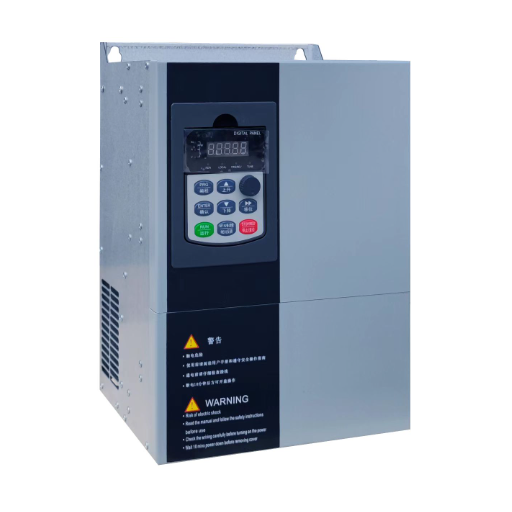
Selecting the right medium voltage VFD is about more than comparing price lists. It is a long-term capital investment, and the unit you choose will influence your operating costs for the next 15 to 20 years.
Sizing by Full Load Amps, Not Just Horsepower
Motor horsepower ratings can vary significantly between manufacturers for the same voltage class. Experts recommend sizing the drive by the motor’s full load amps (FLA) rather than horsepower alone. This ensures the VFD has enough current capacity to handle the actual load under all operating conditions.
Topology Selection: CHB vs. NPC
Your application and site constraints will often point to one topology over the other:
- Choose CHB when you need very high voltage (10 kV+), built-in redundancy, or extremely clean output waveforms
- Choose NPC when you need a compact solution from 2.3 kV to 6.6 kV with proven reliability
Certifications to Verify
At minimum, look for:
- ISO 9001 quality management certification
- Relevant IEC or IEEE compliance for the drive design
- CE marking if the equipment will be used in Europe
- Explosion-proof certifications (GB 3836, IEC 60079) for hazardous environments
- National or regional electrical safety approvals for your target market
IEC 61800-4 covers the specific requirements for adjustable speed electrical power drive systems, including medium and high voltage applications. It addresses insulation coordination, overvoltage protection, and electromagnetic compatibility (EMC).
Total Cost of Ownership Factors
The purchase price is only part of the equation. Evaluate:
- Efficiency at your expected operating point (not just at full load)
- Cooling system requirements and maintenance intervals
- Expected spare parts consumption over 10 years
- Availability of technical training for your maintenance team
FGI (Shandong Electric) can solve a power range between 200 kW and 12,000 kW, around 6.6 kV and i.e., with vector control and various grid-friendly operations thanks to the FD5000 Series. As a founder of China’s only standard on medium-voltage drives and holder of over 350 patents, the company offers both technologies and custom-made solutions for export markets.
For an in-depth evaluation of high-voltage frequency converter manufacturers and actionable strategies to assess potential suppliers, refer to our comprehensive procurement guide.
FAQ: Medium Voltage VFDs
What voltage is considered medium voltage for drives?
Per IEC 61800, medium voltage for drives is any output above 1,000 V AC up to 36 kV AC. In common industrial usage, medium voltage drives are typically found at 2.3 kV, 3.3 kV, 4.16 kV, 6 kV, 6.6 kV, and 10 kV.
What is the difference between a medium voltage VFD and a high voltage VFD?
In practice, the terms overlap. Technically, medium voltage spans >1 kV to 36 kV, while high voltage in the drive industry usually refers to the upper end of that range (10 kV and above). Most industrial buyers and engineers use the terms interchangeably.
Can a medium voltage VFD work with any high voltage motor?
Not automatically. The rating of a drive should match the voltage, current, and power factor of the motor. The motor also has to be capable of handling the output waveform and switching frequency of the inverter. In retrofit projects, it is important to verify that the existing motor insulation can withstand the voltage stress from the PWM inverter. The chances are that older motors might need rewinding or additional filters.
How much energy can a medium voltage VFD save?
Typical energy savings range from 30 to 60 percent for variable torque applications like pumps and fans when variable speed control replaces throttling valves or dampers. The real savings depend on the load profile, operating hours, and the baseline efficiencies of the fixed-speed system.
What is a cascaded H-bridge inverter?
The cascaded H-Bridge (CHB) inverter is a multicarrier type topology, which naturally cascades several H-Bridge power cells in series, where every cell has an isolated DC source. The output voltage is simply the sum of different cell voltages, giving a stepped waveform that is remarkably close to a ‘pure’ sine waveform. The CHB design is modular, scalable, and possesses built-in redundancy.
Conclusion
A medium voltage VFD, or variable frequency drive, is essentially a low voltage VFD that has been enlarged. It is a unit specifically engineered to resolve a specific set of problems: The challenge of efficiently, reliably, and cheaply controlling large motors above a frequency of 1000Vac.
Here are the key takeaways from this guide:
- A medium voltage VFD handles motor voltages above 1 kV, typically from 200 kW to 20 MW and beyond.
- It uses multilevel inverter topologies like cascaded H-bridge and NPC to manage high voltage without excessive stress on individual components.
- The choice between low voltage and medium voltage should be based on total installed cost, not just the drive price. Cable, transformer, and filter costs often tip the balance.
- Industries from mining and oil and gas to power generation and water treatment use these drives for energy savings, process control, and equipment protection.
- Power quality and safety compliance matter. Verify IEEE 519, IEC 61800-4, and explosion-proof certifications before buying.
Whether you are retrofitting an existing plant or specifying equipment for a new project,the right Medium Voltage VFD can save on energy costs, reduce maintenance, and extend the life of your equipment. The trick is matching the drive to your actual application and working with a supplier who understands both the engineering and the business side of the decision.
