
An arc-resistant motor control center (MCC) is a type-tested medium voltage assembly built to contain and vent the energy of an internal arcing fault away from personnel. Certified to IEEE C37.20.7 (Accessibility Type 2B) or IEC 62271-200 Internal Arc Classification (IAC), an arc-resistant MCC redirects hot gases, molten metal, and pressure pulse through a roof plenum or chimney, protecting operators and limiting collateral damage when a fault occurs.
A 6.6 kV motor control center at a Middle East refinery experienced an internal arcing fault during routine energization in 2024. The cause was a contamination-induced flashover on the line side of a starter compartment. The arc lasted 180 milliseconds before the upstream breaker cleared it. In that fraction of a second, the fault released roughly 240 megajoules of energy, and arc plasma temperature reached 20,000 K, hot enough to vaporize copper instantly.
An operator was standing 30 inches in front of the section, taking routine readings. He walked away.
The Type 2B arc-resistant construction had vented the energy through the reinforced roof plenum to the exterior of the building. The damaged section was rebuilt in 11 days using OEM spares. In a standard non-arc-resistant MCC, industry studies put the probable outcome at operator fatality and 6 to 10 weeks of rebuild. The arc-resistant premium on the original 24-section lineup was 185,000.Theincidentsavedroughly185,000.Theincidentsavedroughly12 million in lost production plus an immeasurable human cost.
This guide explains arc-resistant motor control centers from the buyer’s perspective. You will learn how IEEE C37.20.7 and IEC 62271-200 classify accessibility types, how Type 2B differs from Type 1 and Type 2, when arc-resistant construction is required versus optional, 2026 cost premiums by voltage class, MCC room design implications, and the procurement clauses to include in your RFQ. The result is a defensible framework for whether to specify arc-resistant on your next project, and the language to write a clean spec.
Key Takeaways
- An arc-resistant motor control center does not prevent an internal arc. It redirects the arc energy away from personnel and limits collateral damage to the lineup.
- IEEE C37.20.7 Type 2B is the dominant North American standard; IEC 62271-200 IAC AFLR is the global equivalent. Specify both if your project spans regions.
- Arc resistance is only valid if upstream relays clear the fault within the certified time, typically 0.5 seconds or less. Fast tripping and arc resistance are inseparable.
- The cost premium runs 30 to 60 percent over a standard MCC of equivalent rating. A single avoided incident usually justifies the premium many times over.
- Walk-in is not available for arc-resistant medium voltage MCCs. They are front-access only with a 48-inch aisle clearance.
- Most existing standard MCCs cannot be retrofitted to arc-resistant. The realistic options are full replacement or arc-detection relay upgrades as a compensating control.
What Is an Arc-Resistant Motor Control Center?
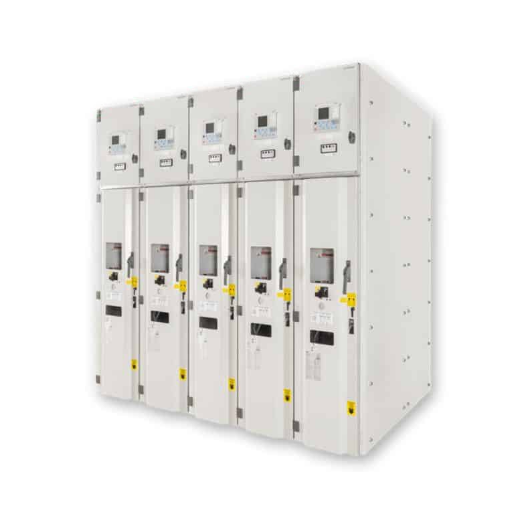
An arc-resistant motor control center is a medium voltage MCC built and type-tested to direct the products of an internal arcing fault, including ionized gases, molten metal, and a pressure pulse, away from areas where personnel work. Reinforced doors, sealed compartment walls, pressure relief flaps, and a roof plenum or chimney form a controlled pathway for the fault energy.
The construction does not stop the arc from happening. The arc still releases full fault energy. The construction simply changes where that energy goes.
Internal Arcing Faults: How and Why They Happen
Internal arcing faults at medium voltage are rare but devastating. Industry data suggests roughly 1 to 3 events per 10,000 MCC operating years. Causes include insulation degradation, moisture or contamination ingress, foreign objects left after maintenance, animal intrusion, and rare component failures.
Once an arc initiates, fault current of 25 to 65 kA can flow within milliseconds. Internal pressure rises past 0.4 bar within 5 milliseconds. Arc plasma reaches 20,000 K, vaporizing copper and steel and generating an overpressure capable of rupturing a standard MCC enclosure.
How Arc-Resistant Construction Differs from a Standard MCC
A standard MCC is sealed for environmental protection but not for arc containment. An internal arc will overpressure the enclosure, rupture the front door, and eject molten metal and plasma toward the operator and adjacent sections.
An arc-resistant MCC differs in five concrete ways. Compartment walls and barriers are reinforced and tested for a defined pressure rise. Pressure relief flaps open at a calibrated threshold to vent gases upward, not outward. A roof plenum or chimney channels gases to a safe exit point. Latches and hinges are tested under arc conditions. The lineup is certified against a defined fault current and clearing time.
Arc-Resistant MCC Versus Arc-Resistant Switchgear
These terms are often confused. Both share the same internal-arc protection philosophy, but the equipment classes differ. Arc-resistant switchgear contains circuit breakers and busbars without integrated motor starters. An arc-resistant MCC contains vacuum contactor or breaker-based motor starters in multiple compartments per section.
The arc-resistant construction details, plenum design, compartment isolation, and certification scope, are tuned for motor switching duty in an MCC. Specifying switchgear when you need an MCC, or vice versa, leads to bid rejection.
For a complete framework on MCC architecture beyond arc resistance, see our MV MCC design and specification guide.
Standards: IEEE C37.20.7 and IEC 62271-200
Two standards govern arc-resistant MCC and switchgear globally. North American and many export projects use IEEE C37.20.7. Europe, Asia, and most international standards-based projects use IEC 62271-200, Annex AA, which defines Internal Arc Classification (IAC).
IEEE C37.20.7 Accessibility Types
IEEE C37.20.7-2017 defines four accessibility types based on which surfaces of the enclosure are protected during an internal arc event.
| Type | Protected Surfaces | Typical Use |
|---|---|---|
| Type 1 | Front only | Wall-mounted lineups against a non-occupied wall |
| Type 2 | Front, sides, rear | Free-standing lineups where personnel may pass on any side |
| Type 2B | Type 2 plus low-voltage compartment access | Type 2 with safe access to LV control compartments during operation |
| Type 2C | Type 2 plus compartment-to-compartment isolation | Limits arc damage to a single compartment within the lineup |
Type 2B is the most common specification for medium voltage MCCs in North America because it allows safe operation and routine LV maintenance without de-energizing the lineup.
IEC 62271-200 Internal Arc Classification
IEC 62271-200 IAC ratings use a different shorthand. The classification appears as IAC AFLR, where each letter indicates a protected face: A for accessible by authorized personnel, F for front, L for lateral (sides), and R for rear. AFLR is roughly equivalent to IEEE Type 2.
The IEC test uses similar fault parameters, but verification criteria include cotton-cloth indicators placed at defined positions around the enclosure. If the indicators ignite during the test, the lineup fails.
Standards Crosswalk
For global EPC projects, specify both standards. A vendor offering only IEEE C37.20.7 Type 2B may not satisfy a classification society or European regulator requiring IEC 62271-200 IAC AFLR. A marine FPSO project in 2024 lost six weeks and $145,000 because the awarded MCC was tested only to IEEE, not IEC, and the class society required IEC.
Accessibility Types Explained
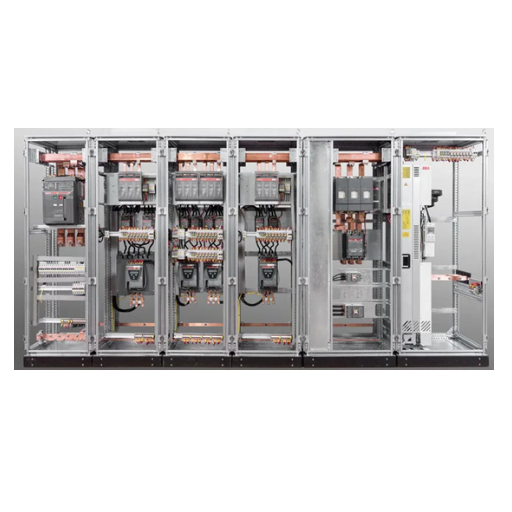
Choosing the wrong accessibility type costs schedule and money. The decision is driven by where personnel work, not by preference.
When to Choose Each Type
Type 1 makes sense only when the lineup is permanently against a wall that no one accesses, such as in a switchgear room with the MCC bolted to a vault wall. This is uncommon in modern installations.
Type 2 is the practical default for free-standing MCCs. Almost any installation where a worker may walk around the lineup needs Type 2 protection on all sides.
Type 2B adds protected access to the low-voltage compartment. Engineers reading meters, working on relays, or operating control switches benefit from Type 2B because LV compartment doors can be opened safely during normal operation. For medium voltage motor protection workflows, Type 2B is the right choice in most plants and pays for itself the first time an LV compartment is accessed during operation.
Type 2C extends protection by isolating compartments within a section so that an arc in one compartment does not propagate to adjacent compartments. Type 2C costs more and is typically specified for critical-process facilities such as data centers, pharmaceutical batch plants, and semiconductor fabs where downtime is uniquely expensive.
How Arc-Resistant MCCs Contain the Fault
Five design elements work together during an arc event.
Reinforced doors and panels are tested to resist the pressure pulse without deflecting beyond a defined limit. Door latches are arc-tested.
Pressure relief flaps open at calibrated pressures, typically around 0.05 bar. Once open, they remain open and direct gases upward.
Roof plenum and chimney systems channel vented gases to a safe exit. Indoor MCCs vent into a building plenum and then to the exterior. Outdoor lineups vent directly upward.
Sealed compartment walls prevent arc plasma from crossing between compartments. In Type 2C designs, the walls are heavier and add a second layer of containment.
Arc detection sensors, while not required for certification, are an optional add-on. Optical sensors detect the arc flash within 1 to 2 milliseconds and command the upstream breaker to trip. Total clearing time can be reduced from 100 to 200 milliseconds (relay-only) to under 50 milliseconds (with arc detection).
Why Fast Relay Clearing Is Mandatory
Arc-resistant certifications are valid only for the clearing time used during the type test. Most certifications use 0.5 seconds. Some manufacturers offer 1-second ratings at higher cost.
If your upstream protection takes longer to clear the fault, the test certificate does not apply to your installation. A 600-millisecond clearing time in a 500-millisecond rated lineup is a non-compliant installation.
This is the single most overlooked detail in arc-resistant specification. The MCC is only as fast as the breaker upstream and the relay that trips it. Coordination studies must verify clearing times for every fault location. Review our motor protection coordination guide for the methodology.
Need an arc-resistant MCC sized and coordinated for your installation? Contact our engineering team for a specification review.
When Should You Specify Arc-Resistant MCC?
Three triggers drive the decision: regulatory requirements, application risk, and total cost of ownership.
Regulatory Drivers
OSHA 29 CFR 1910.269 and 1910.335 require employers to protect workers from electrical hazards, including arc flash. NFPA 70E (2024) defines incident energy thresholds and PPE categories. NEC 110.16 requires arc-flash hazard warning labels on switchgear and MCCs. Arc-resistant construction is not directly mandated by any of these, but it is the most effective engineering control to reduce incident energy at the operator position.
Class societies for marine and offshore (DNV, ABS, Lloyd’s) often require IEC 62271-200 IAC certification on MV equipment in occupied spaces.
Application-Based Triggers
Specify arc-resistant when one or more of these conditions apply:
- Calculated incident energy exceeds 8 cal/cm² at typical working distance
- Operators routinely access the front of the MCC during energized operation
- Process downtime exceeds $100,000 per hour
- The facility is occupied 24/7 (refineries, chemical plants, data centers)
- The application is classified hazardous (Class I Division 1 or 2)
- Marine or offshore installations
- Mining operations with mandatory worker proximity
When Standard MCC Is Acceptable
Standard non-arc-resistant MCC remains acceptable when calculated incident energy is below 4 cal/cm², operators are restricted from energized work, the lineup is in a remote unoccupied room, and downtime tolerance is high. Many utility distribution applications still use standard MCC because crews follow strict de-energized work procedures.
Cost Impact and 2026 Benchmarks
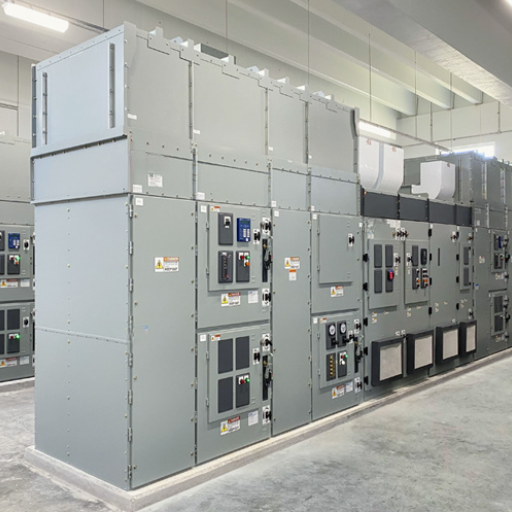
Arc-resistant construction adds 30 to 60 percent to MCC cost. The premium depends on voltage class, accessibility type, and number of sections.
| Voltage Class | Standard MCC (per section) | Arc-Resistant Type 2B (per section) | Premium |
|---|---|---|---|
| 4.16 kV | 18,000to18,000to32,000 | 26,000to26,000to48,000 | 35% to 50% |
| 6.6 kV / 7.2 kV | 22,000to22,000to40,000 | 32,000to32,000to58,000 | 40% to 55% |
| 13.8 kV | 28,000to28,000to52,000 | 38,000to38,000to72,000 | 35% to 45% |
These ranges assume standard control voltages, no special environmental ratings, and conventional vacuum contactor-based starters. Type 2C adds another 15 to 25 percent.
TCO Justification
A single arc-flash incident in a standard MCC averages 2millionto2millionto15 million in direct and indirect cost, including medical, regulatory, downtime, and equipment replacement. The arc-resistant premium on a 20-section lineup is typically 150,000to150,000to400,000. The breakeven is one avoided incident, often within the first year of operation for high-cycle plants.
MCC Room Design Implications
Arc-resistant MCC affects more than the equipment. The room around it must accommodate the construction.
Ceiling Height for Plenum and Chimney
Arc-resistant MCCs are 12 to 24 inches taller than standard MCCs because of the integrated plenum. Indoor installations typically require a minimum 12-foot ceiling, and 14 feet is preferred for chimney venting to an exterior wall or roof penetration.
External Venting
Vented gases must exit the building or be safely dispersed. Common approaches include a sheet-metal duct from the MCC plenum to an exterior louver, a roof penetration with a weatherproof cap, or a chimney along an exterior wall. The duct path must withstand the same pressure pulse as the MCC itself.
Aisle Clearance and Walk-In Limitation
Arc-resistant MV MCCs are front-access only. Walk-in lineups, which are common at low voltage, are not available at medium voltage in arc-resistant construction. Aisle clearance of 48 inches in front of the lineup is typical, and 60 inches is preferred where maintenance withdraws contactors or breakers.
Specifiers copying low-voltage walk-in language into an MV procurement spec is one of the most common errors. All bidders will return an RFI.
Procurement and Specification Checklist
When writing an RFQ for arc-resistant MCC, include the following clauses:
- Specify standard: “IEEE C37.20.7-2017 Accessibility Type 2B” or “IEC 62271-200 IAC AFLR”
- Specify fault current and duration: “Type-tested at 40 kA for 0.5 seconds”
- Require certification documents: “Vendor shall provide IEEE or KEMA test report and certificate”
- Define clearing time coordination: “Total upstream clearing time shall not exceed the rated arc-resistance duration”
- Aisle and ceiling requirements: “Lineup shall be front-access only with 48-inch clearance and 12-foot minimum ceiling”
- Plenum and venting: “Vendor shall supply integrated roof plenum sized for full fault energy”
During factory acceptance testing, inspect the certification labels on each section, confirm pressure relief flap operation, verify plenum continuity across all sections, and review the test report to match the as-built rating.
A 2025 retrofit at an Indian steel mill illustrates the procurement risk. The owner asked the OEM for an arc-resistant retrofit of an existing 4.16 kV lineup. The OEM declined because arc-resistant construction requires structural reinforcement, new doors, vent flaps, and re-testing that is not feasible as a field retrofit. The realistic options were full replacement at 1.2millionorarc−detectionrelayswith4−millisecondopticalclearingat1.2millionorarc−detectionrelayswith4−millisecondopticalclearingat180,000. The mill chose the relay retrofit as a compensating control. The lesson: confirm arc-resistant capability at the original procurement; retrofitting later is rarely practical.
Frequently Asked Questions
What is an arc-resistant motor control center?
An arc-resistant motor control center is a medium voltage MCC constructed and type-tested to divert created energy away from personnel during an internal arc fault. Use of pressure relief vents, and roof plenum for exhaust of hot gases and molten metal, is limited to the path of controlled evacuation, minimizing injury and collateral damage.
What is IEEE C37.20.7 Type 2B?
IEEE C37.20.7 Type 2B is an accessibility classification meaning the front, sides, and rear of the lineup are protected during an internal arc, and the low-voltage compartment can be accessed safely while the MV bus remains energized. Type 2B is the dominant choice for medium voltage MCC in North America.
How is arc-resistant MCC different from arc-resistant switchgear?
Arc-resistant switchgear contains circuit breakers and busbars without integrated motor starters. An arc-resistant MCC contains motor starters in multiple compartments per section, with construction details tuned for motor switching duty. The two equipment classes are tested and certified separately.
Is arc-resistant MCC required by NFPA 70E?
NFPA 70E does not directly require arc-resistant construction. It defines incident-energy thresholds and PPE categories. Arc-resistant MCC is the most effective engineering control to reduce incident energy at the operator position, which simplifies PPE requirements and improves worker safety.
How much more does arc-resistant MCC cost?
Arc-resistant Type 2B MCC costs 30 to 60 percent more than equivalent standard MCC. Typical 2026 ranges are 26,000to26,000to48,000 per section at 4.16 kV and 38,000to38,000to72,000 per section at 13.8 kV. A single avoided incident usually justifies the premium many times over.
Can I retrofit a standard MCC to be arc-resistant?
In most cases, no. Arc-resistant construction requires structural reinforcement, new doors, pressure relief flaps, plenum integration, and full type testing that cannot be performed in the field. The realistic options are full replacement or installation of arc-detection relays as a compensating control.
What is IEC 62271-200 IAC classification?
IEC 62271-200 Annex AA defines Internal Arc Classification (IAC) using letters to denote protected faces: A for authorized-personnel access, F for front, L for lateral (sides), R for rear. AFLR is roughly equivalent to IEEE C37.20.7 Type 2 and is the common spec for global EPC projects.
Does arc-resistant MCC eliminate the need for PPE?
No. Arc-resistant construction reduces incident energy at the operator position but does not eliminate it. Workers must still wear PPE appropriate to the residual incident-energy calculation. Arc-resistant construction simplifies PPE requirements and provides a passive layer of protection if procedures are not followed.
Conclusion: Specifying Arc-Resistant MCC for Personnel and Asset Protection
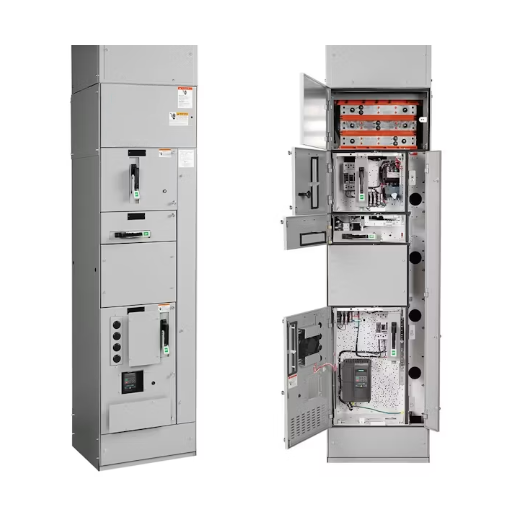
Arc-resistant motor control centers are an engineering control that protects operators and limits collateral damage when an internal arcing fault occurs. The construction does not stop the arc. It redirects the arc energy along a safe path through reinforced compartments, pressure relief flaps, and a roof plenum.
Specify the right accessibility type for your installation. Type 2B is the practical default for medium voltage MCCs in North America. AFLR is the global equivalent under IEC 62271-200. Verify that upstream relay coordination clears faults within the certified duration. Plan for the room implications: taller ceilings, external venting, and front-access aisles. Budget the 30 to 60 percent cost premium against the cost of a single incident, which is almost always orders of magnitude higher.
For a single MCC lineup, the difference between arc-resistant and standard is often the difference between an incident and a non-event. The Saudi refinery operator who walked away from a 240 megajoule arc is the most concrete proof point in the industry.
Need help specifying arc-resistant MCC for your project? Our engineering team supports specification, coordination studies, and procurement from concept through commissioning. Contact our engineering team to discuss your application.
For broader context on motor protection architecture, including relay settings, coordination, and starter selection, see our complete medium voltage motor protection and control guide.
