
Motor protection coordination is the systematic selection and setting of protective devices so a fault is cleared by the device closest to it, isolating only the affected motor circuit while preserving service to the rest of the plant. According to IEEE C37.230, proper coordination requires four properties: selectivity, sensitivity, speed, and reliability.
In March 2024, a pulp and paper mill in Sweden tripped its entire 6.6 kV switchgear because of one miscoordinated motor relay. A bearing failure on a 750 kW refiner caused a stator winding fault. The motor branch protection should have cleared it in 80 milliseconds, but the engineer had set the instantaneous trip too high to avoid nuisance trips during motor starting. The upstream feeder relay tripped on time-overcurrent at 320 ms instead. The mill lost 14 hours of production at 42,000perhour.Totaldamage:42,000perhour.Totaldamage:588,000. All because one instantaneous setting was off by 200 amps.
You already know coordination matters. What you need is a clear procedure, real cost benchmarks, and software guidance to actually get it right. This guide walks you through every step of a motor protection coordination study, including TCC plotting, IEEE 242 time intervals, software selection, common mistakes, and the arc flash trade-offs that catch most engineers off guard. By the end, you’ll have a practical workflow you can apply to any medium voltage motor circuit.
Key Takeaways
- Coordination requires four properties per IEEE C37.230: selectivity, sensitivity, speed, and reliability
- Minimum coordination time interval is 0.30 seconds for static relays and 0.35 seconds for electromechanical relays
- Motor TCCs must show overload curve, motor starting curve, locked-rotor point, cable damage curve, and feeder damage curve on a single log-log plot
- Selective coordination and arc flash mitigation often conflict; engineering controls (ZSI, ERMS, optical relays) resolve the trade-off
- A typical motor protection coordination study costs 5,000to5,000to50,000 depending on bus count and complexity
- IEEE 242 (Buff Book) and IEC 60947-4-1 govern coordination practice; coordination studies should be updated every 5 years
What Is Motor Protection Coordination?
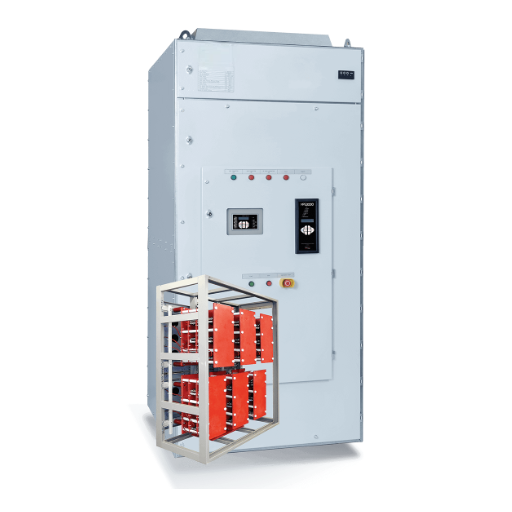
Motor protection coordination is more than just setting one relay correctly. It’s about how every protective device in the chain interacts with the others when a fault happens. The goal is simple: the device closest to the fault should trip first, while every device upstream waits its turn or doesn’t trip at all.
The Four Coordination Principles (IEEE C37.230)
IEEE C37.230 defines coordination through four properties that must work together:
- Selectivity: Only the device closest to the fault operates. Upstream devices don’t trip.
- Sensitivity: Devices detect the smallest fault current that can occur in their zone of protection.
- Speed: Faults clear fast enough to limit equipment damage and arc flash energy.
- Reliability: Devices operate correctly under all conditions, every time.
Get any one of these wrong and the whole study falls apart.
Selectivity vs Discrimination Terminology
Engineers often use “selectivity” and “discrimination” interchangeably, but they mean the same thing. ANSI and IEEE call it selectivity. IEC standards call it discrimination. If you’re working international projects, you’ll see both. The concept is identical: the right device clears the right fault.
Why Coordination Matters: The Cascading Failure Problem
When coordination fails, you don’t just lose one motor. You can lose an entire bus, an entire facility, or in the worst cases, the whole plant. Poor coordination causes cascading failures: a fault that should trip only the affected circuit’s breaker instead trips upstream devices, blacking out entire facilities. This is why every plant with critical motor loads needs a current coordination study, not just a one-time setup at commissioning.
Need help getting started with a coordination study scope? [Contact our protection engineering team →] for a free initial review.
Time-Current Curves: The Coordination Foundation
You can’t do coordination without TCCs. They’re the visual language of protection engineering. Every protective device, every motor, every cable has a curve, and they all share one log-log plot.
How TCCs Are Plotted
A time-current curve is plotted on a logarithmic scale with current on the X-axis and time on the Y-axis. The time range typically runs from 0.01 seconds to 1,000 seconds. The current range covers from below normal load up to the maximum available fault current. Log-log scaling lets you see milliseconds and minutes on the same plot.
Reference voltage matters. If your one-line includes a transformer, you must convert all currents to a single reference voltage. Mix voltage references and the coordination story you see is fiction.
What Each Device’s Curve Looks Like
Different protective devices produce different curve shapes:
- Relays: Sharp, thin curves. Relays sense the fault and signal the breaker to trip.
- Fuses: Wider bands showing minimum melt and total clearing.
- Circuit breakers: Long-time, short-time, and instantaneous regions, plus an interrupting time band.
- Motors: Starting curve (from inrush to rated speed) and damage curve (locked-rotor and stall thermal limits).
- Cables: I²t damage curve based on conductor size and insulation.
The Five Curves on Every Motor TCC
A complete motor branch TCC shows at least five curves:
- Motor starting curve: Plots locked-rotor current decaying as the motor accelerates.
- Motor thermal damage curve: Locked-rotor and stall withstand limits from the motor manufacturer.
- Cable damage curve: I²t curve for the motor feeder cable.
- Protective device curves: Motor relay overload (49/51) plus instantaneous (50).
- Upstream device curve: Feeder breaker relay or fuse that backs up the motor branch.
The protective device curves must sit above and to the right of the motor starting curve so the motor can start without tripping. They must sit below and to the left of the motor and cable damage curves so faults clear before damage occurs. That’s the entire goal in one sentence.
Coordination Time Intervals
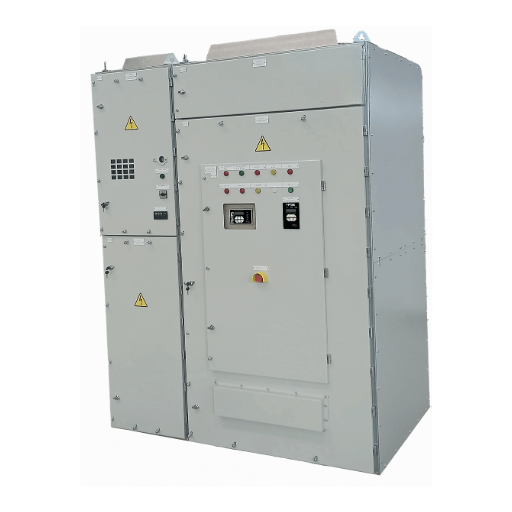
Coordination time interval (CTI) is the minimum time gap between two device curves at the same fault current. Without enough gap, both devices trip together. Too much gap, and arc flash energy explodes.
Minimum CTI Values by Device Type
IEEE 242 Table 15-3 gives the recommended minimum intervals:
| Upstream Device | Downstream Device | Minimum CTI |
|---|---|---|
| Electromechanical relay | Any relay | 0.35 – 0.40 s |
| Static or microprocessor relay | Any relay | 0.25 – 0.30 s |
| Fuse | Fuse | 2:1 ampere ratio |
| Fuse | Breaker | 75% of fuse melt curve |
| Breaker | Breaker | 0.10 – 0.30 s |
For LRG (low-resistance grounded) medium voltage systems, a minimum delay of 0.35 seconds is typical for electromechanical relays and 0.30 seconds for static relays, allowing coordination with motor relays set to 0.05 seconds.
Why CTI Exists
CTI accounts for three real-world factors that don’t show up on the curves:
- Breaker interrupting time: A 5-cycle breaker takes 83 ms just to physically open after the trip signal.
- Relay overshoot: Electromechanical relays can keep operating after current drops below pickup.
- Safety margin: Curve tolerances stack up. You need cushion for real-world variability.
Stacking Devices
Every level of protection adds CTI on top of the level below. With four levels and electromechanical relays at 0.40 seconds each, you’d need 1.6 seconds at the top of the system. That’s a lot of arc flash energy. This is why modern microprocessor relays with 0.25-second CTIs have largely replaced electromechanical units in critical industrial systems.
Step-by-Step Motor Coordination Study Procedure
Here’s the workflow we use for medium voltage motor coordination studies. Follow it in order. Skip a step and you’ll regret it during commissioning.
Step 1: Develop the One-Line Diagram
Build a complete one-line showing every protective device, every transformer, every motor, every cable, and every bus. Include CT ratios, relay model numbers, and breaker interrupting ratings. Garbage in, garbage out: the one-line is your single source of truth.
Step 2: Collect System Data
You need:
- Utility fault duty (three-phase and single-line-to-ground at the point of common coupling)
- Transformer ratings, impedance, and X/R
- Cable types, sizes, and lengths
- Motor nameplate data: full-load current, locked-rotor current, locked-rotor time, service factor
- Existing relay settings and CT ratios
If utility data isn’t available, assume the worst-case infinite bus. You’ll get conservative results.
Step 3: Run Short-Circuit Analysis
Calculate three-phase, line-to-line, and single-line-to-ground fault currents at every bus. You need both maximum (utility at full strength) and minimum (limited generation) fault levels. Coordination must work at both extremes.
Step 4: Plot Motor Branch TCC
Start with the motor branch. Plot all five required curves: motor starting, motor damage, cable damage, motor relay overload, and motor relay instantaneous. Verify the motor starts without tripping and faults clear before damage.
Step 5: Coordinate the Motor Relay
Phase overcurrent pickup is typically set at 115% of motor full-load current (range: 105% to 125% above motor duty factor). Time-overcurrent (51) coordinates with the motor thermal damage curve. Instantaneous (50) is set above 1.6 to 2.0 times locked-rotor current to avoid nuisance tripping during motor starting transients.
Step 6: Coordinate Upstream Feeder Relay
The upstream feeder relay must clear faults the motor branch can’t, but wait long enough that the motor relay clears its own faults first. Add the CTI on top of the motor relay curve at the worst-case fault current. For a static feeder relay coordinating with a static motor relay, that’s a 0.30-second separation.
Step 7: Verify Margins at All Fault Levels
Coordination must work at minimum and maximum fault currents. Many studies look great at the maximum fault, then fall apart at minimum fault where curves can intersect. Plot both scenarios.
Step 8: Document Settings and Generate Report
The deliverable is a settings table for every relay, a TCC plot for every coordination pair, and a written summary of margin verification. This document becomes the field reference for commissioning and future modifications.
Worked Example: 1,500 kW MV Motor Coordination
Consider a 1,500 kW, 6.6 kV motor with FLC of 165 A and locked-rotor current of 1,000 A for 8 seconds. The motor relay (51) picks up at 190 A (115% of FLC) using a moderate inverse curve at TD = 1.5. The instantaneous (50) is set at 1,800 A (1.8x LRC). The upstream feeder relay (51) on the 6.6 kV bus picks up at 600 A with TD = 2.5 to provide a 0.30-second margin over the motor branch at the maximum fault of 12 kA. At a minimum fault of 4 kA, the margin holds at 0.32 seconds. Coordination verified at both extremes.
Software Tools for Coordination Studies
Manual TCC plotting is impractical for any project larger than a single motor circuit. Modern coordination studies need software. Three packages dominate the market: ETAP, SKM Power*Tools, and EasyPower.
ETAP Star Module
ETAP Star supports overcurrent protection and coordination with verified protective device libraries from manufacturers worldwide. Key strengths include AI-driven curve placement, automatic coordination path detection, and the Star Sequence-of-Operation module that simulates fault scenarios and reports operating times for every device.
ETAP wins on interface usability and is the preferred choice for large industrial plants with many MV devices and complex protection schemes.
SKM Power*Tools / CAPTOR
SKM’s Auto Coordination and Evaluation module provides dynamic TCC drawing, with comparison of protective device ratings vs equipment continuous ratings, and automatic violation detection against NEC and industry rules. SKM excels at custom report output and Excel/Word export for stakeholder review.
SKM is the industry favorite for arc flash studies and projects where reporting flexibility matters most.
EasyPower
EasyPower offers a faster learning curve and lower total cost. It’s well-suited for smaller projects, contractor work, and engineering firms that need a less complex tool for occasional coordination studies.
Decision Matrix
| Project Type | Recommended Tool |
|---|---|
| Large industrial (50+ buses) with complex protection | ETAP |
| Bundled coordination + arc flash with reporting | SKM |
| Small to medium project, occasional studies | EasyPower |
| Existing ETAP/SKM model in client database | Use what’s already in place |
A water utility in Texas needed coordination studies for 18 pumping stations, each with 4 to 6 medium voltage motors. The staff engineer evaluated all three tools. ETAP’s intuitive interface and AI-driven coordination won, even though the licensing cost ran 24,000plus24,000plus8,000 annual maintenance. After completing all 18 stations, the engineer reported that ETAP’s sequence-of-operation feature caught two coordination violations that manual review missed, including one that would have caused a complete pump house blackout during a real fault. The software paid for itself on a single catch.
Need help selecting protection equipment that integrates cleanly with your coordination study? Our engineering team supports motor protection projects from selection through commissioning.
Coordination Study Cost Benchmarks
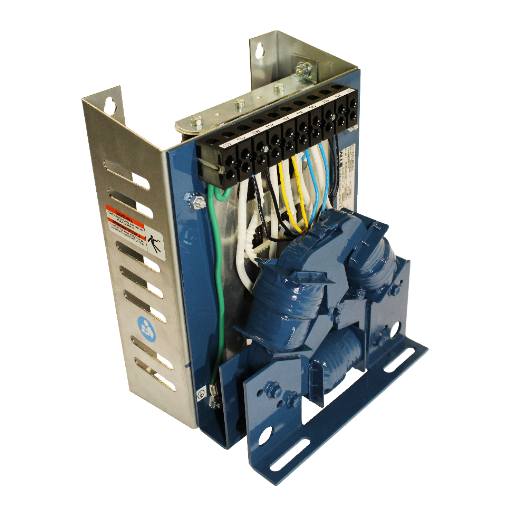
Real coordination study pricing is hard to find online. Here are typical ranges based on 2026 industry rates for outsourced studies:
| Project Size | Bus Count | Typical Cost Range |
|---|---|---|
| Small | 5-15 buses | 5,000−5,000−12,000 |
| Medium | 15-50 buses | 12,000−12,000−30,000 |
| Large | 50-200 buses | 30,000−30,000−80,000 |
| Very large | 200+ buses | 80,000−80,000−200,000+ |
What’s Included in a Typical Quote
A complete coordination study deliverable includes:
- One-line diagram drafted from field data
- Short-circuit analysis at every bus
- TCC plots for every coordination pair (typically 50 to 500+ plots)
- Settings table for every relay and trip unit
- Written summary with recommendations
- Field commissioning support (sometimes separate)
Common Cost Drivers
- Number of motors and feeders (each adds TCCs and settings)
- Field data collection effort (existing one-line vs starting from scratch)
- Number of voltage levels (each adds reference voltage conversion work)
- Existing model in software vs new build
- Documentation and presentation requirements
Bundled with Arc Flash Study
Most facilities bundle coordination with arc flash. The same underlying short-circuit data and TCCs feed both studies. Bundling saves 20-30% versus separate quotes from different providers.
Common Coordination Mistakes
After reviewing dozens of coordination studies, the same errors keep showing up. Avoid these and you’ll save yourself expensive field rework.
Mistake 1: Plotting Curves at Different Reference Voltages
A consulting engineer working on a Middle East oil refinery upgrade plotted motor TCCs at 13.8 kV reference, but the upstream feeder relay curves were plotted at 4.16 kV. The submitted study showed beautiful coordination on paper. During commissioning, a low-side fault on a 13.8/4.16 kV transformer caused both the motor branch and feeder relays to trip simultaneously. The post-incident review found the same reference voltage error in three other circuits. The redesign and field re-commissioning cost the firm $185,000 in change orders.
Mistake 2: Ignoring Motor Starting Inrush Asymmetry
Motor inrush isn’t a clean steady-state value. The first half-cycle can hit 1.5 to 2.0 times the symmetrical locked-rotor current because of DC offset. Set instantaneous below this peak and you’ll trip on every start.
Mistake 3: Setting Instantaneous Below Locked-Rotor Current
The classic mistake. Engineers focused on fast clearing forget that locked-rotor current is normal during starting. Always set instantaneous above 1.6x LRC (closer to 2.0x for high-inertia loads).
Mistake 4: Using Wrong CT Ratio in TCC
Plot at primary current, but verify the CT ratio matches what’s actually installed. A 600:5 CT and a 1200:5 CT change every secondary current calculation by 2x.
Mistake 5: Forgetting Cable Damage Curve
If protection clears the fault before the cable damages, you’re fine. Skip the cable damage curve and you might be installing a cable replacement after the next short-circuit event.
Mistake 6: Ignoring Ground Fault Coordination
Phase coordination handles three-phase and line-to-line faults. Ground faults need their own analysis. Core-balance CTs allow ground fault settings as low as 5 to 10 A primary on motor circuits, but only if you actually study the coordination separately.
Mistake 7: Skipping the Coordination Time Interval Check
The curves look separated by eye, but you didn’t measure the actual gap at the fault current. Always verify CTI numerically at the worst-case fault current, not by visual inspection.
For deeper guidance on relay setting calculations that feed into coordination, see our motor protection relay settings guide.
Selective Coordination vs Arc Flash Mitigation
Here’s the conflict that catches most engineers off guard. Selective coordination wants time delay so upstream devices wait. Arc flash mitigation wants the fastest possible clearing to limit incident energy. These goals fight each other.
The Core Conflict: Slow Clearing Equals Energy Cost
Per IEEE 1584, arc flash incident energy varies linearly with arc duration. Cut clearing time from 30 cycles to 5 cycles and you cut incident energy 6-fold. A real example documented in industry literature: 22.5 cal/cm² with 0.36-second clearing dropped to 0.55 cal/cm² when arc-vault clearing reduced the duration to 8 milliseconds. That’s a 40-fold reduction.
But you can’t just set every breaker to instantaneous. You’d lose all selectivity, and a single fault would black out the entire plant.
Engineering Controls per NEC 240.87
The National Electrical Code provides four approved methods for arc energy reduction without sacrificing selective coordination:
- Zone Selective Interlocking (ZSI): Communication between upstream and downstream breakers. The downstream device signals “I see the fault, you wait.” The upstream device only operates if the signal doesn’t arrive within a defined window.
- Energy-Reducing Maintenance Switching (ERMS): A manually activated mode that temporarily reduces breaker trip time during maintenance. After maintenance, normal coordination settings restore automatically.
- Differential Relaying (87M): Current transformers on both ends of a protected zone. Any imbalance trips the breaker instantaneously.
- Optical/Light-Sensing Relays: Light sensors detect arc flash light. Combined with fault current detection, optical relays trip in as little as 2 milliseconds.
When Selectivity Must Yield to Safety
NFPA 70E and OSHA put worker safety ahead of operational continuity. If your coordination scheme exposes workers to incident energies above PPE limits, you change the scheme. ERMS is the most common solution: keep normal coordination during operation, switch to fast clearing during energized work.
Standards Governing Motor Coordination
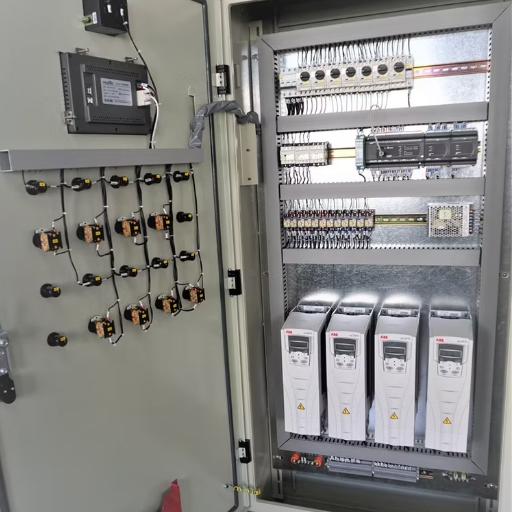
Coordination practice rests on a stack of standards. Know which one governs which decision.
- IEEE 242-2001 (Buff Book): The primary North American reference for industrial and commercial coordination. Table 15-3 defines minimum CTIs.
- IEEE C37.230: Coordination principles (selectivity, sensitivity, speed, reliability) and study workflow.
- IEEE C37.2: Standard device function numbers (49 thermal, 50 instantaneous, 51 time-overcurrent, 87M differential).
- IEEE 1584: Arc flash hazard calculation methodology.
- IEC 60947-4-1: International standard defining Type 1, Type 2, and Total coordination categories for motor starters.
- NEMA AB 5 / ABP 1: Test procedures and selective coordination requirements for low-voltage circuit breakers.
- NEC 240.87, 700.27, 701.27: Arc energy reduction and selective coordination for emergency systems.
- NEMA MG1: Motor starting and thermal limits.
For application-specific guidance on starting current characteristics that feed into coordination, see our medium voltage motor starting methods guide.
When to Update a Coordination Study
A coordination study isn’t a one-time document. Plant configurations change, and outdated studies become dangerous fictions.
IEEE Recommended Frequency
IEEE recommends updating coordination studies at least every 5 years, even if no changes have occurred. Standards evolve, equipment ages, and assumptions drift.
Trigger Events Requiring Immediate Update
Update the study before energizing if any of these have happened:
- New motor or feeder added to the system
- Existing protection settings modified
- Transformer or generator added or replaced
- Utility upgrades that change available fault current
- Equipment replacement (new relays, breakers, fuses)
- Modification to MCC, switchgear, or load center
Coordination Study Deliverables Checklist
A complete study report includes:
- Updated one-line diagram
- Short-circuit calculation at every bus
- TCC plots for every coordination pair
- Relay settings table with CT ratios
- Written narrative summary
- Margin verification at min and max fault currents
- Arc flash labels (if bundled with arc flash study)
- Field commissioning checklist
Frequently Asked Questions
What is motor protection coordination?
Motor protection coordination is the systematic selection and setting of protective devices in a motor circuit so that a fault clears at the device closest to it, while upstream devices remain in service. It requires selectivity, sensitivity, speed, and reliability per IEEE C37.230.
How much does a motor protection coordination study cost?
A coordination study typically costs 5,000forsmallprojects(5−15buses)andrangesupto5,000forsmallprojects(5−15buses)andrangesupto200,000+ for very large facilities (200+ buses). Bundled coordination plus arc flash studies usually save 20-30% versus separate quotes.
What is the minimum coordination time interval?
Minimum coordination time interval is 0.30 seconds for static or microprocessor relays and 0.35 seconds for electromechanical relays per IEEE 242. Breaker-to-breaker coordination requires at least 0.10 to 0.30 seconds depending on interrupting time.
How often should a coordination study be updated?
IEEE recommends updating coordination studies at least every 5 years, or immediately whenever the system is modified, equipment is replaced, or protection settings change.
What software is best for motor coordination studies?
ETAP, SKM Power*Tools, and EasyPower are the three industry-standard platforms. ETAP suits large industrial projects with complex protection. SKM is preferred for arc flash bundling and reporting flexibility. EasyPower works well for smaller projects with simpler systems.
What is the difference between selectivity and coordination?
Selectivity refers to the property of a single device or pair operating only for faults in its zone. Coordination is the broader practice of arranging all protective devices in a system so selectivity is achieved end-to-end. ANSI/IEEE uses “selectivity”; IEC uses “discrimination” for the same concept.
Conclusion
Motor protection coordination is a system-level discipline. Get it right and faults stay local. Get it wrong and the whole plant trips, exactly when you can least afford it.
The procedure isn’t complicated, but the details matter. Build the one-line carefully. Collect real data. Run short-circuit analysis at minimum and maximum fault levels. Plot all five curves on every motor TCC. Verify CTI numerically at worst-case fault currents. Document everything.
For complex industrial systems, software is essential. ETAP, SKM, and EasyPower each have strengths. Pick the one that fits your project type and your team’s experience. And remember the arc flash trade-off: selective coordination wants delay, but worker safety wants speed. Engineering controls like ZSI, ERMS, and optical relays let you have both.
If you’re specifying motor protection equipment or coordinating an existing installation, our engineering team can support you from selection through commissioning. Whether you need reliable motor control equipment, guidance on settings calculation, or a coordination study scope review, we’re here to help.
For broader context on protection system design, see our complete guide to medium voltage motor protection and control. Coordination is one piece of a larger protection picture, and getting the whole picture right is what separates reliable plants from ones that keep tripping.
Ready to scope a coordination study or motor protection upgrade? Contact our engineering team → for a project review.
