
In regards to size selection for a 750 HP motor pump, you must have found that it is not an easy answer. A less expensive drive might need you to spend twice that amount for cables, transformers, filters, and labor expenses. This is the kind of bad judgment engineers and purchasing managers confront when pitting low voltage vs middle voltage VFD options.
So don’t despair: Last year, a project team at a water treatment plant in Texas selected a 480V low voltage drive as their choice for an 800 HP aeration blower. Forty thousand dollars cheaper than the medium voltage alternative! They spent another $68,000, however, on copper cabling, output reactors, and harmonic filters in the next six months. The total turnkey price was exceeding the medium voltage system that they had almost decided against.
This tutorial is to set aside puzzlement. Of course, all classifications of voltage will be clarified, with the point of cost crossover now having been markedly altered. Bringing into the picture power quality as well as safety rules governing all decisions, it is of utmost importance to review several common variable frequency drive applications and expose those where each is most suitable-in clarity is provided for choosing the best to fit an application to a T.
For a deeper technical breakdown of high voltage frequency converter standards, (see our complete guide to medium & high voltage drives.)
What Defines Low Voltage vs Medium Voltage VFDs
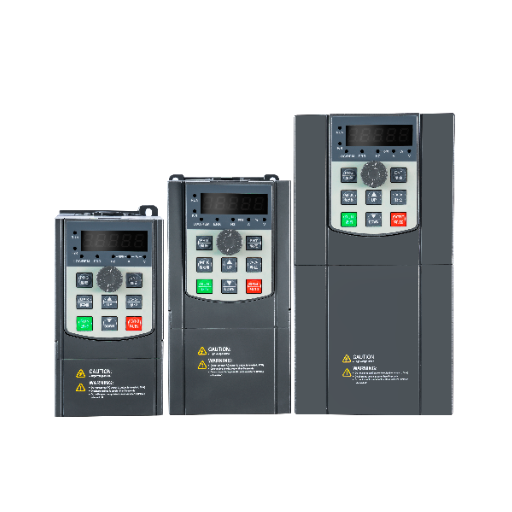
Variable frequency drives (VFDs) control the speed of motors by converting fixed frequency input power to adjustable frequency output. The distinction between low voltage and medium voltage VFD begins with the input voltage rating.
In the IEC 61800 series of standards, low voltage (LV) VFDs are intended to work on an AC voltage system no higher than 1,000V. In practical terms most industrial LV drives tend to be found on systems of some 200V to a little over 600V. The most common voltage rating is 480V in North America. In Europe and Asia, 400V is the norm.
Medium voltage (MV) VFDs are designed to function at voltages above 1,000V AC. They could be rated from 2.3KV up 13.8KV. Common MV ratings include 3.3kV, 4.16kV, 6.6kV, and 11kV.
The internal topology significantly differs. Most LV drives are associated with a two-level voltage source inverter with insulated-gate bipolar transistors (IGBTs). This design is rated high on compact, cost efficiency, and enjoyability of maintenance teams. By contrast, MV drives typically employ multilevel topologies, with neutral-point clamped (NPC) inverters and cascaded-H-bridge topologies being amongst the most popular. By using these topologies, much lower voltage stress is put on the individual switching devices, resulting in near-pure-sine output waveforms.
Waveform quality is far more important than customers generally realize. A two-level LV inverter generates spikey-like voltage pulses, which go back on the long motor cables. Those spikes can lead to insulation damages in the motors. This problem is almost entirely overcome by multilevel MV designs. In this regard, this is what has rendered MV drives capable of controlling motors at distances when exceeding 7500 feet-even when there are no output filters.
Low Voltage vs Medium Voltage VFD at a Glance
| Attribute | Low Voltage VFD | Medium Voltage VFD |
|---|---|---|
| Voltage Range | 200V to 600V AC | 2.3kV to 13.8kV AC |
| Typical Ratings | 480V, 400V, 230V | 3.3kV, 4.16kV, 6.6kV, 11kV |
| Inverter Topology | 2-level voltage source | Multilevel (NPC, cascaded H-bridge) |
| Common Power Range | 1 HP to 600 HP | 500 HP to 10,000+ HP |
| Motor Current at 600 HP | ~750 amps | ~87 amps |
| Output Waveform | PWM with voltage spikes | Near-sinusoidal |
| Cable Distance (no filter) | Under 150 feet | Over 7,500 feet |
| Harmonic Compliance | Often needs external filters | Usually meets IEEE 519 natively |
| Typical Lifespan | 10 to 15 years | 20 to 30 years |
| Technician Availability | Widely available | Specialized training required |
For a deeper technical breakdown of medium voltage VFD standards, (see our medium voltage VFD guide.)
The 600 HP Crossover Point: When Economics Shift in VFD Cost Comparison
For decades, the rule of thumb was simple: consider medium voltage at 250 HP and above. That rule’s outdated.
Modern MV drives have dropped in price. Reliability has improved too. Meanwhile, copper cabling costs have risen. Harmonic mitigation requirements have tightened. The result? A new crossover point. Most systems engineers now place the break-even threshold at approximately 600 HP for new installations. Existing site infrastructure can push that threshold higher or lower.
The reason the crossover shifted comes down to total cost of ownership, not drive unit price alone. A medium voltage drive typically costs 60% to 100% more than its low voltage equivalent at the same horsepower. At 600 HP, that premium might be 50,000to50,000to80,000. But the LV system requires far more current. Current drives cable size, conduit, and installation labor.
At 480V, a 600 HP motor draws roughly 750 amps. At 4.16kV, the same motor draws about 87 amps. That’s a nine-fold difference.
The LV installation needs multiple parallel runs of large copper cable. Heavy conduit. Oversized cable trays. The MV installation uses a single, smaller cable run.
Industry estimates tell the story. According to VFD, at 500 HP, LV cable costs run approximately 12 times higher than MV equivalents. At 750 to 1,000 HP, the multiplier can reach 24 times.
Many of the LV installations that are greater than 500HP require step-down transformers. Output reactors or dV/dt filters are used. These harmonic filters that go unsupported by standard IEEE 519. All those additional components take up floor space, eat maintenance points, and mean lead time. Often isolation transformers are integrated on the MV side to fulfill harmonic requirements on their own.
An experience with the maintenance supervisor at a cement plant in Vietnam; his team installed a 900 HP LV drive for a raw mill fan in2022. The drive cost $95,000. The additional cost for transformer, 18 pulse rectifier as well as 200 meters for cable brought totalcostto214,000.
This time when another cell was running down, the engineering team bypassed the VFD with an MV option. The MV setup caused target purchasing estimations to hike up to 165,000 at the selling price but finally go beyond that to 198,000 inclusive of added installments. The MV drive setup had taken up about 40% less floor space and required no external harmonic filter!
What counts is that in assessing low voltage versus medium voltage VSD options it is best to compare the total installed cost (TIC) rather than merely catalog prices!
For a deeper technical breakdown of how AC-DC-AC conversion scales for high voltage systems, (see our detailed guide on how high voltage frequency converters work.)
Power Quality and Harmonics: Meeting IEEE 519
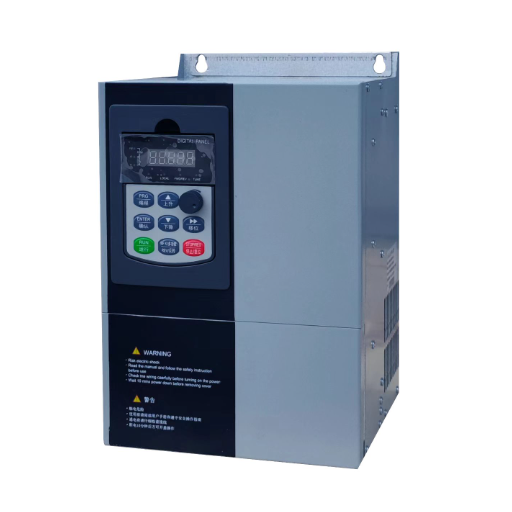
The technical differences between low-voltage and medium-voltage drives manifest clearly in power quality.
IEEE 519 sets the standard of the harmonic distortion that a plant can push back to the power utility grid. Many industrial plants, especially those with many large motors, have to show conformance before receiving permission from the power company. Faulting to meet this standard could mean financial penalties, forced upgrade to the equipment, or disconnection from power.
A standard 6-pulse low-voltage (LV) drive will generate much harmonic current. A single 500-HP LV drive might exceed the IEEE 519 limits for a facility. It depends on the available short-circuit current at the point of common coupling, a heavily weighted part of the power factor. Mitigation could be passive filters and active harmonic filters. Another option is 12-pulse or 18-pulse rectifier configurations. AFE drives are still another option. Each entails an increase in the cost of the power supply system. Each adds complexity. Each contributes failure points.
Medium voltage drives go about harmonic treatment more gracefully, with an 18-pulse rectifier being applied rather frequently in the designs. In another case, an active front end mail-level technology comes into use. Thus, the input current waveform looks much more cleaner and the total harmonic distortion (THD) much lower. The drives operate somewhere in the band of IEEE 519. Getting this suitable for the really sensitive power application could be desirable. In very-low short-circuit utility capacities cases, an indisputable bonus will be making the choice of medium voltage.
A.lternatively, consideration may be given to present technologies with the use of the low-voltage technology. AH no, the harmonic performance should be very well improved, offering almost the same performance at similar cost as before. In the 2010s, multilevel technology integrates across LV at very competitive prices. The low twelve is costing anything below 400 HP for low-harmonic LV drives when compared with buying medium-voltage. It all comes down to your building stats and utility requirements.
Safety and Maintenance Considerations
Factors such as safety culture and technician availability can be grounded in terms of all LV vs MV comparisons.
Low-voltage (LV) systems are more familiar, particularly the 480-V range, which every industrial electrician deals with every day. That familiarity proves to be advantageous in the sense that it prompts familiarity with that equipment, but, when taken out of control, it actually challenges danger. Now the fact that LV equipment is somewhat common can lead to a technician working on it energized when he should not. At 480 volts, an arc flash can damage even kill someone. Therefore, the amount of energy in a 600 HP LV system is tremendous.
Medium voltage (MV) systems, on the other hand, win respect because they require de-energized procedures, as well as formal lockout-tagout protocols and specialized training. MV drives feature faster capacitor discharge systems, better ground fault detection, and stronger interlocks. The upshot is safer maintenance systems, provided, of course, the facility itself adheres to these prescribed methods.
There is a huge technician gap. Lesser in number and less cost of training, the LV drive technicians are easier to find. The MV systems are rarer, and their maintenance can drain quite a huge sum of maintenance dollars. This all carries major weight for remote sites or activities far from the provenence of electrical knowledge. On the other hand, the newer MV systems seem to have their MTBF trend line moved greatly up. It is now common for the better manufacturers to offer the ability of remote diagnostics to the interested parties and may not need the assistance of on-site specialisits.
MV drives have bigger life-cycle hours. In normal pristine industrial environments, the lifespan of an LV drive will be their death between 10 to 15 years. Yet, with proper care for 20–30 cumulatively strong years, MV drives usually outlast the life span of LV drives.
Why the big difference? MV designs have given away quite some margin for thermal riding and thus rendered the components cooler. MV drives of critical applications near surprisingness are selected to select. There’s no room for failure.
Application-Specific Guidance
The right choice between low voltage and medium voltage VFDs depends heavily on what you’re powering and where. These variable frequency drive applications span every major industrial sector.
Pumps and Water/Wastewater
Pump stations represent one of the most common decision points. A 500 HP raw water pump at a municipal plant might justify LV. That’s especially true if the motor’s nearby and existing switchgear is 480V. A 1,200 HP sewage lift station with motors 800 meters from the drive room almost always favors MV. The cable savings alone typically cover the drive premium.
HVAC and Building Automation
Commercial and industrial HVAC systems rarely exceed 300 HP per unit. Low voltage VFDs dominate this space. The existing 480V infrastructure in most buildings makes LV the practical choice, and the power quality challenges are manageable at these sizes.
Oil, Gas, and Petrochemical
Upstream and downstream applications often involve large compressors, extruders, and pumpjacks. These typically run 500 to 3,000 HP. MV is increasingly common here. Long cable runs are one reason. Hazardous area classifications are another. So is the high cost of downtime.
Many offshore platforms now specify MV for all drives above 750 HP. The goal is simple. Reduce cable weight. Cut installation complexity.
Mining and Heavy Industry
Crushers, conveyors, and mills in mining applications frequently exceed 1,000 HP. MV is standard for these loads. The harsh environment also favors MV systems. They’re typically built with more robust enclosures and thermal management than commercial-grade LV drives.
Decision Framework
If you are deciding between LV and MV for a new installation, start with these questions:
- Is the motor rating above or below 600 HP?
- What is the distance between the drive and motor?
- Does your facility have existing MV or LV switchgear?
- What are your utility’s harmonic distortion requirements?
- How much floor space is available?
- What is your maintenance team’s voltage experience?
Reliability and Lifespan Comparison
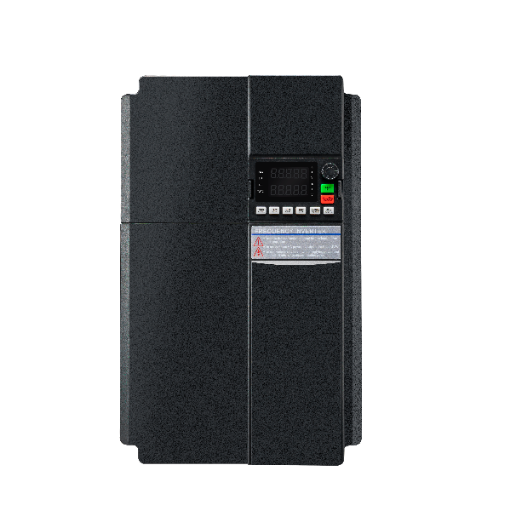
Long-term reliability should factor into any low voltage vs medium voltage VFD evaluation.
Modern LV drives from reputable manufacturers deliver solid reliability in controlled environments. MTBF figures typically range from 50,000 to 100,000 hours. That depends on ambient temperature, dust exposure, and loading profile. The weak points are usually capacitors and cooling fans. Both degrade predictably. You can replace them during scheduled maintenance.
MV drives generally post higher MTBF figures. Many exceed 150,000 hours. Conservative design margins help. So does lower current per switching device. Superior thermal management plays a role too.
Motor insulation also lasts longer with MV multilevel output. The voltage rise time (dV/dt) is gentler. LV drives can subject motors to voltage spikes of 1,200V or more on a 480V system. That stress degrades winding insulation over time.
Environmental factors matter for both technologies. Corrosive atmospheres, extreme temperatures, and high altitude all reduce lifespan. For harsh environments, you’ll want appropriate enclosure ratings. NEMA 12, NEMA 4X, and IP54/IP65 are common choices. Consider forced ventilation or air conditioning for the drive room.
Frequently Asked Questions
What is the difference between a low voltage and medium voltage VFD?
The primary difference is input voltage. Low voltage VFDs operate at 1,000V AC or below, typically 200V to 600V. Medium voltage VFDs operate above 1,000V AC, usually 2.3kV to 13.8kV. MV systems use multilevel inverter topologies that produce cleaner output waveforms and reduce cable costs at higher horsepower.
At what horsepower should I switch from LV to MV VFD?
The modern crossover point is approximately 600 HP for new installations. Below this threshold, LV drives are generally more cost-effective. Above it, MV systems often have lower total installed cost when you factor in cabling, transformers, and harmonic filters.
Is a VFD the same as a frequency converter?
A VFD (variable frequency drive) is a specific type of frequency converter. It converts fixed-frequency AC power to variable-frequency output for motor speed control. The broader term “frequency converter” can also include static frequency converters, 400Hz power supplies, and other AC-to-AC conversion systems.
Do medium voltage VFDs last longer than low voltage VFDs?
Yes. Typical LV drive lifespans range from 10 to 15 years. MV systems often operate 20 to 30 years with proper maintenance. The longer lifespan reflects more conservative thermal design, larger component margins, and gentler output waveforms that reduce motor insulation stress.
Can I use a low voltage VFD for a motor far from the drive?
Distance is a primary parameter in the unanimity-of-ideas debate of LV and MV. LV AC drives virtually always need output filters for cable runs in excess of 150 feet to prevent motor insulation damage from reflections. MV multilevel drives are capable of running motors for “miles” over 7500 feet without any more filters. With real long cable runs, MV usually wins on both counts of cost and reliability.
Conclusion
Choosing between a low voltage and medium voltage VFD isn’t about picking the cheaper drive. It’s about understanding the total system cost, your facility’s power quality constraints, and the long-term operational realities of your application.
Here are the key points to remember:
- The cost crossover point has shifted from 250 HP to approximately 600 HP for new installations
- LV drives offer lower unit cost and easier access to technicians, but often require expensive cabling and harmonic mitigation at higher horsepower
- MV drives reduce cable costs, improve power quality, and generally offer longer service life, but require higher upfront investment and specialized maintenance expertise
- Always model total installed cost, not just drive price
- Application type, distance, and existing infrastructure matter as much as horsepower rating
For a thorough technical breakdown of medium voltage drive power quality challenges, encompassing harmonic mitigation techniques and relevant industry standards, see our comprehensive power quality guide.
The global VFD market had a volume around $23.85 billion in 2026, and LV and MV sectors have been increasing continuously. Marked growth of these sectors has been noted when industries are taking increasing initiative to make the efficiency of energy and control over process as absolute priorities. So, if you are needing a compact LV drive for a 100 HP fan or a heavy MV setup for a 2000 HP compressor, it is a great decision to correspond the technology to the particular operational needs.
Ready to select the right VFD for your project? Our engineering team supports you from initial specification through installation and commissioning. Contact our engineers today for a customized recommendation based on your horsepower, voltage, and application needs.
