
Understanding Rotary Converters
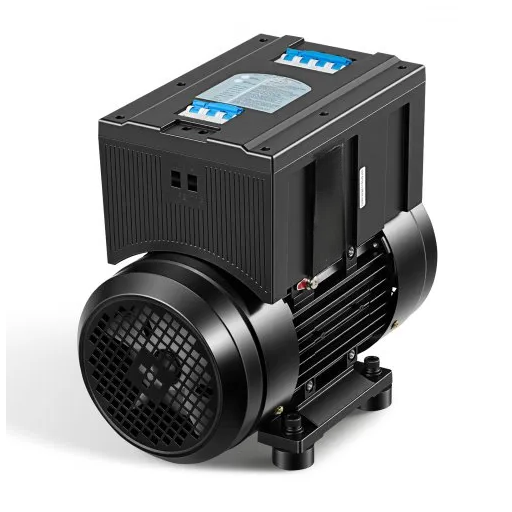
Rotary converters are special electrical machines, designed for changes of electric energy from one form to another, normally between alternating current (AC) and direct current (DC), and for AC energy phase shift. The principle of this machinery is the carriage of a motor and a generator within one body, where the motor activates the generator (which consequently provides the required current). Considering the design operation and application, rotary converters are common and efficient in various industries such as mining in circumstances where the solved tests are shown on equipment. These attributes, which lead to long-term operation, high performance, flexibility in sudden changes of load, and are the prerequisites of each application where a generator can be seen, are also the requisites of the rotary converter.
Definition and Functionality of Rotary Phase Converters
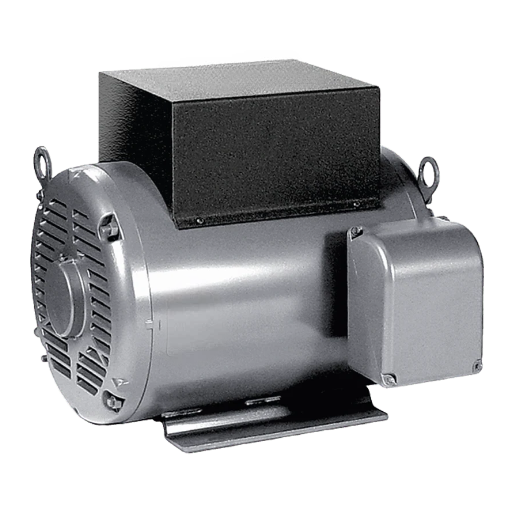
Rotary phase converters are advanced technical equipment used in transforming single-phase energy into three-phase energy for three-phase machine operation where only single-phase power is available. They are used in cases when it is essential to utilize three-phase loads; however, only single-phase power is available. The phase converter is a component of the motor driving the generator which produces the output voltages. A single-phase motor is given to a phase capacitor as a load that drives the gen nd an e the producing three phase voltage. These converters are particularly developed to provide consistent operating characteristics over a wide range of loads due to their capability in voltage and phase angle regulation.
In recent times, extensive research has gone into the development of rotary phase converters so as to achieve the best output while meeting all the up-to-date demands. The current designs now incorporate a computer system, one that has the capability of monitoring the power and voltage output to correct the imbalances, as well as any power factor issues within a region in real time. Such innovations take care of errors that may arise due to variation of workloads while using rotary phase converters. In addition, rotary phase converters provide a long service life and low maintenance cost making them more cost-effective power systems in the field of industrial development with more advanced applications of three-phase power systems, the manufacturing industry, heating, ventilating and air conditioning systems, the agriculture related ones, among others.
Comparison with Static Frequency Converters
| Key Point | Rotary Phase Converters | Static Frequency Converters |
|---|---|---|
| Power Source | Requires three-phase power | Creates three-phase from single-phase |
| Efficiency | Moderate | High |
| Maintenance Requirements | Low | Moderate |
| Durability | Long lifespan | Shorter lifespan |
| Conversion Method | Mechanical | Electronic |
| Noise Levels | Generates noise | Noise-free |
| Power Quality | Stable under varied loads | Precise and consistent |
| Initial Cost | Lower upfront cost | Higher upfront cost |
| Application Flexibility | Suitable for heavy machinery | Ideal for precise electronics |
| Operational Complexity | Simple to operate | Requires technical setup |
Advantages of Rotary Frequency Converters in Industrial Applications
-
01Durability and Longevity
A key feature of rotary frequency converters is their long service life. The durability inherent in the design is capable of absorbing negative effects of erosion and wearing which makes it relevant for intensively exploited environments. -
02High Power Handling Capacity
Where high power issues are of concern, Rotary variants achieve continuous outputs. It can be attributed to the mechanical way in which the vast amounts of energy are converted in that rotary converter is capable of handling such power loads that are normally connected to heavy industrial tools such as presses, lathes, pumps, etc. -
03Stable Performance Under Variable Loads
Among the numerous benefits of rotary converters, is the fact that they are rated for maintaining almost similar quality of power irrespective of power/ new average values. This is a major reason why rotary converters are used in the industrial set up to ensure power without frequent interference. Additionally, this withstands the threat presented by power surges or dropouts. -
04Lower Initial Investment Costs
A rotary converter typically costs less to purchase than its electronic counterpart. Consequently, a marketable and really attractive option for many industries is the hassle-free and long-lasting services which do not involve highly sophisticated electronics. -
05Noise and Vibration Management
Machines upon their operation, frequency converters do not generate excessive levels of noise due to their anti-vibration designs. Better anti-vibration features cascade into fewer maintenance or repairs and improve machine performance in the workspace. -
06Simplicity in Operation and Maintenance
It isn’t very difficult to repair a rotary converter and doesn’t require a lot of mechanical skills to run every day. It is also worth to mention that the management of day to day activities with respect to maintenance causes less struggle because any service or schedule, and work flow limits tend to be more on the processes of machines that depend on electronics.
Technical Aspects of Rotary Converters
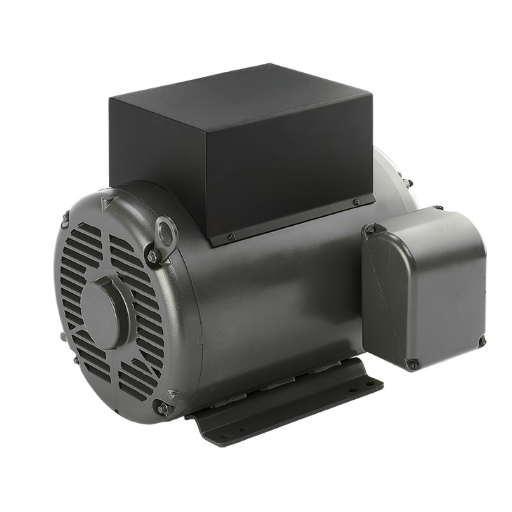
1 — Efficiency and Power Handling
Rotary converters are extremely efficient machines primarily because of the high level of energy conversion while running even near the rated capacity. Applications demanding a considerable portion of electric power for lengthy periods are easily sustainable using the machines. This can be observed from the fact that these converters maintain power factor accurately, particularly when they balance phase loads.
2 — Durability and Lifespan
The rotary converters have a robust mechanical design which makes them durable for quite long time when in use. In addition, proper maintenance can extend the useful life further. Particular attention is given to mechanical parts, such as bearings and rotors, in that they are constructed to take care of the equipment in actual use over a long course of industrial installations depending on the power load.
3 — Voltage Regulation and Performance
Rotary converters easily provide voltage regulation. This is because their technology allows them to limit voltage changes and hence sustain constant voltage, something that industries, particularly most equipment are highly sensitive to. This is a very crucial demand in most equipment, and thus operations can be stable enough to keep the equipment for long time without failure, so ease the probability of failure occurring.
4 — Environmental Considerations
Rotary converters are vastly more effective in high temperature and sandy situations as opposed to the older static models. One of the design improvements is versatility; this means one convertor can work in a host of industrial and business processes.
Design and Components of Rotary Phase Converters
The design of this converter will involve many components each expected to offer specific phase shift matching in addition to the other components within the system. These components will include the following:
-
1Idler Motor:
The rotary phase converter employs an idler motor that, being the heart, produces balanced three-phase electricity. It is a specifically designed or altered device capable of providing the third phase of electricity that three phase equipments require. -
2Control Panel:
Versatile control panels are usually set for this engine that incorporates relays, fuses and other elements necessary to supplement the motor. Starting capacitors and other compensating which prevents over-voltages should also be incorporated because the idler motor’s voltage is raised. -
3Start Circuitry:
Starting devices are necessary in order to run the idler motor, as soon as it fails to run. This could include starting capacitors and a potential relay which is used to automatically start and stop the respective starting devices after the idler motor has attained the predetermined operational speed. -
4Output Terminals:
Output Terminals are responsible for delivering the three-phase output power to the load that is driven. It is extremely important to make sure the output power is evenly distributed onto all 3-phases; this is because in case of unbalances, some of the phases may draw much more current than intended, leading to unnecessary wear and energy wastage of the equipment.
Role of Idler Motors in Phase Conversion
The job of the idler motor in a rotating phase converter is to convert single-phase electrical power into three-phase electrical power. Their way of operation is such that during their working period, they initiate the rotational magnetic field in three phases which enables the practical application of machinery in industries such as CNC machine tools, lathes and milling machines. Most often, the inner part of the idler motor will be designed so as to achieve high efficiency; for example, such motors are most precise because of the rotors and windings used reducing the shortage of the phase and also vibration.
The effectiveness of a motor connected to a pulley system is impacted by many reasons. Among them are main dimensions, power rank of the idler and quality of bearings applied. Large mass in the rotor helps to smooth the flow of power by reducing mid-cycle oscillations during operation. More than that, there is expected to be a high class of bearings and cooling system within the rotor that allows running with start-up load. Capacitances of start and run capacitors should be matched directly to the recommended capacitances for good power factor and pump alignment.
Balancing the phases accurately is of great importance as non-uniform three-phase output can lead to unbalanced distribution of the power to machinery in use causing heating and wear. The latest technology has advanced though Idler motor systems integrated with detection and correction programmes for phase mismatches meaning total reliability is enhanced as well as the overall longevity of the equipment. It is clear that idler machines have become a must in modern phase conversion projects applicable to various fields.
Frequency Conversion Mechanics in Rotary Systems
The conversion from one frequency to another within the working of the synchronous machines exploits the magnetic field interactions inherent in the free-running motor so that it converts the frequency of the supplied voltage to the value most suitable for the requesting apparatus. When single-phase alternating current (AC) is supplied to the idler motor, the induction apparatus starts rotating the stator and creates a rotating magnetic field with respect to the rotor. This means that a balanced three-phase voltage is generated in the motor windings making it a three-phase insulator rather than dispersing of the stator windings.
State-of-the-art rotary phase converters generate phase-shifted power with more rotor harmonics using advanced control systems with focal attention paid to the dynamics of the rotor. In these systems, the rpm of the idler unit servo motors is of paramount quality as it is directly proportional to the frequency of the output power and is set at 60Hz in America or 50 hertz in several other places. Changing the rpm of the motor introduces frequency error which should be compensated for with suitable means of controlling the motor.
Furthermore, in advanced design, there is the use of digital control elements that act as a regulation system to tune devices accordingly and keep the final control output without any deviations. Providing the most effective means for eliminating deviations and ensuring the provided power quality to three-phase equipment.
Performance Characteristics Under High Surge Loads
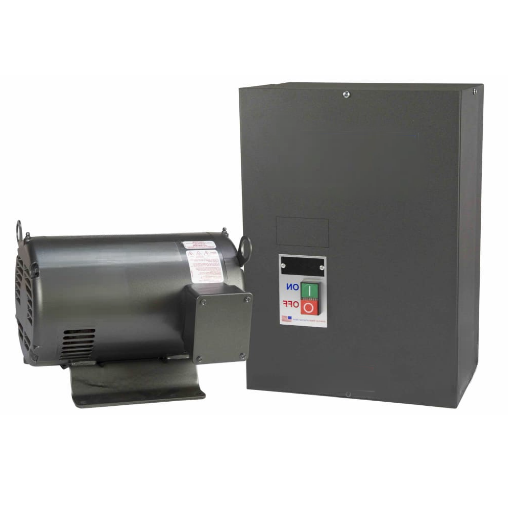
Under high inrush current conditions, the capabilities of any given rotary converter are found to be very significant including the fact that they can handle brief overload conditions because of their mechanical inertia. Because of this distinct feature the output voltage stays constant and the disturbance caused such as voltage drop is not experienced. Even so energy loss in the form of heat is unavoidable because of long duration surges particularly inefficient components can heat up the whole system this in turn causes a breakdown of the mechanical structure and serves more as a signal that cooling needs to be improved In such instances, the necessity of the organization of effective heat exchangers or any other cooling equipment and a thorough routine repair and maintenance of the equipment arise evident temperature protection circuits have to include thick coatings, just as safety devices should enable the power sources based on the object to operate correctly.
Surge Load Capacity of Rotary vs. Static Converters
It is obvious that when it comes to dynamic and high-demand conditions, the transient overcurrent capacity is one of the parameters unit converters should be differentiated. The transient overcurrent capacity of static converters such as inverters could not be as superior as that of rotary converters which—at least up to some extent—demonstrate what is referred to in this paper as inertia over ramp. This latter characteristic along with its durability enables a rotary converter to cope with a sudden maximum load application variation. And this is exactly what makes them so appropriate for application in such environments where machining requires greater loads than the rated loads with breaks in between working cycles.
However, pure static converters are based on solid state devices. They, thus, have problems of wave surge protection when compared to rotatory systems. Although the majority of the present day converters which are static include sophisticated electronic techniques that employ such devices like insulated-gate bipolar transistors (IGBTs) or metal-oxide-semiconductor field-effect transistors (MOSFETs), it is not always the case that they are able to handle large currents. This problem often requires the converters to be used in parallel or additional auxiliary circuitry to be incorporated. It should be noted that the prescription of additional steps or devices increases both the cost and the intricate nature of the design and at worst creates zones for shortfalls.
Impact of Load Changes on Converter Performance
Changes in the load definitely have an impact on the operational efficiency, thermal conditions and long-term operation of the converter. A sudden increase in load causes a current surge in the transformer which is short term cutting precision to the other power devices such as the switching transistors and the diodes. Hence, it can raise the temperature on this device higher. And it may even pushing the heat removal on the electronic parts to the limit for avoiding them jolt. At the same time, register a fast drop of the load and the next minute you will see overvoltage violence if control system of the converter is not responsible for handling such things meaning that the lowers downstream appliances could get fried.
The dynamic load regulation is highly indispensable under conditions where steadiness of the output voltage is required such as in telecommunications or in industrial automation. To guarantee their effectiveness in applications with abrupt load changes, different pulse-width modulation (PWM) methods as well as adaptive control schemes have been introduced. Practically, these measures allow the converters to hold their performance levels irrespective of the variation of operating points whilst reducing power losses and minimizing electromagnetic interference (EMI).
On the downside, advanced converter performance requirements also led to enhancements in the material technologies of semiconductors, where for example, wide gap semiconductors and especially silicon carbide (SiC) and gallium nitride (GaN) are used as converters and help to reduce storage time and enable repetitive overloading of semiconductive devices dope into metal-semiconductor contact.
Efficiency and Reliability of Rotary Converters
Rotary converters remain indispensable equipment in many contemporary industry settings due to being sturdy, flexible and energy efficient. Over 90% are the efficiencies specified in the latest models, thanks to the techniques of limit equilibrium and finesse positioning. Wear and excessive temperature rise during long term operations are minimized by the use of materials that exhibit very high torques and low losses.
Modern monitoring systems are capable of implementing real-time monitoring of such key parameters as: the controlled speed and during its manufacturing processes the applied torque and overheating. The tracking of these indices facilitates introduction of new maintenance procedures that bear no down time and extend the operational life of machines. Moreover, current thinking recognizes the negative influence of novel insulation techniques and designs or structures set into place to occlude the movement of excessive vibration on fatigue. This mechanism determines the equivalency of these machines in terms of power output and the ease of operating them besides, the rotary machines withstand high thermal insulation, fire rating, high temperature and thereby endowed with specific thermal protection.
Applications and Use Cases of Rotary Converters
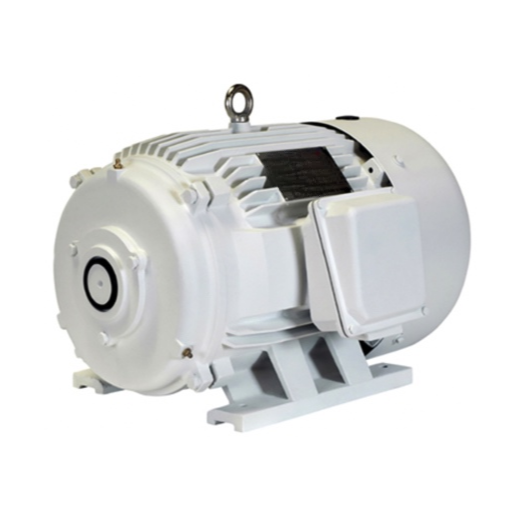
Rotary frequency converters are used in a variety of industries, where reliable energy conversion is vital. They provide innumerable benefits such as providing the energy demand of equipment with varying frequency, i.e., operating 60 Hz equipment using 50 Hz power source. Rotary frequency converters are commonly found in aerospace and defense industry where special electrical conditions need to be modeled or ground power has to be converted for use in aircraft. In addition, rotary converters contribute to productivity in manufacturing process by making it possible to use Western equipment, which is not matched with regard to its frequency. This productivity extends to even critical and harsh operational conditions because of the ease of use and impracticable features of this device.
Industries Benefiting from Rotary Frequency Converters
Rotary converters are quite essential in various applications or specifically in those firms demanding vicarious neodymium to other than standard power systems. The enterprise of aviation, for instance, is engaged in extensive application of these devices to establish the requisite power parameters for operational and test conditions of an aircraft on the ground. In the defense sector, rotary frequency converters are used to power military vehicles and important equipment at different electrical operating conditions and they are used here. And finally, the sector engaged in the process of manufacturing industries, also uses these converters when importing machines that work on different electrical standards, thereby reducing the risks of work stoppage.
Another important application of rotary converters is in the field of renewable energy source, especially in wind power generation for it helps regulated supplied power from test turbines by managing power grid issues. Numerous research centers and laboratories find it suitable to acquire more stable and accurate power supplies for the testing of fragile electronics. The innovative and advanced because of the performance, quality and efficiency, their high resistance to external influences and multitasking in the most complex and hot areas somehow even establishes that particular rotary converters have become basic technologies.
Common Applications for High Surge Loads
- 01
Industrial Machinery with High Starting Currents
Most of the equipment that is utilized within manufacturing plants and industrial processes, for example, large motors, compressors, water pumps and other heavy-duty machinery, requires a big amount of power during the starting cycle. - 02
Aerospace Testing Facilities
When it comes to testing aircraft, there are times when electrical testers use motor generator sets when there is a need to apply a high electrical load on the aircraft components under test. This is when frequency converters from the HP-oriented (rotary converter) range are of the utmost importance. - 03
Military and Defense Applications
Military radars, communications transmitter traces and elements used for weapon testing may very often go through instances of sudden high power necessity. This is why rotary converters should manage unstable power requirements well because they are vital within these industries to avoid any breaks in service provided. - 04
Medical Imaging Equipment
Equipment such as MRI machines, CT scanners and also X-ray cells frequently tend to have very high initial peak power requirement when they start a scan or run at full power. They require rotary converters in order to supply the required power and also to limit the power intake of such systems to non-damaging levels of excess. - 05
Maritime and Shipyard Operations
Marine-rated step-controlled frequency converters are quite popular in the shipping business. They are used for supplying docked vessels or for driving heavy machinery, such as winch and cranes in brief non-uniform but powerful loads. These appliances allow the equipment to be used without any problems in severe load conditions. - 06
Renewable Energy Systems
Those changers are also very efficient in renewable energy applications, such as in the testing of wind turbines where equipment moves up and down in frequent irregular surges as a result of wind changes. Their ability to perform has been tested under high loading, guaranteeing that they can be easily embedded in and withstand high wind intermittency in renewable energy schemes.
Maintenance and Installation Considerations
Installation Guidelines
- Proper Site Selection
To prevent overheating or contamination, allot a neat, dry and well-ventilated room for the filter’s place of installation. - Foundation Requirements
Prevention of mechanical wear and good performance of the converter will be achieved if the unit is mounted on a sturdy, rigid, and shock-free slab. - Electrical Connections
Proper wiring, ground, and voltage must be used as suggested by the manufacturer to avoid operational damage.
Routine Maintenance
- Inspection Schedule
Regularly inspect certain parts such as bearings, brushes (if any) and electrical connections to discover any wear or probable causes of breakage. - Dust and Debris Removal
Clean the unit regularly so that there will be no dust accumulation as this could affect its efficiency or effectiveness. - Lubrication Requirements
Apply only the recommended lubrication to the system’s joints and look out for the intervals so that the system is not compromised.
Troubleshooting and Repairs
- Diagnostic Tools
Monitor the operating temperature, vibration and load levels as they change so as to be aware of any anomalies quickly. - Manufacturer Support
They should rely on the services of authorized service centers as well as consult the manufacturer while carrying out work in order to satisfy all requirements of the guarantee and to ensure safety.
Setting Up a Rotary Converter System
To implement rotary converter systems properly, deliberate engineering and following constructive rules are critical. To embark upon this task, the first step is to locate and prepare the appropriate setting for the system, and to provide for adequate air circulation and ease of regular maintenance of the equipment. A rotary converter must have a proper base where it can mount on a large-sized stowed power and operational noise reduced. All wiring connections have to be done in accordance with the requirements of the electrical codes of conduct such as the National Electrical Code (NEC) or any other relevant codes.
Drawing up the correct wiring is of immense importance. It is essential to use conduits of appropriate thickness made of copper material capable of withstanding the expected current of the converter. And of course, the excess wires both power and grounding should have additional check as well so that the person can take care of the cable bald as well. So the system further had better protection these overloads from risking and capable of being diverted to the trip devices like fuses or breakers. Besides, for safeguarding against equipment breakage and optimizing power generation, phase balancing is indispensable. To ascertain the phase voltages, a voltmeter can be employed and the capacitor bank can be tuned if it is necessary.
As the last thing, perform a system check after the setup is straight and has no issues. Check the load and look for all temperature inclinations, vibrations, and deviations on the converter while studying some load transients. Following the above technical instructions will guarantee good performance and long life of the installation of a rotary converter.
Maintenance Best Practices for Longevity and Performance
In the case of rotating frequency converters, it is very important to follow the process of different maintenance procedures in order to prolong their service life and properly use them. The first and foremost principle to follow at all times is to commence with visual checks in an automatic system to verify the signs of wear, corrosion, or any form of damage in parts such as bearings, electric insulation, and wires. All surfaces should be well lubricated with the required lubricant at the proper intervals to promote smooth bearing performance and minimize heat production.
It is important to keep an eye on the output voltage and stable current also in the process of running it so as to remain informed of their variations should any appear and they indicate component failure. Removal and scrapping of the dirt present in the frequency changer basket as well as the control cubicle, is essential since it may cling to some parts of the machine and cause overheating and interfere with electric connectivity. For all the ventilation or cooling apparatus there may be, one will need to get the air filters, vent covers and free standing vents wiped down/cleaned so that the cis optimum air circulation without excess heat which may decrease the efficiency.
Reference Sources
- Insights into the Definition of Converter Surge Rise Time and Its Influence on Turn/Turn Electrical Stress
Link to source - Comprehensive Comparison of Mover-PM and Stator-PM Linear-Rotary Generators for Wind-Wave Combined Energy Conversion System
Link to source
