
A motor protection circuit breaker for medium voltage is a vacuum or SF6 circuit breaker selected and configured to switch and protect AC motors rated 1 kV to 15 kV. It provides both normal load switching and fault current interruption without relying on upstream fuses, making it the core interrupting device in breaker-based motor starters.
A mining engineer in Western Australia specified a 12 kV, 40 kA vacuum circuit breaker for a 3.3 kV conveyor motor starter. His reasoning was simple: the site’s main switchgear was rated 40 kA, so the motor starter breaker should match. The breaker cost $34,000, nearly double the correctly sized unit. The 2,000 A frame was also oversized for a 105 A motor.
During commissioning, the breaker tripped three times on healthy motor starts. The direct-acting overcurrent release had a minimum setting of 400 A, four times the motor’s full-load current. It could not distinguish between a 630 A locked-rotor inrush and a fault. A protection study revealed the actual maximum fault at the motor starter bus was 22 kA. The engineer replaced the breaker with a 7.2 kV, 25 kA, 630 A unit equipped with an electronic trip unit and motor protection relay. Total waste: $18,000 in overspecification plus three weeks of commissioning delay.
That mistake, assuming maximum fault rating equals correct specification, is the most common error we see when reviewing breaker-based motor starter specifications.
This guide gives you the complete framework for selecting, sizing, and specifying a medium voltage motor protection circuit breaker. You will learn when breakers beat contactors (and when they do not), how to calculate the correct short-circuit rating without overspending, how to verify making capacity against motor locked-rotor current, which trip method fits your protection scheme, how to achieve Type 2 coordination with contactors, real cost ranges from 12,000to12,000to38,000 per breaker, and how IEC and ANSI ratings map to the same application. For a broader view of the full protection and control stack, see our complete medium voltage motor protection and control guide.
Key Takeaways
- MV motor protection circuit breakers are typically vacuum circuit breakers (VCBs) rated for motor switching duty per IEC 62271-100 or ANSI C37.06.
- Specify breakers over contactors when fault levels exceed fuse-contactor limits, when fuse replacement downtime is unacceptable, or when remote control and reclosing are required.
- Critical ratings include rated voltage, continuous current, short-circuit breaking capacity, short-time withstand, and making capacity for locked-rotor inrush.
- Trip methods include electromechanical releases, electronic trip units (ETU), or external motor protection relays with shunt trip coils.
- Type 2 coordination requires the breaker to clear faults without damaging the contactor or motor insulation.
- 2026 cost ranges: 12,000to12,000to22,000 for 7.2 kV; 20,000to20,000to38,000 for 12 kV; complete starter assemblies 30,000to30,000to80,000.
- M2 mechanical endurance (10,000 operations) is recommended for motor duty; standard M1 (1,000 operations) wears prematurely in frequent-start applications.
What Is a Motor Protection Circuit Breaker for MV?
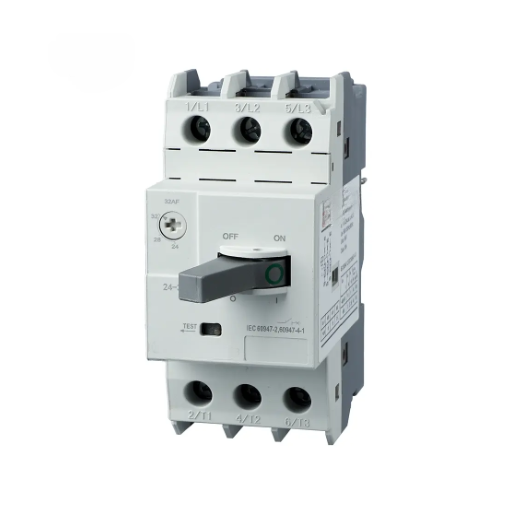
At medium voltage, a motor protection circuit breaker is fundamentally different from the molded-case breakers used in low-voltage motor control centers. An MV breaker is a standalone vacuum or SF6 interrupting device housed in a metal-clad enclosure. It must interrupt full system fault current, survive motor starting inrush, and operate reliably across thousands of switching cycles.
How It Differs from LV Motor Protection Circuit Breakers
Low-voltage motor protection circuit breakers are compact thermal-magnetic or electronic devices that combine overload and short-circuit protection in one housing. Medium voltage breakers are not self-protecting in the same way. The breaker interrupts current, but the decision to trip comes from an external motor protection relay or an electronic trip unit. This separation of sensing and interrupting functions is the defining architectural difference between LV and MV motor protection.
Vacuum vs SF6 vs Air-Magnetic: Technology Comparison
Vacuum circuit breakers (VCBs) dominate modern MV motor starter applications. A vacuum interrupter seals the contacts in a high-vacuum environment, which provides exceptional dielectric recovery and eliminates arc byproducts. SF6 breakers still appear in some utility and generator applications but are declining in industrial motor service due to environmental regulations on SF6 gas. Air-magnetic breakers are largely obsolete for new MV motor installations.
VCBs offer several advantages for motor duty: contact erosion is minimal, operating mechanisms are compact, and maintenance intervals are long. The vacuum interrupter itself can survive 10,000 to 30,000 rated current operations, though the mechanical mechanism often limits practical life first.
The Breaker-Relay Architecture: Who Does What?
In a typical MV motor protection scheme, the motor protection relay monitors current, voltage, and temperature through instrument transformers. When the relay detects an overload, ground fault, or short circuit, it issues a trip command to the breaker via a shunt trip coil or undervoltage release. The breaker then opens its contacts and clears the fault. Understanding this division is essential: the relay is the brain, and the breaker is the muscle.
When to Specify a Circuit Breaker Instead of a Contactor
Engineers often assume breakers are always better than fuse-contactor starters. That assumption costs money and can reduce reliability. The correct choice depends on fault level, switching frequency, and operational requirements.
Three Conditions That Favor Breakers
First, when the maximum fault level at the motor bus exceeds the short-circuit withstand of available fuse-contactor combinations. Most vacuum contactors can withstand 25 kA for one second but cannot interrupt that current. If the system fault level is above the fuse’s current-limiting rating, a breaker is mandatory.
Second, when downtime for fuse replacement is unacceptable. A fuse-contactor starter requires manual fuse replacement after a major fault. In continuous processes such as petrochemical or power generation, breaker reclosure is faster and safer.
Third, when remote operation or automatic reclosing is required. Breakers can be opened and closed from a control room. Vacuum contactors can also be remotely operated, but they still depend on fuse replacement after a fault.
Three Conditions Where Contactors Win
If the motor starts more than 10 times per day, a vacuum contactor will outlast a breaker. Standard M1 breakers are rated for 1,000 mechanical operations. Even M2 breakers at 10,000 operations cannot match the 250,000 to 1,000,000 electrical operations of an AC-3 vacuum contactor. For high-cycle pumps, compressors, or conveyors, the contactor is the right choice.
If the motor is below 200 kW and the fault level is moderate, a fuse-contactor starter costs 40 to 60 percent less than a breaker-based equivalent. There is no technical justification for breaker overspecification on small motors.
If maintenance expertise for breaker mechanisms is not available locally, a fuse-contactor starter is simpler to service. Vacuum interrupter condition assessment requires specialized testing equipment that some sites do not have.
The Hybrid Approach: Breaker as Upstream Backup
Many large industrial sites use a hybrid architecture. A vacuum contactor handles normal starting and stopping, while a vacuum circuit breaker sits upstream as backup protection. The breaker only operates during faults that exceed the contactor’s interrupting capability or when the contactor fails. This approach preserves the contactor’s long life for routine duty while retaining the breaker’s fault-clearing ability. Our vacuum contactor motor starter guide covers the contactor side of this decision in detail.
Key Ratings and Specifications
Selecting a motor protection circuit breaker requires matching five independent ratings to the motor and the electrical system. Getting any one wrong leads to either nuisance tripping or dangerous under-protection.
Voltage and Continuous Current Ratings
The rated voltage must equal or exceed the system nominal voltage. A 7.2 kV breaker is appropriate for 6.6 kV systems. A 12 kV breaker fits 10 kV or 11 kV systems. Never downrate a breaker below the system voltage, and never overspecify voltage ratings unnecessarily, since higher-voltage breakers cost significantly more.
The continuous current rating must exceed the motor full-load current with margin. A common rule is 1.25 times motor FLC for induction motors. For a 1,000 kW, 6.6 kV motor with 105 A full-load current, a 630 A or 1,250 A frame breaker is typical. The exact rating within the frame is set by the trip unit or relay.
Short-Circuit Breaking Capacity and Short-Time Withstand
The short-circuit breaking capacity, or Isc, is the maximum fault current the breaker can safely interrupt. It must exceed the calculated three-phase fault level at the motor starter bus, not the main switchgear bus. Engineers often make the error of matching the main switchgear rating, which can be 50 to 100 percent higher than the actual fault at the motor.
The short-time withstand current (Icw) equals the breaking capacity for most MV vacuum breakers. It defines the current the breaker can carry for one or three seconds without damage while the protection relay decides whether to trip.
Making Capacity: Surviving Motor Locked-Rotor Inrush
Making capacity is the maximum current the breaker can safely close into, including the electrodynamic forces and thermal stress. It is typically 2.5 times the rated short-time withstand current. Motor locked-rotor current is 5 to 7 times full-load current for induction motors and up to 10 times for synchronous motors. The breaker’s making capacity must exceed this inrush with margin.
Mechanical Endurance: M1 vs M2 for Motor Duty
IEC 62271-100 defines mechanical endurance classes. M1 breakers are tested for 1,000 operations. M2 breakers are tested for 10,000 operations. For motor starters that start daily or more frequently, M2 is essential. Standard M1 breakers are designed for distribution boards where breakers may operate only a few times per year.
A cement plant in Vietnam installed standard M1-class vacuum breakers on three kiln feed motors that started 6 times daily. Within 18 months, two breakers showed mechanism wear exceeding limits. Spring fatigue and latch engagement deterioration caused operating time to increase from 55 ms to 92 ms. The plant upgraded to M2-class breakers with lubrication-free mechanisms. Five years later, the M2 units remained within specification, validating the endurance upgrade for motor duty.
Electrical Endurance: E2 and E3 for Frequent Switching
Electrical endurance defines how many rated current interruptions the breaker can survive. E2 breakers withstand 30 interruptions. E3 breakers withstand 100 or more. For motors that start several times daily, E3 is strongly recommended. The vacuum interrupter itself can often survive far more operations, but the contact system and mechanism determine the certified endurance class.
Trip Units and Protection Integration
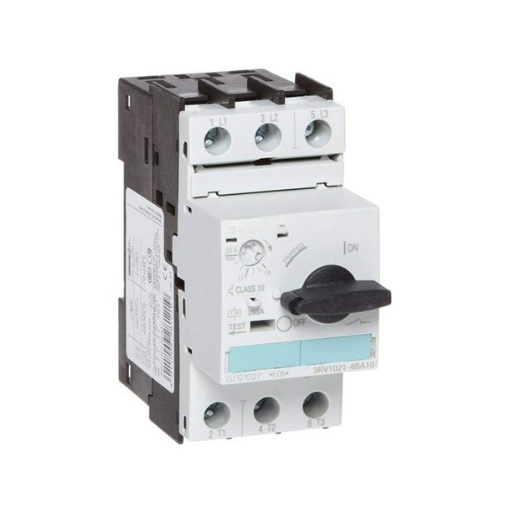
The breaker is only as smart as the device telling it when to open. MV motor protection schemes use one of three trip methods.
Electromechanical Direct-Acting Overcurrent Releases
These are simple coil-driven releases built into the breaker mechanism. When current exceeds a preset threshold, a magnetic release trips the breaker directly. They are inexpensive, typically 500to500to1,500, but offer no time coordination, no motor-specific curves, and coarse settings. Direct-acting releases are suitable only for the simplest applications where a basic overcurrent trip is sufficient.
Electronic Trip Units for Motor Protection
Electronic trip units (ETUs) mount inside the breaker and provide time-current curves, ground fault detection, and adjustable pickup thresholds. A motor-protection ETU costs 2,000to2,000to5,000. It can be programmed with long-time, short-time, instantaneous, and ground-fault protection functions. ETUs are a good compromise for applications that need motor-specific curves without the complexity of a standalone relay.
External Motor Protection Relay Plus Shunt Trip Coordination
For critical motors and complex protection schemes, a standalone microprocessor-based motor protection relay is the preferred approach. The relay monitors current through protection-class CTs, computes thermal models, and issues a trip command to the breaker’s shunt trip coil. This approach offers the most comprehensive protection, including thermal overload, locked rotor, unbalance, ground fault, and differential protection. A multifunction motor protection relay costs 3,000to3,000to10,000. Our motor protection relay settings guide covers relay setting calculations in depth.
Integrated vs Distributed Protection: Which to Choose?
For motors below 500 kW in non-critical service, an ETU is usually sufficient. For motors above 1,000 kW, for critical process motors, or for applications requiring differential protection (87M), a standalone relay with shunt trip is the correct choice. The relay provides more sophisticated algorithms, better coordination flexibility, and independent verification of protection settings.
How to Select an MV Motor Protection Circuit Breaker
The selection process follows seven steps. Skipping any step risks either under-protection or costly overspecification.
Step 1: Determine System Voltage and Maximum Fault Level
Identify the nominal system voltage and calculate the three-phase bolted fault current at the motor starter bus. Use the upstream transformer impedance and cable impedance to the starter. Do not use the main switchgear fault rating, which ignores cable and transformer impedance drops.
Step 2: Size Continuous Current Rating Above Motor Full-Load Amps
Select a breaker frame size with a rated continuous current at least 1.25 times the motor full-load current. This provides margin for overloads, harmonic heating, and ambient temperature effects.
Step 3: Specify Short-Circuit Breaking Capacity with Margin
The breaker Isc must exceed the calculated maximum fault by at least 10 percent margin. If the calculated fault is 22 kA, specify 25 kA. There is no benefit to specifying 40 kA when 25 kA is sufficient.
Step 4: Verify Making Capacity Exceeds Motor Locked-Rotor Current
Calculate motor locked-rotor current: LRA = (HP x 746) / (sqrt(3) x kV x efficiency x power factor x 1000), or use the motor nameplate LRA. Verify that the breaker’s rated making capacity exceeds this value.
Step 5: Select Mechanical Endurance Class for Duty Cycle
Count expected operations over the motor’s life. If the motor starts more than once per day, specify M2 mechanical endurance. If starts are weekly or less, M1 is acceptable.
Step 6: Choose Trip Method Based on Protection Complexity
Select direct-acting release for simple overcurrent only. Select ETU for moderate complexity with motor curves. Select standalone relay plus shunt trip for critical motors or complex protection schemes.
Step 7: Apply Environmental Derating
At altitudes above 1,000 m, dielectric strength reduces approximately 10 percent per 1,000 m. Current rating derates approximately 5 percent per 1,000 m. Temperatures above 40 degrees C require additional current derating per the manufacturer’s altitude and temperature curves.
Worked Example: Specifying a Breaker for a 1,000 kW, 6.6 kV Motor
A consulting engineer needs to specify a breaker for a 1,000 kW, 6.6 kV induction motor in a mining application.
Motor data: Full-load current = 105 A. Locked-rotor current = 6 x FLC = 630 A. System voltage = 6.6 kV. Calculated three-phase fault at starter bus = 22 kA.
Step 1: Voltage = 6.6 kV. Select 7.2 kV rated breaker.
Step 2: Continuous current = 1.25 x 10⁵ A = 131 A. A 630 A frame is appropriate.
Step 3: Isc must exceed 22 kA. Specify 25 kA breaking capacity.
Step 4: Making capacity of a 25 kA breaker is typically 62.5 kA peak. Motor LRA = 630 A RMS, or approximately 890 A peak. Making capacity is more than adequate.
Step 5: Motor starts twice daily. Over 20 years, that is 14,600 operations. Specify M2 mechanical endurance.
Step 6: Mining application, critical motor. Select standalone motor protection relay with shunt trip.
Step 7: Site altitude = 1,800 m. Apply 8 percent dielectric derating and 4 percent current derating.
Result: 7.2 kV, 25 kA, 630 A frame, M2 mechanical endurance, with external motor protection relay and shunt trip. Estimated 2026 cost: 15,000to15,000to18,000 for the breaker, plus 5,000to5,000to8,000 for the relay and CTs.
Coordination with Contactors, Relays, and Upstream Gear
A motor protection circuit breaker does not operate in isolation. It must coordinate with upstream switchgear, downstream contactors, and the motor protection relay that commands it.
Breaker as Primary Protection: Standalone Motor Starter
In a breaker-based starter, the breaker is the primary interrupting device. The motor protection relay senses the fault and issues a trip to the breaker. The breaker opens and clears the fault. There is no contactor in the fault path. This is the simplest architecture and the one most often used for large motors above 1,500 kW.
Breaker as Backup Protection in Hybrid Contactor Schemes
In a hybrid scheme, the vacuum contactor handles normal load switching. The breaker sits upstream and only operates when the contactor cannot clear a fault or when a fault occurs between the breaker and the contactor.
A petrochemical plant in India used a hybrid motor starter architecture. A vacuum contactor handled normal switching at 20 starts per day. A vacuum circuit breaker sat upstream as backup protection. A phase-to-phase fault developed in the cable between breaker and contactor. The motor protection relay detected the fault and issued a trip to both the contactor and the breaker. The contactor opened first under relay command, but the fault current exceeded its interrupting rating. The breaker cleared the remaining fault in 75 ms. Post-event inspection showed the contactor survived with minor contact damage, Type 2 coordination was verified, and the breaker required only a standard inspection before return to service.
Type 2 Coordination Requirements
Type 2 coordination, defined in IEC 60947-4-1, requires that no damage to the contactor or overload relay occurs during a short circuit when the breaker (or fuse) clears the fault. The contactor must be reusable without replacement of parts. Achieving Type 2 coordination requires matching the breaker’s trip curve to the contactor’s withstand curve. Our motor protection coordination guide explains how to verify Type 2 coordination with time-current curves.
Selectivity with Upstream Switchgear and Transformers
The motor breaker must be selective with upstream breakers or fuses. A fault at the motor should trip only the motor breaker, not the upstream feeder breaker or transformer breaker. Selectivity is verified by comparing the trip curves of the motor relay and the upstream protective device. A typical margin is 0.3 to 0.5 seconds between the motor breaker trip time and the upstream breaker minimum trip time.
Standards and Compliance
Motor protection circuit breakers must comply with regional and international standards. Global EPC projects often require dual certification.
IEC 62271-100 and Motor Switching Annex M
IEC 62271-100 is the primary international standard for AC circuit breakers above 1 kV. Annex M specifically addresses test requirements for switching motor current, including making and breaking locked-rotor current and switching unloaded motors. Breakers certified to Annex M are confirmed suitable for motor starting duty.
ANSI C37.04 / C37.06 / C37.09 / C37.010
In North American markets, ANSI standards define breaker ratings. C37.04 establishes the rating structure. C37.06 lists preferred ratings. C37.09 defines test procedures. C37.010 is the application guide that explains how to apply ratings to real systems, including motor starting applications. IEEE C37.96, the Guide for AC Motor Protection, provides the breaker application context for motor circuits.
IEC vs ANSI Rating Crosswalk for Motor Applications
| Rating Parameter | IEC 62271-100 Term | ANSI C37.04 / C37.06 Term | Notes for Motor Spec Writers |
|---|---|---|---|
| Maximum voltage | Rated voltage (Ur) | Rated maximum voltage (Vmax) | Must equal or exceed system nominal voltage |
| Continuous current | Rated normal current (Ir) | Rated continuous current | Size to 1.25 x motor FLC minimum |
| Fault interruption | Rated short-circuit breaking current (Isc) | Rated short-circuit current | Must exceed calculated bus fault by 10% margin |
| Thermal withstand | Rated short-time withstand current (Icw) | Rated short-time current | Typically equal to Isc for vacuum breakers |
| Peak withstand | Rated peak withstand current (Ip) | Rated crest current | 2.5 x Isc; must exceed motor LRA peak |
| Mechanical endurance | Class M1 (1,000 ops) / M2 (10,000 ops) | Not formally classified | Specify M2 for motor duty with >1 start per day |
| Electrical endurance | Class E2 (30 ops) / E3 (100+ ops) | Not formally classified | Specify E3 for frequent motor switching |
| Motor switching | Annex M compliance | Not separately defined | Verify Annex M for motor-starting duty |
UL and CE Certification for Global Projects
UL listing is required for projects in the United States and Canada. CE marking is required for the European Economic Area. Many Chinese and Asian manufacturers now offer dual-certified VCBs. For EPC contractors working across multiple regions, specifying dual-certified breakers simplifies procurement and avoids duplicate testing costs.
Cost Benchmarks and TCO Analysis (2026)
Cost transparency is rare in MV breaker content. Manufacturer catalogs rarely list prices, and distributors quote only on request. The ranges below are based on 2026 procurement data for vacuum circuit breakers from tier-1 and tier-2 manufacturers.
Breaker Cost by Voltage Class and Rating
| Voltage Class | Short-Circuit Rating | Frame Size | Breaker Only (USD) | With ETU (USD) |
|---|---|---|---|---|
| 7.2 kV | 16 to 25 kA | 630 to 1,250 A | 12,000to12,000to18,000 | 15,000to15,000to22,000 |
| 7.2 kV | 31.5 to 40 kA | 630 to 1,250 A | 18,000to18,000to26,000 | 22,000to22,000to30,000 |
| 12 kV | 16 to 25 kA | 630 to 1,250 A | 20,000to20,000to28,000 | 24,000to24,000to32,000 |
| 12 kV | 31.5 to 40 kA | 630 to 2,000 A | 28,000to28,000to38,000 | 32,000to32,000to45,000 |
| 17.5 kV | 25 to 31.5 kA | 630 to 1,250 A | 30,000to30,000to42,000 | 35,000to35,000to50,000 |
Chinese manufacturers with IEC and ANSI certification typically price 20 to 35 percent below ABB, Siemens, and Schneider for equivalent ratings. Lead times are also shorter, often 8 to 12 weeks versus 16 to 24 weeks for European brands.
Complete Breaker-Based Starter Assembly Costs
A complete breaker-based motor starter includes the breaker, instrument transformers, motor protection relay, control power, and enclosure. For a 1,000 kW, 6.6 kV motor, a complete assembly costs 30,000to30,000to45,000 with a Chinese breaker and relay, or 50,000to50,000to80,000 with a tier-1 European breaker and relay.
Breaker vs Contactor TCO Over 15 Years
Over a 15-year life, the total cost of ownership depends on switching frequency. For motors that start once per week or less, the breaker-based starter has lower TCO because there are no fuse replacements and minimal contact wear. For motors that start daily or more, the fuse-contactor starter has lower TCO because the contactor outlasts the breaker mechanism and replacement fuses cost far less than breaker mechanism overhauls.
When Overspecification Wastes Capital
The most expensive breaker is not the highest-rated breaker. It is the wrong breaker. Overspecifying voltage rating, fault rating, or frame size wastes capital and can cause nuisance trips. If a 25 kA breaker is sufficient, buying a 40 kA unit adds 8,000to8,000to12,000 with zero operational benefit.
Maintenance and Life Cycle for Motor Duty
MV vacuum breakers are low-maintenance devices, but motor duty is harder on mechanisms than distribution duty. Predictive maintenance based on operating counts and contact condition extends life and prevents unexpected failures.
Vacuum Interrupter Condition Assessment
Vacuum interrupter condition is assessed by measuring contact resistance with a micro-ohmmeter and by checking the chopper coil signal during operation. Contact resistance should remain below 50 micro-ohms for a healthy VI. A chopper coil that shows reduced amplitude indicates contact erosion approaching the replacement limit. Most manufacturers specify 1 to 3 mm of allowable contact travel consumption.
Mechanism Spring and Stored-Energy System Maintenance
Spring-operated mechanisms use a charged spring to drive the opening stroke. Spring fatigue is the primary wear mechanism in high-cycle applications. Manufacturers typically recommend spring replacement every 10,000 to 20,000 operations or 10 to 15 years. For M2 motor-duty breakers, lubrication-free mechanisms reduce maintenance requirements significantly.
Predictive Indicators: Operating Time, Contact Travel, and Coil Current
Breaker operating time should remain within the manufacturer’s specification, typically 40 to 80 ms for opening. An increase of more than 20 percent indicates mechanism wear or lubrication degradation. Contact travel measurement with a linear transducer verifies that the moving contact reaches full open and close positions. Shunt trip coil current draw that decreases over time can indicate coil degradation.
Frequently Asked Questions
What is a motor protection circuit breaker for medium voltage?
A motor protection circuit breaker for medium voltage is a vacuum or SF6 circuit breaker selected and configured to switch and protect AC motors rated 1 kV to 15 kV. It interrupts normal load current during starting and stopping, and it clears fault current during short circuits without relying on fuses.
Should I use a circuit breaker or a contactor for my MV motor?
Use a breaker when fault levels exceed fuse-contactor limits, when fuse replacement downtime is unacceptable, or when remote reclosing is required. Use a contactor when the motor starts frequently (more than 10 times per day), when the motor is small (below 200 kW), or when capital cost is constrained. For more on the contactor side of this decision, read our vacuum contactor motor starter guide.
What short-circuit rating do I need for a motor protection breaker?
The breaker short-circuit breaking capacity must exceed the calculated three-phase fault current at the motor starter bus by at least 10 percent. Calculate the fault at the bus using the upstream transformer impedance and cable impedance. Do not use the main switchgear fault rating.
How do I coordinate a breaker with a motor protection relay?
The motor protection relay monitors current and issues a trip command to the breaker’s shunt trip coil. The relay must be set to trip faster than upstream devices but with enough delay to avoid nuisance trips during motor starting. Our motor protection coordination guide explains selectivity and Type 2 coordination in detail.
What is the difference between M1 and M2 mechanical endurance?
M1 breakers are certified for 1,000 mechanical operations and are designed for distribution duty. M2 breakers are certified for 10,000 operations and are designed for motor and capacitor switching duty. Specify M2 for any motor starter that operates more than once per day.
How much does a medium voltage motor protection breaker cost?
In 2026, a 7.2 kV vacuum circuit breaker costs 12,000to12,000to22,000. A 12 kV unit costs 20,000to20,000to38,000. Complete breaker-based starter assemblies range from 30,000to30,000to80,000 depending on protection complexity and manufacturer tier.
Can a vacuum circuit breaker be used for motor starting?
Yes, provided the breaker is certified to IEC 62271-100 Annex M for motor switching duty or the ANSI equivalent. The breaker must have adequate making capacity to withstand locked-rotor inrush and adequate mechanical endurance for the expected number of starts.
How often should an MV breaker be maintained in motor service?
For M2 breakers in daily-start service, inspect the mechanism and measure contact resistance annually. Replace springs every 10,000 to 20,000 operations. For M1 breakers used infrequently, a biennial inspection is usually sufficient.
Conclusion
Selecting a motor protection circuit breaker for medium voltage is a balance of three factors: fault capability, switching duty, and total cost. The breaker must interrupt the actual fault at the bus, not the headline rating of the main switchgear. It must survive the motor’s locked-rotor inrush on every start. And it must match the mechanical endurance class to the duty cycle, or the mechanism will wear out before the vacuum interrupter does.
The most expensive specification is the wrong specification. Oversizing voltage, current, or fault ratings wastes capital and can degrade protection selectivity. Undersizing any rating risks catastrophic failure.
For motors in high-cycle service, the vacuum contactor motor starter is often the better choice. For large critical motors with moderate switching frequency, the breaker-based starter provides the fault-clearing confidence that continuous processes demand. For the best of both worlds, a hybrid breaker-contactor scheme delivers long contactor life with breaker backup protection.
If you are specifying a motor protection circuit breaker for an upcoming project, contact our engineering team for application support, rating verification, or a cost-competitive quotation.
