
Transformers are a significant enhancement for engineering and commercial circuit systems, especially the precise management of the electric power consumption and modular fan-circulated heat dissipation. This aspect is further emphasized when it comes to the operation in very severe conditions— under extreme heat or cold temperatures, extremely high humidity or in conditions with the effect of an aggressive environment. Due to such demanding conditions, this has to be tailored disposable items to realize the goal of very high reliability and long life. This article shall attempt to answer based on trying to use frequency converters in extreme conditions or rather discuss what kind of solutions in addition, will enhance resistance and effectiveness of such frequency converters. Starting from material choice up to some new strategies related to thermal cooling, we will study the most essential improvements needed to optimize the performance of such devices within extreme conditions.
Understanding Extreme Environments
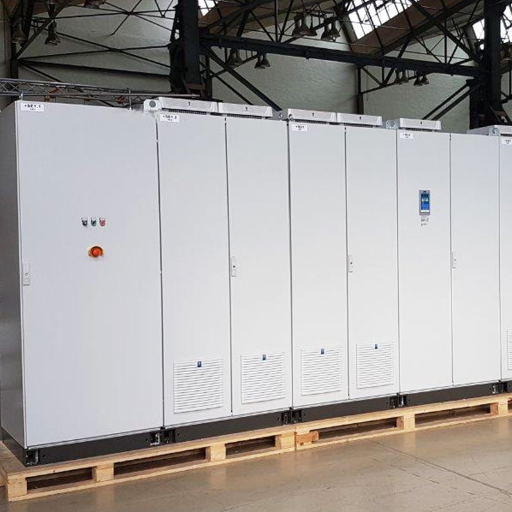
Extreme conditions affect the performance and the life duration of the equipment; someone has to take this into account.
Temperature Extremes
Effective thermal management is vital for the electronic system, since components are sensitive to temperature variations and can be impaired by high or low temperatures that may lead to system problems and failures.
Moisture and Humidity
Increased levels of moisture or humidity will result in the occurrence of condensation, corrosion, and short circuits in electronic systems. The relevant elements that are sealed and have high Ingress protection (IP) ratings are deployed in, e.g., telecom sites to avert the challenges.
Dust and Particulates
Environmental forces like dust and debris present in the surrounding during industrial or outdoor environments may block the heat sinking fins or damage the parts within the converter. Combining through the recent trends and the problems available in the dust and particulate exposures, filters and improved enclosures will be made for each converter separately.
Vibration and Shock
In industrial or mobile applications, there are two of the most common factors: vibrations and sudden impacts that end up causing adverse effects on the utilization of the converter. Such situations call for the need of rugged constructions and knocks to be fitted to prevent the damaging occurrence.
Engineering problems can be solved and more efficient and operationally secure frequency converters may work even in challenging environments.
Defining Extreme Environments
Operating temperatures well above standard values, as high as 50°C, or excessively low below -25°C, humidity over 95%, the increased contamination of chemical and marine atmospheres, all these require the modification of the standard frequency converter design. Also, an electromagnetic incompatible environment, impractical power supply design, mechanical stress with vibration and shock, especially in vibration tests and drop tests in the quality assurance are devoid of coping mechanism and for that matter, are also considered to be in the category of extreme environment.
Having to create and modify the frequency converters for applications in harsh environments requires the application of specific materials and technologies. These can be heat resistant components, advanced cooling systems, and insulated gate bipolar transistors (IGBTs) that are natural, reliably function even at high temperatures. For example, cryogenic conditions need to be maintained where temperature values are below 0°C, and cold resistant enclosures and materials that accommodate temperature changes and maintain their properties are required. Equipment used in an aggressive environment is packed protected with high-quality enclosures made from things like stainless steel or using special coating and with a sealed enclosure with a rating of IP66 or above standards to make sure the equipment is durable. EMI enclosures are improving shielding protection of electronic devices, this is usually done through the introduction of allowable standards procedures in respect of electromagnetic protection parameters and electromagnetic compatibility.
Characteristics of High Temperatures and Humidity
Frequency converters used in high temperatures and humidity levels need to be specifically tailored in their design given the specifics of the environments that they will be used in. For example, capacitors and semiconductors wear out faster at high temperatures due to increased power loss, thus leading to increased rate of failure. State-of-the-art heat dissipation systems that have highly developed heat sinks or even liquid cooling are necessary to overcome an excessive power loss regularity with stifling.
Very high moisture concentration in the surroundings, especially when operating in tropical or industrial settings, tends to promote condensation, the effects of which often invite the generation of tears, rust, and oxidation of any embedded electronics of which the assembly is comprised. This risk is usually negated by the application of protective layers or is reduced by utilising enclosures of the type which are suitable for mechanical protection. On top of these, the availability of advanced materials that are not affected by corrosion and high humidity levels is very important for combating the issue of thermal and humid loading leading to degradation of the structure. Most frequency converters have to go through extensive testing at various environmental conditions to ensure the operations are suitable over a long period of time.
Impact of Vibration and Dust on Equipment
Everything that generates or moves, and has moving parts in it, as is the case with such systems as custom frequency converters, faces either vibration or dust or both, mainly in adverse conditions and with heavy use. Deformation of mechanical parts results in the application of forces on components and the occurrence of a variety of defects, denaturation of structures, and results in potentially damaged systems, including cracked solder, disrupted circuits, and knocked off components. Therefore, some tests and requirements are established in order to prevent or alleviate these adverse conditions in the form of for example, soft-mounted and obstructed centres and vibration-proof substrates.
Dust, however, enters the equipment and sticks to some parts of delicate electronics as well as hinders heat dissipation. This causes concentrated heating up to temperatures which might result in internal corrosion or short circuits, more so in the high voltage/high current areas of the system. Alleviation strategies in enclosures are measured in the way their designs are rated against particulate ingress, i.e., IP ratings. The installation of fan protection and airflow managed systems is possible.
Experimental studies and experience revealed the fact that vibration and dust are one of the major threats that plant and machines have to face, as they deteriorate the equipment to a considerable degree when the issue is disregarded. To withstand the stringent environmental and operational parameters, particularly when special frequency converters are used, implementing sophisticated systems for health monitoring and diagnosis of defects overloading, as well as continued service need to be observed in practice carefully.
Custom Frequency Converter Design
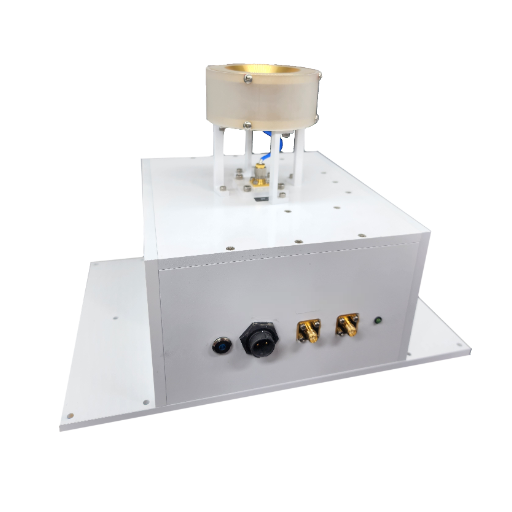
The creation of personalized power converters has to be centered on issues of compatibility, productivity, durability, whether at the level of an electronics product or a system. Relevant issues which need due attention include the following:
- 1
Load Requirements
Diagnose what kind of load will be used, its size and variability to make sure that the converter controls it adequately without breaking or performing below expectations.
- 2
Thermal Management
Cooling has to be especially strong to avoid overheating solutions, like even liquid cooling or some kind of chemically strengthened materials may be used for adequate temperature control especially where the service has to operate for prolonged periods.
- 3
Environmental Conditions
It is necessary to consider the conditions, where electronics will be working. Therefore, it is necessary to take into account such aspects as temperature range, working dampness, dust/vibration resistance and other relevant parameters while installing appropriate electrical cabinets and applying particular surface coatings for finishing products.
- 4
Control Algorithms
Establish application of reliable and flexible control system to suppress the output frequency with low harmonic distortion for maximal efficiency and economic operation of the equipment.
- 5
Component Selection
Use the appropriate high-grade components; ICs and capacitors will ensure high output coupled with a low rate of possible damage.
By satisfying these requirements it is possible to draw out specification for a custom soft starter meeting the peculiar working needs and operating states.
Key Components of a Frequency Converter
| Key Component | Description |
|---|---|
| Rectifier | Converts AC input to DC power |
| DC Link | Smooths and stores DC voltage |
| Inverter | Converts DC power back to AC at desired frequency and voltage |
| Control Circuit | Regulates voltage, frequency, and system stability |
| Filter Circuit | Reduces harmonics and noise in output signal |
| Cooling System | Maintains optimal operating temperature of components |
| Power Semiconductor | High-quality switching devices for efficient power control |
| Capacitors | Provide energy storage and reduce voltage ripple |
| Microcontroller/Processor | Handles signal processing and implements control algorithms |
| Enclosure | Protects internal components from external environmental factors |
Customizing Hardware for Rugged Conditions
To ensure reliable operation in harsh conditions, frequency converter hardware needs to be modified so it can withstand different environmental conditions such as severe cold and hot temperatures, humidity, dust, and vibration. When protecting the devices against mechanical stress proved to be insufficient, it became evident that reinforced enclosures should be utilized and optimized together with the reliable sealing technologies. It is the main function of such solutions to protect the internal assemblies from rain and dust to an extent, texturing such products to narratives of IP65 and up. Cooling technologies evolved to allow for very tight control of component temperatures during very low and very high temperatures by developing liquid cooling or high-performance heat sinks, etc.
Minimizing vibration is important for avoiding problems such as unscheduled maintenance, exacerbated frictional intensity and high equipment gravity reflections. To mitigate these problems the created environmental control regarding factors that deposit particulate matter, or permit contaminants to adhere to the equipment surfaces, must be controlled to prevent them from depositing onto the surfaces. Scaffolding and cleaning also help a lot. What is even worse is factors like propagating frequencies and amplitudes across transmission paths and resonating with vibrating surfaces which can result in uncontrolled miniature explosions.
Software Adjustments for Enhanced Performance
To improve frequency converter system software, it is possible to introduce such modern techniques of programming that provide high system performance and quick response. The use of adaptive algorithms such as model predictive control (MPC) helps the system to foresee one step ahead (foresee) changes in the load and make in real-time optimum changes in voltages and frequency. Implemented self-check monitor (diagnosis) into the software, in addition, makes it possible to track the health of the system all the time and locate possible problems or breakages, analyzing such parameters as harmonic distortion and thermal loading.
Integrating models from machine learning on automation systems can enhance management of the performance of parameters over time by referencing historical data that has been collected from operation. Also, linking up to industrial IoT data networks is made far easier by the connectivity solutions offered by the PROFINET and Modbus and other leading communication technologies where data more efficiently moves within and outside the system. These new programs leave still more room for cutting down on the use of energy, enhancing process regulation accuracy and even lengthening the operating period of frequency converters significantly.
NEMA Standards and Compliance
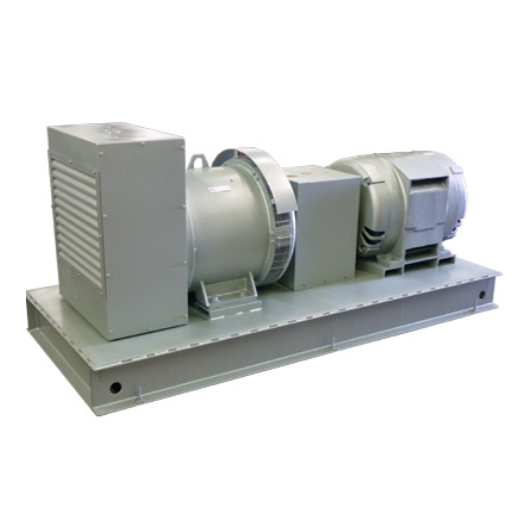
Frequency converters can be tailor-made to meet the typical National Electrical Manufacturers Association (NEMA) standards which is aimed at establishing safety, reliability, and consistency of performance. The consideration of the NEMA rating such as NEMA 1, 3R or 4X provides a guarantee on the protection of enclosure against dust, water and corrosive atmosphere among external influences to avoid them penetrating it. So compliance with NEMA confirms the apparatus meets the required level of performance for operation in a particular industrial or commercial segment. This and other specifications further help in the assembly of machines that can be matched to other similar conforming machines and hence make fitting them into industrial control systems.
Understanding NEMA Ratings
NEMA ratings are a systematic classification of the amount of protection a customized frequency converter’s shielding installations provide against unfavorable environmental factors. Such ratings are essential for high operational, safety, and lifespan levels of the equipment especially in situations characterized by demanding industrial or commercial parameters. In other words, breasts of protection or type of enclosure can be described as general indoor use wherein NEMA Type 1 is normal to have dust inside it except through food, so therefore it is affordable for indoor use only. NEMA Type 4X is for example exposure to water when used outside or foe wash down applications.
The selection and utilization of this [housing] eliminates the risk of running below the safety guidelines and running the internal units. In addition, it helps in minimizing factors like thermal overloading, atmospheric conditions and mechanical factors, which can cause harm. In newer material science technology, scales have been raised on corrosion protection aspects of these materials becoming very effective even exposed to more distasteful environmental settings. Determining that NEMA ratings of the area you intend to purpose your converters is the next important step of selecting customized frequency converters.
Selecting the Right NEMA Enclosure
When choosing a frequency converter for a construction project, there are several factors to take into account before deciding on the size and protection level of a NEMA-rated box. Primarily, is there an issue with dust, water, oil, corrosive factors among others which necessitate sealing or elimination of the materials in the design. If the conditions are severe, for example, some of the NEMA 4X enclosures will offer additional protection against corrosion and other factors in the environment.
In addition, please consider the necessity for the frequency converter to be properly managed thermally. The aspect of heat release is extremely important, since high temperatures spoil the quality of work or diminish the life span of the equipment. There will probably be a need for such properties – temperature control by forced convective modes, coolers or any other solution designed primarily to keep the equipment in proper working order. In addition, include evaluations of resistance to wear and mechanical stresses. For instance, enclosures applied in systems with the opportunity of destructive external effects of vibration, swinging of parts, falls, etc., or wearing may require designing in a shock – or vibration–proof type of construction or may be made of shock-resistant Lexan or polycarbonate containing stainless steel or another special plastic.
Right from the very start, it’s rather important for the NEMA enclosure to meet certain safety and electrical requirements with regards to the application. Specifically, something like the installation of certification or industry regulations such as UL and CSA, is required. It is necessary that the above is part of the reviewed parameters towards the design and customization stage. Otherwise, it will be difficult to ensure that the frequency converter for marine applications functions efficiently in very harsh working conditions.
Ensuring Compliance and Safety
There is yet another aspect regarding the confidentiality of proprietary frequency converters and how it could be achieved and maintained. It is very important to always be in touch with current developments in terms of international and regional norms. As an illustration, the developments in IEC 61800-5-1 or IEEE C62.41, which are responsible for the device safety and electromagnetic compatibility (EMC) of the frequency converters, will also be considered. By incorporating cutting-edge surge protection and optimum insulation coordination as per these standards, manufacturers can reduce potential risks like overvoltages or thermal pasting. It also goes without saying that proactive maintenance is achieved by employing real-time analyses, hence contributing positively to the safety as well as reduction of maintenance costs. In the industry where changes occur in every matter even at the last moment, a programmer definitely comprehends that no aspect in the product remains static and the same as the other innovations.
Modular Frequency Converter Solutions
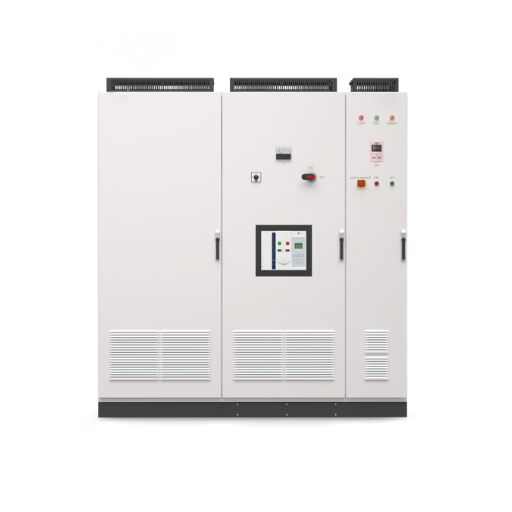
The use of modular custom-designed frequency converter showcases the support for the effective energy use for the organisation. The approach supports alterations to the configuration of a particular system by using solutions adapted to the surrounding configurations. The use of the modular approach in the design lessens the time taken to shut down such systems for the serviceability of a particular part of the system or the entire system. Because they have been engineered to mitigate the wastage of electricity, running costs are reduced and the reliability of the entire system is improved. This is very important as it would allow these technologies to be successfully used even in dynamic industrial and commercial applications challenges.
Advantages of Modular Design
Scalability
As there is an increase or decrease in operational requirements, modular frequency converters are easily scalable. This means that, expanding or reducing the system will be easy without the requirements of complete new system. For example, modular design concepts can accommodate extra frequencies ranging from 10 kW up to more than 1 MW using additional subsystems on demand.
Ease of Maintenance and Reduced Downtime
Modular design is applicable for easy and effective maintenance purposes. In case some components undergo a fault, it’s possible to separate the other components and work on the faulty ones or change them without the entire unit malfunctioning. It is even possible that many customers who use these kind of systems experience indefinitely reduced downtimes. A 40% less figure is often reported in such cases, which improves efficiency in the industry.
Energy Efficiency
Control of power consumption in modular nature is done with ease since one works with the modules of interest only. For instance, if only 50% of the energy capacity is sufficient then only the requisite number of modules will be needed hence saving energy. This then results in year-on-year energy savings up to 25% in feeding applications which are mostly demanded.
Reliability and Redundancy
Employing a modular approach offers in-built backup. In case of any module, failing the other modules would take over and run continuously for maximum reliable system uptime; this particularly important in the critical applications such as in hospitals and data centers where even the slightest amount of downtime is intolerable.
Flexibility in Configuration
Modular converters are also very flexible and can be equipped with several voltages or frequency ranges. They may move for example for 50Hz to 60Hz without the need for adjusting the whole system but change the settings in the converter, catering to countries with both 50Hz and 60Hz operations.
Cost-Effectiveness
The upfront cost required for modular designs can sometimes equal or even exceed that of traditional structures, but ultimately, it pays off as one is able to save a lot of money in maintenance as well as operating costs or even replacing the whole system.
Tradeoffs in Customization and Modularity
Simply put, special adaptions tend to be limited in terms of where and how the device can be used. Encapsulation is said to offer added benefits such as cost benefits and ease of operation for a specific application while bringing out the best performance of the specific device. However, such a steering to a certain end might result in additional money being spent during the very first stages and restricts the growth range for any given set of operating conditions. In addition, purpose-built systems are capable of being very expensive to repair and an issue arises in terms of the procurement of spares for their repair since they are used in very specific applications only.
On the contrary, the key characteristic of modular AC drives is flexibility: in most cases it is rather possible to replace or renew almost any component. This perspective has a positive side since it lessens maintenance costs and drawbacks as a result of less downtime (including those associated with easiness concerning the utilization of standard devices). However, this brings a problem which is the danger of diminishing the level of performance as it appears that every engineering spec cannot be achieved in the same high order in systems composed of submodules. Plug and play systems usually have parts in stock all the time therefore making it easier to manage stock and ensuring components of coterminous compatibility.
These are concepts which are cost effective and largely dependent on the intended purpose of use, available financial resources, and the period which existing equipment is expected to be of use.
Scalability in Power Systems of Custom Frequency Converter
The need for scalability in power systems with respect to application specific frequency converters is crucial in the context of today’s electric as well as industrial consumer demands. In order to cater for such variety in load requirements, such systems usually incorporate a modular approach. Using modular architecture, it is possible to increase or decrease power output by installing or removing power modules, this way preventing unwanted drawbacks and nurturing growth. For example, renewable energy systems with redundancy do not require these back-up sources of energy all the time when scalable frequency converters can be used to different output frequencies and voltages depending on the application and the type of machinery in use.
Moreover, when it comes to digital control technology, more sophisticated systems are also widely used, for purposes of setting and managing the scope of the capacity with great accuracy. In the operation of these systems, Real-Time Data Acquisition and Processing help in ensuring system response to dynamic conditions such as efficient power consumption. The preferential use of renewable sources of energy, which can be wind or solar, among others, demand power system structures that are scalable due to variable generation, hence the need for variable-based capacity inverters.
Real-World Applications and Case Studies of Frequency Converters
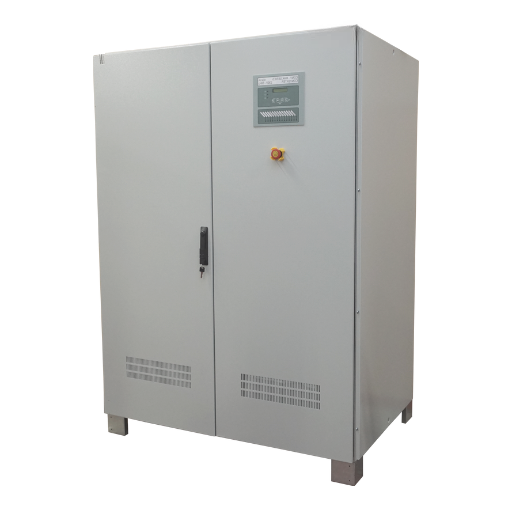
Frequency converters that are made to order are seen as a substantial element of various industries in which controlled consumption of electric power is a must. Take, for example, a few of these cases:
- —
Manufacturing Sector: Frequency converters help to manage one’s everyday needs in various aspects of the manufacturing process such as material handling, pumping and machining operations by controlling the motor speeds of the associated equipment, mainly— such as conveyor belts, pumps, and machine tools for these operations— for lower energy consumption, and effective running of the equipment.
- —
Renewable Energy Integration: In addition to generators and flywheels, they have also found applications in controlling power as it is developed by solar panel arrays and wind power turbines so that it is fit for the grid and does not cause damage to the grid itself.
- —
Aerospace and Defense: In the space environment, aircraft components or devices require power that is constant and does not suffer the problems faced on the ground. The so-called frequency converters come in here and provide this reliability of power irrespective of the aircraft’s position.
- —
Transportation: Power supplies for rail and marine are often custom-built to support either trains or boats of unique frequency, accordingly.
The use of tailor-made frequency converters in promoting energy conservation and raising the service efficiency in industries is supported by the above-mentioned applications.
Industry Examples of Customized Frequency Converters
Industry 01
Manufacturing & Automation
The biggest user of any factory is going to be the numerous customized frequency converters that makes the machinery core to be more precise. The frequency converters are made in such a way that the operation of devices which work on different frequencies can be synchronized with little overtime through project prevent energy losses to the devices and functions without having to shut down and operate the assembly lines again.
Industry 02
Renewable Energy Systems
The frequency converters customized for renewable energy options, particularly the wind energy and the solar power systems powers are very critical to their installations. Wind turbines frequently numb the electricity generation by certain frequencies according to the wind velocity. Sub-sea frequency converters rectify the problem facing the wind turbines by also changing them to a grid standard power output, power integration and stabilization is increased.
Industry 03
Data Centers
Providing uninterrupted services and technical support, customized frequency converters are critical for maintaining required power at data centers. Failure in fluctuation of frequencies could easily threaten the smooth running of the mission-critical servers. However, such convertors provide a steady flow of electrical current ensuring every second of the systems lifespan is well utilized and prevents unnecessary shutdowns which may be costly.
The examples provided in this section show the adaptability of custom frequency converters to various industries, where they become the main components in operation of advanced technological units balancing between efficiency, sustainability and reliability.
Future Trends in Frequency Conversion Technology
The future of frequency conversion is expected to offer development of technologies aimed at improving performance, efficiency and multimodal aspects. One striking characteristic is infusing artificial intelligence and machine learning functionalities embedded in the converter. They facilitate monitoring, load management and prediction of maintenance in an unscheduled manner. This spurred maximization of benefits and capital avoidance in the procurement of spares.
On the other hand, the growing demand for alternative energy has enhanced efforts to create innovative resources of power and the resulting high-speed variable frequency drivers with reference to ground utilization of wind and solar energies. The use of new materials like wide band gap semiconductors such as silicon carbide and gallium nitride also has the potential to reduce and counteract cycling costs and the relative complexities generally associated with power conversion.
Grid connectivity is also rapidly evolving and has become one of the major features of the modern world. The modern grid-friendly converters are constructed with the incorporation of these requirements and thus allowing consumers of energy and the power systems to interact almost as one. This enables the improvement in storage capacity and grid stability, both of which are very crucial given the persistent increase in the demand for energy. These are marks that speak to a new era where everything incorporates better technology and more flexible frequency converters that are convenient in achieving efficient and smart engineering and energy systems.
Frequently Asked Questions
Reference Sources
- [1]
Design of a DC–DC Converter Customized for Ultra-Low Voltage Operating IoT Platforms
- [2]
Review of High-Temperature Power Electronics Converters
