
The high voltage frequency converter working principle is as follows: First, it receives AC power from the mains grid at a fixed frequency, then converts it to DC power through a rectifier stage, and performs power smoothing using a DC bus. Next, the DC power is converted back to AC power at a variable frequency by a pulse-width modulation (PWM) controlled inverter, thereby achieving precise control of the motor speed and torque. This AC-DC-AC conversion process is the fundamental mechanism for the operation of all modern high-voltage frequency converters, enabling their application in everything from the smallest 3.3 kV drive systems to the largest industrial systems above 10 kV.
In March 2024 Liu Wei a senior electrical engineer at a cement plant in Shandong discovered that he needed to operationalize his knowledge about the 6.6 kV motor drive which had failed. The inverter fault light was blinking. Production was down.
The maintenance team could exchange hardware components through board replacements yet they failed to understand the reasons behind the DC bus voltage drop or the functioning of the IGBT switching method which operated the 3,500 kW kiln fan. The plant experienced 14 hours of downtime because of this equipment failure which resulted in a financial loss of $42,000 due to production halts.
This guide teaches you about high voltage frequency converter cabinets because it explains the power flow through these systems. The guide shows electrical energy transformation through different stages while explaining why high voltage systems need different parts compared to low voltage systems and showing how modern control systems safeguard both the converter and motor. The program enables you to read schematics which will lead you to find faults when diagnosing faults while explaining the working principle to a procurement team through engineering details that meet your requirement to explain to them.
The presentation will examine three topics which include the three-stage AC-DC-AC power flow system and the essential components for enabling high voltage conversion and the control systems which operate PWM switching and the industrial design elements which determine successful performance versus subpar results.
Key Takeaways
- A high voltage frequency converter uses a three-stage AC-DC-AC process: rectifier, DC link, and PWM inverter, to convert fixed grid power into precisely controlled variable-frequency output.
- High voltage designs above 3.3 kV rely on thyristor or active front-end rectifiers and multilevel inverter topologies instead of simple two-level switching used in low voltage drives.
- The constant V/Hz ratio principle ensures motors receive proportional voltage and frequency to maintain magnetic flux and prevent insulation damage.
- Modular multilevel converters and SiC semiconductors are replacing traditional IGBT designs, delivering efficiency above 99 percent at medium loads.
- Proper isolation, dv/dt filtering, and harmonic mitigation are non-negotiable in high voltage installations to protect both equipment and personnel.\
For a deeper technical breakdown of high voltage frequency converter standards, (see our complete guide to medium & high voltage drives.)
What Is a High Voltage Frequency Converter?
Definition and Voltage Classification
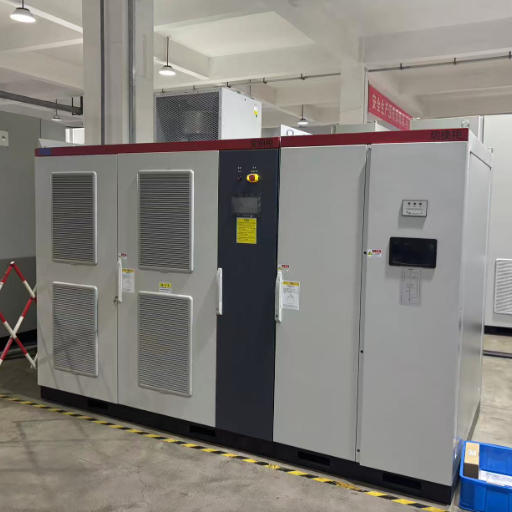
The high voltage frequency converter enables power electronics to control AC motors by changing their speed and torque through frequency and voltage adjustments of the electrical supply. These units operate at motor ratings which extend from 3.3 kV to 10 kV and above, while standard drives function within the 230 V to 480 V range. Power levels typically range from 200 kW to over 50 MW.
The industry uses voltage classifications defined by IEC 61800. The low voltage range extends to a maximum of 1,000 V AC. The medium voltage range begins at 1,000 V and extends to 36 kV AC. The term “high voltage” in drive terminology defines the upper medium voltage range which starts at 6 kV because it requires different component selection and topology design methods.
For a deeper technical breakdown of medium voltage VFD standards, (see our medium voltage VFD guide.)
How It Differs from Low Voltage Converters
The working principle is fundamentally the same for all voltage classes. Both use AC-DC-AC conversion.
The difference lies in component ratings, switching topology, and safety architecture. A 480 V drive might use a simple diode bridge and a two-level IGBT inverter. A 6.6 kV drive needs multi-pulse thyristor rectifiers and multilevel inverter topologies because no single semiconductor switch can safely block the full DC bus voltage at that level.
High voltage converters also require more sophisticated cooling systems, isolation transformers, and electromagnetic compatibility measures. The consequences of failure are more severe, so protection logic, pre-charge circuits, and arc containment receive far more engineering attention.
If you are comparing voltage classes for an upcoming project, our guide on low voltage vs medium voltage VFD breaks down the cost and performance trade-offs at each level.
Stage 1: The Rectifier — AC to DC Conversion
The rectifier is the entry point of the power conversion chain. It converts the fixed-frequency, fixed-voltage AC supply from the grid into DC power that the inverter stage can manipulate. In high voltage frequency converters, this stage is more complex than the simple diode bridges found in low voltage drives.
Thyristor and SCR Rectifiers
High voltage frequency converters need thyristor-based rectifiers which people call silicon-controlled rectifiers (SCRs). Thyristors handle higher voltage and current loads compared to standard diodes because they can switch electricity between different states through phase-controlled operation. The rectifier uses phase-angle control to maintain power factor while minimizing inrush current during startup operations.
Designers need to select between two options for medium voltage systems which operate above 3 kV because they want to decide between uncontrolled diode bridges and controlled thyristor bridges. Diode bridges provide an easier and more affordable solution but do not deliver any power factor correction benefits. Controlled thyristor rectifiers maintain the DC voltage level which increases the input power factor to above 0.95 and decreases reactive power expenses for industrial electricity usage.
Today’s active front-end (AFE) rectifiers replace thyristors with IGBT switches. AFE designs draw sinusoidal current from the grid with near-unity power factor and can even regenerate power back to the grid during motor deceleration. The trade-off involves spending money to create something which proves difficult to use. AFE rectifiers increase converter expenses by 20 to 30 percent while eliminating the requirement for braking resistors in systems which experience frequent stop and start operations.
6-Pulse vs 12-Pulse vs 18-Pulse Configurations
Pulse number determines how many times the rectifier conducts per AC cycle. Higher pulse counts reduce harmonic distortion on the input current, which matters because utilities increasingly penalize facilities with poor power quality.
A 6-pulse rectifier uses a standard three-phase bridge and is the simplest configuration. It is cost-effective but generates significant fifth and seventh harmonic currents. A 12-pulse rectifier uses two six-pulse bridges fed by a phase-shifting transformer, canceling most of the lower-order harmonics. An 18-pulse design adds a third bridge and reduces harmonics further, often meeting IEEE 519 requirements without external filters.
When Zhang Min, a power systems engineer at a steel rolling mill in Hebei, upgraded her facility’s 3.3 kV pump drives in 2023, the local grid operator threatened harmonic penalties based on power quality measurements. Her team replaced six-pulse rectifiers with 12-pulse designs. The fifth harmonic current dropped from 28 percent to under 6 percent. The upgrade paid for itself in 11 months through avoided utility penalties and reduced transformer heating.
Stage 2: The DC Link — Filtering and Energy Storage
After rectification, the DC power is neither smooth nor stable. It contains ripple at multiples of the input frequency. The DC link filters this ripple and stores energy so the inverter can draw clean, consistent power even during rapid load changes.
Capacitor Banks and DC Bus Stabilization
The DC link functions as a system that uses substantial capacitor banks to stabilize voltage variations and secure continuous DC bus operation. The high voltage frequency converters require their capacitors to operate under voltage conditions that range from hundreds to thousands of volts. Designers use series capacitor connections together with balancing resistors to achieve their necessary voltage requirements.
The DC bus voltage in a voltage-source inverter operates at 1.35 times the incoming AC line voltage which diode and thyristor rectifiers use. The DC bus system operates at 8.9 kV for an input voltage of 6.6 kV. The capacitor bank must be sized to handle ripple current, absorb energy from the motor during deceleration, and provide ride-through capability during brief voltage sags.
Pre-charge circuits are critical in this stage. The startup process requires direct capacitor connections to the rectifier output which causes an inrush current that exceeds thousands of amps and destroys components. A pre-charge resistor limits the initial current, and once the capacitors reach approximately 80 percent of nominal voltage, a contactor bypasses the resistor for normal operation.
Voltage Source vs Current Source Topologies
High voltage frequency converters use two fundamental DC link architectures. Voltage source inverters (VSIs) maintain a stiff DC voltage and feed the motor with variable voltage and frequency. This is the dominant topology in modern drives because it provides excellent dynamic response and works with standard AC induction motors.
Current source inverters (CSIs) use a large DC inductor to maintain constant current rather than constant voltage. CSI designs naturally limit fault current and can handle motor cable runs over one kilometer without output filters. They are common in very high power applications above 10 MW, particularly in the oil and gas and mining sectors.
The choice between VSI and CSI affects the entire converter design, from rectifier selection to motor compatibility. Most industrial buyers encounter voltage source designs unless their application specifically demands the rugged current-limiting behavior of a CSI topology.
Stage 3: The Inverter — DC to Variable AC
The inverter is where the real magic happens. It takes the stable DC from the link and reconstructs it as variable-frequency, variable-voltage AC that precisely controls motor speed. In a high voltage frequency converter, this stage demands the most sophisticated semiconductor technology.
IGBT Switching and PWM Fundamentals
Insulated-gate bipolar transistors (IGBTs) are the workhorses of modern inverter stages. An IGBT acts as a high-speed switch. By turning on and off thousands of times per second, it chops the DC voltage into pulses. Pulse Width Modulation (PWM) varies the width of these pulses to create an average voltage that approximates a sine wave.
The switching frequency in high voltage IGBTs typically ranges from 500 Hz to 2 kHz. This is lower than the 4 to 16 kHz common in low voltage drives because higher voltage IGBTs switch more slowly and generate more heat. The lower switching frequency means the output waveform contains more harmonic content, which is why output filters become essential in high voltage applications.
The precise timing of PWM control requires exact timing measurements. The controller calculates the required pulse pattern in real time based on the target frequency, voltage, and motor parameters. Modern drives use space vector modulation (SVM), an advanced PWM technique that achieves approximately 15 percent higher DC bus utilization than traditional sinusoidal PWM. The system produces additional output voltage from the existing DC bus, which results in better motor torque performance during high-speed operation.
Multilevel Inverter Topologies for High Voltage
A two-level inverter switches the output between zero and the full DC bus voltage. At 6.6 kV, that creates enormous voltage steps that stress motor insulation and generate electromagnetic interference. High voltage frequency converters solve this with multilevel topologies that create multiple voltage steps between zero and full DC bus voltage.
The three dominant multilevel designs are:
- Neutral-Point Clamped (NPC): Uses clamping diodes to create three output voltage levels. NPC inverters are compact and widely used from 2.3 kV to 6.6 kV. They produce lower harmonic distortion than two-level designs but face capacitor voltage balancing challenges at higher power levels.
- Cascaded H-Bridge (CHB): Connects multiple H-bridge cells in series, each with its own isolated DC source. Each cell switches at low voltage, and the series connection produces a high-voltage output with many small voltage steps. CHB designs achieve extremely clean sine wave output and offer built-in redundancy. If one cell fails, the drive can continue operating at reduced capacity.
- Modular Multilevel Converter (MMC): Uses hundreds of small submodules with floating capacitors. MMC topologies scale to the highest voltages and power levels, including utility-scale HVDC applications. In industrial motor drives, MMC designs are emerging for applications above 10 kV and 20 MW.
For a deeper technical comparison of multilevel designs, read our detailed guide to cascaded H-bridge multilevel topology
Series-Connected IGBTs and Output Filtering
When multilevel topologies are not practical, designers series-connect individual IGBTs to share the blocking voltage. Each IGBT in the string must turn on and off simultaneously within nanoseconds. Specialized gate drivers with active voltage balancing ensure no single device carries more than its share of the voltage.
Even with multilevel designs, the output waveform still contains high-frequency switching components. Output reactors and sine-wave filters absorb these harmonics before they reach the motor cable. Without proper filtering, the steep voltage rise (dv/dt) at each switching edge creates reflected waves in long motor cables that can double the voltage at the motor terminals, destroying winding insulation over time.
For applications requiring specialized frequency outputs beyond standard 50 Hz or 60 Hz, our 400 Hz frequency converter systems provide the same AC-DC-AC architecture optimized for aviation and testing environments.
Control Systems and the V/Hz Ratio
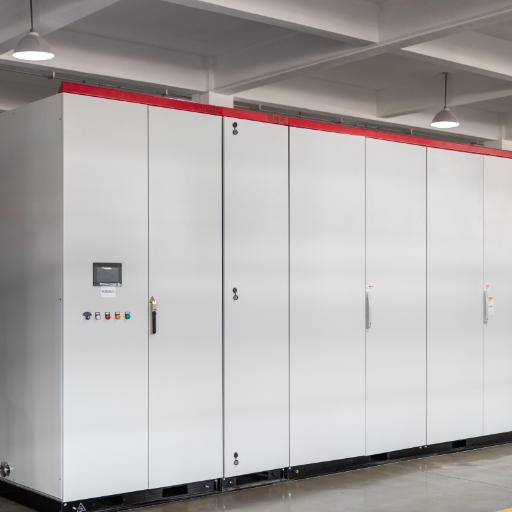
Power electronics without intelligence are just expensive switches. The control system is what turns a collection of semiconductors into a precision motor drive. In a high voltage frequency converter, the controller must manage switching timing, protect against faults, and optimize performance across the entire speed range.
Constant V/Hz Principle for Motor Protection
An AC motor’s magnetic flux depends on the ratio of voltage to frequency. If you reduce frequency without reducing voltage proportionally, the magnetic core saturates, current spikes, and the motor overheats. If you increase frequency without raising voltage, the flux weakens and torque drops.
The constant V/Hz principle maintains this ratio across the speed range. At 50 Hz and 400 V, the ratio is 8 V/Hz. At 25 Hz, the drive outputs 200 V. At 10 Hz, it outputs 80 V.
This simple relationship protects the motor from overload while enabling smooth speed control from near-zero to base speed.
Above base speed, the drive enters field-weakening mode. The voltage cannot exceed the supply limit, so frequency increases while voltage stays flat. The V/Hz ratio drops, flux weakens, and the motor trades torque for higher speed. This is how a standard 50 Hz motor can safely run at 75 Hz or 100 Hz when the application demands it.
Vector Control and Direct Torque Control
Basic V/Hz control works well for pumps and fans where precise torque response is not critical. For applications requiring fast acceleration, precise positioning, or high starting torque, advanced control methods take over.
Field-Oriented Control (FOC), also called vector control, mathematically separates motor current into flux-producing and torque-producing components. The controller adjusts these independently, delivering torque response times under 5 milliseconds. Vector control enables a standard induction motor to perform like a servo drive in demanding applications such as steel mills and crane hoists.
Direct Torque Control (DTC) eliminates the need for separate current regulators and PWM modulators. It directly controls motor flux and torque by selecting optimal inverter switching states based on real-time motor model predictions. DTC provides the fastest torque response of any induction motor control method, typically under 2 milliseconds, and is the preferred choice for high dynamic performance in high voltage applications.
High Voltage Specific Considerations
The explanation of the working principle requires explanation of the factors which distinguish high voltage frequency converters from their low voltage counterparts. The voltage level determines all aspects of safety requirements and cooling systems and electromagnetic design.
Isolation, Grounding, and Cooling Requirements
High voltage converters operate at potential levels which create electrical arcs that can travel through air space and produce dangerous contact currents. The control electronics of the system get protection through isolation transformers which keep them apart from the power circuit. The system achieves reliable performance throughout high voltage operation through the combination of reinforced insulation systems and partial discharge testing and creepage distance requirements.
The grounding methods used in high voltage systems differ from those applied in low voltage systems. The dedicated grounding grids used by high voltage drives need to maintain an impedance level which stays below 1 ohm. The entire system requires metallic enclosures to establish connection with the grounding grid. Arc flash studies establish safe working distances while switchgear systems must implement arc containment barriers that match the maximum fault current capacity.
The process of thermal management has emerged as a critical problem for engineering purposes. A 10 MW converter operating at 98 percent efficiency still dissipates 200 kW of heat. Liquid cooling systems that use deionized water or water-glycol mixtures become standard practice in systems which exceed 5 MW capacity.
Air-cooled systems need to implement extensive heatsink systems while using forced air ventilation that includes cleaned intake components. Sealed liquid-cooled cabinets represent the sole effective solution for mining and cement operations which encounter extremely high ambient dust conditions.
dv/dt Filters and Harmonic Mitigation
The rapid switching edges in PWM inverters create voltage rise rates (dv/dt) of 3,000 to 10,000 volts per microsecond. Standard motor insulation is rated for 500 V/μs or less. Without mitigation, these fast edges penetrate winding insulation and cause premature failure.
dv/dt filters slow the voltage rise at the converter output. They consist of inductors and capacitors tuned to absorb the high-frequency energy without affecting the fundamental output waveform. For cable runs over 100 meters, sine-wave filters or motor termination networks become mandatory.
Harmonic mitigation extends beyond the rectifier pulse count. Active harmonic filters, tuned passive filters, and broad-spectrum EMI filters prevent conducted and radiated interference from affecting nearby control systems and communication equipment. Compliance with IEC 61800-3 and IEEE 519 is standard practice for industrial installations.
Modern Innovations in HV Converter Design
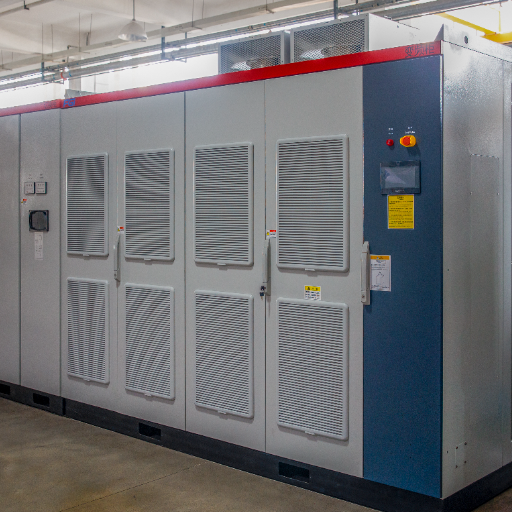
The working principle of high voltage frequency converters has remained fundamentally AC-DC-AC for decades, but the components executing that principle are evolving rapidly. New semiconductor materials and topological innovations are rewriting the efficiency and reliability benchmarks.
SiC Semiconductors and Modular Multilevel Converters
Silicon carbide (SiC) MOSFETs achieve switching speeds which exceed silicon IGBTs by five times their switching performance while consuming only half the energy needed for silicon-based devices. The 10 kV SiC module reaches a 5 kHz switching rate which outperforms silicon IGBT devices that only switch at 1 kHz. Higher switching frequency results in reduced filter size which produces better output waveforms and decreases motor damage.
The efficiency gain is significant. SiC high voltage frequency converters achieve 99.2 percent efficiency at 50 percent load while silicon IGBT designs reach 97 to 98 percent efficiency. The 1 to 2 percent improvement results in 160,000 to 320,000 kWh of energy savings for a 20 MW system which operates 8,000 hours each year.
The other main advancement in technology comes from electronic modular multilevel converters (MMC) systems. MMC designs use hundreds of small submodules to create sine wave output which eliminates the need for output filters and prevents series connection problems. The HVDC transmission system currently uses MMC topologies as its standard system while industrial motor drive applications above 10 kV now adopt these systems.
A Guangdong wastewater treatment facility will use SiC-based modular designs to replace four outdated 6.6 kV IGBT drives in 2024. The new converters completely removed sine-wave output filters and they reduced cabinet space requirements by 35 percent while they decreased cooling power usage by 40 percent. Plant manager Chen Hui observed that the most unexpected advantage involved sound because the high switching frequency produced sounds which humans could not hear thus stopping the particular noise which had disturbed workers for multiple years.
Power Electronic Transformers (PET) represent the next frontier. These devices replace traditional 50/60 Hz transformers with high-frequency isolation stages which create smaller and lighter devices. PET technology currently emerges for industrial motor drives while the technology undergoes testing within traction systems and renewable energy systems which need low transformer weights.
Conclusion
The high voltage frequency converter operates according to a basic and straightforward power transmission method. The rectifier stage transforms grid AC electricity into direct current DC which enters the system. The power system uses DC link to filter and stabilize electrical current.
The inverter stage uses exact semiconductor switching controls to convert the input into AC power with changing frequency and voltage. The advanced control system maintains correct voltage-to-frequency ratio while it safeguards the motor and delivers optimal performance for designated tasks.
The difference between a good converter and an excellent converter originates from its execution details. The execution starts with selecting between thyristor and active front-end rectification methods and choosing between two-level and multilevel inverter designs and assessing the DC link capacitors and evaluating the control system algorithms. High voltage applications above 3.3 kV amplify every design decision because the consequences of poor topology selection or inadequate filtering lead to equipment damage and production downtime.
For engineers and procurement teams evaluating high voltage frequency converters, the key is to match the topology and component selection to the actual application. A pump running at fixed speed 90 percent of the time has different requirements than a steel mill winder reversing every 30 seconds. Understand the working principle, ask the right questions about topology and protection, and choose a manufacturer with demonstrated experience at your voltage and power level.
If you need technical guidance on high voltage frequency converter selection, topology choice, or custom configuration for your industrial application, contact our engineering team. We design and manufacture AC-DC-AC power conversion systems from 3.3 kV to 11 kV, tailored to the specific demands of mining, cement, oil and gas, and power generation applications worldwide.
For a thorough technical breakdown of medium voltage drive power quality challenges, encompassing harmonic mitigation techniques and relevant industry standards, see our comprehensive power quality guide.
Frequently Asked Questions
How does a high voltage frequency converter work step by step?
A high voltage frequency converter works in three stages. First, the rectifier converts incoming AC grid power to DC using thyristor bridges or active front-end switches. Second, the DC link filters and stores this energy in capacitor banks. Third, the inverter switches the DC power back to AC at a controlled frequency and voltage using IGBTs or SiC MOSFETs with PWM modulation.
What is the difference between a high voltage and low voltage frequency converter?
The working principle is identical, but high voltage converters use different components and topologies. Low voltage drives typically use simple diode bridges and two-level IGBT inverters at 230 to 480 V. High voltage converters above 3.3 kV require multi-pulse thyristor rectifiers, multilevel inverter topologies, and advanced output filtering to handle the increased voltage stress and harmonic challenges.
Why do high voltage frequency converters need multilevel inverters?
No single semiconductor switch can safely block the full DC bus voltage in a 6.6 kV or 10 kV system. Multilevel inverters divide the voltage across multiple switching stages, creating smaller voltage steps. This reduces electrical stress on individual components, lowers harmonic distortion, and produces a cleaner output waveform that is safer for motor insulation.
What is the V/Hz ratio and why does it matter?
The V/Hz ratio is the relationship between output voltage and output frequency in a frequency converter. Maintaining a constant V/Hz ratio preserves constant magnetic flux in the motor. If frequency drops without proportional voltage reduction, the motor core saturates and overheats.
If frequency rises without voltage increase, torque capability drops. The controller automatically maintains this ratio to protect the motor across the entire speed range.
Are SiC semiconductors better than IGBTs for high voltage converters?
Silicon carbide (SiC) MOSFETs offer higher switching speeds, lower switching losses, and higher temperature tolerance than silicon IGBTs. For new installations, SiC-based converters can deliver 1 to 2 percent higher efficiency and eliminate some filtering components. However, SiC devices currently cost more than IGBTs, so the choice depends on total lifecycle cost, efficiency targets, and operating hours.
