
An explosion-proof frequency converter is a variable frequency drive enclosed in a certified flameproof or intrinsically safe housing that prevents ignition of surrounding explosive atmospheres. These drives allow motor speed control in oil refineries, chemical plants, mines, and grain handling facilities where standard VFDs would create catastrophic safety risks.
In February 2024, a project engineer in Atyrau, Kazakhstan, specified twelve standard medium voltage drives for a new oil processing module. The equipment arrived on schedule. Then the site’s safety inspector asked one question: “Where is the IECEx certificate for Zone 1, Gas Group IIB plus H2?” The drives had generic ATEX certificates. They did not cover the specific gas group required by the operator’s safety case. Three weeks of re-certification delays cost the EPC contractor $180,000 in standby labor. The “savings” from buying uncertified drives evaporated overnight.
You already know that hazardous areas demand special equipment. What most buyers miss is that certifications are not interchangeable. ATEX does not automatically satisfy IECEx. Ex d does not solve every application. And the drive, motor cable, and motor terminal box must be treated as a single system, not isolated purchases.
This guide explains exactly which protection concept, zone rating, and certification your application requires. You will learn how to read an Ex certificate, match it to your environment, and avoid the compliance mistakes that derail projects.
Key Takeaways
- Ex d (flameproof) is the default protection concept for most MV VFDs in Zone 1 because it contains internal explosions within a robust metal enclosure
- Ex i (intrinsic safety) applies mainly to low-power control circuits inside hazardous area drive systems, not to the main power section
- ATEX applies in Europe, IECEx is globally accepted, UL/cUL covers North America, and CCC Ex is mandatory for Chinese mining operations
- Oil & gas, mining, chemical, and grain handling each favor different certification stacks and enclosure requirements
- IEC 60079-11 Ed. 7 (late 2025) and IEC 60079-1 Ed. 8 (projected 2026) will update intrinsic safety and flameproof enclosure rules
- The drive, motor cable, and motor must be verified as a single hazardous area system to prevent arc ignition at any connection point
What Is an Explosion-Proof Frequency Converter and Why Does It Matter?
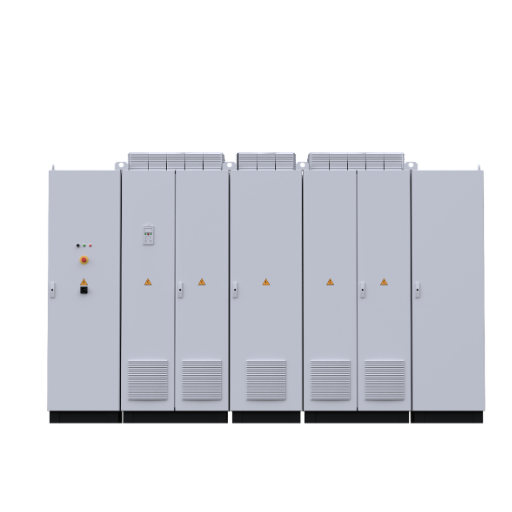
Defining Hazardous Area Drive Equipment
An explosion-proof frequency converter performs the same function as a standard VFD. It rectifies AC input, filters the DC bus, and inverts to variable frequency output for motor control. The difference is the enclosure and internal design.
In an Ex d (flameproof) design, the drive sits inside a cast metal enclosure strong enough to contain an internal explosion. If a spark or arc ignites gas that has entered the housing, the flame path cools the combustion gases before they reach the external atmosphere. The enclosure does not prevent ignition inside. It prevents ignition outside.
In an Ex i (intrinsic safety) design, the electrical energy in the circuit is limited to levels incapable of igniting the surrounding gas mixture. This approach works well for 4-20 mA control signals and low-power sensors. It rarely applies to the main power section of a medium voltage drive because the energy levels required for motor control far exceed safe ignition limits.
Most explosion-proof frequency converters on the market today use Ex d enclosures for the power section and Ex i barriers for control and communication circuits. This hybrid approach provides both power capability and safety compliance.
The Cost of Non-Compliance
Specifying the wrong drive creates three categories of risk. First, regulatory risk. Safety inspectors can halt commissioning until proper certificates are presented. In the European Union, market surveillance authorities conducted over 340 enforcement actions under ATEX Directive 2014/34/EU in 2023. Non-certified imports were the leading violation.
Second, financial risk. Project delays, standby labor, and re-certification costs routinely exceed the original equipment price. The Kazakhstan example is not unusual. It is typical.
Third, liability risk. If an uncertified drive contributes to an incident, insurance coverage may be void and criminal liability can follow under local safety laws. The certificate is not paperwork. It is legal protection.
Want to see how certified drives perform in real installations? Explore our complete guide to high voltage frequency converters for application examples and technical fundamentals.
Ex d vs Ex i vs Ex e: Protection Concepts for VFDs
Ex d, Flameproof Enclosure (The Standard for MV Drives)
Ex d is the workhorse of hazardous area motor control. The enclosure is designed to withstand the pressure of an internal explosion and to cool escaping gases through precisely machined flame paths. Joint widths and gaps are calculated for specific gas groups. A housing rated for IIA methane may not be safe for IIC hydrogen.
For medium voltage drives, Ex d is essentially the only practical power section protection. The magnetic components, capacitors, and switching semiconductors generate heat and electrical stress that cannot be contained by energy limitation alone. A robust metal enclosure is required.
Key design considerations for Ex d VFDs include:
- Reference pressure testing, the enclosure must withstand 1.5 times the maximum explosion pressure recorded during type testing
- Flame path length, longer paths cool gases more effectively but increase enclosure size and weight
- Cable entry glands, every conduit or cable must use certified Ex d glands that maintain the flame path integrity
- Thermal management, sealed enclosures cannot ventilate freely, so heat sinks, heat pipes, or liquid cooling are often necessary
Ex d drives are heavy. A 1,000 kW unit can exceed 4,000 kg. Cranes and reinforced foundations must be planned into the installation. The weight is not a design flaw. It is the physical requirement of containing an explosion.
Ex i, Intrinsic Safety (When and Where It Applies to Drives)
Ex i limits the energy available in a circuit to levels below the minimum ignition energy of the surrounding gas mixture. This is achieved through safety barriers, zener diodes, and galvanic isolators that restrict voltage and current.
For variable frequency drives, Ex i applies primarily to:
- Remote control and monitoring signals (4-20 mA, 0-10 V)
- Communication networks (Modbus, Profibus, Ethernet with Ex i barriers)
- Temperature and vibration sensors on the motor
- Emergency stop circuits
Ex i does not apply to the main power circuit of any drive above a few kilowatts. The energy required to spin a 500 kW motor is orders of magnitude above safe ignition limits. Attempting to design an Ex i power VFD would result in a device incapable of performing its core function.
However, ignoring Ex i in the control architecture is a common mistake. A perfectly certified Ex d power section can be compromised by an uncertified 24 V control cable that introduces sparking energy into the hazardous area. The system is only as safe as its weakest signal path.
Ex e, Increased Safety (Auxiliary Role)
Ex e applies to equipment where additional measures are taken to prevent arcs, sparks, and excessive temperatures under normal operation. Terminals, terminal boxes, and lighting fixtures often use Ex e.
For VFDs, Ex e plays a supporting role. Terminal compartments for power cabling may use Ex e construction if they contain no switching components and are protected against short circuits. However, the drive’s main power section almost always requires Ex d because normal operation inherently produces switching arcs inside the semiconductor stack.
Quick Comparison Table
| Protection Concept | How It Works | VFD Suitability | Typical Application |
|---|---|---|---|
| Ex d (Flameproof) | Contains explosion inside strong enclosure | Main power section | Zone 1 MV drives, mining |
| Ex i (Intrinsic Safety) | Limits circuit energy below ignition level | Control signals only | Sensors, communication, E-stop |
| Ex e (Increased Safety) | Enhanced construction prevents arcs | Terminals and auxiliaries | Terminal boxes, lighting |
Zone Classification: Matching Your Environment to the Right Drive
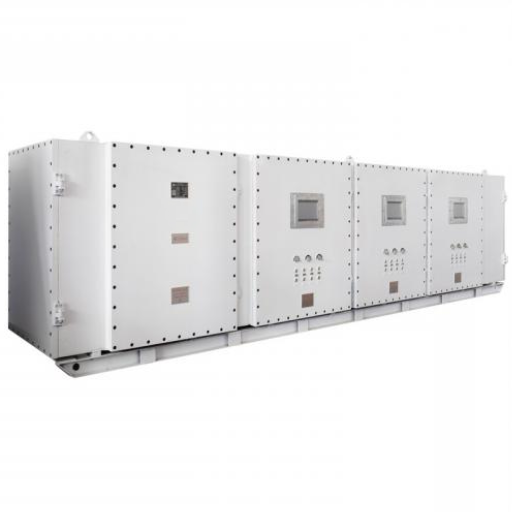
Zone 0, 1, 2 (Gas) and Zone 20, 21, 22 (Dust)
Hazardous areas are classified by the likelihood that an explosive atmosphere is present. The IEC system uses Zones. The North American system uses Divisions. Both answer the same question: how often is the hazard present?
Gas Atmospheres (IEC):
- Zone 0, explosive atmosphere present continuously or for long periods. VFDs are almost never installed in Zone 0 because any internal fault would have no safe margin. Sensors and intrinsically safe circuits only.
- Zone 1, explosive atmosphere likely during normal operation. This is where most explosion-proof frequency converters operate. Oil refineries, chemical reactors, and gas processing plants specify Zone 1 drives as standard.
- Zone 2, explosive atmosphere unlikely during normal operation, and if it occurs, it persists only briefly. Zone 2 drives use less stringent protection, often Ex n (non-sparking) or Ex e. Lower cost, lighter weight, but reduced safety margin.
Dust Atmospheres (IEC):
- Zone 20, combustible dust cloud present continuously
- Zone 21, dust cloud likely during normal operation
- Zone 22, dust cloud unlikely during normal operation
Grain elevators, flour mills, and aluminum powder processing plants specify Zone 21 or 22 drives. Dust protection uses tP (protection by enclosure) rather than flameproof paths. The enclosure prevents dust ingress and limits surface temperature below the dust ignition threshold.
NEC Division System (Class I, Division 1/2) vs IEC Zone System
The United States and Canada primarily use the National Electrical Code (NEC) Division system:
- Class I, Division 1, equivalent to Zone 0/1 combined. Explosive gases are present under normal operating conditions.
- Class I, Division 2, equivalent to Zone 2. Explosive gases present only under abnormal conditions.
UL 1203 and cUL standards certify equipment for the Division system. Many global projects now require dual certification: ATEX/IECEx for international markets and UL/cUL for North American integration.
When specifying drives for multinational corporations, verify which standard the safety department recognizes. Some European operators reject Division-certified equipment. Some US insurers refuse to cover Zone-certified installations if the local code mandates Division labeling.
Gas Groups (IIA, IIB, IIC) and Temperature Classes (T1-T6)
Gas groups classify the explosive properties of the gas mixture:
- IIA, methane, propane (least explosive, largest molecules)
- IIB, ethylene, hydrogen sulfide
- IIC, hydrogen, acetylene (most explosive, smallest molecules, highest flame temperature)
An IIC-rated enclosure is automatically suitable for IIA and IIB. The reverse is never true. If your facility processes hydrogen, an IIB certificate is worthless.
Temperature classes define the maximum surface temperature the equipment can reach:
- T1, 450 degC
- T2, 300 degC
- T3, 200 degC
- T4, 135 degC
- T5, 100 degC
- T6, 85 degC
T4 is the default for most VFDs because semiconductor heat sinks and magnetic components naturally limit surface temperatures below 135 degC under rated load. T5 and T6 are required for hydrogen-rich environments or processes with low auto-ignition temperatures. Achieving T6 in a sealed Ex d enclosure demands liquid cooling or external heat exchangers.
ATEX, IECEx, UL, and CCC Ex: Certification Guide
ATEX Directive 2014/34/EU (European Market)
ATEX is mandatory for equipment sold or used in the European Union. It is not a test standard. It is a legal directive that requires manufacturers to follow harmonized EN standards (which are identical to IEC 60079 standards with European forewords).
ATEX certification involves:
- EU Type Examination by a Notified Body (e.g., DEKRA, TUV, SGS)
- Quality Assurance Notification for production surveillance
- CE marking with the Ex symbol and category numbers (1G, 2G, 3G for gas; 1D, 2D, 3D for dust)
The certificate must match the exact equipment configuration. Changing a contactor brand, cable gland supplier, or software version can invalidate the certificate. Buyers should request the certificate of conformity and verify the model number, protection concept, zone suitability, gas group, and temperature class before accepting delivery.
IECEx 02 Certification (Global Acceptance)
IECEx is the International Electrotechnical Commission System for Certification to Standards Relating to Equipment for Use in Explosive Atmospheres. It is accepted in over 40 countries including Australia, Singapore, South Korea, India, and Russia.
IECEx uses the same technical standards as ATEX but operates under a single global scheme. One IECEx certificate reduces the need for multiple national certifications. The IECEx certified equipment database allows buyers to verify certificates online by entering the certificate number.
For projects in Central Asia, Southeast Asia, and the Middle East, IECEx is often the only accepted certification. European ATEX certificates alone may be rejected during customs clearance or commissioning inspection.
UL 1203 / cUL (North America)
UL 1203 covers safe explosion and ignition-proof equipment. An analogy exists with those requirements of NEC Class I, Division 1 and 2. The cUL is Canada’s equivalent.
North American certification differs greatly from IECEx in methodology because it covers detailed testing. Explosion tests may be carried out by the UL with prescribed gas mixtures and pressures. The marking system employs Class, Division, and Group (A, B, C, D) instead of Zone Systems and IIA/IIB/IIC.
For projects involving U. S. or Canadian shareholders, it is standard practice to obtain dual ATEX with alternating UL certification. Manufacturers of certain products offer “global certification” which bundles together ATEX, IECEx, and UL certification on the same assembly. These unified drives simplify procurement while incurring high costs, 15-25% more than one-time certifications.
CCC Ex and GB 3836 (Chinese Market and Mining)
China Compulsory Certification (CCC) for explosion-proof equipment is mandatory for any product sold or used in China. GB 3836 is the Chinese national standard series, technically aligned with IEC 60079 but with additional domestic requirements.
Mining applications require MA (Mining Safety) certification issued by the National Mine Safety Administration. MA-certified drives must pass additional vibration, humidity, and dust tests beyond standard Ex d requirements. Chinese underground coal mines are among the most regulated hazardous environments in the world. Approximately 70% of global coal output comes from China, and every underground operation uses GB 3836 or MA-certified variable speed drives for ventilation, hoists, and pumps.
For international buyers sourcing from Chinese manufacturers, verify that the supplier holds both IECEx and CCC Ex certificates. A factory with only domestic certification may lack the documentation required for global projects.
Need to verify what certifications your project actually requires? Read our manufacturer evaluation guide to learn how to audit supplier documentation and factory capabilities before placing an order.
Application-Specific Selection Framework
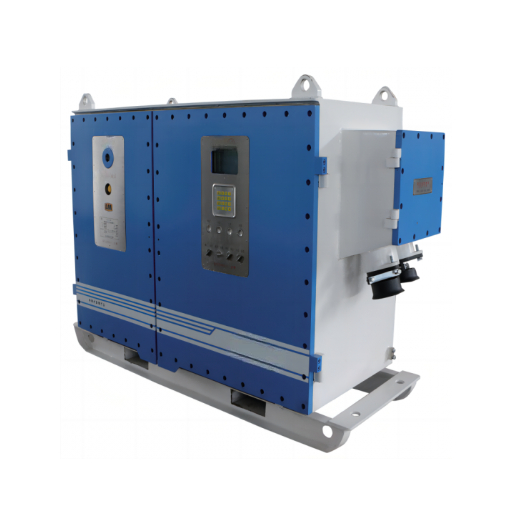
Oil & Gas: Offshore Platforms and Refineries
Oil and gas facilities present the most demanding hazardous area profiles. Hydrocarbon gases, hydrogen sulfide, and salt air create combined chemical and corrosion challenges. Offshore platforms add space constraints and crane weight limits.
Key selection criteria for oil & gas VFDs:
- Gas Group IIB plus H2 or IIC for hydrogen-rich processes
- Zone 1 certification as minimum; some process areas require Zone 0 sensors with Zone 1 drives
- IP66 or IP67 enclosure rating for salt spray and wash-down
- Stainless steel or aluminum alloy enclosure to resist corrosion
- Marine-grade cable glands with dual seals
Offshore projects typically specify IECEx because the installation may involve multiple flag-state jurisdictions. A platform registered in Panama, built in Korea, and operating in the North Sea needs certification that crosses regulatory boundaries. IECEx provides that flexibility.
In 2023, a drilling contractor in the North Sea replaced aging fixed-speed mud pumps with Zone 1, IIC-rated VFDs. The drives reduced energy consumption by 32% and eliminated the mechanical shock loads that had caused three gearbox failures in the previous two years. The payback period was 14 months, but the safety improvement was immediate. Soft-start ramping eliminated the pressure surges that had previously triggered blowout preventer false alarms.
For a comprehensive breakdown of high-voltage frequency converter applications in oil and gas operations, including selection criteria and return on investment analysis, see our dedicated industry guide.
Mining: Underground and Surface Operations
Mining VFDs operate in dust-laden, high-humidity, and vibration-intensive environments. Underground coal mines have the additional hazard of methane accumulation. Chinese regulations mandate that all electrical equipment in return airways and working faces must be either intrinsically safe or flameproof.
Key selection criteria for mining VFDs:
- Ex d flameproof enclosure with impact resistance (mining equipment is struck by rock and machinery)
- GB 3836 or MA certification for Chinese mines; IECEx or ATEX for international operations
- Vibration resistance to IEC 60068-2-6 standards
- High ingress protection against coal dust and water
- Modular design for cell replacement without removing the entire drive from the tunnel
A Shanxi Province coal mine learned the cost of incorrect specification the hard way. In 2022, the facility installed standard IP54 VFDs for main ventilation fans. Energy savings reached 35% within three months. Then a safety inspection revealed that the drives lacked Ex d flameproof housings required by MA certification. The mine was ordered to halt the affected shafts until replacement equipment arrived. The correction doubled the equipment cost and erased six months of energy savings.
The lesson is simple. In mining, Ex certification is not a premium option. It is a legal prerequisite.
Chemical and Pharmaceutical Plants
Chemical facilities handle a wide range of explosive vapors including ethanol, acetone, hydrogen, and proprietary process chemicals. The gas mixture can change between production campaigns. This variability demands flexible certification.
Key selection criteria for chemical VFDs:
- IIC rating to cover the broadest gas spectrum, even if current processes only use IIB
- T4 or T5 temperature class depending on process auto-ignition temperatures
- Stainless steel enclosure for aggressive chemical environments
- ATEX certification for European plants; UL for North American sites
Pharmaceutical cleanrooms add a paradox. The area may be classified Zone 2 due to solvent vapors from coating or granulation processes, but the cleanroom itself requires smooth, washable surfaces. Standard cast aluminum Ex d enclosures with rough cooling fins trap dust and resist cleaning. Specialized pharmaceutical drives use smooth stainless steel housings with internal liquid cooling to eliminate external fins.
Grain Handling and Dust Hazard Industries
Grain elevators, flour mills, and sugar processing plants face combustible dust rather than gas. Dust explosions are often more destructive than gas explosions because dust creates sustained pressure waves and secondary explosions as settled dust is disturbed.
Key selection criteria for dust hazard VFDs:
- Zone 21 or 22 certification with tD or ta protection (protection by enclosure for dust)
- IP6X rating to prevent dust ingress
- Surface temperature limits below the dust cloud ignition temperature (typically T4 or lower)
- Sealed cable entries with dust-tight glands
Grain handling facilities frequently neglect dust certification because the hazard is less visible than gas. A 2022 incident at a Midwest US grain elevator illustrated the risk. A standard VFD installed in a grain storage area experienced a terminal fault. The arc ignited suspended wheat dust. The explosion propagated through conveyors and silos, causing $12 million in damage. The subsequent investigation found that the drive was not rated for dust atmospheres and the installation violated NEC Article 502.
For a deeper technical breakdown of high voltage VFD application standards, see ourhigh voltage VFD applications guide.
IEC 60079-11 Ed. 7 and Ed. 8: What the 2025-2026 Updates Mean for Buyers
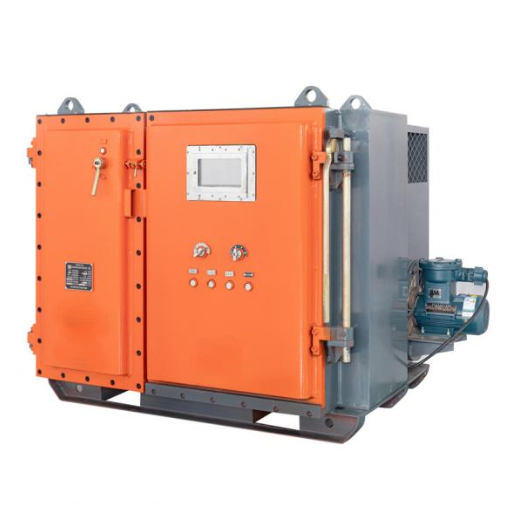
IEC 60079-11 Ed. 7: Intrinsic Safety Harmonization
IEC 60079-11 governs intrinsic safety “i” protection. Edition 7, expected for harmonization by the end of 2025, resolves long-standing differences between the entity concept and the FISCO (Fieldbus Intrinsically Safe Concept) model.
For VFD buyers, this matters in two ways. First, if your project uses fieldbus communication to hazardous area drives, the new edition simplifies cable and barrier specifications. Second, safety barrier manufacturers are updating product lines to Ed. 7 compliance. Buyers should verify that any Ex i barriers purchased in 2025 and beyond are certified to the new edition, not Ed. 6.
IEC 60079-1 Ed. 8: Flameproof Enclosure Changes
IEC 60079-1 governs flameproof enclosures “d”. Edition 8, projected for 2026, introduces updated reference pressure testing protocols and revised criteria for non-transmission of internal ignition to the external atmosphere.
The practical impact is that Ex d enclosures tested under Ed. 8 may have different dimensions, joint designs, and pressure ratings than Ed. 7 versions. Buyers specifying long-lead equipment should ask manufacturers whether their designs are being updated for Ed. 8 compliance. A drive certified only to Ed. 7 will remain valid, but new installations may prefer forward-compatible designs.
IEC 60079-14:2025 Installation Requirements
The 2025 edition of IEC 60079-14 updates installation and maintenance requirements for explosive atmosphere electrical systems. Key changes include clarified cable routing rules, updated grounding requirements for modern VFD topologies, and revised inspection intervals.
For project engineers, the 2025 edition means that installation contractors must follow updated practices. Ensure your electrical contractor references IEC 60079-14:2025, not the 2013 edition, when preparing installation method statements.
System-Level Thinking: Drive, Cable, and Motor as One Unit
Why Output Power Quality Matters in Hazardous Areas
Most discussions about explosion-proof frequency converters focus on the input side and enclosure integrity. The output side deserves equal attention. PWM inverters switch rapidly to create variable frequency output. This switching generates high-frequency voltage transients, harmonic distortion, and common-mode currents.
In a hazardous area, these electrical phenomena create secondary risks. High dv/dt pulses can stress motor insulation and produce partial discharges that generate ozone and electromagnetic interference. Common-mode currents flowing through bearings can create electrical discharge machining pits that eventually cause bearing failure. A seized motor bearing in a sealed Ex d motor housing generates heat. Heat raises surface temperature. Exceed the T-class limit, and the installation is no longer compliant.
Maintaining MV drive power quality inside a hazardous area system is not optional. It is part of the safety equation. Output filters, dv/dt limiters, and sinusoidal output stages reduce electrical stress on the motor and extend the maintenance interval in environments where repairs are difficult and dangerous.
Motor Insulation and Bearing Protection in Ex Environments
Ex d motors installed in hazardous areas use reinforced insulation systems rated for inverter-fed operation. Standard NEMA MG1 Part 31 or IEC 60034-18-41 inverter-duty insulation is the minimum. For long cable runs between the drive and motor, which are common in large refineries and mining complexes, the motor should be specified with voltage surge withstand capability of at least 1,600 V peak.
Bearing protection is equally critical. Common-mode currents find the lowest impedance path to ground. Without insulation or shaft grounding devices, the current arcs through bearing grease films, pitting the raceways. In Ex motors, bearing replacement requires removing the motor from the hazardous area, a process that can shut down production for days. Ceramic bearings or shaft grounding rings add modest cost but eliminate this failure mode.
Cable Routing and Grounding in Flameproof Conduits
Ex d enclosures require certified cable entry devices. Standard industrial cable glands do not maintain flame path integrity. Every entry must use an Ex d or Ex e certified gland matched to the cable diameter and armor type.
Cable routing must also respect zone boundaries. Cables entering a Zone 1 area from a safe area must pass through sealing fittings or barriers that prevent gas migration along the cable. This is a common inspection failure point. The drive is certified. The motor is certified. But the cable tray lacks the required sealing barrier, so the entire installation fails.
Grounding in hazardous areas follows stricter rules than general industry. The equipotential bonding system must maintain continuity under fault conditions. VFDs generate high-frequency ground currents that can create potential differences between enclosures. A single-point ground topology may be insufficient. Star grounding or mesh grounding configurations are often required for large drive installations.
Before analyzing hazardous area power systems, confirm you understand medium voltage VFD fundamentals so you can interpret how drive topology affects cable and motor selection in explosive atmospheres.
Frequently Asked Questions
Can a standard VFD be retrofitted for hazardous area use?
No. Ex d certification applies to the complete assembly including enclosure, internal layout, component spacing, thermal design, and cable entries. Retrofitting a standard drive into a third-party enclosure voids the original certification and will not receive a new Ex certificate. Always purchase purpose-built explosion-proof frequency converters from manufacturers with valid ATEX, IECEx, or UL certifications.
What is the typical cost premium for an explosion-proof drive?
Ex d drives typically cost 40-100% more than standard drives of equivalent power rating. The premium depends on power level, gas group, and certification stack. A Zone 2, IIB drive may carry a 40% premium. A Zone 1, IIC, dual ATEX plus IECEx plus UL drive may cost double. The investment pays back through insurance compliance, avoided shutdowns, and operational flexibility in regulated environments.
How does heat dissipation work in a sealed Ex d enclosure?
Heat dissipation is one of the biggest engineering challenges in Ex d VFD design. Options include external heat sinks with flameproof interfaces, liquid cooling loops with heat exchangers in safe areas, and air-to-air heat exchangers that maintain enclosure sealing. The thermal design must be verified at maximum ambient temperature and worst-case load. Derating is common in hot climates. A drive rated 500 kW at 40 degC may only deliver 400 kW at 55 degC.
Can Ex i be used for medium voltage drives?
Ex i cannot be used for the main power circuit of medium voltage drives because the energy levels required for motor control exceed safe ignition limits by orders of magnitude. Ex i is appropriate for control signals, sensors, and communication circuits associated with the drive system. The power section must use Ex d or Ex p (pressurized enclosure).
What documentation must accompany an Ex-certified VFD shipment?
Every shipment should include the certificate of conformity, instruction manual with hazardous area installation requirements, declaration of conformity, and a datasheet showing the exact marking code (e.g., Ex db IIC T4 Gb). The marking code is the shorthand that tells installers and inspectors exactly where the drive can be used. If the certificate and marking do not match, reject the shipment.
Conclusion
Specifying an explosion-proof frequency converter is not simply a matter of adding a robust enclosure. It requires matching the protection concept to the hazard, the certification to the jurisdiction, and the system design to the application.
Ex d flameproof remains the standard for medium voltage drive power sections. Ex i serves control and monitoring circuits. ATEX opens European markets. IECEx opens global markets. UL opens North American markets. And the drive, cable, and motor must be verified as a unified system, not checked in isolation.
The global hazardous area equipment market continues to grow as industries automate processes that were previously too dangerous for electronic control. Variable frequency drives are at the center of this trend because they improve safety through precise speed control while reducing energy consumption. The engineers who master hazardous area specification will deliver projects that pass inspection the first time, operate reliably for decades, and avoid the costly surprises that derail budgets and schedules.
Focus your evaluation on five practical steps. Define your zone and gas group. Select the appropriate protection concept. Verify the certification matches your market. Confirm the drive, motor, and cable form a compliant system. And ask your manufacturer for forward compatibility with IEC 60079-1 Ed. 8 and IEC 60079-11 Ed. 7.
Shandong Electric manufactures precision power conversion equipment for industrial, aviation, and hazardous area applications, including our 400Hz frequency converter for ground power and test systems. Contact our engineering team to discuss your hazardous area drive requirements.
