
The leading manufacturers of high voltage frequency converters maintain production facilities that achieve IEC 61800-4 certification and they possess multilevel topology expertise and they have established effective customer support systems. The top three vendors in the market include Siemens and ABB and specialized Chinese OEMs like FGI which is part of Shandong Electric. The correct partnership selection requires your organization to assess its voltage needs and operational requirements and ongoing expenses.
The procurement manager at an Indonesian cement plant named Marcus selected a high voltage frequency converter manufacturer in 2024 because he wanted to pay the lowest unit price. The supplier presented a 6 kV 2 500 kW drive which costs 15 percent less than the closest competing proposal. Eighteen months later a power cell suffered a failure. Marcus found out that the manufacturer had no replacement parts in stock and there was no service center available in his area and the manufacturer lacked IEC 61800-4 testing documents for that particular voltage range. The production shutdown which lasted for this length of time resulted in $340,000 in production losses for his plant. The “savings” from cheap sourcing evaporated in 72 hours.
This situation occurs more frequently than most customers want to accept. A high voltage drive system will serve as an operational asset for 15 to 20 years. The manufacturer you choose matters more than the catalog price. You require industrial power systems to provide dependable performance along with continuous technical assistance. The guide provides a comprehensive framework for evaluating high voltage frequency converter manufacturers through certification assessment and topology capability verification and factory evaluation and total cost of ownership analysis. The document will explain the differences which exist between genuine OEMs and trading companies and the standards which demonstrate actual engineering skills and the methods to confirm manufacturer statements before you finalize your order.
Key Takeaways
- The best high voltage frequency converter manufacturers hold IEC 61800-4 compliance, ISO 9001 certification, and proven multilevel topology capability, not just low prices.
- LV VFD experience does not translate to MV/HV competence; verify voltage-class-specific testing infrastructure before selecting a manufacturer.
- OEM manufacturers offer design iteration, spare parts continuity, and warranty honorability that trading companies cannot match.
- Factory audits should verify burn-in testing duration, R&D team size, and reference installations in your specific industry.
- Total cost of ownership for HV drives includes installation support, spare parts availability, and energy efficiency differences that often exceed the initial unit price over a 15-year lifespan.
For a deeper technical breakdown of high voltage frequency converter standards, (see our complete guide to medium & high voltage drives.)
What Makes a High Voltage Frequency Converter Manufacturer Different?
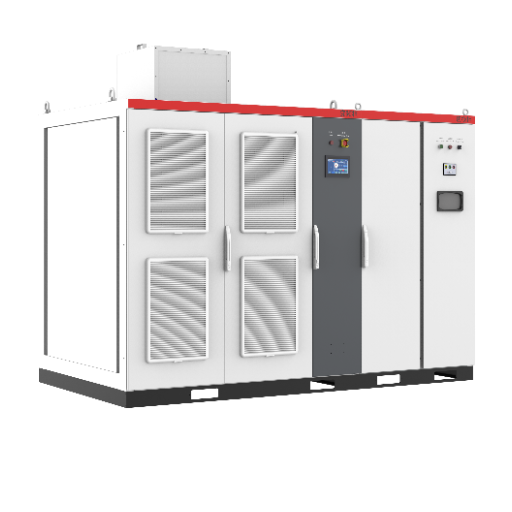
Not every company that builds variable frequency drives can manufacture high voltage frequency converters. The gap between low voltage and medium voltage production is substantial, and assuming otherwise creates serious procurement risk.
Voltage Class Expertise Matters
Low voltage drives operate at or below 1,000 V AC. The IEC 61800-4 standard defines medium voltage drives as systems which operate between 1 kV and 35 kV. High voltage industrial drives typically serve 3.3 kV, 6 kV, 6.6 kV, 10 kV, and 11 kV applications. The insulation systems, semiconductor selection, thermal management, and safety architectures required at 10 kV bear almost no resemblance to 480 V designs. A manufacturer with decades of LV experience but limited MV production history may lack the high-voltage impulse testing rigs, partial discharge measurement equipment, and specialized clean-room assembly protocols that MV drives demand. You should verify a supplier delivers drives which match your specific voltage requirements before adding them to your shortlist.
Topology Portfolio Breadth
High voltage frequency converters rely on multilevel topologies because standard two-level inverters cannot manage the voltage stress at medium and high voltage levels. The three dominant approaches are cascaded H-bridge (CHB), neutral-point clamped (NPC), and high-low-high configurations. Each suits different power ranges, harmonic requirements, and physical constraints. A manufacturer that offers only one topology may force an imperfect fit for your application. For example, CHB designs excel at 6 kV and above with clean sine wave output, while NPC systems can be more compact for 3.3 kV installations. Ask prospective suppliers for their topology range and request application guidance on which design fits your motor and load profile. You can learn more about the technical differences in our guide to [cascaded H-bridge and NPC inverter topologies].
Power Range and Testing Capability
High voltage drives span from roughly 200 kW to over 10,000 kW. Manufacturing capability at the low end does not guarantee competence at the high end. You must confirm that your chosen manufacturer operates dynamometer test beds which match your required power and voltage specifications. The testing process requires full-load and full-speed operation under high-temperature conditions to identify hidden defects that need to be addressed before shipment. The testing process which manufacturers skip creates extra failure hazards that will impact your facility operations.
Want to understand the fundamentals before evaluating manufacturers? Explore our [high voltage frequency converter fundamentals] guide for a complete overview of voltage classes, power ranges, and operating principles.
Essential Certifications and Standards
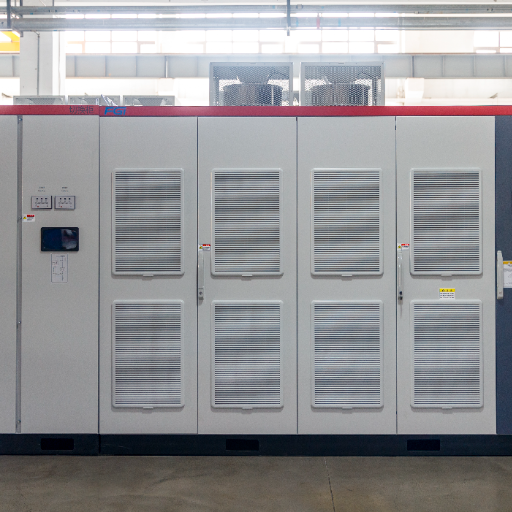
Certifications exist as formal designations which organizations must acquire to prove their compliance with specific requirements. The certifications serve as essential proof for high voltage frequency converter manufacturers about their capacity to meet international standards through their design and production processes and testing procedures. The ability to identify essential certifications together with worthless ones enables thorough buyers to evaluate products while marketers must depend on their advertised claims.
Quality Management: ISO 9001
ISO 9001 certification serves as the fundamental requirement which all industrial power equipment manufacturers must achieve. The certification verifies that the supplier maintains a documented quality management system which includes processes for tracking work and methods for implementing corrective actions and procedures for ongoing improvements. Not all ISO 9001 certificates provide the same value. The certification scope can be found on the certificate document. A manufacturer certified for “sales and distribution” is not the same as one certified for “design, manufacture, and testing of medium voltage variable frequency drives.”The issuing registrar requires you to obtain the certificate number which you must use to verify its authenticity.
Safety and Market Access Certifications
The CE marking shows that products comply with European health and safety and environmental protection regulations which include the Low Voltage Directive and EMC directives. The CE marking for MV drives depends on compliance with both EN 61800-3 and EN 61800-4 standards. UL and cUL listings are essential for North American installations, particularly UL 508C for drives. CCC certification exists as a requirement for all products which manufacturers produce or sell within China. Your project needs verification from manufacturers about their market access certifications because CE certification does not cover all regions.
Technical Compliance for MV and HV Drives
The specific technical standards which apply to different voltage classes create a distinction between high voltage frequency converter manufacturers and general VFD suppliers. The standard IEC 61800-4 establishes requirements for adjustable speed electrical power drive systems which operate between 1,000 V AC and 35 kV. The standards define insulation coordination together with voltage withstand tests and performance requirements which LV standards do not include. IEEE 1566 establishes performance standards for AC drives with a capacity of 375 kW and higher which include efficiency metrics together with harmonic and transient response benchmarks. The standard IEEE 519 establishes harmonic distortion limits for points of common coupling because high voltage drives generate substantial harmonics which affect industrial grids. The manufacturers on your shortlist should provide you with type test reports that meet these standards.
For a deeper technical breakdown of medium voltage VFD standards, see our medium voltage VFD guide.
Hazardous Environment and Environmental Standards
For mining, oil and gas, and chemical processing applications, explosion-proof certifications are non-negotiable. Verify Ex d, Ex i, GB 3836, and IEC 60079 compliance where applicable. ISO 14001 environmental management and RoHS material restrictions increasingly appear in procurement specifications for global projects, particularly those with ESG reporting requirements.
| Certification | What It Proves | When You Need It |
|---|---|---|
| ISO 9001 | Documented quality management system | Every industrial procurement |
| CE Marking | EU safety and EMC compliance | European installations |
| UL / cUL | North American third-party safety validation | USA and Canada projects |
| IEC 61800-4 | MV drive performance above 1 kV | All MV/HV drive purchases |
| IEEE 1566 | Performance for drives above 375 kW | Large industrial motor control |
| IEEE 519 | Harmonic distortion limits | Grid-connected installations |
| Ex d / Ex i | Explosion-proof design | Mining, oil and gas, chemicals |
For hazardous area certification details, see our explosion-proof frequency converter guide.
Technical Capabilities to Verify Beyond the Brochure
Marketing brochures list impressive specifications. Engineering verification separates claims from reality. When evaluating a high voltage frequency converter manufacturer, dig into the technical infrastructure that supports long-term reliability.
Manufacturing and Testing Infrastructure
The testing area of the manufacturer provides greater information than their sales demonstration. You need to inquire about their ability to conduct full-load rated-speed dynamometer tests. The high voltage drives must complete high-voltage impulse tests together with partial discharge tests to establish their insulation protection status. The Environmental stress testing process evaluates how drives operate under temperature variations humidity changes and altitude conditions which exceed laboratory testing environments. Manufacturers who operate facilities between 2000 and 5000 square meters maintain dedicated SMT lines and automated assembly stations and environmental chambers which smaller trading operations cannot develop.
Customization and Engineering Support
Industrial applications rarely match catalog specifications exactly. Verify whether the manufacturer offers custom voltage and frequency design, application-specific protection features, and integration support for your existing control architecture. Communication protocol compatibility matters enormously for modern facilities. Confirm support for Modbus, Profibus, Profinet, Ethernet/IP, and any proprietary protocols your DCS or SCADA system requires. A manufacturer with an in-house engineering team can adapt designs during the project phase rather than forcing your system to accommodate a rigid product.
Topology and Product Range Depth
As discussed earlier, topology selection affects footprint, harmonic performance, and serviceability. Modular power cell designs, common in CHB topologies, allow individual cell replacement without shutting down the entire drive. This can reduce Mean Time To Repair (MTTR) to under 10 minutes with proper spare parts inventory. Ask how many power cell configurations the manufacturer stocks, what the typical replacement lead time is, and whether they offer automatic cell bypass as a standard or optional feature.
OEM Manufacturer vs. Trading Company: How to Tell the Difference
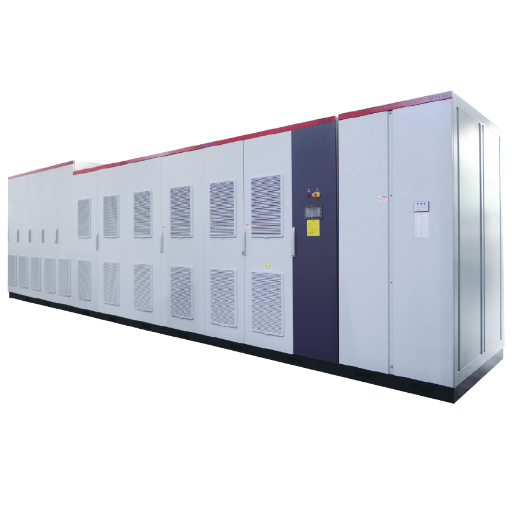
The distinction between a genuine OEM manufacturer and a trading company is one of the most important, and most overlooked, factors in high voltage drive procurement. Trading companies often present themselves as manufacturers online, but they lack the engineering depth, quality control, and long-term accountability that industrial projects require.
Elena, a lead electrical engineer at a water treatment facility in Brazil, learned this distinction the hard way. She received three quotes for a 3.3 kV, 1,200 kW drive. Two suppliers provided detailed type test reports and invited her to a virtual factory tour. The third offered the lowest price and claimed “direct factory” status. Elena requested the company’s business license and factory registration. The trading company could not produce a manufacturing license with scope covering MV drives. When she asked for a live video call from their assembly floor, they stopped responding. Elena selected one of the verified OEMs, paid 8% more upfront, and received a drive with full IEC 61800-4 documentation, on-site commissioning support, and a five-year warranty. Two years later, that drive operates at 96% efficiency with zero unplanned downtime.
Red Flags of Trading Companies
Trading companies typically cannot provide live factory audit video or virtual tours on demand. They give vague answers about testing equipment specifications, R&D team headcount, and engineering qualification. Their product catalogs often mix inconsistent branding, suggesting they source from multiple unknown OEMs. If a supplier claims manufacturing capability but deflects direct technical questions to a “factory engineer” who is never available for real-time discussion, proceed with extreme caution.
Verification Methods You Can Use Today
Request a copy of the business license and verify the scope includes manufacturing of electrical power conversion equipment. Request BOM traceability reports together with major component sourcing information. Third-party factory audit reports from SGS, Bureau Veritas, or TÜV provide independent verification of manufacturing capability. For Chinese suppliers, check whether they hold CCC certification for the specific drive model, as this requires actual production facility inspection.
Why Direct Manufacturer Relationships Matter
High voltage drives operate for 15 to 20 years. Over that lifespan, you will need spare parts, firmware updates, technical support, and potentially design modifications. A trading company may not exist in five years, or may have lost the relationship with the underlying OEM. Direct manufacturer relationships ensure spare parts compatibility, warranty honorability, and design iteration capability for future upgrades. For a capital asset this critical, the manufacturer relationship is as important as the initial specification.
Evaluating Total Cost of Ownership
Unit price is the smallest component of total cost for a high voltage frequency converter. Smart buyers evaluate the full financial picture across the equipment lifecycle.
Installation and Commissioning Support
High voltage drivers need specialist setup which involves three specific tasks: input transformer coordination, cable termination work and harmonic filtering system testing. The availability of factory-authorized startup engineers from manufacturers decreases commissioning risks while it helps to reach full operational capacity more quickly. Budget-conscious buyers who skip this support often discover grounding errors or harmonic issues months later, when correction requires costly shutdowns.
Spare Parts and Service Network
Request a detailed spare parts recommendation list with pricing and lead times. A manufacturer with regional service depots can dispatch replacement power cells or control boards within 24 to 48 hours. Manufacturers without local inventory may require 6 to 12 weeks for international shipping. Over a 15-year asset life, the difference between 48-hour and 12-week spare parts availability can determine whether a minor fault becomes a catastrophic production loss.
Energy Efficiency Differences
Modern MV drives with active front ends achieve power factors above 0.96 and efficiencies at or above 96% at rated load. However, efficiency curves vary between manufacturers and topologies. A 1% efficiency difference on a 5,000 kW drive running 8,000 hours annually translates to 400,000 kWh per year. At industrial electricity rates, that efficiency gap can exceed the original unit price differential within three to five years.
Considering a custom high voltage solution for your project? Our engineering team provides technical consultation and application-specific design reviews. [Contact our engineers] to discuss your voltage, power, and topology requirements.
Factory Audit Checklist for High Voltage Frequency Converter Manufacturers
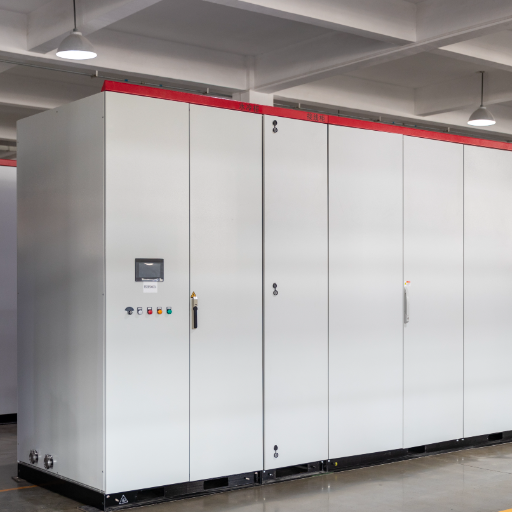
Whether conducted on-site or remotely, a structured factory audit provides objective evidence of manufacturing capability. Use this framework to evaluate any high voltage frequency converter manufacturer before adding them to your approved vendor list.
Pre-Audit Documentation to Request
Before scheduling any visit, request the following: a valid ISO 9001 certificate with scope of certification covering MV drive design and manufacture; IEC 61800-4 type test reports for the specific voltage class and power range you need; a reference list of installed drives in applications similar to yours; and CCC, CE, or UL certificate copies with certifying body file numbers for independent verification.
On-Site or Virtual Audit Assessment Points
During the audit, observe the assembly environment. High voltage drives require dust-controlled assembly areas to prevent insulation contamination. Ask about burn-in testing duration. Minimum standards typically require 24 to 48 hours at full load and elevated temperature. Verify the R&D engineering team size and qualification. A credible MV drive manufacturer employs specialized high-voltage power electronics engineers, not just general electrical technicians. Review the after-sales service network map to confirm geographic coverage aligns with your installation location.
Post-Audit Verification
Contact two or three reference customers from installations completed at least 12 months prior. Ask specifically about reliability, spare parts availability, and responsiveness of technical support. Verify certification validity directly with issuing bodies using the certificate numbers provided. This final step catches expired, forged, or misrepresented credentials before contract signature.
Where High Voltage Frequency Converters Are Manufactured
Geographic sourcing affects lead times, certification alignment, pricing, and service availability. Understanding regional strengths helps you match manufacturer location to project requirements.
Europe: Standards Leadership and Service Depth
European manufacturers such as ABB Siemens and Schneider Electric provide both deep IEC expertise and complete type test documentation and their established global service networks. The products of this company show high conformity with European safety regulations and environmental protection standards. The company requires between 16 to 24 weeks as lead time to deliver large custom drives which it sells at premium prices. Projects that need detailed documentation and strict compliance standards and local service availability should select European suppliers as their optimal choice.
China: Scale, Customization, and Competitive Pricing
Chinese manufacturers including FGI (Shandong Electric), Shenzhen Inovance, Hiconics, and Wolong Electric produce a significant share of global MV drive volume. The region of Asia-Pacific generates between 38% and 55% of worldwide revenue from frequency converters. Chinese suppliers provide affordable pricing solutions which enable customers to create customized products that have shorter timeframes for delivery. The primary aspect which needs to be verified requires confirmation. All verification processes should include the confirmation of export experience and the certification authenticity and quality system documentation while we treat Chinese suppliers as equal standard operators. The Chinese OEMs which maintain a strong reputation and possess international project experience together with their CE/ISO certification ability to deliver equivalent technical performance at total costs which are significantly lower.
North America: Local Compliance and Integration Support
North American manufacturers emphasize UL and cUL compliance, NEC electrical code alignment, and domestic service presence. For projects in the United States and Canada, local certification and readily available field engineers reduce regulatory risk and commissioning time. Pricing typically sits between European and Chinese tiers.
Frequently Asked Questions
What certifications should a high voltage frequency converter manufacturer have?
At minimum, a credible manufacturer holds ISO 9001 for quality management together with IEC 61800-4 which applies to MV drive systems that operate above 1 kV and necessary safety certifications that protect specific markets such as CE for Europe and UL for North America. For hazardous environments, Ex d or Ex i explosion-proof ratings are essential. Every certificate needs its scope and validity to be checked with the organization that issued it.
How do I verify a manufacturer’s ISO 9001 certification?
Request the certificate number and issuing registrar name. The registrar should be contacted through their office or their online certificate database to verify the current status of the certificate which includes design and manufacturing rights for medium and high voltage drives. The certified facility needs to be confirmed as the actual manufacturing site and not simply a sales office.
What is the difference between an OEM manufacturer and a trading company?
An OEM manufacturer designs, engineers, and assembles drives in its own facility with direct control over quality testing and component sourcing. A trading company buys products from third-party factories and resells them, often without engineering expertise or long-term spare parts accountability. Trading companies cannot offer the warranty protection design customization and technical support which OEMs provide.
How important is local service for medium voltage drives?
Local or regional service capability is critical. MV drives are complex assets requiring specialized commissioning, periodic maintenance, and rapid fault response. Manufacturers with authorized service facilities near your site can reduce repair times from weeks to days. For modular CHB designs, local spare power cell inventory can reduce MTTR to under 10 minutes.
What warranty terms are standard for high voltage frequency converters?
Standard manufacturer warranties range from 12 to 24 months from commissioning. Premium suppliers offer 3 to 5 year warranties covering parts, labor, and field service travel. Verify whether warranty terms require factory-authorized commissioning to remain valid, as unauthorized startup can void coverage.
Can Chinese manufacturers meet IEC and IEEE standards?
Yes. Leading Chinese manufacturers including FGI, Inovance, and Hiconics hold CE marking, ISO 9001 certification, and IEC 61800-4 type test reports. The key is verification. Request documentation, check certificate validity with issuing bodies, and conduct factory audits to confirm testing infrastructure matches claimed standards.
How do I evaluate a manufacturer’s harmonic compliance?
Request a computer-generated harmonic distortion analysis for your specific site conditions, verified at the Point of Common Coupling. Confirm the drive meets IEEE 519 or local harmonic limits without requiring external filters, unless filter costs are explicitly included in the proposal. Ask for third-party test reports showing THD levels under rated load conditions.
Conclusion
The process of choosing a high voltage frequency converter manufacturer requires more evaluation than just evaluating product expenses. The right partner delivers certified engineering competence, verified testing infrastructure, and a support network that protects your investment across a 15-to-20-year operational life. The wrong choice exposes your facility to downtime, spare parts shortages, and documentation gaps that can cost multiples of any initial savings.
Your assessment needs to concentrate on five different essential standards. First, confirm voltage-class-specific certifications including IEC 61800-4 and relevant market access marks. Second, verify multilevel topology capability that matches your application requirements. Third, distinguish genuine OEM manufacturers from trading companies through license checks and factory audits. Fourth, calculate total cost of ownership including installation support, spare parts logistics, and energy efficiency. Fifth, validate the service network and warranty terms that will define your experience after commissioning.
The global market for medium and high voltage drive systems keeps growing because Asian Pacific manufacturers are becoming more important to international projects. The verification process conducted from European and Chinese and North American sources guarantees your industrial application requirements will be met through performance and reliability and support.
Ready to evaluate a manufacturer for your next project? [Contact our engineering team] for technical specifications, certification documentation, and a customized proposal based on your voltage, power, and application requirements.
