
A thermal overload relay for medium voltage motors is an electronic thermal protection function, designated by ANSI device number 49, that calculates motor heating from current and time using an I2t model. In MV systems, this function resides within a multifunction motor protection relay or a dedicated electronic overload relay. It is not a standalone bimetallic device like the overload relays used in low-voltage motor control centers.
A water treatment plant in Thailand lost a 1,200 kW, 6.6 kV pump motor because the thermal overload was set to 115% of full-load current. That setting is standard for low-voltage panels, but it was wrong for this motor. The motor had a 1.15 service factor and ran in a 45 degrees C ambient environment. A gradual bearing degradation increased mechanical load, raising current to 118% of FLC. The relay never tripped because the current stayed below the 115% pickup threshold. After six weeks of elevated temperature, the stator winding insulation failed at approximately 180 degrees C. Post-failure analysis revealed the correct pickup should have been 102% of FLC with ambient compensation, and an RTD alarm at 125 degrees C would have triggered three weeks before failure. The rewind cost $45,000 plus 14 days of lost production.
That mistake, applying LV overload rules to an MV motor, is common because most online guidance focuses on bimetallic overload relays in 480V panels, not electronic thermal models in 6.6 kV systems.
This guide explains how thermal overload protection works for medium voltage motors. You will learn how to select the correct trip class for your application, calculate the overload pickup setting with ambient and service factor adjustments, integrate RTD and PT100 temperature monitoring for direct winding and bearing protection, account for negative-sequence heating from current unbalance, verify settings during commissioning, and understand the cost of RTD-based monitoring versus current-only protection. For the complete protection and control picture, see our complete medium voltage motor protection and control guide.
Key Takeaways
- MV motors use electronic thermal protection within multifunction relays, not bimetallic overload relays, which are LV-only devices.
- Trip Class selection (10, 20, 30, or 40) must match the motor’s safe stall time and starting characteristics.
- Standard overload setting is 105% to 115% of motor FLC for MV motors, with service factor and ambient temperature adjustments.
- RTD/PT100 integration provides direct winding and bearing temperature monitoring that current-based I2t models cannot replicate.
- I2t thermal models must include negative-sequence (I2 squared) heating contribution for unbalanced loads.
- Hot restart blocking prevents motor restart until thermal capacity has recovered, typically requiring 15 to 30 minutes after a trip.
- RTD monitoring adds 800to800to2,500 to a protection scheme but can prevent 50,000to50,000to200,000 in motor replacement costs.
How MV Thermal Overload Protection Differs from LV
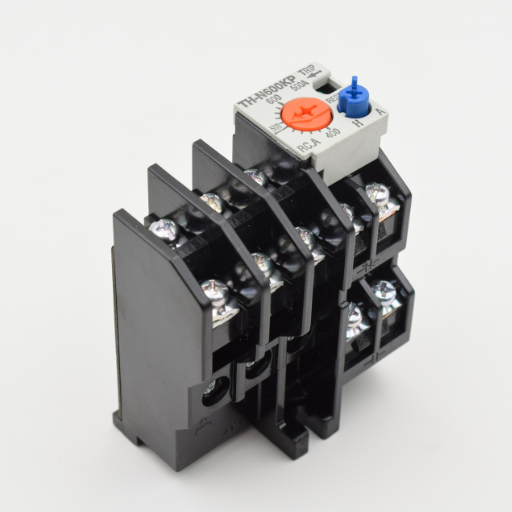
The first thing to understand about a thermal overload relay medium voltage application is that the hardware looks nothing like the bimetallic devices used in 480V MCCs.
Why Bimetallic Overload Relays Stop at 1 kV
Bimetallic overload relays use a heated strip that physically bends to open a contact. They are simple, inexpensive, and reliable for low-voltage motors up to a few hundred amps. Above 1 kV, the insulation requirements, current transformer sizing, and physical separation make bimetallic devices impractical. The energy dissipated in a bimetallic strip at MV current levels would require impractically large housings. For medium voltage motors, bimetallic overload relays are technically and economically obsolete.
The Electronic Thermal Model: I2t Heating Principle
Electronic thermal protection uses a mathematical model of motor heating. The fundamental equation is simple: heating is proportional to current squared multiplied by time (I2t). A motor running at 1.2 times full-load current generates 1.44 times the normal heat (1.2 squared = 1.44). The relay integrates this heating over time, compares it to the motor’s thermal capacity, and trips when the accumulated heating exceeds the safe limit.
Modern relays use a dual-slope thermal model that accounts for both stator and rotor heating. The stator time constant is typically 10 to 30 minutes. The rotor time constant is typically 3 to 10 seconds. The relay tracks both simultaneously.
Multifunction Relay Integration vs Standalone Electronic Overload
For MV motors, thermal overload protection is almost always a function within a multifunction motor protection relay. Standalone electronic overload relays exist for large LV motors but are rare in MV applications because MV motors need ground fault, locked-rotor, unbalance, and differential protection as well. Integrating all functions in one relay reduces wiring, panel space, and cost. Our motor protection relay settings guide covers the full relay configuration process.
Understanding Trip Classes: 10, 20, 30, and 40
Trip class defines how quickly the overload relay trips when the motor is locked at six times full-load current from a cold start. The class number is the maximum trip time in seconds.
What Trip Class Means
- Class 10: trips in 10 seconds or less at 6x FLC (cold)
- Class 20: trips in 20 seconds or less at 6x FLC (cold)
- Class 30: trips in 30 seconds or less at 6x FLC (cold)
- Class 40: trips in 40 seconds or less at 6x FLC (cold)
These times are defined in IEC 60947-4-1 and NEMA ICS 2. The cold-start assumption matters. A hot motor, one that has recently been running, will trip faster because it starts with residual heat already in the thermal model.
Class 10: Fast-Trip for Motors with Short Safe Stall Times
Class 10 is appropriate for motors with safe stall times below 10 seconds. These are typically small to medium MV motors with low inertia, direct-on-line starting, and no special load requirements. Most general-purpose MV induction motors fall into this category.
Class 20: Standard for General-Purpose MV Induction Motors
Class 20 is the most common selection for MV motors. It provides enough time for normal starting while still protecting the motor during a stall condition. If your motor starts in 3 to 8 seconds and the safe stall time from the manufacturer is 12 to 20 seconds, Class 20 is the correct choice.
Class 30: For High-Inertia Loads and Long Starting Times
Class 30 is used for high-inertia loads such as large fans, flywheels, and centrifuges where starting times can exceed 10 seconds. The longer trip time accommodates the extended acceleration period. However, Class 30 also means the motor is exposed to damaging current for longer during a genuine stall. Coordination with a locked-rotor protection function (ANSI 51) is essential.
Class 40: For Special Applications
Class 40 is reserved for synchronous motors, very high-inertia loads, and applications with extended starting sequences such as mills and crushers with clutch engagement. It is rarely needed for standard induction motors.
How to Match Class to Motor Safe Stall Time
The rule is straightforward: the trip class must be shorter than the motor’s safe stall time at locked-rotor current. If the motor nameplate states a safe stall time of 15 seconds, Class 20 is too slow. Use Class 10. If the safe stall time is 25 seconds and normal starting takes 12 seconds, Class 20 is appropriate. Never select a trip class that exceeds the safe stall time.
Setting Calculation for MV Motor Thermal Overload
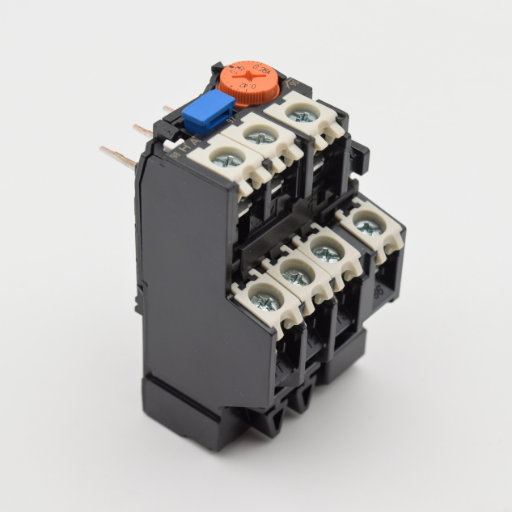
The setting calculation follows six steps. Each step adjusts the base setting to match the motor’s actual operating conditions.
Step 1: Determine Motor Full-Load Current and Service Factor
Start with the motor nameplate full-load current (FLC). Also record the service factor (SF). A service factor of 1.15 means the motor can run at 115% of rated load continuously without exceeding its thermal limits. The overload pickup must respect this service factor.
Step 2: Calculate Base Overload Pickup
For MV motors without a service factor above 1.0, set the overload pickup at 105% to 110% of FLC. For motors with SF 1.15, the base pickup can be set at 110% to 115% of FLC. The pickup must always be below the service factor limit.
Step 3: Apply Ambient Temperature Compensation
If the motor operates above 40 degrees C ambient, reduce the pickup by approximately 5% per 10 degrees C of excess temperature. For a motor in a 50 degrees C environment, reduce the pickup by 5%. For 55 degrees C, reduce by approximately 7.5%.
Step 4: Apply Service Factor Adjustment
If the motor has a service factor above 1.0, the pickup can be set closer to the service factor limit. For SF 1.15, the maximum safe pickup is approximately 115% of FLC. Setting it higher risks insulation damage during sustained overloads.
Step 5: Select Trip Class Based on Safe Stall Time and Starting Curve
Use the motor manufacturer’s safe stall time and the normal starting time from the torque-speed curve. Select a class that is shorter than the safe stall time but longer than the normal starting time.
Step 6: Set Alarm Threshold
Set the thermal alarm at 85% to 90% of the trip threshold. This gives operators warning before a trip occurs, allowing them to reduce load or investigate the cause.
Worked Example: Setting Calculation for a 1,000 kW, 6.6 kV Motor
Motor data: 1,000 kW, 6.6 kV, 50 Hz, FLC = 105 A, service factor = 1.15, safe stall time = 18 seconds, normal starting time = 5 seconds, ambient = 45 degrees C.
Step 1: FLC = 105 A, SF = 1.15.
Step 2: Base pickup = 110% x 105 A = 115.5 A.
Step 3: Ambient compensation: 45 degrees C is 5 degrees C above 40 degrees C. Reduce by 2.5%. Adjusted pickup = 112.6 A, rounded to 113 A (107.6% of FLC).
Step 4: Service factor check: 113 A is below 115% of FLC (120.8 A). Acceptable.
Step 5: Safe stall time = 18 seconds, starting time = 5 seconds. Class 20 is appropriate (trips in 20 seconds at 6x FLC, well within safe stall).
Step 6: Alarm threshold = 90% of trip = 101.7 A, rounded to 102 A.
Result: Pickup = 113 A (107.6% of FLC), Class 20, alarm at 102 A.
Compare this to the Thailand plant mistake. Their engineer set 115% of FLC without ambient compensation. For a 45 degrees C ambient with SF 1.15, the correct setting was approximately 102% to 105% of FLC, not 115%. The 10% difference was the margin that allowed the bearing degradation to go undetected.
RTD and PT100 Integration for Direct Temperature Monitoring
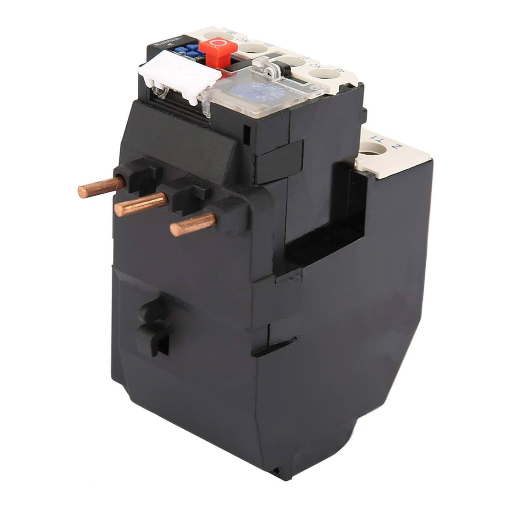
Current-based I2t models estimate temperature indirectly. They cannot detect bearing degradation, coolant failure, or localized hot spots. RTD integration solves this blind spot.
RTD Types: PT100, PT1000, and Thermistors
PT100 platinum resistance thermometers are the standard for MV motor protection. They have a resistance of 100 ohms at 0 degrees C and increase predictably with temperature. PT1000 sensors offer higher resistance change per degree, which improves signal-to-noise ratio over long cable runs. Thermistors (PTC or NTC) are less common in MV motors but appear in some LV and specialized applications.
RTD Placement in MV Motors
RTD placement determines what the sensor actually measures. The three standard locations are:
- Stator winding slots: Embedded between coil sides in the stator core. This measures the hottest spot in the winding. It is the most critical location.
- Drive-end bearing: Mounted in the bearing housing or end shield. Detects bearing lubrication failure or misalignment.
- Non-drive-end bearing: Same purpose as drive-end, providing redundancy.
Some large motors also have coolant outlet temperature RTDs for closed-loop cooling systems.
A cement plant in Egypt installed PT100 RTDs in six 800 kW kiln fan motors. The RTDs were placed in the motor terminal box rather than embedded in the stator winding slots. During an overload event, the terminal box RTD measured 85 degrees C while the actual hot spot winding temperature exceeded 145 degrees C. The RTD alarm threshold of 120 degrees C never triggered because the terminal box was ventilated and cooler than the winding. After rewinding two motors, the plant relocated RTDs to stator slot positions per the motor manufacturer’s drawing. The corrected placement showed a 40 to 50 degrees C difference between terminal box and hot spot during rated load operation.
Alarm and Trip Thresholds by Location
| Location | Alarm Threshold | Trip Threshold | Notes |
|---|---|---|---|
| Stator winding | 120 to 130 degrees C | 140 to 155 degrees C | Class F insulation limit is approximately 155 degrees C |
| Drive-end bearing | 80 to 90 degrees C | 95 to 105 degrees C | Depends on bearing type and lubricant |
| Non-drive-end bearing | 80 to 90 degrees C | 95 to 105 degrees C | Same as drive-end |
| Coolant outlet | 5 to 10 degrees C above nominal | 15 to 20 degrees C above nominal | For closed-loop cooling only |
Wiring and Isolation Requirements for MV
RTD wiring in MV motors requires careful isolation. The sensor leads run from the stator winding through the terminal box to the relay. They must be shielded and routed separately from power cables to avoid induced voltages. In switchgear, RTD input modules provide galvanic isolation between the sensor circuits and the relay electronics. This isolation protects the relay from transient voltages that can couple through the sensor wiring during switching operations.
Cost vs Benefit: RTD Monitoring Incremental Investment
RTD monitoring adds cost but prevents catastrophic failures. In 2026, typical costs are:
- PT100 sensors: 30to30to80 each
- RTD input module for relay: 500to500to1,500
- Wiring and termination: 200to200to500 per motor
- Total incremental cost: 800to800to2,500 per motor
Motor replacement or rewind costs range from 50,000to50,000to200,000 for large MV machines. RTD monitoring is 1% to 3% of the motor replacement cost. For critical motors in continuous processes, the payback is immediate if it prevents even one failure.
Need help integrating RTD monitoring with your motor protection scheme? Contact our engineering team for application support.
Advanced Thermal Protection Features
Modern multifunction relays offer thermal protection features that go far beyond simple I2t curves.
Negative-Sequence Heating and Current Unbalance
Negative-sequence current, caused by voltage unbalance or single-phasing, creates a reverse-rotating magnetic field that induces double-frequency currents in the rotor. This produces severe rotor bar heating that the standard I2t model does not capture. The additional heating is proportional to the square of the negative-sequence current (I2 squared). A voltage unbalance of just 3% can produce a negative-sequence current of 15% to 20%, adding 2.25% to 4% extra heating. NEMA recommends derating motors 5% per 1% of voltage unbalance. Modern relays include an I2 squared t function that adds negative-sequence heating to the thermal model automatically.
Thermal Capacity Used and Hot Restart Blocking
Thermal capacity used (TCU) is the percentage of the motor’s thermal limit that has been consumed. At 100% TCU, the relay trips. After a trip, the TCU decays according to the motor’s cooling time constant, which is typically 15 to 45 minutes for MV motors. Hot restart blocking prevents the motor from restarting until the TCU falls below a safe threshold, typically 70% to 80%. This prevents the motor from being restarted while still hot from a previous run or overload trip.
A compressed air facility in Brazil experienced a thermal overload trip on a 1,500 kW, 11 kV compressor motor during peak summer demand. The operator attempted an immediate restart after confirming the discharge valve was open. The motor protection relay blocked the start command because the TCU read 95%. The operator bypassed the block after a 5-minute wait, believing the motor had cooled. The motor started but tripped again after 90 seconds with winding temperatures reaching 165 degrees C. A post-incident review showed the motor’s cooling time constant was 35 minutes. The plant added a mandatory 30-minute cooling timer and operator training on TCU readings.
Cold Curve vs Hot Curve Behavior
The thermal model uses different time constants for heating and cooling. The heating time constant applies when current is flowing. The cooling time constant applies when the motor is stopped. The ratio between them is typically 2:1 to 4:1. A motor with a 20-minute heating time constant may have a 60-minute cooling time constant. This asymmetry means the motor cools much slower than it heats. Hot restart blocking accounts for this by using the cooling time constant to calculate recovery time.
Emergency Override and Operator Reset Procedures
Some applications allow a one-time emergency override of the thermal block. This should be used only for critical safety shutdowns, not for production convenience. After an override, the operator must log the event and schedule a motor inspection. Repeated overrides indicate either an undersized motor or a process problem that needs engineering review.
Commissioning and Testing Thermal Overload Protection
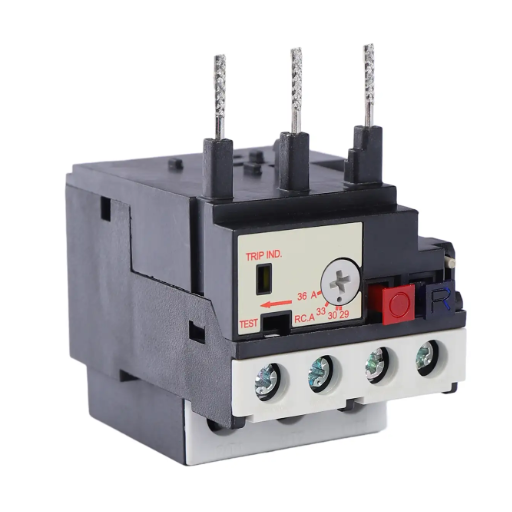
Settings on paper mean nothing until they are verified with actual current and temperature.
Primary Injection Test at Pickup and Trip Points
Primary injection testing injects actual current through the protection CTs to verify that the relay picks up and trips at the correct values. For the thermal overload function, inject 105% of pickup current and verify the alarm operates. Inject 120% of pickup and verify the trip operates within the expected time for the selected class. Always test both the cold curve and the hot curve if the relay supports both.
RTD Simulation and Calibration Verification
Use an RTD simulator to inject known resistance values at the RTD input terminals. Verify that the relay displays the correct temperature for each sensor. Check alarm and trip thresholds by ramping the simulated temperature through the set points. Record the actual trip temperature and compare it to the setting.
Thermal Model Verification with Current Injection
Inject a sustained overload current, such as 125% of FLC, and monitor the TCU percentage in real time. Verify that the TCU reaches 100% within the expected time based on the relay’s thermal time constant. This confirms the I2t model is calculating correctly.
Documentation and Setting Record Requirements
Every commissioning test must be documented. The setting record should include: motor nameplate data, calculated pickup and alarm values, selected trip class, RTD thresholds, negative-sequence settings, TCU blocking threshold, test injection values, measured trip times, and as-found versus as-left settings. This documentation is essential for future maintenance and troubleshooting.
Cost Considerations (2026)
Thermal overload protection for MV motors ranges from minimal to comprehensive depending on the relay and sensors selected.
Electronic Overload vs Multifunction Relay
A dedicated electronic overload relay costs 2,000to2,000to4,000 but provides only thermal and locked-rotor protection. A multifunction motor protection relay with thermal, overcurrent, ground fault, and unbalance protection costs 5,000to5,000to10,000. For MV motors, the multifunction relay is the standard choice because multiple protection functions are required.
RTD Module and Sensor Costs
- PT100 sensors (3 per motor: 2 bearings + 1 winding): 90to90to240
- RTD input module (8-channel): 500to500to1,500
- Sensor extension cable and termination: 200to200to500
- Total RTD hardware per motor: 800to800to2,500
TCO: Overload-Only vs RTD-Integrated Protection
Overload-only protection using the I2t model costs 5,000to5,000to10,000 for the relay and CTs. Adding RTD monitoring increases the total to 6,000to6,000to12,500. The incremental 1,000to1,000to2,500 can prevent a 50,000to50,000to200,000 motor failure. For critical motors, the RTD investment is justified. For non-critical, easily replaced motors, current-only protection may be sufficient.
Frequently Asked Questions
What is the difference between a thermal overload relay and a motor protection relay?
A thermal overload relay performs only the thermal protection function (ANSI 49). A motor protection relay is a multifunction device that includes thermal protection plus overcurrent, ground fault, unbalance, and optionally differential protection. For MV motors, the multifunction relay is standard.
What trip class should I use for my medium voltage motor?
Select a trip class shorter than the motor’s safe stall time but longer than the normal starting time. Most general-purpose MV induction motors use Class 20. High-inertia loads may need Class 30. Motors with safe stall times below 10 seconds need Class 10.
How do I calculate the overload setting for an MV motor?
Start with 105% to 110% of FLC for SF 1.0 motors, or 110% to 115% for SF 1.15 motors. Apply ambient temperature compensation by reducing 5% per 10 degrees C above 40 degrees C. Verify the result is below the service factor limit. Our motor protection relay settings guide covers the full calculation.
Should I use RTDs or current-based thermal protection?
Use both. Current-based I2t protection is mandatory and protects against overloads. RTD monitoring adds direct temperature measurement for bearing and winding hot spots that current models cannot detect. For critical motors, RTDs are strongly recommended.
What temperature should RTD alarms and trips be set to?
Set stator winding alarm at 120 to 130 degrees C and trip at 140 to 155 degrees C. Set bearing alarm at 80 to 90 degrees C and trip at 95 to 105 degrees C. Adjust based on motor insulation class and bearing manufacturer limits.
Can I use a bimetallic overload relay for a medium voltage motor?
No. Bimetallic overload relays are designed for low-voltage applications up to 1 kV. MV motors require electronic thermal protection within a multifunction relay.
What is negative-sequence heating and why does it matter?
Negative-sequence current, caused by voltage unbalance, creates a reverse magnetic field that induces severe heating in the rotor. A 3% voltage unbalance can cause enough additional heating to damage the motor. Modern relays include I2 squared t protection to account for this.
How long should I wait before restarting after a thermal trip?
Wait until the thermal capacity used (TCU) falls below 70% to 80%. This typically takes 15 to 45 minutes depending on the motor’s cooling time constant. Restarting sooner risks immediate re-trip and winding damage.
Conclusion
Thermal overload protection for medium voltage motors is fundamentally different from the bimetallic devices used in low-voltage panels. It is an electronic I2t thermal model within a multifunction relay, configured with a trip class that matches the motor’s safe stall time, a pickup setting that respects service factor and ambient temperature, and optional RTD monitoring that provides direct temperature measurement where current models fall short.
The most common mistake is applying LV rules to MV motors. A 115% pickup setting may be standard for a 480V panel, but for an MV motor with a 1.15 service factor in a hot ambient environment, the correct setting may be closer to 100% to 105% of FLC. The 10% difference can mean the difference between a timely trip and a $45,000 rewind.
RTD monitoring adds 800to800to2,500 per motor but detects bearing degradation, coolant failure, and localized hot spots that no current-based model can sense. For critical motors in continuous processes, the investment is minimal compared to the cost of unplanned failure.
If you are specifying or commissioning thermal overload protection for an MV motor installation, contact our engineering team for setting verification, RTD integration support, or a protection scheme review.
