
The best way to find a reliable China frequency converter manufacturer is to match your application to the right regional hub, verify that the supplier owns a real factory, and confirm certifications through the issuing registrar rather than accepting brochures. Start by defining whether you need a VFD, a static 50/60 Hz converter, or a 400 Hz aviation power supply. Then shortlist manufacturers in the Chinese region that specialize in that product category, audit their production facility, and evaluate samples before committing to volume.
What if the lowest-priced supplier turns out to be a trading company with no engineers on staff? Last year, a procurement manager in Poland selected a Shenzhen-based seller advertising “factory direct” pricing for a 50-unit VFD order. The units arrived without proper CE documentation, three failed within the first month, and the supplier could not provide schematic diagrams or replacement PCBs. The buyer had to air-freight replacements from another supplier at twice the original project cost.
This guide gives you a practical map of the China frequency converter manufacturer landscape. You will learn which regions specialize in which products, how to separate real manufacturers from trading companies, what certifications matter for export, and how to structure OEM or custom orders with lower risk.
Key Takeaways
- China is the world’s largest frequency converter manufacturing base, with the market estimated near USD 3 billion by 2026.
- Regional specialization matters: Shandong and Shanghai for static/aviation/high-voltage, Jiangsu and Zhejiang for industrial VFDs, Guangdong/Shenzhen for VFDs and OEM hubs.
- Many online “top manufacturer” rankings mix trading companies with factories; verify business licenses, factory ownership, and engineering staff.
- Certifications like CE, ISO 9001, UL, and IEC 61000 must be checked through issuing registrars, not accepted from supplier brochures.
- OEM branding and custom engineering are widely available but vary sharply in minimum order quantities, engineering depth, and documentation quality.
If your project involves specialized voltage outputs, multi-phase configurations, or OEM branding, review our complete guide to frequency converter manufacturers for deeper supplier-type analysis.
Why Buyers Source Frequency Converters from China
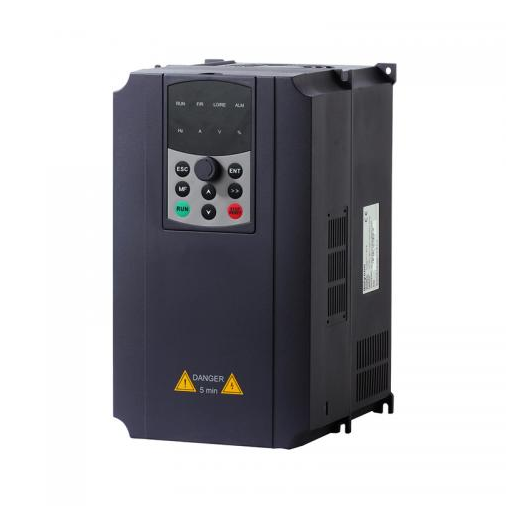
China’s frequency converter industry offers three advantages that are hard to match elsewhere: scale, vertical integration, and export readiness.
The country produces a significant share of the world’s power electronics, from discrete semiconductors and magnetics to complete drive systems. That concentration creates strong price-performance, especially for standard and medium-volume VFD orders. Domestic suppliers also offer wide voltage ranges, multiple output frequencies, and customization options that smaller regional manufacturers cannot support profitably.
Export infrastructure is mature. Major manufacturing provinces have experience with sea freight, customs documentation, Incoterms, and destination-market certifications. For buyers who verify carefully, this means shorter development cycles and lower landed costs than sourcing from Europe or North America for comparable specifications.
However, the size of the market also creates a problem. Thousands of companies sell frequency converters online, but only a fraction are actual manufacturers. The rest are trading companies, distributors, or brokers. Knowing how to tell the difference is the single most valuable skill in China sourcing.
China Frequency Converter Market Overview
Understanding the market size and growth drivers helps buyers set realistic expectations about lead times, capabilities, and partnership structures.
According to industry research, the global frequency converter market is projected at approximately USD 31.59 billion in 2026, with China representing roughly 14% of global demand. Some analysts estimate the China frequency converter market alone could approach USD 3 billion by 2026. The engineering-specific segment is forecast to grow from around USD 1.2 billion in 2024 to USD 2.5 billion by 2033, reflecting continued industrial automation investment.
Key growth drivers include smart-factory expansion, renewable energy integration, rail and metro network build-out, and tightening energy efficiency regulations. These trends attract both domestic Chinese brands and global players such as ABB, Siemens, Danfoss, Schneider Electric, Yaskawa, and Mitsubishi, which manufacture or sell heavily in China.
For buyers, this means two things. First, there are capable suppliers for almost every application. Second, the presence of global brands has raised domestic engineering standards, so a well-chosen Chinese manufacturer can deliver industrial-grade quality at a competitive price point.
Major Frequency Converter Manufacturing Regions in China
Not every China frequency converter manufacturer builds the same products. Geography strongly predicts capability.
Shandong — Static, Aviation, and High-Voltage Converters
Shandong province has a strong base in static frequency converters, 400 Hz aviation ground power units, and higher-voltage power conversion equipment. The region benefits from heavy-industry demand, port access for export, and experience with bespoke engineering for energy and infrastructure projects.
If your project involves 50 Hz to 60 Hz conversion, 400 Hz aerospace power, or voltage classes above 690 V, Shandong should be on your shortlist. For specialized high-voltage requirements, also review our high voltage frequency converter manufacturer guide.
Jiangsu — Industrial VFDs and Three-Phase Drives
Jiangsu, especially cities like Suzhou, Wuxi, and Nanjing, specializes in industrial variable frequency drives and three-phase motor control. The province has a deep supply chain for motors, power modules, and automation components, making it a natural home for VFD manufacturers serving manufacturing and process industries.
Buyers looking for standard or slightly customized 380 V three-phase VFDs in volumes from tens to thousands of units will find many qualified suppliers here.
Zhejiang — Cost-Optimized VFDs and Components
Zhejiang manufacturers often compete on price-performance for small to medium-power VFDs, motor soft starters, and related power electronics. The region is a good fit for buyers with clear specifications, lower complexity, and tight unit-cost targets who still need acceptable quality and on-time delivery.
Guangdong / Shenzhen — VFDs, Servo Drives, and OEM Hubs
Shenzhen and the broader Pearl River Delta region lead in electronics manufacturing speed, OEM/ODM flexibility, and access to components. Many Shenzhen suppliers offer fast prototyping, branding services, and private-label programs for e-commerce sellers, distributors, and smaller OEMs.
The trade-off is that Shenzhen also has the highest concentration of trading companies. Buyers must verify factory ownership carefully, especially when a supplier offers an unusually wide product range or extremely short lead times.
Shanghai — Precision, High-Performance, and R&D-Focused Manufacturers
Shanghai-based manufacturers tend to focus on higher-performance drives, precision applications, and R&D-intensive products. Lead times and prices are often higher than in Zhejiang or Shenzhen, but engineering depth and documentation quality are typically stronger.
Well-Known Chinese Frequency Converter Brands
Several domestic Chinese brands have established national and international recognition in the VFD and industrial drive market:
- INVT — Shenzhen-based, broad VFD portfolio
- INOVANCE — Strong in VFDs, servo drives, and automation
- STEP Electric — Shanghai-based, industrial drives and motion control
- Slanvert — VFDs and motor control solutions
- DELIXI / Chint — Low-voltage electrical and drive products
- Veichi Electric — VFDs, servo systems, and renewable energy inverters
- Easydrive / Sunfar / Micno — Cost-focused VFD suppliers
These brands are useful reference points, but they are not the only option. For specialized applications, such as 400 Hz aviation power, custom static converters, or high-voltage designs, a focused regional manufacturer may provide better engineering fit and more flexible customization than a high-volume VFD brand.
How to Verify a Real China Frequency Converter Manufacturer
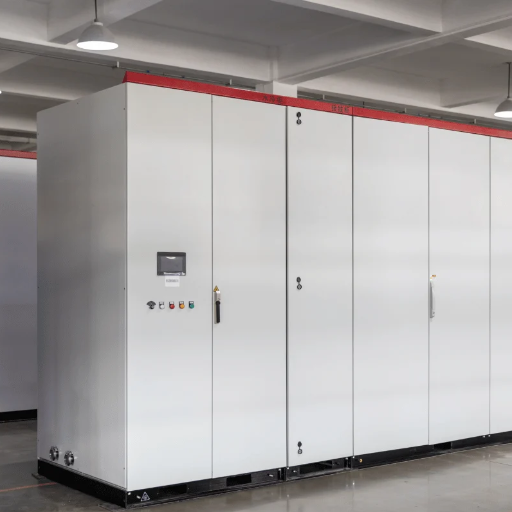
Online rankings and B2B directories are starting points, not verdicts. Many list trading companies alongside factories. Use this verification checklist before requesting detailed quotations.
Request a Business License
Ask for the business license and confirm that “manufacturing” or “production” of power electronics appears in the business scope. If the scope is limited to sales, trading, or import/export, the company is not the manufacturer.
Inspect Factory Photos and Video
Ask for photos that include identifiable details: company signage, employee uniforms, machine model numbers, and production-line labels. Better yet, schedule a live video call from the production floor. A real manufacturer can walk you through SMT lines, transformer winding stations, burn-in racks, and test benches without preparation.
Verify the Address
Check the registered address using Baidu Maps, Google Maps, or satellite imagery. A factory should occupy industrial space, not a residential building or shared office tower. Cross-check the address on the business license with what the supplier provides.
Contact Export References
Ask for two or three reference customers in your region or a similar market. Contact them directly. Ask about product quality, lead-time accuracy, documentation, warranty claims, and communication responsiveness.
Route Technical Questions to Engineers
Send a detailed technical question about your application. If the answer comes back immediately from a salesperson without engineering input, you are likely dealing with a trading company. A real manufacturer will have engineers review the question and may ask clarifying questions before answering.
Look for Red Flags
Common warning signs include:
- Refusal to provide a live video tour
- Generic product photos without company context
- Business license that does not include manufacturing
- Extremely wide product range with no clear factory specialization
- Prices significantly below every other quote without explanation
- Inability to provide test reports or certificate numbers
When Marcus, a buyer in Brazil, evaluated suppliers for a 200-unit VFD order, one Shenzhen seller offered a 25% price advantage but refused a video tour. The business license listed only “trading.” He chose a Jiangsu manufacturer that was 12% more expensive but provided factory video, export references, and engineering review of his motor specifications. The first order shipped on time with zero field failures.
OEM and Customization Capability
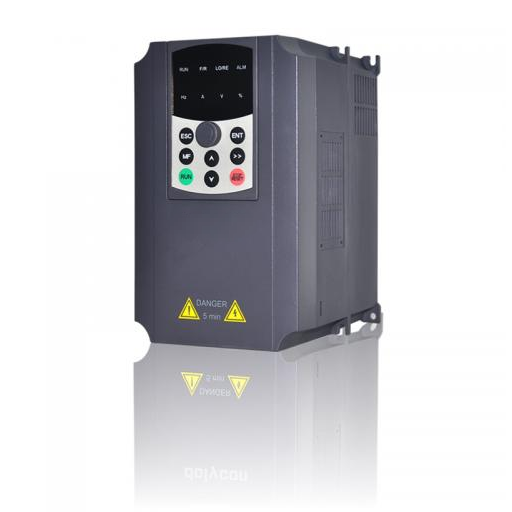
One of the main reasons buyers seek a China frequency converter manufacturer is customization flexibility. The scope of that flexibility varies widely.
OEM Branding
OEM branding typically includes custom labels, manuals, packaging, and logo placement on the enclosure. This is the lightest form of customization and is widely available. Minimum order quantities usually start at 50–100 units for small VFDs and 10–50 units for larger static or 400 Hz converters.
Technical Customization
Technical customization covers non-standard input/output voltages, special output frequencies, multi-channel outputs, modified control interfaces, communication protocols, and environmental protection upgrades. Not every supplier has in-house engineering for this work. A true custom frequency converter manufacturer will ask detailed questions, propose design trade-offs, and provide prototypes before volume production.
Documentation and Warranty Transfer
For OEM programs, confirm whether the manufacturer provides editable manuals, compliance documentation in your company name, and transferable warranty terms. Poor documentation is one of the most common complaints from buyers who otherwise receive acceptable hardware.
Certifications and Export Compliance
Certifications are non-negotiable for export markets. The most commonly required certifications for frequency converters include:
- CE marking — Required for European Economic Area access; covers Low Voltage Directive and Electromagnetic Compatibility Directive.
- ISO 9001 — Indicates a documented quality management system. Verify that the scope includes design and manufacturing, not just sales.
- UL listing — Important for North American markets, especially where inspectors or insurers require third-party safety testing.
- IEC 61000 — Covers electromagnetic compatibility emissions and immunity.
- RoHS — Restricts hazardous substances in electrical equipment.
For specific destination markets, additional certifications may apply: GOST-R for Russia, SABS for South Africa, SASO for Saudi Arabia, and INMETRO for Brazil.
Always verify certificate numbers through the issuing registrar’s online database. Confirm that the certificate is current, the scope covers frequency converters, and the company name matches the supplier exactly.
The ISO 9001 standard provides a globally recognized baseline for quality management systems. You can learn more about it directly from the International Organization for Standardization.
Pricing, Lead Times, and Total Cost of Ownership
Catalog pricing from Chinese suppliers can look attractive, but the real cost depends on more than the unit price.
Typical Lead Times
- Standard catalog VFDs: 2–4 weeks
- Custom configurations: 4–8 weeks
- Fully custom designs: 8–16 weeks
- Large-volume or peak-season orders: add 1–2 weeks
Pricing Structure
A 37 kW 380 V three-phase VFD from a Chinese supplier may range around 350–350–500 per unit at low volume, with significant discounts at higher quantities. Custom engineering, non-recurring engineering fees, and special certifications add cost but often eliminate downstream field problems.
Hidden Costs to Model
Include freight, import duties, customs clearance, inland transport, insurance, warranty claims, spare parts, and the cost of delayed commissioning. A supplier with a 10% lower unit price but 14-week lead times and weak documentation can easily become the more expensive option once total cost of ownership is calculated.
When Lina, an OEM product manager in Germany, evaluated Chinese suppliers for a private-label VFD line, she initially favored the lowest quote. During due diligence, she discovered that supplier required 14-week delivery and could not provide editable German manuals. A second supplier quoted 18% more but delivered in 6 weeks with full documentation and lower OEM minimums. Over the first year, faster restocking and fewer support tickets more than covered the price difference.
Common Mistakes When Choosing a China Frequency Converter Manufacturer
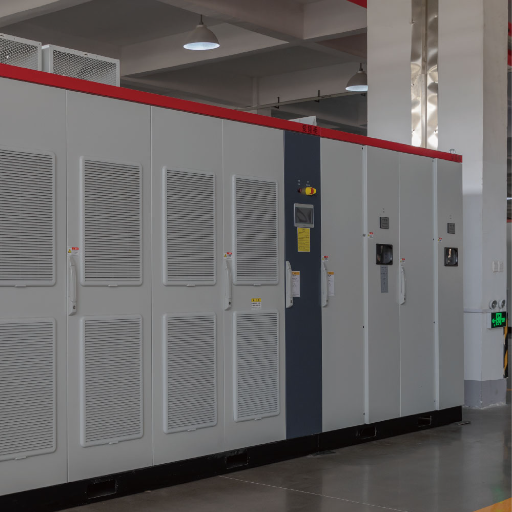
Even experienced buyers make these errors.
Selecting on Price Alone
The cheapest quote often comes from a trading company or from a manufacturer cutting corners on components or testing. Model total cost of ownership over the product life before deciding.
Skipping Factory Verification
A polished website and fast email response do not prove factory ownership. A 30-minute video audit can prevent months of problems.
Ignoring Regional Specialization
A Shenzhen supplier may be excellent for OEM VFDs but poorly suited for 400 Hz aviation power. Match the region to the application.
Accepting Unverified Certificates
CE and ISO 9001 claims are common. Verification through the issuing registrar takes five minutes and protects against forged or expired documents.
Underestimating Documentation Needs
User manuals, wiring diagrams, test reports, and compliance certificates are not afterthoughts. Request samples before placing volume orders.
For a broader evaluation framework that applies regardless of country, see our step-by-step guide on how to choose a frequency converter manufacturer.
Conclusion
Sourcing from a China frequency converter manufacturer offers strong cost-performance, wide product choice, and flexible customization, but only if you verify carefully. Start by matching your application to the right region. Then confirm factory ownership, validate certifications, evaluate samples, and compare total cost of ownership rather than unit price alone.
Whether you need a standard VFD, a custom static converter, or an OEM-branded product line, the right Chinese manufacturer can deliver industrial-grade quality with shorter lead times than many global alternatives. The key is disciplined supplier evaluation.
Ready to source from a verified China frequency converter manufacturer? Shandong Electric welcomes factory tours, technical discussions, and sample evaluations. Contact our engineering team to share your specifications and receive a customized proposal designed around your exact requirements.
